Governance

FSI's research on the origins, character and consequences of government institutions spans continents and academic disciplines. The institute’s senior fellows and their colleagues across Stanford examine the principles of public administration and implementation. Their work focuses on how maternal health care is delivered in rural China, how public action can create wealth and eliminate poverty, and why U.S. immigration reform keeps stalling. 

FSI’s work includes comparative studies of how institutions help resolve policy and societal issues. Scholars aim to clearly define and make sense of the rule of law, examining how it is invoked and applied around the world. 

FSI researchers also investigate government services – trying to understand and measure how they work, whom they serve and how good they are. They assess energy services aimed at helping the poorest people around the world and explore public opinion on torture policies. The Children in Crisis project addresses how child health interventions interact with political reform. Specific research on governance, organizations and security capitalizes on FSI's longstanding interests and looks at how governance and organizational issues affect a nation’s ability to address security and international cooperation.

Authors
News Type
News
Date
Paragraphs

Motivation & Contribution


Over the past 10-15 years, both longstanding and relatively new democracies have suffered from backsliding and erosion, including India, the United States, Brazil, Turkey, and many others. Many social scientists have explained this wave of backsliding in terms of either (a) elected autocrats who undermine democracy from within or (b) declining popular support for democrats who have failed to deliver economic growth and prosperity. However, recent scholarship by Thomas Carothers and Brendan Hartnett has questioned the wisdom of the latter. For example, India enjoyed strong economic growth prior to its backsliding under Narendra Modi.

In “Delivering for Democracy,” Francis Fukuyama, Chris Dann, and Beatriz Magaloni set out to more systematically evaluate the evidence connecting popular support for democracy with delivery, examining both backsliding and non-backsliding countries. After finding preliminary evidence for the democracy-delivery relationship, they offer an explanation of why delivery is simultaneously so important and so elusive under democratic governance.

Evidence


Using ten data sources covering 650,000 people in both old and new democracies, the authors find a strong, positive correlation between satisfaction with democracy and economic performance. This relationship holds not only for many countries at one point in time but for pairs of countries over time. In two developing democracies — Argentina and Brazil — as well as in two developed democracies — Greece and Spain — satisfaction and delivery have been closely connected since 2005, plummeting during economic crises and rising during periods of prosperity. These patterns call for an explanation for why voters care so much about delivery, such that they may be willing to sacrifice their democratic freedoms for it.


Image
Graphs showing satisfaction with democracy and growth rate in Argentina and Brazil


Image
Graphs showing satisfaction with democracy and growth rate in Greece and Spain


The Argument


Delivery is Important

The authors begin from the axiom that stable political life depends upon citizens perceiving their governments as legitimate. Legitimacy can be thought of in terms of both performance — the effective delivery of goods and services — and procedure, which encompasses policies that reflect the democratic will of the people. As the examples of China, Turkey, Saudi Arabia, and Singapore show, however, plenty of autocracies and backsliding democracies have not only delivered, but have also arguably outperformed their democratic peers. From China’s Belt and Road Initiative to Turkey’s Yavuz Sultan Selim Bridge, authoritarian leaders and ruling parties have achieved remarkable performance legitimacy. 

Although autocracies, by definition, cannot be procedurally legitimate, this may carry little weight for democratic citizens who experience prolonged unemployment or must deal with dilapidated infrastructure. Indeed, public engagement through procedural channels — such as voting or jury service — has steadily declined across the democratic world. Democratic voters are increasingly willing to support outsider candidates who build new infrastructure or promise to fight crime, but who nonetheless restrict their political freedoms. Many citizens of El Salvador — which now claims the world’s highest incarceration rate — continue to view Nayib Bukele’s administration as the surest way of delivering security, despite a years-long state of emergency that has seriously eroded democratic freedoms. 

Meanwhile, established democracies built much of their infrastructure decades ago, so investments primarily maintain these systems, rather than showcasing new projects that can garner public support. In some cases, democracies have struggled to even maintain their existing infrastructure, perhaps best exemplified by the collapse of Baltimore’s Francis Scott Key Bridge. All of this creates the conditions for voters to support far-right, anti-democratic parties, which often blame immigrants for economic problems and propose illiberal solutions.

Yet Democratic Delivery is Difficult

Elected democrats seeking to deliver may find themselves hamstrung in ways that autocrats are not. For one, democratic institutions are composed of ‘veto players’ who can stymie the introduction of badly needed policies: national and subnational governments, multiple legislative chambers, judges who review and overturn executive action, and so on. At the same time, democrats must worry about election cycles and term limits, decreasing their incentives to deliver for the long term when later politicians may take credit. Meanwhile, legal and regulatory systems, such as those intended to protect the environment, may prevent the building of critical infrastructure. Property rights prevent the forcible displacement of communities for development, while civil liberties prevent the repression of those who refuse to be displaced. Rules meant to prevent regulatory capture often become arenas where powerful interest groups block and delay government action. 

Independent news media present another potential impediment to delivery, as criticism from journalists can make incumbents wary of undertaking new projects. In addition, media bias can convince voters to remove politicians who do, in fact, deliver. By contrast, autocrats who censor media and arrest journalists can focus on delivery alone, even while their development schemes often rest on corrupt and nepotistic practices. Popular discontent with democratic government ultimately creates a damaging feedback loop: voters are unwilling to fund government projects, in turn leading government to function worse, generating further discontent.


Autocrats have figured out ways to deliver the goods and services their citizens want, but this does not make autocracy a just political system.


Prospects


Autocrats have figured out ways to deliver the goods and services their citizens want, but this does not make autocracy a just political system. By the same token, democracies may struggle to deliver, but their procedural legitimacy — especially voters’ ability to hold representatives to account — entails a powerful means of generating fair and inclusive delivery. As such, the authors call on democracies to examine their past and that of their peer countries — both developed and developing — for inspiration. For example, the U.S. New Deal was exemplary in building ambitious and popular infrastructure, as well as providing broad social and economic protections. (Of course, most of these projects would be hamstrung by modern-day regulatory frameworks.)

Meanwhile, Australia’s citizens have both benefited from a recent infrastructure boom and have demonstrated strong support for democracy. Finally, many Latin American countries have implemented popular and effective programs like conditional cash transfers. For the authors, addressing the issues most pressing to voters — such as job creation, which is especially salient to young people, who are most dissatisfied with democracy — will require democratic governments to strike the right balance between democracy and delivery.

*Research-in-Brief prepared by Adam Fefer.

Hero Image
Group of people protesting in Ibadan, Nigeria, holding a sign reading "#EndSARS #EndBadGov"
Group of people protesting in Ibadan, Nigeria. | Oladipo Adejumo via Unsplash
All News button
0
Subtitle

CDDRL Research-in-Brief [4-minute read]

Date Label
-
Tragedy, Triumph, or Both? Israel After Two Years of War — Webinar with Nadav Eyal

Join us for a special webinar marking two years since the October 7th Hamas attack on Israel and the subsequent multi-front war in the Middle East. The webinar will examine the impact of the ongoing conflict, assess the major geopolitical shifts that have unfolded in the region in the past two years, and identify scenarios for how the war might end. Featuring Amichai Magen, Visiting Fellow in Israel Studies, in conversation with Nadav Eyal, Senior Columnist at Israel's largest daily newspaper, Yedioth Ahronoth.

ABOUT THE SPEAKER

Nadav Eyal is one of Israel's most prominent journalists and a winner of the Sokolov Award — Israel's equivalent of the Pulitzer Prize. He writes columns for Yediot Ahronot and Ynet. Beginning on October 7, 2023, he has focused his work on the massacres perpetrated in Israel and the subsequent war in Gaza and the northern border of Israel. He also serves as a senior commentator for Israel’s Channel 12. Eyal authored the bestseller REVOLT, the Worldwide Uprising Against Globalization. In 2023, Eyal published HOW DEMOCRACY WINS (if it does). Eyal has held senior positions in major Israeli media groups and interviewed Israeli prime ministers and foreign heads of state. He is the chairman of the Movement for Freedom of Information, an Israeli NGO dedicated to promoting transparency and accountability, aiming to foster a more open, democratic, and accountable society. He earned an MSc in Global Politics from the London School of Economics and Political Science (with merit) as a Chevening Scholar and an LL.B. from Hebrew University (magna cum laude). He received the B'nai B'rith World Center Award for Journalism.

Virtual Event Only.

Amichai Magen
Amichai Magen

Virtual Only Event.

Nadav Eyal
Seminars
Date Label
0
CDDRL Visiting Scholar, 2025-26
denis_morozov.jpg

Denis Morozov is a Visiting Scholar at Stanford’s Center on Democracy, Development and the Rule of Law for the 2025-2026 academic year. His research focuses on the role and position of multilateral development banks in the evolving global financial system and their impact on international development.

Before joining Stanford in 2023 as a Fellow at the Distinguished Careers Institute, Denis served as President of Bank of America for Russia and the CIS, overseeing the franchise’s regional work in investment advisory, capital markets, research, and securities trading.

Prior to his role at Bank of America, Denis was the Executive Director of the European Bank for Reconstruction and Development, a leading international financial institution aimed at fostering the transition towards market-oriented economies and multiparty democracy in Central and Eastern Europe, the former USSR, and parts of Northern Africa, the Middle East, and Asia.

Earlier in his career, Denis was the President and Chief Executive Officer of Norilsk Nickel and Uralkali, two global leaders in their respective commodities (base and platinum group metals and fertilizer inputs), both of which were recognized for their superior financial performance and high standards of corporate governance under Denis’ leadership.

Denis obtained a BA in Economics and a JD from Moscow State University. He later received an MA in Public Administration from Columbia University’s School of International and Public Affairs. Additionally, he completed the Advanced Management Program at Harvard Business School, received a diploma in Commercial Banking from the Swiss Banking School, and earned a PhD (Russian equivalent) in Economics from the Moscow State Institute of International Relations.

In 2012, Denis was named a Young Global Leader by the Davos World Economic Forum.

Denis is passionate about travel and exploration and enjoys long-distance running, water sports, and anything to do with mountains.

Date Label
Authors
Nora Sulots
News Type
News
Date
Paragraphs

In 2022, the Center on Democracy, Development and the Rule of Law (CDDRL) launched its Strengthening Ukrainian Democracy and Development (SU-DD) Program — a 10-week training initiative for mid-career Ukrainian practitioners and policymakers. Designed for participants advancing well-defined projects aimed at strengthening Ukrainian democracy, enhancing human development, and promoting good governance, SU-DD builds on the successes of CDDRL’s earlier Ukrainian Emerging Leaders Program, which brought 12 fellows to Stanford over four cohorts.

The third SU-DD cohort began their work in June, meeting online with CDDRL faculty to refine the scope of their projects, each focused on actionable strategies to support Ukraine’s recovery from Russia’s invasion. In their first session, fellows presented their proposals to a panel of distinguished CDDRL faculty, including Mosbacher Director Kathryn Stoner, FSI Director Michael McFaul, and Olivier Nomellini Senior Fellow and MIP Director Francis Fukuyama, receiving initial feedback and guidance. The second meeting invited deeper exploration of solutions, using the MIP Problem-Solving Framework co-created by Professors Fukuyama and Jeremy Weinstein. In the final session, fellows were challenged to revisit and sharpen their project scope while learning from Professor Fukuyama about the Implementation phase of the framework. Equipped with new tools, fresh perspectives, and targeted feedback, the fellows concluded the virtual portion of the program ready to begin their journey at Stanford.

A hallmark of the SU-DD program is participation in CDDRL’s three-week Fisher Family Summer Fellows Program. Last month, the Ukrainian fellows joined peers from across the globe on campus at Stanford, building connections, exchanging ideas, and exploring shared solutions to complex development challenges. This experience broadened their networks far beyond Ukraine's borders, allowing them to build relationships they will draw on as they advance their projects after the program concludes on August 29.

During the final three weeks of the program, our Ukrainian fellows will visit Silicon Valley tech companies, meet with local business experts, politicians, and government officials, as well as Stanford faculty, and finalize implementation plans to bring their proposals to life.

Learn more about each fellow and their work below.

Meet the Fellows

Polina Aldoshyna

Polina Aldoshyna is a Ukrainian lawyer and civic leader with over nine years of experience in law, public administration, and nonprofit management. She currently leads the BGV Charity Fund, overseeing social projects that support vulnerable communities. In addition, she serves as a Deputy of the Zhytomyr Regional Council, focusing on local governance and social policy. Throughout her career, Polina has managed over 60 humanitarian projects, including the establishment of psychosocial support centers and aid programs for displaced individuals and veterans.

Project: Institutionalizing Resilience Centers for Postwar Recovery 

Polina is currently working on transforming Ukraine’s emerging resilience centers—grassroots hubs that provide psychosocial support, legal aid, and essential services to displaced and vulnerable populations—into a sustainable, institutionalized model of community-based social infrastructure. While these centers have played a critical role in the war’s social response, many still lack unified standards, stable funding, and digital infrastructure, limiting their long-term impact.

Her project explores which governance structures — municipal, civic, or hybrid — are most viable in Ukraine’s decentralized context, how public, private, and donor financing can be blended to support long-term operations, and how digital tools, such as CRM systems and reporting platforms, can professionalize service delivery. Drawing on global models, such as Resilience Hubs in the United States, Polina aims to co-design a scalable framework for resilience centers that can be integrated into Ukraine’s broader post-war recovery strategy.

To support this work, Polina is interested in meeting with NGOs, charitable foundations, and private philanthropists who support Ukraine in the reconstruction of human social capital in the United States. She hopes to learn how democratic institutions adapt and deliver services during crisis and post-conflict transitions, as well as engage with scholars and practitioners working at the intersection of governance, social development, and recovery.


Oleksii Movchan

Oleksii Movchan is a Member of the Ukrainian Parliament and Deputy Chairman of the Verkhovna Rada Committee on Economic Development, representing the “Servant of the People” faction. He chairs the subcommittee on public procurements and state property management, and is active in inter-parliamentary groups with the USA, UK, Japan, and others. Before parliament, he led projects at Prozorro.Sale. Oleksii holds degrees from Kyiv-Mohyla Academy, Ukrainian Catholic University, and Kyiv School of Economics. He has advanced key reforms in procurements, state-owned companies, and privatization to support Ukraine’s European Union integration.

Project: Improving Corporate Governance in Municipally-Owned Enterprises (MoEs) in Ukraine

Oleksii is currently working to improve the governance of Ukraine’s municipally owned enterprises (MoEs), which number nearly 14,000—more than triple the number of state-owned enterprises. While some MoEs serve as critical infrastructure providers in areas such as water, heating, and public transport, most operate without modern governance standards. Over 82% are unprofitable and many are subsidized, making them susceptible to inefficiency, mismanagement, and corruption. These shortcomings erode public trust, distort competition, and weaken essential service delivery.

His project focuses on designing and advocating for national legislation to institutionalize OECD-based governance practices across approximately 60 high-impact MoEs in 19 cities. Proposed measures include strategic property management policies, independent supervisory boards, transparent CEO selection, and robust audit, compliance, and risk management systems. The legislation also calls for standardized financial reporting and regular external audits to enhance transparency and creditworthiness.

To support this work, Oleksii is drawing on Ukraine’s pilot reforms in Mykolaiv and Lviv, as well as prior SOE governance reforms since 2015, and global best practices from EU and OECD countries. He is particularly interested in how institutional reform can advance anti-corruption goals and how reformers in other countries have successfully designed and implemented large-scale changes. He hopes to meet with Stanford faculty, civic technologists, and philanthropic organizations, such as the Stanford Cyber Policy Center, Code for America, and the Skoll Foundation, to explore how policy and technology innovations can support municipal reform and Ukraine’s post-war recovery.


Maria Golub

Maria Golub is a recognized expert on Ukraine’s European and Euro-Atlantic integration, with deep expertise in EU-Ukraine bilateral relations. Based in Brussels, she currently serves as a Senior Political and Policy Advisor to Ukrainian leadership, where she advocates for a just and lasting peace in Ukraine and supports the country’s advancement along the EU integration path through a decisive reform agenda. She is also actively involved in shaping Ukraine’s reconstruction strategy and is a strong proponent of the “build back better” principle, championing an ambitious revival plan for the country.

Project: Building a National Recovery Platform and Transatlantic Innovation Alliance

Maria is currently working to establish a national Coalition for Recovery—an inclusive, cross-sectoral platform designed to unify Ukraine’s defense, reconstruction, and reform agendas. As Ukraine faces the twin imperatives of resisting ongoing military aggression and laying the groundwork for long-term renewal, Maria’s project aims to ensure that recovery planning is not siloed but instead integrates priorities across security, governance, innovation, and transatlantic cooperation.

The Coalition will convene key domestic and international stakeholders to shape Ukraine’s internal reform agenda, embed EU and NATO-aligned governance standards, and streamline policy frameworks across recovery sectors. A core pillar of the project is embedding security priorities and military technological innovation directly into the recovery strategy, positioning defense modernization as a foundation — not a separate track — for rebuilding state capacity and competitiveness. In tandem, Maria is developing the concept for a large-scale technology and defense innovation alliance between Ukraine, the EU, and the United States. By fostering deeper collaboration in emerging technologies and military-industrial partnerships, the initiative seeks to contribute to Ukraine’s economic resurgence in 2025–2026 and anchor its strategic integration into the Euro-Atlantic community.

Maria is particularly interested in successful strategies and action plans that demonstrate how countries emerging from large-scale conflict can simultaneously pursue national recovery and build resilient, future-oriented security and defense architectures. She aims to explore cutting-edge developments in the tech and military tech sectors, as well as innovative tools like digital twin cities, to help design an integrated national revival plan. In addition, she hopes to deepen her understanding of how AI tools and techniques can support planning, coordination, and implementation across Ukraine’s postwar recovery landscape.


Alyona Nevmerzhytska

Alyona Nevmerzhytska is CEO of hromadske.ua, Ukraine’s leading independent online media platform. She began her career in 2012 at the Kyiv Post and has since focused on business development and organizational strategy. At hromadske, she has enhanced audience engagement and strengthened data-driven decision-making. Committed to building sustainable models for independent media, she ensures ethical newsroom operations and promotes democratic values. She is a graduate of the Stockholm School of Economics, an Atlantic Council Millennium Fellow, and a 2024 McCain Institute Global Leader.

Project: Strengthening Independent Media for Postwar Accountability and Recovery

Alyona is currently working to build a more resilient and innovative media ecosystem in Ukraine that can serve as both a watchdog and a unifying force during the country’s postwar recovery. As CEO of Hromadske.ua, she is leading efforts to combine investigative journalism, compelling storytelling, and technological advancement with a focus on financial sustainability and editorial independence.

Her project explores how independent media can most effectively cover Ukraine’s complex reconstruction process — holding public institutions and international aid mechanisms accountable while also building trust across communities fractured by war. Alyona is particularly interested in leveraging technology, including AI tools, to enhance investigative capacity, analyze data, and uncover patterns of corruption or inefficiency in recovery efforts.

Through the SU-DD fellowship, she also seeks to explore global models for sustainable journalism beyond donor-driven funding, learning how to strengthen independent media institutions to ensure their long-term viability and public impact. A key area of inquiry is the ethical integration of AI into journalism, ensuring that innovation does not compromise transparency, integrity, or audience trust. Alyona is eager to connect with Stanford faculty in communication and business, as well as experts, to explore sustainable models for independent journalism and civil society resilience. She is also interested in meeting with philanthropic organizations, alongside tech leaders, and Ukrainian NGOs to strengthen partnerships that support innovative, mission-driven media.

Read More

(Clockwise from left) Oleksandra Matviichuk, Oleksandra Ustinova, Oleksiy Honcharuk, and Serhiy Leshchenko joined FSI Director Michael McFaul to discuss Ukraine's future on the three-year anniversary of Russia's full-scale invasion.
News

Through War and Loss, Ukrainians Hold Onto Hope

FSI scholars and civic and political Ukrainian leaders discussed the impact of the largest conflict in Europe since World War II, three years after Russia's invasion of Ukraine.
Through War and Loss, Ukrainians Hold Onto Hope
Ukraine and Russia flags on map displaying Europe.
Commentary

The future of Russia and Ukraine

How the present conflict plays out has important implications for other former Soviet states and for the future of the E.U., says political scientist Kathryn Stoner.
The future of Russia and Ukraine
Oleksandra Matviichuk speaks to an audience at Stanford University on April 15, 2024.
News

Ukraine Needs Western Assistance, Global Implications if Conflict is Lost

Nobel Peace Prize winner and CDDRL alumna Oleksandra Matviichuk delivered the S.T. Lee Lecture on April 15 and spoke of the broader implications of Russia’s actions in Ukraine and for the world if the West does not continue to support Ukraine in its fight against Russia.
Ukraine Needs Western Assistance, Global Implications if Conflict is Lost
Hero Image
2025 Strengthening Ukrainian Democracy and Development fellows
Alyona Nevmerzhytska, Oleksii Movchan, Maria Golub, and Polina Aldoshyna. | Rod Searcey
All News button
1
Subtitle

Meet the four fellows participating in CDDRL’s Strengthening Democracy and Development Program and learn how they are forging solutions to help Ukraine rise stronger from the challenges of war.

Date Label
0
CDDRL Honors Student, 2025-26
shayla_2026.jpeg

Major: International Relations
Minor: Theater
Hometown: Winchester, Virginia
Thesis Advisor: Kathryn Stoner

Tentative Thesis Title: U.S. Silence as a Form of Soft Power

Future aspirations post-Stanford: I plan to attend graduate school, work at the intersection of international development & foreign policy, and pursue global public service projects.

A fun fact about yourself: I was born on leap day!

Date Label

Encina Hall, E105
616 Jane Stanford Way
Stanford, CA 94305-6055

0
CDDRL Postdoctoral Fellow, 2025-26
marianagawa_photo_-_maria_nagawa.jpeg

Maria Nagawa is a Postdoctoral Fellow at the Center on Democracy, Development and the Rule of Law (CDDRL) at Stanford University. She studies governance and development in the Global South with a particular focus on aid and bureaucracy. She employs mixed methods and a range of data sources, including survey, experimental, interview, and administrative data.  

In her book project, she examines how international aid affects the performance of bureaucrats in aid recipient countries. Her work shows how, in incentivizing select bureaucrats to work on aid projects, aid diverts bureaucrats from routine government programming and erodes organizational cohesion. This work draws on months of fieldwork in Uganda, including interviews with diverse actors in the public and aid sectors and a survey of bureaucrats in Uganda's central government.

Prior to starting her fellowship at CDDRL, Maria was a postdoctoral fellow at the Niehaus Center for Globalization and Governance at Princeton University. She has worked in both the private and public sectors and received her PhD in Public Policy and Political Science from Duke University in 2024.

Date Label
Paragraphs

Research on reentry has documented how material hardship, network dynamics, and carceral governance impede reintegration after prison, but existing scholarship has left underdeveloped other instances in which adverse outcomes stem from the institution's socioemotional dynamics and people's practical and emotional responses to bureaucratic indignities. Drawing on more than 2 years of ethnographic fieldwork with people on parole in Philadelphia, this study analyzes three sources of adversity that occur because reentry institutions’ or actors’ practices are incompatible with the behaviors and needs of system-involved people. I demonstrate how unrecognized vulnerability, discretion's benefits and drawbacks, and risk-escalating rules contribute to adverse outcomes—withdrawal and rule-breaking—that sometimes lead to reincarceration. In failing to account for aspects of human agency and dignity, such as the ability to provide for oneself and to advance personal and familial well-being, parole guidelines often prompted withdrawal and subversion.

All Publications button
1
Publication Type
Journal Articles
Publication Date
Journal Publisher
Criminology
Authors
Gillian Slee
News Type
News
Date
Paragraphs

Argument & Key Findings


The system of reentry institutions — including halfway houses, parole agencies, and housing assistance programs — can be extremely complicated for formerly incarcerated persons (FIPs) to navigate. These complications are not merely logistical, but also social and emotional: the ways in which FIPs interact with reentry institutions can affect their sense of belonging, dignity, and prosperity. When the rules and practices of reentry institutions undermine these needs, it becomes more likely that participants will violate rules, withdraw from the institutions altogether, or find themselves reincarcerated. 

In “Home But Not Free,” Gillian Slee offers a rich analysis of these socioemotional dynamics. The paper both increases our knowledge of reentry processes and deepens our understanding of FIPs and reentry staff. Previous scholars have focused more on how adverse outcomes stem from reentry institutions prioritizing surveillance or control. Slee pushes forward this conversation by highlighting how adverse outcomes also stem from failures to acknowledge and support the dignity of FIPs.

Slee’s paper is informed by over two years of ethnographic fieldwork with FIPs in Philadelphia. This includes observing over 200 appointments at a housing assistance program, analyzing more than 130 files of program participants, and both observing and assisting with programming at a women’s halfway house. 


Reentry institutions and their staff often fail to recognize or respond to the constraints and vulnerabilities faced by FIPs. These failures can undermine the dignity of FIPs and provoke their withdrawal from such institutions.


Three Mechanisms:


The core of the paper centers on Slee’s elaboration of three mechanisms that link socioemotional concepts, such as indignity, to outcomes like withdrawal or reincarceration. Each mechanism is clarified through a range of examples and case studies.

1. Unrecognized vulnerability:

Reentry institutions and their staff often fail to recognize or respond to the constraints and vulnerabilities faced by FIPs. These failures can undermine the dignity of FIPs and provoke their withdrawal from such institutions. In the realm of housing assistance, the Philadelphia program requires that rent falls between 30% and 45% of participants’ income. However, this is often unrealistic given the difficulties of finding fairly priced units or securing gainful employment with a felony conviction. Accordingly, FIPs must seek low-quality units or roommates. Yet most participants do not want roommates because it reminds them of being incarcerated. Participants are thus presented with an undignified set of choices. The program restrictions mean that many FIPs cannot or will not utilize housing assistance programs, deepening their sense of instability.

Another source of vulnerability concerns the mismatch between FIPs’ expectations and the realities of frontline bureaucracy. For example, many housing assistance programs have too few staff, some of whom struggle to juggle appointments or return phone calls. Because reentry staff are overburdened, they may ask participants to pick up the slack by searching for housing units. Yet many FIPs lack the requisite know-how, for example, calling about units too frequently or too early in the morning. Others may show up hours early for their appointments, in the process annoying reentry staff. Yet participants are not coached on how to improve these behaviors, leading to neglect. Other FIPs must learn that the majority of units are listed online as opposed to in newspapers, incurring the mockery from reentry staff in the process. 

A final source of vulnerability concerns participants’ lack of efficacy — the sense that their efforts make little difference or are inadequate. Reentry staff may have high expectations of people who feel “cryogenically frozen in time” (p. 32) because of years of incarceration. Some are unable to use modern cell phones or have no rental history.


A final source of vulnerability concerns participants’ lack of efficacy — the sense that their efforts make little difference or are inadequate.


2. Discretion’s Benefits and Drawbacks:

The discretion exercised by reentry staff introduces difficult choices for participants, forcing them to choose between (a) following the rules and becoming socially isolated or (b) breaking the rules and developing social connections. For example, some halfway houses are restrictive about time spent outside of the house. Participants who abide by the rules may miss out on socially important events, like a child’s basketball game. Some FIPs may lie about or conceal where they live in order to deal with less intrusive parole agents. Others may cross state lines to pursue important career opportunities. One participant parked their mobile home outside of the parole district lines because it was less expensive and easier than seeking alternative units, but these kinds of ‘rational’ behaviors cannot be accommodated. Discretion is a highly variable attribute: some reentry staff cancel meetings and inconvenience participants, while others remember individuals’ needs and accommodate them. Those who expect more discretion than they receive may break the rules out of frustration. Ultimately, discretion and its absence can provoke a host of socioemotional problems.


Instead of preventing noncompliance, program rules may serve to encourage it when they undermine participants’ sense of dignity.


3. Risk-Escalating Rules:

Instead of preventing noncompliance, program rules may serve to encourage it when they undermine participants’ sense of dignity. For example, 29 states prohibit associating with other FIPs, yet many participants have friends or family supervised by the system; as such, people violate the rules in order to preserve meaningful relationships. Some FIPs are faced with painful dilemmas, for example, choosing between living in halfway houses where drug use is common or breaking the rules by leaving. Others report using cocaine instead of marijuana because the latter can be detected in their bloodstream for much longer. Some halfway houses mandate spending a certain number of hours inside the house, but this leads to participants being unable to work multiple jobs to support themselves, a clear violation of their dignity.

For many FIPs in uncomfortable halfway houses, they cannot be placed in another house unless they break the rules of their existing house; some consider breaking the rules for the sake of their well-being, even though doing so might land them under even more restrictive supervision. One participant was refused permission to live in a camper that he could afford because the camper’s mobility posed a flight risk. Another participant broke the rules by traveling out of state because her son’s father had cancer, and a reentry professional later told her to return in a rather threatening way. The rules of reentry institutions thus incentivized FIPs to make very risky choices.


By highlighting socioemotional concepts — especially (in)dignity — as central to the experiences of formerly incarcerated persons, Slee shows how the rules and practices of reentry institutions can undermine reintegration.


By highlighting socioemotional concepts — especially (in)dignity — as central to the experiences of formerly incarcerated persons, Slee shows how the rules and practices of reentry institutions can undermine reintegration. Addressing sources of vulnerability and counterproductive rules may help reform reentry institutions in more humane and effective ways.

*Research-in-Brief prepared by Adam Fefer.

 
Hero Image
Prison corridor with jail cells on either side.
Prison corridor with jail cells on either side. | 7500 RPM via Unsplash
All News button
0
Subtitle

CDDRL Research-in-Brief [4-minute read]

Date Label
-

Virtual participation available via Zoom using the link above. Zoom Meeting ID: 997 4878 4037, Passcode: 998456

We invite our virtual participants to join in celebrating Marcel Fafchamps' distinguished career. Following the keynote address, at 10:00 AM PST, there will be an opportunity for online attendees to offer brief remarks or words of appreciation to honor Professor Fafchamps and his many contributions to scholarship, mentorship, and our academic community. Your reflections are a valued part of this special occasion.

Unfinished Business: A Tribute to Marcel Fafchamps

Join us for a full-day academic symposium celebrating the career and contributions of economist Marcel Fafchamps, Satre Family Senior Fellow at the Freeman Spogli Institute for International Studies, on the occasion of his retirement. Featuring a keynote by Marcel himself, this tribute brings together colleagues, collaborators, and students to engage with the themes and ideas that have shaped his influential work in development economics, labor markets, and social networks.

The day will feature in-depth paper presentations, rapid-fire research talks, and engaging discussions with scholars, including Stefano Caria (University of Warwick), Pascaline Dupas (Princeton University), and Simon Quinn (Imperial College London), with more speakers to be announced soon. Topics span management practices, persuasion and diffusion, strategic reasoning, and mutual aid—from field experiments to economic theory.

Come celebrate the distinguished research career of Marcel Fafchamps with us.

Lunch and refreshments will be provided.

The symposium will be held in person, by invitation only. Professor Fafchamps' keynote will be livestreamed via Zoom.

This event is co-sponsored by the Center on Democracy, Development and the Rule of Law and the King Center on Global Development.

8:30 AM  —  Continental Breakfast available in 2nd Floor Lobby, Encina Hall Central

8:45 AM — General Welcome, Kathryn Stoner

9:00 AM — Keynote Address, Marcel Fafchamps: Behavioral Markets

10:00 AM — Virtual Attendees may join to share brief remarks and words of appreciation

10:15 AM — Morning Break

10:45 AM — Session Speaker: Stefano Caria, Competition and Management

11:45 AM — Rapid Fire Speaker: Tom Schwantje, Management Style Under the Spotlight: Evidence from Studio Recordings

12:15 PM — Lunch Break

1:15 PM — Session Speaker Pascaline Dupas: Keeping Up Appearances: Socioeconomic Status Signaling to Avoid Discrimination

2:15 PM — Rapid Fire Speaker: Deivy Houeix, Eliciting Poverty Rankings from Urban or Rural Neighbors

2:45 PM Afternoon Break

3:00 PM Session Speaker: Simon Quinn, Matching, Management and Employment Outcomes: A Field Experiment with Firm Internships

4:00 PM Special Presentation

4:15 PM — Concluding Remarks: Kathryn Stoner, Marcel Fafchamps

4:30 PM — Event Concludes


Kathryn Stoner
Kathryn Stoner
Melanie Morten
Katherine Casey
Katherine Casey

In-person session open to invited guests; registration is required. 

William J. Perry Conference Room, Encina Hall, Second floor, Central, S231
616 Jane Stanford Way, Stanford, CA 94305

Encina Hall
616 Jane Stanford Way
Stanford, CA 94305-6055

0
Senior Fellow Emeritus at the Freeman Spogli Institute for International Studies
Professor, by courtesy, of Economics
marcel_fafchamps_2025.jpg

Marcel Fafchamps is a Senior Fellow Emeritus at the Freeman Spogli Institute for International Studies (FSI) and a member of the Center on Democracy, Development and the Rule of Law. Previously, he was the Satre Family Senior Fellow at FSI. Fafchamps is a professor (by courtesy) for the Department of Economics at Stanford University. His research interests include economic development, market institutions, social networks, and behavioral economics — with a special focus on Africa and South Asia.

Prior to joining FSI, from 1999-2013, Fafchamps served as professor of development economics in the Department of Economics at Oxford University. He also served as deputy director and then co-director of the Center for the Study of African Economies. From 1989 to 1996, Fafchamps was an assistant professor with the Food Research Institute at Stanford University. Following the closure of the Institute, he taught for two years at the Department of Economics. For the 1998-1999 academic year, Fafchamps was on sabbatical leave at the research department of the World Bank. Before pursuing his PhD in 1986, Fafchamps was based in Addis Ababa, Ethiopia, for 5 years during his employment with the International Labour Organization, a United Nations agency that oversees employment, income distribution, and vocational training in Africa.

He has authored two books: Market Institutions in Sub-Saharan Africa: Theory and Evidence (MIT Press, 2004) and Rural Poverty, Risk, and Development (Elgar Press, 2003), and has published numerous articles in academic journals.

Fafchamps served as the editor-in-chief of Economic Development and Cultural Change until 2020. Previously, he had served as chief editor of the Journal of African Economies from 2000 to 2013, and as associate editor of the Economic Journal, the Journal of Development Economics, Economic Development and Cultural Change, the American Journal of Agricultural Economics, and the Revue d'Economie du Développement.

He is a research associate of the National Bureau of Economic Research, an affiliated professor with J-PAL, a senior fellow with the Bureau for Research and Economic Analysis of Development, a research fellow with IZA, Germany, and with the Center for Economic and Policy Research, UK, and an affiliate with the University of California’s Center for Effective Global Action.

Fafchamps has degrees in Law and in Economics from the Université Catholique de Louvain. He holds a PhD in Agricultural and Resource Economics from the University of California, Berkeley. 

Curriculum Vitae

Publications 

Working Papers

Date Label
Marcel Fafchamps Satre Family Senior Fellow; Professor, by courtesy, of Economics Keynote Speaker Freeman Spogli Institute for International Studies
Stefano Caria Professor of Economics Speaker University of Warwick

Landau Economics Building, Office 238

579 Jane Stanford Wayl, Stanford, CA 94305

0
Senior Fellow, Freeman Spogli Institute for International Studies
Professor, Economics
Senior Fellow, Stanford Institute for Economic Policy Research
Director, Stanford King Center on Global Development
dupas_photo_resized.jpg Ph.D.

Pascaline Dupas is a development economist seeking to better understand challenges facing poor households in lower income countries. Her aim is to identify tools and policies that can help overcome these challenges and reduce global poverty.  Her research aims to understand the barriers that households and governments face in accumulating or fostering accumulation of health and education, and how these barriers can be overcome. She conducts extensive fieldwork — field experiments embedded in longitudinal data collection efforts, which are used to perform empirical tests of microeconomic theory and to quantify the effects of potential policies. Health is the primary focus of Dupas’ research to date. Her work covers the role of information and education in health behavior, and the role of subsidies in increasing adoption of health technologies.


Pascaline Dupas Professor of Economics and Public Affairs Princeton University
Deivy Houeix Prize Fellow, Center for History and Economics Panelist Harvard University
Simon Quinn Associate Professor, Department of Economics & Public Policy Speaker Imperial College Business School
Tom Schwantje Postdoctoral Research Fellow Panelist Bocconi University
Symposiums
Date Label
Authors
Soraya Johnson
News Type
Q&As
Date
Paragraphs

The "Meet Our Researchers" series showcases the incredible scholars at Stanford’s Center on Democracy, Development and the Rule of Law (CDDRL). Through engaging interviews conducted by our undergraduate research assistants, we explore the journeys, passions, and insights of CDDRL’s faculty and researchers.

Ayça Alemdaroğlu is a Research Scholar at the Center on Democracy, Development and the Rule of Law (CDDRL),  Associate Director of the center’s Program on Turkey, and a Global Fellow at the Peace Research Institute Oslo (PRIO). Her research focuses on understanding authoritarian regimes and the opposition movements against them, particularly in Turkey.

What inspired you to pursue research in your current field, and how did your journey lead you to CDDRL?


During my childhood in Turkey, I grew up discussing political issues at dinner, as my family was always very engaged in politics. My mother founded two leftist political parties, while my father ran in numerous elections and served as the mayor in Ankara for five years. I then studied political science and sociology in school, focusing on cultural and class issues while doing my PhD at Cambridge.

I eventually came to CDDRL because I appreciated its interdisciplinary emphasis and its focus on current societal issues. My early research focused on how political regimes shape people as individuals through policies and institutions. I was especially curious about eugenics efforts intended to build up a healthier nation, though it often manifested negatively through policies like sterilization.

During my PhD, I began focusing on youth and how social hierarchies, regimes, and inequalities affected their identities. At the time, there was a lot of discourse about the threat of a “dangerous” Muslim youth, but these young people were not monolithic. Often, they were reacting to concerns like finding jobs in a way that any youth group would, meaning their behavior was less correlated to their religious and cultural background than people portrayed it.

Based on your research, how do regimes affect people’s view of their own identities and political factionalism?


I disagree with the cultural primordialist approach that inherent differences are largely unchanging between peoples. Instead, I believe that the way narratives about identities are articulated in politics can strongly exacerbate differences.

For example, the Kurds in Turkey do have distinctive qualities, such as their language and ethnic group. However, what really makes them different is the unfair historical processes that Kurds have been subjected to.


I believe that the way narratives about identities are articulated in politics can strongly exacerbate differences.
Ayça Alemdaroğlu


What is the most exciting or impactful finding from your research, and why do you think it matters for democracy, development, or the rule of law?


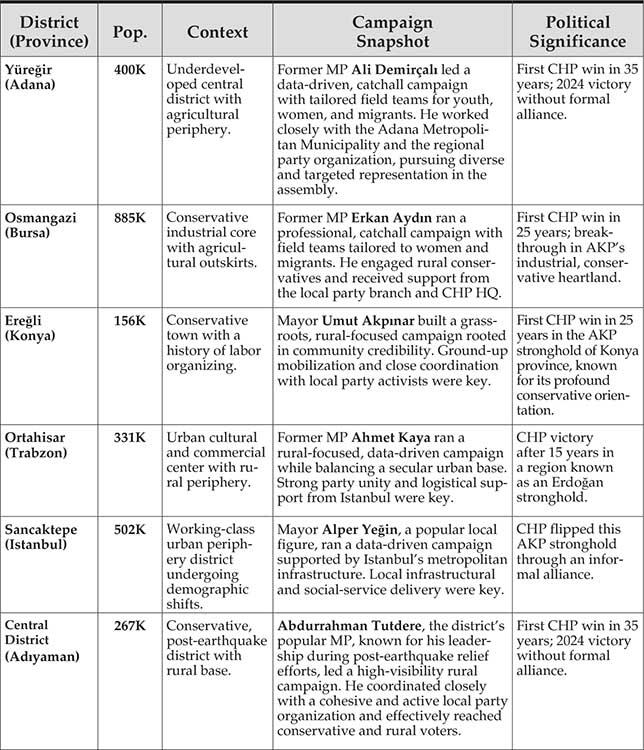
My current research examines the question of how opposition movements survive in authoritarian contexts, with a focus on recent local elections in Turkey, where conservative incumbents were defeated for the first time in decades. We found that the opposition successfully built bottom-up alliances at the local level, which may be more successful than parties trying to form coalitions at the national level. 

This is because top-down alliances, as were attempted to be formed in Turkey in 2023, tend to be fragile and lack sufficient power to win elections. Top-down efforts involve convincing leaders of ideologically opposed parties to join together, which often isn’t effective in convincing their base to join suit. 

On the other hand, bottom-up local action can be much more powerful, with alliances in municipalities formed through an intimate knowledge of how resources and power are distributed among groups. These opposition coalitions, bound together by substantive ideas and community knowledge, tend to be more persuasive. 

This research demonstrates the power of local government and how opposition can be strengthened through numerous bottom-up alliances, as opposed to a weak, top-down national approach. Still, there are difficulties in preventing authoritarian backlash as a response to oppositional successes. After the loss of many governing party candidates in Turkey recently, there has been a new wave of coercion against municipal leaders, such as the Istanbul mayor being jailed after running as a presidential candidate. Several other newly elected mayors have been in jail for months without even an indictment.

How does the increased authoritarianism in Turkey fit into the context of global democratic recession? Are these patterns of oppositional gains in local elections a sign of a more optimistic future for Turkey, or is it still in a state of democratic decline?


I believe our research suggests that the opposition is more effectively contesting the governing party; however, it is too early to say whether this could serve as a model for a broader shift. Despite being embedded in European organizations and experiencing a moment of democratization in the 2000s, Turkey has become increasingly authoritarian, becoming one of the earliest cases of modern democratic decline. Also, global influences are harming Turkey’s trajectory, such as the presence of a more undemocratic leader in the U.S.


I believe our research suggests that the opposition is more effectively contesting the governing party; however, it is too early to say whether this could serve as a model for a broader shift.
Ayça Alemdaroğlu


How do you see your research influencing policy or contributing to real-world change?


When starting research, I don’t think of writing policy as my main goal. Instead, it’s to understand big questions or add more nuance to a discussion about a phenomenon. My research today on local power dynamics and bottom-up coalition building continues to have real-world relevance in the battle against authoritarian regimes.

Returning to your research on Turkey and particularly the plight of the Kurdish minority, how can states mitigate the effects of ethnic fractionalism on development?


In Turkey, I think of democratization as being possible through the recognition of the cultural and political rights of the Kurds. The opening of systems to those who have been historically excluded would benefit not only democratic development but also economic development. This is because ethnically inclusive states are more prosperous, as otherwise, ethnic conflict hinders development, with national security concerns scaring off investment.

Amidst increasing authoritarianism, have situations for minorities like the Kurds worsened or improved over time?


While there have been gestures of peace with the Kurds, when those efforts fail, the Turkish government often strengthens authoritarian measures. This is exemplified by the peace negotiations from 2013 to 2015, which initially resulted in the Kurds amassing more political power. This caused the regime to fear being undermined and become more coercive toward the minority group in the long run.

Overall, improvements for the Kurds have not been linear. Peace negotiations are currently underway, though many believe them to be insincere. When looking at the regime’s other policies towards opposition, journalists, and students, it’s easy to be pessimistic. 

What gaps do you feel need to be addressed in your research field, and what do you anticipate you will study more in the future?


In the intellectual circles I have been a part of, academics tend to come from a political science background. I’m more interested in bringing in cultural and sociological perspectives, such as through discussions of social class or different ethnic groups. My research will continue to unite multi-disciplinary ideas to gain a deeper understanding of authoritarian regimes.

Could you elaborate further on your research into youth participation?


Currently, I’m working on a project comparing the U.S. and Turkey to better understand youth political behavior. In the recent elections in both countries, there was a lot of emphasis on the youth voice as a counter-authoritarian force, but this prediction did not necessarily hold true. In the US, many were persuaded by Trump’s agenda, especially young men. It’s important not to generalize too much when studying youth, as they are as diverse as the rest of the population. Still, there are notable trends among young people to monitor, like the Turkish youth’s growing secularism and how that might impact the Islamist parties’ power. 

You’ve discussed the importance of recognizing the impact of class when conducting research. How do you think politicians have capitalized on class to maintain power in Turkey, and is the opposition or current regime more supported by the working class?


The Islamist parties have been most known to garner support from lower economic groups. While the main opposition party is relearning how to succeed among the working class, it would be an overstatement to assume this shift has significantly expanded beyond the local level at this point.

President Erdogan was able to amass power by garnering support from the poor, going door-to-door and engaging in bottom-up efforts to get their votes. Now, opposition leaders appear to be learning from these strategies, leading to improved outcomes so far.


President Erdogan was able to amass power by garnering support from the poor, going door-to-door and engaging in bottom-up efforts to get their votes. Now, opposition leaders appear to be learning from these strategies, leading to improved outcomes so far.
Ayça Alemdaroğlu


Lastly, what books would you recommend for students interested in a research career in your field?


I may be expected to recommend political science books, but it is American sociologist Richard Sennett who especially influenced me early in my career. He focuses on how big social changes affect individuals. His book, The Hidden Injuries of Class, shaped my understanding of how social class is not just a reflection of an individual’s position in society, but also influences one’s sense of self. He also wrote Respect in a World of Inequality about how changes in the economy and labor market influence individuals. Sennet’s work successfully approaches issues in a humane, historical, and power-conscious way.

Read More

Ayça Alemdaroğlu leads a group of Knight-Hennessy Scholars on a tour of Turkey.
News

Traveling Turkey with Ayça Alemdaroğlu

Ayça Alemdaroğlu, associate director of Stanford's Program on Turkey, explores how national identities are created and how people voice dissent.
Traveling Turkey with Ayça Alemdaroğlu
Graphic novel
News

Studying Middle Eastern History Through Graphic Novels

A spring quarter course co-taught by CDDRL's Ayça Alemdaroğlu explored how graphic novels convey the visceral realities of living amidst political violence and conflict in a way traditional media struggle to match.
Studying Middle Eastern History Through Graphic Novels
Presidential Candidate Kemal Kilicdaroglu Holds Campaign Rally In Tekirdag
Q&As

Challenges and Opportunities in Turkey's 2023 Presidential and Parliamentary Elections

In this Q&A, Ayça Alemdaroğlu, Associate Director of the Program on Turkey at the Center on Democracy, Development and the Rule of Law, discusses the key issues and their implications for the country's future.
Challenges and Opportunities in Turkey's 2023 Presidential and Parliamentary Elections
Hero Image
Meet Our Researchers: Ayça Alemdaroğlu
All News button
1
Subtitle

Exploring how authoritarian regimes influence identity, opposition movements, and class dynamics with CDDRL Research Scholar Ayça Alemdaroğlu, Associate Director of the center's Program on Turkey.

Date Label
Subscribe to Governance