Violence
-

About the Seminar: On January 6, 2021, the U. S. Capitol was attacked as Congress certified the presidential election results. On the anniversary of this historic event, join Hakeem Jefferson and Didi Kuo for a discussion of January 6th’s impact on American politics, violence and election legitimacy, and the ongoing crisis of democracy.


About the Speaker: 

Image
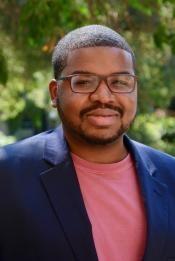
Hakeem Jefferson
Hakeem Jefferson is an assistant professor of political science at Stanford University where he also is a faculty affiliate with the Center for Comparative Studies in Race and Ethnicity and the Stanford Center for American Democracy. He received his PhD in political science from the University of Michigan and a Bachelor of Arts degree in political science and African American Studies from the University of South Carolina.

His research focuses primarily on the role identity plays in structuring political attitudes and behaviors in the U.S. He is especially interested in understanding how stigma shapes the politics of Black Americans, particularly as it relates to group members’ support for racialized punitive social policies. In other research projects, Hakeem examines the psychological and social roots of the racial divide in Americans’ reactions to officer-involved shootings and work to evaluate the meaningfulness of key political concepts, like ideological identification, among Black Americans.

Hakeem’s dissertation, "Policing Norms: Punishment and the Politics of Respectability Among Black Americans," was a co-winner of the 2020 Best Dissertation Award from the Political Psychology Section of the American Political Science Association.

Related: 

Statement from CDDRL Leadership on the Events of Jan. 6

January 6 and the Crisis of American Democracy

Online, via Zoom

0
Assistant Professor, Political Science
hakeem_jefferson_2022.jpg

Hakeem Jefferson is an assistant professor of political science at Stanford University where he is also a faculty affiliate with the Center for Comparative Studies in Race and Ethnicity and the Stanford Center for American Democracy. During the 2021-22 academic year he was also the SAGE Sara Miller McCune Fellow at the Center for Advanced Study in the Behavioral Sciences.

Hakeem’s work focuses primarily on the role identity plays in structuring political attitudes and behaviors in the U.S. His in-progress book project builds on his award-winning dissertation to consider how Black Americans come to support punitive social policies that target members of their racial group.

In other projects, Hakeem examines the causes of the racial divide in Americans’ reactions to officer-involved shootings; works to evaluate the meaningfulness of key political concepts, like ideological identification among Black Americans; and considers how white Americans navigate an identity that many within the group perceive as increasingly stigmatized. In these and other projects, Hakeem sets out to showcase and clarify the important and complex ways that identity matters across all domains of American life.

A public-facing, justice-oriented scholar, Hakeem is an academic contributor at FiveThirtyEight and his writings and commentary have been featured in places like the New York Times, The Washington Post, NPR, and other major outlets. He is also active on Twitter, and you can follow him @hakeemjefferson.

CDDRL Affiliated Faculty
CV
Assistant Professor of Political Science at Stanford University

Encina Hall, C150
616 Jane Stanford Way
Stanford, CA 94305

0
Center Fellow, Freeman Spogli Institute for International Studies
didi_kuo_2023.jpg

Didi Kuo is a Center Fellow at the Freeman Spogli Institute for International Studies (FSI) at Stanford University. She is a scholar of comparative politics with a focus on democratization, corruption and clientelism, political parties and institutions, and political reform. She is the author of The Great Retreat: How Political Parties Should Behave and Why They Don’t (Oxford University Press) and Clientelism, Capitalism, and Democracy: the rise of programmatic politics in the United States and Britain (Cambridge University Press, 2018).

She has been at Stanford since 2013 as the manager of the Program on American Democracy in Comparative Perspective and is co-director of the Fisher Family Honors Program at CDDRL. She was an Eric and Wendy Schmidt Fellow at New America and is a non-resident fellow with the Carnegie Endowment for International Peace. She received a PhD in political science from Harvard University, an MSc in Economic and Social History from Oxford University, where she studied as a Marshall Scholar, and a BA from Emory University.

Date Label
Seminars
Paragraphs

How can societies restrain their coercive institutions and transition to a more humane criminal justice system? We argue that two main factors explain why torture can persist as a generalized practice even in democratic societies: weak procedural protections and the militarization of policing, which introduces strategies, equipment, and mentality that treats criminal suspects as though they were enemies in wartime. Using a large survey of the Mexican prison population and leveraging the date and place of arrest, this paper provides causal evidence about how these two explanatory variables shape police brutality. Our paper offers a grim picture of the survival of authoritarian policing practices in democracies. It also provides novel evidence of the extent to which the abolition of inquisitorial criminal justice institutions—a remnant of colonial legacies and a common trend in the region—has worked to restrain police brutality.

All Publications button
1
Publication Type
Journal Articles
Publication Date
Journal Publisher
American Political Science Review
Authors
Beatriz Magaloni
Number
Issue 4
All Publications button
1
Publication Type
Journal Articles
Publication Date
Subtitle
This essay examines “professions of friendship”: efforts by populations who are targeted as enemies of the state to proclaim their historical fidelity to the state's foundation and preservation. Such declarations often reinscribe a rigid and often violently statist narrative of politics. The essay argues that the retrenchment of this narrative, when reissued in the name of friendship, does not simply close down political options. It seeks to embolden sentiments of moral obligation across instituted lines of enmity. These solicitations of friendship are burdened by a particular historical task: to envision a past and a future of social cohabitation in a present where its possibilities have been violently undermined and morally devalued. The essay centers on two instances that bookend the past century: the first was delivered in Istanbul by an organization speaking on behalf of Armenians living in territories claimed by the Turkish nationalist movement in 1922; the second was issued by a Kurdish Peace Mother in Diyarbakır, as a plea for an end to state violence in late 2015.
Journal Publisher
Comparative Studies of South Asia, Africa and the Middle East
Authors
Number
2
1
Postdoctoral Fellow at Stanford Impact Labs (SIL), affiliated with PovGov at CDDRL, 2021-22
External Collaborator, PovGov
Carlos Schmidt-Padilla

I received my PhD in Political Science from the University of California, Berkeley, where I was also a Research Associate at the Center on the Politics of Development. Broadly, my research interests encompass the political economy of development of Latin America and of sub-Saharan Africa. In particular, I study questions concerning crime, human capital, immigration, and policing in developing countries. I am from San Salvador, El Salvador.

News Type
News
Date
Paragraphs

The faculty and staff of Stanford's Center on Democracy, Development and the Rule of Law, as well as the undersigned alumni of the Draper Hills Summer Fellows Program, wish to protest the completely unjustified arrest and pending trial of the researcher Tatiana Kouzina on June 28, 2021 by Belarusian authorities. Ms. Kouzina now faces unspecified criminal charges that could lead to her extended detention.

Following a fraudulent presidential election in August 2020, there have been ongoing peaceful protests and demonstrations in opposition of the Belarusian government and President Alexander Lukashenko. During this time, the government has unjustly arrested thousands of activists and protesters. Waves of repression reached politicians, civil society organizations, media, the research community, and ordinary citizens. The arrest of Ms. Kouzina is another in a series of troubling steps that the Belarusian government has taken against its people. We call for the release of Ms. Kouzina and other political prisoners currently being held in Belarus.

Ms. Kouzina is a highly respected Belarusian expert who was the co-founder, teacher, and researcher at the School of Young Managers in Public Administration (SYMPA) and the Belarusian Institute for Public Administration Reform and Transformation (BIPART). In this capacity, she conducted substantial research in the field and contributed to numerous policy and research documents, including as part of SYMPA's participation in EU-STRAT, an international research project implemented by a consortium of the leading European universities (including the Free University of Berlin and Leiden University, Netherlands) and think tanks in 2016-2019. As a long-time recognized member of the Belarusian research community, Ms. Kouzina has contributed immensely to its development and sustainability. From 2010-2015, she was the Executive Director of the Belarusian Institute for Strategic Studies (BISS) and has cooperated with the Belarus Research Council (BRC), other Belarusian think tanks, and civil society organizations throughout her career.

Ms. Kouzina's arrest is a shocking example of the current Belarusian regime's repressive policies that have attacked other members of the Belarusian research and expert community. As researchers ourselves and members of the broader global democratic community, we strongly protest this arbitrary arrest and demand that Ms. Kouzina be released immediately.

Signed,

Francis Fukuyama, Mosbacher Director of the Center on Democracy, Development and the Rule of Law, Stanford University, USA

Michael McFaul, Director, Freeman Spogli Institute for International Studies, Stanford University, USA

Olga Stuzhinskaya, international affairs and development expert, founder and former director of the Office for a Democratic Belarus in Brussels, CDDRL alumni 2006

Victor Liakh, East Europe Foundation, Ukraine

Hoi Trịnh, Board Member, VOICE, USA

Anna Dobrovolskaya, Memorial Human Rights Center, Россия

Mahdi Al Hajat, free journalist, Iraq

Haykuhi Harutyunyan, Corruption prevention commission, Armenia

Ruby Tetteh, Deputy Director, MOTI, Ghana

Denis Volkov, CDDRL alumni, Russia

Dmytro Potekhin, CEO, Factology.Systems, Ukraine

Abbas Milani, Hamid and Christina Moghadam Director of Iranian Studies, Stanford University, USA

Sasha Jason, Program Manager, Center on Democracy, Development and the Rule of Law, Stanford University, USA

Professor Donald Emmerson, Senior Fellow Emeritus, Stanford University, USA

Jamie O'Connell, Lecturer in Residence, Stanford Law School, and CDDRL affiliated faculty, USA

Belinda Byrne, Program Administrator, Stanford University, USA

Katherine Welsh, Administrative Associate at the Center on Democracy, Development and the Rule of Law, Stanford University, USA

Amr Hamzawy, Senior research scholar, Stanford University, USA

Erik Jensen, Professor of the Practice of Law, Director, Rule of Law Program, Stanford Law School, USA

Anna Grzymala-Busse, Michelle and Kevin Douglas Professor of International Studies, Stanford University, USA

Marcel Fafchamps, Senior Fellow, CDDRL, Stanford University, USA

Yusmadi Yusoff, People's Justice Party (KEADILAN), Malaysia

Olga Aivazovska, Head of Board, Civil Network OPORA, Ukraine

Befekadu Hailu, Center for Advancement of Rights and Democracy (CARD), Ethiopia

Varvara Pakhomenko, Consultant, Russia

Olena Sotnyk, Human rights defender, Ukraine

Elsa Marie DSilva, Red Dot Foundation, India

Laila Kiki, The Syria Campaign, Syria

Alla Kos, Austria

Nino Evgenidze, EPRC, Georgia

James D. Fearon, Professor, Stanford University, USA

Nino Chichua, Georgia Healthcare Group, Georgia

Janaína Homerin, Draper Hills Summer Fellow, Brazil

David Smolansky, Mayor in Exile, Venezuela

Hadeel AlQaq, Jordan

Eka Kemularia, Director, Green Line, Georgia

Yuriy Bugay, Independent consultant, NGO activist, Ukraine

Lauren Weitzman, Program Manager CDDRL, Stanford University, USA

Steve Luby, Professor of Medicine, Stanford University, USA

Hero Image
Tatiana Kouzina
Tatiana Kouzina
All News button
1
Subtitle

The faculty and staff of Stanford's Center on Democracy, Development and the Rule of Law, as well as the undersigned alumni of the Draper Hills Summer Fellows Program, wish to protest the completely unjustified arrest and pending trial of the researcher Tatiana Kouzina on June 28 by Belarusian authorities.

Paragraphs

This study is the result of over four years of active collaboration between the Poverty, Violence and Governance Lab (PovGov) and the Rio-based NGO Agency for Youth Networks (hereafter, Agency). What began in 2012 as an informal conversation between PovGov researchers and the program’s founder and director, Marcus Faustini, led to a solid partnership that has produced not only this research but also opportunities for engagement through events both in California and in Rio de Janeiro. A central objective of PovGov’s research agenda is to assess and disseminate knowledge about initiatives and policies seeking to benefit socially vulnerable populations throughout Latin America. Agency’s target population – namely, young people from the favelas and peripheries of Rio de Janeiro who often find themselves unemployed, out of school, and exposed to high levels of violence – being of great relevance to PovGov’s work. 

Download

.

All Publications button
1
Publication Type
Working Papers
Publication Date
Authors
Beatriz Magaloni
Veriene Melo
Paragraphs

In this paper we examine the effects of police body-worn cameras through a randomized control trial implemented in Rio de Janeiro. The paper explores the use of this technology by police officers in charge of tactical operations and officers performing “proximity” patrolling in the largest favela of Brazil, Rocinha. The study reveals that institutional and administrative limitations at Military Police of the State of Rio de Janeiro (PMERJ) were associated with limited use of the cameras –basically officers refusing to turn the cameras on. Despite low footage, results reveal that when a police officer was randomly assigned to a BWC, this technology had a significant effect reducing the number of gunshots fired by police officers. The reduction on police lethal force is particularly strong among GTTPs, which are tactical units assigned to operations that commonly involve armed confrontations. The use of BWC among these police officers reduced their use of ammunition by more than 45%. Moreover, we find that police officers assigned to a BWC had significantly lower number of activity reports or occurrences (BOPMs). The inactivity effect is mostly driven by GPP units, which have patrolling functions and more engagement with the community. These units reduce their reported activities almost by half. 

Download

.

All Publications button
1
Publication Type
Working Papers
Publication Date
Authors
Beatriz Magaloni
Paragraphs

State interventions against drug trafficking organizations (DTOs) sometimes work to improve security, but often exacerbate violence. To understand why, this paper offers a theory about different social order dynamics among five types of criminal regimes – Insurgent, Bandit, Symbiotic, Predatory, and Anarchic. These differ according to whether criminal groups confront or collude with state actors; predate or cooperate with the community; and hold a monopoly or contest territory with rival DTOs. Police interventions in these criminal orders pose different challenges and are associated with markedly different local security outcomes. Evidence for the theory is provided by the use a multi-method research design combining quasi-experimental statistical analyses, extensive qualitative research and a large N survey in the context of Rio de Janeiro’s “Pacifying Police Units” (UPPs), which sought to reclaim control of the slums from organized criminal groups.

Download the paper

.

All Publications button
1
Publication Type
Journal Articles
Publication Date
Authors
Beatriz Magaloni
Paragraphs

What works in preventing and reducing violence among youth? This report draws on the global evidence base of evaluations of existing interventions designed to reduce or prevent violence and identifies those with the greatest evidence of effectiveness. We find six types of interventions for which there is strong evidence of effectiveness in preventing at-risk individuals and offenders from engaging in criminal and violent behavior—cognitive behavioral therapy, multidimensional therapy, drug courts and drug addiction treatment, focused deterrence, controls on the sale and abuse of alcohol, and hot spots policing. A much broader range of interventions have shown less conclusive proof of effectiveness—either because they have not been rigorously evaluated or because evaluations have yielded mixed results. In these cases, we identify the mechanisms that may lie behind potential success and explore how these might be extracted to promote innovative pilots in the Mexican context.

All Publications button
1
Publication Type
White Papers
Publication Date
Authors
Beatriz Magaloni
Paragraphs

Why do drug trafficking organizations (DTOs) sometimes prey on the communities in which they operate but sometimes provide assistance to these communities? What explains their strategies of extortion and co-optation toward civil society? Using new survey data from Mexico, including list experiments to elicit responses about potentially illegal behavior, this article measures the prevalence of extortion and assistance among DTOs. In support of our theory, these data show that territorial contestation among rival organizations produces more extortion and, in contrast, DTOs provide more assistance when they have monopoly control over a turf. The article uncovers other factors that also shape DTOs’ strategies toward the population, including the degree of collaboration with the state, leadership stability and DTO organization, and the value and logistics of the local criminal enterprise.

Read here.

All Publications button
1
Publication Type
Journal Articles
Publication Date
Authors
Beatriz Magaloni
Alberto Díaz-Cayeros
Subscribe to Violence