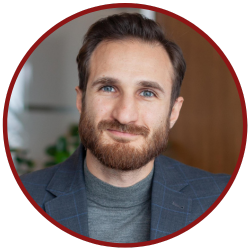
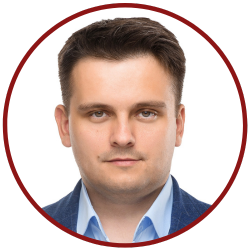
Torbjörn Becker has been the Director of the Stockholm Institute of Transition Economics (SITE) at the Stockholm School of Economics in Sweden since 2006 and is a board member of several economics research institutes in Eastern Europe, including the Kyiv School of Economics. He is the chair and one of the founders of Friends of KSE, a Swedish charity that was set up in the spring of 2022 to support students and academics from Ukraine. He was recently appointed by the Swedish government to chair the Expert Group for Aid Studies (EBA) that evaluates and analyzes Sweden's international development assistance. He is a board member of the Swedish Institute of International Affairs. He also served on the board of the Swedish Development Cooperation Agency (Sida) for ten years. Prior to this, he worked for nine years at the International Monetary Fund (IMF), where his work focused on international macro, economic crises and issues related to the international financial system. He holds a Ph.D. from the Stockholm School of Economics and has been published in top academic journals and has contributed to several books and policy reports focusing on Russia and Eastern Europe. Recently he has coauthored a number of papers and books on Ukraine, including, The EU Cannot Afford Not to Support Ukraine Financially, Macroeconomic Policies for Wartime Ukraine; A Blueprint for the Reconstruction of Ukraine; Financing Ukraine’s Victory—Why and how; and coauthored a chapter on anti-corruption policies in the book Rebuilding Ukraine: Principles and policies.
Yulia Bezvershenko is a Ukrainian policy-maker who works on science and innovation (S&I) policy with a specific focus on institution building, promoting science, and creating a knowledge-based economy and society in Ukraine. From 2020-2021, she served as a Director-General of the Directorate for Science and Innovation at the Ministry of Education and Science of Ukraine. It's a unit responsible for national-level S&I policy development, implementation of S&I programs, and international S&I cooperation.
As a scientist and activist, Bezvershenko has been deeply involved in the Ukrainian S&I reform since 2014, elaborating on legislation and creating institutions. She has been a co-founder and Vice-President of the NGO Unia Scientifica and the Young Scientists Council of the National Academy of Science of Ukraine.
Bezvershenko holds a Master of Public Policy and Governance from the Kyiv School of Economics, a Ph.D. in Theoretical Physics from the Bogolyubov Institute for Theoretical Physics, and an MSc in Physics from the National University Kyiv-Mohyla Academy.
Eva Busza is the Regional Director for Eurasia at NDI. Previous appointments include Vice President, Policy and Sector Collaboration at the Council of Ontario Universities, Vice President, Research and Programs at the Asia Pacific Foundation of Canada and Director of Policy and Strategic Planning for UN Secretary-General Ban Ki-moon. She started her professional career at NDI working on global democracy and governance programs. She has over twenty years of experience working with government, business, and civil society on a range of social, economic, and security programs globally. Ms. Busza holds a Ph.D. from Stanford University and a Master’s degree from the University of British Columbia. In addition to teaching in the Department of Government at the College of William and Mary, she has been a research fellow at several universities and institutes, including the Harriman Institute at Columbia University, George Washington University, the Woodrow Wilson International Center for Scholars, the Brookings Institution, and the Center for International Security and Arms Control at Stanford University.
Tatyana Deryugina is an Associate Professor of Finance at the University of Illinois and a co-founder of Economists for Ukraine. Her research, which broadly falls in the area of environmental and energy economics, has been published in leading economics journals and has received widespread press coverage, including by The Economist, The Wall Street Journal, The Washington Post, Bloomberg, and The Atlantic. Professor Deryugina also serves on the editorial boards of three economics journals and is a affiliated with several top economics organizations, including the National Bureau of Economic Research, the Institute for the Study of Labor (IZA), the E2e Project, and the CESifo Research Network. She holds a PhD in Economics from MIT, a BA in Applied Mathematics from UC Berkeley, and a BS in Environmental Economics and Policy from UC Berkeley. She was born in Kyiv, Ukraine.
Dr. Iryna Dronova is an Associate Professor jointly appointed in the Departments of Landscape Architecture & Environmental Planning (College of Environmental Design) and Environmental Science, Policy & Management (College of Natural Resources) at the University of California, Berkeley. Her work brings together environmental sciences, geography, and remote sensing to investigate multi-scale dynamics of landscapes and improve the understanding of the impacts of policy and planning on ecosystems and human well-being. Major research themes include nature-based climate solutions in cities to promote environmental benefits and heat mitigation, applications of earth observation technology and artificial intelligence to develop indicators of ecological and societal resilience to environmental risk factors, and monitoring changes in critical ecosystem services and their responses to ecological restoration and adaptive management. Current work also applies these topics and tools to support the monitoring of Ukraine’s land use and natural resources in response to global change drivers, policies, and impacts of the current Russian war, and to help inform collaborative research and future strategies for recovery and rebuilding.
Barry Eichengreen is George C. Pardee and Helen N. Pardee Chair and Distinguished Professor of Economics and Professor of Political Science at the University of California, Berkeley. He is a Research Associate of the National Bureau of Economic Research and Research Fellow of the Centre for Economic Policy Research. In 1997-98 he was Senior Policy Advisor at the International Monetary Fund.
Professor Eichengreen is a fellow of the American Academy of Arts and Sciences (class of 1997). He is a distinguished fellow of the American Economic Association (class of 2022), a corresponding fellow of the British Academy (class of 2022), and a Life Fellow of the Cliometric Society (class of 2013). He has held Guggenheim and Fulbright Fellowships and been a fellow of the Center for Advanced Study in the Behavioral Sciences (Palo Alto) and the Institute for Advanced Study (Berlin). For 15 years from 2004 he served as convener of the Bellagio Group of academics and officials. He is a regular monthly columnist for Project Syndicate.
Professor Eichengreen has been awarded the Economic History Association's Jonathan R.T. Hughes Prize for Excellence in Teaching and the University of California at Berkeley Social Science Division's Distinguished Teaching Award. He is the recipient of a doctor honoris causa from the American University in Paris, and was the 2010 recipient of the Schumpeter Prize from the International Schumpeter Society and the 2022 recipient of the Nessim Habif Prize for Contributions to Science and Industry. He was named one of Foreign Policy Magazine's 100 Leading Global Thinkers in 2011. He is a past president of the Economic History Association (2010-11).
His most recent book is In Defense of Public Debt with Asmaa El-Ganainy, Rui Esteves and Kris Mitchener (Oxford University Press 2021).
Anastassia Fedyk is an Assistant Professor of Finance at the Haas School of Business at UC Berkeley. Her research lies at the intersection of behavioral finance and innovation, with a specific emphasis on using big data techniques to understand firm news and valuations. She studies how information from financial news and individual employment records influences asset prices and explores the impact of firms’ investments in technology and skilled human capital. Anastassia holds a Ph.D. in Business Economics from Harvard University and a B.A. in Mathematics with honors from Princeton University. Prior to pursuing her academic career, Anastassia Fedyk was a researcher and portfolio manager at Goldman Sachs Asset Management.
Anastassia Fedyk is also a co-founder of Economists for Ukraine, a global collective leveraging economic expertise and technology to fight off Russia's invasion and increase Ukraine's resilience. Economists for Ukraine work to enhance Ukraine's long-term sustainability and economic resilience through digital aid platforms, resilient infrastructure, effective frameworks for post-war reconstruction, and funding science.
Francis Fukuyama is the Olivier Nomellini Senior Fellow at the Freeman Spogli Institute for International Studies (FSI), and Director of the Ford Dorsey Master's in International Policy. He is also a professor (by courtesy) of Political Science. From 2015 to 2021, he served as the Mosbacher Director of FSI's Center on Democracy, Development, and the Rule of Law (CDDRL).
Dr. Fukuyama has written widely on issues in development and international politics. His 1992 book, The End of History and the Last Man, has appeared in over twenty foreign editions. His book, Identity: The Demand for Dignity and the Politics of Resentment, was published in Sept. 2018. His most recent book, Liberalism and Its Discontents, was published in the spring of 2022.
Francis Fukuyama received his B.A. from Cornell University in classics, and his Ph.D. from Harvard in Political Science. He was a member of the Political Science Department of the RAND Corporation, and of the Policy Planning Staff of the US Department of State. From 1996-2000 he was Omer L. and Nancy Hirst Professor of Public Policy at the School of Public Policy at George Mason University, and from 2001-2010 he was Bernard L. Schwartz Professor of International Political Economy at the Paul H. Nitze School of Advanced International Studies, Johns Hopkins University. He served as a member of the President’s Council on Bioethics from 2001-2004.
Dr. Fukuyama holds honorary doctorates from Connecticut College, Doane College, Doshisha University (Japan), Kansai University (Japan), and Aarhus University (Denmark), and the Pardee Rand Graduate School. He is a non-resident fellow at the Carnegie Endowment for International Peace and at the Center for Global Development. He is a member of the Board of Governors of the Pardee Rand Graduate School and the Volcker Alliance. He is a member of the American Political Science Association and the Council on Foreign Relations. He is married to Laura Holmgren and has three children.
Luis Garicano is a Spanish academic economist who was a Member of the European Parliament (MEP) from 2019 to August 2022. While in Parliament he was a vice president of the Renew Europe Group in Parliament and a vice president of the European political party Alliance of Liberals and Democrats for Europe (ALDE Party). He was a co-drafter of the legislation for the European Recovery and Reconstruction Fund and led the efforts of the centrist group of the European Parliament (RenewEurope) on Russian sanctions and aid to Ukraine- he travelled with this purpose to Lviv and Kyiv twice on the first 2 months of the war. He has recently co-written (with Beatrice Weder di Mauro and Dominc Rohner) a CEPR book on the “Economic Consequences of the Ukraine War”
Garicano developed an extensive academic career, first at the University of Chicago, where he attained the rank of full professor in Economics and Strategy, and then at the London School of Economics, where he has been Full Professor in Economics and Strategy and head of the Managerial Economics and Strategy Group; in addition, he has been visiting professor at other institutions, among others MIT, Columbia Business School and the London Business School. Likewise, he has held positions as an economist of the European Commission and McKinsey & Company, where he has also held a named chair with the FEDEA foundation.
His research has appeared in the leading international academic journals in economics, including The Quarterly Journal of Economics, The Journal of Political Economy, The American Economic Review and The Review of Economic Studies.
Garicano’s research focuses on the impact of organization and technology on aggregate economic variables like the wage distribution, productivity, or economic growth. He has studied why organizations and institutions fail and how to better design them. He has also studied how specific digital technologies are transforming the economy, such as for instance business to business electronic commerce, portable computing, enterprise resource planning or blockchain. His research has shown that it is the interaction between technology and its implementation, through organizational change, that really matters to induce productivity and change. His more recent research has studied how to build better institutions in Europe to avoid new economic crisis in the Eurozone.
Luis Garicano holds bachelor’s degrees in Economics and Law from Universidad de Valladolid, a Master’s degree in European Economic Studies from the College of Europe in Bruges, and a Master’s degree and a Ph.D. in Economics from the University of Chicago. He has contributed as a columnist to international and Spanish media including Financial Times, Wall Street Journal, El País and El Mundo.
Yuriy Gorodnichenko, a native of Ukraine, is a Quantedge Presidential professor at the Department of Economics, University of California – Berkeley. He received his B.A. and MA at EERC/Kyiv-Mohyla Academy (Kyiv, Ukraine) and his Ph.D. at the University of Michigan. A significant part of his research has been about monetary policy (effects, optimal design, inflation targeting), fiscal policy (countercyclical policy, government spending multipliers), taxation (tax evasion, inequality), economic growth (long-run determinants, globalization, innovation, financial frictions), and business cycles. Yuriy serves on many editorial boards, including Journal of Monetary Economics and VoxUkraine (http://voxukraine.org/). He is the leader of CEPR's Ukraine Initiative. Yuriy is a prolific researcher. His work was published in leading economics journals and was cited in policy discussions and media. Yuriy has received numerous awards for his research.
Anna Grzymala-Busse is a professor in the Department of Political Science, the Michelle and Kevin Douglas Professor of International Studies, senior fellow at the Freeman Spogli Institute for International Studies and the director of The Europe Center. Her research interests include political parties, state development and transformation, informal political institutions, religion and politics, and post-communist politics.
In her first book, Redeeming the Communist Past, she examined the paradox of the communist successor parties in East Central Europe: incompetent as authoritarian rulers of the communist party-state, several then succeeded as democratic competitors after the collapse of these communist regimes in 1989.
Rebuilding Leviathan, her second book project, investigated the role of political parties and party competition in the reconstruction of the post-communist state. Unless checked by a robust competition, democratic governing parties simultaneously rebuilt the state and ensured their own survival by building in enormous discretion into new state institutions.
Anna's most recent book project, Nations Under God, examines why some churches have been able to wield enormous policy influence. Others have failed to do so, even in very religious countries. Where religious and national identities have historically fused, churches gained great moral authority, and subsequently covert and direct access to state institutions. It was this institutional access, rather than either partisan coalitions or electoral mobilization, that allowed some churches to become so powerful.
Other areas of interest include informal institutions, the impact of European Union membership on politics in newer member countries, and the role of temporality and causal mechanisms in social science explanations.
Denis Gutenko most recently served as the head of the State Fiscal Service of Ukraine. Holding this position from 2019-20 he was responsible for dismantling the large-scale State Fiscal Service into three accountable units: Tax Administration, Customs and Tax police.
Before joining the State Fiscal Service, Gutenko had worked in the Ministry of Economy since 2015. Gutenko promoted deregulation and improvement of business climate agenda. He initiated and successfully lobbied Parliament to adopt laws on the liberalization of international trade and currency, the transparency of scrap metal exports, and the reform of a corrupt ecological tax policy. Gutenko also led the removal of administrative barriers and outdated currency restrictions, resulting in the increased flow of services and payments for Ukrainian freelancers and small and medium enterprises.
Prior to this Gutenko began his career in the private sector as a banker, auditor and agribusiness manager, experiences that sparked his interest in improving the Ukrainian state bureaucracy and fighting widespread corruption.
Gutenko’s focus as a fellow at CDDRL at Stanford in 2021-2022 was on good governance and public administration reform, both of which remain significant opportunities and challenges for Ukraine.
James Hodson is CEO of the AI for Good Foundation and is responsible for building economic and community resilience through technology. Since 2015, the AI for Good Foundation has worked with national and municipal governments, the UN, OECD, and many others to design, develop, and deploy tech-enabled policies/solutions for social, economic, and institutional transformation. AI for Good works extensively in Ukraine with more than 40 staff on the ground and strategic partnerships with Ukraine's Presidential Administration, Ministry for Digital Transformation, Ministry of Culture, and every regional government, providing sanctions recommendations, infrastructure resilience, deployed technology expertise, and real-time aid intermediation for regions covering more than 8M civilians. Hodson completed doctoral studies in Artificial Intelligence as a Marie Curie Fellow at the Jozef Stefan Institute in Slovenia, holds undergraduate degrees in Computer Science and Philosophy from Princeton University, and previously founded and led the AI Research Group at Bloomberg in New York from 2012-2015. His academic work spans complex network analysis, natural language processing, labour economics, corporate finance, and accounting, as well as holding multiple AI patents and being an active angel investor in the "tech for good" space.
Eric Hontz leads CIPE’s Center for Accountable Investment which uses the lens of Corrosive and Constructive Capital to examine the impact of investment on democratic and market institutions. The CAI’s work sits at the confluence of corporate governance, the rule of law, and the business and investment climate, with patterns of trade and investment worldwide. Hontz is active in developing the capacity of business organizations to advocate on behalf of member interests and helping these organizations to foster a culture of inclusive business growth. In prior roles, Hontz was an associate at a law firm and a vice president at an investment bank, where he reviewed complex alternative investment products. He is frequently featured in media as an expert on economic reform and policy in Ukraine and other former Soviet states.
Hontz holds Bachelor’s degrees in Russian and Political Science from the University of Montana, a JD/MBA from the University of Maryland, and is licensed to practice law in Maryland. Hontz also spent time studying at the Russian State University for Humanities, holds a certificate from the Institute Organization Management for nonprofit management from the U.S. Chamber of Commerce, and served in the Peace Corps in Severodonetsk, Lugansk Oblast, Ukraine. Hontz sits on the board of the University of Maryland School of Law Alumni Association and is an active volunteer in various roles in Baltimore’s civil society organizations.
Erik Jensen holds joint appointments at Stanford Law School and Stanford’s Center on Democracy, Development and the Rule of Law. He is Lecturer in Law, Director of the Rule of Law Program at Stanford Law School, an Affiliated Core Faculty at Stanford’s Center on Democracy, Development and the Rule of Law, and Senior Advisor for Governance and Law at The Asia Foundation. Jensen began his international career as a Fulbright Scholar. He has taught and practiced in the field of law and development for 35 years and has carried out fieldwork in approximately 40 developing countries. He lived in Asia for 14 years. He has led or advised research teams on governance and the rule of law at the World Bank, the Asian Development Bank and the African Development Bank. Among his numerous publications, Jensen co-edited with Thomas Heller Beyond Common Knowledge: Empirical Approaches to the Rule of Law (Stanford University Press: 2003). At Stanford, he teaches courses related to state building, development, global poverty and the rule of law. Jensen’s scholarship and fieldwork focuses on bridging theory and practice, and examines connections between law, economy, politics and society. Much of his teaching focuses on experiential learning. In recent years, he has committed considerable effort as faculty director to three student driven projects: the Afghanistan Legal Education Project (ALEP) which started and has developed a law degree-granting programs at the American University of Afghanistan (AUAF), an institution where he also sits on the Board of Trustees; the Iraq Legal Education Initiative at the American University of Iraq in Sulaimani (AUIS); and the Rwanda Law and Development Project at the University of Rwanda. He has also directed projects in Bhutan, Cambodia and Timor Leste. With Paul Brest, he is co-leading the Rule of Non-Law Project, a research project launched in 2015 and funded by the Global Development and Poverty Fund at the Stanford King Center on Global Development. The project examines the use of various work-arounds to the formal legal system by economic actors in developing countries. Eight law faculty members as well as scholars at the Freeman Spogli Institute are participating in the Rule of Non-Law Project.
Marianna Kudlyak is a macroeconomist with research interests in macroeconomics, labor economics, and consumer finance. Dr. Kudlyak works as a research advisor at the Federal Reserve Bank of San Francisco; previously, she worked as an economist at the Federal Reserve Bank of Richmond. She is Visiting Fellow at the Hoover Institution at Stanford University, Research Fellow at the Centre for Economic Policy Research (CEPR) Monetary Economics and Fluctuations Programme, Research Fellow at the Institute of Labor Economics (IZA), and Senior Research Fellow at the International Center for Economic Analysis (ICEA). She earned a PhD in Economics from the University of Rochester under the advisorship of Professor Mark Bils.
Dr. Kudlyak has conducted research on unemployment, non-employment, wages, online job search, mortgage default, household borrowing, and inequality. She has published numerous articles in academic journals and Federal Reserve publications. Dr. Kudlyak is ranked in the top 100 of female economists worldwide (over the last ten years of publications) by IDEAS/RePEc.
Michael McFaul is Director at the Freeman Spogli Institute for International Studies, the Ken Olivier and Angela Nomellini Professor of International Studies in the Department of Political Science, and the Peter and Helen Bing Senior Fellow at the Hoover Institution. He joined the Stanford faculty in 1995.
Dr. McFaul also is an International Affairs Analyst for NBC News and a columnist for The Washington Post. He served for five years in the Obama administration, first as Special Assistant to the President and Senior Director for Russian and Eurasian Affairs at the National Security Council at the White House (2009-2012), and then as U.S. Ambassador to the Russian Federation (2012-2014).
He has authored several books, most recently the New York Times bestseller From Cold War to Hot Peace: An American Ambassador in Putin’s Russia. Earlier books include Advancing Democracy Abroad: Why We Should, How We Can; Transitions To Democracy: A Comparative Perspective (eds. with Kathryn Stoner); Power and Purpose: American Policy toward Russia after the Cold War (with James Goldgeier); and Russia’s Unfinished Revolution: Political Change from Gorbachev to Putin.
His current research interests include American foreign policy, great power relations, and the relationship between democracy and development. Dr. McFaul was born and raised in Montana. He received his B.A. in International Relations and Slavic Languages and his M.A. in Soviet and East European Studies from Stanford University in 1986. As a Rhodes Scholar, he completed his D. Phil. in International Relations at Oxford University in 1991. He is currently writing a book on great power relations in the 21st century.
Erin Elizabeth McKee serves as the Assistant Administrator in the Bureau for Europe and Eurasia (E&E) at USAID.
Prior to joining the Bureau for Europe and Eurasia, Assistant Administrator McKee served as the United States Ambassador to the Independent State of Papua New Guinea, to the Solomon Islands, and to the Republic of Vanuatu from 2019 to 2022. Prior to her ambassadorial appointment, she served as the Deputy Chief of Mission at U.S. Embassy Jakarta, and Mission Director for USAID/Indonesia and USAID/ASEAN, also in Jakarta.
Assistant Administrator McKee is a member of the Senior Foreign Service, with the rank of Career Minister, and brings a wealth of foreign policy and development experience to her position. Prior to her tour in Indonesia, Assistant Administrator McKee served as the Senior Deputy Assistant to the Administrator for the Human Capital and Talent Management Office (HCTM). She also served as the Senior Deputy Assistant Administrator for the Bureau of Policy, Planning and Learning (PPL). Preceding her assignments in Washington, D.C., Assistant Administrator McKee was the USAID Regional Mission Director for Central Asia. There she was responsible for direct management of USAID’s programs in Kazakhstan, Kyrgyzstan, Tajikistan, Turkmenistan, and Uzbekistan. Before her assignment in Central Asia, Assistant Administrator McKee was the supervisory contracting officer at USAID’s missions in Iraq, South America (covering Peru, Bolivia, Colombia, Ecuador, Paraguay and Brazil), and West Bank-Gaza. From 1995 to 1999 she served as a private enterprise officer, then as the chief of the economic growth office in USAID/Russia. Assistant Administrator McKee was recruited as a Foreign Service Officer in 1995 from the private sector.
Before her U.S. government career, Assistant Administrator McKee served as the general manager and then Executive Director for Capital Investment Group’s (CIG) Russia operations, and earlier for Morrison Knudsen, Inc.’s international mining division throughout the former Soviet Union. She holds a bachelor’s degree from the University of California, and a master’s degree from the University of Washington. She speaks Russian, Spanish, and Bahasa Indonesia.
Roger Myerson is the David L. Pearson Distinguished Service Professor of Global Conflict Studies in the Harris School of Public Policy and the Griffin Department of Economics at the University of Chicago. He is author of Game Theory: Analysis of Conflict (1991) and has applied game-theoretic analysis to the study of political systems. He has written extensively about moral hazard and leadership in the foundations of the state and about the vital role of local politics in democratic state-building. In 2007, he was awarded the Nobel Memorial Prize in Economic Sciences for his fundamental contributions to mechanism design theory, which analyzes rules for coordinating economic agents efficiently when they have different information and difficulty trusting each other.
Tymofiy Mylovanov
Mustafa Nayyem
Andrii Parkhomenko is an Assistant Professor at the University of Southern California, Marshall School of Business. His research interests include spatial economics, urban economics, and housing. In his recent work, he explored the implications of telecommuting for the spatial distribution of economic activity, the effect of land use regulations on local and aggregate economic performance, the relationship between housing prices and job polarisation within local labour markets, etc. He also worked on regional development policies for post-war reconstruction of Ukraine. Andrii grew up in Kyiv, Ukraine. He graduated with a BA in Economics from Kyiv National Economics University, and obtained a PhD in Economics from Universitat Autonoma de Barcelona.
Dr. Dafna H. Rand is the Director of the Office of Foreign Assistance (F) at the Department of State. From 2017-2021, she was the Vice President of Policy and Research at Mercy Corps, a non-governmental organization working in 40 countries to support communities in need. Dr. Rand has a long career in public service: She has served as a Deputy Assistant Secretary in the Bureau of Democracy, Human Rights and Labor (DRL) and as a member of the Policy Planning staff at the State Department. She also served on the staff of the National Security Council during the Obama administration. Dr. Rand is the former Deputy Director of Studies at the Center for a New American Security (CNAS) and a former professional staff member of the U.S. Senate Select Committee on Intelligence (SSCI). She started her career in government as the foreign policy and defense legislative assistant to Senator Frank R. Lautenberg.
Dr. Rand’s research has focused on international security and democratic reform in the Middle East and North Africa, including two books on the subject. She earned a PhD in political science at Columbia University and an AB at Harvard University.
Vladyslav Rashkovan has been a member of the International Monetary Fund Executive Board since February 2017. As an Alternate Executive Director Vladyslav represents Ukraine and 15 other European countries.
Prior to the IMF Vladyslav had a prominent banking career, serving as a Deputy Governor of the Central Bank of Ukraine, and being responsible for the banking sector reforms and central bank transformation. Before joining the NBU in 2014, Vladyslav occupied a position of the Chief financial officer of UniCredit Bank in Ukraine, also being engaged in leadership of the Group turnaround projects in Central and Eastern Europe.
Before that Vladyslav pursued the academia and consultancy career. In his non-profit activity Vladyslav served as a member of the National reform council (2014-2016), Chair of the banking committee of the American Chamber of Commerce in Ukraine (2010-2014) and member of the Board of directors of the Kyiv School of Economics (2012-2014).
Since the Russia’ invasion of Ukraine, Vladyslav stands in the center of many international projects to provide financial support to Ukraine and plan its post-war reconstruction and modernization. He also serves as a member of the International advisory panel for the National recovery council.
Nataliia Shapoval
Ilona Sologoub is a scientific editor and researcher at VoxUkraine, Ukrainian economic think tank. In 2019-2021 Ilona was the CEO of this organization. During 2011-2018 Ilona was a researcher and then policy research director at the Kyiv School of Economics, participating in policy research projects on healthcare, education and other social issues. Before that Ilona worked at a commercial bank evaluating market risk.
Ilona has an MBA and MA in Economics degrees from Kyiv School of Economics. She has a number of publications related to economic issues. She is a contributor to the book “From the Ukraine to Ukraine” (2020) and one of the editors of CEPR book “Reconstruction of Ukraine: Principles and Policies” (2022).
Olexandr Starodubtsev was born in Kharkiv, Ukraine in 1979. After reallocating to Kyiv in 2000, Starodubtsev was working primarily on the stock market, where made a career from a back-office specialist up to a managing partner of a Ukrainian branch of the multinational financial institution.
During the Revolution of Dignity in 2014 Olexandr created a civil initiative of the Open University of Maidan together with his friends. Just after the Revolution Olexandr started a civil movement for reforming the public procurement sphere. Later this initiative received the name of “Prozorro”. Starodubtsev joined the Ministry of Economic Development and Trade of Ukraine as the Head of the public procurement department in April 2015 in order to speed up the reform. In less than a year a new electronic system was developed, all necessary legislation was adopted, and all relevant stakeholders were trained and prepared for switching to fully electronic procurement IT-system. Later on, in 2016, Prozorro has been recognized worldwide, winning several distinctive awards. Moreover, Prozorro became an inspirational example for other reforms in Ukraine.
In 2019, Starodubtsev implemented an IT system for the personnel management for the Ukrainian civil service in project manager’s role. Later on, that year, he won a competition and headed the National Agency for the Civil Service of Ukraine. Starodubtsev's goal was to reboot the civil service and transform it from the post-soviet type to the modern one. However, after four month, in March 2020, he was fired by the newly elected government. He joined the new team of the National Agency for Corruption Prevention as a deputy head of the agency in May 2020.
Starodubtsev received his MBA in Kyiv-Mohyla Business School and won the prestigious award for Alumni of the year in 2015. In 2017, he was accepted for the first cohort of Ukrainian Emerging Leaders Program in Stanford University. Starodubtsev is married and has a son and a daughter.
Kathryn Stoner is the Mosbacher Director of the Center on Democracy, Development, and the Rule of Law (CDDRL), and a Senior Fellow at CDDRL and the Center on International Security and Cooperation at FSI. From 2017 to 2021, she served as FSI's Deputy Director. She is Professor of Political Science (by courtesy) at Stanford and she teaches in the Department of Political Science, and in the Program on International Relations, as well as in the Ford Dorsey Master's in International Policy Program. She is also a Senior Fellow (by courtesy) at the Hoover Institution.
Michael Strauss was appointed General Counsel at the European Bank for Reconstruction and Development (EBRD) effective January 2020. In that role, Mr Strauss serves on the Executive Committee and various other committees of the Bank. Mr Strauss joined EBRD from private practice as a Partner at the Washington-based law firm Harris, Wiltshire & Grannis LLP. Prior to this, he represented the United States on the Board of the Asian Development Bank and served as a Senior Advisor covering international finance at the US Treasury.
He has worked as a legal counsel in both the World Bank Group and the International Monetary Fund, primarily focused on sovereign debt, institutional governance, and development in Francophone Africa. He began his legal career in capital markets, mergers & acquisitions, and privatizations in the London and Paris offices of the law firm Cleary, Gottlieb, Steen & Hamilton LLP. Mr Strauss is a US national. He has a JD from Stanford Law School, a Master’s from the Fletcher School of Law & Diplomacy (where he has also taught law as an adjunct professor), and a BA from Williams College. He is admitted to the Bar in New York and Washington, DC.
Roman Zinchenko is a passionate advocate for green innovation and a dedicated supporter of Ukraine's sustainable energy community. He co-founded Greencubator in 2009 alongside his brother Andrij, which has since become a hub for sustainable energy startups, a social innovations accelerator, and a grant program manager for climate-positive small and medium-sized enterprises (SMEs). Despite the challenges posed by the Russian war against Ukraine, Greencubator persevered and even recorded a record number of applications from climate innovators in 2022. Additionally, Roman became a founding member of the "Group 35" charity, which supports Ukraine's defenders on the front lines, and served as the organization's deputy CEO.
Roman is committed to promoting green transition in business education and venture capital. As a visiting lecturer at Ukrainian Catholic University (UCU) Business School, he teaches courses on public communication for leaders, management of innovations, and green business models. He is also the head of the Ukrainian Venture Capital Association's energy committee. Furthermore, Roman spent eight years as a host and curator of speaker preparation for TEDxKyiv, Ukraine's largest branch of the TEDx movement. He now uses this experience to develop public communication training programs.
Since 2017, Roman has led the team for the EBRD's Climate Innovation Vouchers project, the region's largest grant program for climate innovators. He has also been the national trainer for ClimateLaunchpad Ukraine since 2016. Roman has contributed his expertise as a mentor and judge to various international climate- and sustainability-focused contests and programs.
Roman holds an MA in international information from the Institute of International Relations (Kyiv, 1998) and is an Aspen Institute alumnus (Executive Leadership Program, 2006). He received numerous awards, including the Stanford Bright Award, the New Europe 100, and the Top-20 Innovators by Focus award in Ukraine. Additionally, he has been recognized for his support of Ukraine's Air Defense Forces.