Democracy
Authors
News Type
News
Date
Paragraphs

Nearly every day for the last three years, Russian missiles, drones, and artillery fire have struck Ukraine, killing thousands of people and damaging power plants, schools, hospitals, and homes in what has become the largest conflict in Europe since World War II.

“You live in constant fear for your loved ones,” said Oleksandra Matviichuk, founder of the Center for Civil Liberties and a participant in a February 24 virtual panel discussion with Ukrainian leaders in Kyiv on the war’s impact on daily life, the global democratic order, and Ukraine’s path ahead. The Center on Democracy, Development and the Rule of Law hosted the event on the third anniversary of Russia’s invasion of Ukraine in 2022.

“It's very difficult to be in a large-scale war for three years. You live in total uncertainty,” Matviichuk said.


It's very difficult to be in a large-scale war for three years. You live in total uncertainty.
Oleksandra Matviichuk
Founder, Center for Civil Liberties


Kathryn Stoner, the Mosbacher Director of the Center on Democracy, Development and the Rule of Law (CDDRL), introduced the panelists, and Michael McFaul, director of the Freeman Spogli Institute for International Studies (FSI) and a former U.S. ambassador to Russia, moderated the discussion.

On the frontlines, outnumbered Ukrainian troops have waged a stiff resistance, while a mass influx of Russian troops, with enormous loss of life, have made incremental but not decisive progress. Hundreds of thousands have died or been injured on both sides. Talks to end the war are underway between the Trump Administration and Russia, with Ukraine and European nations not currently invited to participate.

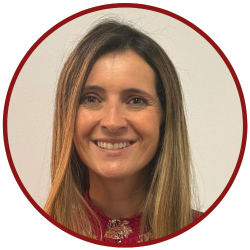
Oleksandra Matviichuk (L), founder of the Center for Civil Liberties, speaks about her experiences in Ukraine over the last three years.
Oleksandra Matviichuk (L) spoke about her experiences in Ukraine over the last three years. | Rod Searcey

‘We will cease to exist’


Matviichuk, who was a visiting scholar from 2017-2018 with the Ukrainian Emerging Leaders Program at CDDRL, noted the conflict has actually been going on for 11 years, since 2014 when Russia invaded and occupied Crimea. Today, she said, there is no safe place in Ukraine where people can hide from Russian rockets. “Just two days ago, Russia sent 263 drones against Kyiv and other peaceful cities in Ukraine.”

Matviichuk described how Russia seeks to ban the Ukrainian language and culture, and how they take Ukrainian children to Russia to put them in Russian education camps. “They told them they are not Ukrainian children, but they are Russian children.”

If the West does not provide Ukraine with security guarantees in a peace plan, then “it means that we will cease to exist. There will be no more of our people,” Matviichuk said.

Oleksandra Ustinova, a member of the Verkhovna Rada, Ukraine's Parliament, said, “If we talk about life in Ukraine now, it's complicated, especially during the last week after the Munich Security Conference,” where Vice President JD Vance delivered a speech that focused on internal politics in Europe.

“People do not understand how we thought the United States was our biggest partner,” she said.


People do not understand how we thought the United States was our biggest partner.
Oleksandra Ustinova
Member of the Verkhovna Rada, Ukraine's Parliament


At one point, Ustinova noted that she could not hear the conversation in her headphones because sirens were blaring as Russia had just launched an aerial attack on Kyiv.

She said that Russian President Putin and others who seek a Ukrainian election are trying to set a trap because Ukrainian law does not allow an election during martial law, which Ukraine has declared because of the Russian invasion. Plus, it would involve the demobilization of more than 400,000 troops.

“It would be very easy to fake elections, and that’s what the Russians would do,” Ustinova said. “It’s a trap. They're going to find where to put the money into their own candidate.”

Ustinova, who was also a visiting scholar with the Ukrainian Emerging Leaders Program from 2018-2019, said, “We can see that this is a new reality, not only in the Ukrainian war, but in foreign relations, and hopefully the Europeans can unite. Because if they don't, it will be a disaster for everyone.”

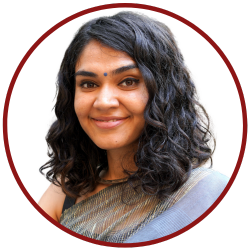
Oleksandra Ustinova joined the CDDRL-sponsored event virtually via Zoom.
Oleksandra Ustinova joined the CDDRL-sponsored event virtually via Zoom. | Rod Searcey

Oleksiy Honcharuk, a former Ukrainian prime minister from 2019-2020 who was the Bernard and Susan Liautaud Visiting Fellow at FSI in 2021, said, “I think that we are still strong. My prediction is that in three or six months, Ukraine can double the damage to Russia on the battlefield from a technological perspective with drones.”

But time is very expensive now, he added, because every single day, every single hour, Ukrainians are paying with the lives of their best people and soldiers.

Honcharuk said Ukrainians are “shocked” about the position of the United States’ recent vote against a United Nations resolution condemning the Russian invasion as well as the Trump Administration’s position on talks with Russia.

“This is exactly the moment when all the people of goodwill should do everything possible to support Ukraine in this very complicated time,” said Honcharuk.

Regarding the UN vote, McFaul said, “I am shocked, I am appalled, I am embarrassed as an American to see those votes today. We are voting with the most horrific dictators in the world.”

Oleksiy Honcharuk (R) spoke to a packed audience in Encina Hall.
Oleksiy Honcharuk (R) spoke to a packed audience in Encina Hall. | Rod Searcey

‘Not about people’


Matviichuk said, “Putin started this war of aggression, not because he wanted to occupy just more Ukrainian land. Putin started this war of aggression because he wanted to occupy and destroy the whole of Ukraine and even go further. He wants to forcibly restore the Russian Empire — he dreams about his legacy, his logic is historical.”

This ultimately means that Ukraine needs real security guarantees, she said. “President Trump said he started the peace negotiation because he cares about people dying in this war. So, if President Trump cares about people dying in this war, he also has to care about people dying in Russian prisons.”

She explained that she’s spoken with hundreds of people who have survived brutal conditions in Russian captivity. And so, it’s surprising, Matviichuk said, to hear political statements from U.S. officials “about natural minerals and elections, about possible territorial concessions, but not about people.”

Lack of Global Support


Serhiy Leshchenko, an advisor to Ukrainian President Zelenskyy’s Chief of Staff, spoke about the recent overtures by the Trump Administration to Russia.

“This is a new reality we are living in now. Frankly, my understanding is that Ukrainians are not very shocked with what's going on because we went through so many shocks within the last three years.”

Acknowledging the lack of an American flag at an allied event this week in Kyiv, Leshchenko said Ukrainians know perfectly well that perception is reality.

“It means that now we have an absolutely different perception. So, it’s obvious that there is no global security infrastructure anymore. It’s obvious that NATO is not an answer anymore,” said Leshchenko, an alumnus of the 2013 cohort of CDDRL’s Fisher Family Summer Fellows Program.

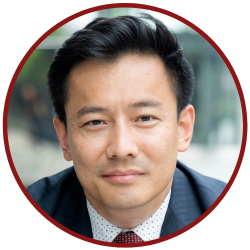
Serhiy Leshchenko (R) spoke virtually via Zoom at an event hosted by the Center on Democracy, Development and the Rule of Law on February 24, 2025.
Serhiy Leshchenko (R) spoke virtually via Zoom at an event hosted by the Center on Democracy, Development and the Rule of Law on February 24, 2025. | Rod Searcey

‘Sad occasion’


In her opening remarks, Stoner noted, “We’re here on what is actually a sad occasion, which is that Feb. 24 marks three years since the start of the full-scale Russian invasion of Ukraine.”

She said, “Only about less than 1% of land has changed hands since December 2022, so Ukraine is not losing. Ukraine is at least defending what it has, and it remains in Kursk (Russia).”

McFaul said, “It’s in our national interest that we do not line up with Belarus and Russia and North Korea – that holds negative consequences for our future security and prosperity. I actually think our country cares about values.”

He added that the notion that all America cares about is mineral rights, business deals, and hotels in Gaza is not the America he knows.

McFaul told the panelists, “I've witnessed and observed what you’ve been doing for your country, and we are just extremely fortunate to be connected to all of you, whom I consider to be heroic individuals in the world.”

A full recording of the event can be viewed below, and additional commentary can be found from The Stanford Daily.

Read More

Keith Darden presented his research in a CDDRL/TEC REDS Seminar on February 6, 2025.
News

War and the Re-Nationalization of Europe

American University Political Scientist Keith Darden examines how the Russian-Ukrainian war is reshaping European institutions.
War and the Re-Nationalization of Europe
Yoshiko Herrera presented her research in a REDS Seminar co-hosted by CDDRL and TEC on January 16, 2025.
News

Identities and War: Lessons from Russia’s War on Ukraine

Political Science scholar Yoshiko Herrera examines how identity shapes the causes, conduct, and consequences of war, especially in the wake of Russia’s invasion of Ukraine.
Identities and War: Lessons from Russia’s War on Ukraine
Vladimir Kara-Murza onstage with Michael McFaul at Stanford University.
News

Gone Today, Here Tomorrow: Vladimir Kara-Murza on the Fight for Democracy in Russia

During the 2024 Wesson Lecture, former political prisoner and democracy activist Vladimir Kara-Murza called for transparency and accountability from within Russia and more support from the international community to establish and grow Russian democracy.
Gone Today, Here Tomorrow: Vladimir Kara-Murza on the Fight for Democracy in Russia
Hero Image
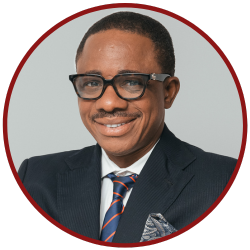
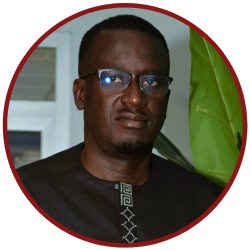
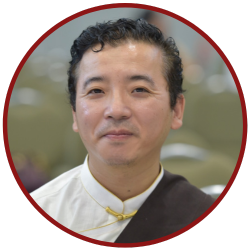
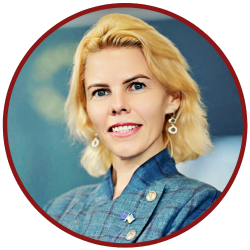
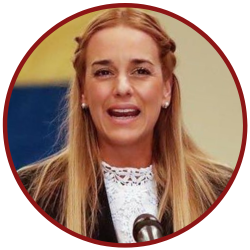
(Clockwise from left) Oleksandra Matviichuk, Oleksandra Ustinova, Oleksiy Honcharuk, and Serhiy Leshchenko joined FSI Director Michael McFaul to discuss Ukraine's future on the three-year anniversary of Russia's full-scale invasion.
(Clockwise from left) Oleksandra Matviichuk, Oleksandra Ustinova, Oleksiy Honcharuk, and Serhiy Leshchenko joined FSI Director Michael McFaul to discuss Ukraine's future on the three-year anniversary of Russia's full-scale invasion. | Rod Searcey
All News button
1
Subtitle

FSI scholars and civic and political Ukrainian leaders discussed the impact of the largest conflict in Europe since World War II, three years after Russia's invasion of Ukraine.

Date Label
Authors
Khushmita Dhabhai
News Type
News
Date
Paragraphs

In a CDDRL Research Seminar Series talk, Julia Azari, Professor of Political Science at Marquette University, explored the link between race, presidential transformation, and impeachment crises. She argued that presidents who significantly alter the racial status quo often face backlash, leading to populist successors who undermine democratic norms and ultimately face impeachment. She examined three cases — Andrew Johnson following Abraham Lincoln, Richard Nixon following Lyndon Johnson, and Donald Trump following Barack Obama — highlighting how racial politics shaped their presidencies and impeachment crises.

Azari’s framework situates race at the heart of presidential politics. Presidents usually maintain political stability, but transformative leaders disrupt racial hierarchies through legislation, executive action, and symbolism. This disruption sparks resistance, exploited by successors who reject transformation and undermine opposition. These backlash presidents often overreach institutionally, leading to impeachment. However, Azari argued impeachment rarely halts reactionary movements, which outlast individual leaders and shape long-term politics.

Her first case examined Lincoln’s presidency, which ended decades of compromise over slavery through the Civil War, emancipation, and constitutional amendments. His successor, Andrew Johnson, sought to reverse these changes through “presidential reconstruction,” allowing Southern states to reinstate white supremacist governance. His impeachment stemmed from both political imperatives — opposing Radical Reconstruction — and institutional overreach, violating the Tenure of Office Act. Though he survived removal, Reconstruction ultimately failed, and white supremacy prevailed.

The second case analyzed Nixon’s presidency following Lyndon Johnson’s civil rights transformation. Johnson’s passage of landmark legislation triggered a white backlash, which Nixon capitalized on with “law and order” rhetoric and the Southern Strategy. His impeachment crisis resulted from abuses of executive power, including spying on opponents and obstructing justice in the Watergate scandal. Though Nixon resigned, his realignment of the Republican Party and weakening of civil rights enforcement persisted.

The final case examined Obama’s presidency, which symbolically challenged the whiteness of the office, intensifying racial polarization. Conspiracies about his identity and accusations of favoritism toward minorities fueled Trump’s rise. Trump embraced racially charged policies, from the Muslim travel ban to attacking the 1619 Project. His two impeachments reflected this broader racialized political crisis — first for withholding Ukraine aid to pressure an investigation into Biden, and second for inciting the January 6 insurrection to overturn the 2020 election.

Azari concluded that racial transformation triggers backlash, leading to populist leaders who challenge institutional norms and face impeachment. However, impeachment alone is ineffective in stopping these movements, as they continue shaping U.S. politics. With Trump’s continued influence and the 2024 election looming, this pattern of transformation, backlash, and institutional crisis is likely to persist.

Read More

Larry Diamond, Šumit Ganguly, and Dinsha Mistree present their research in a CDDRL seminar.
News

The Future of India’s Democracy

Stanford Scholars Larry Diamond, Šumit Ganguly, and Dinsha Mistree, co-editors of the recently released book "The Troubling State of India's Democracy," gathered to discuss how the decline of opposition parties in India has undermined the health of its democracy.
The Future of India’s Democracy
Keith Darden presented his research in a CDDRL/TEC REDS Seminar on February 6, 2025.
News

War and the Re-Nationalization of Europe

American University Political Scientist Keith Darden examines how the Russian-Ukrainian war is reshaping European institutions.
War and the Re-Nationalization of Europe
Alice Siu presented her research during a CDDRL seminar on January 30, 2025.
News

Can Deliberation Revitalize Democracy?

Alice Siu, Associate Director of CDDRL’s Deliberative Democracy Lab, demonstrates the wide-ranging effects of deliberation on democracy.
Can Deliberation Revitalize Democracy?
Hero Image
Julia Azari shared her research in a CDDRL seminar on February 20, 2025.
Julia Azari shared her research in a CDDRL seminar on February 20, 2025. | Nora Sulots
All News button
1
Subtitle

Marquette University Professor of Political Science Julia Azari explored the link between race, presidential transformation, and impeachment crises in a CDDRL research seminar.

Date Label
Authors
Soraya Johnson
News Type
News
Date
Paragraphs

India’s once-robust democracy is in decline, with the Bharatiya Janata Party (BJP) being the only party with effective political organizing and a clear national message. FSI Mosbacher Senior Fellow in Global Democracy Larry Diamond, Hoover Senior Fellow Šumit Ganguly, and Hoover Research Fellow Dinsha Mistree reflected on this reality in a CDDRL seminar series talk. The discussion built on findings from their recently released book, The Troubling State of India's Democracy (University of Michigan Press, 2024).

The absence of a coordinated opposition in India has continued to threaten the functioning of its democracy. The challenges confronting the Indian National Congress Party (INC) are at the heart of the problem.

In the first half of the twentieth century, the INC emerged as a healthy political party. It enjoyed a unified national vision that championed secularism and independence from the British Empire. By being inclusive towards various political and religious identities, it unified a vast coalition across India’s broad geography, utilizing effective grassroots organizing mechanisms.

Today, however, the INC is hampered by extreme personalism due to the domineering role of the Gandhi family. The party lacks the organization or national vision to compete with the BJP. This decline began under the populist prime minister Indira Gandhi, who rose to power in the late 1960s. She replaced party leaders with loyalists and sycophants, weakening critical party mechanisms. The party began to set aside ideologically-driven political priorities in favor of more personalistic sinecures.

As subsequent members of the Gandhi family continued to lead the party, the INC failed to pose as an effective alternative to the BJP. The lack of political options results in a harmful feedback loop where citizens are discouraged from engaging with the opposition at all because they perceive no other candidates as having a chance at gaining power.

The future of India’s democratic competition requires the revival of opposition parties. Local parties at the state level are unlikely to grow to match the BJP, as they are often focused on specific ethnic and regional concerns, as well as lacking the infrastructure to take on the BJP nationally. The INC, once a leading national party, is unlikely to reinvent itself effectively unless it is released from the personalist grasp of the Gandhi family. The history of coalition building among the diversity of parties at the state and regional levels may provide a potential model for democratic checks or even electoral alternation. In any case, vigorous opposition must emerge from within India's political party system if backsliding is to be countered in the world's largest democracy.

A full recording of the seminar can be viewed below:

Read More

Keith Darden presented his research in a CDDRL/TEC REDS Seminar on February 6, 2025.
News

War and the Re-Nationalization of Europe

American University Political Scientist Keith Darden examines how the Russian-Ukrainian war is reshaping European institutions.
War and the Re-Nationalization of Europe
Alice Siu presented her research during a CDDRL seminar on January 30, 2025.
News

Can Deliberation Revitalize Democracy?

Alice Siu, Associate Director of CDDRL’s Deliberative Democracy Lab, demonstrates the wide-ranging effects of deliberation on democracy.
Can Deliberation Revitalize Democracy?
Ali Çarkoğlu
News

Polarization, Cleavages, and Democratic Backsliding: Electoral Dynamics in Turkey (1990-2023)

Using data from the World Values Survey and Turkish Election Studies, CDDRL Visiting Scholar Ali Çarkoğlu explores the rise of the Justice and Development Party (AKP) and the enduring influence of cultural divides on Turkey’s political landscape.
Polarization, Cleavages, and Democratic Backsliding: Electoral Dynamics in Turkey (1990-2023)
Hero Image
Larry Diamond, Šumit Ganguly, and Dinsha Mistree present their research in a CDDRL seminar.
Larry Diamond, Šumit Ganguly, and Dinsha Mistree (clockwise L to R) presented their research in a CDDRL seminar on February 13, 2025. | Nora Sulots
All News button
1
Subtitle

Stanford Scholars Larry Diamond, Šumit Ganguly, and Dinsha Mistree, co-editors of the recently released book "The Troubling State of India's Democracy," gathered to discuss how the decline of opposition parties in India has undermined the health of its democracy.

Date Label
Authors
News Type
News
Date
Paragraphs

When political parties are strong intermediaries between citizens and the government, they can effectively manage the relationship between democracy and capitalism, political scientist Didi Kuo told a Stanford audience.

But when parties become weak intermediaries, they lay the groundwork for crises in democracy, she said during a February 20 event for her new book, The Great Retreat: How Political Parties Should Behave and Why They Don’t (Oxford University Press, 2025). In her work, she challenged the narrative that parties are the problem and explained that strengthening them is actually the key to addressing current challenges to democracies.

The Center on Democracy, Development and the Rule of Law (CDDRL) hosted the panel discussion with Kuo, Center Fellow at Stanford's Freeman Spogli Institute for International Studies, manager of the Program on American Democracy in Comparative Perspective, and co-director of CDDRL’s Fisher Family Honors ProgramBruce Cain, professor of political science at Stanford and director of the Bill Lane Center for the American West; Jake Grumbach, associate professor at the Goldman School of Public Policy at UC Berkeley; and Julia Azari, professor of political science at Marquette University.

Kuo described how political parties in the last 50 years have grown weaker and more unpopular while also becoming increasingly professionalized and beholden to the private sector – trends that have resulted in a “plutocratic populism” where parties no longer exist to represent their constituents.

‘They’re often hollow’


As democracy expanded across the West in the 19th century, she said, political parties were often strong and arguably machine-like in their effectiveness. Then, after the Cold War, a neoliberal economic consensus emerged that included seismic changes to campaign finance and shifting party priorities. The effects included the weakening of the party systems of Western democracies, a ceding of governance to the private sector, and, as a result, a crisis in democracy.

“Party organizations themselves have become far more professionalized, elite, and focused exclusively on the technology and machinery of election campaigns. There's been much less role for state and local parties,” said Kuo, adding that in this “era of nationalized parties,” political parties at these lower levels have become sidelined. “They're often hollow.”

And that creates an opening for some. For example, she said, after 2010, the extreme right began to build local power in parties. “Steve Bannon did a podcast in which he recommended that people look up their local Republican Party organization. He said you’re very likely to find that it’s empty, so you can just go there with some of your friends. Sign up, become a local party chair, and then you can take over election administration. So, this was a strategy that was promulgated on his podcast prior to 2020.”


Party organizations themselves have become far more professionalized, elite, and focused exclusively on the technology and machinery of election campaigns. There's been much less role for state and local parties.
Didi Kuo
Center Fellow, FSI


Today, state parties have played very weak roles in their national parties’ structures, Kuo said. “There’s also been much less reliance on the affiliated groups that once constituted the core of parties, such as labor unions, student groups, women's groups, and groups that really emerged in an era of the mass organization party.”

At the same time, she noted, while not a full convergence, an increasing similarity has arisen among the major parties regarding their economic approaches to governance and markets.

This holds two key implications, she said. First, this embrace of neoliberal orthodoxies has eroded the traditional distinctions between left and right that support the party systems. “Neither party really represents the working class through an economic agenda,” Kuo said.

She added, “There’s a lot of empirical evidence that these erosions of party differences in left and right generate more political instability. They produce more extremist candidates who can capitalize on the fact that voters aren't sure how to hold politicians to account when the policies are the same and also increases the level of anti-system messaging in political campaigns.”

The second implication is that these changes to party organization have resulted in more delegation to non-party groups – political strategists, consultants, and the private sector – that end up doing the work that parties historically did.

Meanwhile, the parties increasingly reflect an “educational cleavage” among voters that, along with increased outsourcing of governance to the private sector, has contributed to a rise of “plutocratic populism.”

In his remarks, Cain raised the issue of how campaign finance reform and other institutional changes, such as the introduction of primaries, contributed to the decline of strong political parties. Meanwhile, rapid changes in technology and global economics are playing roles in the political process.

“Globalization means we don't have stable neighborhoods anymore, that labor is going in and out, that we communicate in a completely different way than the way we used to, which makes it very hard to rely on the party machines,” he said.

Azari said parties are failing to live up to their central role in representing the citizenry and “empowering less powerful groups in society” that offer “a countervailing source of power to capital.” A turn to centrism or a “third way” by the Democratic Party in the 1990s reflected such a dynamic of disconnection.

“The political center is a nondescript place, a nonexistent voter, yet it looms large in the public imagination,” Azari added, quoting a line from Kuo's book.

Grumbach said that as a behaviorist, he seeks to understand the “neurology of the mass voter brain.” He cited a recent Quinnipiac survey that revealed how negatively Democratic voters now view Democratic members of Congress compared to poll results in October 2024. “It is a massive shift … the Democratic Party is ripe for a takeover.”


The political center is a nondescript place, a nonexistent voter, yet it looms large in the public imagination.
Julia Azari
Professor of Political Science, Marquette University


‘Democratic renewal’


Kuo, an Eric and Wendy Schmidt Fellow at the think tank New America, has written widely about democratization, capitalism, and political parties.

Kuo said, “I'll say that we are in a very bad place in American democracy that goes far beyond anything any one political party can do … I think that building stronger political parties very much needs to be part of democratic renewal.”

In a recent interview with CDDRL, Kuo noted, “Much of my research highlights the importance of understanding not just what governments and institutions look like, but how they link to society. How do they connect with citizens? How do they convince citizens that government actions are meaningful and worthwhile? These are critical questions for democracy.”

Read More

Didi Kuo
News

In her new book, Didi Kuo argues political parties no longer exist to represent their constituents

Kuo, a fellow at the Freeman Spogli Institute for International Studies, says this evolution lays the groundwork for serious imbalances in who democracy serves.
In her new book, Didi Kuo argues political parties no longer exist to represent their constituents
Meet Our Researchers: Dr. Didi Kuo
Q&As

Meet Our Researchers: Dr. Didi Kuo

Examining democratization, political reform, and the role of political parties with FSI Center Fellow Dr. Didi Kuo.
Meet Our Researchers: Dr. Didi Kuo
Stanford frosh Stella Vangelis (right) and Peter Bennett (left) attended “Pizza, Politics, and Polarization” at their residence hall, Arroyo house. The event was organized by ePluribus Stanford, a campus-wide initiative that fosters constructive dialogue and democratic engagement on campus.
News

In dorm discussion series, students grapple with political gridlock

A week after the politically divisive U.S. 2024 presidential election, Stanford students living in Arroyo house gathered in their dorm lounge with Stanford political scientist Didi Kuo to explore factors driving polarization in America.
In dorm discussion series, students grapple with political gridlock
Hero Image
Didi Kuo discussed her new book, "The Great Retreat," in front of a Stanford audience on February 19, 2025.
Didi Kuo discussed her new book, "The Great Retreat," in front of a Stanford audience on February 19, 2025. | Rod Searcey
All News button
1
Subtitle

Political scientist Didi Kuo challenged the narrative that political parties are the problem and said that strengthening their connections to the citizenry is the key to addressing today’s democratic crisis.

Date Label
Authors
Soraya Johnson
News Type
News
Date
Paragraphs

Alice Siu, the Associate Director of CDDRL’s Deliberative Democracy Lab (DDL), presented her work at a CDDRL research seminar on the effect of deliberation on how people think about political issues, particularly in the current polarized context.

DDL and its partners organized discussions on contentious issues, ranging from climate change to institutional democratic reforms, among hundreds of participants from wide-ranging demographic and political backgrounds. For a total of 12 hours, participants discussed topics through an AI-assisted deliberation platform. They were polled before and after deliberation and compared to a control group who did not engage in the discussions. 

The results showed a consistent and significant opinion change among participants following deliberation, with movement towards consensus across party affiliations. Satisfaction with democracy dramatically improved, especially among Republicans, who shifted from 18.9% to 50.1% satisfaction. Evidence showed an increase in participants’ trust and empathy toward individuals with opposing opinions.

The effects of these conversations persisted after the intervention. Three months after deliberation, participants continued to feel more positively about those they disagreed with. Results show that 41.7% agreed that those with opposing viewpoints “have good reasons; there are just better ones on the other side,” compared to 31% before deliberation and 33% immediately after. These long-term effects manifested in the participants’ political participation as well. One year after a climate-focused deliberation, participation in discussions was correlated with stronger support for a Democratic-controlled congress before the 2022 midterm elections.

These results demonstrate that democracy can be strengthened through deliberation. However, for a substantial, long-lasting impact, deliberation must be scaled significantly. To do so, technology must be leveraged. For example, using an AI instead of a human moderator may improve affordable access to deliberation platforms. Furthermore, deliberation should occur in educational settings from the middle school to the graduate level. Investing in youth’s communication skills and civic engagement affords them tools to uphold our democracy for generations. Challenging but empathic conversations with those from differing viewpoints must be encouraged. While this research offers reasons for optimism, a more scalable model must be developed to ensure large-scale participation in robust discourse; at DDL, Siu is leading this effort to bring deliberation to entire societies through the AI-assisted Stanford Online Deliberation Platform.

Read More

Ali Çarkoğlu
News

Polarization, Cleavages, and Democratic Backsliding: Electoral Dynamics in Turkey (1990-2023)

Using data from the World Values Survey and Turkish Election Studies, CDDRL Visiting Scholar Ali Çarkoğlu explores the rise of the Justice and Development Party (AKP) and the enduring influence of cultural divides on Turkey’s political landscape.
Polarization, Cleavages, and Democratic Backsliding: Electoral Dynamics in Turkey (1990-2023)
Yoshiko Herrera presented her research in a REDS Seminar co-hosted by CDDRL and TEC on January 16, 2025.
News

Identities and War: Lessons from Russia’s War on Ukraine

Political Science scholar Yoshiko Herrera examines how identity shapes the causes, conduct, and consequences of war, especially in the wake of Russia’s invasion of Ukraine.
Identities and War: Lessons from Russia’s War on Ukraine
Alberto Díaz-Cayeros presents his research in a CDDRL seminar.
News

Colonialism, Epidemics, and Resilience: Rethinking Demographic Collapse in Tepetlaoztoc

FSI Senior Fellow Alberto Díaz-Cayeros explores how demographic collapse, epidemic disease, and colonial rent extraction were interconnected in Tepetlaoztoc, a city-state in the Acolhua Kingdom of the Aztec Empire.
Colonialism, Epidemics, and Resilience: Rethinking Demographic Collapse in Tepetlaoztoc
Hero Image
Alice Siu presented her research during a CDDRL seminar on January 30, 2025.
Alice Siu presented her research during a CDDRL seminar on January 30, 2025. | Soraya Johnson
All News button
1
Subtitle

Alice Siu, Associate Director of CDDRL’s Deliberative Democracy Lab, demonstrates the wide-ranging effects of deliberation on democracy.

Date Label
Authors
Khushmita Dhabhai
News Type
News
Date
Paragraphs

Ali Çarkoğlu, a political scientist specializing in elections, voting behavior, and Turkish politics, presented an analysis of Turkey's electoral dynamics from 1990 to 2023 at a CDDRL research seminar. His study focused on the interplay between social cleavages, democratic backsliding, and their impact on political competition and voter behavior. Using data from the World Values Survey and Turkish Election Studies, Çarkoğlu explored the rise of the Justice and Development Party (AKP) and the enduring influence of cultural divides on Turkey’s political landscape.

Central to his analysis was the "alla Turca kulturkampf," a concept describing the deep-rooted center-periphery divide in Turkish politics. This cleavage reflects a cultural conflict between two contrasting societal visions: the Kemalist ideal of secularism, gender equality, and scientific rationalism versus the pro-Islamist focus on tradition, religion, and family values. Despite the AKP’s success in bringing peripheral groups into the state’s institutional core, these cultural divides persist as a primary source of polarization. Çarkoğlu argued that this polarization has entrenched partisan loyalty and overshadowed other factors in shaping voter behavior.

A key theme of the presentation was Turkey's democratic backsliding, characterized by the erosion of democratic institutions, curtailment of civil liberties, and electoral manipulation. Çarkoğlu noted that Turkey ranks 148th on the liberal democracy index, illustrating its significant democratic decline. He linked these trends to heightened polarization, which weakens opposition forces and reduces the influence of traditional electoral cleavages. Instead of fostering competitive elections, the political landscape is increasingly dominated by entrenched party loyalties and identity-driven politics.

The presentation also highlighted the significant social and economic changes Turkey has undergone since 1990. Urbanization surged from 61% in 1992 to 78% in 2024, while agriculture’s share of employment dropped from 45% to 17%. Economic growth has raised per capita income from $2,000 to $10,000, but inequality remains pervasive, and safety nets are inadequate. Women’s labor force participation remains low at 35%, and educational disparities persist. Household sizes have decreased, and the dependency ratio has dropped from 65 to 47 over 30 years. However, these societal shifts have had limited political consequences, as electoral dynamics remain anchored in longstanding cultural cleavages.

Çarkoğlu’s findings indicated that Turkey’s party system has remained "frozen" for the past three decades. While socio-demographic factors play a declining role in explaining voter behavior, attitudinal variables such as group identity and cultural values have gained prominence. This shift reflects how polarization has solidified, with partisan loyalty reinforcing competitive authoritarianism.

Çarkoğlu emphasized that the weakening of electoral cleavages has facilitated democratic backsliding by reducing opposition effectiveness and enabling strategic manipulation. Despite rapid social change, entrenched cultural divides and polarization have prevented political transformation. His research underscores the importance of addressing institutional decline, polarization, and social inequality to combat democratic erosion. Turkey’s experience offers critical lessons for other unconsolidated democracies facing similar challenges.

Read More

Yoshiko Herrera presented her research in a REDS Seminar co-hosted by CDDRL and TEC on January 16, 2025.
News

Identities and War: Lessons from Russia’s War on Ukraine

Political Science scholar Yoshiko Herrera examines how identity shapes the causes, conduct, and consequences of war, especially in the wake of Russia’s invasion of Ukraine.
Identities and War: Lessons from Russia’s War on Ukraine
Alberto Díaz-Cayeros presents his research in a CDDRL seminar.
News

Colonialism, Epidemics, and Resilience: Rethinking Demographic Collapse in Tepetlaoztoc

FSI Senior Fellow Alberto Díaz-Cayeros explores how demographic collapse, epidemic disease, and colonial rent extraction were interconnected in Tepetlaoztoc, a city-state in the Acolhua Kingdom of the Aztec Empire.
Colonialism, Epidemics, and Resilience: Rethinking Demographic Collapse in Tepetlaoztoc
Alex Mierke-Zatwarnicki
News

Understanding Identity Politics: Strategies for Party Formation and Growth

CDDRL Postdoctoral Fellow Alex Mierke-Zatwarnicki explores how identity politics — strategies of political mobilization based on group identity — shape the development of new political parties, particularly those trying to establish themselves in a competitive environment.
Understanding Identity Politics: Strategies for Party Formation and Growth
Hero Image
Ali Çarkoğlu
All News button
1
Subtitle

Using data from the World Values Survey and Turkish Election Studies, CDDRL Visiting Scholar Ali Çarkoğlu explores the rise of the Justice and Development Party (AKP) and the enduring influence of cultural divides on Turkey’s political landscape.

Date Label
Authors
Khushmita Dhabhai
News Type
Q&As
Date
Paragraphs

This "Meet Our Researchers" series showcases the incredible scholars at Stanford’s Center on Democracy, Development and the Rule of Law (CDDRL). Through engaging interviews conducted by our undergraduate research assistants, we explore the journeys, passions, and insights of CDDRL’s faculty and researchers.

Dr. Didi Kuo is a Center Fellow at Stanford's Freeman Spogli Institute for International Studies (FSI), manager of the Program on American Democracy in Comparative Perspective at the Center on Democracy, Development and the Rule of Law (CDDRL), and co-director of CDDRL's Fisher Family Honors Program. Her research focuses on democratization, political reform, corruption, and the evolution of political parties. She is the author of Clientelism, Capitalism, and Democracy (Cambridge University Press, 2018) and the forthcoming The Great Retreat: How Political Parties Should Behave and Why They Don’t (Oxford University Press, 2025). Dr. Kuo has been an Eric and Wendy Schmidt Fellow at New America and is a non-resident fellow with the Carnegie Endowment for International Peace. She received a PhD in political science from Harvard University, an MSc in Economic and Social History from Oxford University, where she studied as a Marshall Scholar, and a BA from Emory University.

What inspired you to pursue research in your current field, and how did your journey lead you to CDDRL?


I first became interested in politics growing up in the American South during the early stages of today’s polarized era. Living in a deeply conservative area during the rise of partisan media and in Newt Gingrich’s congressional district sparked my curiosity about politics and its broader implications.

In college, my interest expanded beyond American democracy. Post-Cold War debates on democratization and the U.S.’s role in promoting democracy, particularly during the wars in Iraq and Afghanistan after 9/11, shaped my desire to explore democracy, governance, and international policy—questions that remain critical today.

I majored in political science, pursued graduate studies in the UK, and worked at think tanks where I saw PhDs bridging research and policy. This inspired me to pursue a doctorate. After earning my PhD, I was fortunate to join CDDRL as a postdoctoral fellow, where I’ve found the ideal environment to explore these issues and contribute to broader discussions on democracy and development.

What is the most exciting or impactful finding from your research, and why do you think it matters for democracy?


I don’t tend to think of my findings as particularly “exciting” in the traditional sense, as they often reaffirm long-standing conventional wisdom. However, one key insight that my research reinforces is that stable and thriving democratic societies require not just strong democratic institutions but also robust intermediary organizations.

My new book focuses on political parties, which are a prime example of these intermediary organizations. Much of my research highlights the importance of understanding not just what governments and institutions look like, but how they link to society. How do they connect with citizens? How do they convince citizens that government actions are meaningful and worthwhile? These are critical questions for democracy.

I believe you cannot fully grasp concepts like governance, democracy, or even state capacity without understanding the role of these intermediaries. They play a vital role in bridging the gap between institutions and the public, ensuring that democracy is not just about structures but about meaningful engagement with citizens. This finding matters because, without these linkages, even the strongest institutions risk losing public trust and legitimacy.


Much of my research highlights the importance of understanding not just what governments and institutions look like, but how they link to society. How do they connect with citizens? How do they convince citizens that government actions are meaningful and worthwhile?
Dr. Didi Kuo


Can you talk to us a bit about your book, its research questions, context, and what inspired you to write it?


When I arrived at Stanford 10 years ago, I noticed a disconnect: while political science views strong political parties as essential for democratic success, public opinion often sees them as a problem. At CDDRL, I observed how many outside academia dislike or even distrust parties, despite their historical link to stability and democratic consolidation.

My book was inspired by this gap. It defends political parties, arguing that many of democracy’s challenges over the past 50 years stem from weaker parties—not stronger ones. My goal is to challenge the narrative that parties are the problem and show how strengthening them is key to addressing today’s democratic challenges.

Given that academic research often emphasizes the electoral functions of parties, should reforms focus on narrowing the scope of party roles to enhance public connection? How can parties prioritize their most responsive roles without deprioritizing critical functions like fundraising?


That's a critical question. Angelo Panebianco’s 1988 concept of the "electoral-professional party" highlights how professionalized parties prioritize winning elections over grassroots connections—a trend that has only intensified with today’s competitive elections and internal party factions.

Despite electoral success through strategies like PR and micro-targeting, parties struggle to meaningfully connect with voters, leading to dissatisfaction, distrust, and rising disillusionment. This indicates that a purely electoral focus is unsustainable.

Parties are unlikely to shift strategies without electoral losses. For instance, Democrats must rebuild trust and align policies with popular interests, while Republicans face the challenge of reconciling their traditional structure with the influence of the MAGA faction.

Both parties need to balance professionalization with public engagement by fostering grassroots connections and building sustainable support. Without recalibration, they risk further alienating voters and undermining trust in democratic institutions.


Parties are unlikely to shift strategies without electoral losses. For instance, Democrats must rebuild trust and align policies with popular interests, while Republicans face the challenge of reconciling their traditional structure with the influence of the MAGA faction.
Dr. Didi Kuo


A lot of academic research tends to focus on how parties are becoming more polarized, but there are a lot of cleavages developing within the parties themselves. How do you think the Democrats and Republicans differing approaches to mobilization and organization will shape the future of partisanship in the U.S.? Do these differences create opportunities for a realignment of political coalitions, and how might this frame how we view partisanship in the future?


That’s a great question, and we’re already seeing a partisan realignment. Historically, Democrats and left-leaning parties represented the working class, but now they increasingly draw support from highly educated urban professionals. Meanwhile, right-leaning parties, traditionally backed by elites, are gaining support from the working class.

This shift, driven by education and economic divides, challenges both parties. Democrats must balance appealing to urban professionals and working-class voters, while Republicans struggle to reconcile small-government policies with the needs of a working-class base.

State and local parties may offer insights by experimenting with coalition-building strategies, such as Democrats succeeding in rural areas or centrist Republicans challenging MAGA influence. These cleavages create both opportunities and uncertainty, and how parties manage these divisions will shape the future of U.S. partisanship.

You mentioned that parties used to have a stronger social connection and representation role, which has now largely been replaced by social movements and NGOs. Should parties want to reclaim that function, how could they go about it? Would they need to replace NGOs, partner with them, or take another approach? How do you see this relationship evolving in the future?


As parties have become more professionalized, their community engagement has become episodic, focused mainly around elections. This has left advocacy and organizing to NGOs, civic groups, and social movements, many of which operate independently or are even anti-party.

To reclaim their social role, parties need to maintain a consistent presence in communities year-round, addressing local issues and collaborating with civic groups. NGOs and social movements, in turn, should see parties as potential partners rather than adversaries, working together to institutionalize their causes and foster democratic engagement.

This relationship should be a two-way street—parties investing in communities and NGOs collaborating within the party system. Together, they can rebuild connections and create a more integrated approach to representation and problem-solving.


To reclaim their social role, parties need to maintain a consistent presence in communities year-round, addressing local issues and collaborating with civic groups. NGOs and social movements, in turn, should see parties as potential partners rather than adversaries.
Dr. Didi Kuo


Finally, what book would you recommend for students interested in a research career in your field?


I recommend Making Democracy Work by Robert Putnam. While Putnam is better known for Bowling Alone, this book initially captured my interest in political science. It compares governance in northern and southern Italy, introducing the concept of social capital as critical to local institutions' success. Putnam demonstrates how formal institutions and society are deeply interconnected, linking contemporary outcomes to historical legacies of conquest and political development.

Reading it in college while traveling through Italy was transformative—it brought the book to life and showed how political science connects institutions, societies, history, and economics. It’s a great introduction to the field, encouraging young researchers to tackle complex questions and piece together relationships to understand political challenges like democratic backsliding. Each piece of research adds to a larger puzzle, making this work so rewarding.

Read More

Stanford frosh Stella Vangelis (right) and Peter Bennett (left) attended “Pizza, Politics, and Polarization” at their residence hall, Arroyo house. The event was organized by ePluribus Stanford, a campus-wide initiative that fosters constructive dialogue and democratic engagement on campus.
News

In dorm discussion series, students grapple with political gridlock

A week after the politically divisive U.S. 2024 presidential election, Stanford students living in Arroyo house gathered in their dorm lounge with Stanford political scientist Didi Kuo to explore factors driving polarization in America.
In dorm discussion series, students grapple with political gridlock
Hakeem Jefferson, Didi Kuo, Jonathan Rodden, and Anna Grzymala-Busse
News

Diversity and Democracy: Navigating the Complexities of the 2024 Election

The third of four panels of the “America Votes 2024” series examined the tension surrounding diversity and inclusion in the upcoming election. The panel featured Stanford scholars Hakeem Jefferson, Didi Kuo, Jonathan Rodden, and Anna Grzymala-Busse.
Diversity and Democracy: Navigating the Complexities of the 2024 Election
[Left to right]: Michael McFaul, Marshall Burke, Steven Pifer, Oriana Skylar Mastro, Didi Kuo, and Amichai Magen on stage.
Commentary

Five Things FSI Scholars Want You to Know About the Threats Our World Is Facing

At a panel during Stanford's 2024 Reunion weekend, scholars from the Freeman Spogli Institute for International Studies shared what their research says about climate change, global democracy, Russia and Ukraine, China, and the Middle East.
Five Things FSI Scholars Want You to Know About the Threats Our World Is Facing
Hero Image
Meet Our Researchers: Dr. Didi Kuo
All News button
1
Subtitle

Examining democratization, political reform, and the role of political parties with FSI Center Fellow Dr. Didi Kuo.

Date Label
Paragraphs

The Chinese government is revolutionizing digital surveillance at home and exporting these technologies abroad. Do these technology transfers help recipient governments expand digital surveillance, impose internet shutdowns, filter the internet, and target repression for online content? We focus on Huawei, the world’s largest telecommunications provider, which is partly state-owned and increasingly regarded as an instrument of its foreign policy. Using a global sample and an identification strategy based on generalized synthetic controls, we show that the effect of Huawei transfers depends on preexisting political institutions in recipient countries. In the world’s autocracies, Huawei technology facilitates digital repression. We find no effect in the world’s democracies, which are more likely to have laws that regulate digital privacy, institutions that punish government violations, and vibrant civil societies that step in when institutions come under strain. Most broadly, this article advances a large literature about the geopolitical implications of China’s rise.

All Publications button
1
Publication Type
Journal Articles
Publication Date
Journal Publisher
Perspectives on Politics
Authors
Erin Baggott Carter
Brett Carter
Number
Published online 2025:1-20
Subscribe to Democracy