FSI's research on the origins, character and consequences of government institutions spans continents and academic disciplines. The institute’s senior fellows and their colleagues across Stanford examine the principles of public administration and implementation. Their work focuses on how maternal health care is delivered in rural China, how public action can create wealth and eliminate poverty, and why U.S. immigration reform keeps stalling.
FSI’s work includes comparative studies of how institutions help resolve policy and societal issues. Scholars aim to clearly define and make sense of the rule of law, examining how it is invoked and applied around the world.
FSI researchers also investigate government services – trying to understand and measure how they work, whom they serve and how good they are. They assess energy services aimed at helping the poorest people around the world and explore public opinion on torture policies. The Children in Crisis project addresses how child health interventions interact with political reform. Specific research on governance, organizations and security capitalizes on FSI's longstanding interests and looks at how governance and organizational issues affect a nation’s ability to address security and international cooperation.
Major: International Relations Minor: Theater Hometown: Winchester, Virginia Thesis Advisor: Kathryn Stoner
Tentative Thesis Title:U.S. Silence as a Form of Soft Power
Future aspirations post-Stanford: I plan to attend graduate school, work at the intersection of international development & foreign policy, and pursue global public service projects.
A fun fact about yourself: I was born on leap day!
Encina Hall, E105 616 Jane Stanford Way Stanford, CA 94305-6055
0
mnagawa@stanford.edu
CDDRL Postdoctoral Fellow, 2025-26
marianagawa_photo_-_maria_nagawa.jpeg
Maria Nagawa is a Postdoctoral Fellow at the Center on Democracy, Development and the Rule of Law (CDDRL) at Stanford University. She studies governance and development in the Global South with a particular focus on aid and bureaucracy. She employs mixed methods and a range of data sources, including survey, experimental, interview, and administrative data.
In her book project, she examines how international aid affects the performance of bureaucrats in aid recipient countries. Her work shows how, in incentivizing select bureaucrats to work on aid projects, aid diverts bureaucrats from routine government programming and erodes organizational cohesion. This work draws on months of fieldwork in Uganda, including interviews with diverse actors in the public and aid sectors and a survey of bureaucrats in Uganda's central government.
Prior to starting her fellowship at CDDRL, Maria was a postdoctoral fellow at the Niehaus Center for Globalization and Governance at Princeton University. She has worked in both the private and public sectors and received her PhD in Public Policy and Political Science from Duke University in 2024.
Research on reentry has documented how material hardship, network dynamics, and carceral governance impede reintegration after prison, but existing scholarship has left underdeveloped other instances in which adverse outcomes stem from the institution's socioemotional dynamics and people's practical and emotional responses to bureaucratic indignities. Drawing on more than 2 years of ethnographic fieldwork with people on parole in Philadelphia, this study analyzes three sources of adversity that occur because reentry institutions’ or actors’ practices are incompatible with the behaviors and needs of system-involved people. I demonstrate how unrecognized vulnerability, discretion's benefits and drawbacks, and risk-escalating rules contribute to adverse outcomes—withdrawal and rule-breaking—that sometimes lead to reincarceration. In failing to account for aspects of human agency and dignity, such as the ability to provide for oneself and to advance personal and familial well-being, parole guidelines often prompted withdrawal and subversion.
The system of reentry institutions — including halfway houses, parole agencies, and housing assistance programs — can be extremely complicated for formerly incarcerated persons (FIPs) to navigate. These complications are not merely logistical, but also social and emotional: the ways in which FIPs interact with reentry institutions can affect their sense of belonging, dignity, and prosperity. When the rules and practices of reentry institutions undermine these needs, it becomes more likely that participants will violate rules, withdraw from the institutions altogether, or find themselves reincarcerated.
In “Home But Not Free,” Gillian Slee offers a rich analysis of these socioemotional dynamics. The paper both increases our knowledge of reentry processes and deepens our understanding of FIPs and reentry staff. Previous scholars have focused more on how adverse outcomes stem from reentry institutions prioritizing surveillance or control. Slee pushes forward this conversation by highlighting how adverse outcomes also stem from failures to acknowledge and support the dignity of FIPs.
Slee’s paper is informed by over two years of ethnographic fieldwork with FIPs in Philadelphia. This includes observing over 200 appointments at a housing assistance program, analyzing more than 130 files of program participants, and both observing and assisting with programming at a women’s halfway house.
Reentry institutions and their staff often fail to recognize or respond to the constraints and vulnerabilities faced by FIPs. These failures can undermine the dignity of FIPs and provoke their withdrawal from such institutions.
Three Mechanisms:
The core of the paper centers on Slee’s elaboration of three mechanisms that link socioemotional concepts, such as indignity, to outcomes like withdrawal or reincarceration. Each mechanism is clarified through a range of examples and case studies.
1. Unrecognized vulnerability:
Reentry institutions and their staff often fail to recognize or respond to the constraints and vulnerabilities faced by FIPs. These failures can undermine the dignity of FIPs and provoke their withdrawal from such institutions. In the realm of housing assistance, the Philadelphia program requires that rent falls between 30% and 45% of participants’ income. However, this is often unrealistic given the difficulties of finding fairly priced units or securing gainful employment with a felony conviction. Accordingly, FIPs must seek low-quality units or roommates. Yet most participants do not want roommates because it reminds them of being incarcerated. Participants are thus presented with an undignified set of choices. The program restrictions mean that many FIPs cannot or will not utilize housing assistance programs, deepening their sense of instability.
Another source of vulnerability concerns the mismatch between FIPs’ expectations and the realities of frontline bureaucracy. For example, many housing assistance programs have too few staff, some of whom struggle to juggle appointments or return phone calls. Because reentry staff are overburdened, they may ask participants to pick up the slack by searching for housing units. Yet many FIPs lack the requisite know-how, for example, calling about units too frequently or too early in the morning. Others may show up hours early for their appointments, in the process annoying reentry staff. Yet participants are not coached on how to improve these behaviors, leading to neglect. Other FIPs must learn that the majority of units are listed online as opposed to in newspapers, incurring the mockery from reentry staff in the process.
A final source of vulnerability concerns participants’ lack of efficacy — the sense that their efforts make little difference or are inadequate. Reentry staff may have high expectations of people who feel “cryogenically frozen in time” (p. 32) because of years of incarceration. Some are unable to use modern cell phones or have no rental history.
A final source of vulnerability concerns participants’ lack of efficacy — the sense that their efforts make little difference or are inadequate.
2. Discretion’s Benefits and Drawbacks:
The discretion exercised by reentry staff introduces difficult choices for participants, forcing them to choose between (a) following the rules and becoming socially isolated or (b) breaking the rules and developing social connections. For example, some halfway houses are restrictive about time spent outside of the house. Participants who abide by the rules may miss out on socially important events, like a child’s basketball game. Some FIPs may lie about or conceal where they live in order to deal with less intrusive parole agents. Others may cross state lines to pursue important career opportunities. One participant parked their mobile home outside of the parole district lines because it was less expensive and easier than seeking alternative units, but these kinds of ‘rational’ behaviors cannot be accommodated. Discretion is a highly variable attribute: some reentry staff cancel meetings and inconvenience participants, while others remember individuals’ needs and accommodate them. Those who expect more discretion than they receive may break the rules out of frustration. Ultimately, discretion and its absence can provoke a host of socioemotional problems.
Instead of preventing noncompliance, program rules may serve to encourage it when they undermine participants’ sense of dignity.
3. Risk-Escalating Rules:
Instead of preventing noncompliance, program rules may serve to encourage it when they undermine participants’ sense of dignity. For example, 29 states prohibit associating with other FIPs, yet many participants have friends or family supervised by the system; as such, people violate the rules in order to preserve meaningful relationships. Some FIPs are faced with painful dilemmas, for example, choosing between living in halfway houses where drug use is common or breaking the rules by leaving. Others report using cocaine instead of marijuana because the latter can be detected in their bloodstream for much longer. Some halfway houses mandate spending a certain number of hours inside the house, but this leads to participants being unable to work multiple jobs to support themselves, a clear violation of their dignity.
For many FIPs in uncomfortable halfway houses, they cannot be placed in another house unless they break the rules of their existing house; some consider breaking the rules for the sake of their well-being, even though doing so might land them under even more restrictive supervision. One participant was refused permission to live in a camper that he could afford because the camper’s mobility posed a flight risk. Another participant broke the rules by traveling out of state because her son’s father had cancer, and a reentry professional later told her to return in a rather threatening way. The rules of reentry institutions thus incentivized FIPs to make very risky choices.
By highlighting socioemotional concepts — especially (in)dignity — as central to the experiences of formerly incarcerated persons, Slee shows how the rules and practices of reentry institutions can undermine reintegration.
By highlighting socioemotional concepts — especially (in)dignity — as central to the experiences of formerly incarcerated persons, Slee shows how the rules and practices of reentry institutions can undermine reintegration. Addressing sources of vulnerability and counterproductive rules may help reform reentry institutions in more humane and effective ways.
Virtual participation available via Zoom using the link above. Zoom Meeting ID: 997 4878 4037, Passcode: 998456
We invite our virtual participants to join in celebrating Marcel Fafchamps' distinguished career. Following the keynote address, at 10:00 AM PST, there will be an opportunity for online attendees to offer brief remarks or words of appreciation to honor Professor Fafchamps and his many contributions to scholarship, mentorship, and our academic community. Your reflections are a valued part of this special occasion.
Join us for a full-day academic symposium celebrating the career and contributions of economist Marcel Fafchamps, Satre Family Senior Fellow at the Freeman Spogli Institute for International Studies, on the occasion of his retirement. Featuring a keynote by Marcel himself, this tribute brings together colleagues, collaborators, and students to engage with the themes and ideas that have shaped his influential work in development economics, labor markets, and social networks.
The day will feature in-depth paper presentations, rapid-fire research talks, and engaging discussions with scholars, including Stefano Caria (University of Warwick), Pascaline Dupas (Princeton University), and Simon Quinn (Imperial College London), with more speakers to be announced soon. Topics span management practices, persuasion and diffusion, strategic reasoning, and mutual aid—from field experiments to economic theory.
Come celebrate the distinguished research career of Marcel Fafchamps with us.
Lunch and refreshments will be provided.
The symposium will be held in person, by invitation only. Professor Fafchamps' keynote will be livestreamed via Zoom.
This event is co-sponsored by the Center on Democracy, Development and the Rule of Law and the King Center on Global Development.
8:30 AM — Continental Breakfast available in 2nd Floor Lobby, Encina Hall Central
8:45 AM — General Welcome, Kathryn Stoner
9:00 AM — Keynote Address, Marcel Fafchamps: Behavioral Markets
10:00 AM— Virtual Attendees may join to share brief remarks and words of appreciation
10:15 AM — Morning Break
10:45 AM — Session Speaker: Stefano Caria,Competition and Management
11:45 AM — Rapid Fire Speaker: Tom Schwantje, Management Style Under the Spotlight: Evidence from Studio Recordings
12:15 PM — Lunch Break
1:15 PM — Session Speaker Pascaline Dupas: Keeping Up Appearances: Socioeconomic Status Signaling to Avoid Discrimination
2:15 PM — Rapid Fire Speaker: Deivy Houeix,Eliciting Poverty Rankings from Urban or Rural Neighbors
2:45 PM — Afternoon Break
3:00 PM — Session Speaker: Simon Quinn,Matching, Management and Employment Outcomes: A Field Experiment with Firm Internships
Marcel Fafchamps is a senior fellow at Stanford University’s Freeman Spogli Institute for International Studies (FSI) and a professor of economics. His research focuses on development economics, particularly how institutions, social networks, and market failures impact economic outcomes in low-income countries. He has published extensively on topics like agriculture, labor markets, and entrepreneurship, and has held academic positions at Oxford and Stanford. Fafchamps is known for combining rigorous empirical analysis with an understanding of real-world development challenges.
Stefano Caria is a Professor of Economics at the University of Warwick, affiliated with J‑PAL, CEPR, CAGE, and the IGC, serving as lead academic for Ethiopia. He earned his DPhil (and MPhil) in Economics from the University of Oxford and previously held positions at Oxford’s Department of International Development and the University of Bristol. He combines experimental and structural methods to study labor market frictions, refugee employment, childcare support, and firm-worker matching in low-income settings across Africa and the Middle East.
Tom Schwantje is a Postdoctoral Research Fellow at Bocconi University, where he is affiliated with IGIER and FINAFRICA. In his research, he focuses on the organizational economics and management of firms and banks in low-income countries. He is particularly interested in how managers operate in these settings, and how this is shaped by their environment. Most recently, he has started working on an exciting new research agenda on the organizational economics of banking in Ethiopia. Tom received his undergraduate and graduate degrees from Oxford University.
Deivy Houeix is a Prize Fellow at the Center for History and Economics at Harvard University. His primary field is Development Economics, with secondary interests in Organizational Economics. His research focuses on technology's role in lower-income countries, particularly in West Africa. Houeix explores how digital technologies reshape economic relationships and contract structures within and between firms, uncovering some key drivers and barriers to their adoption. Houeix is a graduate of the Massachusetts Institute of Technology, and has conducted research projects in Côte d'Ivoire, Ethiopia, Senegal, and Togo. In 2027, Houeix will join Columbia Business School as an Assistant Professor of Economics.
Pascaline Dupas is Professor of Economics and Public Affairs at Princeton University. She joined the Princeton faculty in July 2023. She was previously the Kleinheinz Family Professor of International Studies at Stanford University, where she spent 12 years on the faculty. She has also held faculty positions at Dartmouth College and UCLA. Dupas is a development economist studying the challenges facing poor households in lower-income countries and their root causes. Her goal is to identify interventions and policies that can help overcome these challenges and reduce global poverty. She conducts extensive fieldwork. Her ongoing research includes studies of education policy in Ghana, family planning policy in Burkina Faso, and government-subsidized health insurance in India, among others.
Simon Quinnis an Associate Professor of Economics at Imperial College Business School and Academic Director of its MSc in Economics & Strategy for Business. His research lies at the intersection of development and labor economics, with a focus on firms, markets, and institutions in low-income countries, especially in Africa. A Rhodes Scholar, he earned his MPhil and DPhil in Economics from Oxford, where he was also an Examination Fellow at All Souls College. Simon’s work includes field experiments on credit, management, and labor markets.
Kathryn Stoner is the Mosbacher Director of the Center on Democracy, Development and the Rule of Law (CDDRL), and a Senior Fellow at CDDRL and the Center on International Security and Cooperation at FSI. From 2017 to 2021, she served as FSI's Deputy Director. She is Professor of Political Science (by courtesy) at Stanford and she teaches in the Department of Political Science, and in the Program on International Relations, as well as in the Ford Dorsey Master's in International Policy Program. She is also a Senior Fellow (by courtesy) at the Hoover Institution.
Katherine Casey is a professor of political economy at the Stanford Graduate School of Business and Faculty Director of the King Center on Global Development. Her research explores the interactions between economic and political forces in developing countries, with particular interest in the role of information in enhancing political accountability and the influence of foreign aid on economic development. Her work has appeared in the American Economic Review, Journal of Political Economy and Quarterly Journal of Economics, among others. She teaches a course in the MBA program focused on firm strategy vis a vis government in emerging markets.
Melanie Morton, Faculty Affiliate, King Center on Global Development, is a development economist and associate professor in the department of economics at Stanford University. She is a senior fellow at the Stanford Institute for Economic Policy Research and the National Bureau for Economic Research. Dr. Morten is interested in how households respond to risk in developing countries, including using short term and temporary migration. Her work has been published in numerous journals including the Journal of Police Economy and the World Bank Economic Review. She received her PhD from Yale and was a postdoctoral fellow at the Minneapolis Federal Reserve.
The symposium will be held in the William J. Perry Conference Room, 2nd Floor, Encina Hall.
Event Location:
William J. Perry Conference Room Encina Hall, 2nd Floor, C-231 616 Jane Stanford Way Stanford, CA 94305-6165
Visitor Parking
There is no free parking on campus. Visitor and hourly parking permits are required through the ParkMobile app. Please download the app ahead of your visit and follow directions. Pay-by-space parking is available throughout campus; availability is limited. Please note that parking is monitored Monday - Friday, 8 am - 4 pm.
The parking areas closest to Encina Hall are located on surrounding streets and in the following parking garages:
Knight Management Center Parking Garage
Stanford Graduate School of Business (GSB), 655 Knight Way, Stanford, CA 94305
Manzanita Field Garage
742 Campus Drive, Stanford, CA 94305
For parking information, contact the Parking and Transportation Department's Visitor Parking page.
Rideshare Drop-off / Pick-up Address
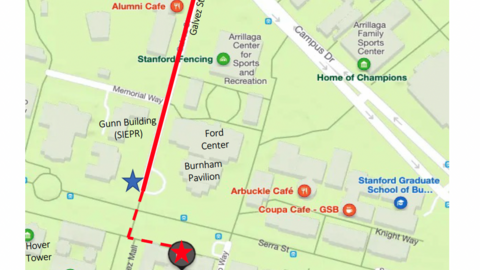
The closest drop-off location is: Gunn Building, 366 Galvez St., Stanford, CA 94305
From Galvez, walk South towards the Hoover Tower, and turn left at the intersection, onto Jane Stanford Way. Encina Hall is the large four-story building on your right. Enter through the main door, at the top of the stairs, and head up to the 2nd floor. An accessible entrance and ramp are located on the right side of Encina Hall, at the West Entrance.
Encina Hall
616 Jane Stanford Way
Stanford, CA 94305-6055
0
fafchamp@stanford.edu
Senior Fellow Emeritus at the Freeman Spogli Institute for International Studies
Professor, by courtesy, of Economics
marcel_fafchamps_2025.jpg
Marcel Fafchamps is a Senior Fellow Emeritus at the Freeman Spogli Institute for International Studies (FSI) and a member of the Center on Democracy, Development and the Rule of Law. Previously, he was the Satre Family Senior Fellow at FSI. Fafchamps is a professor (by courtesy) for the Department of Economics at Stanford University. His research interests include economic development, market institutions, social networks, and behavioral economics — with a special focus on Africa and South Asia.
Prior to joining FSI, from 1999-2013, Fafchamps served as professor of development economics in the Department of Economics at Oxford University. He also served as deputy director and then co-director of the Center for the Study of African Economies. From 1989 to 1996, Fafchamps was an assistant professor with the Food Research Institute at Stanford University. Following the closure of the Institute, he taught for two years at the Department of Economics. For the 1998-1999 academic year, Fafchamps was on sabbatical leave at the research department of the World Bank. Before pursuing his PhD in 1986, Fafchamps was based in Addis Ababa, Ethiopia, for 5 years during his employment with the International Labour Organization, a United Nations agency that oversees employment, income distribution, and vocational training in Africa.
He has authored two books: Market Institutions in Sub-Saharan Africa: Theory and Evidence (MIT Press, 2004) and Rural Poverty, Risk, and Development (Elgar Press, 2003), and has published numerous articles in academic journals.
Fafchamps served as the editor-in-chief of Economic Development and Cultural Change until 2020. Previously, he had served as chief editor of the Journal of African Economies from 2000 to 2013, and as associate editor of the Economic Journal, the Journal of Development Economics, Economic Development and Cultural Change, the American Journal of Agricultural Economics, and the Revue d'Economie du Développement.
He is a research associate of the National Bureau of Economic Research, an affiliated professor with J-PAL, a senior fellow with the Bureau for Research and Economic Analysis of Development, a research fellow with IZA, Germany, and with the Center for Economic and Policy Research, UK, and an affiliate with the University of California’s Center for Effective Global Action.
Fafchamps has degrees in Law and in Economics from the Université Catholique de Louvain. He holds a PhD in Agricultural and Resource Economics from the University of California, Berkeley.
Senior Fellow, Freeman Spogli Institute for International Studies
Professor, Economics
Senior Fellow, Stanford Institute for Economic Policy Research
Director, Stanford King Center on Global Development
dupas_photo_resized.jpg
Ph.D.
Pascaline Dupas is a development economist seeking to better understand challenges facing poor households in lower income countries. Her aim is to identify tools and policies that can help overcome these challenges and reduce global poverty. Her research aims to understand the barriers that households and governments face in accumulating or fostering accumulation of health and education, and how these barriers can be overcome. She conducts extensive fieldwork — field experiments embedded in longitudinal data collection efforts, which are used to perform empirical tests of microeconomic theory and to quantify the effects of potential policies. Health is the primary focus of Dupas’ research to date. Her work covers the role of information and education in health behavior, and the role of subsidies in increasing adoption of health technologies.
Hide publication sections
Off
Pascaline Dupas
Professor of Economics and Public Affairs
Princeton University
Deivy Houeix
Prize Fellow, Center for History and Economics
Panelist
Harvard University
Simon Quinn
Associate Professor, Department of Economics & Public Policy
Speaker
Imperial College Business School
Tom Schwantje
Postdoctoral Research Fellow
Panelist
Bocconi University
The "Meet Our Researchers" series showcases the incredible scholars at Stanford’s Center on Democracy, Development and the Rule of Law (CDDRL). Through engaging interviews conducted by our undergraduate research assistants, we explore the journeys, passions, and insights of CDDRL’s faculty and researchers.
Ayça Alemdaroğlu is a Research Scholar at the Center on Democracy, Development and the Rule of Law (CDDRL), Associate Director of the center’s Program on Turkey, and a Global Fellow at the Peace Research Institute Oslo (PRIO). Her research focuses on understanding authoritarian regimes and the opposition movements against them, particularly in Turkey.
What inspired you to pursue research in your current field, and how did your journey lead you to CDDRL?
During my childhood in Turkey, I grew up discussing political issues at dinner, as my family was always very engaged in politics. My mother founded two leftist political parties, while my father ran in numerous elections and served as the mayor in Ankara for five years. I then studied political science and sociology in school, focusing on cultural and class issues while doing my PhD at Cambridge.
I eventually came to CDDRL because I appreciated its interdisciplinary emphasis and its focus on current societal issues. My early research focused on how political regimes shape people as individuals through policies and institutions. I was especially curious about eugenics efforts intended to build up a healthier nation, though it often manifested negatively through policies like sterilization.
During my PhD, I began focusing on youth and how social hierarchies, regimes, and inequalities affected their identities. At the time, there was a lot of discourse about the threat of a “dangerous” Muslim youth, but these young people were not monolithic. Often, they were reacting to concerns like finding jobs in a way that any youth group would, meaning their behavior was less correlated to their religious and cultural background than people portrayed it.
Based on your research, how do regimes affect people’s view of their own identities and political factionalism?
I disagree with the cultural primordialist approach that inherent differences are largely unchanging between peoples. Instead, I believe that the way narratives about identities are articulated in politics can strongly exacerbate differences.
For example, the Kurds in Turkey do have distinctive qualities, such as their language and ethnic group. However, what really makes them different is the unfair historical processes that Kurds have been subjected to.
I believe that the way narratives about identities are articulated in politics can strongly exacerbate differences.
Ayça Alemdaroğlu
What is the most exciting or impactful finding from your research, and why do you think it matters for democracy, development, or the rule of law?
My current research examines the question of how opposition movements survive in authoritarian contexts, with a focus on recent local elections in Turkey, where conservative incumbents were defeated for the first time in decades. We found that the opposition successfully built bottom-up alliances at the local level, which may be more successful than parties trying to form coalitions at the national level.
This is because top-down alliances, as were attempted to be formed in Turkey in 2023, tend to be fragile and lack sufficient power to win elections. Top-down efforts involve convincing leaders of ideologically opposed parties to join together, which often isn’t effective in convincing their base to join suit.
On the other hand, bottom-up local action can be much more powerful, with alliances in municipalities formed through an intimate knowledge of how resources and power are distributed among groups. These opposition coalitions, bound together by substantive ideas and community knowledge, tend to be more persuasive.
This research demonstrates the power of local government and how opposition can be strengthened through numerous bottom-up alliances, as opposed to a weak, top-down national approach. Still, there are difficulties in preventing authoritarian backlash as a response to oppositional successes. After the loss of many governing party candidates in Turkey recently, there has been a new wave of coercion against municipal leaders, such as the Istanbul mayor being jailed after running as a presidential candidate. Several other newly elected mayors have been in jail for months without even an indictment.
How does the increased authoritarianism in Turkey fit into the context of global democratic recession? Are these patterns of oppositional gains in local elections a sign of a more optimistic future for Turkey, or is it still in a state of democratic decline?
I believe our research suggests that the opposition is more effectively contesting the governing party; however, it is too early to say whether this could serve as a model for a broader shift. Despite being embedded in European organizations and experiencing a moment of democratization in the 2000s, Turkey has become increasingly authoritarian, becoming one of the earliest cases of modern democratic decline. Also, global influences are harming Turkey’s trajectory, such as the presence of a more undemocratic leader in the U.S.
I believe our research suggests that the opposition is more effectively contesting the governing party; however, it is too early to say whether this could serve as a model for a broader shift.
Ayça Alemdaroğlu
How do you see your research influencing policy or contributing to real-world change?
When starting research, I don’t think of writing policy as my main goal. Instead, it’s to understand big questions or add more nuance to a discussion about a phenomenon. My research today on local power dynamics and bottom-up coalition building continues to have real-world relevance in the battle against authoritarian regimes.
Returning to your research on Turkey and particularly the plight of the Kurdish minority, how can states mitigate the effects of ethnic fractionalism on development?
In Turkey, I think of democratization as being possible through the recognition of the cultural and political rights of the Kurds. The opening of systems to those who have been historically excluded would benefit not only democratic development but also economic development. This is because ethnically inclusive states are more prosperous, as otherwise, ethnic conflict hinders development, with national security concerns scaring off investment.
Amidst increasing authoritarianism, have situations for minorities like the Kurds worsened or improved over time?
While there have been gestures of peace with the Kurds, when those efforts fail, the Turkish government often strengthens authoritarian measures. This is exemplified by the peace negotiations from 2013 to 2015, which initially resulted in the Kurds amassing more political power. This caused the regime to fear being undermined and become more coercive toward the minority group in the long run.
Overall, improvements for the Kurds have not been linear. Peace negotiations are currently underway, though many believe them to be insincere. When looking at the regime’s other policies towards opposition, journalists, and students, it’s easy to be pessimistic.
What gaps do you feel need to be addressed in your research field, and what do you anticipate you will study more in the future?
In the intellectual circles I have been a part of, academics tend to come from a political science background. I’m more interested in bringing in cultural and sociological perspectives, such as through discussions of social class or different ethnic groups. My research will continue to unite multi-disciplinary ideas to gain a deeper understanding of authoritarian regimes.
Could you elaborate further on your research into youth participation?
Currently, I’m working on a project comparing the U.S. and Turkey to better understand youth political behavior. In the recent elections in both countries, there was a lot of emphasis on the youth voice as a counter-authoritarian force, but this prediction did not necessarily hold true. In the US, many were persuaded by Trump’s agenda, especially young men. It’s important not to generalize too much when studying youth, as they are as diverse as the rest of the population. Still, there are notable trends among young people to monitor, like the Turkish youth’s growing secularism and how that might impact the Islamist parties’ power.
You’ve discussed the importance of recognizing the impact of class when conducting research. How do you think politicians have capitalized on class to maintain power in Turkey, and is the opposition or current regime more supported by the working class?
The Islamist parties have been most known to garner support from lower economic groups. While the main opposition party is relearning how to succeed among the working class, it would be an overstatement to assume this shift has significantly expanded beyond the local level at this point.
President Erdogan was able to amass power by garnering support from the poor, going door-to-door and engaging in bottom-up efforts to get their votes. Now, opposition leaders appear to be learning from these strategies, leading to improved outcomes so far.
President Erdogan was able to amass power by garnering support from the poor, going door-to-door and engaging in bottom-up efforts to get their votes. Now, opposition leaders appear to be learning from these strategies, leading to improved outcomes so far.
Ayça Alemdaroğlu
Lastly, what books would you recommend for students interested in a research career in your field?
I may be expected to recommend political science books, but it is American sociologist Richard Sennett who especially influenced me early in my career. He focuses on how big social changes affect individuals. His book, The Hidden Injuries of Class, shaped my understanding of how social class is not just a reflection of an individual’s position in society, but also influences one’s sense of self. He also wrote Respect in a World of Inequality about how changes in the economy and labor market influence individuals. Sennet’s work successfully approaches issues in a humane, historical, and power-conscious way.
Read More
News
Traveling Turkey with Ayça Alemdaroğlu
Ayça Alemdaroğlu, associate director of Stanford's Program on Turkey, explores how national identities are created and how people voice dissent.
Studying Middle Eastern History Through Graphic Novels
A spring quarter course co-taught by CDDRL's Ayça Alemdaroğlu explored how graphic novels convey the visceral realities of living amidst political violence and conflict in a way traditional media struggle to match.
Challenges and Opportunities in Turkey's 2023 Presidential and Parliamentary Elections
In this Q&A, Ayça Alemdaroğlu, Associate Director of the Program on Turkey at the Center on Democracy, Development and the Rule of Law, discusses the key issues and their implications for the country's future.
Exploring how authoritarian regimes influence identity, opposition movements, and class dynamics with CDDRL Research Scholar Ayça Alemdaroğlu, Associate Director of the center's Program on Turkey.
Public health infrastructure varies widely at the local, state, and national levels, and the COVID-19 response revealed just how critical local health authority can be. Public health officials created COVID policies, enforced behavioral and non-pharmaceutical interventions, and communicated with the public. This article explores the determinants of public health capacity, distinguishing between formal institutional capacity (i.e., budget, staff) and informal embedded capacity (i.e., community ties, insulation from political pressures). Using qualitative data and interviews with county health officers in California, this article shows that informal embedded capacity—while difficult to measure—is essential to public health capacity. It concludes by relating public health capacity to broader issues of state capacity and democracy.
Aurelia is an undergraduate student at Stanford studying International Relations. Her background lies in studies of Southeast Asia and Psychology. Her current research interests focus on Comparative International Governance of foreign policy approaches and law reform across the Global North and South. She is serving as a research assistant over the summer of '25 with CDDRL. In her spare time, she enjoys watching musical theatre, cooking, and hanging out with her closest friends.
Editorial Assistant, Journal of Democracy, Fall 2026
Research Assistant, Fisher Family Summer Fellows Program, Summer 2025
Conventional indicators may suggest that the United States is not susceptible to democratic backsliding, given its levels of wealth and the longevity of its political institutions. Yet a different picture emerges when considering assaults on the law following President Donald Trump’s return to power. In a recent CDDRL seminar. U.C. Berkeley Distinguished Professor of Political Science Paul Pierson examined the institutional roots of this trend and how it was shaped by the current moment of polarization and rising inequality.
Deepening partisanship, Pierson explained, has eroded the checks and balances embedded in U.S. institutions. Some assert that polarization is not abnormal in our country’s history, but Pierson believes that the state of polarization today poses unprecedented challenges. Politics has been increasingly nationalized, with state elections serving as a virtual training ground for ambitious politicians. Local media have declined in influence relative to nationally oriented partisan news outlets like Fox News. State issues are blending into national politics. These trends have undermined the system of federalism that historically kept the national government in check.
As politicians have become more concerned about teamsmanship and partisan loyalty, the path of least resistance for them has been to prop up their party leaders even at the expense of democratic processes. In the past, partisan politicians could be trusted to keep their leaders in check should they behave undemocratically, regardless of how popular they may be. A case in point is President Richard Nixon, who had been reelected in a landslide in 1972, but was later held accountable by members of his own party once his transgressions were revealed in the wake of the Watergate scandal. The same cannot be said for the contemporary Trump era, as politicians appear reluctant to hold their president accountable due to partisan considerations. This trend has undermined horizontal oversight and, arguably, vertical accountability. On the latter, political elites have failed to adequately press citizens to hold the current administration accountable.
The U.S. remains an extreme outlier in its growing wealth inequality, as mirrored by the ascendancy of ultra-wealthy plutocrats. Campaign funding has been increasingly dominated by the ultra-wealthy, many of whom supported the Republican ticket in the 2024 election. That said, these individuals’ influence is not unlimited, considering that the president has leverage over them and has shown willingness to threaten their interests should they behave disloyally.
Despite blatant warning signs, there are some reasons to temper the alarmism surrounding the prospects of democratic backsliding in the United States. President Trump is not overwhelmingly popular, and aspects of his agenda will unlikely garner support from most of the electorate. Furthermore, whether his legacy will endure following the end of his presidency is unclear. Indeed, the vulnerabilities of U.S. political institutions remain salient. But plenty of room remains for resisting anti-democratic transgressions, given the non-partisan orientation of the judiciary and the small size of the Republican majority in the U.S. House of Representatives.
The challenges confronting U.S. political institutions in the face of hyperpolarization and deepening wealth inequality demonstrate that democracy should not be taken for granted and that more efforts are needed to protect and strengthen democratic accountability.
A recording of Professor Pierson's talk can be viewed below:
Read More
News
Margins That Matter: Understanding the Changing Nature of U.S. Elections
In a CDDRL research seminar, Clémence Tricaud, Assistant Professor of Economics at the UCLA Anderson School of Management, shared her research on the evolving nature of electoral competition in the United States. She explored a question of growing political and public interest: Are U.S. elections truly getting closer—and if so, why does that matter?
Empathy in Action: How Perspective-Taking Shapes Public Support for Ukraine in Eastern Europe
In a REDS seminar talk, co-hosted by CDDRL and The Europe Center, Princeton Professor of Politics Grigore Pop-Eleches shared findings from a major research project examining what drives support for Ukraine — and whether empathy can help counter growing war fatigue.
Impacts of Ethics Training on Police Officers in Ghana
Associate Professor at Texas A&M University Danila Serra’s field research on the impacts of police ethics training provides hope for reducing corruption and restoring public faith in state institutions.
Paul Pierson presented his research in a CDDRL seminar on May 22, 2025. | Soraya Johnson
All News button
1
Subtitle
University of California, Berkeley Distinguished Professor Paul Pierson explores the risks of democratic backsliding in the United States in the face of rising polarization and inequality.
Sallam, Hesham. 2025. “Authenticity and National Loyalty: The Intellectual Roots of Islamist-Leftist Affective Polarisation in Post-2013 Egypt.” The Journal of North African Studies, February, 1–29. doi:10.1080/13629387.2025.2469791.
Hesham Sallam draws our attention to a surprising pattern: Egyptian Islamists and leftists have, for several generations, criticized each other on remarkably similar grounds. Their arguments have sometimes focused on Islam and left-wing political goals. But just as — if not more — frequently, they have focused on how each other’s agendas are inauthentic to Egyptian society and promoted to benefit foreign actors. It is true that the contents of their critiques have differed: Islamists denounce the left as betraying Egypt’s pure, Islamic nation while acting on behalf of “Zionists” or “western imperialists.” Meanwhile, leftists see Islamists as inauthentic to Egypt’s secular, pluralistic history, as well as advancing foreign interests. These differences notwithstanding, a common structure of political argument has been preserved across decades.
The article introduces the history of Islamist-leftist debate in Egypt since the 1970s. Central to this history was the process of reappropriation: Islamists criticized the left, and the left responded by criticizing Islamists using more or less the same script. The study draws upon an array of Arabic sources likely unknown to readers outside of Egypt, including editorials, monographs, and public debates.
The Islamist Critique
The article first presents the intricacies of Egyptian Islamists’ critique of the left. There is a long history of Egyptian political elites denouncing left-wing politics as inauthentic and foreign. For example, Gamal Abdel-Nasser accused Egyptian communists of conspiring with Zionists and Soviets, while Anwar al-Sadat accused them of atheism and thus betraying Egypt’s Islamic essence. As leftists were repeatedly accused of disloyalty, nationalist ideas became even more dominant within leftist circles — this despite the historical suspicions of left-wing thinkers of nationalism as a distraction from class politics. The Egyptian case thus mirrors the trajectory of Europe’s internationalist labor movements during World War II, when leftist political goals were abandoned for state nationalism. In any case, the Islamist critique, which was led principally by the Muslim Brotherhood, regularly accused the left of foreign loyalties and a betrayal of Egyptian values. Over time, this critique was extended to secular Egyptians and deployed increasingly virulent language; for example, an academic critic of Islamism was denied promotion, ostensibly for his writings that were described by an Islamist detractor as “spreading cultural AIDS.” They also drew on prominent social science frameworks like Samuel Huntington’s “Clash of Civilizations”: Egypt’s authentic Islamic nation was seen as pitted in an irresolvable clash against the atheistic West, which, they alleged, was simultaneously funding the Egyptian left. These are just a few of the examples Sallam uses to show how Islamists portrayed the left as inauthentic and disloyal, undermining its legitimacy in Egyptian politics.
As leftists were repeatedly accused of disloyalty, nationalist ideas became even more dominant within leftist circles.
The Leftist Critique
Sallam next shows us how the left struck back at their Islamist foes. A key process in this history concerns the Hosni Mubarak regime’s co-optation of influential leftists into the state’s cultural institutions. This occurred as a response to the Muslim Brotherhood’s electoral successes in the 1980s. Coincident with these institutional changes, leftists began appropriating the authenticity critique. They claimed that Islamists were engaged not in building a pure Islamic state and society, but in a narrow project meant to advance their own political standing. Rejecting the Islamist critique of them as atheists, leftists accused their opponents of weaponizing Islam and betraying its true essence. They rejected the distinction between so-called violent and nonviolent Islamism, on the grounds that nonviolent Islamists still were willing to justify violence. Islamists were said to be working on behalf of foreign interests like Sudanese president Omar Al-Bashir, whose designs on Egyptian territory went unnoticed by Islamists. The Brotherhood was deemed a cult-like vehicle for indoctrinating and promoting foreign goals, especially those of the Gulf. Far from authentic to Egyptian society, Islamists were seen as holding Egyptian Muslims in contempt for their alleged heresies. And in one of the most surprising appropriations, leftists claimed that Islamists were in fact quite similar to both Zionists and imperialists: all three sought to dominate the Middle East through sectarian politics. The Brotherhood’s Egyptian constitution was denigrated for being indistinguishable from versions published in Europe and Pakistan. Especially inauthentic to Egyptian society was the Brotherhood’s view of religious minorities as second-class citizens; this was deemed a fundamental betrayal of Egypt’s national essence, namely secular pluralism. These counter-critiques helped the left frame itself as the true guardian of the Egyptian nation.
In one of the most surprising appropriations, leftists claimed that Islamists were in fact quite similar to both Zionists and imperialists: all three sought to dominate the Middle East through sectarian politics.
Beyond Speech
Importantly, the Islamist-leftist debates were not mere rhetoric, but served as a basis for political action, especially when it came to questions of cooperation. For example, after the Islamist critic Farag Foda was assassinated, the so-called ‘moderate’ Islamist Mohamed Al-Ghazali defended his assassins; some leftists used these events to justify their refusal to cooperate with Islamists. More generally, they argued that Islamists’ quest for a religious state would only lead to political violence and exclusion, further grounds to reject compromise. Yet claims about authenticity and nationalism were also used to justify cooperation, as when leftists argued that both they and the Brotherhood were natural allies in the fight against foreign imperialism and Zionism. It is not clear whether a less confrontational approach would have helped Islamists and leftists cooperate against Egypt’s successive dictators, but their divisive rhetoric almost certainly did not help matters.
The Islamist-leftist debates were not mere rhetoric, but served as a basis for political action, especially when it came to questions of cooperation.
Contributions
The article will help readers understand why Egyptian politics has become increasingly marked by groups’ ‘affective’ hatreds for one another, as opposed to normal political disagreements. By weaving the themes of treason and inauthenticity through decades of history, Sallam shows us why this new status quo is not surprising. Affective polarization has led many Egyptians to view their opponents as unworthy of political inclusion, consistent with the rise of a global populism that emphasizes “us vs. them” distinctions. Sallam fleshes this out by relaying the different responses among leftists and Islamists to Egypt’s 2013 military coup, which ousted the Brotherhood leader Morsi. Leftists called the coup a necessary evil to counter foreign influences seeking to establish an Islamic state, while Islamists accused the left of being sponsored by the West.
Readers will see the conflict between Islamists and leftists as not just fleeting moments of political disagreement, but a generations-long battle for domination in the realm of ideas.