FSI researchers consider international development from a variety of angles. They analyze ideas such as how public action and good governance are cornerstones of economic prosperity in Mexico and how investments in high school education will improve China’s economy.
They are looking at novel technological interventions to improve rural livelihoods, like the development implications of solar power-generated crop growing in Northern Benin.
FSI academics also assess which political processes yield better access to public services, particularly in developing countries. With a focus on health care, researchers have studied the political incentives to embrace UNICEF’s child survival efforts and how a well-run anti-alcohol policy in Russia affected mortality rates.
FSI’s work on international development also includes training the next generation of leaders through pre- and post-doctoral fellowships as well as the Draper Hills Summer Fellows Program.
Governance is exceptionally complex in health systems. Part of the complexity lies in the differences between these systems; especially across countries. Differences make it difficult to assess governance conditions in a comparative sense, and call for a framework to think about this issue. This talk discusses a potential framework based on the idea that governance mechanisms vary depending on relationships in systems and the problems that systems face. The framework is applied to different countries to show how different health sector governance regimes might be required for different contexts.
Speaker Bio
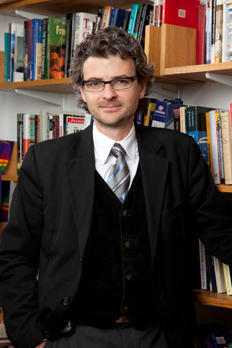
Matt Andrews
Matt Andrews is Associate Professor of Public Policy at Harvard Kennedy School. A South African, he does research on governance in developing countries and also on implementation of reforms. His most recent work examines comparative governance arrangements as well as problem driven approaches to doing development differently.
**This event is co-sponsored by the FSI Policy Implementation Lab.**
Governance Maps, Traps and Emergent Strategies
Matt Andrews
Associate Professor of Public Policy, Harvard Kennedy School
Associate Professor of Public Policy, Harvard Kennedy School
Social and economic grievances of Tunisian youth played a major role in igniting the uprising in Tunisia, and more generally, the so-called Arab Spring. Despite a successful political transition in the country, progress on addressing youth grievances has been slow in light of deteriorating living conditions, rampant corruption, and rising unemployment. These realities continue to pose a serious challenge to the prospects of building a sustainable democracy in Tunisia. Based on data gathered from meetings with a diverse group of 500 young Tunisians, this talk will shed light on youth’s perceived and actual exclusion from social, economic, and political opportunities. In doing so it will provide a critical assessment of the underlying causes of youth alienation in the country and prospects for greater political, social and economic inclusion.
Speaker Bio
Image
Ghazi Ben Ahmed leads the Mediterranean Development Initiative of the Center for Transatlantic Relations, Johns Hopkins SAIS in Tunisia. He is the founder and the Secretary General of the Club de Tunis, a Tunisian based foundation that helps policymakers and entrepreneurs devise strategies and development projects for inclusive growth. He has set up jointly with Dar El Dhekra (Remembrance House, the first Tunisian Jewish Association), a project to safeguard Tunisian Jewish Heritage by promoting its products on the US market. Ghazi Ben Ahmed is the Tunisia Coordinator for Leaders Engaged in New Democracies (LEND). He cooperates with the U.S. State Department, the Community of Democracies, and the Club de Madrid to provide peer advice, peer support, and capacity building to political leaders and policy makers in Tunisia. Previously he was the Lead Trade Expert in the African Development Bank (AfDB). Before joining the AfDB, he was a Senior Advisor at the United Nation agency for Trade and Development (UNCTAD), in the Africa and LDC Division. He also worked for almost 10 years in the European Commission in Brussels, in several Directorates-Generals: Trade, EuropeAid and External Relations, responsible for trade issues, EU trade and development policy, textile negotiations, macroeconomic analysis, structural adjustment and institutional building in the Mediterranean countries.
*This event is co-sponsored with the Mediterranean Studies Forum.*
[[{"fid":"218669","view_mode":"crop_870xauto","fields":{"format":"crop_870xauto","field_file_image_description[und][0][value]":"Ghazi Ben Ahmed flyer","field_file_image_alt_text[und][0][value]":"","field_file_image_title_text[und][0][value]":"","field_credit[und][0][value]":"","field_caption[und][0][value]":"","field_related_image_aspect[und][0][value]":"","thumbnails":"crop_870xauto","pp_lightbox":false,"pp_description":false},"type":"media","attributes":{"height":"540","width":"870","class":"media-element file-crop-870xauto"}}]]
Okimoto Conference Room 3rd Floor East Wing Encina Hall 616 Serra Street Stanford, California 94305
Ghazi Ben Ahmed
Executive Director
Mediterranean Development Initiative
Ambassador David Lane was nominated by President Barack Obama to serve as the U.S. Representative to the United Nations Agencies for Food and Agriculture and confirmed by the U.S. Senate on May 24, 2012.
Ambassador Lane has more than twenty years of experience working in leadership positions across sectors. Before coming to Rome, he served at the White House as Assistant to the President and Counselor to the Chief of Staff.
Prior to joining the Obama Administration, he served as President and CEO of the ONE Campaign, a global advocacy organization focused on extreme poverty, development, and reform. Before that, as Director of Foundation Advocacy and the East Coast Office of the Bill & Melinda Gates Foundation, he helped lead that organization’s advocacy and public policy efforts.
During the Clinton Administration, he served as Executive Director of the National Economic Council at the White House and Chief of Staff to the U. S. Secretary of Commerce. He served as Vice-Chair of Transparency International USA, and he is a member of the Council on Foreign Relations
Ambassador Lane earned his B.A. from the University of Virginia and his M.P.A. from the Princeton University Woodrow Wilson School of Public and International Affairs.
Islamic charities occupied a critical space in Mubarak-era Egypt. While there are a plethora of organizational types and activities, Mona Atia describes a particular type of work performed by Islamic charities as a merging of religious and capitalist subjectivity, or pious neoliberalism. Pious neoliberalism describes how Islamism works in conjunction with neoliberalism rather than as an alternative to it. It represents a new compatibility between business and piety that is not specific to any religion, but rather is a result of the ways in which religion and economy interact in the contemporary moment. In Egypt, pious neoliberalism produces new institutions, systems of knowledge production and subjectivities. This lecture explores the relationship between Islamic charity and Egypt’s variegated religious landscape. The author will discuss how Islamic charities helped spread Islamic practices outside the space of the mosque and into everyday life/spaces and their impact on development in Egypt.
Speaker Bio:
Image
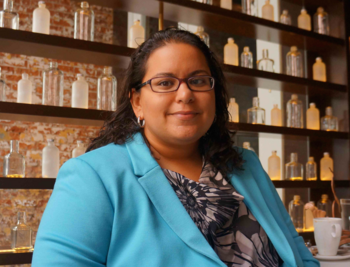
Mona Atia is Associate Professor of Geography and International Affairs at the George Washington University. She received her PhD in Geography at the University of Washington, where she received the 2008 Distinguished Dissertation Award. She holds a MSc in Cities, Space and Society from the London School of Economics and a BS in Business Administration from the University of California at Berkeley. Professor Atia is a critical development geographer whose areas of expertise include Islamic charity and finance, philanthropy and humanitarianism, and the production of poverty knowledge. She is author of Building a House in Heaven: Pious Neoliberalism and Islamic Charity in Egypt (University of Minnesota Press, 2013). She currently holds an NSF CAREER Award for her project "The Impact of Poverty Mapping on the Geography of Development."
This event is co-sponsored by the Sohaib and Sara Abbasi Program in Islamic Studies.
Participant youth, Wallace and Wellington, overlooking the city from their community.
CONFERENCE OVERVIEW
The heavy presence of youth and young adults in the world of criminality is an issue that has been gaining increasingly more attention in the agendas of policymakers and politicians in developing and developed nations. With scarce options for a quality education, prospects for gainful employment and the possibility for future economic sustainability, on a daily basis, young individuals from poor communities throughout Latin American and U.S. cities are exposed to a violent environment with easily accessed - and often attractive - gateways into the world of criminality. From casual affiliation to gangs in schools and neighborhoods in Southern California, to full-time armed participation in international drug cartels in Juarez and drug factions in Rio de Janeiro favelas, youth are the biggest target – and victims – of violence.
In attempts to shed light to this very complex and fundamental issue that is claiming thousand of lives every year and deteriorating the social fabric across cities, the Program on Poverty and Governance (PovGov) at Stanford Center on Democracy, Development, and the Rule of Law (CDDRL) in conjunction with the Center for Latin American Studies, The Bill Lane Center for the America West, The Mexico Initiative at FSI, and The Center on International Security and Cooperation, will hold a two-day conference to discuss the dimensions of youth and criminal violence in Latin American and U.S. cities and share pathways to hope.
Ranging from grassroots initiatives to widespread government policies, the conference will develop on various established development actions and programs aimed at providing educational, work, and entrepreneurial opportunities for youth in territories impacted by poverty, criminality and violence in the U.S. and Latin America. We will gather activists and practitioners from grassroots civil society organizations, community leaders, educators, professionals from international development platforms, policy-makers, politicians, scholars - as well as some of the very individuals participating in these programs - to discuss the many challenges faced by the youth population in these different locations and to share innovative and inspirational initiatives to generate opportunities and foster change.
At PovGov, we believe in the importance of creating an environment where actors with different backgrounds across sectors, disciplines, realities and environments can come together to share their first-hand experiences, challenges and aspirations. We hope this wide-reaching and multiplayer conference can enrich the discussion around the formulation of policies and development strategies to benefit the youth in places of violence and better inform the work moving forward.
· Brenda Jarillo, Post-Doctoral Fellow, PovGov, Stanford University.
· Monica Valdez González, Director of Research and Studies, IMJUVE, Mexico.
Discussant: Francis Fukuyama, Director, Program on Governance, Stanford University.
10:40 – 11:40
Keynote Speaker
The Agenda for Youth Violence Prevention in Brazil: Where We Are Now and Where We Are Heading
Angela Guimarães, Brazil’s Sub-Secretary of Youth and President of the National Council on Youth (CONJUVE)
11:50 – 12:50: Lunch
1:00 – 2:30
Panel 2. Initiatives for At-risk Youth in Rio Favelas
· Eliana de Sousa e Silva, Director, Redes de Desenvolvimento da Maré, Rio de Janeiro, Brazil.
· Jailson de Sousa e Silva, Director, Observatório de Favelas, Rio de Janeiro, Brazil.
· Ivana Bentes, National Secretary of Citizenship and Cultural Diversity, Brazil.
Discussant: Larry Diamond, Director, CDDRL, Stanford University.
(10-minute break)
2:40 – 4:10
Panel 3. Reducing Youth Gang Activity and Violence in the U.S.
· Amy Crawford, Deputy Director, Center for Crime Prevention and Control, John Jay College of Criminal Justice in New York.
· Lateefah Simon, Director, California’s Future Initiative at Rosenberg Foundation, San Francisco, California.
· Christa Gannon, Founder and Director, Fresh Lifelines for Youth, San Mateo and Santa Clara, California.
Discussant:Bruce Cain, Director, Bill Lane Institute for the American West, Stanford University.
4:15 – 5:00: Closing Event of the Day
Stanford International Crime and Violence Lab announcement; cooperation agreement ceremony; photography exposition from Observatório de Favelas (“People’s Images” project).
· Beatriz Magaloni, Stanford University.
· Alberto Diaz-Cayeros, Stanford University.
(Adjourn)
Wednesday, April 29th 2015
9:00- 10:30
Panel 4. Evaluating Effective Interventions for Youth
· Jorja Leap, Adjunct Professor, Department of Social Welfare; Director, Health and Social Justice Partnership, UCLA.
Join the Stanford Association for International Development (SAID) on Saturday, April 11th for their 2015 conference centered on the theme of forced migration. Hear keynote Alex Aleinikoff, UN Deputy High Commissioner for Refugees and a diverse panel of speakers discuss the impacts of forced migration around the world. There will also be a social impact and international development career fair during lunch. Find more information and register at saidconference.org.
About Stanford Association for International Development (SAID)
Stanford Association for International Development (SAID) is a student-run organization with a mission of promoting awareness of international development on campus and in the surrounding community. SAID partners annually with Stanford’s Center on Democracy, Development and the Rule of Law (CDDRL) to put on our conference. CDDRL is a leading center of thought, research and teaching in international development, and frequently organizes academic and policy forums to increase the public understanding of economic and political development. This spring, SAID and CDDRL will host a conference at Stanford University on the topic of forced migration.
This event is co-sponsored by CDDRL, CDDRL's Program on Human Rights, Stanford In Government, Stanford Speaker’s Bureau, Graduate Student Council, Stanford Global Studies, CREES and the Stanford Economics Department, among others.
Elizabeth Blake, Habitat for Humanity International’s General Counsel and team leader of its Government Relations and Advocacy operations, spoke to students at the Freeman Spogli Institute on February 25 as part of the Program on Human Rights Winter Speaker Series that examined U.S Human Rights NGO’s and International Human Rights.
Habitat for Humanity is a Christian not-for-profit organization that started in 1974 with the credo that every person has a human right to secure shelter and tenure of land. Most of its work is overseas, where Habitat for Humanity has built homes for over 3 million people in over 70 countries. Using security of tenure as its cornerstone, it especially assists women and children who are the most vulnerable to homelessness and insecure tenure. Habitat for Humanity has also recently expanded into housing microfinance, water and sanitation, risk reduction and response, and in creating Habitat Resource Centers.
Blake’s provocative starting salvo was that “NGOs often do harm and frequently waste money.” Instead, they need to work better among themselves and invite partnerships with other NGOs, governments, and multi-lateral partners. This is not simply a moral imperative but also a practical necessity given the size of the U.S. not-for-profit sector, which as an employer of 13 million people is a significant part of the national economy.
Habitat for Humanity’s approach maximizes its impact abroad through four principles:
1. Community development starts with its people – people are the true assets;
2. International community development must be based upon priorities set by the local community itself;
3. The test of success of any community development is that local capacity is improved; and
4. “Accompaniment” – a term first coined by Paul Farmer of Partners in Health: Habitat for Humanity works with and works for the people of that community.
This last principle is the most important: Habitat for Humanity has 1 million volunteers each year who work together with communities, or as Blake says, “scraping walls together with people from a local community is a different relationship to handing out soup” and ensures “going from aid to empowerment.”
Responding to questions from Dana Phelps, program associate for the Program on Human Rights and moderator of the event, Blake emphasized the relevance of her corporate background to working in the non-profit world. As a graduate of Columbia University’s School of Law, she brings her extensive corporate experience to her work at Habitat, and stressed that “non-profits are businesses – a major corporate undertaking” for which her business background had trained her “not to take no for an answer.”
Blake also explained that while Habitat for Humanity is a multi-denominational Christian organization, it is not registered as a church. This means it is subject to anti-discrimination laws in its hiring practices and daily operations. It does not engage in prosthletyzing but instead sees itself as a morals-based organization.
When Blake was further pressed on how “accompaniment” works in practice, she emphasized that Habitat for Humanity does not impose its values and morals on communities, but instead has intentionally slow processes that ensure communities adapt new practices in their own time. For example, when questioned on the impact of gender-equality housing improvements, Blake said, “Habitat for Humanity doesn’t make the first running – it tends to go in to communities that are already taking the running on gender equality.”
Helen Stacy, Director of the Program on Human Rights
Hero Image
Elizabeth Blake, former SVP of Habitat for Humanity, speaks at Stanford | Dana Phelps
Mark Lorey, vice president for Child Development and Program Effectiveness at World Vision International, spoke on his experience working for a faith-based international NGO on human rights issues at the Stanford Program on Human Rights’ Winter Speaker Series, U.S. Human Rights NGOs and International Human Rights, on February 18, 2015.
Lorey addressed the Stanford audience from the Christian perspective and outlined World Vision’s mission for the sustained well-being of children. The projects and other initiatives that World Vision has in place often have a strong religious component to them. For example, many of the projects aim to empower local religious leaders to mobilize marginalized populations through deep faith and commitment to their God. He focused on the stigma and judgment that is attached to HIV/AIDS, especially coming from those of strict religious orientation. In believing in the capability for change, he presented a video that highlighted the experience of a devout Armenian Orthodox priest that once spoke adamantly against those inflicted with HIV/AIDS, but that through a World Vision educative program became a strong advocate for the victims of the disease.
Nicolle Richards, a Stanford undergraduate whose commitment to faith-based organizations has shifted considerably throughout her Stanford career, moderated the event. Richards pressed Lorey on World Vision’s work and the work of faith-based organizations more broadly. She questioned the contrast between faith-based and secular NGOs’ mission and impact in the field; the ethics involved when working with children of secular backgrounds; incorporating religious differences into their community work; and the details of a particular World Vision controversy over their decision to not hire people of different sexual orientations. Lorey struggled to answer many of these sensitive and important questions, leaving the audience with an impression that World Vision battles internally with its constraints as a faith-based organization and that the work of faith-based organizations may not be as impactful as we hope. There was a particularly uncomfortable tension in the room when Helen Stacy, director of the Program on Human Rights, interjected in the discussion, asking Lorey to speak in more detail about World Vision’s recently revoked anti-gay policy that inhibited the hiring of peoples in same-sex marriages. Unwilling to speak about this in an open forum, Lorey asserted that while it is an important issue, it is not one that he wished to dwell on.
Questions from the silenced audience were sparse, but addressed the prevalent gender inequalities among faith-based leaders and concerns about being overly authoritarian in the Good Samaritan model towards human rights work abroad.
Dana Phelps, Program Associate, Program on Human Rights
Hero Image
Mark Lorey of World Vision speaks at Stanford | Dana Phelps
Carolyn Miles, CEO and president of Save the Children, spoke on her organization’s efforts to protect children’s rights in many countries of the world at the Stanford Program on Human Rights’ Winter Speaker Series U.S Human Rights NGOs and International Human Rights on February 11, 2015.
Throughout her talk, Miles addressed the Stanford audience about the importance of protecting the basic needs of children, proclaiming the Save the Children mission: Every child deserves a childhood. She spoke about the urgent needs of child refugees in Syria, the organization’s biggest and most challenging hurdle at present. The audience grew still when Miles played a Save the Children commercial capturing a Syrian child’s experience in one year of her life during the wake of the crisis. Miles raised other important issues, such as the critical importance of developing longer-term strategies that support children in the aftershock of crises, which often can be more damaging than the initial crisis itself. For example, in the aftermath of Hurricane Katrina when thousands of children were displaced, organizations such as the Red Cross had no plan in place for caring for children in shelters beyond a short period of time. Save the Children trained Red Cross workers in preparedness techniques and strategies for emergency aftermath.
Helen Stacy, director of the Program on Human Rights and moderator of the event, questioned Miles on the organization’s strategy for accessing marginalized communities; prioritizing children that are forgotten or ignored; and the concern of overeducating and preparing children in countries with a depleted workforce. Miles believes that focusing on the hard-to-reach populations will close the gap between the majority and the minority, and that studies show that this is achievable when governments are made to feel accountable to their marginalized peoples when witnessed on an international level. In relation to unrealistically preparing children for the workforce, Miles stated that in the Middle East this may potentially be a problem, but that Save the Children endeavors to prepare students through matching their skillsets to jobs that are already available. When Stacy challenged Miles on the Western mindset that frames the Save the Children mission that “every child deserves a childhood," Miles agreed that it is a Western attitude but stood by her stance that she believes that all children under the age of eighteen are entitled to certain basic rights, regardless of non-Western cultural norms indicating otherwise. Questions from the audience included fundraising issues, learning from undesirable program evaluation results, dealing with diversity when designing projects and innovation in children’s rights.
Dana Phelps, Program Associate, Program on Human Rights
Hero Image
Carolyn Miles, CEO and president of Save the Children | Dana Phelps

 FSI researchers consider international development from a variety of angles. They analyze ideas such as how public action and good governance are cornerstones of economic prosperity in Mexico and how investments in high school education will improve China’s economy.
 Matt Andrews


 Participant youth, Wallace and Wellington, overlooking the city from their community.


