Stanford's Center on Democracy, Development, and the Rule of Law is proud to announce the 2016 class of Draper Hills Summer Fellows who were selected for their outstanding contributions to advancing democratic development in some of the most challenging regions of the world.
From Afghanistan to Venezuela, this group of 25 courageous leaders are working to root out corruption, advance freedom of expression, pioneer new technology for social change, and reform government institutions. Many have been imprisoned and victimized for their work, and struggle with great odds to defend democracy and human rights in closed societies. Fellows will arrive at Stanford in July to begin the three-week academic training program taught by Stanford faculty, policymakers, and thought-leaders in the technology sector.
The 2016 class will mark the 12th cohort of the Draper Hills Summer Fellows Program and the fellows will join the Omidyar Network Leadership Forum, an alumni community of over 270 alumni in 70 countries worldwide.
Sub-Saharan Africa
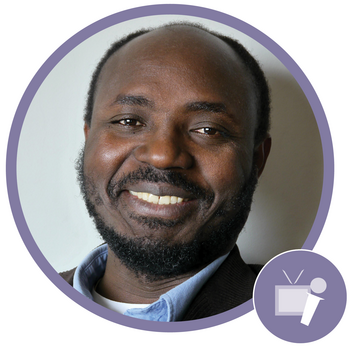
Rafael Marques de Morais is an award-winning journalist and human rights activist in Angola, working to investigate corruption and abuse of power by the country’s ruling family. He founded Makaangola, a watchdog website dedicated to exposing corruption and human rights abuses in Angola.
Astère Muyango is a human rights lawyer working to strengthen the rule of law in Burundi, and serves as the country program director of International Bridges to Justice. His organization represents indigents accused of crimes, and has represented many of the young protestors who were arrested during Burundi’s recent political violence.
Kasha Nabagesera is the executive director of Kuchu Times Media Group, the first LGBTI media platform in Africa. She is known as the “founding mother” of the LGBTI movement in Uganda - where homosexuality is illegal - advocating for equal rights and the eradication of all forms of discrimination based on sexual orientation.
Oluseun Onigbinde is a social entrepreneur in Nigeria and co-founder of BudgIT, which develops civic technology tools to advance greater public sector transparency and accountability. Their technology campaigns have reached over 625,000 Nigerians on issues of public sector accountability.
Glowen Wombo Kyei-Mensah is the managing director of Participatory Development Associates, a development consultancy working to support governance and community development in Ghana. She brings over a decade of experience in the development sector, leading nationwide research projects with considerable impact on social and policy reform.
Asia
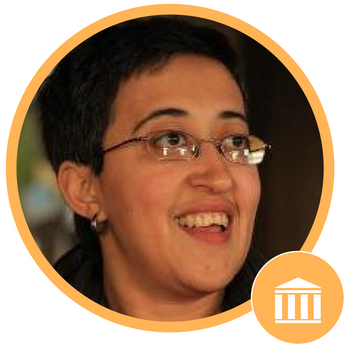
Atishi Marlena is a young Indian politician, who is part of the Aam Aadmi Party, which emerged from a nationwide anti-corruption movement. She serves as the advisor to the Deputy Chief Minister working on educational reform and participatory governance efforts in the National Capital Territory of Delhi, where the political party is in power.
Wai Wai Nu is the director and founder of Women Peace Network-Arakan, an organization building a platform for peace and understanding among Burma’s diverse ethnic groups. Nu was a political prisoner for seven years under the Burmese military government, and emerged to serve as a national – and international – voice for Burma’s human rights and democracy movement.
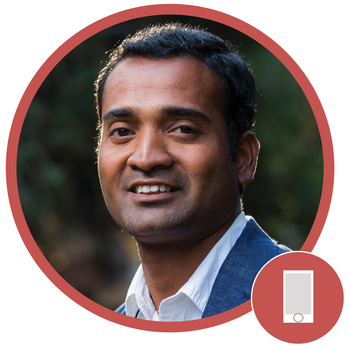
Rajamanohar Somasundaram is a technology entrepreneur from India who co-founded Hexolabs, a company building technology solutions for basic mobile handset users in emerging markets. Somasundaram pioneers the use of mobile technology for the development of healthcare, education, and governance services to support inclusive development at the base of the pyramid.
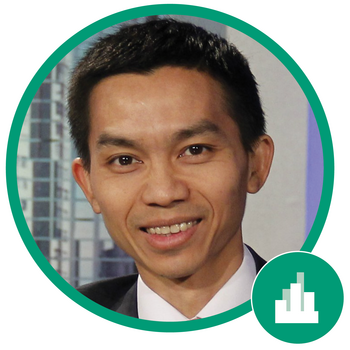
Nguyen Duc Thanh is a Vietnamese economist, and president of the Vietnam Institute for Economic and Policy Research, a think tank that advocates for market economy reform, civil society empowerment, and the implementation of the rule of law. Thanh was a member of the Economic Advisory Group to the Vietnamese Prime Minister from 2011-2016.
Chandralal Majuwana is a human rights lawyer in Sri Lanka. He serves as the head of the Human Rights Program for the Forum for Human Dignity, a Colombo-based NGO. The program provides legal assistance to victims of human rights abuses and focuses on education and advocacy.
Eastern Europe and Eurasia
Olga Aivazovska is head of the Board of the Civil Network OPORA, a civil-society organization catalyzing change in Ukraine by engaging citizens in decision-making, and fighting for the protection of voting rights and transparent electoral processes. An active participant in Ukraine’s Revolution of Dignity, Aivazovska has been working to transform Ukraine into a democratic and prosperous country.
Giorgi Kadagidze is a professor at Ilia State University, one of the leading research and educational institutions in Georgia. From 2009-2016, Kadagidze served as Chairman of the Board and Governor of the Central Bank of Georgia, leading the country’s economic transition from a planned to a market-based economy.
Edmon Marukyan is a member of the National Assembly of the Republic of Armenia and serves as the chairman of the Council of Bright Armenia, an opposition party. Before assuming public office, he worked as a human rights lawyer helping to strengthen democracy and civil society in Armenia.
Elizaveta Osetinskaya is a media manager, editor and business journalist. She was responsible for the editorial operations at RBC Media Holding until May 2016. RBC Media Holding is the leading independent Russian media outlet, which includes a TV channel, the largest news portal in the country, a newspaper and magazine.
Arab World
Houssem Aoudi is a Tunisian entrepreneur with over a decade of experience in media, civic engagement, and social innovation. He is the founder of Wasabi, a company that builds platforms to promote open expression. Aoudi served as the director of the Media Center for the 2014 Tunisian parliamentary and presidential elections, and is the co-founder of a hub and community space for entrepreneurs.
Asos Askari is a lawyer who serves as a legal advisor to the Kurdistan Regional Government in Iraq, drafting new laws and regulations to govern natural resource, human rights, and public sector reform. He also co-founded the Iraq Legal Education Initiative, a partnership between the American University of Iraq Sulaimani and Stanford Law School, which seeks to advance legal education in the Kurdistan region.
Belabbes Benkredda is an award-winning social innovator and the founder of the Munathara Initiative, the Arab world’s largest online and television debate forum highlighting voices of youth, women, and marginalized communities. Operating in 11 Arab countries, Munathara’s monthly prime- time TV debates are the only civil society-run, independent political talk program on Arabic television.
Abdelrahman Mansour is an Egyptian political activist and entrepreneur in the field of media and journalism. He has played a key role in several Egyptian and Arab initiatives committed to advancing citizen’s rights to knowledge and access to information.
Latin America
Mauricio Alarcón Salvador is an Ecuadorian lawyer, and human rights and transparency activist. He is currently the executive director of Fundación Ciudadanía y Desarrollo, a non-profit organization that works on citizen participation and transparency, and serves as the program director of Fundamedios, Ecuador’s leading organization in the promotion and defense of freedom of expression.
Lisseth Boon is a Venezuelan investigative journalist with over 20 years of experience in print, broadcast, and digital media. She is currently an investigative reporter at RunRun.es, an independent news website.
Lucila Crexell is a national senator of Argentina and represents the province of Neuquén, located in the Patagonia region. She has two decades of experience working in different areas of the public administration - both at the national and local level. As a senator, she defends the decentralization of power and the protection of provincial autonomy.
Maria Llorente is the executive director of the Fundacion Ideas para la Paz, an independent think tank working on peace and security issues, and actively involved in the peace process in Colombia. Her work has contributed to evidence-based policy recommendations to increase citizen security and the reform of the Colombian police.
Jana Macedo is a public policy manager at the Brazilian Federal Government where she works at the Ministry of Planning coordinating initiatives on participatory planning and civic engagement. Previously, Macedo worked on human rights issues, which gave her a multidisciplinary perspective to develop public policy serving vulnerable populations.

 FSI researchers consider international development from a variety of angles. They analyze ideas such as how public action and good governance are cornerstones of economic prosperity in Mexico and how investments in high school education will improve China’s economy.