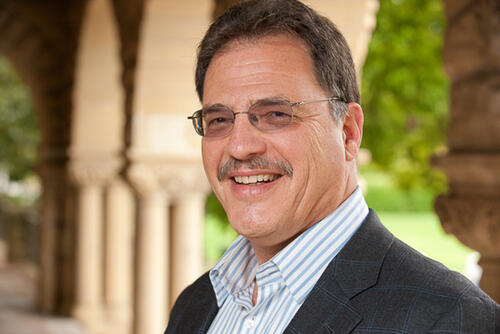
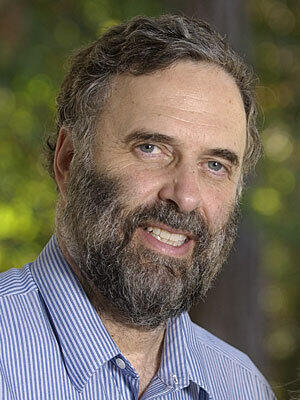
FSI researchers strive to understand how countries relate to one another, and what policies are needed to achieve global stability and prosperity. International relations experts focus on the challenging U.S.-Russian relationship, the alliance between the U.S. and Japan and the limitations of America’s counterinsurgency strategy in Afghanistan.
Authoritarian Regimes React to Recent Challenges to Democracy in the U.S.
As street protests in the U.S. grew in strength in support of racial justice, authoritarian regimes around the world offered their own interpretations of events to their people back home. The Iranian regime in particular points to the demonstrations as proof that U.S. democracy has failed. Join us as Stanford scholars discuss recent and persistent challenges to democracy in the U.S., in particular violence against the Black community and in response to recent protests.
Freeman Spogli Institute for International Studies (FSI) Director Michael McFaul will moderate a panel discussion on this trend with Larry Diamond, senior fellow at FSI and the Hoover Institution, Didi Kuo, associate director for research at the Center on Democracy, Development and the Rule of Law (CDDRL), Abbas Milani director of the Iranian Studies Program, and Nancy Okail, visiting scholar at CDDRL.
This event is online only. Register to receive a personalized link to join the Zoom webinar.
This event is co-sponsored by the Freeman Spogli Institute for International Studies, the Center on Democracy, Development and the Rule of Law at FSI and the Hamid and Christina Moghadam Program in Iranian Studies at Stanford.
Abbas Milani
615 Crothers Way,
Encina Commons, Room 128A
Stanford University
Stanford, CA 94305
Abbas Milani is the Hamid and Christina Moghadam Director of Iranian Studies at Stanford University and a visiting professor in the department of political science. In addition, Dr. Milani is a research fellow and co-director of the Iran Democracy Project at the Hoover Institution.
Prior to coming to Stanford, Milani was a professor of history and political science and chair of the department at Notre Dame de Namur University and a research fellow at the Institute of International Studies at the University of California at Berkeley. Milani was an assistant professor in the faculty of law and political science at Tehran University and a member of the board of directors of Tehran University's Center for International Studies from 1979 to 1987. He was a research fellow at the Iranian Center for Social Research from 1977 to 1978 and an assistant professor at the National University of Iran from 1975 to 1977.
Dr. Milani is the author of Eminent Persians: Men and Women Who Made Modern Iran, 1941-1979, (Syracuse University Press, Syracuse, NY, 2 volumes, November, 2008); King of Shadows: Essays on Iran's Encounter with Modernity, Persian text published in the U.S. (Ketab Corp., Spring 2005); Lost Wisdom: Rethinking Persian Modernity in Iran, (Mage 2004); The Persian Sphinx: Amir Abbas Hoveyda and the Riddle of the Iranian Revolution (Mage, 2000); Modernity and Its Foes in Iran (Gardon Press, 1998); Tales of Two Cities: A Persian Memoir (Mage 1996); On Democracy and Socialism, a collection of articles coauthored with Faramarz Tabrizi (Pars Press, 1987); and Malraux and the Tragic Vision (Agah Press, 1982). Milani has also translated numerous books and articles into Persian and English.
Milani received his BA in political science and economics from the University of California at Berkeley in 1970 and his PhD in political science from the University of Hawaii in 1974.
Larry Diamond
CDDRL
Stanford University
Encina Hall, C147
616 Jane Stanford Way
Stanford, CA 94305-6055
Larry Diamond is the William L. Clayton Senior Fellow at the Hoover Institution, the Mosbacher Senior Fellow in Global Democracy at the Freeman Spogli Institute for International Studies (FSI), and a Bass University Fellow in Undergraduate Education at Stanford University. He is also professor by courtesy of Political Science and Sociology at Stanford, where he lectures and teaches courses on democracy (including an online course on EdX). At the Hoover Institution, he co-leads the Project on Taiwan in the Indo-Pacific Region and participates in the Project on the U.S., China, and the World. At FSI, he is among the core faculty of the Center on Democracy, Development and the Rule of Law, which he directed for six and a half years. He leads FSI’s Israel Studies Program and is a member of the Program on Arab Reform and Development. He also co-leads the Global Digital Policy Incubator, based at FSI’s Cyber Policy Center. He served for 32 years as founding co-editor of the Journal of Democracy.
Diamond’s research focuses on global trends affecting freedom and democracy and on U.S. and international policies to defend and advance democracy. His book, Ill Winds: Saving Democracy from Russian Rage, Chinese Ambition, and American Complacency, analyzes the challenges confronting liberal democracy in the United States and around the world at this potential “hinge in history,” and offers an agenda for strengthening and defending democracy at home and abroad. A paperback edition with a new preface was released by Penguin in April 2020. His other books include: In Search of Democracy (2016), The Spirit of Democracy (2008), Developing Democracy: Toward Consolidation (1999), Promoting Democracy in the 1990s (1995), and Class, Ethnicity, and Democracy in Nigeria (1989). He has edited or coedited more than fifty books, including China’s Influence and American Interests (2019, with Orville Schell), Silicon Triangle: The United States, China, Taiwan the Global Semiconductor Security (2023, with James O. Ellis Jr. and Orville Schell), and The Troubling State of India’s Democracy (2024, with Sumit Ganguly and Dinsha Mistree).
During 2002–03, Diamond served as a consultant to the US Agency for International Development (USAID) and was a contributing author of its report, Foreign Aid in the National Interest. He has advised and lectured to universities and think tanks around the world, and to the World Bank, the United Nations, the State Department, and other organizations dealing with governance and development. During the first three months of 2004, Diamond served as a senior adviser on governance to the Coalition Provisional Authority in Baghdad. His 2005 book, Squandered Victory: The American Occupation and the Bungled Effort to Bring Democracy to Iraq, was one of the first books to critically analyze America's postwar engagement in Iraq.
Among Diamond’s other edited books are Democracy in Decline?; Democratization and Authoritarianism in the Arab World; Will China Democratize?; and Liberation Technology: Social Media and the Struggle for Democracy, all edited with Marc F. Plattner; and Politics and Culture in Contemporary Iran, with Abbas Milani. With Juan J. Linz and Seymour Martin Lipset, he edited the series, Democracy in Developing Countries, which helped to shape a new generation of comparative study of democratic development.
Download full-resolution headshot; photo credit: Rod Searcey.
Didi Kuo
Encina Hall, C150
616 Jane Stanford Way
Stanford, CA 94305
Didi Kuo is a Center Fellow at the Freeman Spogli Institute for International Studies (FSI) at Stanford University. She is a scholar of comparative politics with a focus on democratization, corruption and clientelism, political parties and institutions, and political reform. She is the author of The Great Retreat: How Political Parties Should Behave and Why They Don’t (Oxford University Press) and Clientelism, Capitalism, and Democracy: the rise of programmatic politics in the United States and Britain (Cambridge University Press, 2018).
She has been at Stanford since 2013 as the manager of the Program on American Democracy in Comparative Perspective and is co-director of the Fisher Family Honors Program at CDDRL. She was an Eric and Wendy Schmidt Fellow at New America and is a non-resident fellow with the Carnegie Endowment for International Peace. She received a PhD in political science from Harvard University, an MSc in Economic and Social History from Oxford University, where she studied as a Marshall Scholar, and a BA from Emory University.
Michael A. McFaul
Encina Hall
616 Jane Stanford Way
Stanford, CA 94305-6055
Michael McFaul is the Ken Olivier and Angela Nomellini Professor of International Studies in Political Science, Senior Fellow at the Freeman Spogli Institute for International Studies, and the Peter and Helen Bing Senior Fellow at the Hoover Institution, all at Stanford University. He joined the Stanford faculty in 1995 and served as FSI Director from 2015 to 2025. He is also an international affairs analyst for MSNOW.
McFaul served for five years in the Obama administration, first as Special Assistant to the President and Senior Director for Russian and Eurasian Affairs at the National Security Council at the White House (2009-2012), and then as U.S. Ambassador to the Russian Federation (2012-2014).
McFaul has authored ten books and edited several others, including, most recently, Autocrats vs. Democrats: China, Russia, America, and the New Global Disorder, as well as From Cold War to Hot Peace: An American Ambassador in Putin’s Russia, (a New York Times bestseller) Advancing Democracy Abroad: Why We Should, How We Can; and Russia’s Unfinished Revolution: Political Change from Gorbachev to Putin.
He is a recipient of numerous awards, including an honorary PhD from Montana State University; the Order for Merits to Lithuania from President Gitanas Nausėda of Lithuania; Order of Merit of Third Degree from President Volodymyr Zelenskyy of Ukraine, and the Dean’s Award for Distinguished Teaching at Stanford University. In 2015, he was the Distinguished Mingde Faculty Fellow at the Stanford Center at Peking University.
McFaul was born and raised in Montana. He received his B.A. in International Relations and Slavic Languages and his M.A. in Soviet and East European Studies from Stanford University in 1986. As a Rhodes Scholar, he completed his D. Phil. in International Relations at Oxford University in 1991.