-

The Visiting Fellows in Israel Studies program at CDDRL and the Environmental Social Sciences department of the Doerr School of Sustainability

present a two-day conference

Climate Resilience and Local Governmental Policy: Lessons from Los Angeles and Tel Aviv

Los Angeles and Tel Aviv-Yafo are vibrant cultural and cosmopolitan centers characterized by significant demographic diversity. They are also home to disparate ethnic, religious, and cultural groups and are marked by stark contrasts in wealth and poverty. Despite their differences in size and geography, both cities face similar challenges in fashioning their responses to the anticipated adverse impacts of rapid climate change. To enhance climate resilience and ensure the effective implementation of climate policies, it is essential to consider not only the technical integrity of adaptation programs but also the socio-economic and cultural diversity unique to each city.

Studying these two cities side by side can shed light on how climate strategies can be adapted across scales and contexts. It can provide insights into navigating the complex interactions between central and local governments in designing climate adaptation programs. It can aid in prioritizing resource utilization to achieve the greatest possible reduction in climate-related risks. And, it can foster creative thinking about how equity-focused climate actions can be tailored to the unique needs, capacities, and values of diverse communities within each city.

PRESS
 

Day 1 — Evaluation of Past Environmental Cooperation Initiatives


8:15 - 9:00 am — Breakfast, Gathering, and Registration


9:00 - 9:15 am — Welcome: Global Contexts – Local Action
 

WELCOME

  • Chair: Alon Tal, Visiting Fellow in Israel Studies, Center on Democracy, Development and the Rule of Law, Stanford University


 INTRODUCTION

  • Kathryn Stoner, Mosbacher Director, Center on Democracy, Development and the Rule of Law, Stanford University
  • Vicki Veenker, Vice Mayor, City of Palo Alto


9:15 - 10:15 am — Opening Keynote: Los Angeles and Tel Aviv-Yafo: The Urgency of Climate Resilience


PRESENTERS

  • The Honorable Nancy Sutley, Los Angeles Deputy Mayor of Energy and Sustainability
  • Noah Efron, Tel Aviv City Council member; Chair, Tel Aviv-Yafo Municipal Environmental Protection Committee


10:15 - 11:30 am — Panel 1: Water Management in Water Scarce Cities: Combatting Droughts and Ensuring Supply
 

  • Chair: Bruce Cain, Professor of Political Science, Director of the Bill Lane Center for the American West, Stanford University


PRESENTER

  • Felicia Marcus, William C. Landreth Visiting Fellow, Water in the West Program, Stanford University


PANELISTS

  • Dror Avisar, Head of the Water Research Center, Tel Aviv University
  • Maya Crabtree, Director of the Environment, Forum of 15, Israel
  • Gregory Pierce, Co-Executive Director, Luskin Center for Innovation, UCLA
     

11:30 - 11:45 am — Break


11:45 am – 1:00 pm — Panel 2: Health, Trees, and Thermal Comfort: Urban Strategies
 

  • Chair: Neta Lipman, Professional Director, The New Environmental School, Tel Aviv University; Former Deputy Director, Natural Resources and Climate Resilience, Israel Ministry for Environmental Protection


PANELISTS

  • Eitan Ben Ami, Director, Environment & Sustainability Authority, Tel Aviv-Yafo Municipality
  • Rachel Malarich, City Forest Officer, Los Angeles Public Works
  • David Pearlmutter, Professor, Ben Gurion University
  • Marta Segura, Chief Heat Officer & Director, Climate Emergency Mobilization Office, City of Los Angeles
  • Leeor Carasso, Tel Aviv University
     

1:00 - 2:00 pm — Lunch


2:00 - 3:30 pm — PARALLEL SESSIONS

Panel 3a (East Wing): Financing Climate Resilience in Local Government
 

  • Chair: Blas L. Pérez Henríquez, Founding Director, The California Global Energy, Water & Infrastructure Innovation Initiative, Stanford University


PANELISTS

  • Hend Halabi, Israel Ministry of Environmental Protection, Climate Adaptation Division
  • Dr. Michael Roth, Energy-Water Resilience Support Specialist, Golden Colorado
  • Tamar Zandberg, Director of Climate Policy Center, Ben Gurion University; Past Minister of Environmental Protection, Israel
  • Abby Edwards, CA Governor's Office of Land Use and Innovation
  • Snir Schwartz, Tel Aviv University Law School


Panel 3b (West Wing): Preparing for Sea Level Rise – Local Strategies
 

  • Chair: David Behar, Climate Program Director, San Francisco Public Utilities Commission, and Chair, Practitioner Exchange for Effective Response to Sea Level Rise (PEERS)


PANELISTS

  • Udi Carmely, Architect & Urban Planner, Tel Aviv-Yafo Municipality
  • Galit Cohen, Senior Researcher, Israel Institute for National Security Studies; Director, Jewish Climate Trust
  • Daniella Hirschfeld, Assistant Professor, Department of Landscape Architecture and Environmental Planning, Utah State University
  • Eric Klinenberg, Helen Gould Shepard Professor in the Social Sciences, New York University
     

3:30 - 3:45 pm — Break


3:45 - 5:00 pm — Panel 4: Forest Fire Prevention, Cities and the Climate Crisis
 

  • Chair: Chris Field, Melvin and Joan Lane Professor for Interdisciplinary Environmental Studies; Perry L. McCarty Director, Woods Institute for the Environment, Stanford University


PRESENTERS

  • Frank Bigelow, Community Wildfire Preparedness & Mitigation Deputy Director, Cal Fire
  • Colin Price, Professor, Department of Geophysics, Tel Aviv University; Chair, Planet Zero Initiative
  • Yoav PerlmanDirector of Birdlife Israel, Society for Protection of Nature in Israel 


5:00 - 6:30 pm — Stanford Campus Sustainability Tours — Optional, Pick Up to One 
 

  • Stanford Central Energy Facilty (Energy Efficiency “Living lab” with three heat recovery tanks, micro-grid and novel heat recovery system)
    • Host: Dr. Lincoln Bleavans, Executive Director, Sustainability Utilities & Infrastructure, Stanford University
  • Ecoloigcal walking tour (Biodiversity and Conservation projects on campus)
    • Host: Dr. Alan Launer, Director, Conservation Planning, Stanford University
  • O'Donohue Family Stanford Educational Farm (Exceptional Environmental Educationl Center and Garden develoing agroecological relationships and natural diversity to grow over 200 varieties of vegetables, flowers, herbs, field crops and fruit)
    • Host: Gordon Bloom, Director, Social Entrepreneurship and Innovation Lab (SE Lab)- Human & Planetary Health; Founder, Social Entrepreneurship Collaboratory (SE Labs), Stanford University


6:15 - 7:00 pm — Reception in Courtyard


7:00 - 9:00 pm — Dinner and Keynote Address in Auditorium
 

  • Moderator: Larry Diamond, Mosbacher Senior Fellow of Global Democracy at the Freeman Spogli Institute for International Studies, Senior Fellow at the Hoover Institution, and Professor, by courtesy, of Sociology and of Political Science


KEYNOTE ADDRESS

  • Professor Steven Chu, William R. Kenan, Jr. Professor of Physics and Professor of Energy Science and Engineering, Stanford University; 1997 Nobel Prize for Physics; U.S. Secretary of Energy 2009-2013


Return to top, click FRIDAY, MAY 30 for Day 2 agenda 

FAQ
 

  • Can I attend only one day of the conference?
    Yes. Please note this in your registration.
  • Will meals be served? What if I have allergies or dietary needs?
    Yes, we will provide all meals listed on the schedule. Please indicate in your registration what your dietary restrictions are.
  • Where should I park?
    The closest parking to Paul Brest Hall is the Wilbur Field Garage (560 Wilbur Dr, Stanford). Permits are required and enforced Monday through Friday from 6:00 a.m. to 4:00 p.m. Please visit the Stanford Transportation website for information about parking at Stanford and how to pay for parking.
  • Can I bike to and from the conference?
    Yes! Stanford is a bike-friendly campus. Moreover, there are plenty of spots to park bikes all over campus.
  • Is there a cost to attend the conference?
    No. However, once you sign up, we expect you to attend.
  • I am coming from out of town. Where can I stay?
    We have reserved a room block at the Sheraton Palo Alto Hotel with a negotiated rate. Let them know you are with our conference to receive that rate.
  • I have other questions. Who should I ask?
    Email Aleeza Schoenberg, Israel Program Manager at CDDRL.
  • I am a member of the media interested in covering this event. Who should I reach out to?
    Please send an email to CDDRL Communications and provide your name, outlet, number of people you will be traveling with, and what equipment you plan to bring.
     

We are grateful to Tel Aviv University, The Diane and Guilford Glazer Foundation, the Jewish Climate Trust, and Hillel@Stanford for their support in making this conference possible.

The conference was held at Paul Brest Hall on Stanford's campus. Two-hundred people attended. Read about it in the news.

Conferences
Date Label
-
Gil Troy event

Join Hillel@Stanford and the Visiting Fellows in Israel Studies program in welcoming Professor Gil Troy to campus on Monday, March 3, at 5:30 pm.

Professor Troy has created a special program for Stanford students titled, “This is Not OK: Resisting the Academic Intifada with a Positive Liberal, American, and Zionist Vision.” After the presentation, he will engage students in an intimate conversation and Q&A session.

A light, kosher dinner will be provided. Advance RSVP via mobile device is required. Please email brandenj@stanford.edu with any questions.

ABOUT THE SPEAKER

Professor Gil Troy is a Senior Fellow in Zionist Thought at The Jewish People Policy Institute (JPPI)—a global Jewish think tank—and the author of, most recently, "The Essential Guide to October 7th and its Aftermath: Facts, Figures, History," as well as "To Resist the Academic Intifada: Letters to My Students on Defending the Zionist Dream.” He is also a Distinguished Scholar in North American History at McGill University living in Jerusalem, an award-winning American presidential historian, and a leading Zionist thinker.

Open to Stanford students only.

Koret Pavilion (Hillel@Stanford, 565 Mayfield Ave, Stanford)

RSVP via mobile device. Click "Register via Mobile" or text Gil Troy to 650.547.7882.

Gil Troy
Seminars
Israel Studies
Date Label
Authors
Aleeza Schoenberg
News Type
News
Date
Paragraphs

As part of its 2025 Winter Webinar Series, the Visiting Fellows in Israel Studies program at the Center on Democracy, Development and the Rule of Law (CDDRL) hosted a webinar featuring Eugene Kandel in conversation with Amichai Magen. Kandel, the former head of Israel’s National Economic Council and a professor of economics and finance at Hebrew University, is the co-founder of the Israel Strategic Futures Institute (ISFI). The talk focused on Kandel’s work at ISFI in diagnosing what Kandel and his colleagues identify as internal existential risks for Israel, and the policy ideas generated by ISFI in response to those risks.

Kandel began his analysis by pointing out the fact that the post-Cold War era has been one of spectacular economic success for Israel. The country entered 2022 with a budget surplus, record employment, and low public debt. But this, Kandel believes, is an increasingly precarious, indeed unsustainable reality. Describing a deep demographic shift towards the Haredi (ultraorthodox) and religious-nationalist population, as well as growing structural weaknesses in Israel’s economy and government, Kandel warned that Israel could face a "run on the country" if it did not provide the most productive parts of its population with guarantees that their values would be protected.

Kandel outlined the three incompatible ideological groupings found in Israeli society. One group believes in Jewish liberal democracy, one is primarily Hasidic and believes in the Torah’s centrality, and one desires a non-Jewish country for all citizens. Disproportionate population growth in the Hasidic group puts liberal democracy at risk, while Hasidic citizens rely heavily on social services, which will soon be unsustainable.

Drawing on examples in Northern Ireland, Switzerland, and Belgium, Kandel proposes a professional, easily replaceable, non-political government. Every Israeli citizen would be a member of one of three "Alumot"—a word meaning clusters—each with their own constitutions, taxes, social services, and elections. Changes in government would require consensus from all three Alumot. Since citizens would choose their Alumot freely and could even switch between them, the Alumot serving members would be motivated to improve citizens’ lives and economic conditions.

Magen countered that Kandel's proposals wrongly gave up on a shared Israeliness that - with all its difficulties - has proven highly successful in the past seven and a half decacdes, and that the Alumot idea is politically impractical. Kandel and Magen discussed how the current issues with Israeli society, namely its division, are the same limiting factor in adapting a new political system. They also discussed how Jews outside Israel can help the Israeli government thrive, and how Israel needs to address its internal conflicts if it has a realistic prospect of successfully managing its external challenges.

A full recording of the conversation can be viewed below.

Read More

Ari Shavit
News

Ari Shavit on Israel's Existential War

Shavit, in conversation with FSI Visiting Fellow in Israel Studies Amichai Magen, discussed the threats Israel faces — particularly from Iran and its proxies — while reassessing historical defense doctrines and the evolving regional landscape, including the future of Gaza.
Ari Shavit on Israel's Existential War
Sheryl Sandberg answers audience questions with Rabbi Idit Solomon, Interim Associate Director of Hillel at Stanford, following a screening of her documentary film, "Screams Before Silence," on November 19.
News

Sheryl Sandberg Screens & Discusses Documentary on Oct. 7 Sexual Violence

Sheryl Sandberg said that filming a documentary about the sexual brutality of Hamas’ attacks on Israelis on Oct. 7 was the most important work of her life and that she wants to turn the world’s attention to the inhumanity that took place.
Sheryl Sandberg Screens & Discusses Documentary on Oct. 7 Sexual Violence
Tzipi Livni speaks at a lunch time event with Stanford faculty and students.
News

FSI's Visiting Fellow in Israel Studies Reflects on What Lies Ahead for Israel and the Middle East

The October 7, 2023, attack by Hamas has already indelibly altered Israel and the Middle East, and will continue to reverberate for decades to come, says Amichai Magen, a fellow at the Freeman Spogli Institute for International Studies.
FSI's Visiting Fellow in Israel Studies Reflects on What Lies Ahead for Israel and the Middle East
Hero Image
Eugene Kandel presents via Zoom in a webinar hosted by the Visiting Fellows in Israel Program.
All News button
1
Subtitle

Kandel's talk with Visiting Fellow in Israel Studies Amichai Magen focused on his work at the Israel Strategic Futures Institute (ISFI) in diagnosing what he and his colleagues identify as internal existential risks for Israel and the policy ideas generated by ISFI in response to those risks.

Date Label
Authors
Aleeza Schoenberg
News Type
News
Date
Paragraphs

As part of its 2025 Winter Webinar Series, the Visiting Fellows in Israel Studies program at the Center on Democracy, Development and the Rule of Law (CDDRL) hosted a webinar featuring Ari Shavit in conversation with Amichai Magen. One of Israel's most seasoned and informed journalists and political analysts, Shavit is also the author of the New York Times bestseller My Promised Land: The Triumph and Tragedy of Israel (2013). In the aftermath of the October 7th Hamas attack, Shavit was one of the first to grapple with the strategic causes and consequences of the attack and subsequent war, publishing a short book on the subject in the spring of 2024, titled Existential War: From Catastrophe, to Victory, to Revival (2024) [Hebrew]. 

Taking Existential War as the starting point for their conversation, Magen and Shavit discussed how a combination of Israeli complacency, miscalculations vis-a-vis Hamas, internal divisions, and overreliance on defensive technologies allowed the October 7th attacks to occur. They discussed Ze’ev Jabotinsky’s 1923 essay, The Iron Wall, and David Ben-Gurion's national defense strategy as a means of understanding the contemporary struggle between Iran and its proxies, on the one hand, and Israel and its allies, on the other hand. Shavit outlined Israel’s past successes and the need to update Jabotinsky’s and Ben-Gurion's strategic doctrines for 21st-century realities. For Shavit, Iran poses the greatest threat to stability and safety in the Middle East and the West. Magen and Shavit also discussed the future of Gaza and Syria, the roles that Turkey, Qatar, and Saudi Arabia play in the region, and the risk that the weakening of the Iran-led Shi'a axis could be replaced by a Syria-centered radical Sunni axis in the Middle East. Against this background, it is imperative that the United States work closely with Israel and pragmatic Sunni Arab countries in the region — most importantly, Saudi Arabia, Egypt, Jordan, and the UAE — to shape a new regional framework for the Middle East.

A full recording of the conversation can be viewed below.

Read More

Helicopter with three released hostages on January 19, 2025.
Commentary

There’s Got to Be More to This Ceasefire Deal

Amichai Magen hunts for the pony in the Israel-Hamas ceasefire.
There’s Got to Be More to This Ceasefire Deal
Sheryl Sandberg answers audience questions with Rabbi Idit Solomon, Interim Associate Director of Hillel at Stanford, following a screening of her documentary film, "Screams Before Silence," on November 19.
News

Sheryl Sandberg Screens & Discusses Documentary on Oct. 7 Sexual Violence

Sheryl Sandberg said that filming a documentary about the sexual brutality of Hamas’ attacks on Israelis on Oct. 7 was the most important work of her life and that she wants to turn the world’s attention to the inhumanity that took place.
Sheryl Sandberg Screens & Discusses Documentary on Oct. 7 Sexual Violence
Tzipi Livni speaks at a lunch time event with Stanford faculty and students.
News

FSI's Visiting Fellow in Israel Studies Reflects on What Lies Ahead for Israel and the Middle East

The October 7, 2023, attack by Hamas has already indelibly altered Israel and the Middle East, and will continue to reverberate for decades to come, says Amichai Magen, a fellow at the Freeman Spogli Institute for International Studies.
FSI's Visiting Fellow in Israel Studies Reflects on What Lies Ahead for Israel and the Middle East
Hero Image
Ari Shavit
All News button
1
Subtitle

Shavit, in conversation with FSI Visiting Fellow in Israel Studies Amichai Magen, discussed the threats Israel faces — particularly from Iran and its proxies — while reassessing historical defense doctrines and the evolving regional landscape, including the future of Gaza.

Date Label
-
Cover Photo for Event

On Monday, May 12, the Visiting Fellows in Israel Studies program at the Center on Democracy, Development and the Rule of Law is pleased to welcome Israeli journalist and writer Amir Tibon to present the 2025 Daniel Pearl Memorial Lecture. Tibon will discuss his latest book, The Gates of Gaza: A Story of Betrayal, Survival, and Home in Israel's Borderlands.

The Daniel Pearl Memorial Lecture honors the life of Daniel Pearl (Class of '85), who was a journalist, musician, and family man dedicated to the ideals of peace and humanity. In 2002, Daniel was kidnapped and killed by terrorists in Pakistan while working as a foreign correspondent for the Wall Street Journal.

The 2025 Daniel Pearl Memorial Lecture is presented by the Visiting Fellows in Israel Studies program in partnership with the Daniel Pearl Foundation, the Taube Center for Jewish Studies, and Hillel at Stanford.
 

About the Book


A gripping first-person account of how one Israeli grandfather helped rescue two generations of his family on October 7, 2023—a saga that reveals the deep tensions and systemic failures behind Hamas's attacks that day.

Book Cover for "The Gates of Gaza: A Story of Betrayal, Survival, and Home in Israel's Borderlands" by Amir Tibon

On the morning of October 7, Amir Tibon and his wife were awakened by mortar rounds exploding near their home in Kibbutz Nahal Oz, a progressive Israeli community less than a mile from Gaza City. Soon, they were holding their two young daughters in the family’s reinforced safe room, urging them not to cry as gunfire echoed just outside the door. With his cell phone battery running low, Amir texted his father: “The girls are behaving really well, but I’m worried they’ll lose patience soon and Hamas will hear us.”

Some 45 miles north, Amir’s parents had just cut short an early morning swim along the shores of Tel Aviv. Now, they jumped in their Jeep and sped toward Nahal Oz, armed only with a pistol but intent on saving their family at all costs.

In The Gates of Gaza, Amir Tibon tells this harrowing story in full for the first time. He describes his family's ordeal—and the bravery that ultimately led to their rescue—alongside the histories of the place they call home and the systems of power that have kept them and their neighbors in Gaza in harm’s way for decades. 

Woven throughout is Tibon's own expertise as a longtime international correspondent, as well as more than thirty original interviews: with residents of his kibbutz, with the Israeli soldiers who helped to wrest it from the hands of Hamas, and with experts on Gaza, the Israeli-Palestinian conflict, and the failed peace process. More than one family's odyssey, The Gates of Gaza is the intimate story of a tight-knit community and the broader saga of war, occupation, and hostility between two national movements—a conflict that has not yet extinguished the enduring hope for peace.

Speakers

Amir Tibon

Amir Tibon

Senior Columnist, Haaretz

Amir Tibon is an award-winning diplomatic correspondent for Haaretz and the author of The Gates of Gaza: A Story of Betrayal, Survival, and Hope in Israel's Borderlands (Little, Brown, Sept 2024), which tells the gripping true story of how he, along with his wife and their two young children, were rescued from Kibbutz Nahal Oz on October 7, 2023 by Tibon’s own father—an incredible tale of survival that also reveals the deep tensions and systemic failures that led to Hamas’s attacks that day. The story was featured on 60 Minutes, and the film rights have been optioned by Leviathan Productions, with Avi Issacharoff and Lior Raz (Fauda) set to write the script. 

Tibon has previously served as Haaretz’s correspondent in Washington, D.C., and as a senior editor for its English edition. He is the author of The Last Palestinian: The Rise and Reign of Mahmoud Abbas (co-authored with Grant Rumley), the first-ever biography of the leader of the Palestinian Authority. He, his wife, and their two young daughters were evacuated from their home in Kibbutz Nahal Oz after the October 7 attack and are currently living in temporary housing in north-central Israel. 

Larry Diamond
Larry Diamond
Amichai Magen
Amichai Magen

Bechtel Conference Center (Encina Hall, First floor, Central)
616 Jane Stanford Way, Stanford, CA 94305

Registration is required to attend.

Amir Tibon
Lectures
Israel Studies
Date Label
-
The Art of Diplomacy book cover and Stuart Eizenstat headshot

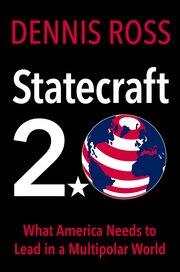
Join the Visiting Fellows in Israel Studies program for lunch on Wednesday, February 26, as former ambassador to the EU Stewart Eizenstat, who has been actively involved in Holocaust restitution negotiations, U.S.-Israel relations, and Middle East peace policy discussions, discusses his new book, The Art of Diplomacy: How American Negotiators Reached Historic Agreements that Changed the World.

ABOUT THE SPEAKER

Stuart E. Eizenstat served as chief White House domestic policy adviser to President Jimmy Carter; in the Clinton administration, he served as U.S. ambassador to the European Union, undersecretary of commerce, undersecretary of state, and deputy secretary of the treasury. He was also special representative of the president and secretary of state on Holocaust issues, with continuing responsibilities on Holocaust issues, in the Obama, Trump, and Biden administrations. He is the author of President Carter: The White House Years (2018), The Future of the Jews: How Global Forces Are Impacting the Jewish People, Israel, and Its Relationship with the United States (2012), and Imperfect Justice: Looted Assets, Slave Labor, and the Unfinished Business of World War II (2003). He is an international lawyer in Washington, DC, with Covington & Burling, LLP, and serves as chairman of the U.S. Holocaust Memorial Museum Council, appointed by President Joe Biden. He received the “Great Negotiator” award from Harvard Law School. This book is written in his personal capacity.

Reuben Hills Conference Room (Encina Hall, 2nd floor East Wing)

Open to Stanford affiliates (students, fellows, faculty, and staff) only.

Stuart Eizenstat
Seminars
Date Label
Authors
Amichai Magen
News Type
Commentary
Date
Paragraphs

Lore has it that the late President Ronald Reagan loved telling “the one about the pony.” In his rendition of the story, the parents of twin brothers—one a diehard pessimist, the other an eternal optimist—consulted a psychologist who recommended a unique experiment. On the twins’ next birthday the pessimist was shown into a room packed with the most expensive gifts the parents could afford, while the optimist was invited into a room full of horse manure. An hour later, when the parents checked on the pessimist, he complained bitterly about some arcane detail in one of his expensive gifts. In contrast, when they cautiously opened the door to check in on the optimist, they found him digging joyfully through the manure. “Mom! Dad! This is incredible!” the optimist shouted with glee. “With all the shit piled up in this room, there’s got to be a pony!”

Read the full article in Persuasion.

Hero Image
Helicopter with three released hostages on January 19, 2025.
Nir Keidar/Anadolu via Getty Images
All News button
1
Subtitle

Amichai Magen hunts for the pony in the Israel-Hamas ceasefire.

Date Label
Paragraphs

How can we build trust, especially in polarized societies? We propose that exposure to broad financial markets—where individuals place their assets in the hands of large groups of unfamiliar agents who nonetheless have the incentive and ability to promote their interests—can contribute to generalized trust. In a randomized controlled trial, we encourage Israelis to hold or trade stocks for up to seven weeks. We find that participation in financial markets increases the probability of expressing generalized trust by about 6 percentage points, equivalent to a quarter of the control group mean. The effects seem to be driven by political partisans along the left–right spectrum in Israel, and are robust to negative price changes. Thus, trust is not only a cause but can also be an effect of participation in financial markets.

All Publications button
1
Publication Type
Journal Articles
Publication Date
Journal Publisher
Journal of Public Economics
Authors
Saumitra Jha
Number
February 2025, 105303
0
photo-faculty-tal-alon1.jpeg

Professor Alon Tal’s career has been a balance between academia and public interest advocacy. Between 2021–2022, he was a member of Knesset, Israel’s parliament, where he served as chair of the subcommittee for environmental and climate impact on health. Presently he has an appointment as professor in the Department of Public Policy at Tel Aviv University. Tal has held faculty posts at Stanford, Ben Gurion, Hebrew, Michigan State, Otago, and Harvard Universities. He has also founded several Israeli environmental organizations, including Adam Teva V’Din, the Israel Union for Environmental Defense, and the Arava Institute. He has served as deputy chair of Keren Kayemeth L’Yisrael, where for many years he oversaw national forestry policy in Israel and is currently co-chair of Zafuf, the Israel Forum for Population, Environment and Society. He plays fiddle and mandolin in the Arava Riders, a leading Israeli bluegrass band.

Visiting Fellow in Israel Studies, Winter-Spring 2025
Date Label
Subscribe to Israel