Authors
News Type
News
Date
Paragraphs

Image
1595 small 4 1
In a 1999 article profiling six of “China’s bright young stars,” the New York Times described Junning Liu as “one of China’s most influential liberal political thinkers.” Today, sitting in a delegate-style conference room, Liu wants to add a point to Thomas C. Heller’s discussion of risk assessment and the role of law in doing business. If assets are not protected by legal institutions, Heller argues, foreign direct investment becomes a riskier prospect and economic growth suffers as a result. Except, he points out, in China. The legal system doesn’t manage risk but China is growing extremely fast.

“There are more businesspeople in Chinese prisons than dissidents,” Liu says evenly, with a suggestion of a smile. “So you see … Chinese people mind the situation more than you [the foreign investors] do.”

Liu is one of 26 change-makers from developing democracies who were selected from more than 800 applicants to take part in this year’s Stanford Summer Fellows on Democracy and Development Program, which is offered by FSI’s Center on Democracy, Development, and the Rule of Law (CDDRL). His colleagues in the program are presidential advisors and attorneys general, journalists and civic activists, academics and members of the international development community. They traveled to Stanford from 21 countries in transition, including Iraq, Afghanistan, Iran, Pakistan, China, Russia, Egypt, and Nigeria. And like their academic curriculum during the three-week program, which examines linkages among democracy, economic development, and the rule of law, their professional experiences and fields of study center on these three areas, assuring that each fellow brings a seasoned perspective to the program’s discussions.

“For most of the fellows … democracy is seen not as a luxury or an option, but rather as a necessity for achieving broad-based development and a genuine rule of law.”The curriculum for the first week focused on democracy, with leading comparative democracy scholars Michael A. McFaul, Larry Diamond, and Kathryn Stoner team-teaching the morning seminars. Using selected articles and book chapters as starting points for discussion, McFaul, Diamond, and Stoner-Weiss began the weeklong democracy module with an examination of what democracy is and what definition or definitions might apply to distinguish electoral democracy, liberal democracy, and competitive authoritarianism. Another question discussed was whether there was such a thing as Islamic democracy, Asian democracy, Russian democracy, or American democracy.

As the week progressed, fellows and faculty discussed institutions of democracy, electoral systems, horizontal accountability, development of civil society, democratic transitions, and global trends in democracy promotion. Fellows led sessions themselves in the afternoons, comparing experiences and sharing insights into how well political parties and parliaments constrained executive power and how civil society organizations contributed to democratic consolidation and/or democratic transitions.

Image
1595 small 4 2
In addition to discussing their personal experiences with democracy promotion, fellows met with a broad range of practitioners, including USAID deputy director Maria Rendon, IREX president Mark Pomar, MoveOn.org founder Joan Blades, Freedom House chairman and International Center on Nonviolent Conflict founding chair Peter Ackerman, International Center on Nonviolent Conflict president Jack DuVall, Otpor cofounder Ivan Marovic, A Force More Powerful documentary filmmaker Steve York, and Advocacy Institute cofounder David Cohen. Guest speakers talked about their fieldwork, offered practical advice, and answered fellows’ questions. This component grounded the classroom discussions in a practical context. “It was important for our visiting fellows to interact with American practitioners, both to learn about innovative techniques for improving democracy practices but also to hear about frustrations and failures that Americans also face in working to make democracy and democracy promotion work more effectively,” explains McFaul. “We Americans do not have all the answers and have much to learn from interaction with those in the trenches working to improve governance in their countries.”

The following two weeks would focus in turn on development and the rule of law, but democracy continued to serve as the intellectual lynchpin of the program, with economies and legal institutions analyzed vis-à-vis their relationship to the development of democratic systems.

Image
1595 small 4 3
“For most of the fellows, who come from national circumstances which once suffered (or still do suffer) prolonged authoritarian rule, democracy is seen not as a luxury or an option, but rather as a necessity for achieving broad-based development and a genuine rule of law,” says Diamond. “Unless people have the ability to turn bad rulers out of office, and to hold rulers accountable in between elections through a free press and civil society, countries stand a poor prospect of controlling corruption, protecting human rights, correcting policy mistakes, and ensuring that government is responsive to the needs and aspirations of the people.”

Among the fellows, this idea of democracy as a “necessity,” a fundamental platform from which to pursue economic and legal reforms, was widely recognized. “It appears that like-minded people were selected to participate,” notes Sani Aliyu, a broadcast journalist and interfaith mediator from Nigeria. “Each of us is interested in the development of humanity, and it appears that we have accepted that democracy seems to be the vehicle through which human development can be accessed reasonably. We share this."

Image
1595 small 4 4
As the program’s curriculum shifted to development issues for week two, the all-volunteer assemblage of Stanford faculty expanded to include professors and professional research staff from Stanford Law School, the Graduate School of Business, and the Department of Economics. Avner Greif established the context for the development module with an overview of institutional foundations of politics and markets, followed by discussions of growth restructuring in transitional economies with GSB professor Peter B. Henry and Stanford Center for International Development deputy director Nicholas Hope. Terry L. Karl analyzed corruption in developing economies and the “resource curse,” and Carl Gershman, president of the National Endowment for Democracy, joined Diamond, McFaul, and Karl in discussing how the spectrum of democratic to autocratic systems of government affected a country’s development.

Another salient component of the development module centered on the role of media in promoting democracy and development. The field trip to San Francisco, which included a session with KQED Forum host Michael Krasny, a briefing on international reporting at the San Francisco Chronicle, and a discussion of media strategies at the Family Violence Prevention Fund, provided particularly rich practical content, as did the fellows’ roundtable on maintaining media independence in semi-autocracies.

Image
1595 small 4 5
At KQED Radio, Cuban-born Raul Ramirez, the executive producer of Forum, talked with fellows about the concept of “civic journalism” and KQED’s goal of creating space for civic discussion. Forum host Michael Krasny and Ramirez, who runs workshops on civic journalism at the European Journalism Centre in Maastricht, then fielded a barrage of questions from fellows: How does KQED maintain independence from government and commercial funding? If Rush Limbaugh attacked you, would you respond in your program? Is it possible to have neutral, nonpartisan public radio? How do you manage to deal with political issues, particularly when you start to affect the power structures with your programming? Are there any words, like “terrorist,” that you are banned from using on the air?

“Discussion of this kind is of great importance to both media professionals and the audience,” notes Anna Sevortian, a journalist and research coordinator at the Center for Development of Democracy and Human Rights in Moscow. “It helps you to clarify how a particular newspaper, TV, or radio station is dealing with matters of public policy or of political controversy.”

Image
1595 small 4 6
The third week’s curriculum layered rule-of-law issues onto the conceptual modules of democracy promotion and economic development, drawing on the teaching caliber of constitutional scholar and Stanford president emeritus Gerhard Casper, Erik Jensen, Helen Stacy, Allen S. Weiner, Tom Heller, and Richard Burt. After establishing a theoretical framework through discussions of the role of law, constitutionalism, human rights, transitional justice, the role of law in business and economic development, and strategies for promoting the rule of law, fellows compared experiences defending human rights, met with American immigration and civil liberties lawyers, and had a session with Circuit Court Judge Pamela Rymer on judging in federal courts. Field trips to Silicon Valley-based Google and eBay again put into practical context the free market, rule-of-law components discussed theoretically in the classroom.

Despite the intellectual rigor of the coursework and discussion, and the exploration of practical applicability with guest speakers and field trips, the Stanford Summer Fellows on Democracy and Development Program was designed as much to stimulate connections among field practitioners and to provide a forum in which to exchange ideas. Weekend dinners, stretching late into the evening at the homes of Diamond and Stoner-Weiss, helped to gel the collegiality developing in the classroom. Led by Violet Gonda, a Zimbabwean journalist living in exile in London, and Talan Aouny, director of a major Iraqi civil society development program, the fellows organized a multicultural party, a potluck-style affair in which guests made a dish from their home country to share with their colleagues and friends of the program.

Image
1595 small 4 7
Program directors McFaul and Stoner-Weiss hope this social network will endure well into the weeks and months after the program. “We envision the creation of an international network of emerging political and civic leaders in countries in transition who can share experiences and solutions to the very similar problems they and their countries face,” says Stoner-Weiss. To ensure they fulfill their goal of building a small but robust global network of civic activist and policymakers in developing countries, CDDRL recently launched its Summer Fellows Program Alumni Newsletter. The newsletter is based on an interactive website that will allow the center to strengthen its network of leaders and civic activists and facilitate more groundbreaking policy analysis across academic fields and geographic regions, the results of which will be promptly fed back to its activist alumni in a virtual loop of scholarship and policymaking.

Image
1595 small 4 8
Earlier this year, CDDRL also moved to professionalize the Stanford Summer Fellows on Democracy and Development Program by hiring a program manager, Laura Cosovanu, an attorney with experience in foundations and other nonprofit organizations, to oversee its advancement. The logistical acrobatics Cosovanu performed throughout the three weeks quickly became the object of good-natured teasing for some of the fellows, all of whom seemed to realize and appreciate the work required to get fellows and faculty into the same room.

As Kenza Aqertit, a National Democratic Institute for International Affairs field representative from Morocco, told program faculty at the graduation dinner, “You’ve done a great job and you should be proud of all your efforts. Plus you’ve won so many friends in so many autocracies and semi-autocracies.

Hero Image
1595 small 4logo
All News button
1
Authors
News Type
News
Date
Paragraphs

Image
1567 small guyglasses
Larry Diamond—Hoover Institution senior fellow, CDDRL democracy program coordinator, and former senior advisor to the Coalition Provisional Authority in Iraq—has just discussed causes and consequences of corruption and international efforts to control it with a room full of visiting fellows. This is not just a group of learned political scientists, however, and Diamond does not hesitate to follow a sophisticated piece of analysis with a hard-nosed, view-from-the-ground assessment. He has, for instance, just told the fellows what he thinks of a major development institution. (“I think the World Bank needs to be ripped apart and fundamentally restructured.”) He has extended the concept of a “resource curse” to include not just oil but also international assistance. (“In many countries, aid is like oil; it’s used for outside rents.”) He has recommended that institutions learn the “dance of conditionality” and exercise selectivity, choosing countries to invest in based on demonstrated performance. But the 27 fellows around the table know a thing or two about corruption. Most of them face it in their home countries; many of them have made fighting it part of their work. And almost all of their hands go up to tell Diamond that there is something he missed, or something he got right.

This year’s 27 Stanford Summer Fellows on Democracy and Development—outstanding civic, political, and economic leaders from developing democracies—were selected from more than 500 applicants to take part in the program, which FSI’s Center on Democracy, Development, and the Rule of Law (CDDRL) hosted July 30–August 17, 2007. They traveled to Stanford from 22 countries in transition, including Iraq, Afghanistan, Iran, Pakistan, China, Russia, Egypt, Nigeria, Kenya, and the Democratic Republic of the Congo. And like their academic curriculum during the three-week program, which examines linkages among democracy, economic development, and the rule of law, their professional experiences and fields of study center on these three areas, assuring that each fellow brings a seasoned perspective to the program’s discussions.

“Should the United States promote democracy? Can the United States promote democracy?” The curriculum for the first week focused on defining the concepts of “democracy,” “development,” and the “rule of law” and identifying institutions that support democratic and market development. Using selected articles and book chapters as starting points for discussion, CDDRL Director Michael A. McFaul and Marc Plattner, National Endowment for Democracy vice-president for research and studies, began the weeklong module with an examination of what democracy is and what definition or definitions might apply to distinguish electoral democracy, liberal democracy, and competitive authoritarianism. Another question discussed was whether there was such a thing as Islamic democracy, Asian democracy, Russian democracy, or American democracy.

Faculty including Diamond, CDDRL associate director for research Kathryn Stoner, Stanford president emeritus and constitutional law scholar Gerhard Casper, Stanford Law School lecturer Erik Jensen, and economists Avner Greif and Seema Jayachandran “team-taught” individual sessions as the week progressed. Fellows and faculty discussed how to define and measure development, the role and rule of law in societies, how legal systems affect democratic development, constitutionalism, electoral systems, parliamentary versus presidential systems, horizontal accountability, and market development. Fellows worked in groups to discuss and present their conclusions about an issue to their colleagues, comparing experiences and sharing insights into how well political parties and parliaments constrained executive power and how civil society organizations contributed to democratic consolidation.

Image
1567 small womenguestering
In addition to discussing their personal experiences with democracy promotion, economic development, and legal reform, fellows met with a broad range of practitioners, including USAID deputy director Maria Rendon Labadan, National Endowment for Democracy president Carl Gershman, U.S. Court of Appeals Ninth Circuit Judge Pamela Rymer, IREX president Mark Pomar, Freedom House chairman and International Center on Nonviolent Conflict founding chair Peter Ackerman, International Center on Nonviolent Conflict president Jack DuVall, The Orange Revolution documentary filmmaker Steve York, and government affairs attorney Patrick Shannon. Guest speakers talked about their fieldwork, offered practical advice, and answered fellows’ questions.

This component grounded the classroom discussions in a practical context. “It was important for our visiting fellows to interact with American practitioners, both to learn about innovative techniques for improving democracy practices but also to hear about frustrations and failures that Americans also face in working to make democracy and democracy promotion work more effectively,” explained McFaul. “We Americans do not have all the answers and have much to learn from interaction with those in the trenches working to improve governance in their countries.”

As the program’s curriculum shifted to democratic and economic transitions for week two, McFaul and Stoner-Weiss balanced the structure of the classroom with guest lecturers, a documentary film premiere, and field trips to Google headquarters and San Francisco media organizations to put into practical context the components discussed theoretically in the classroom. The field trip to San Francisco included a session with KQED Forum executive producer Raul Ramirez, a briefing with the editorial board at the San Francisco Chronicle, and a discussion of links between violence against women and children and poverty, health, and security at the Family Violence Prevention Fund.

“We are building an extraordinary community of democratic activists and officials who have a deeper understanding of the types of institutions that secure freedom, control corruption, and foster sustainable development.” The third week’s curriculum looked at international and domestic efforts to promote democracy, development, and the rule of law. This integrative module drew on the teaching caliber of Stephen D. Krasner (FSI senior fellow), Peter B. Henry (Graduate School of Business), Allen S. Weiner and Helen Stacy (Stanford Law School), and Nicholas Hope (Stanford Center for International Development) as well as Casper, Jensen, McFaul, and Stoner-Weiss. Through case studies and, in particular, comparison of successes and failures in the fellows’ own experiences, faculty and fellows explored and assessed international strategies for promoting rule of law, reconciliation of past human rights abuses, democracy, and good governance. The discussions, occasionally contentious, circled in on a set of central questions: Should the United States promote democracy? Can the United States promote democracy? What are the links between democracy and increasing the rule of law, controlling corruption, rebuilding societies shattered by massive human rights violations, and promoting good governance?

Despite the intellectual rigor of the coursework and discussion, and the exploration of practical applicability with guest speakers and field trips, the Stanford Summer Fellows on Democracy and Development Program was designed as much to stimulate connections among field practitioners and to provide a forum in which to exchange ideas. “Through the summer fellows program, we are building an extraordinary community of democratic activists and officials who have a deeper understanding of the types of institutions that secure freedom, control corruption, and foster sustainable development, and who are keeping in touch with us and with one another,” said Diamond. “When I meet our ‘alumni’ fellows in subsequent years, they speak movingly of the bonds they formed and the insights they gained in these three fast-paced weeks.”

To ensure they fulfill their goal of building a small but robust global network of civic activist and policymakers in developing countries, CDDRL launched a Summer Fellows Program Alumni Newsletter. The newsletter is based on an interactive website that will allow the center to strengthen its network of leaders and civic activists and facilitate more groundbreaking policy analysis across academic fields and geographic regions, the results of which will be promptly fed back to its activist alumni in a virtual loop of scholarship and policymaking. “We envision the creation of an international network of emerging political and civic leaders in countries in transition,” said Stoner-Weiss, “who can share experiences and solutions to the very similar problems they and their countries face.”


SSFDD ALUMNI FOCUS: VIOLET GONDA
A producer and pre s ent er for SW Radio Africa (London), Violet Gonda was a Stanford Summer Fellow on Democracy and Development in 2006, the same year her station was named the International Station of the Year by the Association of International Broadcasters. "CDDRL brings together a cross-section of people from different backgrounds, different careers," Gonda said. "Politicians, lawyers, activists ... all in the same room. It is an amazing group of people."

Banned from returning to her home country because of her journalism work at the radio station-"we are welcome in Zimbabwe but only in the prisons"-Gonda "literally eat[s], breathe[s], and dream[s] Zimbabwe." The summer fellows program, she said, gave her a broad perspective on what's going on in other countries; "it is so intensive ... you can really compare and contrast democracy on every continent." One thing Gonda found is that "when you look at these leaders, you'd think they all were born of the same mother ... and the ways people respond to these crises are the same."

Gonda had such a positive experience at Stanford that she decided to apply for, and was accepted to, the prestigious John S. Knight Fellowships for journalists for the academic year 2007-08. "It's always been Zimbabwe, Zimbabwe, Zimbabwe," she said. "Now I finally have time to sit down and read a book, write an article, go to seminars, sharpen my skills." She is not exactly sitting still however. In December she gave a presentation on Zimbabwe's political situation for the Center on African Studies, and will also be discussing Zimbabwe at the Palo Alto Rotary Club and the Bechtel International Center. "Media in America does not have a lot of international news, particularly on Africa," Gonda said. "So it's a good opportunity to talk about Zimbabwe, and I will take advantage of it."

She is also working on developing new content for SW Radio Africa and plans to interview FSI scholars she met through the summer fellows program so "We are building an extraordinary community of democratic activists and officials who have a deeper understanding of the types of institutions that secure freedom, control corruption, and foster sustainable development." that Zimbabweans can understand what is going on in different countries. Close contact with program alumni means that she has friends and colleagues in other parts of that world who can be called on for their perspective on situations. While SW Radio Africa's mission is "to record and to expose" developments in Zimbabwe, Gonda explained, "it's good to compare, to show people we are not alone, that this is happening elsewhere."

Hero Image
1567 small 6
All News button
1
Paragraphs

How might China become a democracy? And what lessons, if any, might Taiwan's experience of democratization hold for China's future? The authors of this volume consider these questions, both through comparisons of Taiwan's historical experience with the current period of economic and social change in the PRC, and through more focused analysis of China's current, and possible future, politics.This volume explores current, and possible future, political change in China in the context of Taiwan's experience of democratization.

Table of Contents

  • Comparing and Rethinking Political Change in China and Taiwan - B. Gilley.
  • Civil Society and the State. The Evolution of Political Values - Y.H. Chu.
  • Intellectual Pluralism and Dissent - M. Goldman and A. Esarey.
  • Religion and the Emergence of Civil Society - R. Madsen.
  • Business Groups: For or Against the Regime? - D.J. Solinger.
  • Regime Responses. Responsive Authoritarianism - R.P. Weller.
  • Developing the Rule of Law - R. Peerenboom and W. Chen.
  • Competitive Elections - T.J. Cheng and G. Lin.
  • International Pressures and Domestic Pushback - J. deLisle.
  • Looking Forward. Taiwan's Democratic Transition: A Model for China? - B. Gilley.
  • Why China's Democratic Transition Will Differ from Taiwan's - L. Diamond.

Author's Biography
Bruce Gilley is assistant professor of political studies at Queen's University in Canada. His numerous publications include China's Democratic Future, Model Rebels: The Rise and Fall of China's Richest Village, and Tiger on the Brink: Jiang Zemin and China's New Elite. Larry Diamond is senior fellow at the Freeman Spogli Institute for International Studies and also at the Hoover Institution, Stanford University, and founding coeditor of the Journal of Democracy. Most recent of his many works on democracy and democratization are Developing Democracy: Toward Consolidation and Promoting Democracy in the 1990s.

All Publications button
1
Publication Type
Books
Publication Date
Journal Publisher
Lynne Rienner Publishers
Authors
Larry Diamond
Weitseng Chen
Number
1588265935
  • -
  • -
  • -
  • -
  • -

This is the third annual conference of the Taiwan Democracy Program, which is part of Stanford University's Center on Democracy, Development, and the Rule of Law (CDDRL). The conference took stock of the last eight years of democracy in Taiwan under the Chen Shui-bian Administration and assessed Taiwan's progress toward democratic consolidation.


Agenda:

Day I

Morning Session--9:00 am-12:15 pm

Session I: Introduction

  1. Theoretical and Comparative Perspectives on Democratic Consolidation
  2. Polarized Politics, Quality of Governance and Support for Democracy in Taiwan: A View from Asian Barometer

Session II: The 2008 Elections

  1. The Legislative Yuan Election Campaigns, Results and Implications
  2. The Presidential Election Campaigns, Results and Implications

Afternoon Session--1:30 pm-5:15 pm

Session III: Partisan Alignments and Electoral System

  1. Dynamics of Partisanship, National Identity, and Issue Cleavages in the DPP Era
  2. The Democratic Progressive Party’s Clientelism: A Failed Political Action
  3. Taiwan’s First Legislative Election under the Mixed-Member Majoritarian System: What Happened and What It Implies

Session IV: How well are Democratic Institutions Functioning?

  1. Horizontal Accountability and Rule of Law in A Divided Polity: the Judicial and Control Yuan
  2. Parliament and Executive-Legislative Relations
  3. Constitutional and Institutional Reform

Day II

Morning Session--9:00 am-12:15 pm

Session V: Civil Society

  1. Engaging the State: Civil Society and the Institutional Transformation of Democracy
  2. Press Freedom, DPP Government and the Intellectuals


Session VI: Political Economy

  1. Politics and Business under the DPP: Restructuring State-Business Institutional Relations in Taiwan
  2. Inequality, Discontents, and the Popularization of “M-Shaped Society Conception in Taiwan

Afternoon Session--1:15 pm-4:30 pm

Session VII: Security and Democracy

  1. Democracy and Cross-Straits Relations: A Case Study of the “Three-Links”
  2. Security Apparatus and Depoliticization in Chen Shui-bian’s Era

Round Table Discussion

Is Taiwan's Democracy Consolidated?

Oksenberg Conference Room

Conferences
Date Label
News Type
News
Date
Paragraphs

By the turn of this century, sub-Saharan Africa had experienced 25 years of economic and political disaster. While "economic miracles" in China and India raised hundreds of millions from extreme poverty, Africa seemed to have been overtaken by violent conflict and mass destitution, and ranked lowest in the world in just about every economic and social indicator. In the May/June 2008 issue of the Boston Review, economist Edward Miguel tracks comparably hopeful economic trends throughout sub-Saharan Africa and suggests that we may be seeing a turnaround. Nine experts, including Rosamond L. Naylor and Jeremy M. Weinstein, gauge Miguel's optimism.

"The global food crisis exposes the fragility of sub-Saharan economic progress," writes Rosamond Naylor. "Although the overall economic situation in sub-Saharan Africa appears to have improved in recent years, any discussion about a sustained turnaround for the region must consider the rural sector and the role of agricultural development in improving the life of the poor."

"We might ask whether Africa's new democracies are democracies at all," says Jeremy Weinstein. "While the small (but unnoticeable) uptick in Africa's recent economic growth is not in dispute, its causes are not entirely clear."

Hero Image
br cover may jun 08
All News button
1
Paragraphs

By the turn of this century, sub-Saharan Africa had experienced twenty-five years of economic and political disaster. While "economic miracles" in China and India raised hundreds of millions from extreme poverty, Africa seemed to have been overtaken by violent conflict and mass destitution, and ranked lowest in the world in just about every economic and social indicator. In the May/June 2008 issue of the Boston Review, economist Edward Miguel tracks comparably hopeful economic trends throughout sub-Saharan Africa and suggests that we may be seeing a turnaround. Nine experts, including Rosamond Naylor and Jeremy Weinstein, gauge Miguel's optimism.

All Publications button
1
Publication Type
Journal Articles
Publication Date
Journal Publisher
Boston Review
Authors
-

How might one think about Chinese power, its dimensions, its effects, and its implications for change in the United States and elsewhere? Dr. David M. Lampton will put China's current trajectory and its conceptions of power in their historical contexts, discuss how China's neighbors are responding to the PRC's growing strength, and explore the vulnerabilities and uncertainties that lie ahead not only for China but the outside world.  
 
Dr. Lampton's work is based on interviews in China, in countries along the PRC's long periphery, and in the United States, as well as extensive documentary research. His book, The Three Faces of Chinese Power: Might, Money, and Minds, was just published by the University of California Press. 

David M. Lampton, Dean of Faculty, is George and Sadie Hyman Professor and Director of China Studies at the Johns Hopkins School of Advanced International Studies and Senior International Advisor on China for the law firm of Akin Gump. Before assuming the post at SAIS in December 1997, he was president of the National Committee on United States-China Relations in New York City for a decade. Dr. Lampton is the author of numerous books and articles on Chinese domestic and foreign affairs. His most recent book is, The Three Faces of Chinese Power: Might, Money, and Minds (University of California Press, 2008), and his articles have appeared in the American Political Science Review, The China Quarterly, Foreign Affairs, Foreign Policy, The New York Times, The Washington Post, and other venues academic and popular. Earlier books and edited volumes include: Same Bed, Different Dreams: Managing U.S.-China Relations, 1989-2000 (University of California Press, 2001) and (editor) The Making of Chinese Foreign and Security Policy in the Era of Reform (Stanford University Press, 2001).

Lampton received his PhD and undergraduate degrees from Stanford University and has lived in the Peoples Republic of China, Taiwan, and Hong Kong. He has an honorary doctorate from the Russian Academy of Sciences' Institute of Far Eastern Studies and is consultant to the Aspen Institute's Congressional Program, the Kettering Foundation, and various corporations and government agencies.

Levinthal Hall

David M. Lampton George and Sadie Hyman Professor and Director of China Studies Speaker the Johns Hopkins School of Advanced International Studies
Conferences
News Type
News
Date
Paragraphs
Hans Blix, the U.N.'s chief weapons inspector from 2000-03, led the inspections in Iraq prior to the U.S. invasion. On the five-year anniversary of the invasion, Dr. Blix spoke with Rebecca Tuhus-Dubrow, associate editor of Boston Review Books, about what makes a good diplomat, the Iraq inspections, and his new book from Boston Review Books calling for new, global disarmament efforts. He will discuss his book, Why Nuclear Disarmament Matters, at a special Program on Global Justice workshop Friday, April 4.

How did you get involved in diplomacy and inspection work?

I had originally intended to become a professor. I took a PhD at Cambridge and I also studied at Columbia University for two years. Then as I got back to Stockholm and did some teaching, I was asked to come in as a consultant to the Foreign Ministry, and gradually I got gobbled up by the ministry.

Can you describe the experience of doing inspections in Iraq?

My job was mainly to make sure that our inspectors had all their rights to do what they needed to do, that they were not stopped. Remember that in the '90s, Iraq frequently stopped inspectors and we suspected that they had something to hide. But in 2002-2003, we were never stopped for any inspection, not even the so-called palaces of Saddam Hussein. I thought that in the '90s sometimes the inspectors from New York had been a bit too Rambo-like, and of course inspectors from the teams often had people from the intelligence side, both from the U.S. and the U.K. We were determined to be completely independent. And I think we were. We were in nobody's pocket.

There were moments which were thrilling. At one point our inspectors found some munitions which had been for chemical weapons. There was no chemical in them, but they had not been declared. For a moment we thought maybe this is the tip of an iceberg, but gradually came to the conclusion that it was floes from an iceberg that had been there.

Preemption is where you see an attack coming, where an attack is imminent... You can take action when the airplanes or the missiles are approaching your territory. Another matter, however, is to attack a foreign country saying that we suspect that they will attack us.

From the beginning, like most people, our gut feelings were that there were weapons of mass destruction, although when we were asked about it we said, we are not here to tell you gut feelings, but to inspect. But as we inspected more and more cases, and did not find any weapons of mass destruction, the gut feeling changed, naturally.

There's a sad feeling about the whole thing that we were not able to have a greater impact. I was sometimes told, or it was assumed, that my phone had been bugged. And my reflection on that is simply that I wish that they had listened better to what I had to say.

There were also things that were amusing.

Do you have any amusing anecdotes you want to share?

Well, I remember that before we were admitted, Kofi Annan tried to bring me into discussions with Iraqis in the spring of 2002, and the Iraqis would have nothing to do with me, because they were negative to inspections, and they called me a spy. Before that they said I was a nonentity. Eventually when they accepted inspection, I was addressed as Your Excellency. So I thought when I became a spy I'd at least been promoted from a nonentity, and then when I was addressed as Your Excellency I'd really arrived.

What do you think is the key to being an effective diplomat?

You have to know your mandate first. In our case that was set by the resolutions, 1284 and 1441. As a lawyer I knew them very well. Our role was to inspect and report to the Security Council. We were not there to tell the Council what it should do. We were, as it were, the police investigation and they were the judges.

The second is that you must know your dossier. The facts. We spent lots of time going through what had happened in the '90s.

The third point I think is to exercise critical thinking, as police investigations do. They have a hypothesis, but you must collect and examine all the evidence. If you do not have the right diagnosis, how can [the] Security Council find the right therapy? This was the error, the big error, in the U.S. and the U.K. They did not have critical minds. They came, and they relied far too much on defectors. And the defectors were not interested in inspection, they were interested in invasion.

It also has to do something with--this is the fourth point--how inspectors behave. As I said I thought sometimes in the '90s the animosity and difficulty that they had in Iraq was due to the conduct of the inspectors--Rambo-style. I said when I took over that we intended to use all the rights that we had under the Security Council resolutions, but we were not there in order to provoke or harass or humiliate the Iraqis. When you ask what is important in diplomacy, I think that one of the most important things is always to avoid humiliation.

You say in your book that the climate for arms control has deteriorated, even as international cooperation has increased in some other areas like health and the environment. Why do you think that is?

The interdependence that results from more communication and transport and increased trade forces the world into a great deal of agreements, because it wouldn't function otherwise. SARS or avian flu or what have you--all this requires cooperation. The body of international law has increased tremendously, and most of it functions without any courts or any threats of sanctions.

We also have basic rules about how states conduct against each other, like diplomatic relations and the interpretation of treaties and consular relations, but also, nowadays, on the use of force. And that's an area, as I say in my book, where law is much less reliable. It's relatively new. Such rules did not exist before the U.N. Charter. The League of Nations did not prohibit states to go to war. It obliged them to try first with peaceful means. It's only in 1945 that people in San Francisco laid down the rule that states must not use armed force against each other unless they do it in self-defense against an armed attack or unless they do it under authorization of the Security Council. So that was a leap forward in 1945. Now, during the Cold War there were many violations of this. But what was new in 2002 was that the U.S. National Security Strategy declared that the rules of the Charter were too narrow for them, and they declared that they would take armed action regardless of these limitations in the Charter.

And this is no small point. This is a question of preventive war. Preemption is where you see an attack coming, where an attack is imminent. It is generally recognized that you can take action before the bombs fall. You can take action when the airplanes or the missiles are approaching your territory. Another matter, however, is to attack a foreign country saying that we suspect that they will attack us. In the case of Iran, that's taking armed action already at the sight of a few grams of uranium enriched to 4 percent. Now that's not an armed attack.

What do you think about the current prospects for disarmament?

I'm delighted to see that there's a strong body of American opinion, non-partisan, and led by former Secretary of State Shultz, and Kissinger, and Sam Nunn and Bill Perry. Many, including Colin Powell, side with them. They say, yes, the arsenal of nuclear weapons was needed during the Cold War, but no longer, and it can only damage and give ideas to other people; if the great powers need nuclear weapons maybe we also need them. So they urge the United States to take the initiative vis-a-vis Russia to move toward nuclear disarmament. They're not starry-eyed idealists. They know this is going to take time, but there are plenty of things that can be undertaken now.

And what are the most important steps to be taken now?

I have no hesitation that the most important signal would be a ratification and entry into force of the Comprehensive Test Ban Treaty. This was rejected by the U.S. Senate during the Clinton administration. Both Hillary Clinton and Barack Obama have said that they would want to have that treaty ratified. And I think the chances are that if the US ratifies it then China will, if China will, India will, if India does I think Pakistan will, then we will get the whole bunch. So this is at the top of the agenda. But taking nuclear weapons off hair-trigger alert--which really is a relic from the cold war--I think is also very high up on the agenda.

What do you think is the most worrisome development in terms of nuclear weapons today?

I think the most acute questions are the negotiations with North Korea and with Iran. I'm favorable to the approach that's been taken lately by the U.S. in relation to North Korea. I don't think that threatening the North Koreans with any military action is a defensible policy. Military pressure is more likely to be counterproductive and lead them to a hardening of their positions; that's what we have seen in the past. However, the six-power talks in Beijing have been looking much more for carrots, and including, notably, a guarantee against attack, and also a guarantee of diplomatic relations with the U.S. and with Japan, if the North Koreans go along with a nuclear settlement. I think this is much more likely to yield results.

In the case of Iran, I think that while the Europeans have a number of carrots on the table, they say that these carrots are only available to Iran if, first, Iran does its part. There's a precondition that Iran should suspend enrichment. I don't know any negotiations in which one party says, yes, I will do my part and then we'll discuss what you'll give me for it. But the two elements I mentioned in the case of North Korea are not, to my knowledge, on the table in the case of Iran. Namely, a guarantee against attack, and talk about diplomatic relations. So I think that playing these two cards would be enormously valuable.

What about the possibility of nuclear weapons falling into terrorist hands?

One can hardly exclude any risk, but most experts deem it highly unlikely that non-state actors would be able to master this. They have to put together the weapons; they also have to find some means of delivery. And we also know from the case of terrorists in Tokyo a number of years ago that they chose rather the chemical weapons in their attack in the subway. There's some talk about what they call dirty bombs, a way of using radioactive material and exploding it and contaminating an area. That would be a terror weapon, but can by no means be compared to a nuclear weapon.

What's your advice to U.S. voters who are concerned about nuclear weapons?

I certainly think that McCain is a respectable, upright person with integrity. But from the point of view of disarmament, and the need for a new wind in international relations, I think that both Hillary and Obama are far better placed.

What are you up to these days?

I give a lot of lectures around the world. I travel much too much.

Actually, what I would want to do and what I'm starting to do is write a book about the development of international law and disarmament. How can we move the world slowly towards more peaceful relations? Well, you'll find beginnings of my thinking in Why Disarmament Matters. This is something I should do, but all these engagements to speak at various conferences take a lot of my time.

Aside from the former U.S. statesmen who support disarmament, are there any other causes for optimism you can see?

We need, as I said, a new wind. And I think a change of leaders, perhaps, could give a chance to that. In Russia you have a change of leaders even though Putin hovers over the scene. In Washington you will have a new leader. In France it's new, in Germany relatively new, and in the U.K., the new government is much more pro-disarmament. So there are some glimmers of hope.

All News button
1
-

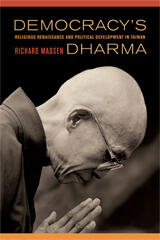
This is a CDDRL's Special Event within our Democracy in Taiwan Program. It is also co-sponsored by the Public Diplomacy/Emerging Publics Project of the Center for the Pacific Rim at University of San Francisco. In this seminar, Dr. Richard Madsen will talk about his new book that explores the religious renaissance that has reformed, revitalized, and renewed the practices of Buddhism and Daoism in Taiwan and how this religious renaissance embraces democracy modernity.  

Image
10896
Richard Madsen is distinguished professor and chair of the sociology department at the University of California, San Diego and a co-author (with Robert Bellah et al.) of The Good Society and Habits of the Heart which received the Los Angeles Times Book Award and was jury nominated for the Pulitzer Prize. He has authored or co-authored five books on China, including Morality and Power in a Chinese Village for which he received the C. Wright Mills Award; China's Catholics: Tragedy and Hope in an Emerging Civil Society; and China and the American Dream.  He also co-edited (with Tracy B. Strong) The Many and the One: Religious and Secular Perspectives on Ethical Pluralism in the Modern World. His latest book is Democracy’s Dharma: Religious Renaissance and Political Development in Taiwan.

Richard Madsen received an MA in Asian studies and a Ph.D. in sociology from Harvard.

"Madsen is a genial and well-informed guide, both to social-political change in Taiwan and to the ins and outs of religious movements. His engaging writing skillfully interweaves profound insights and themes into the descriptive analytical narrative. Democracy's Dharma presents new material based on recent research while offering a fresh spin on thinking about Asian religions."–Thomas Gold, editor of Social Connections in China: Institutions, Culture, and the Changing Nature of Guanxi

Philippines Conference Room

Richard Madsen Distinguished Professor Speaker Department of Sociology at the University of California, San Diego
Conferences
Subscribe to Northeast Asia