Democracy promotion
Authors
News Type
News
Date
Paragraphs

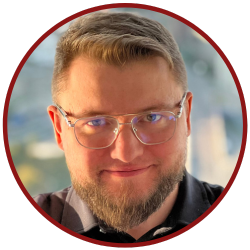
The Freeman Spogli Institute for International Studies (FSI) is pleased to welcome Kumi Naidoo as the next Frank E. and Arthur W. Payne Distinguished Lecturer. Effective November 7, 2023, Naidoo will be based at FSI’s Center on Democracy, Development and the Rule of Law (CDDRL), with a simultaneous affiliation at the Center for Food Security and the Environment (FSE).

The Payne Lectureship at FSI aims to raise public understanding of the complex policy issues facing the global community and advance international cooperation.

Naidoo has a distinguished career as an activist, including in South Africa, where he was an organizer of anti-apartheid activities. He was forced into exile in the United Kingdom under pressure from the pro-apartheid South African Security Police, but returned in 1990 following Nelson Mandela’s release from prison, whereupon he organized for the legalization of the African National Congress.

Naidoo turned his activism to the issues of climate change in 2009, when he joined Greenpeace International, serving as the executive director until 2015. In 2010, he released his first book, “Boiling Point: Can Citizen Action Save the World?”, in which he urges unity and cooperation in facing the urgency of the climate crisis. He has also served as the secretary general of Amnesty International and other global human rights organizations.

"FSI is lucky to be able to bring leaders like Dr. Naidoo to Stanford to help our community think about global challenges like climate change and development from new perspectives. With all of his experience as a frontline activist, Kumi is going to be a wonderful resource to our students and scholars,” says Michael McFaul, director of the Freeman Spogli Institute.


We need to reach people in their hearts, body and soul. I look forward to continuing to work on one of the solutions I have been pursuing which is the need to harness the power of arts and culture.
Kumi Naidoo
Payne Distinguished Lecturer


As the Payne Distinguished Lecturer, Naidoo will have the opportunity to teach a seminar to the Ford Dorsey Master’s in International Policy, mentor undergraduate and graduate students across FSI’s centers, and present the annual Payne Lecture in the winter of 2024. Naidoo’s multi-disciplinary expertise at the crossroads of social justice and environmental advocacy will bring welcome perspectives to the intellectual communities at CDDRL, FSE, and FSI, and across Stanford’s campus to places like the new Stanford Doerr School of Sustainability.

“At a time when we are seeing a convergence of multiple crises in the world and some troubling trends, including the rise of fascism, continuing climate denialism, a challenge to the multilateral system and more, I am pleased to have this opportunity to engage in reflective work on the question of ‘How can activism win bigger and faster?’” says Naidoo. 

He continues, “One of the key reasons we are not getting as much urgency and momentum to act on climate and intersecting challenges is the communications deficits activism comes up against: at an objective level, we face a challenging ownership structure of mainstream media which leaves little place for narratives and perspectives pushing for substantive structural and systemic change.”

“We are delighted to welcome Dr. Naidoo as this year’s Payne Lecturer,” shared Kathryn Stoner, Mosbacher Director of CDDRL. “With his remarkable background as a human rights activist and a global leader in environmental and social justice, Kumi brings a wealth of knowledge and insight that will undoubtedly spark meaningful conversations and inspire our students, faculty, and the greater Stanford community."

Previous Payne Distinguished Lecturers include Rose Gottemoeller, former deputy secretary of NATO; Ertharin Cousin, former U.S. Ambassador to the UN Agencies for Food and Agriculture; Brett McGurk, former presidential envoy to defeat ISIS; and Jung-Seung Shin, former Ambassador for the Republic of Korea, among others.

The Payne Lectureship is named for Frank E. Payne and Arthur W. Payne, brothers who gained an appreciation for global problems through their international business operations. The Payne Distinguished Lecturer is chosen for his or her international reputation as a leader, with an emphasis on visionary thinking; a broad, practical grasp of a given field; and the capacity to clearly articulate an important perspective on the global community and its challenges. 

Speaking to his upcoming time at Stanford, Kumi Naidoo outlined some of his goals for his research and lectureship while at FSI.

“At a subjective level, change agents tend to try to move people primarily by facts, figures, policy and rational arguments. This approach has tended to ignore the need to reach people in their hearts, body and soul. I look forward to continuing to work on one of the solutions I have been pursuing which is the need to harness the power of arts and culture, what increasingly is referred to as Artivism. I am hoping to use my time at Stanford University to interrogate these issues and share through my writing and podcast (Power, People and Planet) some of the perspectives that challenge the way that conventional activism has tried to foster structural and systemic change.”

Read More

2023 Fisher Family Summer Fellows in front of fountain
News

Applications for the 2024 Fisher Family Summer Fellows Program are Now Open

The program will run from Sunday, July 21, through Friday, August 9, 2024. Applications are due by 5:00 pm PST on Sunday, January 14, 2024.
Applications for the 2024 Fisher Family Summer Fellows Program are Now Open
Hero Image
Kumi Naidoo joins the Freeman Spogli Institute for International Studies as the 2023-24 Payne Distinguished Lecturer
Kumi Naidoo joins the Freeman Spogli Institute for International Studies as the 2023-24 Payne Distinguished Lecturer.
All News button
1
Subtitle

Naidoo brings a multi-disciplinary perspective from his experiences as a leader at Greenpeace International, Amnesty International, and other causes to the students and scholars at FSI and beyond.

Authors
Rachel Owens
News Type
News
Date
Paragraphs

In a CDDRL seminar series talk, FSI’s Mosbacher Senior Fellow in Global Democracy Larry Diamond provided a comprehensive view of the global state of democracy. Drawing on Freedom House data, he noted that, for the first time since 2006, almost as many countries made gains in freedom as those that experienced declines. While the trend may seem promising, Diamond cautioned that the future of the current global democratic recession is anything but certain.

Diamond’s analysis draws on a democracy measure averaging three different indicators, namely those of Freedom House, Economist Intelligence Unit, and Varieties of Liberal Democracy. Although aggregate global trends show that democratic decline has been moderate since 2006, with the largest erosion occurring in Sub-Saharan Africa, the picture looks more concerning upon closer examination. Among countries with populations over 1 million, the percentage of democracies is only 43 percent, which marks a 20-percentage point drop from 2006. Considering that India and Indonesia can no longer be classified as clearly democratic, Diamond explained, only a quarter of the world’s population today live under democracies (compared to 54 percent in 2006). The ratio of democratic transitions to autocratic breakdowns, moreover, has been declining, especially in the last five years.

Diamond’s presentation underscored the centrality of the rule of law in driving democratic decline rates. Based on Freedom House data, the rule of law has lagged behind political rights and civil liberties in many countries. In explaining the roots of the democratic recession, Diamond highlighted the erosion of normative commitments to democracy, weakening institutions, and poor economic and political performance. 

Despite the alarming global trends and the setbacks suffered in longstanding democracies such as India, the illiberal populist currents driving this democratic recession can be reversed, as evidenced by the recent defeat of Poland’s Law and Justice Party at the polls. Diamond ended his talk by noting that the near-term trajectory of global democracy will largely be shaped by the outcome of elections in the United States and India in 2024.

Watch a recording of Diamond's talk below, or explore upcoming CDDRL events here.

Read More

Janka Deli presents during CDDRL seminar
News

Can Markets Save the Rule of Law?: Insights from the EU

CDDRL postdoctoral fellow challenges the conventional wisdom that deterioration in the rule of law generates decline in economic vitality.
Can Markets Save the Rule of Law?: Insights from the EU
Hilary Appel presents during a REDS Seminar hosted by the Center on Democracy, Development and the Rule of Law and The Europe Center.
News

EU and NATO Enlargement and the Populist Backlash Thesis

Many argue that EU and NATO enlargement produced a populist backlash in Europe. Evidence suggests otherwise.
EU and NATO Enlargement and the Populist Backlash Thesis
Brett Carter and Erin Baggot Carter present their new book during CDDRL's Fall 2023 Research Seminar Series
News

CDDRL Affiliated Scholars Build the World’s Largest Autocratic Propaganda Dataset

Erin Baggot Carter and Brett Carter discuss their new book in the Center on Democracy, Development and the Rule of Law’s weekly research seminar.
CDDRL Affiliated Scholars Build the World’s Largest Autocratic Propaganda Dataset
Hero Image
Larry Diamond speaks during CDDRL's research seminar
Larry Diamond, FSI's Mosbacher Senior Fellow in Global Democracy, presents during CDDRL's research seminar on October 26, 2023.
Rachel Cody Owens
All News button
1
Subtitle

Is the world still in a democratic recession? Larry Diamond — the Mosbacher Senior Fellow in Global Democracy at FSI — believes it is.

Date Label
-
Image
Stanford Democracy Day International Luncheon

The Bechtel International Center and Stanford Democracy Day are pleased to invite you to our inaugural Stanford Democracy Day International Luncheon this Tuesday, November 7, from 11:00 am to 12:30 pm. Head over to the Bechtel International Center's Assembly Room to listen to a panel of leading international democracy scholars and enjoy a tasty free lunch from Coupa Café. 

​​Dr. Kathryn Stoner, the Director of Stanford’s Center on Democracy, Development and the Rule of Law (CDDRL), will deliver opening remarks and moderate the panel of international democracy scholars at Stanford, including Dr. Larry Diamond (Senior Fellow, Freeman Spogli Institute), Dr. Kharis Templeman (Research Fellow, Hoover Institution), Dr. Didi Kuo (Associate Director for Research CDDRL),  Dr. Hesham Sallam (Senior Research Scholar, CDDRL), and Dr. James Fearon (Senior Fellow, FSI).

​​This event is open to the Stanford Community. Please RSVP here by November 3rd so that we can ensure a proper food and drink order.

Bechtel International Center
584 Capistrano Way, Stanford, CA 94305

Panel Discussions
Authors
Nora Sulots
News Type
News
Date
Paragraphs

The Fisher Family Summer Fellows on Democracy and Development Program at Stanford University's Center on Democracy, Development and the Rule of Law is now accepting applications for our summer 2024 program. The deadline to apply is 5:00 pm PST on Sunday, January 14, 2024.

The program brings together an annual cohort of approximately 30 mid-career practitioners from countries in political transition who are working to advance democratic practices and enact economic and legal reform to promote human development. Launched by CDDRL in 2005, the program was previously known as the Draper Hills Summer Fellows Program. The new name reflects an endowment gift from the Fisher family — Sakurako (Sako), ‘82, and William (Bill), MBA ‘84 — that secures the future of this important and impactful program.

From Afghanistan to Zimbabwe, our program participants are selected from among hundreds of applicants every year for the significant contributions they have already made to their societies and their potential to make an even greater impact with some help from Stanford. We aim to give them the opportunity to join a global network of nearly 500 alumni from 97 countries who have all faced similar sets of challenges in bringing change to their countries.

The Fisher Family Summer Fellows Program provides an intensive 3-week on-campus forum for civil society leaders to exchange experiences and receive academic and policy training to enrich their knowledge and advance their work. Delivered by a leading Stanford faculty team composed of Michael McFaul, Kathryn Stoner, Francis Fukuyama, Larry Diamond, Erik Jensen, and more, the program allows emerging and established global leaders to explore new institutional models and frameworks to enhance their ability to promote good governance, accountable politics, and find new ways to achieve economic development in their home countries.

Prospective fellows from Ukraine are also invited to apply for our Strengthening Ukrainian Democracy and Development (SU-DD) Program, which runs concurrently with the Fisher Family Summer Fellows Program. The SU-DD program provides a unique opportunity for mid-career practitioners working on well-defined projects aimed at strengthening Ukrainian democracy, enhancing human development, and promoting good governance. Applicants to the SU-DD program will use the Fisher Family Summer Fellows Program application portal to apply and indicate their interest there. You will then be directed to a supplemental application for the SU-DD program, which will ask some additional questions specific to the SU-DD program, including requiring a detailed description of your proposed project.

Read More

2023 SU-DD Fellows
News

Empowering Ukrainian Democracy: Innovative Training Program Nurtures Projects for Recovery and Development

Meet the six fellows selected to participate in the first cohort of the Center on Democracy, Development and the Rule of Law’s Strengthening Ukrainian Democracy and Development Program.
Empowering Ukrainian Democracy: Innovative Training Program Nurtures Projects for Recovery and Development
Fisher Family Summer Fellows Class of 2023
News

Announcing the Inaugural Fisher Family Summer Fellows Cohort

In July 2023, CDDRL will welcome a diverse cohort of 33 experienced practitioners from 21 countries who are working to advance democratic practices and economic and legal reform in contexts where freedom, human development, and good governance are fragile or at risk.
Announcing the Inaugural Fisher Family Summer Fellows Cohort
Summer Fellows from the 2022 cohort pose together for a group photo.
News

The Gift of Connection: A Bright Future Lies Ahead for the Summer Fellows Program at CDDRL

A gift from alumni Sakurako, ’82, and William Fisher, MBA ’84, secures the future of the Summer Fellows Program at the Center on Democracy, Development and the Rule of Law, which provides opportunities for civic leaders from around the world to network and learn from Stanford scholars.
The Gift of Connection: A Bright Future Lies Ahead for the Summer Fellows Program at CDDRL
Hero Image
2023 Fisher Family Summer Fellows in front of fountain
All News button
1
Subtitle

The program will run from Sunday, July 21, through Friday, August 9, 2024. Applications are due by 5:00 pm PST on Sunday, January 14, 2024.

-
2023 SU-DD Fellows
CDDRL's 2023 Strengthening Ukrainian Democracy and Development Fellows: (L to R) Halyna Yanchenko, Konstantyn Chyzhyk, Olena Kutsai, Anton Turupalov, Gulsanna Mamediieva, and Mykhailo Pavliuk. | Rod Searcey

Please join us on Monday, August 28, to meet CDDRL's six Strengthening Ukrainian Democracy and Development (SU-DD) Fellows. SU-DD is a 10-week training program for Ukrainian practitioners and policymakers. Launched in the fall of 2022, the program provides a unique opportunity for mid-career practitioners working on well-defined projects aimed at strengthening Ukrainian democracy, enhancing human development, and promoting good governance.

Meet our Ukrainian fellows and learn first-hand about what they have been working on during their time at Stanford. Hear about their respective projects, each focusing on actionable ways to support Ukraine’s recovery from Russia’s invasion, and find out more about how these practitioners and policymakers plan to launch their rebuilding efforts when they return to Ukraine in September.

This event is taking place in-person only. There will not be an online component.

AGENDA


12:30-12:35 — Introduction (Kathryn Stoner, Mosbacher Director of CDDRL)
12:35-12:55 — Olena Kutsai
1:00-1:20 — Mykhailo Pavliuk
1:25-1:45 — Gulsanna Mamediieva
1:45-2:00 — Break
2:00-2:20 — Konstantyn Chyzhyk
2:25-2:45 — Halyna Yanchenko
2:50-3:10 — Anton Turupalov


Reuben W. Hills Conference Room (Encina Hall East, 2nd floor)
616 Jane Stanford Way, Stanford, CA 94305

Panel Discussions
Authors
Nora Sulots
News Type
News
Date
Paragraphs

Last year, the Center on Democracy, Development and the Rule of Law announced the launch of a new 10-week training program for Ukrainian practitioners and policymakers. The Strengthening Ukrainian Democracy and Development (SU-DD) Program provides a unique opportunity for mid-career practitioners working on well-defined projects aimed at strengthening Ukrainian democracy, enhancing human development, and promoting good governance. It builds on some of the successes of the Center’s earlier Ukrainian Emerging Leaders Program, which hosted 12 Ukrainian fellows across four cohorts.

In May and June, our SU-DD inaugural cohort of six fellows met online with CDDRL faculty to discuss and define the scope of their respective projects, each focusing on actionable ways to support Ukraine’s recovery from Russia’s invasion.

One of the key components of the SU-DD program is for fellows to also participate in our three-week-long Fisher Family Summer Fellows Program. We were delighted to welcome them to campus in July for this opportunity to create connections and synergies and gain a deeper understanding of shared development problems and solutions from a variety of country contexts far beyond Ukrainian borders. Participating in this program also expanded the network for our Ukrainian fellows to draw upon as they continue their work and implement their projects when they leave Stanford on September 1.

During the final three weeks of the SU-DD program, our Ukrainian fellows are visiting Silicon Valley tech companies, meeting with local business experts, politicians, government officials, and Stanford faculty, and working on implementation plans for their projects.

Learn more about each of our fellows and their projects below, and join us on Monday, August 28, at 12:30 pm, to hear them present their ideas.

Meet the Fellows

Anton Turupalov

Anton Turupalov is a political consulting and government relations professional in Ukraine with extensive experience in public service. He has previously served as Deputy Mayor of Mykolayiv, Advisor to the Minister of Healthcare of Ukraine, and Advisor to the Head of the Parliament of Ukraine. Anton's expertise lies in regional policy and local administration. As a key advisor on regional policy to the former Prime Minister of Ukraine, he played a pivotal role in implementing groundbreaking system changes, including land and administrative reform. Anton organized Ukraine's first coronavirus isolation facility during the COVID-19 pandemic under challenging circumstances. Following the full-scale invasion of Ukraine by Russia in February 2022, Anton co-organized the Assistance Coordination Center in Warsaw, a hub for coordinating humanitarian aid between Ukrainian and Polish authorities, international donors, and organizations. Currently based in Warsaw, Anton serves as an advisor to the Minister of Agriculture and Food of Ukraine.

Project Description: Anton is spearheading the creation of the Ukrainian Endowment for Democracy (UED), a platform dedicated to protecting and developing democracy in Ukraine. The UED aims to promote the transformation of the political system, establish effective institutions, and introduce equal rules of the game to build sustainable democracy. The Endowment’s mission is to promote democratic institutions, foster economic development, and support the political system’s evolution. UED will bring together responsible businesses and experienced reformers to address systemic national problems, shape the national agenda, partner with international organizations, and work on two fronts: promoting democracy and building a strong economy. It will support the development of democratic institutions, political parties, civil society organizations, and independent media, and promote Ukraine as a regional leader of democracy, as well as support Ukraine’s integration with Europe and the West.

In addition to establishing the UED, Anton is working on a secondary project focused on improving the efficiency, transparency, and responsiveness of reconstruction and humanitarian aid efforts in Ukraine. The project aims to develop a one-stop-shop system connecting international donors, relevant national government ministries, agencies, and local actors (region, town, and community-level stakeholders). This platform will enable a more transparent, efficient, and responsive mechanism for coordinating aid efforts in Ukraine, reducing corruption, improving prioritization, lowering net costs, and facilitating communication of needs and systemic issues by local administrations.
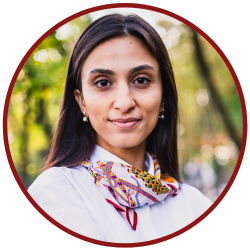


Gulsanna Mamediieva

Gulsanna ("Sanna") Mamediieva led strategic planning and European integration of the digital sector of Ukraine as Director General for EU Integration at the Ministry of Digital Transformation of Ukraine. She played a significant role in Ukraine’s integration into the EU Digital Single Market and the rapid digital transformation of Ukraine, including building the government ecosystem “Diia” (The State and Me), which makes it easy and secure for Ukrainians to obtain digital documents (driver’s licenses, passports, etc.), access public services online (such as paying taxes, business registration), developing digital skills, electronic communication and growth of ICT industry. This influence made Ukraine one of the world leaders in public innovation and, without exaggeration, European “digital tiger.” It also served as a backbone of Ukrainian resilience during the COVID-19 pandemic and wartime. Since February 2022, she has coordinated international technical assistance to support Ukraine’s digital resilience. Gulsanna also initiated exporting Ukrainian digital transformation experience to other countries. The first case is with Estonia, which will present its government state application, “Mrik,” which is based on Ukraine’s “Diia” app. Gulsanna currently serves as an Advisor to the Vice Prime Minister on Innovation, Technology and Education, and to the Minister of Digital Transformation of Ukraine. She is also Director for Programs and Partnerships at Digitally GovTech Center of Excellence, a member of the Council of Europe’s Committee on Artificial Intelligence, and Coordinator for Ukraine at Eastern Partnership Harmonization Digital Market initiative. She was a Visiting Fellow at the McCourt School for Public Policy at Georgetown University before arriving at Stanford this summer. She holds a Master’s degree in Information Technology Law from the University of Tartu, Estonia, and is pursuing a Ph.D. in Internet Law at Carleton University in Canada. Before her government role, Gulsanna worked as an IT lawyer at DLA Piper Ukraine, specializing in ICT and Intellectual Property.

Project Description: Sanna has a number of tech policy areas of interest. She would like to learn more about innovation strategy development, edTech, govTech, military tech, AI for public purpose, saving ecosystems, biotech and medtech, and innovation parks. She is also interested in developing solutions and learning about comparative practices for upskilling and reskilling displaced people, mostly women, with a specific focus on the ICT sector. She has been very involved in building Ukraine’s digital capacity and IT sector development. Sanna is also interested in helping to build further digital capacities for better governance at both the local and national levels. To achieve this, she is keen on connecting with individuals in California, including local government representatives, who are engaged in similar efforts. She is also eager to connect with women in the Bay Area who have participated in ICT-related retraining and reskilling initiatives.

Gulsanna is interested in technology around elections, blockchain, and security that would be involved in structuring a way in which all displaced Ukrainians might have the opportunity to vote in the next round of presidential and/or parliamentary and local elections. She endeavors to understand the risks and benefits of such a system and, thus, is interested in connecting with experts in technical/computer science who are conversant in blockchain and e-voting, if only to explain why these ideas may not work that well. She is also interested in digital diplomacy, promoting and sharing Ukrainian digital transformation experiences.
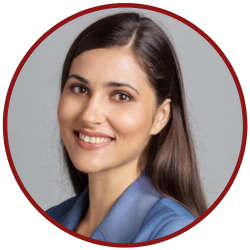


Halyna Yanchenko

Halyna Yanchenko was elected to the Ukrainian Verkhovna Rada (Parliament) in 2019 and is the Deputy Chair of Sluha Narodum “SN” (Servant of the People), a centrist, pro-European and anti-corruption Party. Shortly after her election, Ukraine’s president, Volodymyr Zelensky, tapped her to lead government investment efforts. In January 2022, she was appointed as a Secretary in the National Investment Council of Ukraine. In addition, she chairs the Temporary Special Commission of the Verkhovna Rada on protecting investor rights. Prior to being elected to the Verkhovna Rada of Ukraine, she led the Civil Oversight Council at the National Anti-Corruption Bureau of Ukraine. In 2014-2015 was a deputy of the Kyiv city council. Halyna earned a Master’s Degree in Sociology from the National University Kyiv-Mohyla Academy. She also studied for one year at Wichita Falls High School in Texas. 

Project Description: Halyna has many interests and was an important voice in the political process that led to the creation of “Diya” (a state cell phone application that has electronic IDs and provides public services to citizens and businesses) to make it easy and secure for Ukrainians to obtain digital drivers’ licenses, passports, health cards, and the like. This was very successful, and Ukrainians can now do all of this on their smartphones. Building on this success, Halyna is interested in using technology to assist in quickly employing veterans and returning displaced Ukrainians post-war. She is interested in engaging foreign investment for the recovery of Ukraine. She also wants to learn more about platforms and systems that can match skills with reconstruction priorities (as well as helping to map out those priorities). She would benefit from making connections in the private sector, including tech companies that could be helpful in these areas, as well as learning more from people who have worked in post-conflict zones on reconstruction priorities and organization. She also seeks to meet with emergency and disaster preparedness and recovery organizations at the state, federal and local levels or other contacts who may have experience in some of these areas.
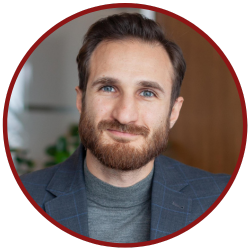


Konstantyn Chyzhyk

Konstantyn ("Kostya") Chyzhyk is a Partner at British-Ukrainian law and consultancy firm Hillmont Partners, helping international companies develop business in Ukraine and advising the government and the parliament on economic and judicial reforms. As Deputy Minister of Energy and Ecology, Konstantyn coordinated European integration, investments, digital transformation, and security, worked on renewable energy sector stabilization and reform, launched new auctions on gas extraction, and managed the largest sectoral loan and grant portfolio in the government of $1.2B. As Deputy Head and later as Head of the Investment Promotion Office under the President of Ukraine, Konstantyn unlocked and secured more than $1B of foreign direct investments. As Head of Communications and International Relations of the Ministry of Finance, he promoted IMF-backed reforms and managed cooperation with investors and the IMF, World Bank, EBRD, and EIB. 

Project Description: Kostya wants to use his time at Stanford to develop a new vision for ways in which to attract foreign direct investment to Ukraine. He is interested in learning more about strategic, sectoral, and institutional policy and regulatory frameworks that Ukraine would need to have in place in order to attract foreign capital post-war. He is keen on engaging with professionals from private equity and venture funds. Additionally, he seeks to connect with regional authorities, both at the state and local levels, if applicable, who are actively involved in economic development and the promotion of foreign direct investment (FDI). Kostya's intention is to gain insights from California's initiatives in this realm and also understand more about the factors that investors prioritize when considering investment in post-conflict areas.
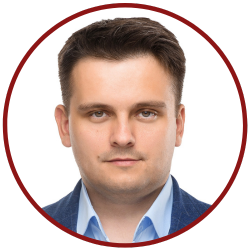


Mykhailo Pavliuk

Mykhailo Pavliuk is vice-chairman of the Chernivtsi Oblast (state) legislature in Ukraine. Among his central duties is the protection of the mutual interests of communities (known in Ukrainian as hromadas) and local governing bodies. His interests have long been focused on Euro-Atlantic integration, decentralization and deconcentration of authority in Ukraine, and the engagement of public and non-governmental organizations in policymaking. As acting Governor of the Chernivtsi Oblast State Administration in 2018-2019, Mykhailo focused on the creation of a successful administrative structure of new, capable, self-sufficient communities. In 2006-2010 shortly after his university graduation, he also organized long-term public discussions about the advantages for Ukraine of European Union and NATO membership. In his spare time, Mykhailo volunteers to deliver humanitarian aid to liberated areas of Ukraine and to the Armed Forces of Ukraine. He also supports internally displaced persons in Chernivtsi and coordinates their resettlement.

Project Description: Mykhailo’s project is about local self-governance — its decentralization, finalization, and implementation in the post-war period in Ukraine. He wants to learn more about checks and balances between executive and local self-governance in the United States, how to empower self-sufficient communities (hromadas in Ukrainian, which are literally community-based forms of governance) and enrich them with practices of good governance (transparent, responsive and efficient), and also ways in which to engage citizens in local public issues. During his time at Stanford, he is interested in meeting with local government representatives in Palo Alto, Menlo Park, and Mountain View, as well as state (California) government actors to understand better how (or whether) this works here.


Olena Kutsai

Olena Kutsai is a lawyer with more than 15 years of experience in the international corporate sector, including work for Chevron and Scorpio Real Estate corporations. Olena currently serves as a Member of the Secretariat of the Business Ombudsman Council of Ukraine and is a Member of the Peace Coalition. In the Business Ombudsman Council, Olena leads high-level dialogues focused on improving the business environment in Ukraine. She is responsible for strategic cooperation with a number of stakeholders, including the Ministry of Digital Transformation and the Ministry of Ecology and Natural Resources. Olena drives several special initiatives to support the reconstruction and recovery of Ukraine following Russia’s invasion in 2022. She also develops policy recommendations promoting good governance, sustainable development, and the rule of law in Ukraine, working with the Government of Ukraine, Verkhovna Rada (parliament), the Office of the President of Ukraine, business associations, non-governmental institutions, international financial institutions (World Bank, EBRD), and international development organizations such as USAID and Agriteam. Olena is an author and co-author of the Council’s educational webinars and training for the private and public sectors. She holds a Master’s of Public Administration from the Ukrainian Catholic University and a Master’s of Law from the Eastern European University. Olena is a graduate of the Center on Democracy, Development and the Rule of Law’s Leadership Academy for Development (Stanford University) and an advanced leadership course at Harvard Business School.

Project Description: Olena has an extensive background in business development and business advocacy. Her primary interest revolves around exploring effective strategies to reconstruct and revitalize the business community in Kherson, a region in southeastern Ukraine liberated from Russian occupation in the spring of 2022. Her overarching goal is to create models that can be scaled, adapted, and implemented in other parts of Ukraine.

Her past work has been focused on helping businesses forced to relocate from occupied or conflict-ridden areas of Ukraine. She helped these businesses secure new operational spaces, access essential services like electricity and internet, and rebuild disrupted supply chains to resume production. In Kherson, specific challenges arise due to the aftermath of flooding caused by the Russian military's destruction of the Khakovka Dam on June 6, 2023. Alongside her focus on business recovery, Olena also seeks to address the cleanup and restoration of vital services like electricity and internet, as well as the rebuilding of other infrastructure destroyed in the flooding.

Given the significant environmental damage in Kherson, Olena has found value in connecting with experts in food sustainability at Stanford, as well as climate and environmental scientists like David Lobell. She also seeks to engage with and learn from individuals with experience in disaster cleanup and recovery, both within California and on a national and international scale.

Read More

Fisher Family Summer Fellows Class of 2023
News

Announcing the Inaugural Fisher Family Summer Fellows Cohort

In July 2023, CDDRL will welcome a diverse cohort of 33 experienced practitioners from 21 countries who are working to advance democratic practices and economic and legal reform in contexts where freedom, human development, and good governance are fragile or at risk.
Announcing the Inaugural Fisher Family Summer Fellows Cohort
Michael McFaul moderates a panel with Oleksiy Honcharuk, Serhiy Leshchenko, Oleksandra Matviichuk, Oleksandra Ustinova on the one-year anniversary of the full-scale invasion of Ukraine.
News

Ukraine’s Fight for Democracy, One Year In

To commemorate the first year of the full-scale invasion of Ukraine, Ukrainian leaders joined a panel hosted by the Freeman Spogli Institute for International Studies to express their hopes for victory and their gratitude for Western support.
Ukraine’s Fight for Democracy, One Year In
Ukrainian flag on a blue background with SU-DD logo
News

CDDRL Launches Program Aimed at Strengthening Ukrainian Democracy and Development

The Strengthening Ukrainian Democracy and Development (SU-DD) Program, formerly the Ukrainian Emerging Leaders Program, is a 10-week training program for Ukrainian practitioners and policymakers.
CDDRL Launches Program Aimed at Strengthening Ukrainian Democracy and Development
Hero Image
2023 SU-DD Fellows
CDDRL's 2023 Strengthening Ukrainian Democracy and Development Fellows: (L to R) Halyna Yanchenko, Konstantyn Chyzhyk, Olena Kutsai, Anton Turupalov, Gulsanna Mamediieva, and Mykhailo Pavliuk.
Rod Searcey
All News button
1
Subtitle

Meet the six fellows selected to participate in the first cohort of the Center on Democracy, Development and the Rule of Law’s Strengthening Ukrainian Democracy and Development Program.

0
CDDRL Research Affiliate, 2025-26
Deliberative Democracy Lab Postdoctoral Fellow 2023-25
lodewijk_gelauff_1.jpg

Lodewijk Gelauff is a Postdoctoral Scholar at the Deliberative Democracy Lab in CDDRL. He is an interdisciplinary scholar and received his doctorate in Management Science and Engineering from Stanford in 2023 with his dissertation on "Design and Evaluation of Online Technologies for Societal Decision Making."

In his work, he works with societal decision-makers to use and improve tools to engage residents or stakeholders in their decisions. As part of this, he managed the development and use of a few tools, including a video chat platform to facilitate small-group discussions without a human moderator and a voting platform for participatory budgeting that is used by dozens of cities in the United States.

In his recent work, he focuses on designing experiments and developing data sets that allow more in-depth analysis of how stakeholders use these technologies in practice. Lodewijk is actively involved as a volunteer with the Wikimedia community and was named the Wikimedia Laureate (a career award) in 2021 for his volunteer activities. 

Date Label
Authors
Tara Hein
News Type
Blogs
Date
Paragraphs

Catastrophizing the state of the world in which one comes of age is a common fallacy of youth. I intend to avoid this pitfall. Still, contextualizing the present state of affairs is a tremendous feat. My generation is graduating from university amidst the looming sixth mass extinction, as our planet continues to warm, and humanity appears unable to free itself from imperial wars.

Yet as I begin to find my footing in this world, my way of contributing to solving these seemingly insurmountable challenges, I am imbibed with hope rather than fear. This faith emanates from the fabric of the communities in which I have been fortunate to be embedded. For it is in the folds of communityliving, learning, and working with people who care deeply about making the world a better place and about each other as human beingsthat we find the strength to persevere, even when it appears that much of the progress we thought we had made as a species is disintegrating in real-time.

From Costa Rica to Chile, Latin American democracies are in jeopardy.


Three months ago, I submitted my honors thesis to the Center on Democracy, Development and the Rule of Law (CDDRL) as a student in its Fisher Family Honors Program. Under the advisement of my brilliant mentors, Professors Beatriz Magaloni and Jeremy Weinstein, I spent the last year and a half of my time at Stanford conducting original research on citizenship in Chile, a country currently working to redefine its social contract.

Tara Hein '23 presents her honors thesis
Tara Hein '23 presents her honors thesis. | Nora Sulots

Though Chile is one of Latin America’s poster childrenlauded for its economic success and the strength of its democratic institutionsin 2019, the world watched with bated breath as protests erupted nationwide. Over a million people took to the streets in the capital alone, fueled by a broad range of demands from improved healthcare and pension systems to greater recognition of Indigenous peoples and women’s rights. Through in-depth, semi-structured interviews, I sought to understand how low-income citizensa group standing to gain significantly from the protestors’ demandssaw the state and understood their role as citizens of a democratic polity. Because democracy derives its legitimacy from the participation of its members,1 how people self-conceptualize their citizenship and choose to exercise their rights and responsibilities matters greatly in determining the vitality and longevity of this political system.

I was born and raised in Costa Rica, one of three liberal democracies in Latin America, and consistently ranked among the best democracies in the Western Hemisphereeven above the United States according to V-Dem’s liberal democracy index and Freedom House’s freedom score. Growing up, however, I was perplexed and disillusioned by the reality I witnessed at home.

In 2018, my country confronted one of the most contentious presidential elections in its recent history: the candidates that faced off in the runoff were both from nascent parties promising to diverge from the status quo, bogged down by corruption scandals and legitimacy crises.2 Across Costa Rica, young people worried about our democracy formed Coalición Costa Rica, a nonpartisan national civil society coalition dedicated to safeguarding our democratic system by working towards a more informed and participatory country. As a founding member of this organization’s local branch in my hometown, Monteverde, I went door-to-door informing voters on the critical issues at stake that election cycle, organized transportation systems to bring citizens to the polls, and spearheaded events to increase my community’s engagement with these elections.

Caminata por los derechos humanos, Monteverde, Costa Rica 2018
Caminata por los derechos humanos (Monteverde, Costa Rica 2018) | Tara Hein

That April, as I worked the polls at the Escuela de Santa Elenaa local school serving as a polling station—I found I, too, was losing faith in democracy. Our efforts felt insufficient. I was disheartened by the rationale folks gave for selecting their chosen candidate; I was frustrated by the imperfect nature of our system. How many people had not voted that day? How many had not voted simply because they could not get to the polls? How many did not know who to vote for or how to choose, and how many more thought that regardless of who won, their government would continue to fail them? If I saw so many shortcomings in my home countryallegedly one of the best democracieswhat was it like elsewhere?

Community and collaboration are vital ingredients to solving the pressing issues facing our societies.


This was one experience among many that motivated me to come to Stanford, determined to learn how democracies across Latin America could be strengthened from the ground up, creating systems of governance that fulfill their promise of working in service of all their members.

Through my honors thesis, I sought to explore this question using rigorous empirical research. I saw the case of Chile as one that could shed light on the challenges democracies in my region face. In particular, I observed striking parallels between the growing discontent with and diminishing trust in democracy in Chile and Costa Rica. From developing a research design, writing the interview protocol, and securing IRB approval, to conducting fieldwork in Santiago, creating local partnerships, recruiting participants, and conducting interviews, writing my honors thesis pushed me to use the tools I had acquired throughout my undergraduate career in service of contributing to our understanding of the state of our democracies.

The concluding chapter of my thesis features an epigraph with a statement from former Uruguayan President José “Pepe” Mujica, cautioning that “if we renounce politics and each one takes refuge in the individual,” our civilization will break down.3 These words speak to how democracies suffer when people withdraw from the political communityfrom decision-making processes, public spaces, and their democratic citizenship. Citizen participation is democracy’s oxygen; this form of government hinges on our ability to act collectively and integrate members’ voices into its functioning. The Chilean experience illustrates the perils of a disjointed society divided into isolated units.

A similar sentiment holds for addressing the challenges of our time. Ideas require feedback and discussion to flourish, for it is only once they are subjected to scrutiny through a variety of paradigms that they are able to withstand the chaotic pressures of real-world implementation. This process is not about relentless criticism or antagonism: it is about cooperation and collaboration, operating under the premise that those around you care as deeply as you do about solving the pressing issues facing our societies.
 

My time at CDDRL was transformative, not only in my growth as a young scholar but also in my development as a citizen of the world.

Fisher Family Honors Program Class of 2023
Fisher Family Honors Program Class of 2023 | Damian Marhefka

My time at CDDRL was transformative, not only in my growth as a young scholar but also in my development as a citizen of the world. This is precisely because, beyond an intellectual home, I found community here. From daily greetings, smiles, exchanges of heartfelt conversation, and comradery — within the honors cohort, between students, staff, and faculty—emerges a culture of care that nurtures the whole person. Such quotidian interactions brim with positivity, converting weekly research seminars, workshops, or even casual encounters in Encina Hall into powerful energy sources. It is this spirit that informs the relationships that are born here, turning a group of remarkable individual scholars into a community.

On days when it seemed my thesis did not want to get written — when the headlines on the constitutional process in Chile, presidential elections in Brazil, or violence in El Salvador flooded my inbox, dampening my ability to continue reading journal articles and coding interviews — coming to CDDRL became an antidote. I could find solace in conversations with advisors and mentors, work sessions with other students, or moments of shared humanity with the wonderful staff and faculty at the Center.

Confronting the troubles of our time with the intention of finding solutions — facing a myriad of setbacks along the way — requires a kind of dynamic resilience that takes a great deal of courage and resolve. Yet engaging in this endeavor embedded in a collaborative, vibrant, and compassionate community, like the one found at CDDRL, makes even the hardest days a little bit easier. Such communities are the key to having the stamina and faith to continue developing new, innovative, and daring solutions in an environment where they will be pushed to become their best versions.

Becoming intimately familiar with the case of Chile has proven a sobering endeavor on the practicalities of democratic reform. As I finalized my thesis, Chile was embarking on its second attempt at re-writing its constitution after the draft resulting from the first was vehemently rejected by a majority of the population.

Perhaps above all, both my research itself and my time at CDDRL more broadly have impressed upon me the need to care for our political communities as one would a delicate flower in a tropical garden.

Tara Hein poses with Fisher Family Honors Program co-directors Didi Kuo and Stephen Stedman.
Tara Hein poses with Fisher Family Honors Program co-directors Didi Kuo and Stephen Stedman (June 2023). | Damian Marhefka

1. O’Donnell, Guillermo. “The Quality of Democracy: Why the Rule of Law Matters.” Journal of Democracy 15, no. 4 (2004): 32-46.
2. Colburn, Forrest D., and Arturo Cruz S. “Latin America’s Shifting Politics: The Fading of Costa Rica’s Old Parties.” Journal of Democracy 29, no. 4 (2018): 43-53.
3. Klein, Darío. Vota y Verás: Reflexiones de Pepe Mujica. Syncretic Press, 2018.

Read More

2023 Honors Thesis Award Winners, Tara Hein and Sean Michael
News

Graduating CDDRL Honors Students Recognized for Outstanding Theses

Tara Hein ('23) is a recipient of the 2023 Firestone Medal and Sean Michael ('23) has won CDDRL's Outstanding Thesis Award.
Graduating CDDRL Honors Students Recognized for Outstanding Theses
Phi Beta Kappa graduates
News

CDDRL Congratulates Newly Elected 2023 Phi Beta Kappa Members

Tara Hein and Sorcha Whitley (honors class of 2023) are among the newest members of this prestigious academic honors society.
CDDRL Congratulates Newly Elected 2023 Phi Beta Kappa Members
CDDRL honors students at the Lincoln Memorial
Blogs

Honors College Day 4: The Ins and Outs of Democracy, Development, and the Rule of Law

This is the fourth in a series of blog posts written by the Fisher Family Honors Program class of 2023 detailing their experiences in Washington, D.C. for CDDRL's annual Honors College.
Honors College Day 4: The Ins and Outs of Democracy, Development, and the Rule of Law
Hero Image
Santiago Skyline, taken by Tara during her fieldwork (Santiago de Chile, July 2022)
Tara Hein
All News button
1
Subtitle

Fisher Family Honors Program graduate Tara Hein (‘23) reflects on her time at Stanford and the community she found within the Center on Democracy, Development and the Rule of Law.

Authors
News Type
Blogs
Date
Paragraphs

Arriving in Tbilisi, Georgia, for the Leadership Network for Change reunion in April 2023, I didn’t know what was waiting for me. It turned out that the following few days were, with no doubt, some of the most exciting moments of my life!

In my home country of Tanzania, very few people know about Georgia; however, Georgia is a country you will find impossible to forget. The most memorable things were the warmth and hospitality of Georgians, breathtaking nature, the captivating mixture of old and new architecture in the capital Tbilisi, and the adventure of bouncing into traditional dances, customs, cuisine, and places I had never known even existed.

While in Georgia, I attended sessions and lectures which built on the foundations of what I had learned during CDDRL’s Summer Fellows Program in 2022, from theories to learning by seeing the contemporary development and challenges of democracy. I feel lucky to have been able to attend the sessions and discussions about democracy and to learn from professors and the philosophers of our time. I wish many would have an opportunity like this.

LNC alumni look on as CDDRL faculty speak
Geline (center) and fellow LNC alumni listen to CDDRL faculty speak at the April 2023 reunion in Tbilisi, Georgia.

I remember that on our way to Kazbegi, we stopped at a place called the Russia-Georgia Friendship Monument. The Russia–Georgia Friendship Monument was built in the Soviet era to symbolize the friendship between the two nations. However, it has stirred controversy among Georgians. While some view it as a painful reminder of conflicts between Russia and Georgia, criticisms emerge regarding the painting inside the wall, accused of presenting a biased narrative, and its location along the Georgian Military Highway is seen by some as a reminder of unresolved conflicts. After learning the story behind the Monument, I understand the hesitation on the Georgian side. I also realized that unless people and countries share common values, the sustainability and the meaning of symbolic structures like the Russia-Georgia Friendship Monument will forever remain fiction.

Geline Alfred Fuko poses at the Russia-Georgia Friendship Monument
Geline poses at the Russia-Georgia Friendship Monument.

Moreover, I had an opportunity to chat with other LNC participants from other parts of the world. The conversations were so insightful. Before coming to Georgia, I had a few questions related to democratic principles and values. The conversations I had with my peers during this program were so rich, and I was able to address some of these questions. Imagine!! Meeting peers with many years of experience in promoting democracy from almost all over the world — it was epic. I am pleased that I am more informed, and I am more confident that, today, I can give comparative knowledge when it comes to governance issues to aid my work. Being part of the LNC program kept me on track.

All in all, I wish to say მადლობა საქართველოს, სტენფორდის CDDRL-ს და ფიშერების ოჯახს (Georgian for "thank you to Georgia, Stanford CDDRL, and the Fisher Family").

Geline Alfred Fuko poses with fellow LNC alumni in Kazbegi, Georgia
Geline (left of center) poses with fellow LNC alumni at a lookout in Kazbegi, Georgia.

Read More

Fisher Family Summer Fellows Class of 2023
News

Announcing the Inaugural Fisher Family Summer Fellows Cohort

In July 2023, CDDRL will welcome a diverse cohort of 33 experienced practitioners from 21 countries who are working to advance democratic practices and economic and legal reform in contexts where freedom, human development, and good governance are fragile or at risk.
Announcing the Inaugural Fisher Family Summer Fellows Cohort
Summer Fellows from the 2022 cohort pose together for a group photo.
News

The Gift of Connection: A Bright Future Lies Ahead for the Summer Fellows Program at CDDRL

A gift from alumni Sakurako, ’82, and William Fisher, MBA ’84, secures the future of the Summer Fellows Program at the Center on Democracy, Development and the Rule of Law, which provides opportunities for civic leaders from around the world to network and learn from Stanford scholars.
The Gift of Connection: A Bright Future Lies Ahead for the Summer Fellows Program at CDDRL
LNC reunion
Blogs

Good to Be Back Again: Reflections on the 2022 Leadership Network for Change Reunion

Over the weekend of August 13-15, 2022, CDDRL hosted a reunion for the LNC community on campus at Stanford. It was the first global meeting and an exciting opportunity to bring together all generations of our fellows to connect, engage, and envision ways of advancing democratic development. 2018 Draper Hills alum Evan Mawarire (Zimbabwe) reflects on the experience.
Good to Be Back Again: Reflections on the 2022 Leadership Network for Change Reunion
Hero Image
Geline Fuko in Georgia
Geline Fuko in Kazbegi, Georgia. April 2023.
All News button
1
Subtitle

2022 Summer Fellows alumna Geline Fuko (Tanzania) reflects on her experience at CDDRL’s April 2023 LNC reunion in Georgia.

0
CDDRL Honors Student, 2023-24
cddrl_graduation_lunch_2024-424.jpg

Major: Political Science
Minor: Data Science
Hometown: Orange County, CA
Thesis Advisor: Lisa Blaydes

Tentative Thesis Title: Exploring External Actor Influences on Innovation Ecosystem Development in West Asia

Future aspirations post-Stanford: I would like to attend law school and then work in national security in a development-focused position.

Subscribe to Democracy promotion