Democracy promotion
Authors
Nora Sulots
News Type
News
Date
Paragraphs

The Fisher Family Summer Fellows on Democracy and Development Program, hosted by the Center on Democracy, Development and the Rule of Law (CDDRL) at Stanford University, brings together an annual cohort of approximately 30 mid-career practitioners from countries in political transition who are working to advance democratic practices and enact economic and legal reform to promote human development.

Previously known as the Draper Hills Summer Fellows Program, it was renamed in 2023 in recognition of a transformative gift from the Fisher family — Sakurako (Sako), '82, and William (Bill), MBA '84 — which endowed the program and secured its future. Since its launch in 2005, the program has built a robust, global alumni network of more than 500 leaders who are effecting change in some of the world's most challenging political environments.

CDDRL is pleased to welcome its 2026 cohort, who bring a wide range of experiences and perspectives shaped by work on democracy, governance, and human development.


The Fisher Family Summer Fellows Class of 2026 is a diverse cohort of 27 experienced practitioners from 21 countries who are working to advance democratic practices and economic and legal reform in contexts where freedom, human development, and good governance are fragile or at risk. Fellows come from a wide range of professional backgrounds — including civil society organizations, government institutions, media, academia, and the private sector — all united by their commitment to democratic reform and sustainable development in their communities.

Included in this year's class are three Ukrainian fellows who are jointly participating in CDDRL's Strengthening Ukrainian Democracy and Development Program (SU-DD). These fellows will begin meeting online with CDDRL faculty in early June to define the scope of their individual projects, each focused on developing actionable strategies to support Ukraine's recovery from Russia's invasion. By integrating the SU-DD scholars into the broader Summer Fellows Program, CDDRL fosters connections and cross-country learning that can lead to shared insights and scalable solutions. Participation in the program also expands the professional network our Ukrainian fellows can draw upon as they advance their work back home.

The 2026 Fellows will arrive on campus on July 20 to begin the three-week training program led by an interdisciplinary group of Stanford faculty and practitioners. Through seminars, case studies, and collaborative discussions, participants will explore innovative institutional models and practical strategies designed to strengthen democratic accountability and support sustainable development in their home countries. By connecting leaders across regions and sectors, the program continues to foster an international network of changemakers equipped with the knowledge, skills, and relationships needed to advance meaningful reform.

Meet the Fellows

Azerbaijan | Brazil | Colombia | Egypt | Georgia | India | Kenya | Liberia | Mongolia | Nepal | Nicaragua | Nigeria | Peru | Russia | South Africa | Tanzania | Thailand | Turkey | Ukraine | Venezuela | Zimbabwe


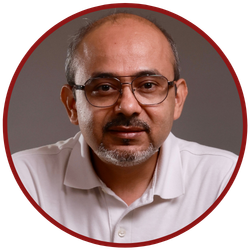
AZERBAIJAN
 

emin huseynov

Emin Huseynov is an Azerbaijani journalist and human rights defender, co-founder of the Institute for Reporters’ Freedom and Safety, and Director at the Institute for Human Rights. Over 20 years, he has worked to defend press freedom and document repression in Azerbaijan. In 2014, amid a government crackdown, Emin spent over 10 months hiding in the Swiss Embassy in Baku before reaching safety in Switzerland. He was then arbitrarily stripped of his citizenship. Since 2015, Emin has been actively working to raise awareness of gross human rights violations in the South Caucasus, Eastern Europe, and Central Asia on major international platforms, including the United Nations, the OSCE, and the Council of Europe.
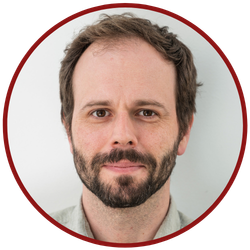


BRAZIL
 

Pedro Telles

Pedro Telles is a Program Director at the Democracy Hub (D-Hub), dedicated to network-building, capacity-building, and strategic support for democracy defenders globally. He is also an adjunct professor at Fundação Getulio Vargas (FGV) and a Senior Atlantic Fellow for Social and Economic Equity at the London School of Economics (LSE), with extensive experience working in civil society, government, philanthropy, and elections. He is a co-founder of multiple organizations focused on advocacy and civic engagement, such as Ctrl+Z, Quid, and Advocacy Hub, and is a board member of Avaaz, Transparência Brasil, and Legisla Brasil. He has also worked at Greenpeace, Luminate, and the Legislative Assembly of São Paulo.
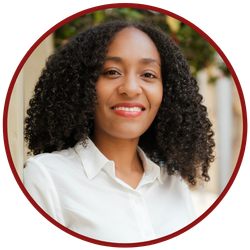


COLOMBIA
 

Andry Gonzalez

Andry Gonzalez is an economist with a master’s degree in Urban Planning and a Fulbright alumna. She served as an adviser to the Office of the Vice President of Colombia, Francia Márquez, advancing racial equity and territorial development. She currently works as a Program Manager at Open Society Foundations. She believes democracy must be meaningful in everyday life and that true development requires redistributing power, not just resources. She is passionate about supporting young people and women from marginalized communities to step into spaces of influence and shape the future of their territories.
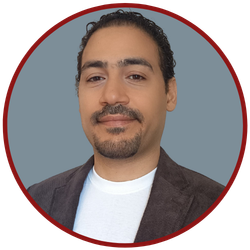


EGYPT
 

Ahmed Attalla F. Ali

Ahmed Attalla F. Ali is an Egyptian political and human rights activist and researcher. He is a co-founder of the grassroots pro-democracy April 6 Movement, contributing to its political direction and governance after the 2011 revolution. Since 2018, he has served as Executive Director of the Egyptian Front for Human Rights, leading documentation, research, legal assistance, and international advocacy. He has published studies and articles on civil-military relations, social movements, human rights, and EU–MENA relations. He holds a Law degree and a diploma in Political Science, and is currently pursuing an MA in EU Studies at UCLouvain, Belgium.


GEORGIA
 

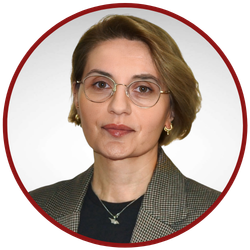
Tamar Rukhadze

Tamar Rukhadze is a media and civil society professional with nearly 30 years of experience promoting independent journalism and freedom of expression in Georgia. She began her career as a reporter in 1997, later leading major newsrooms before focusing on advancing media ethics, accountability, and resilience through civil society and international initiatives. Tamar previously served as Executive Director and Board Chair of the Georgian Charter of Journalistic Ethics and has held senior positions with IREX on USAID-funded programs. In 2025, she became Deputy Director of Batumelebi & Netgazeti following the arrest of founder and CEO Mzia Amaglobeli.


INDIA
 

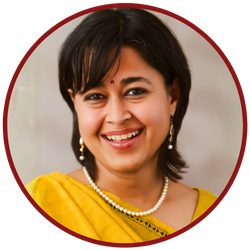
Dilip Kumar Pandey

Dilip Kumar Pandey is a PhD scholar, a former MLA from Timarpur, and an ex-Chief Whip in the Delhi Assembly. He comes from a farming family in Ghazipur, Uttar Pradesh, and holds an MCA degree. Known for his anti-corruption work and association with UNCAC, he is also an author of 5 books, including the bestseller, Gulabi Khanjar. A recurve archer, he is a music enthusiast who has written, sung, and composed various campaign songs for the Aam Aadmi Party. He runs the Radhika Prahlad Foundation, which supports medical care for the underprivileged, and has served as a member of Delhi’s Sahitya Kala Parishad. He is also an expert in inclusive policy, governance, political communication, and co-existential philosophy.
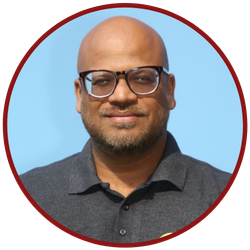
 

Srikanta Kumar Routa

Srikanta Kumar Routa serves as Head of Operations at The/Nudge Institute, where he orchestrates large-scale economic inclusion initiatives to uplift rural and tribal households from extreme poverty. With over 13 years of distinguished expertise in the development sector, he has successfully scaled the Graduation Approach to serve 200,000 families, facilitating $100 million investment through strategic government and private partnerships. An alumnus of TISS Hyderabad, Srikanta is recognized for his strategic acumen and operational excellence across India’s most remote terrains. He remains steadfast in his mission to foster universal equity and sustainable development for marginalized communities.


KENYA
 

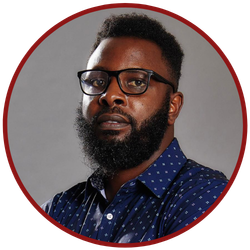
Keith Andare

Keith Andare is a Nairobi-based internet consultant working at the intersection of digital rights and climate action. He is the founder and executive director of the African Centre for Climate Research and Innovations (ACCRI), a pan-African civil society organization focused on environmental and digital transitions. Andare has extensive experience in digital rights and internet governance, having served as a member of the Multistakeholder Advisory Group (MAG) for the Kenyan, East African, and African Internet Governance Forums. He is passionate about cybersecurity and digital democracy.
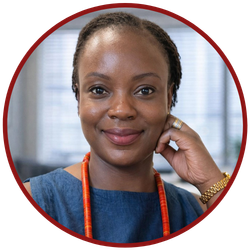
 

Aimee Akinyi Ongeso

Aimee Akinyi Ongeso is a Program Manager at Open Society Africa and an Obama Africa Leader. She is a democracy and justice practitioner with more than 16 years of experience advancing legal empowerment, participatory governance, and community-led justice across Africa. Her work focuses on designing and scaling grassroots-driven models that integrate law, organizing, and economic justice to strengthen democratic systems, particularly in conflict-affected contexts.


LIBERIA
 

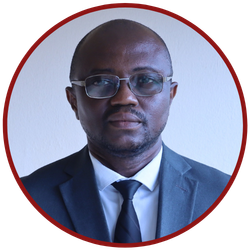
Lamii Kpargoi

Lamii Kpargoi is a Commissioner of the Office of the Ombudsman of the Republic of Liberia with a professional interest in human rights advocacy. Over the last 20 years, Mr. Kpargoi has worked as a civil society activist, with 16 of those years spent practicing law in Liberia. He is known for his dedication to upholding democratic values, promoting press freedom, and advocating for human rights. As a Chevening Scholar, he earned an LLM in Labour Law and Corporate Governance from the University of Bristol in the UK in 2019-2020. Mr. Kpargoi is also a Reagan-Fascell Democracy Fellow and a US State Department Community Solutions Fellow.


MONGOLIA
 

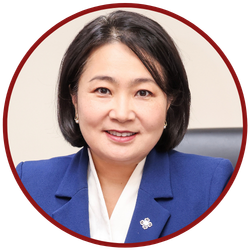
Nominchimeg Odsuren

Nominchimeg Odsuren is a Mongolian politician and a current Member of Parliament, with a professional background in law and a strong focus on advancing the rule of law. Trained at the University of Tokyo and Columbia Law School, she specializes in comparative, private, and economic law. Her work promotes transparency, accountability, and effective governance. With a cross-cultural perspective, she applies global best practices to strengthen legal frameworks and support sustainable policy reform in emerging democracies.


NEPAL
 

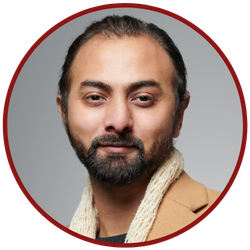
Pratik Kunwar

Pratik Kunwar is a political innovator and the Founder of Shaasan, a nonprofit civic initiative solving problems at the intersection of governance, climate, and deep learning. His work has been featured by Time, Forbes, the UN, and the WEF, among others. He has advocated for his work at the European Parliament, World Forum for Democracy, Davos, and One Young World, among others. Pratik is an Asia Society Next Generation Leader (2024) and has served on the European Union's International Youth Sounding Board and on the Advisory Council of the WEF's Global Shapers Community. Pratik holds a Master's in Data, Economics, and Design of Policy from MIT.


NICARAGUA
 

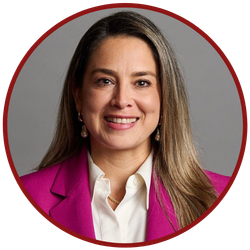
Berta Valle

Berta Valle is a Nicaraguan journalist and human rights advocate with extensive experience in media and international advocacy. Forced into exile in 2018, she became a leading voice for political prisoners following the arbitrary detention of her husband, Félix Maradiaga, in 2021. She is a co-founder of the World Liberty Congress Political Prisoner Support Team and the End Arbitrary Detention initiative at the University of Virginia, and serves as President of Fundación Libertad, advancing human rights and democratic restoration in Nicaragua. Her work also explores the use of decentralized technologies to strengthen financial freedom in repressive contexts.


NIGERIA
 

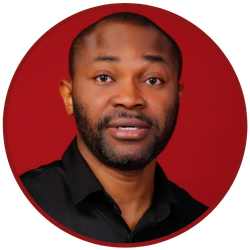
Ayodele Ganiu

Ayodele Ganiu is a cultural policy advocate with over 16 years of leadership advancing democratic reforms in Nigeria’s culture sector. As the Founder of Unchained Vibes Africa (UVA), he combats a shrinking civic space through the "Freedom Vibes" initiative, which combines transformative art with strategic litigation. Known for translating complex governance issues into cultural narratives that defy censorship, his work has yielded landmark legal victories and policy reforms, earning UVA the 2026 Bertha Artivism Award. He holds a B.Sc. in Finance from the University of Lagos and advanced training in cultural policy from the UNESCO Chair’s Arts Rights Justice Academy at the University of Hildesheim.


PERU
 

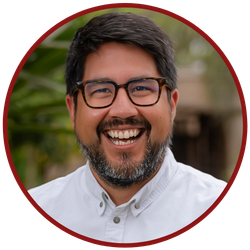
Álvaro Henzler

Álvaro Henzler is a serial social entrepreneur with 20+ years of experience. He has founded ventures in education, social impact, civic engagement, and leadership development. President of Asociación Civil Transparencia, Peru’s leading democracy NGO, co-founder and Executive President of Mosaico, advancing collective impact across Latin America, and co-founder of EnseñaPerú (member of Teach For All network). He holds an MPA from Harvard Kennedy School and a BA in Economics from Universidad del Pacífico, was a Research Fellow at Harvard’s Ash Center, and an advisor during the Peru–U.S. FTA. He was named a WEF Global Shaper and Georgetown Impact Award recipient.


RUSSIA
 

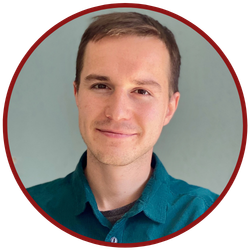
Leonid Drabkin

Leonid Drabkin is a senior executive with extensive experience leading OVD-Info, one of Russia’s largest and most respected human rights organizations, where he focused on documenting political prosecutions and providing legal support. He brings eight years of NGO leadership experience, complemented by work in media development and the pharmaceutical sector across Russia and in international settings. Drabkin holds an MSc in Finance from the United Kingdom and is recognized for a results-driven, change-oriented approach to advancing human rights. He was named to Forbes 30 Under 30 and is currently working in exile following Russia’s invasion of Ukraine.


SOUTH AFRICA
 

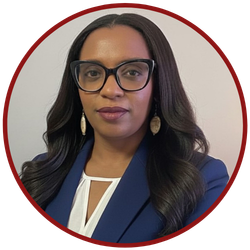
Tania Coenraad

Tania Coenraad is a governance, democracy, and development practitioner based in Cape Town. Most recently she served as the Chief of Staff and Head of Parliamentary Operations, providing strategic leadership on legislative affairs, parliamentary oversight, and stakeholder engagement in South Africa. With over 17 years of experience across Parliament, local government, and community development, she has advanced socio-economic inclusion and strengthened institutional accountability. Her work is driven by a commitment to ethical leadership, constitutional democracy, and development outcomes.



TANZANIA
 

Deus Valentine Rweyemamu

Deus Valentine Rweyemamu is the founding CEO of the Center for Strategic Litigation (CSL), an East African think-and-do tank focused on addressing a regional rule of law crisis. He is a reputed advisor on human rights, governance, and advocacy for various international organizations. Previously, Deus worked at the Open Society Foundations' Eastern Africa office, building the Tanzania portfolio. He helped establish key human rights and constitutional organizations like the Tanzania Human Rights Defenders Coalition and the Tanzania Constitutional Forum. He helped found CEMOT, a technology-powered election observation coalition based on the Election Situation Room model.


THAILAND
 

Bencha Saengchantra

Bencha Saengchantra is a former Member of the House of Representatives and currently serves on the Education and Training Committee. Over eight years in parliament, she supported and advanced legislation promoting democratic reform, human rights, gender equality, and social justice. Her work has focused on strengthening rule of law, expanding civic participation, and improving quality of life. As a participant in the Fisher Family Summer Fellows Program, she seeks to deepen her understanding of democratic governance and collaborate with global leaders to advance legal reform, equality, and democratic resilience in Thailand, across Asia, and around the world.
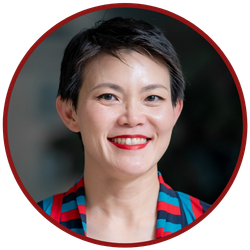
 

Janjira Sombatpoonsiri

Dr. Janjira Sombatpoonsiri is an activist scholar whose work examines how authoritarian power adapts in the digital age and how civic actors respond. She is a Research Fellow at the German Institute for Global and Area Studies (GIGA) in Hamburg and a full-time Assistant Professor at Chulalongkorn University’s Institute of Asian Studies in Bangkok. Her research spans protest movements, democratic resilience, and digital repression. Her forthcoming book is A Thousand Cuts: Digital Repression and Democracy in Thailand (2027, University of Wisconsin Press). She hopes to develop a regional policy hub that fosters cross-learning and collaboration across Southeast Asia.



TURKEY
 

Zeynep Aksoy

Zeynep Aksoy is a senior strategist based in Istanbul. At House of Impact, she works at the intersection of data, technology, and social research, translating behavioral insight into high-impact strategies for institutions and public actors. Her work spans large-scale national and local public initiatives. She holds a BA in Middle Eastern History and Politics and an MA in Political Theory from Sciences Po Paris. With a background in editorial and on-screen media, she continues to work across long-form and digital formats. She serves on the boards of SES Equality and Solidarity Association.


UKRAINE*
 

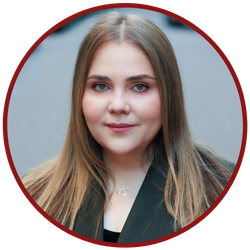
Kateryna Chernohorenko

Kateryna Chernohorenko is the architect of digital transformation and a former Deputy Minister of Defense of Ukraine (2023–2025). During her tenure, she launched Reserve+ and Army+ mobile apps, digitizing millions of military records and dozens of services. She scaled DELTA, the NATO-certified combat system, and led the Drone and IT Coalition, mobilizing $3.3B+ in aid. Kateryna also established Ukraine's Cyber Incident Response Center and founded the Space Policy Directorate in the MoD of Ukraine. She leads the digital transformation program at the High Qualification Commission of Judges and teaches “E-Governance, Document Management, and Digital Democracy” at Kyiv-Mohyla Academy.
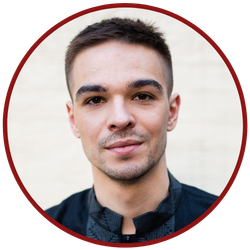
 

Illia Filipov

Illia Filipov* is a Ukrainian edtech entrepreneur and co-founder & CEO of EdEra. With a physics background from Taras Shevchenko National University, he chose to build educational infrastructure in Ukraine rather than pursue opportunities abroad. Since 2014, he has led the development of 300+ educational products, reaching over 2 million users on EdEra’s platform and millions more through solutions for government and business. He has worked with national institutions and international partners on education reforms, media literacy, and civic engagement, and served as an advisor to government bodies and the OSCE. His work focuses on expanding access to education to strengthen democratic systems.
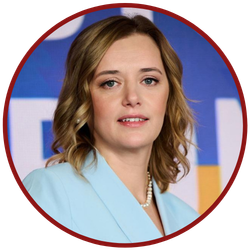
 

Svitlana Kovalchuk

Svitlana Kovalchuk* is Executive Director of Yalta European Strategy (YES), Ukraine’s leading platform advancing European integration and global dialogue on democracy, security, and development. For nearly a decade, she has led YES and the Victor Pinchuk Foundation's international initiatives, strengthening Ukraine’s global presence through the YES Annual Meeting in Kyiv and platforms at the World Economic Forum and the Munich Security Conference. She previously worked at the German Corporation for International Cooperation. Svitlana holds a PhD in Political Science and is an alumna of Harvard Kennedy School.
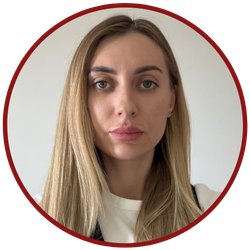
 

Valentyna Riznyk

Valentyna Riznyk* is a Ukrainian public affairs professional and legal scholar with experience in local governance and national policymaking. She serves as Secretary of the Poltava Regional Organization of the political party “Servant of the People” and is a member of the Youth Council under the Ministry of Economy of Ukraine. Valentyna has worked as an assistant to Members of Parliament and as an advisor to political leadership, contributing to legislative processes and community engagement. She holds a PhD in Law and a Master’s degree in Political Science, with a focus on strengthening democratic institutions and public trust in governance systems.
 

*These fellows are jointly participating in CDDRL’s Strengthening Ukrainian Democracy and Development Program.


VENEZUELA
 

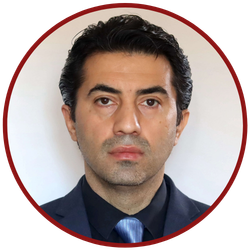
Pedro A. Urruchurtu Noselli

Pedro A. Urruchurtu Noselli is a political scientist and activist who serves as Senior Advisor on Foreign Affairs and Director of International Relations for María Corina Machado, as well as International Coordinator for Vente Venezuela. As a key strategist, he has helped mobilize international support for democracy in Venezuela, focusing on building global networks to counter authoritarianism. His work is defined by a commitment to diplomacy and political education, having trained more than 45,000 individuals. He is an alumnus of Georgetown University’s Global Competitiveness Leadership Program and was recently honored with the 2026 Impact Award for his courage. Pedro has faced political persecution for his work, including spending more than 400 days as a hostage in the Argentine Embassy in Caracas before his escape.

ZIMBABWE
 

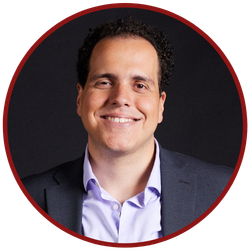
Gladys Kudzaishe Hlatywayo

Gladys Kudzaishe Hlatywayo is a Member of Parliament for Harare Province in Zimbabwe. She is a democracy/human rights activist and a feminist with over 20 years of experience. She has been active in both Zimbabwean civil society and opposition movements as a change agent, advocating for a democratic Zimbabwe. She was a 2014-2015 Hubert H. Humphrey Fellow at the University of Minnesota (United States)  and a 2016/2017 Chevening Scholar at the London School of Economics and Political Science (United Kingdom). She holds an MSc in Public Management and Governance from LSE, an MSc in Development Studies from the National University of Science and Technology, and a BA Degree from the University of Zimbabwe.

Hero Image
2026 Fisher Family Summer Fellows
All News button
1
Subtitle

In July 2026, the Center on Democracy, Development and the Rule of Law will welcome a diverse cohort of 27 experienced practitioners from 21 countries who are working to advance democratic practices and economic and legal reform in contexts where freedom, human development, and good governance are fragile or at risk.

Date Label
Display Hero Image Wide (1320px)
Yes
Paragraphs

Contrary to prevailing assumptions (and authoritarian aspirations), Larry Diamond argues that promoting democracy is not a dying or hopeless mission for the U.S. Here is why it remains an imperative, and how we can build it back better in the years to come.

All Publications button
1
Publication Type
Commentary
Publication Date
Journal Publisher
NOTUS Perspectives
Authors
Larry Diamond
News Type
News
Date
Paragraphs

Sunday morning, we awoke to the good news that Jesús Armas, a Venezuelan civic leader and 2022 alumnus of the Fisher Family Summer Fellows Program at Stanford University's Center on Democracy, Development and the Rule of Law (CDDRL), had been released from prison after more than a year in detention. He was forcibly disappeared and detained in Venezuela by security forces in December 2024 following the country’s stolen presidential election earlier that year. We are deeply relieved that he is now free from imprisonment in El Helicoide — a place, Jesús wrote upon his release, “that has been a symbol of torture, evil, and authoritarianism.”

Jesús is a dedicated public servant, engineer, and activist who has worked bravely with the opposition to promote peaceful democratic participation, free and fair elections, and civic unity in Venezuela. His detention occurred amid a broader wave of arrests targeting opposition organizers, journalists, and civil society actors in the country, and his case drew sustained international concern.

Reflecting on his experience, Jesús wrote that “nobody should be behind bars for thinking differently,” underscoring the principle that peaceful dissent must not be met with imprisonment.

We hope this development contributes to continued progress toward the release of all individuals unjustly detained for peaceful civic and political engagement, in Venezuela and beyond, and toward renewed respect for human dignity, fundamental rights, and the rule of law.

Read More

DAL Webinar 2.13.26
Seminars

Rebuilding Democracy in Venezuela: Political Challenges and Pathways Forward

Join us for the first event in a 4-part webinar series hosted by the Democracy Action Lab — "Rebuilding Democracy in Venezuela." Friday, February 13, 12:00 - 1:00 pm PT. Click to register for Zoom.
Rebuilding Democracy in Venezuela: Political Challenges and Pathways Forward
man holds a portrait of nicolas maduro during a march
News

Venezuela After Maduro, Explained

A Democracy Action Lab panel weighed competing scenarios for Venezuela’s political future amid elite continuity, economic crisis, and international intervention.
Venezuela After Maduro, Explained
Lilian Tintori, Waleed Shawky, and Gulika Reddy
News

Confronting Repression: Strategies for Supporting Political Prisoners

A panel discussion featuring 2025 Fisher Family Summer Fellows Lilian Tintori and Waleed Shawky, along with Gulika Reddy, Director of the International Human Rights and Conflict Resolution Clinic at Stanford Law School, explored the human cost of political imprisonment, the barriers advocates face, and the strategies available to combat them.
Confronting Repression: Strategies for Supporting Political Prisoners
Hero Image
Jesús Armas stands in a crowd in front of a Venezuelan flag following his release from prison, holding a t-shirt that reads "Release all political prisoners" in Spanish.
Jesús Armas stands in a crowd following his release from prison, holding a t-shirt that reads "Release all political prisoners" in Spanish. | Image via @jesusarmasccs on Instagram
All News button
1
Subtitle

A Venezuelan civic leader and alumnus of CDDRL’s Fisher Family Summer Fellows Program, Armas was kidnapped by security forces following the country’s 2024 presidential election.

Date Label
In Brief
  • A 2022 Fisher Family Summer Fellow at Stanford's Center on Democracy, Development and the Rule of Law, Jesús Armas was freed after prolonged detention in Venezuela’s El Helicoide prison.
  • He was detained after the country’s 2024 presidential election amid arrests of opposition organizers and civil society actors.
  • His case reflects broader international concern over detention for peaceful political expression.
Display Hero Image Wide (1320px)
Yes
Authors
News Type
News
Date
Paragraphs

On Jan. 7, the Democracy Action Lab convened a panel to assess Venezuela’s political landscape following the U.S. administration’s recent removal and arrest of leader Nicolás Maduro.

The event, “Venezuela After Maduro: Democracy, Authoritarian Rebalancing, or Chaos,” included speakers María Ignacia CurielHéctor FuentesDorothy KronickHarold Trinkunas, and Diego A. Zambrano. Moderated by Alberto Díaz-Cayeros, the discussion offered analyses of post-extraction scenarios that drew on comparative experiences, Venezuelan political dynamics, and theories of post-authoritarian and post-conflict transitions. 

Housed in the Center on Democracy, Development and the Rule of Law (CDDRL), the Democracy Action Lab (DAL) combines rigorous research with practitioner collaborations. It is co-directed by Beatriz Magaloni and Díaz-Cayeros, both senior fellows at the Freeman Spogli Institute for International Studies (FSI). During the panel discussion, Díaz-Cayeros said that DAL is collecting and sharing resources on the situation in Venezuela.

Authoritarian rebalance 


Maduro served as president of Venezuela for more than 10 years before he was ousted Jan. 3 in a U.S. military operation that brought him to America to face narco-terrorism charges.

Trinkunas, a senior research scholar at FSI’s Center for International Security and Cooperation (CISAC), discussed the possibility of Venezuela transitioning to democracy, especially given the opposition's overwhelming victory in the 2024 presidential elections. But an authoritarian rebalancing looms large, he noted.

“We have to remember that all the institutions of power and all the electoral offices in Venezuela below the president are held by supporters of the regime,” he said.

Trinkunas recalled political scientist Alexander B. Downs’ book, “Catastrophic Success,” which examined the negative consequences of foreign-imposed regime changes and highlighted that such interventions often lead to civil war and violent removals of leaders.

“About one-third to 40% of all regimes installed by a foreign intervention end up in civil conflict within 10 years,” Trinkunas said. And, almost half of leaders installed by foreign powers withdraw from or are pushed from office before their terms are up.

He foresees a divergence between the interests of the intervening power, the U.S., and Venezuela’s power elites and population under the proposed arrangement. “The people with the guns stay employed.” And they may not be eager to cooperate if it involves sharing Venezuela’s mineral wealth with the United States government.

Díaz-Cayeros said, “Nothing has changed in the basic underlying economic conditions of Venezuela that has forced an exodus of 8 million people.” Days after the arrest of Maduro, the government in office is still the same government that came into office through an electoral fraud, he added.

We have to remember that all the institutions of power and all the electoral offices in Venezuela below the president are held by supporters of the regime.
Harold Trinkunas
Senior Research Scholar, CISAC

Status quo interests


Curiel, a research scholar at CDDRL, research manager for the Democracy Action Lab, and a native of Venezuela, described the ecosystem of armed actors in Venezuela and outlined how both state and non-state security forces have the incentives and capabilities to preserve the status quo. 

“They’ve had arrangements that have been important for their survival, up until now. And so, there’s a question that these groups face with the loss of Maduro and [his wife Cilia] Flores,” she said.

To the extent they perceive their arrangements are under threat, they might respond with violence or engage in chaos, Curiel added. This is further complicated by the fact that different armed groups are loyal to different members of the governing coalition, creating competing power centers.

Fuentes, a CDDRL visiting scholar and Venezuelan native, noted that the situation in Venezuela remains extremely fluid and that it is still too early to determine whether Maduro’s removal will lead to authoritarian rebalancing or a genuine democratic transition. He argued that policymakers face a real tension between two objectives: stabilizing the country while accounting for the complexity and fragility of the Venezuelan state, and recognizing that stabilization without a clear commitment to democratic transition as the ultimate goal is not sustainable.

“The stability is not going to happen unless you promise and commit to the final goal of a democratic transition,” said Fuentes, a lawyer and policy expert from Venezuela.

He explained that the regime’s basic instinct is to resist and survive any U.S. involvement in the way its key ally, Cuba, has done through the decades.

Stability is not going to happen unless you promise and commit to the final goal of a democratic transition.
Héctor Fuentes
Visiting Scholar, CDDRL

Zambrano, a Stanford law professor and CDDRL affiliated faculty member who grew up in Venezuela, said he was guardedly optimistic about a democratic transition and supported the military operation that removed Maduro. As for the legal implications of the capture of Maduro, he cited prior examples of the U.S. taking military action in Kosovo, Libya, and Panama, among others, without Congressional approval and in apparent violation of international law.

The international law prohibition on the use of force “has been violated [maybe] 40 times” in the last few decades, he said. “This is one more violation. Is that good? No, that’s not good, but it’s not a drastic change the way the Russian invasion of Ukraine was,” because the latter implicated the international prohibition on the annexation of territory. Moreover, in Venezuela’s case, the Venezuelan people welcomed the U.S. intervention.

Kronick, an associate professor of public policy at UC Berkeley and Stanford alum, observed that U.S. officials at a January 3 press conference didn’t mention democracy and totally dismissed María Corina Machado, whom she described as “Venezuela's most popular politician and the driving force behind the opposition candidate in last year's presidential election.”

The 2024 Venezuelan presidential election was highly controversial, given that both the opposition showed incontrovertible evidence, widely verified by the international community, that the election was stolen by Maduro and that the opposition actually won by a landslide.

Kronick said the acting president of Venezuela, Delcy Rodríguez, is clearly not a democratic activist and has been a key member of the regime for years. “It’s a little bit hard to be optimistic about the prospects for democratization,” given her current role.

On the other hand, Venezuela has very capable election-vote-counting technology and decades of high-turnout elections, all of which could potentially facilitate re-democratization. 

This kind of U.S. unilateral action strikes a very deep chord in the Latin American psyche. And it doesn’t really matter if someone is on the left or on the right.
Alberto Díaz-Cayeros
Senior Fellow, FSI; Co-Director, Democracy Action Lab

‘Gangster diplomacy’


In the question-and-answer session, Michael McFaul, former FSI director, described the Trump Administration’s current attempt to take more than $2 billion in oil from Venezuela as “gangster diplomacy” and a “travesty.” 

Díaz-Cayeros said, “This kind of U.S. unilateral action strikes a very deep chord in the Latin American psyche. And it doesn’t really matter if someone is on the left or on the right” in Latin and South America.”

Kathryn Stoner, Mosbacher Director of CDDRL, noted that the U.S. arrest of Maduro raises troubling questions about whether Russia would attempt a similar action against Ukraine’s leaders in the future. “What then stops Putin, other than the incompetence of the Russian armed forces, from going in and trying to get (President Volodymyr) Zelensky or any other high leader in Ukraine?”

Kronick suggested audience members read a recent Foreign Affairs essay, “A Grand Bargain With Venezuela,” in which the author argues for a “pacted transition,” a negotiated, power-sharing arrangement, as the most viable path for Venezuela. This would involve an agreement between the current regime and opposition to coexist and gradually democratize, rather than one side seeking total victory.

“Whether you read this and think this is pie in the sky and this is never going to happen, or you think this is what we need to really push for, I think it’s really worth engaging with, so I’ll end with that recommendation,” she said.
 

In October 2025, CDDRL launched the Democracy Action Lab, a new initiative designed to apply the findings of leading-edge research to practice in the global effort to defend and revitalize democracy. DAL’s agenda is organized around four key issues — how democratic erosion unfolds; how practitioners navigate strategic dilemmas; how diasporas may influence political struggles at home; and how citizens’ beliefs and trade-offs shape their commitments to democracy.

Read More

Leopoldo López
News

“Venezuela can be the spark for a fourth wave of democratization,” says Leopoldo López

López, a political leader and prominent advocate for democracy in Venezuela, shared his vision for uniting global efforts to champion freedom and push back against authoritarianism with a Stanford audience on December 2, 2024.
“Venezuela can be the spark for a fourth wave of democratization,” says Leopoldo López
María Corina Machado spoke to a Stanford audience in a special video address on November 18, and engaged in a conversation with Larry Diamond.
News

Venezuela: Cultivating Democratic Resilience Against Authoritarianism

María Corina Machado, the leader of the Venezuelan pro-democracy movement, suggests that a strong international response to Venezuelan authoritarianism will help overcome electoral fraud against democracy in her country.
Venezuela: Cultivating Democratic Resilience Against Authoritarianism
A person cast a vote during the presidential elections at Escuela Ecológica Bolivariana Simón Rodríguez on July 28, 2024 in Fuerte Tiuna, Caracas, Venezuela.
Commentary

Exploring the Implications of Venezuela’s 2024 Presidential Election with Héctor Fuentes

Fuentes, a lawyer, human rights advocate, and agent of social change in Venezuela, is a member of the 2024 class of Fisher Family Summer Fellows at the Center on Democracy, Development and the Rule of Law.
Exploring the Implications of Venezuela’s 2024 Presidential Election with Héctor Fuentes
Hero Image
man holds a portrait of nicolas maduro during a march
A man holds a portrait of Nicolas Maduro during a march in Caracas, Venezuela, on January 6, 2026. | Jesus Vargas/Getty Images
All News button
1
Subtitle

A Democracy Action Lab panel weighed competing scenarios for Venezuela’s political future amid elite continuity, economic crisis, and international intervention.

Date Label
In Brief
  • Experts convened by CDDRL's Democracy Action Lab discussed the challenges facing Venezuela after Nicolás Maduro’s removal, including the possibility of democratic transition, authoritarian rebalancing, or political instability.
  • Panelists emphasized that entrenched institutions, armed actors, and economic conditions could complicate efforts to achieve lasting democratic change.
  • The discussion highlighted the importance of balancing stability and democratization while considering the role of international intervention and negotiated political solutions.
Display Hero Image Wide (1320px)
Yes
-
Venezuela Panel Event

The U.S. military operation known as Operation Absolute Resolve, which resulted in the capture and removal of Nicolás Maduro from Venezuela, represents a watershed moment in hemispheric politics. The operation, characterized by precision targeting, limited duration, and the absence of a formal occupation, has nonetheless created a profound political rupture inside Venezuela and raised far-reaching questions about sovereignty, legitimacy, governance, and democratic reconstruction.

This event convenes scholars and practitioners to examine what comes after such a military intervention, providing an analysis of post-extraction scenarios, drawing on comparative experience, Venezuelan political dynamics, and theories of post-authoritarian and post-conflict transitions.

The discussion does not seek to justify or condemn the intervention itself. Rather, it aims to assess the range of plausible futures now confronting Venezuela and the conditions under which the current rupture could lead to authoritarian rebalancing, prolonged disorder, or democratic recovery.

SPEAKERS:

  • María Ignacia Curiel
  • Héctor Fuentes
  • Dorothy Kronick
  • Harold Trinkunas
  • Diego A. Zambrano
     

MODERATOR: Alberto Díaz-Cayeros 

About the Speakers

Maria Curiel

Maria Ignacia Curiel

Research Scholar, CDDRL; Research Affiliate, Poverty, Violence, and Governance Lab
Link to bio

María Ignacia Curiel is a Research Scholar at the Center on Democracy, Development and the Rule of Law and Research Affiliate of the Poverty, Violence and Governance Lab at Stanford University. Curiel is an empirical political scientist using experimental, observational, and qualitative data to study questions of violence and democratic participation, peacebuilding, and representation.

Her research primarily explores political solutions to violent conflict and the electoral participation of parties with violent origins. This work includes an in-depth empirical study of Comunes, the Colombian political party formed by the former FARC guerrilla, as well as a broader analysis of rebel party behaviors across different contexts. More recently, her research has focused on democratic mobilization and the political representation of groups affected by violence in Colombia, Mexico, and Venezuela.

Hector Fuentes

Héctor Fuentes

Visiting Scholar, Center on Democracy, Development and the Rule of Law at the Freeman Spogli Institute for International Studies
Link to bio

Hector Fuentes is a Visiting Scholar at Stanford’s Center on Democracy, Development and the Rule of Law at Stanford University. His research focuses on Venezuelan elections, exploring the dynamics that led to this semi-competitive election, analyzing the strategic successes of the opposition, and identifying windows of opportunity for fostering a transition to democracy in Venezuela.

Dorothy_Kronick

Dorothy Kronick

Associate Professor of Public Policy, Goldman School of Public Policy at Berkeley
Link to bio

Dorothy Kronick is an Associate Professor of Public Policy at the Goldman School of Public Policy at Berkeley. She studies contemporary Latin American politics, focusing on Venezuelan politics and the politics of crime and policing. Her work has been published in the American Political Science Review, the Journal of Politics, Science, and Science Advances, among other outlets. Her commentary on Venezuelan politics has appeared in the New York Times and the Washington Post.

Harold Trinkunas

Harold Trinkunas

Deputy Director and a Senior Research Scholar at the Center for International Security and Cooperation at the Freeman Spogli Institute for International Studies
Link to bio

Harold Trinkunas is a Senior Research Scholar and the Deputy Director at the Center for International Security and Cooperation at the Freeman Spogli Institute for International Studies at Stanford University. His work has examined civil-military relations, ungoverned spaces, terrorist financing, emerging power dynamics, and global governance.

Diego Zambrano

Diego A. Zambrano

Associate Professor of Law, Stanford Law School & CDDRL Affiliated Faculty
Link to bio

Diego A. Zambrano is a Professor of Law and Associate Dean for Global Programs at Stanford Law School, specializing in the areas of civil litigation and comparative law. He is also the faculty director of the Neukom Center for the Rule of Law and Faculty Affiliate at the Center on Democracy, Development and Rule of Law at Stanford University. 

Alberto Díaz-Cayeros

Alberto Díaz-Cayeros

Senior Fellow, Freeman Spogli Institute (FSI), Affiliated faculty at the Center on Democracy, Development and the Rule of Law (CDDRL), Co-director, Democracy Action Lab (DAL)
Link to bio

Alberto Diaz-Cayeros joined the FSI faculty in 2013 after serving for five years as the director of the Center for US-Mexico studies at the University of California, San Diego. He earned his Ph.D at Duke University in 1997. He was an assistant professor of political science at Stanford from 2001-2008, before which he served as an assistant professor of political science at the University of California, Los Angeles. Diaz-Cayeros has also served as a researcher at Centro de Investigacion Para el Desarrollo, A.C. in Mexico from 1997-1999. His work has focused on federalism, poverty and violence in Latin America, and Mexico in particular. He has published widely in Spanish and English. His book Federalism, Fiscal Authority and Centralization in Latin America was published by Cambridge University Press in 2007 (reprinted 2016). His latest book (with Federico Estevez and Beatriz Magaloni) is: The Political Logic of Poverty Relief Electoral Strategies and Social Policy in Mexico. His work has primarily focused on federalism, poverty and economic reform in Latin America, and Mexico in particular, with more recent work addressing crime and violence, youth-at-risk, and police professionalization. He currently serves as the co-director of the Democracy Action Lab at the Center on Democracy, Development and the Rule of Law (CDRRL) at the Freeman Spogli Institute (FSI).

Alberto Díaz-Cayeros

William J. Perry Conference Room, Encina Hall 2nd Floor 

Virtual to Public. If prompted for a password, use: 123456
Only those with an active Stanford ID with access to the William J. Perry Conference Room in Encina Hall may attend in person.

Encina Hall, Suite 052
616 Jane Stanford Way
Stanford, CA 94305-6055

0
Research Scholar
Research Manager, Democracy Action Lab
Poverty, Violence, and Governance Lab Research Affiliate, 2024-25
CDDRL Postdoctoral Fellow, 2023-24
maria_curiel_2024.jpg

María Ignacia Curiel is a Research Scholar at the Center on Democracy, Development and the Rule of Law and Research Affiliate of the Poverty, Violence and Governance Lab at Stanford University. Curiel is an empirical political scientist using experimental, observational, and qualitative data to study questions of violence and democratic participation, peacebuilding, and representation.

Her research primarily explores political solutions to violent conflict and the electoral participation of parties with violent origins. This work includes an in-depth empirical study of Comunes, the Colombian political party formed by the former FARC guerrilla, as well as a broader analysis of rebel party behaviors across different contexts. More recently, her research has focused on democratic mobilization and the political representation of groups affected by violence in Colombia, Mexico, and Venezuela.

Curiel's work has been supported by the Folke Bernadotte Academy, the Institute for Humane Studies, and the APSA Centennial Center and is published in the Journal of Politics. She holds a Ph.D. in Political Science and dual B.A. degrees in Economics and Political Science from New York University.

Date Label
María Ignacia Curiel Research Scholar Research Manager Panelist Democracy Action Lab (DAL) and CDDRL, Freeman Spogli Institute for International Studies (FSI)
0
hector_fuentes.jpg

Héctor Fuentes is a Visiting Scholar at Stanford’s Center on Democracy, Development and the Rule of Law (2024-25). His research focuses on the critical juncture of the 2024 Venezuelan elections, exploring the dynamics that led to this semi-competitive election, analyzing the strategic successes of the opposition, and identifying windows of opportunity for fostering a transition to democracy in Venezuela. As the Director of EstadoLab, he has co-authored influential pieces on state fragility and democracy in Venezuela, as well as on state fragility across South America.

Héctor holds a Master of Global Affairs from Tsinghua University, where he was a Schwarzman Scholar, and a Master of Public Policy from the University of Oxford, supported by a Chevening Scholarship. His legal training was completed at the Central University of Venezuela, where he graduated as valedictorian. Throughout his career, Héctor has built extensive expertise in institutional capacity building, rule of law strengthening, and natural resource governance.

In addition to his research and academic work, Héctor has been actively involved in democracy promotion efforts in Venezuela. He co-founded EstadoLab, leading national campaigns that reached millions of young people and supported their participation in pro-democracy initiatives. He has also worked on various international projects aimed at rebuilding state capacity and promoting justice reform.

CDDRL Visiting Scholar, 2024-26
Fisher Family Summer Fellow, 2024
Date Label
Héctor Fuentes Visiting Scholar Panelist Freeman Spogli Institute for International Studies (FSI)
Dorothy Kronick Associate Professor of Public Policy Panelist Goldman School of Public Policy, U.C. Berkeley
Harold Trinkunas Senior Research Scholar & Deputy Director Panelist Center for International Security and Cooperation (CISAC) at the Freeman Spogli Institute for International Studies (FSI)

Room N346, Neukom Building
555 Nathan Abbott Way
Stanford, CA 94305

650.721.7681
0
Professor of Law, Stanford Law School
diego-zambrano-3-1024x684_square.jpg

Diego A. Zambrano’s primary research and teaching interests lie in the areas of civil procedure, transnational litigation, and judicial federalism. His work explores the civil litigation landscape: the institutions, norms, and incentives that influence litigant and judicial behavior. Professor Zambrano also has an interest in comparative constitutional law and legal developments related to Venezuela. He currently leads an innovative Stanford Policy Lab tracking “Global Judicial Reforms” and has served as an advisor to pro-democracy political parties in Venezuela. In 2021, Professor Zambrano received the Barbara Allen Babcock Award for Excellence in Teaching.

Professor Zambrano’s scholarship has appeared or is forthcoming at the Columbia Law Review, University of Chicago Law Review, Michigan Law Review, Northwestern University Law Review, Stanford Law Review, and Virginia Law Review, among other journals, and has been honored by the American Association of Law Schools (AALS) and the National Civil Justice Institute. Professor Zambrano will be a co-author of the leading casebook Civil Procedure: A Modern Approach (8th ed. 2024) (with Marcus, Pfander, and Redish). In addition, Professor Zambrano serves as the current chair of the Federal Courts Section of the AALS. He also writes about legal issues for broader public audiences, with his contributions appearing in the Wall Street Journal, BBC News, and Lawfare.

After graduating with honors from Harvard Law School in 2013, Professor Zambrano spent three years as an associate at Cleary Gottlieb in New York, focusing on transnational litigation and arbitration. Before joining Stanford Law School in 2018, Professor Zambrano was a Bigelow Teaching Fellow at the University of Chicago Law School.

CDDRL Affiliated Faculty
Date Label
Diego A. Zambrano Associate Professor of Law, CDDRL Affiliated Faculty Panelist Stanford Law School
Panel Discussions
Date Label
Authors
Larry Diamond
News Type
Commentary
Date
Paragraphs

As we gather here to celebrate freedom and to recommit ourselves to the democratic cause, we face a powerful authoritarian tide. The remarkable third wave of global democratization ran out of steam two decades ago. Since then, many countries have fallen under the spell of illiberal and even authoritarian populism. Anti-establishment parties have swept into power promising to elevate “the people” over corrupt ruling elites and decrepit institutions, only to betray them more deeply through corruption and abuse of power. These include not just emerging-market democracies like Venezuela and Turkey but wealthier democracies in Europe and the United States, whose stability as liberal democracies we took for granted. 

In this global trend away from freedom, authoritarian populists have implemented a common playbook to polarize politics, punish independent media and civil society, undermine judicial independence, purge neutral watchdog institutions, politicize the civil service and security apparatus, and weaponize the state to persecute critics and opponents.

Once this authoritarian project settles into power, truth decays, the rule of law crumbles, fear sets in, and submission becomes the norm. Moreover, authoritarian populists draw from one another — and from powerful autocracies like Russia and China — the narrative arguments, political techniques, resource flows, and technological tools to accelerate their bids for hegemony.


The longer these authoritarian parties are in power, the more they eviscerate democratic institutions. But they are not invincible or irreversible.
Larry Diamond
Mosbacher Senior Fellow in Global Democracy, FSI


The longer these authoritarian parties are in power, the more they eviscerate democratic institutions. But they are not invincible or irreversible. Incipient authoritarianism has been turned back in countries as diverse as Brazil, Poland, Sri Lanka, and Senegal. The slide away from liberal democracy has been reversed recently in Botswana and Mauritius. An executive coup against democracy was defeated in South Korea. Young people in Bangladesh overthrew a dictator last year in a remarkable upsurge of protest. And the longstanding autocracies in Venezuela and Turkey are looking increasingly desperate and unpopular. These examples bear lessons we must learn and promote if we are to ignite — as we surely can — a new era of democratic progress.

First, we must study what it takes to defeat autocrats at the ballot box. Typically, electoral battles are not a straight contrast between democracy and autocracy. Voters weigh their circumstances of life as well. Fortunately, autocrats have other failings besides their corruption, lawlessness, and abuse of power: sooner or later, they fail to deliver on their material promises. Successful democratic campaigns target the populists’ hypocrisy and address not just people’s political rights but their economic and social needs. 

To defeat autocrats, democratic forces must offer specific, credible plans to meet the core policy challenges of economic growth and distribution, fairness and inclusion, education, health care, infrastructure, public safety, and national security. 

But people everywhere also need a vision of what constitutes a good and just form of government. Here, democracies have dropped the ball in making the case FOR democracy as the best form of government. Decades ago, as they fought dictatorships and then came to power, democracies taught their young people the values, ideas, and history of democracy. But as new democracies stabilized, the existence of a democratic culture came to be assumed, and countries forgot the terrible price they paid under dictatorship — the fear, falsehoods, powerlessness, and repression, the lack of accountability, voice, justice, and human dignity. We can make the practical case for democracy — it performs better over time. But we cannot pin the argument on performance, which may fail at specific points in time.


Ultimately, the case for democracy is that being able to speak truth to power, to hold it accountable, and to change those who exercise it is a core element of human dignity and a basic human right.
Larry Diamond
Mosbacher Senior Fellow in Global Democracy, FSI


Ultimately, the case for democracy is that being able to speak truth to power, to hold it accountable, and to change those who exercise it is a core element of human dignity and a basic human right. The freedoms to speak, publish, pray, organize, and assemble are inalienable human rights. As are the rights to a fair and impartial trial and to have all citizens be treated equally under the law. It is only democracy — never autocracy — that protects these rights and treats citizens with dignity by investing sovereignty in them, not some self-appointed minority. Liberty and democracy are intertwined.

We must make these points relentlessly, creatively, and convincingly, not just in the schools, at successively higher levels of instruction and deliberation, but through the social media platforms where people live their information lives. Russia, China, Iran, and other autocracies wage extensive propaganda campaigns to trash liberal values and institutions. They portray democracy as lacking in dynamism, capacity, and masculine strength. These arguments are false, offensive, and degrading to the human spirit. But they will not fail of their own accord. They need to be defeated by better, more inspiring arguments and narratives about why people need freedom to thrive, and why societies need democracy to have freedom.

Today, there are four arenas of struggle for the future of freedom, and democrats must prevail in all of them. The core battle is now in the countries that have been sliding back from democracy to autocracy. 


In almost every instance where authoritarian projects have been defeated, it has been through elections. Illiberal populists crave the legitimacy that comes from victory in multiparty elections. But corruption and misrule erode their electoral support. So, they need elections that are competitive enough to validate their claim to rule but rigged enough to minimize the risk of defeat. The pathway to restoring democracy is to seize the electoral opportunity, flood the zone with election workers and observers, and wage an effective campaign so that people who have grown weary of authoritarian abuse can defeat it at the ballot box.

To win, democrats must forge a unified coalition across factional and ideological divides. They must offer concrete policy ideas to improve people’s lives. They need a narrative about what has happened to justice and democracy, and why restoring these will help to make the country great again. A campaign is not a legal brief. It must inspire and excite. It requires strong, compelling leadership. It must engage diverse sections of society, including people who once supported the authoritarian populists but are now disillusioned. Democrats must also express patriotism and show that illiberal populists wave a false flag. Democrats are the truer patriots because they recognize democracy and liberty as pillars of national greatness.

These lessons can help to restore democracy where it has been lost and to secure it in a second arena, when it is under challenge from authoritarian populist parties. But there are two other arenas of struggle in which we must prevail. Globally, democrats cannot let the world’s powerful authoritarian states capture and hollow out the global institutions to defend freedom — the UN Human Rights Council, the international and regional instruments of electoral observation and assistance, and the rules that govern the flows of data and information. Neither can we shrink from the global battle to support democratic values and free flows of information, and to lend technical and financial support to peoples, parties, media, and movements around the world struggling for freedom. 

In the face of isolationist efforts to defund and withdraw from this cause, we must convince democratic publics that we can only secure our own freedom by supporting that of others. A more democratic world will be a safer, fairer, less corrupt, more peaceful, and prosperous world.


There is no more urgent priority than to give the Ukrainian people the weapons, resources, and economic sanctions to defeat Russian aggression. Similarly, we must ensure that Taiwan’s democracy does not suffer the same aggression from the People’s Republic of China.
Larry Diamond
Mosbacher Senior Fellow in Global Democracy, FSI


All of that has been under existential challenge in Ukraine since Russia’s brutal invasion in February of 2022. Resisting aggression is the fourth arena of struggle. There is no more urgent priority than to give the Ukrainian people the weapons, resources, and economic sanctions to defeat Russian aggression. Similarly, we must ensure that Taiwan’s democracy does not suffer the same aggression from the People’s Republic of China. Taiwan must have the weapons, trade, and international dignity it needs to survive. We must preserve the status quo across the strait by making clear that the US and other democracies stand behind the resolve of a free people to chart their own destiny in Taiwan — as we do in Ukraine.

We meet here today just a short distance from the grotesque wall that stood for decades as the dividing line between freedom and tyranny. 36 years ago — almost to this day — the wall was torn down. Few imagined it would happen when it did. But it did because of democratic conviction and resolve. Now, we are in a new cold war with global authoritarianism. The history of Berlin should constantly remind us that freedom is fragile, but it can also be resilient. We must never lose faith in the rightness of our cause and the obligation we bear once again to defend freedom in an hour of peril.

Professor Diamond delivered this speech at the Berlin Freedom Conference on November 10, 2025.

Read More

Sunset with overlaid American flag and Statue of Liberty
Q&As

Turbulent Times For Democracy

Hoover scholar Larry Diamond calls for respect, collaboration, and a crackdown on young people’s smartphones.
Turbulent Times For Democracy
Larry Diamond on World Class Podcast
Commentary

How Democracy Is Doing Around the World

On the World Class podcast, Larry Diamond and Michael McFaul compare how civic discourse and political institutions are holding up in the United States, South Korea, Taiwan, and other democracies.
How Democracy Is Doing Around the World
Larry Diamond and Francis Fukuyama speaking at a round table in front of a wall of books on a shelf.
Commentary

CDDRL Scholars Explore Impacts of Executive Orders and Policy Changes on Global Democracy

In a new video series, Francis Fukuyama and Larry Diamond discuss how democracy-promoting programs are being eroded under the new administration.
CDDRL Scholars Explore Impacts of Executive Orders and Policy Changes on Global Democracy
Hero Image
Larry Diamond delivered remarks to the Berlin Freedom Conference on November 10, 2025.
Larry Diamond delivered remarks to the Berlin Freedom Conference on November 10, 2025. | Courtesy of Democracy Without Borders
All News button
1
Subtitle

Professor Larry Diamond's remarks to the Berlin Freedom Conference, November 10, 2025.

Date Label
Authors
Nora Sulots
News Type
News
Date
Paragraphs

The Fisher Family Summer Fellows on Democracy and Development Program at Stanford University's Center on Democracy, Development and the Rule of Law is now accepting applications for our summer 2026 program. The deadline to apply is 11:59 pm PST on Thursday, January 15, 2026.

The program brings together an annual cohort of approximately 30 mid-career practitioners from countries in political transition who are working to advance democratic practices and enact economic and legal reform to promote human development. Launched by CDDRL in 2005, the program was previously known as the Draper Hills Summer Fellows Program. The new name reflects an endowment gift from the Fisher family — Sakurako (Sako), ‘82, and William (Bill), MBA ‘84 — that secures the future of this important and impactful program.

From Afghanistan to Zimbabwe, our program participants are selected from among hundreds of applicants every year for the significant contributions they have already made to their societies and their potential to make an even greater impact with some help from Stanford. We aim to give them the opportunity to join a global network of over 500 alumni from 97 countries who have all faced similar sets of challenges in bringing change to their countries.

The Fisher Family Summer Fellows Program provides an intensive 3-week on-campus forum for civil society leaders to exchange experiences and receive academic and policy training to enrich their knowledge and advance their work. Delivered by a leading Stanford faculty team composed of Michael McFaul, Kathryn Stoner, Francis Fukuyama, Larry Diamond, Erik Jensen, and more, the program allows emerging and established global leaders to explore new institutional models and frameworks to enhance their ability to promote good governance, accountable politics, and find new ways to achieve economic development in their home countries.

Prospective fellows from Ukraine are also invited to apply for our Strengthening Ukrainian Democracy and Development (SU-DD) Program, which runs concurrently with the Fisher Family Summer Fellows Program. The SU-DD program provides a unique opportunity for mid-career practitioners working on well-defined projects aimed at strengthening Ukrainian democracy, enhancing human development, and promoting good governance. Applicants to the SU-DD program will use the Fisher Family Summer Fellows Program application portal to apply and indicate their interest there. You will then be directed to a series of supplemental questions specific to the SU-DD program, including requiring a detailed description of your proposed project.

Read More

2025 Fisher Family Summer Fellows
News

Spotlight on the 2025 Summer Fellows

The Fellow Spotlight Series is an inspiring and moving series of "TED"-style talks given by each of our 2025 Fisher Family Summer Fellows to share their backstories and discuss their work.
Spotlight on the 2025 Summer Fellows
2025 Strengthening Ukrainian Democracy and Development fellows
News

Ukrainian Leaders Advance Postwar Recovery Through Stanford Fellowship

Meet the four fellows participating in CDDRL’s Strengthening Democracy and Development Program and learn how they are forging solutions to help Ukraine rise stronger from the challenges of war.
Ukrainian Leaders Advance Postwar Recovery Through Stanford Fellowship
FFSF Class of 2025 with 20th Anniversary logo
News

Announcing the 20th Anniversary Cohort of the Fisher Family Summer Fellows on Democracy and Development Program

In July 2025, the Center on Democracy, Development and the Rule of Law will welcome a diverse cohort of 27 experienced practitioners from 18 countries who are working to advance democratic practices and economic and legal reform in contexts where freedom, human development, and good governance are fragile or at risk.
Announcing the 20th Anniversary Cohort of the Fisher Family Summer Fellows on Democracy and Development Program
Hero Image
2025 Summer Fellows role play during a case study session
Chloe Davis
All News button
1
Subtitle

The program will run from Sunday, July 19, to Friday, August 7, 2026. Applications are due by 11:59 pm PST on Thursday, January 15, 2026.

Date Label
-
DAL Launch Event

Two decades after the close of the Third Wave of democratization, scholars and practitioners alike continue to grapple with the question of why some democracies erode while others endure. To advance this critical inquiry, Stanford University’s Center on Democracy, Development and the Rule of Law (CDDRL) is launching the Democracy Action Lab (DAL), a new initiative devoted to rigorous, comparative, and conceptually grounded research on the conditions of democratic backsliding and resilience. DAL will provide an academic home for refining definitions, testing theories, and generating knowledge that informs both scholarly debates and practical responses to the challenges facing democracy worldwide.

The launch will feature a roundtable, “Global Challenges & Responses to Democratic Erosion” with leading voices in the field — Kathryn Stoner, Beatriz Magaloni, Anna Grzymala-Busse, and Didi Kuo — moderated by María Ignacia Curiel. Panelists will reflect on conceptual clarity and contestation around “backsliding,” its relationship to fragile statehood, populism, and authoritarian resilience, and the mechanisms through which institutions weaken or recover. Drawing on comparative cases across Latin America, Europe, and beyond, the discussion will also chart new directions for research: refining metrics, mapping mechanisms of erosion, and theorizing pathways of democratic renewal. The event marks DAL’s commitment to placing cutting-edge academic work at the center of global conversations about democracy’s future.

Following the panel, attendees are invited to a celebratory reception.

SPEAKERS:

  • Anna Grzymala-Busse
  • Didi Kuo
  • Beatriz Magaloni
  • Kathryn Stoner
     

MODERATOR: María Ignacia Curiel

About the Speakers

Anna Grzymala-Busse

Anna Grzymala-Busse

Senior Fellow, Freeman Spogli Institute for International Studies, Michelle and Kevin Douglas Professor of International Studies, Professor of Political Science; Senior Fellow, Hoover Institution; Director of The Europe Center
Link to bio

Anna Grzymała-Busse is a professor in the Department of Political Science, the Michelle and Kevin Douglas Professor of International Studies, senior fellow at the Freeman Spogli Institute for International Studies and the director of The Europe Center. Her research interests include political parties, state development and transformation, informal political institutions, religion and politics, and post-communist politics. Anna's most recent book, Sacred Foundations: The Religious and Medieval Roots of the European State argues that the medieval church was a fundamental force in European state formation.

Didi Kuo

Didi Kuo

Center Fellow, Freeman Spogli Institute for International Studies
Link to bio

Didi Kuo is a Center Fellow at the Freeman Spogli Institute for International Studies (FSI) at Stanford University. She is a scholar of comparative politics with a focus on democratization, corruption and clientelism, political parties and institutions, and political reform. She is the author of The Great Retreat: How Political Parties Should Behave and Why They Don’t (Oxford University Press, forthcoming) and Clientelism, Capitalism, and Democracy: the rise of programmatic politics in the United States and Britain (Cambridge University Press, 2018).

She has been at Stanford since 2013 as the manager of the Program on American Democracy in Comparative Perspective and is co-director of the Fisher Family Honors Program at CDDRL. She was an Eric and Wendy Schmidt Fellow at New America and is a non-resident fellow with the Carnegie Endowment for International Peace. She received a PhD in political science from Harvard University, an MSc in Economic and Social History from Oxford University, where she studied as a Marshall Scholar, and a BA from Emory University.

Beatriz Magaloni

Beatriz Magaloni

Graham H. Stuart Professor of International Relations, School of Humanities and Sciences; Senior Fellow, Freeman Spogli Institute for International Studies; Director, Poverty, Violence, and Governance Lab
Link to bio

Beatriz Magaloni is the Graham Stuart Professor of International Relations at the Department of Political Science. Magaloni is also a Senior Fellow at the Freeman Spogli Institute, where she holds affiliations with the Center on Democracy, Development and the Rule of Law (CDDRL) and the Center for International Security and Cooperation (CISAC). She is also a faculty affiliate at Stanford’s King Center for Global Development. Magaloni has taught at Stanford University for over two decades.

She leads the Poverty, Violence, and Governance Lab (PovGov). Founded by Magaloni in 2010, PovGov is one of Stanford University’s leading impact-driven knowledge production laboratories in the social sciences. Under her leadership, PovGov has innovated and advanced a host of cutting-edge research agendas aimed at reducing violence and poverty and promoting peace, security, and human rights.

Kathryn Stoner

Kathryn Stoner

Mosbacher Director, Center on Democracy, Development, and the Rule of Law; Senior Fellow; Freeman Spogli Institute for International Studies
Link to bio

Kathryn Stoner is the Mosbacher Director of the Center on Democracy, Development, and the Rule of Law (CDDRL), and a Senior Fellow at CDDRL and the Center on International Security and Cooperation at FSI. From 2017 to 2021, she served as FSI's Deputy Director. She is Professor of Political Science (by courtesy) at Stanford and she teaches in the Department of Political Science, and in the Program on International Relations, as well as in the Ford Dorsey Master's in International Policy Program. She is also a Senior Fellow (by courtesy) at the Hoover Institution.

Maria Curiel

Maria Ignacia Curiel

Research Scholar, CDDRL; Research Affiliate, Poverty, Violence, and Governance Lab
Link to bio

María Ignacia Curiel is a Research Scholar at the Center on Democracy, Development and the Rule of Law and Research Affiliate of the Poverty, Violence and Governance Lab at Stanford University. Curiel is an empirical political scientist using experimental, observational, and qualitative data to study questions of violence and democratic participation, peacebuilding, and representation.

Her research primarily explores political solutions to violent conflict and the electoral participation of parties with violent origins. This work includes an in-depth empirical study of Comunes, the Colombian political party formed by the former FARC guerrilla, as well as a broader analysis of rebel party behaviors across different contexts. More recently, her research has focused on democratic mobilization and the political representation of groups affected by violence in Colombia, Mexico, and Venezuela.

María Ignacia Curiel

Panel: William J. Perry Conference Room, Encina Hall 2nd Floor 
Reception: Poverty, Violence, and Governance Lab, Encina Hall Garden Level S051

Virtual to Public. If prompted for a password, use: 123456
Only those with an active Stanford ID with access to the William J. Perry Conference Room in Encina Hall may attend in person. Registration is required.

Encina Hall
616 Jane Stanford Way
Stanford, CA  94305


(650) 723-4270
0
Senior Fellow at the Freeman Spogli Institute for International Studies
Michelle and Kevin Douglas Professor of International Studies
Professor of Political Science
Senior Fellow, Hoover Institution
anna_gb_4_2022.jpg

Anna Grzymała-Busse is a professor in the Department of Political Science, the Michelle and Kevin Douglas Professor of International Studies, senior fellow at the Freeman Spogli Institute for International Studies and the director of The Europe Center. Her research interests include political parties, state development and transformation, informal political institutions, religion and politics, and post-communist politics.

In her first book, Redeeming the Communist Past, she examined the paradox of the communist successor parties in East Central Europe: incompetent as authoritarian rulers of the communist party-state, several then succeeded as democratic competitors after the collapse of these communist regimes in 1989.

Rebuilding Leviathan, her second book project, investigated the role of political parties and party competition in the reconstruction of the post-communist state. Unless checked by a robust competition, democratic governing parties simultaneously rebuilt the state and ensured their own survival by building in enormous discretion into new state institutions.

Anna's third book, Nations Under God, examines why some churches have been able to wield enormous policy influence. Others have failed to do so, even in very religious countries. Where religious and national identities have historically fused, churches gained great moral authority, and subsequently covert and direct access to state institutions. It was this institutional access, rather than either partisan coalitions or electoral mobilization, that allowed some churches to become so powerful.

Anna's most recent book, Sacred Foundations: The Religious and Medieval Roots of the European State argues that the medieval church was a fundamental force in European state formation.

Other areas of interest include informal institutions, the impact of European Union membership on politics in newer member countries, and the role of temporality and causal mechanisms in social science explanations.

Director of The Europe Center
Anna Grzymala-Busse Michelle and Kevin Douglas Professor of International Studies and Senior Fellow Panelist Freeman Spogli Institute for International Studies

Encina Hall, C150
616 Jane Stanford Way
Stanford, CA 94305

0
Center Fellow, Freeman Spogli Institute for International Studies
didi_kuo_2023.jpg

Didi Kuo is a Center Fellow at the Freeman Spogli Institute for International Studies (FSI) at Stanford University. She is a scholar of comparative politics with a focus on democratization, corruption and clientelism, political parties and institutions, and political reform. She is the author of The Great Retreat: How Political Parties Should Behave and Why They Don’t (Oxford University Press) and Clientelism, Capitalism, and Democracy: the rise of programmatic politics in the United States and Britain (Cambridge University Press, 2018).

She has been at Stanford since 2013 as the manager of the Program on American Democracy in Comparative Perspective and is co-director of the Fisher Family Honors Program at CDDRL. She was an Eric and Wendy Schmidt Fellow at New America and is a non-resident fellow with the Carnegie Endowment for International Peace. She received a PhD in political science from Harvard University, an MSc in Economic and Social History from Oxford University, where she studied as a Marshall Scholar, and a BA from Emory University.

Date Label
Didi Kuo Center Fellow Panelist CDDRL, Freeman Spogli Institute for International Studies

Dept. of Political Science
Encina Hall, Room 436
Stanford University,
Stanford, CA

(650) 724-5949
0
Senior Fellow at the Freeman Spogli Institute for International Studies
Graham H. Stuart Professor of International Relations
Professor of Political Science
beatriz_magaloni_2024.jpg MA, PhD

Beatriz Magaloni Magaloni is the Graham Stuart Professor of International Relations at the Department of Political Science. Magaloni is also a Senior Fellow at the Freeman Spogli Institute, where she holds affiliations with the Center on Democracy, Development and the Rule of Law (CDDRL) and the Center for International Security and Cooperation (CISAC). She is also a Stanford’s King Center for Global Development faculty affiliate. Magaloni has taught at Stanford University for over two decades.

She leads the Poverty, Violence, and Governance Lab (Povgov). Founded by Magaloni in 2010, Povgov is one of Stanford University’s leading impact-driven knowledge production laboratories in the social sciences. Under her leadership, Povgov has innovated and advanced a host of cutting-edge research agendas to reduce violence and poverty and promote peace, security, and human rights.

Magaloni’s work has contributed to the study of authoritarian politics, poverty alleviation, indigenous governance, and, more recently, violence, crime, security institutions, and human rights. Her first book, Voting for Autocracy: Hegemonic Party Survival and its Demise in Mexico (Cambridge University Press, 2006) is widely recognized as a seminal study in the field of comparative politics. It received the 2007 Leon Epstein Award for the Best Book published in the previous two years in the area of political parties and organizations, as well as the Best Book Award from the American Political Science Association’s Comparative Democratization Section. Her second book The Politics of Poverty Relief: Strategies of Vote Buying and Social Policies in Mexico (with Alberto Diaz-Cayeros and Federico Estevez) (Cambridge University Press, 2016) explores how politics shapes poverty alleviation.

Magaloni’s work was published in leading journals, including the American Political Science Review, American Journal of Political Science, Criminology & Public Policy, World Development, Comparative Political Studies, Annual Review of Political Science, Cambridge Journal of Evidence-Based Policing, Latin American Research Review, and others.

Magaloni received wide international acclaim for identifying innovative solutions for salient societal problems through impact-driven research. In 2023, she was named winner of the world-renowned Stockholm Prize in Criminology, considered an equivalent of the Nobel Prize in the field of criminology. The award recognized her extensive research on crime, policing, and human rights in Mexico and Brazil. Magaloni’s research production in this area was also recognized by the American Political Science Association, which named her recipient of the 2021 Heinz I. Eulau Award for the best article published in the American Political Science Review, the leading journal in the discipline.

She received her Ph.D. in political science from Duke University and holds a law degree from the Instituto Tecnológico Autónomo de México.

Director, Poverty, Violence, and Governance Lab
Co-director, Democracy Action Lab
CV
Date Label
Beatriz Magaloni Graham H. Stuart Professor of International Relations and Senior Fellow Panelist Freeman Spogli Institute for International Studies

FSI
Stanford University
Encina Hall C140
Stanford, CA 94305-6055

(650) 736-1820 (650) 724-2996
0
Satre Family Senior Fellow, Freeman Spogli Institute for International Studies
kathryn_stoner_1_2022_v2.jpg MA, PhD

Kathryn Stoner is the Mosbacher Director of the Center on Democracy, Development and the Rule of Law (CDDRL) and the Satre Family Senior Fellow at the Freeman Spogli Institute for International Studies (FSI). From 2017 to 2021, she served as FSI's Deputy Director. She is Professor of Political Science (by courtesy) at Stanford and teaches in the Department of Political Science, the Program on International Relations, and the Ford Dorsey Master's in International Policy Program. She is also a Senior Fellow (by courtesy) at the Hoover Institution.

Prior to coming to Stanford in 2004, she was on the faculty at Princeton University for nine years, jointly appointed to the Department of Politics and the Princeton School for International and Public Affairs (formerly the Woodrow Wilson School). At Princeton, she received the Ralph O. Glendinning Preceptorship, awarded to outstanding junior faculty. She also served as a Visiting Associate Professor of Political Science at Columbia University and an Assistant Professor of Political Science at McGill University. She has held fellowships at Harvard University as well as the Woodrow Wilson Center in Washington, D.C. 

In addition to many articles and book chapters on contemporary Russia, she is the author or co-editor of six books: Transitions to Democracy: A Comparative Perspective, written and edited with Michael A. McFaul (Johns Hopkins 2013);  Autocracy and Democracy in the Post-Communist World, co-edited with Valerie Bunce and Michael A. McFaul (Cambridge, 2010);  Resisting the State: Reform and Retrenchment in Post-Soviet Russia (Cambridge, 2006); After the Collapse of Communism: Comparative Lessons of Transitions (Cambridge, 2004), coedited with Michael McFaul; and Local Heroes: The Political Economy of Russian Regional Governance (Princeton, 1997); and Russia Resurrected: Its Power and Purpose in a New Global Order (Oxford University Press, 2021).

She received a BA (1988) and MA (1989) in Political Science from the University of Toronto, and a PhD in Government from Harvard University (1995). In 2016, she was awarded an honorary doctorate from Ilia State University in Tbilisi, the Republic of Georgia.

Download full-resolution headshot; photo credit: Rod Searcey.

Mosbacher Director, Center on Democracy, Development and the Rule of Law
Professor of Political Science (by courtesy), Stanford University
Senior Fellow (by courtesy), Hoover Institution
CV
Date Label
Kathryn Stoner Mosbacher Director of the Center on Democracy, Development, and the Rule of Law (CDDRL) Panelist Freeman Spogli Institute for International Studies
Panel Discussions
Date Label
Subscribe to Democracy promotion