Diplomacy

Encina Hall
616 Jane Stanford Way
Stanford, CA 94305-6055

(650) 721-5345 (650) 724-2996
0
eileen_head_shot_2024.jpeg

Eileen Donahoe is the co-founder and an affiliated scholar at the Global Digital Policy Incubator (GDPI) at Stanford University's Center on Democracy, Development and the Rule of Law. (Previously, she served as GDPI’s executive director.) GDPI is a global multi-stakeholder collaboration hub for the development of policies that reinforce human rights and democratic values in a digitized society. Current research priorities include: international trends in AI governance, technical methods for aligning AI with democratic norms and standards, evolution of digital authoritarian policies and practices, and emerging blockchain and AI-enabled tools to support democracy.

Eileen served in the Biden administration as US Special Envoy for Digital Freedom at the Department of State. She also served in the Obama administration as the first US Ambassador to the UN Human Rights Council in Geneva during a period of significant institutional reform and innovation. After the Obama administration, she joined Human Rights Watch as Director of Global Affairs, where she represented the organization worldwide on human rights foreign policy, with special emphasis on digital rights, cybersecurity, and internet governance. Earlier in her career, she was a technology litigator at Fenwick & West in Silicon Valley.

Eileen serves as Vice Chair of the National Endowment for Democracy Board of Directors; on the Carnegie Endowment for International Peace Board of Directors; and on the Dartmouth College Board of Trustees. She is a member of the Global Network Initiative (GNI), the World Economic Forum AI Governance Alliance, and the Resilient Governance and Regulation working group. Previously, she served on the Transatlantic Commission on Election Integrity, the University of Essex Advisory Board on Human Rights, Big Data and Technology, the NDI Designing for Democracy Advisory Board, and the Freedom Online Coalition Advisory Network. Degrees: BA, Dartmouth; J.D., Stanford Law School; MA East Asian Studies, Stanford; M.T.S., Harvard; and Ph.D., Ethics & Social Theory, GTU Cooperative Program with UC Berkeley. She is a member of the Council on Foreign Relations.
CDDRL Affiliated Scholar
Date Label
-

Image
Michael Chase

This event is co-sponsored by the Taiwan Democracy Project and the U.S.-Asia Security Initiative.


Abstract

Taiwan's defense policy faces several daunting challenges. President Tsai has inherited a complex security situation from her predecessors. The DPP's defense policy blue papers, published prior to Taiwan's January 2016 election, and Taiwan's newly published Quadrennial Defense Review (QDR) outline President Tsai's plans for Taiwan's defense policy. Some of the major defense policy issues Taiwan must face under President Tsai include uncertainties about US Asia policy and Trump's approach to handling relations with China, growing Chinese military capabilities and increasing Chinese air and naval activities around Taiwan, defense budget constraints, and problems associated with Taiwan's attempt to transition to an all-volunteer military. Taiwan's proposed responses as outlined in the 2017 QDR include a defense strategy of "Resolute defense, multi-domain deterrence" and strengthening the island's domestic defense industries, a project that has both defense policy and economic implications. This presentation will assess Taiwan's approach and consider the implications for US policy in Asia.


Bio

Michael S. Chase is a senior political scientist at RAND, a professor at the Pardee RAND Graduate School, and an adjunct professor in the China Studies and Strategic Studies Departments at Johns Hopkins University's School of Advanced International Studies (SAIS) in Washington, D.C.

A specialist in China and Asia-Pacific security issues, he was previously an associate professor at the U.S. Naval War College (NWC) in Newport, Rhode Island, where he served as director of the strategic deterrence group in the Warfare Analysis and Research Department and taught in the Strategy and Policy Department. Prior to joining the faculty at NWC, he was a research analyst at Defense Group Inc. and an associate international policy analyst at RAND. He is the author of the book Taiwan's Security Policy and numerous chapters and articles on China and Asia-Pacific security issues. His work has appeared in journals such as Asia Policy, Asian Security, China Brief, Survival, and the Journal of Strategic Studies.

His current research focuses on Chinese military modernization, China's nuclear policy and strategy and nuclear force modernization, Taiwan's defense policy, and Asia-Pacific security issues. Chase holds a Ph.D. in international affairs and M.A. in China Studies from SAIS and a B.A. in politics from Brandeis University. In addition, he studied Chinese at the Hopkins-Nanjing Center in Nanjing, China.

Goldman Room, 4th Floor

Encina Hall

616 Serra St.

Michael S. Chase Professor Pardee RAND Graduate School
Lectures
-


ABSTRACT

In this talk, Karine Walther discusses her new book Sacred Interests: The United States and the Islamic World, 1821-1921. Throughout the nineteenth and early twentieth centuries, as Americans increasingly came into contact with the Islamic world, U.S. diplomatic, cultural, political, and religious beliefs about Islam began to shape their responses to world events. In Sacred Interests, Karine V. Walther excavates the deep history of American Islamophobia, showing how negative perceptions of Islam and Muslims shaped U.S. foreign relations from the Early Republic to the end of World War I.


SPEAKER BIO

Image
Karine Walther is an Associate Professor of History at Georgetown University's School of Foreign Service in Qatar. She holds a PhD in history from Columbia University, a Maîtrise and Licence in Sociology from the University of Paris VIII and a BA in American Studies from the University of Texas, Austin. Her book, Sacred Interests: The United States and the Islamic World, 1821-1921 was published by the University of North Carolina Press in August of 2015.  Her forthcoming book, tentatively titled Spreading the Faith: American Missionaries, ARAMCO and the Birth of the US-Saudi Special Relationship, 1889-1955 will be published by UNC Press in 2018. 

Karine Walther Associate Professor of History Georgetown University, School of Foreign Service, Qatar
Seminars
-

Image
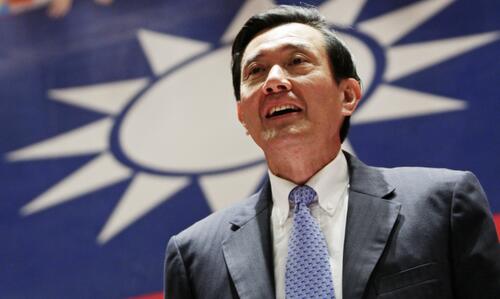
Ma Ying-jeou KMT

The eight-year presidency of Ma Ying-jeou (2008-2016) in Taiwan left a complex legacy of political achievements, confrontations, and disappointments that defies easy characterization. It began with President Ma and the Kuomintang’s (KMT) commanding electoral victories in the 2008 elections, and ended with the KMT’s overwhelming loss to the resurgent Democratic Progressive Party (DPP) and its leader Tsai Ing-wen in 2016.

It featured rapid conclusions to a broad set of agreements on cross-Strait cooperation with the People’s Republic of China (PRC). But worries about closer ties with the PRC also triggered a popular backlash against growing mainland Chinese influence in Taiwan’s economy and culminated in a student-led occupation of the Legislative Yuan.

It coincided with contradictory trends in public opinion, including both the consolidation of a separate Taiwanese identity and support for the status quo in cross-Strait relations, as well as the increasing salience of divisions over social and environmental issues such as same-sex marriage and green energy at the same time as rising concerns about economic inequality.

It also marked a return to unified government after the acrimonious partisan fights of the Chen Shui-bian years, but long-standing intra-KMT divisions and the decentralized organization of the legislature continued to frustrate the administration, especially in President Ma’s second term.        

Finally, the Ma era produced no consensus about how to move beyond Taiwan’s developmental state legacies. Plans for domestic economic liberalization and greater integration into the global economy were only partially carried out, and the Ma administration ignored or struggled to address rising inequality, stagnant wages, increasing economic dependence on the PRC market, and a skewed tax system favoring investors and corporations over salaried workers.


Conference Agenda

The 11th Annual Conference on Taiwan Democracy will bring together scholars from Taiwan, the US, and Europe to consider these political achievements, confrontations, and disappointments in depth, and to assess the strengths and weaknesses of Taiwan’s democracy at the end of the Ma Ying-jeou’s presidency. Conference participants will discuss trends in public opinion, party politics and elections, cross-Strait relations, governance and media, and the performance of political institutions. The conference papers will be revised and included in an edited volume covering democratic practice during the Ma Ying-jeou era in Taiwan.

The conference is free and open to the public. Those interested in attending are requested to RSVP at the link above. This event is organized by the Taiwan Democracy Project in the Center on Democracy, Development, and the Rule of Law.


Thursday, March 9

9:15-10:45. Panel I. Public Opinion and Elections

  • Min-hua Huang, "Why Young Voters Abandoned the KMT"
  • Ching-hsin Yu, "Trends in National Identity, Partisanship, and Attitudes toward Cross-Strait Relations"
  • Yun-han Chu, discussant

11:00-12:45. Panel II. Party Politics

  • Austin Wang, "Tsai Ing-wen and the DPP: The Path Out of the Political Wilderness"
  • Nathan Batto, "The KMT as a Presidentialized Party: Party Leaders and Shifts in China Discourse"
  • Kharis Templeman, "The Disruption that Wasn't: How 2016 Changed the Taiwanese Party System"
  • Ching-hsin Yu, discussant

12:45-1:45. Lunch

1:45-3:30. Panel III. Economics, Security, and Cross-Strait Relations

  • Szu-yin Ho, "Ma Ying-jeou's Cross-Strait Policy: Ambitions, Constraints, Results" 
  • Lang Kao, "Cross-Strait Agreements and Taiwan's Executive-Legislative Relationship, 2008-2016"
  • Dean Chen, "In the Shadow of Great Power Rivalry: The KMT Administration's Relations with America, China, and Japan, 2008-2016"
  • Larry Diamond, discussant


Friday, March 10

9:15-10:45. Panel IV. Governance, Media, and Civil Society

  • Eric Yu, "The Changing Media Environment and Public Opinion"
  • Yun-han Chu and Yu-tzung Chang, "The Challenge of Governability in Taiwan"
  • Kharis Templeman, discussant

11:00-12:30. Panel V. Political Institutions

  • Shih-hao Huang, w/ Shing-yuan Sheng, "Decentralized Legislative Organization and Its Consequences for Policy-making in the Ma Ying-jeou Era"
  • Christian Goebel, "Special Prosecutors, Courts, and Other Accountability Institutions under Ma YIng-jeou"
  • TJ Pempel, discussant

12:30-1:30. Lunch


Oksenberg Room, 3rd Floor, Encina Hall Central

CDDRL
Stanford University
Encina Hall, C147
616 Jane Stanford Way
Stanford, CA 94305-6055

(650) 724-6448 (650) 723-1928
0
Mosbacher Senior Fellow in Global Democracy at the Freeman Spogli Institute for International Studies
William L. Clayton Senior Fellow at the Hoover Institution
Professor, by courtesy, of Political Science and Sociology
diamond_encina_hall.png MA, PhD

Larry Diamond is the William L. Clayton Senior Fellow at the Hoover Institution, the Mosbacher Senior Fellow in Global Democracy at the Freeman Spogli Institute for International Studies (FSI), and a Bass University Fellow in Undergraduate Education at Stanford University. He is also professor by courtesy of Political Science and Sociology at Stanford, where he lectures and teaches courses on democracy (including an online course on EdX). At the Hoover Institution, he co-leads the Project on Taiwan in the Indo-Pacific Region and participates in the Project on the U.S., China, and the World. At FSI, he is among the core faculty of the Center on Democracy, Development and the Rule of Law, which he directed for six and a half years. He leads FSI’s Israel Studies Program and is a member of the Program on Arab Reform and Development. He also co-leads the Global Digital Policy Incubator, based at FSI’s Cyber Policy Center. He served for 32 years as founding co-editor of the Journal of Democracy.

Diamond’s research focuses on global trends affecting freedom and democracy and on U.S. and international policies to defend and advance democracy. His book, Ill Winds: Saving Democracy from Russian Rage, Chinese Ambition, and American Complacency, analyzes the challenges confronting liberal democracy in the United States and around the world at this potential “hinge in history,” and offers an agenda for strengthening and defending democracy at home and abroad.  A paperback edition with a new preface was released by Penguin in April 2020. His other books include: In Search of Democracy (2016), The Spirit of Democracy (2008), Developing Democracy: Toward Consolidation (1999), Promoting Democracy in the 1990s (1995), and Class, Ethnicity, and Democracy in Nigeria (1989). He has edited or coedited more than fifty books, including China’s Influence and American Interests (2019, with Orville Schell), Silicon Triangle: The United States, China, Taiwan the Global Semiconductor Security (2023, with James O. Ellis Jr. and Orville Schell), and The Troubling State of India’s Democracy (2024, with Sumit Ganguly and Dinsha Mistree).

During 2002–03, Diamond served as a consultant to the US Agency for International Development (USAID) and was a contributing author of its report, Foreign Aid in the National Interest. He has advised and lectured to universities and think tanks around the world, and to the World Bank, the United Nations, the State Department, and other organizations dealing with governance and development. During the first three months of 2004, Diamond served as a senior adviser on governance to the Coalition Provisional Authority in Baghdad. His 2005 book, Squandered Victory: The American Occupation and the Bungled Effort to Bring Democracy to Iraq, was one of the first books to critically analyze America's postwar engagement in Iraq.

Among Diamond’s other edited books are Democracy in Decline?; Democratization and Authoritarianism in the Arab WorldWill China Democratize?; and Liberation Technology: Social Media and the Struggle for Democracy, all edited with Marc F. Plattner; and Politics and Culture in Contemporary Iran, with Abbas Milani. With Juan J. Linz and Seymour Martin Lipset, he edited the series, Democracy in Developing Countries, which helped to shape a new generation of comparative study of democratic development.

Download full-resolution headshot; photo credit: Rod Searcey.

Former Director of the Center on Democracy, Development and the Rule of Law
Faculty Chair, Jan Koum Israel Studies Program
Date Label
Conferences
-

Abstract

Dr. Tien will reflect on security and economic trends in the Asia-Pacific region, and speak about Taiwan's foreign policy strategy in light of these trends. 

Bio

Dr. Hung-mao Tien received his Ph.D. in Political Science from the University of Wisconsin-Madison. Since September 2016, he has been the the chairman of the Straits Exchange Foundation, the semi-official body in Taiwan responsible for direct exchanges and dialogue with the People's Republic of China. He is also the president and board chairman of the Institute for National Policy Research in Taipei, as well as an advisor to the Carnegie Endowment for International Peace, and board member of several foundations and business corporations in Taiwan. He previously served as Minister of Foreign Affairs, ROC (Taiwan), Representative (ambassador) to the United Kingdom, and presidential advisor to former President Lee Teng-hui.  He has also served in an advisory capacity to Harvard University’s Asia Center, The Asia Society in New York, and the Brookings Institution in Washington, D.C.  Dr. Tien has taught in universities in both the US and Taiwan as professor of political science.  His numerous publications in English (author, editor and co-editor) include: Government and Politics in Kuomintang China 1927-37 (Stanford University Press); The Great Transition: Social and Political Change in the Republic of China (Stanford: Hoover Institution Press); and Democratization in Taiwan, Implications for China (St. Anthony’s Series, Oxford University), Consolidating the Third Wave Democracies, Themes and Perspectives (Baltimore and London: The Johns Hopkins University Press), China Under Jiang Zemin (Rienner), and The Security Environment in the Asia-Pacific (M.E. Sharpe).

Philippines Conference Room

3rd Floor, Encina Hall

Hung-mao Tien President Institute for National Policy Research
Lectures
-

Co-sponsored by the Taiwan Democracy Project at the Center on Democracy, Development, and the Rule of Law, and the China Program at the Shorenstein Asia-Pacific Research Center (APARC)


Abstract

As President Trump assumes office, it is timely to consider the state of US-People's Republic of China (PRC)-Taiwan relations and how they might evolve in the coming years. Uncertainty regarding US-PRC-Taiwan relations is running high—it is far greater than eight years ago when Barack Obama assumed office. Trump’s phone call with Taiwan’s President Tsai Ing-wen shortly after winning the election and his subsequent suggestion that Taiwan could be used as a bargaining chip to extract trade concessions from China have alarmed Beijing and created anxiety in Taipei. In Washington, Trump’s actions and statements have fueled policy debates about whether to abandon the “one China” policy which has been a mainstay of US policy for 37 years.  How the Trump administration will adjust relations with Beijing and Taipei is unknown. In the months ahead, a new dynamic may be created in the US-PRC-Taiwan triangular relationship in which the source of instability is neither China nor Taiwan, but rather is the United States. 


Biography

Bonnie S. Glaser is a senior adviser for Asia and the director of the China Power Project at CSIS, where she works on issues related to Chinese foreign and security policy. She is concomitantly a non-resident fellow with the Lowy Institute in Sydney, a senior associate with CSIS Pacific Forum and a consultant for the U.S. government on East Asia. From 2008 – mid-2015 Ms. Glaser was a Senior Adviser with the Freeman Chair in China Studies, and from 2003 to 2008, she was a senior associate in the CSIS International Security Program. Prior to joining CSIS, she served as a consultant for various U.S. government offices, including the Departments of Defense and State.

Ms. Glaser has written extensively on various aspects of Chinese foreign policy, including Sino-U.S. relations, U.S.-China military ties, cross-Strait relations, China’s relations with Japan and Korea, and Chinese perspectives on missile defense and multilateral security in Asia. Her writings have been published in the Washington Quarterly, China Quarterly, Asian Survey, International Security, Problems of Communism, Contemporary Southeast Asia, American Foreign Policy Interests, Far Eastern Economic Review, Korean Journal of Defense Analysis, New York Times, and International Herald Tribune, as well as various edited volumes on Asian security. Ms. Glaser is a regular contributor to the Pacific Forum quarterly Web journal Comparative Connections. She is currently a board member of the U.S. Committee of the Council for Security Cooperation in the Asia Pacific, and a member of both the Council on Foreign Relations and the Institute of International Strategic Studies. She served as a member of the Defense Department’s Defense Policy Board China Panel in 1997. Ms. Glaser received her B.A. in political science from Boston University and her M.A. with concentrations in international economics and Chinese studies from the Johns Hopkins School of Advanced International Studies.


Philippines Conference Room

Encina Hall, 3rd Floor

Bonnie Glaser Director of the China Power Project and Senior Advisor for Asia Center for Strategic and International Studies
Lectures
-

Image
Accidental State

Abstract

The existence of two Chinese states—one controlling mainland China, the other controlling the island of Taiwan—is often understood as a seemingly inevitable outcome of the Chinese civil war. Defeated by Mao Zedong, Chiang Kai-shek’s Nationalists fled to Taiwan to establish a rival state, thereby creating the “Two Chinas” dilemma that vexes international diplomacy to this day. Accidental State challenges this conventional narrative to offer a new perspective on the founding of modern Taiwan.

Hsiao-ting Lin marshals extensive research in recently declassified archives to show that the creation of a Taiwanese state in the early 1950s owed more to serendipity than careful geostrategic planning. It was the cumulative outcome of ad hoc half-measures and imperfect compromises, particularly when it came to the Nationalists’ often contentious relationship with the United States.

Taiwan’s political status was fraught from the start. The island had been formally ceded to Japan after the First Sino–Japanese War, and during World War II the Allies promised Chiang that Taiwan would revert to Chinese rule after Japan’s defeat. But as the Chinese civil war turned against the Nationalists, U.S. policymakers reassessed the wisdom of backing Chiang. The idea of placing Taiwan under United Nations trusteeship gained traction. Cold War realities, and the fear of Taiwan falling into Communist hands, led Washington to recalibrate U.S. policy. Yet American support of a Taiwan-based Republic of China remained ambivalent, and Taiwan had to eke out a place for itself in international affairs as a de facto, if not fully sovereign, state.


Biography

Hsiao-ting Lin is a research fellow and curator of the East Asia Collection at the Hoover Institution. He holds a BA in political science from National Taiwan University (1994) and an MA in international law and diplomacy from National Chengchi University in Taiwan (1997). He received his DPhil in oriental studies in 2003 from the University of Oxford, where he also held an appointment as tutorial fellow in modern Chinese history. In 2003–4, Lin was a postdoctoral fellow at the Institute of East Asian Studies, University of California at Berkeley. In 2004, he was awarded the Kiriyama Distinguished Fellowship by the Center for the Pacific Rim, University of San Francisco. In 2005–7, he was a visiting fellow at the Hoover Institution, where he participated in Hoover’s Modern China Archives and Special Collections project. In April 2008, Lin was elected a fellow of the Royal Asiatic Society of Great Britain and Ireland for his contributions to the studies of modern China’s history.

Lin’s academic interests include ethnopolitics and minority issues in greater China, border strategies and defenses in modern China, political institutions and the bureaucratic system of the Chinese Nationalist Party (Kuomintang), and US-Taiwan military and political relations during the Cold War. He has published extensively on modern Chinese and Taiwanese politics, history, and ethnic minorities, including Accidental State: Chiang Kai-shek, the United States, and the Making of Taiwan (Harvard University Press, 2016); Modern China’s Ethnic Frontiers: A Journey to the West (Routledge, 2011); Breaking with the Past: The Kuomintang Central Reform Committee on Taiwan, 1950–52 (Hoover Press, 2007); Tibet and Nationalist China’s Frontier: Intrigues and Ethnopolitics, 1928–49 (UBC Press, 2006), nominated as the best study in the humanities at the 2007 International Convention of Asia Scholars; and over a hundred journal articles, book chapters, edited volumes, reviews, opinion pieces, and translations. He is currently at work on a manuscript that reevaluates Taiwan’s relations with China and the United States during the presidency of Harry Truman to that of Jimmy Carter.


This event is sponsored by the Taiwan Democracy Project in the Center on Democracy, Development, and the Rule of Law. It is free and open to the public, and lunch will be served. Please RSVP by November 28.

Reuben Hills Conference Room

2nd Floor, Encina Hall East

Hsiao-ting Lin Librarian, East Asian Archives, Hoover Institution
Lectures
-


Image
Taiwan's Democracy Challenged

This discussion will be based on the authors' recently published book, Taiwan's Democracy Challenged: The Chen Shui-bian Years, Lynne Rienner Publishing (2016).

Abstract

At the end of Chen Shui-bian’s two terms as the president of Taiwan, his tenure was widely viewed as a disappointment, if not an outright failure. Today, the Chen years (2000-2008) are remembered mostly for relentless partisan fighting over cross-Strait relations and national identity questions, prolonged political gridlock, and damaging corruption scandals—as an era that challenged, rather than helped consolidate, Taiwan’s young democracy and squandered most of the promise with which it began.

Yet as Taiwan’s Democracy Challenged: The Chen Shui-bian Years documents, this conventional narrative obscures a more complex and more positive story. The chapters here cover the diverse array of ways in which democratic practices were deepened during this period, including the depoliticization of the military and intelligence forces, the ascendance of an independent and professional judicial system, a strengthened commitment to constitutionalism and respect for the rule of law, and the creation of greater space for civil society representatives in the policy-making process. Even the conventional wisdom about unprecedented political polarization during this era is misleading: while elite politics became more divided and acrimonious, mass public opinion on cross-Strait relations and national identity was actually converging.

Not all developments were so positive: strong partisans on both sides of the political divide remained only weakly committed to democratic principles, the reporting of news organizations became more sensationalist and partisan, and the Taiwanese state’s exceptional autonomy from sectoral interests and vaunted capacity for long-term planning deteriorated. But on the whole, the authors argue, these years were not squandered. By the end of the Chen Shui-bian era, Taiwan’s democracy was firmly consolidated. 


This event is sponsored by the Taiwan Democracy Project in the Center on Democracy, Development, and the Rule of Law. It is free and open to the public, and lunch will be served. Please RSVP by October 31.

Taiwan's Democracy Challenged presentation slides
Download pdf

CISAC Central Conference Room, Encina Hall 2nd Floor

CDDRL
Stanford University
Encina Hall, C147
616 Jane Stanford Way
Stanford, CA 94305-6055

(650) 724-6448 (650) 723-1928
0
Mosbacher Senior Fellow in Global Democracy at the Freeman Spogli Institute for International Studies
William L. Clayton Senior Fellow at the Hoover Institution
Professor, by courtesy, of Political Science and Sociology
diamond_encina_hall.png MA, PhD

Larry Diamond is the William L. Clayton Senior Fellow at the Hoover Institution, the Mosbacher Senior Fellow in Global Democracy at the Freeman Spogli Institute for International Studies (FSI), and a Bass University Fellow in Undergraduate Education at Stanford University. He is also professor by courtesy of Political Science and Sociology at Stanford, where he lectures and teaches courses on democracy (including an online course on EdX). At the Hoover Institution, he co-leads the Project on Taiwan in the Indo-Pacific Region and participates in the Project on the U.S., China, and the World. At FSI, he is among the core faculty of the Center on Democracy, Development and the Rule of Law, which he directed for six and a half years. He leads FSI’s Israel Studies Program and is a member of the Program on Arab Reform and Development. He also co-leads the Global Digital Policy Incubator, based at FSI’s Cyber Policy Center. He served for 32 years as founding co-editor of the Journal of Democracy.

Diamond’s research focuses on global trends affecting freedom and democracy and on U.S. and international policies to defend and advance democracy. His book, Ill Winds: Saving Democracy from Russian Rage, Chinese Ambition, and American Complacency, analyzes the challenges confronting liberal democracy in the United States and around the world at this potential “hinge in history,” and offers an agenda for strengthening and defending democracy at home and abroad.  A paperback edition with a new preface was released by Penguin in April 2020. His other books include: In Search of Democracy (2016), The Spirit of Democracy (2008), Developing Democracy: Toward Consolidation (1999), Promoting Democracy in the 1990s (1995), and Class, Ethnicity, and Democracy in Nigeria (1989). He has edited or coedited more than fifty books, including China’s Influence and American Interests (2019, with Orville Schell), Silicon Triangle: The United States, China, Taiwan the Global Semiconductor Security (2023, with James O. Ellis Jr. and Orville Schell), and The Troubling State of India’s Democracy (2024, with Sumit Ganguly and Dinsha Mistree).

During 2002–03, Diamond served as a consultant to the US Agency for International Development (USAID) and was a contributing author of its report, Foreign Aid in the National Interest. He has advised and lectured to universities and think tanks around the world, and to the World Bank, the United Nations, the State Department, and other organizations dealing with governance and development. During the first three months of 2004, Diamond served as a senior adviser on governance to the Coalition Provisional Authority in Baghdad. His 2005 book, Squandered Victory: The American Occupation and the Bungled Effort to Bring Democracy to Iraq, was one of the first books to critically analyze America's postwar engagement in Iraq.

Among Diamond’s other edited books are Democracy in Decline?; Democratization and Authoritarianism in the Arab WorldWill China Democratize?; and Liberation Technology: Social Media and the Struggle for Democracy, all edited with Marc F. Plattner; and Politics and Culture in Contemporary Iran, with Abbas Milani. With Juan J. Linz and Seymour Martin Lipset, he edited the series, Democracy in Developing Countries, which helped to shape a new generation of comparative study of democratic development.

Download full-resolution headshot; photo credit: Rod Searcey.

Former Director of the Center on Democracy, Development and the Rule of Law
Faculty Chair, Jan Koum Israel Studies Program
Date Label
Larry Diamond Senior Fellow and Principal Investigator, Taiwan Democracy Project
Seminars
-

This talk will be based on Professor Lin's new book, Taiwan's China Dilemma: Contested Identities and Multiple Interests in Taiwan's Cross-Strait Economic Policy, Stanford University Press (2016). 


Abstract

China and Taiwan share one of the world's most complex international relationships. Although their similar cultures and complementary economies promoted an explosion of commercial ties since the late 1980s, they have not led to a stable political relationship, let alone progress toward the unification that both governments once claimed to seek. In addition, Taiwan’s economic policy toward China has alternated between liberalization and restriction. Most recently, Taiwan's Sunflower Movement succeeded in obstructing deeper economic ties with China. Why has Taiwan's policy toward China been so controversial and inconsistent?

Author Syaru Shirley Lin explains the divergence between the development of economic and political relations across the Taiwan Strait and the oscillation of Taiwan’s cross-Strait economic policy through the interplay of national identity and economic interests. She shows how the debate over Taiwanese national identity has been intimately linked to Taiwan’s economic policy during a turbulent time in cross-Strait relations. Using primary sources, opinion surveys, and interviews with Taiwanese opinion leaders, she paints a vivid picture of one of the most unsettled and dangerous relationships in the contemporary world.

As Taiwan grapples with the growing importance of the Chinese economy, it also experiences the uneven socio-economic consequences of globalization. This has produced a reconsideration of the desired degree of further integration with China, especially among the younger generations. Taiwan’s China Dilemma illustrates the growing backlash against economic liberalization and regional economic integration around the world.


Biography

Image
Shirley Lin

Syaru Shirley Lin teaches political science at the University of Virginia and is a member of the founding faculty of the master’s program in global political economy at the Chinese University of Hong Kong. Her book, Taiwan’s China Dilemma: Contested Identities and Multiple Interests in Taiwan's Cross-Strait Economic Policy, was published by Stanford University Press in 2016. She graduated from Harvard College and earned her masters and Ph.D. from the University of Hong Kong. Before starting her academic career, Prof. Lin was a partner at Goldman Sachs, where she was responsible for direct investment in Asia and spearheaded the firm’s investments in many technology start-ups such as Alibaba and Semiconductor Manufacturing International Corp. Previously, she specialized in the privatization of state-owned enterprises in Singapore and China. Prof. Lin’s present board service includes Goldman Sachs Asia Bank, Langham Hospitality Investments and Mercuries Life Insurance. She also advises Crestview Partners and the Focused Ultrasound Foundation and is a member of the Hong Kong Committee for Pacific Economic Cooperation.


This event is sponsored by the Taiwan Democracy Project in the Center on Democracy, Development, and the Rule of Law. It is free and open to the public, and lunch will be served. Please RSVP by October 17.

CISAC Central Conference Room, Encina Hall, 2nd Floor

Syaru Shirley Lin Professor of Political Economy Chinese University of Hong Kong and the University of Virginia
Lectures
Subscribe to Diplomacy