Diplomacy
-
Marketing Democracy book talk

Erin A. Snider joins ARD to discuss her recently released book, Marketing Democracy: The Political Economy of Democracy Aid in the Middle East (Cambridge University Press, 2022).

For nearly two decades, the United States devoted more than $2 billion towards democracy promotion in the Middle East with seemingly little impact. To understand the limited impact of this aid and the decision of authoritarian regimes to allow democracy programs whose ultimate aim is to challenge the power of such regimes, Marketing Democracy examines the construction and practice of democracy aid in Washington DC and in Egypt and Morocco, two of the highest recipients of US democracy aid in the region.

Drawing on extensive fieldwork, novel new data on the professional histories of democracy promoters, archival research and recently declassified government documents, Erin A. Snider focuses on the voices and practices of those engaged in democracy work over the last three decades to offer a new framework for understanding the political economy of democracy aid. Her research shows how democracy aid can work to strengthen rather than challenge authoritarian regimes. Marketing Democracy fundamentally challenges scholars to rethink how we study democracy aid and how the ideas of democracy that underlie democracy programs come to reflect the views of donors and recipient regimes rather than indigenous demand. 

ABOUT THE SPEAKER 

Image
Erin A. Snider
Erin A. Snider is an assistant professor at Texas A&M University’s Bush School of Government and Public Service. Her research and teaching focus on the political economy of aid, democracy, and development in the Middle East. She was a Postdoctoral Fellow at Princeton University’s Niehaus Center for Globalization and Governance, a Fulbright scholar in Egypt, a Gates Scholar at the University of Cambridge, and a Carnegie Fellow with the New America Foundation in Washington, D.C. Her first book, Marketing Democracy: The Political Economy of Democracy Aid in the Middle East was published with Cambridge University Press. Other research has been published in International Studies Quarterly, PS: Political Science and Politics, and Middle East Policy, among other outlets. She holds a PhD in politics from the University of Cambridge and an MSc in Middle East Politics from the School of Oriental and African Studies (SOAS), University of London.

This event is co-sponsored by the Abbasi Program in Islamic Studies and the Center for African Studies at Stanford University.​

Hesham Sallam

Online via Zoom

Erin A. Snider Assistant Professor Associate Professor of Political Science and Islamic Studies Texas A&M University’s Bush School of Government and Public Service
Lectures
1
johannes_ludewig.jpg

Chairman of National (Germany) Regulatory Control Council 2006-2021; CEO of German Railways and afterward Community of European Railways, Brussels 1997-2010; State Secretary Federal Ministry of Economics (1995-1997); Economic and Financial Advisor to the German Federal Chancellor, also responsible for the economic reconstruction of East Germany after Reunification 1990; Dr.(PhD) 1975 (University of Hamburg); MS 1972 (Stanford University).

CDDRL Visiting Scholar, 2022
0
CDDRL Visiting UELP Scholar, 2021-22
ustaiev.jpeg

Nariman Ustaiev is co-founder and Director at Gasprinski Institute for Geostrategy. He is also an external advisor for the Committee on Human Rights, Deoccupation and Reintegration of Temporarily Occupied Territories in Donetsk, Luhansk Regions and Autonomous Republic of Crimea, National Minorities and Interethnic Relations of the Verkhovna Rada of Ukraine. 

His work explores the multiple dimensions of Ukraine’s foreign and security policy and their intersection with good governance based on human rights. His areas of expertise are foreign policy; political and security challenges in the Black Sea Region; and human rights and Crimean Tatar issues. 

Prior to this Nariman had worked for governmental institutions responsible for Ukraine’s security policy, namely the National Security and Defense Council, the Secretariat of the Cabinet Ministers and the State Service for the Autonomous Republic of Crimea and Sevastopol for many years. 

Nariman graduated from the Diplomatic Academy at the Ministry of Foreign Affairs of Ukraine, the Ukrainian Academy for Foreign Trade and Kyiv-Mohyla Business School. 

Authors
News Type
News
Date
Paragraphs

This interview by Melissa De Witte originally appeared in Stanford News.


The upcoming summit between President Joe Biden and President Vladimir Putin is not rewarding the Russian leader for his bad behavior: It’s opening negotiations and delivering a warning to him instead, says Stanford scholar Kathryn Stoner.

Here, Stoner is joined by Stanford political scientist and former U.S. Ambassador to Russia Michael McFaul, Payne Distinguished Lecturer at CISAC and former Deputy Secretary General of NATO Rose Gottemoeller and Russia historian Norman Naimark to discuss what to expect at the summit in Geneva on Wednesday.

The meeting, the scholars say, could reset U.S.-Russia relations, signal deterrence on certain issues – including cybersecurity in light of attacks like the SolarWinds breach that the U.S. has blamed on the Russian Foreign Intelligence Service – and launch strategic stability talks related to nuclear weapons.

Interviews have been edited for length and clarity. For more information on what to expect about the Biden-Putin summit from FSI scholars, visit the FSI website.


Where does diplomacy now stand between the U.S. and Russia?

Naimark: Russian-American relations are at their lowest point since the fall of the Soviet Union in 1991, perhaps even since the last years of Gorbachev’s rule. When relations are fraying between the world’s two most powerful nuclear powers, the coming of the summit on June 16 between President Biden and President Putin should be welcomed. It’s worth recalling the heightened military tensions just three months ago between Moscow and Washington, when Moscow moved tens of thousands of troops to the Ukrainian border and mobilized its air and sea power in the region. Both leaders have emphasized that they seek stability, reliability and predictability in their bilateral relations; at the same time, their respective administrations have warned that expectations should be kept at the minimum for any kind of serious breakthrough at the summit.

Stoner: We’ve lost a lot of leverage because of the withdrawal from global politics that started under the latter part of the Obama administration and continued with Trump with his America First platform, which meant America alone. There is some leverage, it’s just how much. We don’t necessarily want to destabilize Russia because it’s a big, complicated country with nuclear weapons, but all signs point to Putin staying in office until 2036. He’s not going away. I think we have to try to signal deterrence on certain issues, like trying to move into another former Soviet republic as he is doing with Ukraine, Georgia and potentially Belarus, but then cooperate in other areas where it is productive to do so.

What do you think about some of the criticisms toward Biden meeting with Putin? For example, that Biden meeting with Putin is only rewarding him for his bad behavior.

Stoner: There is a reasonable question about why Biden and Putin are meeting and if it is somehow rewarding Putin for bad behavior by having a summit with the President of the United States. Rather than rewarding Putin, however, I think this meeting could be Biden’s warning to him that if hacking and other cyberattacks continue, we have a menu of things we could do as well.

Naimark: There is no reason that the American president cannot talk about difficult subjects like cybersecurity, ransomware attacks, human rights, the release of Alexei Navalny, the protection of Ukrainian sovereignty and other important items on the American agenda while focusing on issues of mutual interest: the future of arms control, global warming and the regulation of the Arctic, and outer space. One can always hope that, like the last summit on Lake Geneva between Russian and American leaders [Mikhail Gorbachev and Ronald Reagan] in November 1985, this one can lay the groundwork for serious improvements in relations in the near future.

Is this meeting a reset of diplomatic relations between the two nations?

Stoner: I know in Washington it is popular to say that Biden is not having a reset of relations with Russia when past presidents all have tried that. I think that’s wrong. I do think it is a reset in the relationship in that there should be more clarity and stability, but that doesn’t mean it’s going to be friendly and universally cooperative, given that we still see many differences in perspectives and some antagonism too. Still, Russia and the U.S. need to talk because there are a lot of issues in common where it would be helpful to coordinate with Russia. After all, even in the depths of the Cold War, the leaders of both countries still talked. Russia has reestablished itself as the most formidable power in Europe and it looks like Biden is acknowledging that and the fact that the U.S. can no longer afford to ignore Russia.

Is there anything the two leaders will be able to agree upon?

McFaul: I used to organize these kinds of meetings when I worked in the government and back when President Medvedev was there. We would have these meetings as a way to force our governments to produce what is called in State Department-speak “deliverables.” We didn’t have meetings to have them, we wanted to get things done. In the first Obama-Medvedev meeting we had a long list of deliverables when they met in July of 2009.

But there is no way that will happen with Putin today because he doesn’t really want to cooperate, he doesn’t really want deliverables. That’s challenging for President Biden, I think, because he has said that he wants a stable, predictable relationship with Putin. I think that’s fine to aspire to, but I don’t think Putin is that interested in that kind of relationship, so that creates a challenge of substance for summits like this.

Gottemoeller: With such different threat perceptions, the two presidents are not going to agree in Geneva about what should go into the next nuclear treaty. They can agree, though, to put their experts together to hammer it out. They can also agree to put the two sides together to tackle the different threat perceptions and the question of what stability means. Finally, they can agree to a deadline, so the talks don’t stall. It won’t be a headline-grabbing outcome, but at least Moscow and Washington will get moving again on the nuclear agenda.

Where can Biden make progress?

McFaul: I think the most likely place to make progress is to launch strategic stability talks, which is an abstract phrase for beginning the process of negotiations about nuclear weapons and their delivery vehicles that would be a follow-on to the New START treaty. Biden and Putin rightfully extended the New START treaty early in his term for five years, and I think that was very smart. I personally worked on that treaty, so I think it’s a good treaty and deserves to be extended. But it’s going to run out really fast because the next set of negotiations are going to be much more complicated. I hope they would start some process to begin those negotiations now.

Gottemoeller: Maybe the only place where President Biden can make progress with Vladimir Putin in Geneva is the nuclear agenda with Russia. Since the two men agreed, in February, to extend the New START treaty by five years, they have put out a clear public message that they intend to pursue a deal to replace New START and to launch strategic stability talks. They are not going to have identical ideas, however, about what those two goals mean.

Biden wants a new arms control deal that will control all nuclear warheads, whether launched on intercontinental strategic-range missiles or on shorter-range systems. He also wants to get a handle on some of the new types of nuclear weapons that the Russians have been developing. One new system, for example, uses nuclear propulsion to ensure that it can fly for many hours at great speed over long distances, earning it the moniker “weapon of vengeance.” These exotic weapons did not exist when New START was negotiated; now, they need to be controlled.

Putin, by contrast, focuses on U.S. long-range conventional missiles that he worries are capable of the accuracy and destructive power of nuclear weapons. The United States, in his view, could use these conventional weapons to destroy hard targets such as the Moscow nuclear command center. He also worries that the United States is producing ever more capable ways to intercept his nuclear missiles and destroy them before they reach their targets. In his worst nightmare, the United States undermines his nuclear deterrent forces without ever resorting to nuclear weapons.

What advice do you have for Biden?

McFaul: One, do not have a one-on-one meeting – just have a normal meeting. Two, I would recommend not having a joint press conference that just gives Putin a podium for the world to say his “whataboutism” stuff; it’s better to have separate press conferences because most of the world will be more interested in what Biden says compared to what Putin says.

Third, I think it’s important to cooperate when you can but also be clear about your differences and don’t pull punches on that. In particular, I want Biden to talk about Alexei Navalny, the Americans who are wrongly detained in Russia today, Crimea still being occupied, Russian proxies in eastern Ukraine, and parts of Georgia that are under occupation. They have been attacking us relentlessly with these cyberattacks, these Russian criminals who in my view have to have some association with the Russian government.

That’s a tough list, but I think it’s really important for President Biden to say those things directly to Putin. I have confidence that he can. I was at their last meeting. I traveled with the vice president in 2011 when he met with then Prime Minister Putin. Biden is capable of delivering tough messages and I hope he uses this occasion to do so again.

What would be a sign that their meeting was productive?

Stoner: One sign the meeting was productive would be if Biden and Putin could agree to establish a joint committee or council on some rules surrounding cybersecurity. Another would be if they make plans to talk again about either replacing or reviving the Minsk-2 agreement [that sought to bring an end to Russia’s war on Ukraine]. And three, a positive sign would be if they plan to do some negotiation on further reducing tactical nuclear weapons or strategic nuclear weapons. An agreement to disagree on some issues, but to continue talking on others would be indicative of at least some small progress.

The Russian and American flags flying side by side

Assessing the Biden-Putin Summit

Analysis and commentary on the Biden-Putin summit from FSI scholars.
Learn More

Read More

Hero Image
Flags of the United States and Russia Getty Images
All News button
1
Subtitle

Scholars at the Freeman Spogli Institute for International Studies hope that President Joe Biden’s meeting with Russian President Vladimir Putin will lay the groundwork for negotiations in the near future, particularly around nuclear weapons.

Authors
News Type
News
Date
Paragraphs

On April 21, 2021, the APARC China Program hosted Professor Erin Baggott Carter, Assistant Professor in the Department of Political Science and International Relations, University of Southern California, and Visiting Scholar at the Stanford Center on Democracy, Development and the Rule of Law. Her program, "When Beijing Goes to Washington: Autocratic Lobbying Influence in Democracies," explored how lobbying from China and China-based companies can affect policy in the United States. Professor Jean Oi, William Haas Professor of Chinese Politics and director of the APARC China Program, moderated the event.

Professor Baggot Carter based her talk on a dataset drawn from the public records of the US Foreign Agents Registration Act, which includes over 10,000 lobbying activities undertaken by the Chinese government between 2005 and 2019. According to Baggot Carter, the evidence suggests that Chinese government lobbying makes legislators at least twice as likely to sponsor legislation that is favorable to Chinese interests. Moreover, US media outlets that participated in Chinese-government sponsored trips subsequently covered China as less threatening. Coverage pivoted away from US-China military rivalry and the CCP’s persecution of religious minorities and toward US-China economic cooperation. These results suggest that autocratic lobbying poses an important challenge to democratic integrity. Watch now: 

Read More

Hero Image
United States Capitol Building from an angle Photo by Harold Mendoza on Unsplash
All News button
1
Subtitle

Professor Erin Baggot Carter tells us how autocratic lobbying affects political outcomes and media coverage in democracies.

-

This is a virtual event. Please click here to register and generate a link to the talk. 
The link will be unique to you; please save it and do not share with others.


This event is co-sponsored by the Center on Democracy, Development, and the Rule of Law.

How does autocratic lobbying affect political outcomes and media coverage in democracies? This talk focuses on a dataset drawn from the public records of the US Foreign Agents Registration Act. It includes over 10,000 lobbying activities undertaken by the Chinese government between 2005 and 2019. The evidence suggests that Chinese government lobbying makes legislators at least twice as likely to sponsor legislation that is favorable to Chinese interests. Moreover, US media outlets that participated in Chinese-government sponsored trips subsequently covered China as less threatening. Coverage pivoted away from US-China military rivalry and the CCP’s persecution of religious minorities and toward US-China economic cooperation. These results suggest that autocratic lobbying poses an important challenge to democratic integrity.


Portrait of Erin Baggott CarterErin Baggott Carter is an Assistant Professor at the Department of Political Science and International Relations at the University of Southern California. There, she is also a Co-PI at the Lab on Non-Democratic Politics. She received a Ph.D. in Government from Harvard University, is currently a visiting scholar at the Stanford Center on Democracy, Development and the Rule of Law, and was previously a Fellow at the Stanford Center for International Security and Cooperation.
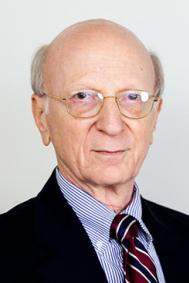
Dr. Carter's research focuses on Chinese politics and propaganda. She recently completed a book on autocratic propaganda based on an original dataset of eight million articles in Arabic, Chinese, English, French, Russian, and Spanish drawn from state-run newspapers in nearly 70 countries. She is currently working on a book on how domestic politics influence US-China relations. Her other work has appeared or is forthcoming in the British Journal of Political ScienceJournal of Conflict Resolution, and International Interactions. Her work has been featured by the New York Times, the Brookings Institution, and the Washington Post Monkeycage Blog.


Image
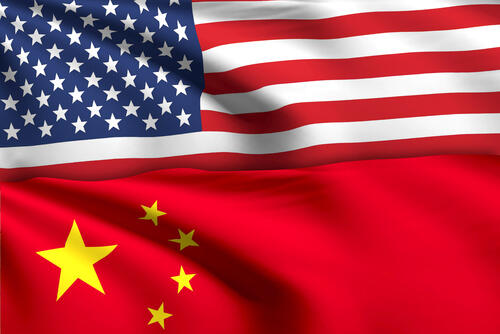
American and Chinese flags
This event is part of the 2021 Winter/Spring Colloquia series, Biden’s America, Xi’s China: What’s Now & What’s Next?, sponsored by APARC's China Program.


Via Zoom Webinar. Register at: https://bit.ly/3beG7Qz

Erin Baggott Carter Assistant Professor, Department of Political Science and International Relations, University of Southern California; Visiting Scholar, Center on Democracy, Development and the Rule of Law, Stanford University
Seminars
-

Abstract

Speculation about the course of cross-Strait relations after the upcoming 19th Chinese Communist Party Congress ranges from greater PRC flexibility to substantially increased pressure on Taiwan. The Mainland’s persistent suspicion about President Tsai Ing-wen’s motives has only deepened with her appointment of avowed independence supporter Lai Ching-te as premier, especially because of the prospect that Lai could eventually become president. As a result, once the internal tugging and hauling leading up to the Party Congress has been settled, some people predict that Beijing will resort to military intimidation or even actual use of force to bring Tsai to heel. What are the PRC’s goals? What are Taipei’s? What role can and should the United States play in seeking not only to avoid conflict but to reestablish a reliable level of stability in cross-Strait relations and to prevent Taiwan from once more becoming a highly divisive issue in U.S.-PRC relations? Alan Romberg will address these issues in his talk on October 30th.


Bio

Image
Alan Romberg

Alan Romberg is a Distinguished Fellow and the Director of the East Asia program at Stimson. Before joining Stimson in September 2000, he enjoyed a distinguished career working on Asian issues including 27 years in the State Department, with over 20 years as a U.S. Foreign Service Officer. Romberg was the Principal Deputy Director of the State Department's Policy Planning staff, Principal Deputy Assistant Secretary of State for Public Affairs and Deputy Spokesman of the department. He served in various capacities dealing with East Asia, including director of the Office of Japanese Affairs, member of the Policy Planning staff for East Asia, and staff member at the National Security Council for China. He served overseas in Hong Kong and Taiwan.

Additionally, Romberg spent almost 10 years as the CV Starr Senior Fellow for Asian Studies at the Council on Foreign Relations, and was special assistant to the secretary of the navy.

Romberg holds an M.A. from Harvard University, and a B.A. from the Woodrow Wilson School of Public and International Affairs at Princeton University.

This event is co-sponsored by the Taiwan Democracy Project in the Center on Democracy, Development, and the Rule of Law (CDDRL) and the U.S.-Asia Security Initiative in the Shorenstein Asia-Pacific Research Center (APARC), both part of the Freeman Spogli Institute for International Studies.

Alan Romberg Distinguished Fellow Stimson Center
Lectures
-

Abstract 

Scholars have credited a model of state-led capitalism called the developmental state with producing the first wave of the East Asian economic miracle. Using historical evidence based on original archival research, this talk offers a geopolitical explanation for the origins of the developmental state. In contrast to previous studies that have emphasized colonial legacies or domestic political factors, I argue that the developmental state was the legacy of the rivalry between the United States and Communist China during the Cold War. Responding to the acute tensions in Northeast Asia in the early postwar years, the United States supported emergency economic controls in Japan, South Korea, and Taiwan to enforce political stability. In response to the belief that the Communist threat would persist over the long term, the U.S. strengthened its clients by laying the foundations of a capitalist, export-oriented economy under bureaucratic guidance. The result of these interventions was a distinctive model of state-directed capitalism that scholars would later characterize as a developmental state.

I verify this claim by examining the rivalry between the United States and the Chinese Communists and demonstrating that American threat perceptions caused the U.S. to promote unorthodox economic policies among its clients in Northeast Asia. In particular, I examine U.S. relations with the Chinese Nationalists on Taiwan, where American efforts to create a bulwark against Communism led to the creation of an elite economic bureaucracy for administering U.S. economic aid. In contrast, the United States decided not to create a developmental state in the Philippines because the Philippine state was not threatened by the Chinese Communists. Instead, the Philippines faced a domestic insurgency that was weaker and comparatively short-lived. As a result, the U.S. pursued a limited goal of maintaining economic stability instead of promoting rapid industrialization. These findings shed new light on the legacy of statism in American foreign economic policy and highlight the importance of geopolitics in international development.


Bio

Image
James Lee

James Lee is a Ph.D. Candidate in the Department of Politics at Princeton University. He specializes in International Relations with a focus on U.S. foreign policy in East Asia and relations across the Taiwan Strait. James also serves as the Senior Editor for Taiwan Security Research, an academic website that aggregates news and commentary on the economic and political dimensions of Taiwan's security.


This event is co-sponsored by the Taiwan Democracy Project in the Center on Democracy, Development, and the Rule of Law (CDDRL) and the U.S.-Asia Security Initiative in the Shorenstein Asia-Pacific Research Center (APARC), both part of the Freeman Spogli Institute for International Studies.

James Lee Ph.D. Candidate Princeton University
Lectures
-

Michael McFaul, Director of the Freeman Spogli Institute for International Studies, Professor Political Science

and FSI Senior Fellow, Peter and Helen Bing Senior Fellow at the Hoover Institution

Francis Fukuyama, Mosbacher Director, Center for Democracy, Development, and the Rule of Law,

Larry Diamond, Senior Fellow at FSI and the Hoover Insitution

Eileen Donahoe, Executive Director, Global Digital Policy Incubator


Cordially Invite you to a conference conmemorating the launch of the 

Global Digital Policy Incubator

Friday, October 6, 2017

Bechtel Conference Center, Encina Hall

Registration / Coffee / Meet the Speakers

9:30-10:00am

Welcome to the Global Digital Policy Incubator

10:00-10:015am

When Freedom of Expression Conflicts with Democracy

Enhancing the Quality of Discourse Necessary to Sustain Democracy                  10:15-11:45am

Moderator: Larry Diamond, Senior Fellow at the Hoover Institution and FSI

Timothy Garton Ash, Hoover Institution, Stanford, Oxford University & Free Speech Debate

Francis Fukuyama, Director, Center for Democracy, Development, and the Rule of Law, Stanford

Brittan Heller, Director of Technology & Society, Anti-Defamation League

Ieva Kupce Ilves, Cybersecurity expert, former head of Cybersecurity Policy, MoD Latvia

Justine Isola, Product Policy Manager at Facebook

When Information Becomes the Weapon

Expanding notions of National Security in the Digital Context                                 12:00-1:45pm

Moderator: Michael Mcfaul, Director of FSI, former U.S. Ambassador to Russia

Toomas Ilves, Former President of Estonia

Mike Brown, Presidential Innovation Fellow, DIUX, Fformer CEO Symantec

Denis McDonough, White House Chief of Staff to former President Obama, Senior Principle, Markle Foundation

Nicole Wong, former U.S. Deputy CTO, former Google Vice President & Deputy General Counsel,

former Legal Director of Product, Twitter

Digital Platforms and Democratic Responsibility

Emerging Private Sector Roles in Protecting Freedom and Security                       2:00-3:30pm

Moderator: Larry Kramer, President of the Hewlett Foundation 

Juniper Downs, Global Head of Public Policy and Government Relations, Youtube

Daphne Keller, Director of Intermediary Liability, Center for Internet & Society, Stanford Law School

Andrew McLaughlin, Co-Founder, Higher Ground Labs, Venter Partner, Betaworks, former U.S. Dep. CTO

Nick Pickles, Senior Public Policy Manager, Twitter

Mike Posner, Director, NYU Stern Center for Business & Human Rights, former U.S. Assistant Secretary of State, Democracy, Human Rights, and Labor

Keynote Conversation 

Digital Technology, Diplomacy, and Democratic Values                                                     

Former Secretary of State Hilary Clinton

In conversation with Eileen Donahoe, Executive Director of the Global Digital Policy Incubator,

former U.S. Ambassador to the United Nations Human Rights Council

4:30 - 5:30pm

Cemex Auditorium, Knight Management Center

*event by invitation only, doors open at 3:30pm, guests must be in their seats 4:15pm*

Ticket Lottery for (Stanford students only) will open Wednesday, September 27 through the

Stanford Ticket Office 

Conferences
-


For this special theme panel, the Taiwan Democracy Project has invited presentations that examine important changes in Taiwan’s party politics and cross-Strait relations since the election of President Tsai Ing-wen and a DPP majority in the legislature in Taiwan in January 2016. The event will be held in San Francisco, CA, directly following the conclusion of the American Political Science Association annual conference there, and is open to the public. Conference attendees with an interest in Taiwan are especially encouraged to attend.


The event will include two panels followed by open discussion:


12:00-1:30pm  

Panel I. Party Politics after the 2016 Elections

1.     Nathan Batto, “The KMT Party Organization”

2.     Austin Wang, “The DPP Party Organization”

3.     Da-chi Liao, “New Party Organizations”

Chair: Larry Diamond, Stanford University

Discussant: Kharis Templeman, Stanford University


2:00-3:30pm  

Panel II. Cross-Strait Relations and Taiwan’s Foreign Policy after the 2016 Elections

4.     Dalton Lin,  “Beijing’s Taiwan Policy after the 2016 Elections”

5.     Shirley Lin,  “Taiwan and the High Income Trap”

Chair: Kharis Templeman

Discussant: Larry Diamond 


The Taiwan Democracy Project is a research program affilated with the Center on Democracy, Development, and the Rule of Law at the Freeman Spogli Insitute for International Studies, Stanford University. This event is made possible by generous support from the Taipei Economic and Cultural Office in San Francisco.

Taiwan Politics after the 2016 Election
Download pdf
Beijing's Taiwan Policy after the 2016 Elections
Download pdf
The DPP after 2016
Download pdf

2nd Floor, Olympic Room

Westin St. Francis Union Square, 

335 Powell St.

San Franciso, CA 94102

Nathan Batto Assistant Research Fellow, Institute of Political Science Academia Sinica
Austin Wang Doctoral Candidate Duke University
Da-Chi Liao Professor, Institute of Political Science National Sun Yat-sen University
Dalton Lin Assistant Professor of International Affairs Georgia Tech
Shirley Lin Professor of Political Science University of Virginia and Chinese University of Hong Kong
Panel Discussions
Subscribe to Diplomacy