Democracy
-

Abstract:

The uprisings that spread across the Middle East in 2011 created new hope for democratic change in the Arab world.  Four years later, the euphoria that greeted the Arab uprisings has given way to a far more somber mood, a recognition of the limits of mass protests to bring about political change, and acknowledgement that the region's entrenched authoritarian regimes are more resilient than many protesters imagined. Yet in responding to the challenge of mass politics, authoritarian regimes in the Middle East have not simply shown their resilience. In adapting to new challenges they have also changed, giving rise to new and more troubling forms of authoritarian rule, suggesting that the turmoil of recent years may be only the beginning of an extended period of political instability, violence, and repression in many parts of the Middle East.

Speaker Bio:

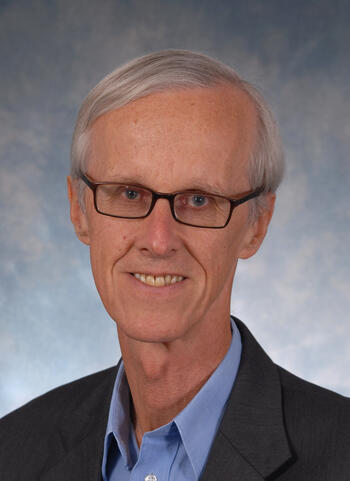
heydemann photo Steven Heydemann

Steven Heydemann serves as the vice president of Applied Research on Conflict at United States Institute of Peace. Heydemann is a political scientist who specializes in the comparative politics and the political economy of the Middle East, with a particular focus on Syria. His interests include authoritarian governance, economic development, social policy, political and economic reform and civil society. From 2003 to 2007, Heydemann directed the Center for Democracy and Civil Society at Georgetown University. From 1997 to 2001, he was an associate professor in the department of political science at Columbia University. Earlier, from 1990-1997, he directed the Social Science Research Council’s Program on International Peace and Security and Program on the Near and Middle East. Heydemann is the author of Authoritarianism in Syria: Institutions and Social Conflict, 1946-1970 (Cornell University Press, 1999), and editor of Networks of Privilege in the Middle East: The Politics of Economic Reform Revisited, (Palgrave Press, 2004), and War, Institutions and Social Change in the Middle East (University of California Press, 2000).

This event is co-sponsored by the Arab Studies Institute


[[{"fid":"217528","view_mode":"crop_870xauto","fields":{"format":"crop_870xauto","field_file_image_description[und][0][value]":"Steven Heydemann talk flyer","field_file_image_alt_text[und][0][value]":"","field_file_image_title_text[und][0][value]":"","field_credit[und][0][value]":"","field_caption[und][0][value]":"","field_related_image_aspect[und][0][value]":"","thumbnails":"crop_870xauto","pp_lightbox":false,"pp_description":false},"type":"media","attributes":{"height":506,"width":870,"class":"media-element file-crop-870xauto"}}]]

Goldman Conference Room
4th Floor East Wing E409
Encina Hall
616 Serra Street
Stanford, California 94305

Steven Heydemann Vice President, Applied Research on Conflict USIP
Seminars
-

Abstract:

Authoritarian ruling parties are expected to resist democratization, often times at all costs. And yet some of the strongest authoritarian parties in the world have not resisted democratization, but have instead embraced it. This is because their raison d’etre is to continue ruling, though not necessarily to remain authoritarian. Put another way, democratization requires ruling parties hold free and fair elections, but not that they lose them. Authoritarian ruling parties can thus be incentivized to concede democratization from a position of exceptional strength. This alternative pathway to democracy is illustrated with Asian cases – notably Taiwan – in which ruling parties democratized from positions of considerable strength, and not weakness. The conceding-to-thrive argument has clear implications with respect to “candidate cases” in developmental Asia, where ruling parties have not yet conceded democratization despite being well-positioned to thrive were they to do so, such as the world’s most populous dictatorship, China.


Bio:

Joseph Wong is the Ralph and Roz Halbert Professor of Innovation at the Munk School of Global Affairs, University of Toronto, and Professor of Political Science and Canada Research Chair in Democratization, Health and Development. Professor Wong was the Director of the Asian Institute at the Munk School from 2005 to 2014. In addition to academic articles and book chapters, Professor Wong has published four books: Healthy Democracies: Welfare Politics in Taiwan and South Korea (2004) and Betting on Biotech: Innovation and the Limits of Asia’s Developmental State (2011), both published by Cornell University Press, as well as Political Transitions in Dominant Party Systems: Learning to Lose, co-edited with Edward Friedman (Routledge, 2008), and Innovating for the Global South: Towards a New Innovation Agenda, co-edited with Dilip Soman and Janice Stein (University of Toronto Press, 2014). He is currently working on a book monograph with Dan Slater (University of Chicago) on Asia’s development and democracy, which is currently under contract with Princeton University Press. Professor Wong earned his Hons. B.A from McGill University (1995) and Ph.D. from the University of Wisconsin-Madison (2001). 

Philippines Conference Room, 3rd Floor, Encina Hall

616 Serra St., Stanford, CA

Joe Wong Professor and Canada Research Chair in Political Science University of Toronto
Seminars
-

Is communication technology conducive to collective violence? Recent studies have provided conflicting answers to the same question. While some see the introduction of cellular communication as a contributing factor to civil conflict in Africa (Pierskalla and Hollenbach APSR 2013), others ascribe an opposite effect to mobile communications in Iraq (Shapiro and Weidmann IO forthcoming). During the talk, I will further explore the logic behind "Why the revolution will not be tweeted", and argue that the answer lies in contagion processes of collective action at the periphery, not the hierarchical schemes of central coordination as was argued before. To provide evidence, I will draw on historical accounts of social revolutions, a GIS study of the Syrian Civil War, a convenience survey sample from the 2011 Egyptian Revolution, as well as network experiments of collective risk-taking in a controlled setting.

Speaker Bio

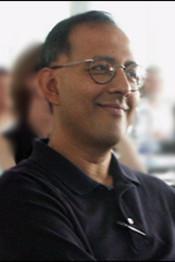
photo 26 Navid Hassanpour
Navid Hassanpour (Ph.D.s in Political Science from Yale'14, and Electrical Engineering from Stanford'06) studies political contestation, in its contentious and electoral forms. Following an inquiry into collective and relational dimensions of contentious politics, currently he is working on a project that examines the history, emergence, and the dynamics of representative democracy outside the Western World. This year he is a Niehaus postdoctoral fellow at Princeton's Woodrow Wilson School of public and International Affairs. His work has appeared in Political Communication as well as IEEE Transactions on Information Theory. His book project, Leading from the Periphery, is under consideration at Cambridge University Press' Structural Analysis in the Social Sciences Series.

This event is part of the Liberation Technology Seminar Series

NEW LOCATION

School of Education 

Room 128

Navid Hassanpour Postdoctoral Research Associate, Niehaus Center for Globalization and Governance (NCGG)
Seminars
-

Three years ago, world leaders from 8 countries came together to launch the Open Government Partnership (OGP) - a multi-stakeholder initiative that brings together domestic reformers committed to making their governments more open, accountable and responsive to citizens. Since then, the partnership has rapidly grown from 8 to 65 countries. In this talk, Linda Frey speaks about OGP's new approach to multilateralism, and how the uniqueness of its model is helping to spur progress on concrete open government reforms in a diverse group of countries.  Frey will draw on the findings of OGP's Independent Reporting Mechanism to speak to early successes, as well as implementation challenges and areas for further study.  


Speaker Bio

Image
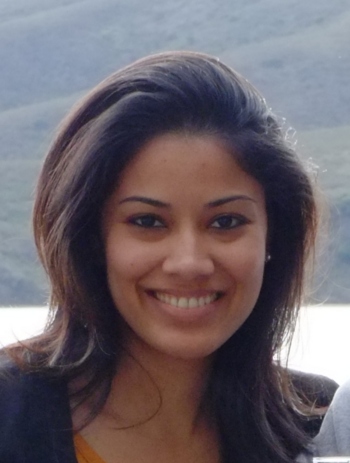
Munyema Hasan

Munyema Hasan

Program Officer
Open Government Partnership, Support Unit

Munyema joined the OGP Support Unit in January 2014 as Program Officer. She has spent the past four years working in the field of transparent and accountable governance, with organizations like the World Bank, International Budget Partnership, Stanford University and the Affiliated Network for Social Accountability. Munyema holds a M.Sc. in Development Studies from the London School of Economics and a B.A. in Economics and Political Science from the American University in Cairo, Egypt and the University of California, Berkeley.

This event is part of the Liberation Technology Seminar Series

PLEASE NOTE: NEW ROOM

School of Education 

Room 128


Munyema Hasan Open Government Partnership
Seminars
Date Label
-

ABSTRACT

While a growing number of women are becoming cabinet ministers in African governments, there is considerable cross-national variation in the extent to which women exercise influence across policy domains. We argue that this variation is the result of enduring cross-national differences in women’s economic rights. Where women are legally subject to male authority in accessing economic resources, they are less able to build the political capital needed to negotiate over leadership positions in largely clientelistic political systems. Using an original dataset on the allocation of ministerial portfolios in 34 African countries, we show that women ministers have less diversified policy portfolios and are less likely to be appointed to high prestige portfolios where women have unequal marriage property rights or are unable to serve as head of household. Our results are robust to controlling for relevant factors such as female labor force participation, legislative quotas, and customary law.

SPEAKER BIO

Image
leonardo arriola
Leonardo R. Arriola is Associate Professor of Political Science at the University of California, Berkeley. His research focuses on the political economy of democracy and political violence in developing countries. He is author of Multiethnic Coalitions in Africa: Business Financing of Opposition Election Campaigns (Cambridge University Press), which received the 2013 best book award from the African Politics Conference Group and an honorable mention for the 2014 Luebbert best book award from the Comparative Politics Section of the American Political Science Association. His research has appeared in journals such as the American Journal of Political Science, Comparative Political Studies, Comparative Politics, and World Politics. He has conducted fieldwork in Cameroon, Ethiopia, Kenya, Madagascar, and Senegal. He has a PhD in political science from Stanford University.

Leonardo Arriola Associate Professor Associate Professor University of California, Berkeley
Seminars
-

ABSTRACT

When defined in terms of social identity and evaluations of in and out groups, the polarization of the American electorate has clearly increased. We elaborate on the question of affective polarization by developing and validating a measure of implicit or subconscious partisan affect. Using this measure, we demonstrate not only that hostility for the out party is ingrained or automatic in voters’ psyches, but also that partisan affect exceeds affect based on race and other social cleavages. After documenting the extent of affective party polarization, we demonstrate that party cues exert powerful effects on non-political judgments and behaviors. Partisans discriminate against out partisans, and do so to a degree that exceeds discrimination based on race. In concluding, we note that heightened partisan affect and the intrusion of partisan bias into non-political domains means that partisan affiliation in America now approximates the model of the “mass membership” party.


SPEAKER BIO

Image
shanto iyengar
Shanto Iyengar holds a joint appointment as the Harry and Norman Chandler Chair in Communication and Professor of Political Science at Stanford University. Iyengar is also a senior fellow (by courtesy) at the Hoover Institution. Iyengar currently serves as the editor of Political Communication (Taylor and Francis), an inter-disciplinary journal sponsored by the American Political Science Association and the International Communication Association. According to the 2012 Thomson-Reuters Journal Citation Reports, Political Communication is the top-ranked journal in the field of Communication, and fourth (out of 170) in the field of Political Science. Iyengar's teaching and research addresses the role of the news media and mass communication in contemporary politics. He is the author of several books including Media Politics: A Citizen's Guide (W. W. Norton, 2007), Going Negative: How Political Advertisements Shrink and Polarize the Electorate (Free Press, 1995), Explorations in Political Psychology (Duke University Press, 1993), and News That Matters: Television and American Opinion (University of Chicago Press, 1987). Iyengar's research has been published by leading journals in political science and communication. He is also a regular contributor to Washingtonpost.com. His scholarly awards include the Murray Edelman Career Achievement Award for research in political communication, the Philip Converse Award for the best book in the field of public opinion (for News That Matters), the Goldsmith Book Prize (for Going Negative), and the Distinguished Alumni Achievement Award from the University of Iowa.


[[{"fid":"217340","view_mode":"crop_870xauto","fields":{"format":"crop_870xauto","field_file_image_description[und][0][value]":"Iyengar Flyer","field_file_image_alt_text[und][0][value]":"","field_file_image_title_text[und][0][value]":"","field_credit[und][0][value]":"","field_caption[und][0][value]":"Iyengar Flyer","field_related_image_aspect[und][0][value]":"","thumbnails":"crop_870xauto","pp_lightbox":false,"pp_description":false},"type":"media","attributes":{"height":"910","width":"870","class":"media-element file-crop-870xauto"}}]]

Shanto Iyengar Director, Political Communication Lab Stanford University
Seminars
-

Abstract

Civil society is under siege in many parts of the world.  Governments have arrested human rights activists, closed humanitarian NGOs, and banned peaceful protests. Simply stated, governments are criminalizing dissent and confining civic space.  Join Doug Rutzen for a discussion of the global backlash against civil society and ongoing efforts to protect the freedoms of association and assembly around the world.

Speaker Bio

douglas rutzen photo Douglas Rutzen

Doug Rutzen is President and CEO of the International Center for Not-for-Profit Law, which has worked on the legal framework for civil society in 100 countries.  Doug also teaches “global revolutions, social change, and NGOs” at Georgetown law school.  On the margins of the 2013 UN General Assembly, Doug joined President Obama on a panel discussing civil society.  Under Doug’s leadership, ICNL received a MacArthur Award for Creative and Effective Institutions, the organizational analogue to MacArthur's "genius award" for individuals.  Earlier this year, the Nonprofit Times named Doug as one of the most influential nonprofit leaders in the United States.


[[{"fid":"217338","view_mode":"crop_870xauto","fields":{"format":"crop_870xauto","field_file_image_description[und][0][value]":"PHR Rutzen Flyer","field_file_image_alt_text[und][0][value]":"","field_file_image_title_text[und][0][value]":"","field_credit[und][0][value]":"","field_caption[und][0][value]":"PHR Rutzen Flyer","field_related_image_aspect[und][0][value]":"","thumbnails":"crop_870xauto","pp_lightbox":false,"pp_description":false},"type":"media","attributes":{"height":960,"width":870,"class":"media-element file-crop-870xauto"}}]]

Encina Hall, 616 Serra Street, Stanford, CA 94305

Commentator Director, Program on Human Rights, Commentator
Doug Rutzen President and CEO Speaker International Center for Not-for-Profit Law, Washington, DC, Speaker
Seminars
-

ABSTRACT

Humanitarian aid for the victims of conflict may seem like a simple moral imperative – we should do whatever we can to help. But our good intentions can have unanticipated and unintended consequences. In order to understand the impact of humanitarian aid, we have to examine the context in which each operation takes place and the constraints which limit what can be achieved.

The seminar will look at the legal, financial, organisational, cultural and political context and constraints within which humanitarian aid is provided. It will suggest that states and international organisations are “blind” to ways in which aid could be delivered more effectively.

Finally, the seminar will explore what might be achieved at the World Humanitarian Summit in 2016.


SPEAKER BIO

Image
dsc 0100 2
Martin Barber was a senior UN official and has extensive experience in humanitarian affairs and peace operations – both at UN Headquarters and in the field. He served as Director of the United Nations Mine Action Service (UNMAS) at UN Headquarters in New York from 2000 until his retirement from the UN in 2005. Previously, he was Chief of Policy Development and Advocacy in the UN Office for Coordination of Humanitarian Affairs (OCHA). From 1996 to 1998, he was Deputy Special Representative of the UN Secretary-General in the UN Mission in Bosnia and Herzegovina (UNMIBH), Sarajevo. From 1989 to 1996, he worked with the UN Office for Coordination of Humanitarian Assistance to Afghanistan (UNOCHA) in Islamabad, Pakistan, serving as UN Humanitarian Coordinator for Afghanistan in 1995-96. From 1975 to 1982 he served with the UN High Commissioner for Refugees (UNHCR) in Laos and Thailand. Between 1982 and 1989, he was Director of the British Refugee Council, London. From 2010 to 2013, he served as Senior Adviser in the Office for the Coordination of Foreign Aid in the Government of the United Arab Emirates. Barber is now a consultant and analyst working on humanitarian issues. He holds a doctorate in South-East Asian Sociology from the University of Hull and is an Honorary Fellow of the University of Edinburgh. In 2006, he was made an OBE “for services to de-mining”.

Blinded by Humanity: What next for humanitarian aid?
Download pdf
Martin Barber Former Director, United Nations Mine Action Service (UNMAS) UN Headquarters, New York
Seminars
-

Abstract:

Arab workers participated prominently in the popular uprisings of 2011.  They shared the outrage of many of their compatriots over daily abuse by internal security forces, widespread corruption, and foreign policies subservient to U.S. interests. Their participation in those uprisings was also informed by struggles against the neoliberal economic restructuring of the region since the 1970s, which resulted in an indecent chasm between rich and poor, deteriorating working conditions and public social services, and high youth unemployment.

Egypt experienced a strike wave of unprecedented magnitude in the 2000s. Tunisia, with one exception, experienced less intense contestation by workers and others. Egyptian workers’ have had very limited influence on national politics in the post-Mubarak era.  Democratic development seems unlikely in the near future.  The Tunisian national trade union federation and its affiliates were the central force in installing procedural democracy. The nature of workers’ social movements in the 2000s partially explains these divergent outcomes.

Speaker Bio:

Image
Joel Beinin

Joel Beinin is the Donald J. McLachlan Professor of History and Professor of Middle East History. He received his A.B. from Princeton University in 1970, his M.A. from Harvard University in 1974, and his A.M.L.S. and Ph.D. from the University of Michigan in 1978 and 1982. He also studied at the American University of Cairo and and the Hebrew University of Jerusalem. He lived in Egypt in 1969, 1980-81, 1985, 1986, 1994, 2004-05, and 2006-08 and in Israel in 1965-66, 1970-73, 1987, 1988, 1993, and 1993. He has taught Middle East history at Stanford University since 1983. From 2006 to 2008 he served as Director of Middle East Studies and Professor of History at the American University in Cairo. His research and writing focuses on workers, peasants, and minorities in the modern Middle East and on Israel, Palestine, and the Arab-Israeli conflict.


Beinin has written or edited nine books, most recently Social Movements, Mobilization, and Contestation in the Middle East and North Africa; co-edited with Frédéric Vairel (Stanford University Press, 2011) and The Struggle for Worker Rights in Egypt (Solidarity Center, 2010). His articles have been published in leading scholarly journals as well as The Nation, Middle East Report, The Los Angeles Times, The San Francisco Chronicle, Le Monde Diplomatique, and others. He has appeared on Al-Jazeera TV, BBC radio, National Public Radio, and many other TV and radio programs throughout North America, and in France, Egypt, Singapore, and Australia, and has given frequent interviews to the global media. In 2002 he served as President of the Middle East Studies Association of North America.

This event is co-sponsored by the Arab Studies Institute.


[[{"fid":"217426","view_mode":"crop_870xauto","fields":{"format":"crop_870xauto","field_file_image_description[und][0][value]":"Beinin Flyer","field_file_image_alt_text[und][0][value]":"","field_file_image_title_text[und][0][value]":"","field_credit[und][0][value]":"","field_caption[und][0][value]":"Beinin Flyer","field_related_image_aspect[und][0][value]":"","thumbnails":"crop_870xauto","pp_lightbox":false,"pp_description":false},"type":"media","attributes":{"height":655,"width":870,"class":"media-element file-crop-870xauto"}}]]

Goldman Conference Room
4th Floor East Wing E409
Encina Hall
616 Serra Street
Stanford, California 94305

Joel Beinin Donald J. McLachlan Professor of History Stanford University
Seminars
Subscribe to Democracy