
Conference Report: Electoral Systems Reform in the U.S. [Mar. 2014]
Paragraphs
The Program on American Democracy in Comparative Perspective hosted a workshop on electoral systems on March 14-15, 2014. The workshop brought together leading scholars of electoral institutions and electoral reforms in the United States and other advanced industrial democracies. The first in a series of meetings to assess the causes and consequences of political polarization and poor institutional performance of American democracy, the electoral systems workshop focused in particular on how the method of election shapes the political incentives of public officeholders, especially members of Congress and other representative bodies. Over the course of the two days of presentations and discussions, participants debated the costs and benefits of different electoral systems, proposed various strategies and goals for reforms, and learned from the experiences of reform initiatives both in American cities and in other countries.
This report summarizes the key debates and findings from the workshop. Although there is no single solution to the many problems in American politics, is it clear that electoral institutions are failing to produce political leaders who negotiate, compromise, and govern effectively. Instead, elected representatives perceive strong incentives to stake out incompatible and uncompromising positions. Changing the rules that determine how candidates are elected can encourage moderation and correct disproportional outcomes produced by the current winner-take-all system in the United States. Thus, they have the potential to make the system fairer and more governable, though there is some tension between these two different goals.
All Publications button
1
Publication Date
The End(s) of Compassion? Buddhist Charity and the State in Taiwan
-
ABSTRACT
The Buddhist Compassion Relief Tzu Chi (Ciji) Foundation from Taiwan is perhaps one of the largest Buddhist charities in the Chinese world today. This talk traces how Tzu Chi developed under the “regime of civility” in Taiwan. The same regime also contributed to the recent controversies between Tzu Chi and the Aborigines. I argue that the tension between the Buddhist non-governmental organization and the Christian Aborigines has to do with the inequality under the regime of civility: on the one hand, the Aborigines have been marginalized as the “subject” of the civility campaign by the state; and, on the other hand, the same regime of civility is what allows the Buddhist charity to thrive in civil society. This talk raises the question whether civility could turn against civil society.
SPEAKER BIO
Image

C. Julia Huang is a Professor of Anthropology at National Tsing Hua University, Taiwan, and currently a Visiting Scholar at the Ho Center for Buddhist Studies at Stanford University. Huang has published articles in the Journal of Asian Studies, Ethnology, Positions, Nova Religio, the Eastern Buddhist, and the European Journal for East Asian Studies. Her book, Charisma and Compassion: Cheng Yen and the Buddhist Tzu Chi Movement (Harvard University Press, 2009) is an ethnography of a lay Buddhist movement that began as a tiny group in Taiwan and grew into an organization with ten million members worldwide. Huang has recently completed a book manuscript, The Social Life of Goodness: Religious Philanthropy in Chinese Societies (with Robert P. Weller and Keping Wu). She is currently working on a project on the Buddhist influences on cadaver donations for medical education in Taiwan.
This event is part of the Taiwan Democracy Project.
Ends of Compassion--presentation
Download pdf
C. Julia Huang
Professor of Anthropology
National Tsing Hua University, Taiwan
Seminars
Communication Power and Taiwan's Democratization
-
Abstract
In 2010-2011, the "Arab Spring" brought unexpected revolutions to many Middle Eastern and North African countries. Why did these seemingly invincible regimes fall, while China remained durably authoritarian? Many observers credited global media for the political transformations. While the hopes of Arab Spring democracy have proven to be fragile or short-lived, we can effectively explore the relationship between political communication and regime stability by turning our attention to Taiwan’s remarkable democratization, which remains under-appreciated by the international community.
This talk considers political communication in Taiwan from the martial law era to the heady days of democratic activism beginning in the late 1970s and lasting till the 1990s. Professor Esarey argues that the Chiang Ching-kuo administration’s diminishing capacity to control a small but influential opposition (dangwai) media, and even mainstream newspapers, gradually permitted reformers to reframe debates, reset the political agenda, and challenge state narratives and legitimacy claims.
When viewed in comparative perspective, Taiwan’s successful democratization suggests that seeking regime change is impracticable, and even perilous, without considerable and sustainable media freedom as well as opportunities for the public to advocate, evaluate, and internalize alternative political views. A balance of “communication power” between state and societal actors facilitates a negotiated and peaceful transition from authoritarianism.
Bio
Professor Ashley Esarey received his PhD in Political Science from Columbia University and was awarded the An Wang Postdoctoral Fellowship by Harvard University. He has held academic appointments at Middlebury College, Whitman College, and the University of Alberta, where he is an instructor in the departments of East Asian Studies and Political Science and a research associate of the China Institute. Esarey has written on democratization and authoritarian resilience, digital media and politics, and information control and propaganda. His recent publications include My Fight for a New Taiwan: One Woman’s Journey from Prison to Power (with Lu Hsiu-lien) and The Internet in China: Cultural, Political, and Social Dimensions (with Randolph Kluver).
Communication Power and Taiwan's Democratization
Download pdf
Ashley Esarey
Research Associate, China Institute
University of Alberta
Seminars
Electoral Politics and Cross-Strait Relations
-
Abstract
Cross-Strait relations play an important role in electoral politics in Taiwan. Increasing economic exchange together with warming political engagements make today’s cross-Strait relations a very unique case in the study of public opinion in Taiwan. Because of the economic prosperity of China, people in Taiwan might consider the expansion of trade and other forms of cross-Strait exchanges beneficial to the prosperity of Taiwan. However, growing trade ties also mean that Taiwan’s economic reliance on the mainland increases day by day, and it could eventually result in political unification—an outcome that the majority of people in Taiwan do not want. The long-standing antagonism across the Strait, especially visible in their different governing systems and ideological attitudes, has produced something close to two separate countries and contrasting national identities. Dr. Chen was former Director of Election Study Center of National Chengchi University in Taiwan, and he will present long-term polling tracks to demonstrate how cross-Strait relations have affected electoral politics in Taiwan.
Bio
Lu-huei Chen is Distinguished Research Fellow at the Election Study Center and Professor of Political Science at National Chengchi University in Taiwan. He is currently a visiting scholar of Top University Strategic Alliance (TUSA) at MIT. Professor Chen received his Ph. D. in political science from Michigan State University. His research focuses on political behavior, political socialization, research methods, and cross-Strait relations. He has published articles in Issues and Studies, Journal of Electoral Studies (in Chinese), Social Science Quarterly, and Taiwan Political Science Review (in Chinese). He is the editor of Continuity and Change in Taiwan's 2012 Presidential and Legislative Election (in Chinese, 2013), Public Opinion Polls (in Chinese, 2013), and co-edited The 2008 Presidential Election: A Critical Election on Second Turnover (in Chinese, with Chi Huang and Ching-hsin Yu, 2009).
Electoral Politics and Cross-Strait Relations
Lu-huei "Jack" Chen
Professor of Political Science
National Cheng Chi University, Taiwan
Seminars
Autocracy Amid Democratic Institutions: Evidence from Modern Africa
-
Abstract:
Scholars increasingly find that autocrats secure their survival by building formal political institutions: either single parties or national parliaments. These insights, however, do little to illuminate autocratic politics in post-Cold War Africa, where international creditors have forced autocrats to abide the nominally democratic institutions constructed during the Third Wave of Democracy. My book manuscript measures the threats to autocratic survival posed by democratic institutions and explains how the continent's autocrats are learning to survive them. During this presentation I will focus on the dynamics of popular protest in an age of regular elections. After presenting evidence that dependence on Western aid constrains African autocrats' recourse to repression -- and that, anticipating these constraints, African citizens are far more likely to protest when their rulers depend on Western aid -- I will show how Africa's autocrats suppress popular unrest without violence. Drawing on micro-level data from the Republic of Congo, I will focus on three classes of autocratic survival strategies: electoral alliances with opposition parties, electoral competition among regime loyalists, and the ethnic construction of the internal security apparatus.
Speaker Bio:
Image
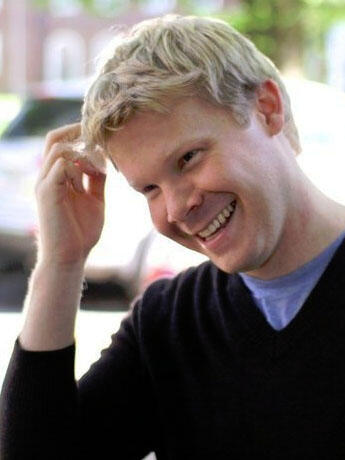
Brett Carter
0
blcarter@stanford.edu
brett_carter_2025.jpg
Brett Carter is an Associate Professor in the Department of Political Science and International Relations at the University of Southern California, a Hoover Fellow at Stanford University's Hoover Institution, and a Faculty Affiliate at Stanford's Center on Democracy, Development and the Rule of Law. He received a Ph.D. from Harvard University, where he was a fellow at the Harvard Academy for International and Area Studies.
Carter studies politics in the world's autocracies. His first book, Propaganda in Autocracies: Institutions, Information, and the Politics of Belief (Cambridge University Press), draws on the largest archive of state propaganda ever assembled — encompassing over eight million newspaper articles in six languages from nearly 60 countries around the world — to show how political institutions shape the propaganda strategies of repressive governments. It received the William Riker Prize for the Best Book in Political Economy, the International Journal of Press/Politics Hazel Gaudet-Erskine Best Book Award, Honorable Mention for the Gregory Luebbert Award for the Best Book in Comparative Politics, and Honorable Mention for the APSA Democracy & Autocracy Section's Best Book Award.
His second book, in progress, shows how politics in Africa’s autocracies changed after the fall of the Berlin Wall and how a new era of geopolitical competition — marked by the rise of China and the resurgence of Russia — is changing them again.
Carter’s other work has appeared in the Journal of Politics, British Journal of Political Science, Perspectives on Politics, Journal of Conflict Resolution, Security Studies, China Quarterly, Journal of Democracy, and Foreign Affairs, among others. His work has been featured by The New York Times, The Economist, The National Interest, and NPR’s Radiolab.
Hoover Fellow
CDDRL Affiliated Scholar
CDDRL Visiting Scholar, 2020-2021
Hide publication sections
Off
Seminars
The End of Neoliberalism and the Rise of the Human-Security State
-
Abstract
Paul Amar will discuss his book The Security Archipelago, winner of the 2014 Charles Taylor Book Award of the American Political Science Association. The book provides an alternative historical and theoretical framing of the refashioning of free-market states and the rise of humanitarian security regimes in the Global South by examining the pivotal, trendsetting cases of Brazil and Egypt. Addressing gaps in the study of neoliberalism and biopolitics, Amar describes how coercive security operations and cultural rescue campaigns confronting waves of resistance have appropriated progressive, antimarket discourses around morality, sexuality, and labor. Homing in on Cairo and Rio de Janeiro, Amar reveals the innovative resistances and unexpected alliances that have coalesced in new polities emerging from the Arab Spring and South America's Pink Tide. These have generated a shared modern governance model that he terms the "human-security state."
Speaker Bio
Image

Paul Amar, Associate Professor in the Global & International Studies Program, is a political scientist with affiliate appointments in Feminist Studies, Sociology, Comparative Literature, Middle East Studies, and Latin American & Iberian Studies. At UCSB he currently serves as Chair of Middle East Studies, Coordinator of the Campus Cluster on Security Studies, and member of the Graduate Studies Council. In addition, he serves as coordinator of scholarly projects for the Arab Council of the Social Sciences, based in Beirut. Before he began his academic career, he worked as a journalist in Egypt, a police reformer in Brazil, and as a conflict-resolution and economic development specialist at the United Nations. His books include: Cairo Cosmopolitan (2006); New Racial Missions of Policing (2010); Global South to the Rescue (2011); Dispatches from the Arab Spring (2013); The Middle East and Brazil (2014), and The Security Archipelago: Human-Security States, Sexuality Politics and the End of Neoliberalism. This most recent book was awarded the Charles Taylor Award for "Best Book of the Year" in 2014 by the Interpretive Methods Section of the American Political Science Association.
*This event is co-sponsored with CDDRL's Program on Arab Reform and Democracy and the Mediterranean Studies Program.*
[[{"fid":"217928","view_mode":"crop_870xauto","fields":{"format":"crop_870xauto","field_file_image_description[und][0][value]":"Paul Amar Flyer","field_file_image_alt_text[und][0][value]":"","field_file_image_title_text[und][0][value]":"","field_credit[und][0][value]":"","field_caption[und][0][value]":"","field_related_image_aspect[und][0][value]":"","thumbnails":"crop_870xauto","pp_lightbox":false,"pp_description":false},"type":"media","attributes":{"width":"870","class":"media-element file-crop-870xauto"}}]]
Reuben Hills Conference Room
2nd Floor East Wing E207
Encina Hall
616 Serra Street
Stanford, California 94305
Paul Amar
Associate Professor, Global and International Studies Program
University of California, Santa Barbara
Seminars
The Partisan Divide - Congress in Crisis
-
Abstract
Two former congressmen present the keys to fixing a broken Congress in
“A smart book that asks the right questions and offers some intriguing solutions.”— President Bill Clinton
Premiere/FastPencil (a publishing imprint distributed by Dover Publications) announces the release of The Partisan Divide: Congress in Crisis, a powerful and important new work by two former congressional leaders, one Democratic and one Republican. According to Mr. Frost and Mr. Davis, Congress is incapable of reforming itself without a good kick in the seat from the American public. Frost and Davis, with great insight and skill, along with a wealth of entertaining anecdotes and photos, dissect the causes of legislative gridlock and offer a common sense, bipartisan plan for making our Congress function again.
The perfect tonic for these turbulent times, The Partisan Divide: Congress in Crisis is a fascinating must-read for the historically and politically curious.
Speaker Bios
Image

Image

*This event is co-sponsored with CDDRL's Program on American Democracy in Comparative Perspective and Stanford in Government.*
[[{"fid":"217935","view_mode":"crop_870xauto","fields":{"format":"crop_870xauto","field_file_image_description[und][0][value]":"","field_file_image_alt_text[und][0][value]":"","field_file_image_title_text[und][0][value]":"","field_credit[und][0][value]":"","field_caption[und][0][value]":"","field_related_image_aspect[und][0][value]":"","thumbnails":"crop_870xauto","pp_lightbox":true,"pp_description":false},"type":"media","attributes":{"height":"1113","width":"870","class":"media-element file-crop-870xauto"}}]]
State of Politics in 2014
Download pdf
Martin Frost
Former Democratic Representative to the U.S. House of Representatives
Texas's 24th Congressional District, 1979-2005
Tom Davis
Former Republican Representative to the U.S. House of Representatives
Virginia's 11th District, 1995-2008
Seminars
 Sheila Carapico
 Sherene Seikaly