Democracy
Authors
News Type
News
Date
Paragraphs

In a webinar dated, May 27, 2020, Ohio University Historian Ziad Abu-Rish analyzed the trajectory of Lebanon's Uprising and the impact of the Covid-19 crisis on the contemporary political scene. Abu-Rish examined the multiple crises manifesting in Lebanon today and their impact on the fate of the uprising that began in October 2019. While the currency, fiscal, and infrastructural crises were central to the making of Lebanon’s uprising, he argued, the novel strategic innovations that the protesters made were key to shaping its trajectory relative to past protests. More recently, the COVID-19 pandemic has both exacerbated existing dynamics while also providing respite to the government and some of the traditional political parties. To watch the recording of the talk, please click below.


Hero Image
screen shot 2020 05 29 at 9 10 19 am
All News button
1
-

This event is co-sponsored by the Arab Studies Institute

ABSTRACT

This talk is based on the speaker's new book Cleft Capitalism: The Social Origins of Failed Market Making in Egypt (Stanford University Press, 2020). Egypt has undergone significant economic liberalization under the auspices of the International Monetary Fund, the World Bank, USAID, and the European Commission. Yet after more than four decades of economic reform, the Egyptian economy still fails to meet popular expectations for inclusive growth, better standards of living, and high-quality employment. While many analysts point to cronyism and corruption, this study finds the root causes of this stagnation in the underlying social and political conditions of economic development. It offers a new explanation for why market-based development can fail to meet expectations: small businesses in Egypt are not growing into medium and larger businesses. The practical outcome of this missing middle syndrome is the continuous erosion of the economic and social privileges once enjoyed by the middle classes and unionized labor, without creating enough winners from market making. This in turn set the stage for alienation, discontent, and, finally, revolt. With this book, Adly uncovers both an institutional explanation for Egypt's failed market making, and sheds light on the key factors of arrested economic development across the Global South.

SPEAKER BIO

Image
amr jpg 1

Amr Adly is an assistant professor in the department of political science at The American University in Cairo. He worked as a non-resident scholar at the Carnegie Middle East Center. He has also worked as a project manager at the Center on Democracy, Development, and the Rule of Law at Stanford University, where he was a postdoctoral fellow. Adly received his Ph.D. from the European University Institute in Florence. He is also author of Cleft Capitalism: The Social Origins of Egypt’s Failed Market Making (Stanford University Press, 2020) and State Reform and Development in the Middle East: The Cases of Turkey and Egypt (Routledge, 2012). He has been published in a number of peer-reviewed journals, including Geo-forum, Business and Politics, Turkish Studies, and Middle Eastern Studies. Adly is also a frequent contributor to print and online news sources.

Online; via Zoom: REGISTER

Seminars
Authors
News Type
News
Date
Paragraphs

In a webinar dated May 12, 2020, Villanova University Scholar Samer Abboud examined the emergent "illiberal peace" in Syria. The absence of an internationally mandated or internally negotiated peace process, he argued, has allowed the Syrian regime to craft an illiberal peace as an outcome to the nearly decade-long conflict. This illiberal peace is shaped through a politics of exclusion in which Syrian society is bifurcated into the loyal and disloyal through processes of reconciliation, settlement, and new legal regimes of citizenship. Click below to watch the recording of the talk.


Hero Image
screen shot 2020 05 13 at 2 34 19 pm
All News button
1
-

ABSTRACT

This talk examines the multiple crises manifesting in Lebanon today and their impact on the fate of the uprising that began in October 2019. While the currency, fiscal, and infrastructural crises were central to the making of Lebanon’s uprising, the novel strategic innovations that the protesters made were key to shaping its trajectory relative to past protests. More recently, the COVID-19 pandemic has both exacerbated existing dynamics while also providing respite to the government and some of the traditional political parties. The presentation therefore engages these complexities to take stock of the current status of popular mobilizations, elite efforts to contain them, and the economic structures that undergird both.

SPEAKER BIO

Image
ziad abu rish
Ziad Abu-Rish is Assistant Professor of History at Ohio University, where he is founding director of the Middle East & North Africa Studies Certificate Program. His research explores state formation, economic development, and popular mobilizations in the Middle East, with a particular focus on Lebanon and Jordan. Abu-Rish is co-editor of The Dawn of the Arab Uprisings: End of an Old Order? (2012). He currently serves as Senior Editor at Arab Studies Journal, co-editor at Jadaliyya e-zine, and board member of the Lebanese Studies Association. He is also a Research Fellow at the Lebanese Center for Policy Studies (LCPS).

Online, via Zoom: REGISTER

Ziad Abu-Rish Ohio University
-

ABSTRACT

The absence of an internationally mandated or internally negotiated peace process has allowed the Syrian regime to craft an illiberal peace as an outcome to the nearly decade-long conflict. This illiberal peace is shaped through a politics of exclusion in which Syrian society is bifurcated into the loyal and disloyal through processes of reconciliation, settlement, and new legal regimes of citizenship. These forms of ‘peace’ are productive of new forms of post-conflict citizenship in Syria structured around loyalty to the regime that also serve to punish anyone suspected of betraying ‘the homeland’. The division of society into the loyal and disloyal is being consecrated in new laws and practices that are shaping Syria’s post-conflict trajectory. The prospect of a progressive Syrian future that motivated many of the early protestors has been quelled by the circumscription of political space and the reinvigoration of pre-conflict forms of governance underpinned by violence and exclusion. The emergence of new forms of citizenship shaped by illiberal peace is determining the terrain of politics in Syria today.  


SPEAKER BIO

Image
samer abboud headshot web
Samer Abboud is Associate Professor of Global Interdisciplinary Studies at Villanova University. He is the author of Syria (Polity 2018) as well as a number of journal articles and book chapters on Syria. He has published in journals such as Security DialogueCitizenship StudiesMiddle East Policy, and New Political Science and is a Senior Fellow at the Center for Syrian Studies at St. Andrew’s University, Scotland.  

Online, via Zoom: REGISTER

Samer Abboud Villanova University
Seminars
-

ABSTRACT

Democracy promotion has been a longstanding goal of US foreign policy in the Middle East and elsewhere. President George W. Bush championed democracy promotion as a way to counter the ideology and extremism that led to the September 11, 2001 terror attacks against the United States. After Bush’s attempts ended in abject failure, President Barack Obama sought to repair relations with the Muslim world but also withdraw the US footprint in the Middle East. But Obama was forced to take a far more hands-on approach with the outbreak of the 2010-2011 uprisings known as the Arab Spring. President Donald Trump, who has displayed an almost allergic aversion to Obama’s policies, has openly embraced the region’s autocrats with little regard for their abuse of human rights or absence of attention to political or economic freedom. How the United States approaches the region matters – both for aspiring democrats and for those who wish to silence them. Despite the rise of Russia and China, the United States remains the sole superpower, with the loudest voice on the world stage. Thus, the shift from democracy promoter – albeit reluctantly at times – to authoritarian enabler has made the task of democratic political reform far more challenging for people across the Middle East. This discussion will examine the recent democracy promotion efforts of the United States, with a focus on the Obama and Trump years.

SPEAKER BIO

Image
yerkes color large 2017
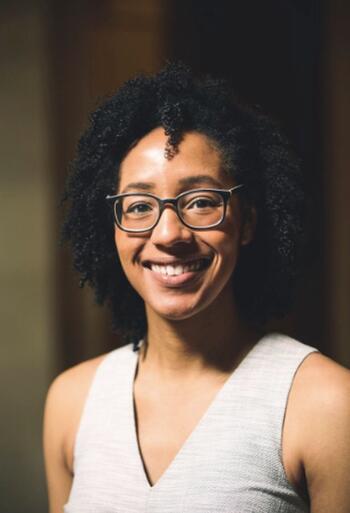
Sarah Yerkes is a fellow in the Carnegie Endowment for International Peace’s Middle East Program, where her research focuses on Tunisia’s political, economic, and security developments as well as state-society relations in the Middle East and North Africa.  She has been a visiting fellow at the Brookings Institution and a Council on Foreign Relations international affairs fellow and has taught in the Security Studies Program at Georgetown University and at the Elliott School of International Affairs at the George Washington University. Yerkes is a former member of the State Department’s policy planning staff, where she focused on North Africa. Previously, she was a foreign affairs officer in the State’s Department’s Office of Israel and Palestinian affairs. Yerkes also served as a geopolitical research analyst for the U.S. military’s Joint Staff Strategic Plans and Policy Directorate (J5) at the Pentagon, advising the Joint Staff leadership on foreign policy and national security issues.

Online, via Zoom: REGISTER

Sarah Yerkes Carnegie Endowment for International Peace
Seminars
News Type
Commentary
Date
Paragraphs

Stringent social-distancing rules and other restrictions aimed at addressing the Covid-19 pandemic have brought a large part of the world to a screeching halt and dramatically changed current daily life for millions of people around the globe. In the U.S. alone, the economic toll was underscored this week when the U.S. Labor Department reported that another 6.6 million people filed for unemployment last week, bringing the total number of job losses to more than 16 million over the last month. 

How long can a nation of 327 million people endure with work and schools closed, lost jobs, and people still dying from a pandemic with no proven treatment? And, as the number of new infections starts to level off, will Americans be willing to continue to adhere to such strict measures?  

In a perspective published in the April 9, 2020, issue of the New England Journal of MedicineDavid Studdert, professor in both Stanford’s law and medical schools, and Mark Hall, professor of law at Wake Forest Law School, analyze the tension between disease control priorities and basic social and economic freedoms. 

“Resistance to drastic disease-control measures is already evident. Rising infection rates and mortality, coupled with scientific uncertainty about Covid-19, should keep resentment at bay — for a while. But the status quo isn’t sustainable for months on end; public unrest will eventually become too great,” writes Studdert and Hall.

In the perspective, titled Disease Control, Civil Liberties, and Mass Testing — Calibrating Restrictions during the Covid-19 Pandemic,” the authors advocate for a graduated path back to normal that is guided by a population-wide program of disease testing and surveillance.

Read the Perspective

In ordinary times, a comprehensive program of testing, certification, and retesting would be beyond the pale. Today, it seems like a fair price to pay for safely and fairly resuming a semblance of normal life.
David Studdert
David M. Studdert is a leading expert in the fields of health law and empirical legal research. He explores how the legal system influences the health and well-being of populations. A prolific scholar, he has authored more than 150 articles and book chapters and his work appears frequently in leading international medical, law, and health policy publications.
Profile

Read More

Hero Image
getttyimages civil liberties Getty Images
All News button
1
Subtitle

David Studdert addresses the tradeoff between basic liberties and societal health in the current coronavirus pandemic in a New England Journal of Medicine perspective.

Paragraphs

Understanding why elites extend the franchise is one of the central questions in comparative politics. However, most theories fail to account for subsequent extensions of voting rights to once-excluded groups, including women, racial and religious minorities, and the poor. This article reviews three new books in comparative politics that focus on the struggle for voting rights and representation in the first-wave democracies. These books challenge classic assumptions and show that democratization is punctuated by ongoing struggles over inclusion that continue to this day. Together, these books contribute to debates over modernization theory, democratic responsiveness, and the use of the United States as a case in comparative analysis.

All Publications button
1
Publication Type
Journal Articles
Publication Date
Journal Publisher
Comparative Politics
Authors
Didi Kuo
Number
Number 3
-

POSTPONED: Due to concerns over the spread of COVID-19, Stanford CDDRL will be postponing The Ukrainian Nexus Conference until a later date. Please check back for updates on our rescheduled conference date.

--------------------------------------------------------------

Please join the Ukrainian Emerging Leaders Program at Stanford's Center on Democracy, Development and the Rule of Law for the conference, "The Ukrainian Nexus: Politics, Technology, Creativity". This is the Center's second annual conference on Ukraine, created by the program's fellows. 

After the events of 2019 everybody knows about Ukraine in the U.S. but nobody actually knows what Ukraine is. The mission of the Conference is to discover Ukraine and its role in the world order for the Stanford and the broader Silicon Valley community. There will be three streams -- Government, Innovation/Business and Creativity. 

The goal of this year's conference is to bring together major stakeholders from the new Ukrainian leadership (government, parliament, civil society and business), Silicon Valley's technology and innovation sector, and the Stanford academic community. 

In addition to conference leadership from core faculty members Francis Fukuyama, Michael McFaul and Steven Pifer, conference participants and agenda will be updated here. 

-

This event is co-sponsored with The Abbasi Program in Islamic Studies.

ABSTRACT

Organized groups with cross class networks and institutional links to different social constituencies have often been behind revolutionary mobilizations. The Egyptian case in 2011 conveys a different dynamic. Small youth groups played leading roles in organizing and strategizing for the mass protests attracting large numbers of participants? How was that possible? And why were middle-class employees, the white-collar and professional sectors, overrepresented in the mobilizations? Finally, how could we understand the rise of these movements at this juncture. I argue that the Egyptian mass protests could be understood by adopting a middle ground approach between organization and spontaneity. There are cases when prior militancy, demands for union democracy, and political links with the democracy movement prepared middle-class employees to join in larger numbers. In other cases, participation was spontaneous resulting from growing grievances against the state. I also show that political realignments in the early 2000s created openings that led to both a rise in labor unrest and invigorated the democracy movement - eventually culminating in the 2011 mass mobilizations.

SPEAKER BIO

Image
86826 1
Nada Matta is an assistant professor in the Departments of Global Studies and Modern Languages and Sociology at Drexel University. Her research interests are in political economy, social movements and gender studies; and she primarily investigate questions of structural inequality and social change in the Middle East. Nada is the co-author of “the Second Intifada: A dual Strategy Arena” published in the European Journal of Sociology, and is writing a book about the Egyptian Revolution of 2011. 

Seminars
Subscribe to Democracy