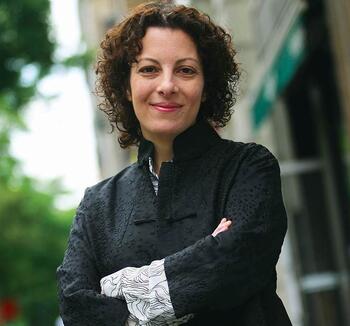
Why do voters support executive aggrandizement? One possible answer is that they do so because they think this will ease their preferred leader’s hand in putting their partisan vision into action, provided that the leader will continue winning elections.
We study this phenomenon through a survey experiment in Turkey, by manipulating voters’ perceptions about the potential results of the first presidential election after a constitutional referendum of executive aggrandizement. We find that voters from both sides display what we call “elastic support” for executive aggrandizement; that is, they change previously revealed constitutional preferences in response to varying winning chances. This elasticity increases not only when citizens feel greater social distance to perceived political “others” (i.e., affective polarization) but also when voters are concerned about economic management in a potential post-incumbent era. Our findings contribute to the literature on how polarization and economic anxiety contribute to executive aggrandizement and democratic backsliding.
Charles is a Research Scholar at the Global Digital Policy Incubator of the Center on Democracy, Development and the Rule of Law at Stanford University, a member of the Board of Trustees of the Internet Society, and a board member of the International Centre for Trade Transparency and Monitoring. Charles served as an elected member of the Legislative Council in the Hong Kong Special Administrative Region, representing the Information Technology functional constituency, for two terms from 2012 to 2020. In 2021, he founded Tech for Good Asia, an initiative to advocate positive use of technology for businesses and civil communities. As an entrepreneur, Charles co-founded HKNet in 1994, one of the earliest Internet service providers in Hong Kong, which was acquired by NTT Communications in 2000. He was the founding chair of the Internet Society Hong Kong, honorary president and former president of the Hong Kong Information Technology Federation, former chair of the Hong Kong Internet Service Providers Association, and former chair of the Asian, Australiasian and Pacific Islands Regional At-Large Organization (APRALO) of ICANN. Charles holds a BS in Computer and Electrical Engineering and an MS in Electrical Engineering from Purdue University.
The Ukraine-Russia crisis continues to evolve at the geographic boundaries of Eastern Europe, but Oleksiy Honcharuk believes the conflict is as much about democracy and ideology as it is about borders.
Hancharuk, the former prime minister of Ukraine and 2021 Bernard and Susan Liautaud Visiting Fellow at the Center on Democracy, Development and the Rule of Law (CDDRL), joined FSI Director Michael McFaul on World Class Podcast to discuss the roots of the crisis and why Vladamir Putin sees the success of democracy in Ukraine – or anywhere – as an existential threat to his authority.
Listen to the full episode and browse highlights from their conversation below. For additional reading, see McFaul and Honcharuk's joint op-ed in the Washington Post on the need for closer U.S.-Ukraine relations.
The Complicated History Between Russia and Ukraine
Ukraine played a key role in the collapse of the Soviet Union, and it came out as the biggest independent country of the former Soviet states. Ukraine decided to be a democracy, thankfully, and this has been our path for the last thirty years.
This is a great achievement for our nation, because if you look around our country, even among hundreds of other successful European countries, there are not many other good examples of democracy. They have problems: Turkey has problems; Belarus has problems; Kazakhstan as well. We have some problems with corruption, but we are still an electoral democracy with fair elections.
Now, unfortunately, Russia understands itself as the successor, or empire, coming after the Soviet Union, and Putin has said many times that this collapse was the biggest catastrophe in the last twenty years of the last century. For him, Ukraine’s success is a tragedy.
For Putin, it's very dangerous to have examples of successful democratic countries, especially Slavic Orthodox Christian countries with close ties to Russia. Putin needs the Russian people to believe that democracy is a weak, failing idea that doesn’t work.
Oleksiy Honcharuk
Former Prime Minister of Ukraine
Putin has invaded Ukraine before during the annexation of Crimea. He tried to divide Ukraine into a Russian, authoritarian Ukraine and a European, democratic Ukraine. But he failed. Our civil society worked hard to create voluntary military and paramilitary organizations and units, and Ukrainians pushed back as a nation.
And that was a moment when Putin understood, finally, that he lost Ukraine not only as an economic partner, but ideologically. Ukrainians chose freedom. We chose democracy. And for Putin, it's very dangerous to have examples of successful democratic countries – especially Slavic Orthodox Christian countries with close ties to Russia – like Ukraine. Putin needs the Russian people to believe that democracy is a weak, failing idea that doesn’t work.
A Struggle Broader Than One Country
This buildup of Russian troops along the Ukrainian border is not juist a regional conflict, and it's not just about NATO. It’s a battle between two conceptually different systems: the authoritarian system and the democratic system. It’s an attack towards democracy and the Western world. Our values in the Western world are a threat for Mr. Putin himself.
Putin is trying to shape the situation and to undermine the trust among countries and among people. He's trying to create destabilizing situations like an immigration crises, organize sabotages among the military, have political murders, and so on and so forth.
This buildup is only one element of this game to create one more additional crisis to attract attention, and to create a situation where Western leaders have to decide and make very hard decisions. Putin is trying to show that, “If I do attack, nobody will protect you. All of these values you have are just fairy tales. The West is weak, the West is insincere. When they tell you that values matter, it’s a lie because the only real value is money. There is no democracy.”
The Role of the West in Supporting Democracies
For Putin, the weak reaction from the West to the aggression towards Ukraine was a signal that it was acceptable to act like this. That's why Putin is raising the stakes and why he will continue to raise the stakes every year. Right now, the sanctions policy and general Western policy is creating a situation where time is playing against the victim, not against the aggressor.
Putin’s strategy is to wait, to use all his resources to undermine his democratic opponents, and to make sure that the next politicians in the western world will be more flexible. And maybe in 10 years or 15 years when the annexation of Crimea has become deep history, he will find some new trade-off with the next generation of democratic leaders.
This buildup of Russian troops is not just a regional conflict, and it's not just about NATO. It’s a battle between two conceptually different systems: the authoritarian system and the democratic system. It’s an attack on democracy itself.
Oleksiy Honcharuk
Former Prime Minister of Ukraine
This is why there needs to be a new model of smart or cascading sanctions where the EU adopts a package of sanctions for some period of time, maybe five, seven or ten years, and every next wave, every next package of sanctions will automatically come into power if the problem is not solved. So every single day, it automatically raises the price for the aggressor.
Supporting fragile democracies is not just about making a morally right choice; these countries on the frontlines that have paid an additional price – an additional tax, if you will, for democracy, and have taken on additional burdens, because they choose the democratic path. Whether it’s Ukraine or other countries, we need Western support now in a much bigger way than we have it now.
Oleksiy Honcharuk Appointed the Bernard and Susan Liautaud Visiting Fellow
Honcharuk, formerly the prime minister of Ukraine, will focus on examining what Western allies can do to support Ukraine in its struggle to thrive as a democracy in Eastern Europe while at Stanford.
Members of the Ukrainian military carry the flag of Ukraine during the 30th anniversary of the country's independence. | Getty
All News button
1
Subtitle
Former prime minister of Ukraine Oleksiy Honcharuk joins Michael McFaul on the World Class Podcast to analyze Russia's aggression towards Ukraine and how it fits into Vladamir Putin's bigger strategy to undermine democracy globally.
Robert G. Wesson Lecture Series in International Relations Theory and Practice
As a Venezuelan, Leopoldo López lived through the gradual deterioration of what was once a regional reference for democracy into an authoritarian regime that has created the worst humanitarian and migration crisis in the Western Hemisphere. Venezuela is a clear example of how democracy could lose the battle against autocracy.
Unfortunately, the fight for freedom is no longer an issue to be solved only among Venezuelans. In fact, our conflict has become, like many others around the world, part of the global conflict between autocracy and democracy.
Autocracy in its different forms is spreading and constitutes a diverse but articulated movement around the world. To face this situation, new forms of organizations and democratic leadership must be promoted and empowered as an effective way to revert this new wave of autocracies. It is essential to create a synergy between effective local leadership, a comprehensive narrative and the use of new technologies that set up a range of possibilities to promote freedom.
The Wesson Lectureship was established at Stanford by the Freeman Spogli Institute for International Studies in 1989. It provides support for a public address at the university by a prominent scholar or practicing professional in the field of international relations. The series is made possible by a gift from the late Robert G. Wesson, a scholar of international affairs, prolific author, and senior research fellow at the Hoover Institution.
In establishing the series, Dr. Wesson stated his hope that the lectures would stimulate increased commitment to the study of international relations in a context that would enable students to understand the importance of developing practical policies within a theoretical and analytical framework. Previous Wesson Lecturers have included such distinguished speakers as McGeorge Bundy, Willi DeClerq, Condoleezza Rice, Mikhail Gorbachev, Fernando Henrique Cardoso, and Mary Robinson.
ABOUT THE SPEAKER
Image
Leopoldo López is a Venezuelan political leader, pro-democracy activist and Sakharov prize laureate. He is the founder and national coordinator of the Voluntad Popular political party.
López received a Bachelor's degree cum laude in sociology and economics from Kenyon College, and a Master´s degree in public policy from the John F. Kennedy School of Government at Harvard University. He was awarded a honoris causa doctorate in Law from Kenyon College in 2007.
Leopoldo López was elected mayor of the municipality of Chacao in Caracas in 2000 and he finished his second term with a 92% approval rate. He also won third place at the World Mayor Awards and the 2007 and 2008 “Premio Transparencia”, awarded by Transparency International.
In 2014 he was unjustly detained by the Maduro regime and was sentenced to 14 years of imprisonment. He spent four years in a military prison, a year and a half in house arrest and another year and a half in the Spanish embassy in Caracas under political asylum. He was recognized by Amnesty International as a prisoner of conscience. Also, in 2015 his detention was declared arbitrary by the UN.
In October 2020, López escaped from Venezuela through Colombia to join his family in Spain. It was the first time in seven years that he was able to be with his family in freedom. In his exile, López continues his fight for Venezuela´s democracy and freedom.
López has received several international awards for his fight for democracy and freedom in Venezuela. Among them, he was honored with the 2014 Harvard alumni achievement award, the NED´S 2013 Democracy Award, the 2016 Geneva Summit Courage Award and the 2017 Sakharov Prize for Freedom and Thought.
Hybrid event: Online via Zoom, and in-person in Bechtel Conference Center
A year ago, a crowd on the National Mall violently breached the halls of the U.S. Capitol with the intent of disrupting the formal ratification of the 2020 presidential election. Despite the chaos, Joe Biden was inaugurated as the president, the prosecution of individual perpetrators has begun, and the House of Representatives January 6 Commitee's investigation is ongoing. Yet there remains a sense that something fundamental to American democracy has changed. Where is America now, one year from the attack?
To mark the first anniversary of the January 6 Capitol riot, scholars from across the Freeman Spogli Institute for International Studies share their thoughts on what has happened in the year since, and what the ongoing effects of the violence signal about the future of democracy and the integrity of America’s image at home and abroad.
Intensifying Divisions
Larry Diamond, Mosbacher Senior Fellow in Global Democracy
The January 6 insurrection was the gravest assault on American democracy since the Civil War, and it came much closer to disrupting the peaceful transfer of power (and possibly our democracy itself) than we realized at the time.
Rather than providing a sobering lesson of the dangers of political polarization, the insurrection seems only to have intensified our divisions, and the willingness to contemplate or condone the use of violence. According to a recent Washington Post survey, a third of Americans feel violence against the government could be justified in some circumstances —a sharp increase from 16 percent in 2010 and 23 percent in 2015.
Sadly, many politicians have not been the least bit chastened by the close brush with a constitutional catastrophe. The “Big Lie” that Biden did not legitimately win the 2020 election retains the support of most Republicans and a substantial proportion of independents. Around the country, Republican legislatures have been introducing, and in many states adopting, bills that would give Republican legislatures the ability to reverse or sabotage legitimate electoral outcomes, and other bills that make it more difficult for people (especially Democratic-leaning groups) to vote. All of this is doing deep damage to the global reputation and hence “soft power” of American democracy.
Although they are generally relieved that Trump is no longer president, our allies remain deeply worried about the stability and effectiveness of American democracy.
What gives me some hope is the expanding network of civil society organizations documenting the multiple threats to electoral integrity in the U.S. But we are going to need much more widespread and resourceful mobilization to counter the downward spiral of our democracy.
Larry Diamond
Mosbacher Senior Fellow in Global Democracy at FSI
The Capitol uprising on January 6 marked a grave crisis in American institutions, when a sitting President refused to transfer power peacefully and sought to actively overturn an election. The Republican Party, rather than repudiating the uprising and marginalizing its organizers, instead rallied in subsequent weeks to normalize the event. These developments, while bad in themselves from the standpoint of US politics, also sent an unmistakable geopolitical signal that the Biden presidency would not represent an American return to “normal” internationalism. The Administration would lead a deeply polarized country uncertain of its own global role.
This is the point at which geopolitics and domestic unrest come together. The single greatest weakness of the United States today does not lie in its economy or military power, but in the deep polarization that has affected American politics. This is not just speculation, but something underlined by Kremlin-linked commentators, as Françoise Thom has detailed: in the words of one, "the decrepit empire of the Stars and Stripes, weakened by LGBT, BLM, etc." makes "it is clear that it will not survive a two-front war." They see that a significant number of Republicans believe that the Democratic Party represents a bigger threat to the American way of life than does Russia. A country that cannot rally around sensible public health measures during a pandemic will not rally around defense of freedom abroad. This is the significance of January 6: it has hardened partisan divisions rather than being the occasion for national soul-searching.
Read Francis Fukuyama's full commentary in American Purpose.
It has been a year since rioters stormed the United States Capitol in an effort—an organized, violent effort—to declare Donald Trump the rightful winner of the 2020 presidential election. The riots signaled a dangerous turn in American politics, an attack on the basic, fundamental institutions of democracy. For democracy to work, all sides must agree on the rules of the game: the fairness of the balloting and counting process, the routine and peaceful transfer of power. We now see what happens when the institutions and procedures of elections are delegitimated.
Our political leaders can act now to restore confidence in elections. They can do so by protecting election administrators from threats of violence, by depoliticizing oversight of elections, and by passing democratic reforms. Although President Biden’s Freedom to Vote Act and John Lewis Voting Rights Advancement Act have been blocked by Republicans, narrower versions of these bills could create stricter federal election standards. And Americans can organize to protect democracy through civic groups that push for ballot access and election integrity, particularly at the state level. Politicians and activists alike must make clear that election administration is not a partisan issue. As the nation enters the third year of a global pandemic and an upcoming midterm election, our leaders must make strengthening democracy their utmost priority.
The failure of the Jan. 6 insurrection provided an opportunity for the United States to collectively take a step back from the conspiracy theories and lies that pervaded American political discourse in the preceding couple of years. But alas, the nation failed to take advantage of that opportunity, with tens of millions of Americans maintaining their delusions as strongly as ever. Substantial numbers of Americans continue to believe that Donald Trump really won the 2020 election, and the number of QAnon adherents and believers was virtually unchanged.
Even more alarming has been the cynical exploitation of such trends by elected officials in their quest to gain or retain political power. Rather than standing up for the rule of law and defending the conclusions of an independent judiciary regarding various allegations of election fraud, they have pointed to such outcomes as yet more evidence of a system rigged against them. We now live in a environment in which no conceivable evidence can persuade true believers to change their minds, and the resulting epistemic fractures translate into a once-unified nation sharply divided against itself. A worse national posture to meet the challenges of coming great-power competition could not be imagined.
Read more of Herbert Lin's analysis of contemporary security issues and power competition in his latest book, Cyber Threats and Nuclear Weapons (Stanford University Press, 2021).
Matthew Masterson, Non-resident Fellow at the Stanford Internet Observatory
The insurrection on January 6th left a scar on American Democracy. For the first time in our history, America did not have a peaceful transition of power. The effects of that day continue to be felt every day in election offices across the United States. Election officials, the guardians of our Democracy, are targets of harassment and threats fueled by the ongoing lies regarding the integrity and accuracy of the election. Worse yet, there have been little no consequences for these threats against our democracy. While some who participated in January 6th are being investigated and prosecuted, those responsible for the threats against election officials have faced little to no accountability for their actions. Facing ongoing threats and little support from law enforcement election officials are leaving their jobs out of fear for their own safety and the safety of their families.
Healing the wound of January 6th won’t be easy; there must be accountability for the damage done to our democracy. American democracy is resilient and strong, but can not survive the unchecked attacks against it. Those who seek to profit from the lies about 2020 need to be held accountable for selling out democracy in pursuit of their own political and financial gain. They must be defeated at the ballot box or their businesses made to pay the price by Americans unwilling to accept holding democracy for ransom. As we bring accountability, we need to invest in continuing to improve the security, accessibility and integrity of the process. We need to fund elections on an ongoing basis like the national security issue they are. The only response to this sustained attack on our democracy is a sustained investment in protecting it.
Matthew Masterson
Non-resident Fellow at the Stanford Internet Observatory
Protesters attacked the U.S. Capitol on January 6, 2021 in an attempt to disrupt the verification of the 2020 election results. | Getty
All News button
1
Subtitle
On the first anniversary of the riot at the U.S. Capitol, scholars from across FSI reflect on the ongoing ramifications the violence is having on America's domestic politics and international influence.
Hakeem Jefferson is an assistant professor of political science at Stanford University where he is also a faculty affiliate with the Center for Comparative Studies in Race and Ethnicity and the Stanford Center for American Democracy. During the 2021-22 academic year he was also the SAGE Sara Miller McCune Fellow at the Center for Advanced Study in the Behavioral Sciences.
Hakeem’s work focuses primarily on the role identity plays in structuring political attitudes and behaviors in the U.S. His in-progress book project builds on his award-winning dissertation to consider how Black Americans come to support punitive social policies that target members of their racial group.
In other projects, Hakeem examines the causes of the racial divide in Americans’ reactions to officer-involved shootings; works to evaluate the meaningfulness of key political concepts, like ideological identification among Black Americans; and considers how white Americans navigate an identity that many within the group perceive as increasingly stigmatized. In these and other projects, Hakeem sets out to showcase and clarify the important and complex ways that identity matters across all domains of American life.
A public-facing, justice-oriented scholar, Hakeem is an academic contributor at FiveThirtyEight and his writings and commentary have been featured in places like the New York Times, The Washington Post, NPR, and other major outlets. He is also active on Twitter, and you can follow him @hakeemjefferson.
We are delighted to announce that Hakeem Jefferson, Assistant Professor of Political Science, is a new faculty affiliate at the Center on Democracy, Development and the Rule of Law.
Professor Jefferson’s research focuses primarily on the role identity plays in structuring political attitudes and behaviors in the U.S. He is especially interested in understanding how stigma shapes the politics of Black Americans, particularly as it relates to group members’ support for racialized punitive social policies. In other research projects, he examines the psychological and social roots of the racial divide in Americans’ reactions to officer-involved shootings and works to evaluate the meaningfulness of key political concepts, like ideological identification, among Black Americans.
"I am delighted that Hakeem Jefferson is joining the CDDRL community” shared Kathryn Stoner, Mosbacher Director of CDDRL. “Hakeem's work on race and politics in America is a welcome addition to the Center's expanding work on the quality of American democracy. I look forward to supporting his important work on the role that identity plays in the United States and elsewhere in structuring political behavior and social policies."
Hakeem's work on race and politics in America is a welcome addition to the Center's expanding work on the quality of American democracy.
Kathryn Stoner
Mosbacher Director of CDDRL
Professor Jefferson is also a faculty affiliate with the Center for Comparative Studies in Race and Ethnicity and the Stanford Center for American Democracy. He received his PhD in political science from the University of Michigan and a Bachelor of Arts degree in political science and African American Studies from the University of South Carolina.
In 2020, his dissertation, "Policing Norms: Punishment and the Politics of Respectability Among Black Americans," was a co-winner of the Best Dissertation Award from the Political Psychology Section of the American Political Science Association.
Hakeem Jefferson
Assistant Professor, Political Science and CDDRL Affiliated Faculty
About the Seminar: In this time of great challenges, our democracies urgently need to produce citizens who can move from demanding change to making it. But the skills for doing so are not innate, they are learned. In this talk, Beth Simone Noveck will discuss how both citizens and governments can take advantage of digital technology, data, and the collective wisdom of our communities to design and deliver powerful solutions to contemporary problems. Drawing on the latest methods from data and social sciences, including original survey data from around the world, she proposes a practical set of methods for public servants, community leaders, students, activists, and anyone who wants to be a catalyst for positive social change.
About the Speaker: Beth Simone Noveck is a professor at Northeastern University, where she directs the Burnes Family Center for Global Impact and its partner project, The Governance Lab (The GovLab) and its MacArthur Research Network on Opening Governance. The author of Solving Public Problems: How to Fix Our Government and Change Our World (Yale Press 2021) (named a Best Book of 2021 by Stanford Social Innovation Review), she is also Core Faculty at the Institute for Experiential AI (IEAI) at Northeastern. New Jersey governor Phil Murphy appointed her as the state’s first Chief Innovation Officer and Chancellor Angela Merkel named her to her Digital Council in 2018. Previously, Beth served in the White House as the first United States Deputy Chief Technology Officer and director of the White House Open Government Initiative under President Obama. UK Prime Minister David Cameron appointed her senior advisor for Open Government.
In addition to Solving Public Problems, Beth is the author of Smart Citizens, Smarter State: The Technologies of Expertise and the Future of Governing (Harvard Univ Press 2015) and Wiki Government: How Technology Can Make Government Better, Democracy Stronger and Citizens More Powerful (Brookings 2009) and co-editor of The State of Play: Law, Games and Virtual Worlds (NYU Press, 2005).
About the Seminar: For centuries, the world’s dominant power has been the state that wielded the world’s dominant navy. More recently, globalization has been remade, as a sea-based trade—85% of all global trade moves by sea. As does nearly 2/3rds of the world trade in oil and gas, while 93% of all data in the world moves along undersea cables that line the ocean floor. The oceans are vital, too, to our changing climate. All of which highlights the drama of China’s return to the high seas, and its rapid maritime and naval build-up. The net result: a new arms race, centered in the Western Pacific but reaching out into the Arctic and the Indian Oceans, and pulling in Russia, India, Japan and Europe. Bruce Jones, author of To Rule the Waves, will explore how our security, our prosperity, and our environment are being reshaped by the dynamics of sea power.
Bruce Jones is a senior fellow and director of the project on international order and strategy at the Brookings Institution. The author or co-author of several books on international order, his most recent work is “To Rule the Waves: How Control of the World’s Oceans Shapes the Fate of the Superpowers”.
About the Seminar: Saumitra Jha and Steven Wilkinson's book project, Wars and Freedoms, makes the case that, throughout human history, external wars are common catalysts for political change at home, and they do so in large part because of their impact on the organizational capacity of the disenfranchised. It draws widely from across the social sciences and humanities: literature; history; biography; psychology; sociology; economics; and political science. The book draws upon these diverse ways of knowing to provide evidence from across time and around the world of the relevance of a simple framework for understanding which types of external wars are conducive to the emergence of broad-based freedoms, the building of states, and the shrinking of wealth inequalities on one hand, and when instead, others have led to the building of military castes, or an increased propensity for political polarization, ethnic conflict, attempted coups, revolution and genocide on the other. In so doing, Wars and Freedoms provides a re-interpretation of the history of revolutions and political change, in order to make clear which lessons and episodes from history may be more germane for the future of democracy and freedoms in the twenty-first century.
Wars and Freedoms describes how there were historically three paths that connected organizational skills developed in external wars to the spread of democracy and democratic values: in the shadow of a crisis that threatened broad class conflict, through a more gradual process of state-building in response to ongoing external existential threats, and through the organizational efforts of committed military leaders. Of these, however, only the last, the most fragile and contingent, is still likely to emerge organically. Understanding the decline of other paths, however, can still help us understand both how political freedoms and democracy emerged, how our democracies may die, and what we may still be able to do about it.
Saumitra Jha is Associate Professor of Political Economy at the Stanford Graduate School of Business, a Senior Fellow at the Center for Democracy, Development and the Rule of Law in Stanford's Freeman-Spogli Institute for International Affairs and convenes the Stanford Conflict and Polarization Lab. His work on the historical relationship between conflict and markets has been received the Michael Wallerstein Award for best article in political economy from the American Political Science Association, and has been published in the top journals in both Economics and Political Science, including The American Political Science Review, Econometrica, and The Quarterly Journal of Economics. His co-authored work on Heroes was awarded the Oliver Williamson Award from the Society for Institutional and Organizational Economics. Also an award-winning teacher, he has shown a particular interest in communicating the results of his research to broader audiences, in the press (such as the Indian Express and USA Today) and through online policy and social media outlets (VoxEU, VoxDev, Public Books, Broadstreet, Ideas for India, AOC), and to a range of student and practitioner audiences, including cadets at West Point, members of the US intelligence community, European Union diplomats, and entrepreneurs in Africa, India and the United States. His work has been featured in the Economist, Financial Times and the Washington Post, among others, and he has provided commentary for television and radio news, including for the BBC, ABC and CBC.
Graduate School of Business
655 Knight Way
Stanford, CA 94305
(650) 721 1298
0
saumitra@stanford.edu
Associate Professor of Political Economy, GSB
Associate Professor, by courtesy, of Economics and of Political Science
saumitra_jha.jpg
Along with being a Senior Fellow at the Freeman Spogli Institute for International Studies, Saumitra Jha is an associate professor of political economy at the Stanford Graduate School of Business, and convenes the Stanford Conflict and Polarization Lab.
Jha’s research has been published in leading journals in economics and political science, including Econometrica, the Quarterly Journal of Economics, the American Political Science Review and the Journal of Development Economics, and he serves on a number of editorial boards. His research on ethnic tolerance has been recognized with the Michael Wallerstein Award for best published article in Political Economy from the American Political Science Association in 2014 and his co-authored research on heroes with the Oliver Williamson Award for best paper by the Society for Institutional and Organizational Economics in 2020. Jha was honored to receive the Teacher of the Year Award, voted by the students of the Stanford MSx Program in 2020.
Saum holds a BA from Williams College, master’s degrees in economics and mathematics from the University of Cambridge, and a PhD in economics from Stanford University. Prior to rejoining Stanford as a faculty member, he was an Academy Scholar at Harvard University. He has been a fellow of the Niehaus Center for Globalization and Governance and the Center for the Study of Democratic Politics at Princeton University, and at the Center for Advanced Study in the Behavioral Sciences at Stanford. Jha has consulted on economic and political risk issues for the United Nations/WTO, the World Bank, government agencies, and for private firms.
Senior Fellow at the Freeman Spogli Institute for International Studies
Dan C. Chung Faculty Scholar at the Freeman Spogli Institute for International Studies
Senior Fellow at the Stanford Institute for Economic Policy Research
Hide publication sections
Off
Date Label
Associate Professor of Political Economy at the Stanford Graduate School of Business and Senior Fellow at the Center for Democracy, Development at the Rule of Law in the Freeman-Spogli Institute.