Governance

FSI's research on the origins, character and consequences of government institutions spans continents and academic disciplines. The institute’s senior fellows and their colleagues across Stanford examine the principles of public administration and implementation. Their work focuses on how maternal health care is delivered in rural China, how public action can create wealth and eliminate poverty, and why U.S. immigration reform keeps stalling. 

FSI’s work includes comparative studies of how institutions help resolve policy and societal issues. Scholars aim to clearly define and make sense of the rule of law, examining how it is invoked and applied around the world. 

FSI researchers also investigate government services – trying to understand and measure how they work, whom they serve and how good they are. They assess energy services aimed at helping the poorest people around the world and explore public opinion on torture policies. The Children in Crisis project addresses how child health interventions interact with political reform. Specific research on governance, organizations and security capitalizes on FSI's longstanding interests and looks at how governance and organizational issues affect a nation’s ability to address security and international cooperation.

Paragraphs
The global cities of Latin America - Rio de Janeiro, Ciudad Juarez, Tijuana, Mexico City and Medellin - have become engines of economic growth. These cities attract remarkable talent across all levels and build extensive networks that allow for innovation and the circulation of ideas. But crime, violence and the dissolution of the social fabric threaten the main attraction of these cities and significantly undermine development prospects. The challenge of providing policing that protects citizens, especially those living in the poorest neighborhoods where gangs and other criminal organizations tend to concentrate, is daunting. The conference on violence and policing in Latin America and US cities brought together academics, policy makers, NGOs, and citizens to reflect on how cities in Latin America are meeting the challenges of rising
criminal violence. Particular focus was given to the “policing” processes in cities that have experienced and successfully reduced civil war-like levels of violence. The goal was to reflect on the dynamics and varieties of security strategies, police reform and efforts to rebuild the social fabric of major cities. The conference was hosted by the Program on Poverty and Governance (PovGov) at Stanford's Center on Democracy, Development, and the Rule of Law (CDDRL). Other centers and institutions at Stanford University that co-sponsored the conference include the Center for Latin American Studies (CLAS), the Bill Lane Center for the American West, the Mexico Initiative’ at the Freeman Spogli Institute for International Studies (FSI), and the Center for International Security and Cooperation (CISAC).
 
For a complete conference overview, please click here
 
All Publications button
1
Publication Date
Authors
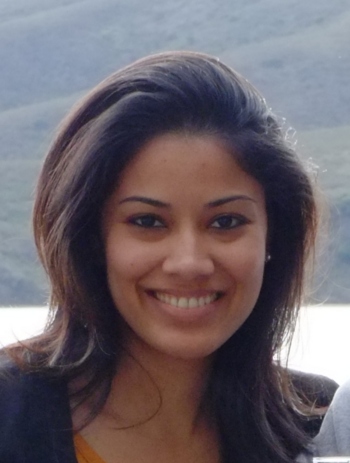
Veriene Melo
-

ABSTRACT

The Buddhist Compassion Relief Tzu Chi (Ciji) Foundation from Taiwan is perhaps one of the largest Buddhist charities in the Chinese world today. This talk traces how Tzu Chi developed under the “regime of civility” in Taiwan. The same regime also contributed to the recent controversies between Tzu Chi and the Aborigines. I argue that the tension between the Buddhist non-governmental organization and the Christian Aborigines has to do with the inequality under the regime of civility: on the one hand, the Aborigines have been marginalized as the “subject” of the civility campaign by the state; and, on the other hand, the same regime of civility is what allows the Buddhist charity to thrive in civil society. This talk raises the question whether civility could turn against civil society.

SPEAKER BIO

Image
huang julia

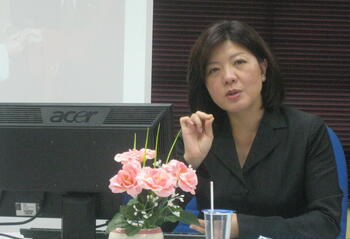
C. Julia Huang is a Professor of Anthropology at National Tsing Hua University, Taiwan, and currently a Visiting Scholar at the Ho Center for Buddhist Studies at Stanford University. Huang has published articles in the Journal of Asian Studies, Ethnology, Positions, Nova Religio, the Eastern Buddhist, and the European Journal for East Asian Studies. Her book, Charisma and Compassion: Cheng Yen and the Buddhist Tzu Chi Movement (Harvard University Press, 2009) is an ethnography of a lay Buddhist movement that began as a tiny group in Taiwan and grew into an organization with ten million members worldwide. Huang has recently completed a book manuscript, The Social Life of Goodness: Religious Philanthropy in Chinese Societies (with Robert P. Weller and Keping Wu). She is currently working on a project on the Buddhist influences on cadaver donations for medical education in Taiwan.


This event is part of the Taiwan Democracy Project.

Ends of Compassion--presentation
Download pdf
C. Julia Huang Professor of Anthropology National Tsing Hua University, Taiwan
Seminars
-

Abstract

In 2010-2011, the "Arab Spring" brought unexpected revolutions to many Middle Eastern and North African countries. Why did these seemingly invincible regimes fall, while China remained durably authoritarian? Many observers credited global media for the political transformations. While the hopes of Arab Spring democracy have proven to be fragile or short-lived, we can effectively explore the relationship between political communication and regime stability by turning our attention to Taiwan’s remarkable democratization, which remains under-appreciated by the international community.

This talk considers political communication in Taiwan from the martial law era to the heady days of democratic activism beginning in the late 1970s and lasting till the 1990s. Professor Esarey argues that the Chiang Ching-kuo administration’s diminishing capacity to control a small but influential opposition (dangwai) media, and even mainstream newspapers, gradually permitted reformers to reframe debates, reset the political agenda, and challenge state narratives and legitimacy claims. 

When viewed in comparative perspective, Taiwan’s successful democratization suggests that seeking regime change is impracticable, and even perilous, without considerable and sustainable media freedom as well as opportunities for the public to advocate, evaluate, and internalize alternative political views. A balance of “communication power” between state and societal actors facilitates a negotiated and peaceful transition from authoritarianism.


Bio

Professor Ashley Esarey received his PhD in Political Science from Columbia University and was awarded the An Wang Postdoctoral Fellowship by Harvard University. He has held academic appointments at Middlebury College, Whitman College, and the University of Alberta, where he is an instructor in the departments of East Asian Studies and Political Science and a research associate of the China Institute. Esarey has written on democratization and authoritarian resilience, digital media and politics, and information control and propaganda. His recent publications include My Fight for a New Taiwan: One Woman’s Journey from Prison to Power (with Lu Hsiu-lien) and The Internet in China: Cultural, Political, and Social Dimensions (with Randolph Kluver).


Communication Power and Taiwan's Democratization
Download pdf
Ashley Esarey Research Associate, China Institute University of Alberta
Seminars
-

Abstract: 

What explains the variation in legislative strength in African states since the early 1990s? Strong legislatures are central to democratic consolidation and the emergence of limited representative government. Yet we know very little about contemporary legislative development, especially among countries that democratized over the last two decades. With novel data and qualitative analysis from sub-Saharan Africa, this paper investigates the sources of observed variation in legislative strength and capacity in Africa, and the policy implications of varying levels of legislative institutionalization. The findings show that strong states with elite party systems produce strong legislatures. These findings highlight the tension between political institutionalization and populist democratic representative government. The paper concludes with policy recommendations for ongoing legislative strengthening programs around the world.  


Image
opalo
Speaker Bio:

Ken Opalo is a PhD Candidate in the Department of Political Science at Stanford University. His research interests include the political economy of institutional development, natural resource management, elections and governance. His dissertation explains the observed variation in political strength, organizational capacity and general levels of institutionalization of African legislatures since 1990. Ken argues that strategies of political domination employed by ruling elites during the period of one party rule explain much of the variation in legislative development in Africa. Specifically, countries that had strong mass parties (as opposed to elite parties) were more likely to have weaker parliaments after the re-introduction of multiparty politics. In his research, Ken uses a mixed methods approach – including detailed case studies of Kenya and Zambia; a regression discontinuity design; and natural experiments to identify the causal mechanisms implied by his theory of endogenous institutional change.

Ken has done research and/or visited 10 different African countries in Eastern, West and Southern Africa. He is a former research consultant with the Global Commission on Elections, Democracy, and Security, a project of the Kofi Annan Foundation. Ken is currently a short-term consultant with the World Bank on the political economy of regional infrastructure development in East and West Africa. He maintains a blog at www.kenopalo.com and has written for and/or appeared on the BBC, Al Jazeera, the African Development Bank, and Foreign Policy Magazine.

Seminars
-

The Fabric of NGOs

Please join us in a discussion of the role of NGOs in the field of human rights, and of the important role they play in the world today. Our speakers represent both the activist and grant-making sides of the NGO world.


Speaker Bios

Nick Deychakiwsky

Program Officer, Charles Stewart Mott Foundation

Nick Deychakiwsky is a Program Officer at the Charles Stewart Mott Foundation managing its Civil Society – United States and Global Philanthropy & Nonprofit Sector program areas.  Between 2000 and 2006 he oversaw the Mott Foundation’s grantmaking in Russia, Ukraine, and Belarus.  During the 1990s Nick lived in Ukraine, holding managerial positions at the International Management Institute – Kyiv, the Council of Advisors to the Parliament of Ukraine, the International Renaissance (Soros) Foundation, and the Eurasia Foundation. 

Maurice I Middleberg

Executive Director, Free the Slaves

Maurice Middleberg is the Executive Director of Free the Slaves, a global leader in the fight to eradicate modern day slavery. The mission of Free the Slaves is to liberate slaves and change the condiitons that allow slavery to exist. Free the Slaves fosters long-term solutions to slavery, that encompasses building local capacity to fight slavery; community-based education and mobilization, strengthening legal protections and anti-slavery policies, and building critical assets in vulnerable households. Free the Slaves currently has programs in Brazil, Democratic Republic of the Congo, Ghana, Haiti, India and Nepal. Mr Middlberg's career spans more than thrity years, and covers global health, social justice and international development. He has held senior and executive positions at CARE, the Global Health Council, EngenderHealth and IntraHealth, and has worked for the U.S. Agency for International Development. A political scientist by training, he has held academic appointments at Columbia and Emory Universities. 


Bechtel Conference Room, Encina Hall

616 Serra Street

Stanford, CA 94305

Maurice I. Middleberg Executive Director Speaker Free the Slaves
Nick Deychakiwsky Program Officer Speaker Charles Stewart Mott Foundation
Seminars
-

Speaker Bio

14120 Michael Callen
Michael Callen

Assistant Professor, Public Policy

Harvard Kennedy School


Michael Callen is assistant professor of public policy at the Harvard Kennedy School of Government. His recent work uses experiments to identify ways to address accountability and service delivery failures in the public sector. He has published in the American Economic Review, the Journal of Conflict Resolution, and the British Journal of Political Science. He is an Affiliate of Evidence for Policy Design (EPoD), the Bureau for Research and Economic Analysis of Development (BREAD), the Jameel-Poverty Action Lab (J-PAL), the Center for Effective Global Action (CEGA), the Center for Economic Research Pakistan (CERP), Empirical Studies of Conflict (ESOC), and a Principal Investigator on the Building Capacity for the Use of Research Evidence (BCURE): Data and evidence for smart policy design project. His primary interests are political economy, development economics, and experimental economics.

This event is part of the Liberation Technology Seminar Series

**** NOTE LOCATION****

School of Education

Room 128

Michael Callen Assistant Professor, Public Policy, Harvard Kennedy School
Seminars
-

Is communication technology conducive to collective violence? Recent studies have provided conflicting answers to the same question. While some see the introduction of cellular communication as a contributing factor to civil conflict in Africa (Pierskalla and Hollenbach APSR 2013), others ascribe an opposite effect to mobile communications in Iraq (Shapiro and Weidmann IO forthcoming). During the talk, I will further explore the logic behind "Why the revolution will not be tweeted", and argue that the answer lies in contagion processes of collective action at the periphery, not the hierarchical schemes of central coordination as was argued before. To provide evidence, I will draw on historical accounts of social revolutions, a GIS study of the Syrian Civil War, a convenience survey sample from the 2011 Egyptian Revolution, as well as network experiments of collective risk-taking in a controlled setting.

Speaker Bio

photo 26 Navid Hassanpour
Navid Hassanpour (Ph.D.s in Political Science from Yale'14, and Electrical Engineering from Stanford'06) studies political contestation, in its contentious and electoral forms. Following an inquiry into collective and relational dimensions of contentious politics, currently he is working on a project that examines the history, emergence, and the dynamics of representative democracy outside the Western World. This year he is a Niehaus postdoctoral fellow at Princeton's Woodrow Wilson School of public and International Affairs. His work has appeared in Political Communication as well as IEEE Transactions on Information Theory. His book project, Leading from the Periphery, is under consideration at Cambridge University Press' Structural Analysis in the Social Sciences Series.

This event is part of the Liberation Technology Seminar Series

NEW LOCATION

School of Education 

Room 128

Navid Hassanpour Postdoctoral Research Associate, Niehaus Center for Globalization and Governance (NCGG)
Seminars
-

Three years ago, world leaders from 8 countries came together to launch the Open Government Partnership (OGP) - a multi-stakeholder initiative that brings together domestic reformers committed to making their governments more open, accountable and responsive to citizens. Since then, the partnership has rapidly grown from 8 to 65 countries. In this talk, Linda Frey speaks about OGP's new approach to multilateralism, and how the uniqueness of its model is helping to spur progress on concrete open government reforms in a diverse group of countries.  Frey will draw on the findings of OGP's Independent Reporting Mechanism to speak to early successes, as well as implementation challenges and areas for further study.  


Speaker Bio

Image
Munyema Hasan

Munyema Hasan

Program Officer
Open Government Partnership, Support Unit

Munyema joined the OGP Support Unit in January 2014 as Program Officer. She has spent the past four years working in the field of transparent and accountable governance, with organizations like the World Bank, International Budget Partnership, Stanford University and the Affiliated Network for Social Accountability. Munyema holds a M.Sc. in Development Studies from the London School of Economics and a B.A. in Economics and Political Science from the American University in Cairo, Egypt and the University of California, Berkeley.

This event is part of the Liberation Technology Seminar Series

PLEASE NOTE: NEW ROOM

School of Education 

Room 128


Munyema Hasan Open Government Partnership
Seminars
Date Label
-
Crowdsourcing is an increasingly powerful method for combining amateurs' efforts to recreate an expert's abilities. However, across domains from design to engineering to art, few goals are truly the effort of just one person — even one expert. If we can now crowdsource simple tasks such as image labeling, how might we coordinate many peoples' abilities toward far more complex and interdependent goals? In this talk, I present computational systems for gathering and guiding crowds of experts --- including professional programmers, designers, singers and artists. The resulting collectives tackle problems modularly and at scale, dynamically grow and shrink depending on task demands, and combine into larger organizations. I'll demonstrate how these expert crowds, which we call Flash Teams, can pursue goals such as designing new user experiences overnight and producing animated shorts in two days.
 
As new forms of online work such as Flash Teams emerge, new forms of digital labor challenges also arise. I will introduce our work creating an online platform to facilitate collective action for workers on the Amazon Mechanical Turk marketplace. Our reflection from this effort: the nature of online communities make it easy to form new forms of publics to form, but equally easy for them to stall, face internal friction, and ultimately disintegrate.

Speaker Bio

msb hoover Michael Bernstein

Michael Bernstein is an Assistant Professor of Computer Science at Stanford University, where he co-directs the Human-Computer Interaction group and is a Robert N. Noyce Family Faculty Scholar. His research in human-computer interaction focuses on the design of crowdsourcing and social computing systems. This work has received Best Paper awards and nominations at premier venues in human-computer interaction and social computing (ACM UIST, ACM CHI, ACM CSCW, AAAI ISWSM). Michael has been recognized with the NSF CAREER award, as well as the George M. Sprowls Award for best doctoral thesis in Computer Science at MIT. He holds Ph.D. and M.S. degrees in Computer Science from MIT, and a B.S. in Symbolic Systems from Stanford University.
This event is part of the Liberation Technology Seminar Series

School of Education

Room 206

Michael Bernstein Assistant Professor, Computer Science; Co-Director, Human-Computer Interaction Group, Stanford
Seminars
-

This event is open to Stanford undergraduate students only. 

The Center on Democracy, Development, and the Rule of Law (CDDRL) is currently accepting applications from eligible juniors due February 27, 2015 who are interested in writing their senior thesis on a subject touching upon democracy, economic development, and rule of law (DDRL) from any university department. CDDRL faculty and current honors students will be present to discuss the program and answer any questions.

For more information on the CDDRL Senior Honors Program, please click here.


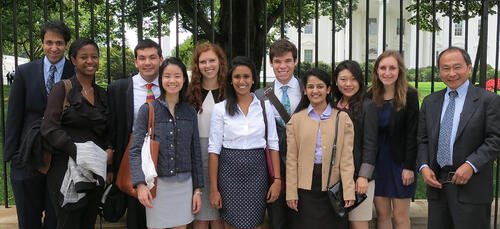
CDDRL Class of 2015 Class of 2015 in front of the White House with Francis Fukuyama.


[[{"fid":"217337","view_mode":"crop_870xauto","fields":{"format":"crop_870xauto","field_file_image_description[und][0][value]":"SHP15 Info Session Flyer","field_file_image_alt_text[und][0][value]":"","field_file_image_title_text[und][0][value]":"","field_credit[und][0][value]":"","field_caption[und][0][value]":"SHP15 Info Session Flyer","field_related_image_aspect[und][0][value]":"","thumbnails":"crop_870xauto","pp_lightbox":false,"pp_description":false},"type":"media","attributes":{"height":1056,"width":870,"class":"media-element file-crop-870xauto"}}]]

Encina Hall, C148
616 Jane Stanford Way
Stanford, CA 94305

0
Olivier Nomellini Senior Fellow at the Freeman Spogli Institute for International Studies
Director of the Ford Dorsey Master's in International Policy
Research Affiliate at The Europe Center
Professor by Courtesy, Department of Political Science
yff-2021-14290_6500x4500_square.jpg

Francis Fukuyama is the Olivier Nomellini Senior Fellow at Stanford University's Freeman Spogli Institute for International Studies (FSI), and a faculty member of FSI's Center on Democracy, Development and the Rule of Law (CDDRL). He is also Director of Stanford's Ford Dorsey Master's in International Policy, and a professor (by courtesy) of Political Science.

Dr. Fukuyama has written widely on issues in development and international politics. His 1992 book, The End of History and the Last Man, has appeared in over twenty foreign editions. His book In the Realm of the Last Man: A Memoir will be published in fall 2026.

Francis Fukuyama received his B.A. from Cornell University in classics, and his Ph.D. from Harvard in Political Science. He was a member of the Political Science Department of the RAND Corporation, and of the Policy Planning Staff of the US Department of State. From 1996-2000 he was Omer L. and Nancy Hirst Professor of Public Policy at the School of Public Policy at George Mason University, and from 2001-2010 he was Bernard L. Schwartz Professor of International Political Economy at the Paul H. Nitze School of Advanced International Studies, Johns Hopkins University. He served as a member of the President’s Council on Bioethics from 2001-2004. He is editor-in-chief of American Purpose, an online journal.

Dr. Fukuyama holds honorary doctorates from Connecticut College, Doane College, Doshisha University (Japan), Kansai University (Japan), Aarhus University (Denmark), the Pardee Rand Graduate School, and Adam Mickiewicz University (Poland). He is a non-resident fellow at the Carnegie Endowment for International Peace. He is a member of the Board of Trustees of the Rand Corporation, the Board of Trustees of Freedom House, and the Board of the Volcker Alliance. He is a fellow of the National Academy for Public Administration, a member of the American Political Science Association, and of the Council on Foreign Relations. He is married to Laura Holmgren and has three children.

(October 2025)

CV
Date Label
Honors Program Director

Encina Hall, C150
616 Jane Stanford Way
Stanford, CA 94305

0
Center Fellow, Freeman Spogli Institute for International Studies
didi_kuo_2023.jpg

Didi Kuo is a Center Fellow at the Freeman Spogli Institute for International Studies (FSI) at Stanford University. She is a scholar of comparative politics with a focus on democratization, corruption and clientelism, political parties and institutions, and political reform. She is the author of The Great Retreat: How Political Parties Should Behave and Why They Don’t (Oxford University Press) and Clientelism, Capitalism, and Democracy: the rise of programmatic politics in the United States and Britain (Cambridge University Press, 2018).

She has been at Stanford since 2013 as the manager of the Program on American Democracy in Comparative Perspective and is co-director of the Fisher Family Honors Program at CDDRL. She was an Eric and Wendy Schmidt Fellow at New America and is a non-resident fellow with the Carnegie Endowment for International Peace. She received a PhD in political science from Harvard University, an MSc in Economic and Social History from Oxford University, where she studied as a Marshall Scholar, and a BA from Emory University.

Date Label
Mentor
Subscribe to Governance