International Development

FSI researchers consider international development from a variety of angles. They analyze ideas such as how public action and good governance are cornerstones of economic prosperity in Mexico and how investments in high school education will improve China’s economy.

They are looking at novel technological interventions to improve rural livelihoods, like the development implications of solar power-generated crop growing in Northern Benin.

FSI academics also assess which political processes yield better access to public services, particularly in developing countries. With a focus on health care, researchers have studied the political incentives to embrace UNICEF’s child survival efforts and how a well-run anti-alcohol policy in Russia affected mortality rates.

FSI’s work on international development also includes training the next generation of leaders through pre- and post-doctoral fellowships as well as the Draper Hills Summer Fellows Program.

-
ZehraFKabasakalArat_Seminar

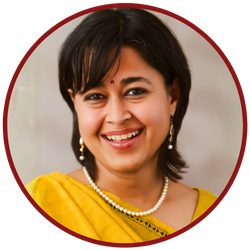
The instability of democracy, which used to be associated with developing countries, is now a global concern. Democratic principles and institutions are “backsliding” or under attack even in older, “established” democracies. In addition to trying to dismantle the institutional structure of democracy, elected authoritarian leaders and right-wing populist movements are employing discriminatory policies and rhetoric, targeting women, LGBT+ individuals, immigrants, and other marginalized groups. This seminar offers a comparative analysis of democratic decline during the Cold War and post-Cold War eras – periods characterized by class and identity politics, respectively. Noting the interconnection between human rights and democracy, it proposes a human rights theory of democracy that explains the decline of democratic systems by the gap between civil-political and social-economic rights. It highlights the pervasive influence of neo-classical and neoliberal economic paradigms as central factors driving this regression.

ABOUT THE SPEAKER

Dr. Zehra F. Kabasakal Arat studies human rights, with an emphasis on women’s rights, as well as processes of democratization, globalization, and development. She combines theoretical writings with empirical research – both qualitative and quantitative. Her publications include numerous journal articles and book chapters, as well as books: Democracy and Human Rights in Developing Countries (1991); Deconstructing Images of ‘The Turkish Woman’ (1998); Non-State Actors in the Human Rights Universe (2006); Human Rights Worldwide (2006); Human Rights in Turkey (2007, received Choice Award of Outstanding Academic Titles); The Uses and Misuses of Human Rights (2014). Her work in progress includes: human rights discourse and practices in Turkey since 1920s; women’s rights and neoliberalism; Intersectionality and Third World feminism; human rights norms; problems with tolerance as a human rights advocacy tool; the relationship between human rights scholars and NGOs; theorizing domestic politics of human rights. At UConn, she also contributes to the Human Rights program and the Women’s, Gender and Sexualities Studies.

She has served professional organizations in various capacities (e.g., Founding President, Human Rights Section of APSA, 2000-2001, and Chair, Human Rights Research Committee of IPSA, 2006-2012). Currently, she serves on the editorial boards of Human Rights Quarterly; International Feminist Journal of Politics, Journal of Human Rights, and Zeitschrift für Menschenrechte. She is also the editor of the book series “Power and Human Rights” by the Lynne Rienner Publishers. She is recognized by several awards, including the APSA Award of Distinguished Scholar in Human Rights (2010), SUNY Chancellor’s Award for Excellence in Scholarship and Creative Activities (2006), and the title of Juanita and Joseph Leff Distinguished Professor (Purchase College, 2006).

She has been engaged in human rights activism, as well, and is a founding member of the Women’s Platform for Equality (EŞİK) in Turkey.

Hesham Sallam
Hesham Sallam

Virtual to Public. If prompted for a password, use: 123456

Only those with an active Stanford ID with access to E-008 Conference Room in Encina Hall may attend in person.

Zehra F. Kabasakal Arat Professor of Political Science Presenter University of Connecticut
Seminars
News Feed Image
1.29.26_ZehraArat.png
Date Label
Authors
News Type
News
Date
Hero Image
Amichai Magen, Kathryn Stoner, and Larry Diamond
Amichai Magen, Kathryn Stoner, and Larry Diamond.
Rod Searcey
All News button
1
Subtitle

Building on a successful pilot at the Freeman Spogli Institute for International Studies, the Jan Koum Israel Studies Program will deepen understanding of Israel through new classes, collaborative research, and community engagement.

Date Label
-
Sanjeev Khagram seminar

This seminar will introduce the prototype of an innovative new AI-powered decision-making intelligence platform that forecasts country trajectories with scenario analysis, predictive analytics, hotspot detection, causal explanations through large language models, etc., for a range of outcomes central to CDDRL and FSI's missions — effective governance, human security, and sustainable development. The initial use case is for political resilience and its inverse, fragility, conflict, and violence.

ABOUT THE SPEAKER

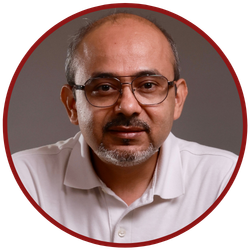
Dr. Sanjeev Khagram is a world-renowned leader, entrepreneur, scholar, and professor across the academic, private, public, and civic sectors. His specialities include global leadership and management across sectors, entrepreneurship and innovation, the data revolution and 4th Industrial Revolution — including AI, sustainable development and human security, good governance and accountability, globalization and transnationalism, public-private partnerships and multi-stakeholder networks. Dr. Khagram holds all of his transdisciplinary bachelor's, master's, and doctoral degrees from Stanford University. He has lived and worked for extended periods in Australia, Brazil, China, Kenya, India, Indonesia, Mexico, Nigeria, the GCC, Germany, South Africa, Thailand, and the United Kingdom.

Dr. Sanjeev Khagram is currently a Visiting Scholar at Stanford University’s Center for Democracy, Development and the Rule of Law and Department of Management Science and Engineering.  He is also a Distinguished Visiting Fellow with the Hoover Institution's Emerging Markets Working Group, where he leads the Global Reslience Intelligence Platform Partnership (GRIPP), and at the Center for Sustainable Development and Global Competitiveness, where he leads the AI and Sustainability Initiative at Stanford.

Khagram was most recently CEO, Director-General, and Dean of the Thunderbird School of Global Management, 2018-2024, which he took to #1 in International Trade with QS World University Rankings. He is on leave from his position as Foundation Professor of Global Leadership and Global Futures at the Thunderbird School of Global Management, Arizona State University.  Previously, he was the inaugural Young Professor of Global Political Economy at Occidental College, Wyss Scholar at the Harvard Business School, Founding Director of the Lindenberg Center for International Development, Professor at the University of Washington, and Associate Professor at Harvard’s Kennedy School of Government.

Dr. Khagram is an award-winning scholar and teacher. Dr. Khagram has published widely including the award winning book Dams and Development with Cornell University Press; Restructuring World Politics with University of Minnesota Press; The Transnational Studies Reader with Routledge Press; Open Budgets: The Political Economy of Transparency, Participation and Accountability with Brookings Press; "Inequality and Corruption" in the American Journal of Sociology; "Future Architectures of Global Governance" in Global Governance, "Environment and Security" in the Annual Review of Environment and Resources, “Towards a Platinum Standard for Evidence-Based Assessment,” in Public Administration Review, “Social Balance Sheets” in Harvard Business Review, “Evidence for Development Effectiveness” in the Journal of Development Effectiveness, and “From Human Security and the Environment to Sustainable Security and Development,” in the Journal of Human Development.

Dr. Khagram has worked extensively in global leadership roles across international organizations, government, business, and civil society from the local to the international levels around the world. Dr. Khagram has established and led a range of global multi-stakeholder initiatives over the last three decades, including the Global Carbon Removal Partnership, Global Partnership for Sustainable Development Data, the Global Initiative for Fiscal Transparency, and the World Commission on Dams, authoring its widely acclaimed final report.  

Dr. Khagram was selected as a Young Global Leader at the World Economic Forum, was a senior advisor to United Nations Secretary General Ban Ki-Moon, Dean of the Desmond Tutu Peace Centre, and Founder/CEO of Innovations for Scaling Impact – a global technology enterprise solutions network. He is currently Chair of the Board of United Platform Solutions (an African AI-IOT Pollution Monitoring Venture) and Vice Chair of Altos Bank (the first new bank in Silicon Valley since 2008).

Dr. Khagram was born in Uganda as a fourth-generation East African Indian.  He and his family were expelled by Idi Amin and spent several years in refugee camps before being provided asylum in the United States in the 1970s.  He has lived and worked across all regions of the world and travelled to over 140 countries.

Kathryn Stoner
Kathryn Stoner

Virtual to Public. If prompted for a password, use: 123456
Only those with an active Stanford ID with access to Philippines Conference Room in Encina Hall may attend in person.

0
CDDRL Visiting Scholar, 2025-26
CISAC Visiting Scholar, 2024-25
dr.sanjeevkhagramphoto.jpg

Dr. Sanjeev Khagram is a world-renowned leader, entrepreneur, scholar, and professor across the academic, private, public, and civic sectors. His specialities include global leadership and management across sectors, entrepreneurship and innovation, the data revolution and 4th Industrial Revolution — including AI, sustainable development and human security, good governance and accountability, globalization and transnationalism, public-private partnerships and multi-stakeholder networks. Dr. Khagram holds all of his transdisciplinary bachelor's, master's, and doctoral degrees from Stanford University. He has lived and worked for extended periods in Australia, Brazil, China, Kenya, India, Indonesia, Mexico, Nigeria, the GCC, Germany, South Africa, Thailand, and the United Kingdom.

Dr. Sanjeev Khagram is currently a Visiting Scholar at Stanford University’s Center for Democracy, Development and the Rule of Law and Department of Management Science and Engineering.  He is also a Distinguished Visiting Fellow with the Hoover Institution's Emerging Markets Working Group, where he leads the Global Reslience Intelligence Platform Partnership (GRIPP), and at the Center for Sustainable Development and Global Competitiveness, where he leads the AI and Sustainability Initiative at Stanford.

Khagram was most recently CEO, Director-General, and Dean of the Thunderbird School of Global Management, 2018-2024, which he took to #1 in International Trade with QS World University Rankings. He is on leave from his position as Foundation Professor of Global Leadership and Global Futures at the Thunderbird School of Global Management, Arizona State University.  Previously, he was the inaugural Young Professor of Global Political Economy at Occidental College, Wyss Scholar at the Harvard Business School, Founding Director of the Lindenberg Center for International Development, Professor at the University of Washington, and Associate Professor at Harvard’s Kennedy School of Government.

Dr. Khagram is an award-winning scholar and teacher. Dr. Khagram has published widely including the award winning book Dams and Development with Cornell University Press; Restructuring World Politics with University of Minnesota Press; The Transnational Studies Reader with Routledge Press; Open Budgets: The Political Economy of Transparency, Participation and Accountability with Brookings Press; "Inequality and Corruption" in the American Journal of Sociology; "Future Architectures of Global Governance" in Global Governance, "Environment and Security" in the Annual Review of Environment and Resources, “Towards a Platinum Standard for Evidence-Based Assessment,” in Public Administration Review, “Social Balance Sheets” in Harvard Business Review, “Evidence for Development Effectiveness” in the Journal of Development Effectiveness, and “From Human Security and the Environment to Sustainable Security and Development,” in the Journal of Human Development.

Dr. Khagram has worked extensively in global leadership roles across international organizations, government, business, and civil society from the local to the international levels around the world. Dr. Khagram has established and led a range of global multi-stakeholder initiatives over the last three decades, including the Global Carbon Removal Partnership, Global Partnership for Sustainable Development Data, the Global Initiative for Fiscal Transparency, and the World Commission on Dams, authoring its widely acclaimed final report.  

Dr. Khagram was selected as a Young Global Leader at the World Economic Forum, was a senior advisor to United Nations Secretary General Ban Ki-Moon, Dean of the Desmond Tutu Peace Centre, and Founder/CEO of Innovations for Scaling Impact – a global technology enterprise solutions network. He is currently Chair of the Board of United Platform Solutions (an African AI-IOT Pollution Monitoring Venture) and Vice Chair of Altos Bank (the first new bank in Silicon Valley since 2008).

Dr. Khagram was born in Uganda as a fourth-generation East African Indian.  He and his family were expelled by Idi Amin and spent several years in refugee camps before being provided asylum in the United States in the 1970s.  He has lived and worked across all regions of the world and travelled to over 140 countries.

Date Label
Sanjeev Khagram CDDRL Visiting Scholar FSI
Seminars
Date Label
Authors
Nora Sulots
News Type
News
Date
Paragraphs

The Fisher Family Summer Fellows on Democracy and Development Program at Stanford University's Center on Democracy, Development and the Rule of Law is now accepting applications for our summer 2026 program. The deadline to apply is 11:59 pm PST on Thursday, January 15, 2026.

The program brings together an annual cohort of approximately 30 mid-career practitioners from countries in political transition who are working to advance democratic practices and enact economic and legal reform to promote human development. Launched by CDDRL in 2005, the program was previously known as the Draper Hills Summer Fellows Program. The new name reflects an endowment gift from the Fisher family — Sakurako (Sako), ‘82, and William (Bill), MBA ‘84 — that secures the future of this important and impactful program.

From Afghanistan to Zimbabwe, our program participants are selected from among hundreds of applicants every year for the significant contributions they have already made to their societies and their potential to make an even greater impact with some help from Stanford. We aim to give them the opportunity to join a global network of over 500 alumni from 97 countries who have all faced similar sets of challenges in bringing change to their countries.

The Fisher Family Summer Fellows Program provides an intensive 3-week on-campus forum for civil society leaders to exchange experiences and receive academic and policy training to enrich their knowledge and advance their work. Delivered by a leading Stanford faculty team composed of Michael McFaul, Kathryn Stoner, Francis Fukuyama, Larry Diamond, Erik Jensen, and more, the program allows emerging and established global leaders to explore new institutional models and frameworks to enhance their ability to promote good governance, accountable politics, and find new ways to achieve economic development in their home countries.

Prospective fellows from Ukraine are also invited to apply for our Strengthening Ukrainian Democracy and Development (SU-DD) Program, which runs concurrently with the Fisher Family Summer Fellows Program. The SU-DD program provides a unique opportunity for mid-career practitioners working on well-defined projects aimed at strengthening Ukrainian democracy, enhancing human development, and promoting good governance. Applicants to the SU-DD program will use the Fisher Family Summer Fellows Program application portal to apply and indicate their interest there. You will then be directed to a series of supplemental questions specific to the SU-DD program, including requiring a detailed description of your proposed project.

Read More

2025 Fisher Family Summer Fellows
News

Spotlight on the 2025 Summer Fellows

The Fellow Spotlight Series is an inspiring and moving series of "TED"-style talks given by each of our 2025 Fisher Family Summer Fellows to share their backstories and discuss their work.
Spotlight on the 2025 Summer Fellows
2025 Strengthening Ukrainian Democracy and Development fellows
News

Ukrainian Leaders Advance Postwar Recovery Through Stanford Fellowship

Meet the four fellows participating in CDDRL’s Strengthening Democracy and Development Program and learn how they are forging solutions to help Ukraine rise stronger from the challenges of war.
Ukrainian Leaders Advance Postwar Recovery Through Stanford Fellowship
FFSF Class of 2025 with 20th Anniversary logo
News

Announcing the 20th Anniversary Cohort of the Fisher Family Summer Fellows on Democracy and Development Program

In July 2025, the Center on Democracy, Development and the Rule of Law will welcome a diverse cohort of 27 experienced practitioners from 18 countries who are working to advance democratic practices and economic and legal reform in contexts where freedom, human development, and good governance are fragile or at risk.
Announcing the 20th Anniversary Cohort of the Fisher Family Summer Fellows on Democracy and Development Program
Hero Image
2025 Summer Fellows role play during a case study session Chloe Davis
All News button
1
Subtitle

The program will run from Sunday, July 19, to Friday, August 7, 2026. Applications are due by 11:59 pm PST on Thursday, January 15, 2026.

Date Label
Authors
Nora Sulots
News Type
News
Date
Paragraphs

The Center on Democracy, Development and the Rule of Law is pleased to invite applications from pre-doctoral students at the write-up stage and from post-doctoral scholars working in any of the four program areas of democracy, development, evaluating the efficacy of democracy promotion, and rule of law. The application cycle for the 2026-2027 academic year will be open from Monday, September 22, 2025, through Thursday, December 4, 2025.

Our goal is to provide an intellectually dynamic environment that fosters lively exchange among Center members and helps everyone to do excellent scholarship. Fellows will spend the academic year at Stanford University focusing on research and data analysis as they work to finalize and publish their dissertation research while connecting with resident faculty and research staff at CDDRL.

Pre-doctoral fellows must be enrolled currently in a doctoral program or equivalent through the time of intended residency at Stanford and must be at the dissertation write-up (post course work) phase of their doctoral program. Post-doctoral fellows must have earned their Ph.D. within 3 years of the start of the fellowship, or plan to have successfully defended their Ph.D. dissertations by July 31, 2026.

In addition to our regular call for applications, CDDRL invites applications for the Gerhard Casper Fellow in Rule of Law for 2026-27. We welcome research on any aspect of rule of law, including judicial politics, criminal justice, and the politicization of judicial institutions. We are an interdisciplinary center; candidates from any relevant field (i.e. the social sciences, law) are welcome to apply. The Gerhard Casper Fellow will be part of CDDRL’s larger cohort of pre- and postdoctoral fellows. Please apply through the CDDRL fellowship application process and indicate that you would like to be considered for the Gerhard Casper Rule of Law Fellowship.

Hero Image
Ivetta Sergeeva presents during the 2024 Global Development Postdoctoral Fellows Conference
Ivetta Sergeeva presents during the 2024 Global Development Postdoctoral Fellows Conference.
All News button
1
Subtitle

The Center on Democracy, Development and the Rule of Law welcomes applications from pre-doctoral students at the write-up stage and from post-doctoral scholars working in any of the four program areas of democracy, development, evaluating the efficacy of democracy promotion, and rule of law.

Date Label
Paragraphs

We conduct an interactive online experiment framed as an employment contract. Subjects from the US, India, and Africa are matched within and across countries. Employers make a one-period offer to a worker who can either decline or choose a high or low effort. The offer is restricted to be from a variable set of possible contracts. High effort is always efficient. Some observed choices are well predicted by self-interest, but others are better explained by conditional reciprocity or intrinsic motivation. Subjects from India and Africa follow intrinsic motivation and provide high effort more often. US subjects are more likely to follow self-interest and reach a less efficient outcome on average, but workers earn slightly more. We find no evidence of stereotypes across countries. Individual characteristics and stated attitudes toward worker incentives do not predict the behavioral differences observed between countries, consistent with cultural differences in the response to labor incentives.

All Publications button
1
Publication Type
Journal Articles
Publication Date
Journal Publisher
Games and Economic Behavior
Authors
Marcel Fafchamps
Number
December 2025, Pages 175-199
-
10.30_OrenSamet

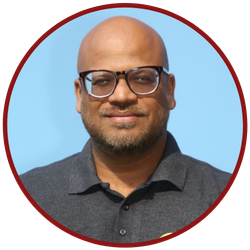
When, how, and to what ends do opposition parties look beyond their borders for support? In authoritarian and hybrid regimes, oppositions face formidable obstacles to winning power and ensuring fair elections. International engagement can provide resources to help overcome these barriers, but it also carries risks, from repression to charges of “foreign interference.” In his book project, Samet develops the concept of opposition diplomacy: efforts by opposition politicians to encourage international pressure on regimes through lobbying, international networks, and diaspora allies. Drawing on cross-national data and interviews across Southeast Asia, Europe, and the United States, he shows that oppositions often turn abroad when domestic pathways are blocked, and that such strategies can shape foreign policy decisions like sanctions. Yet these dynamics frequently concentrate international pressure on the most entrenched regimes, unintentionally limiting prospects for reform. The project highlights both the global influence of opposition actors and the limits of democracy promotion.

ABOUT THE SPEAKER

Oren Samet is the Einstein-Moos Postdoctoral Fellow at Stanford’s Center on Democracy, Development and the Rule of Law. His research examines the international dimensions of authoritarian politics and democratization, with a focus on opposition politics and a regional emphasis on Southeast Asia. His work explores opposition competition in authoritarian elections, processes of autocratization, and the challenges of democracy promotion and governance aid. His academic research has appeared in the American Journal of Political Science, Comparative Political Studies, and Political Communication, and he has also written for Foreign Policy, Slate, and World Politics Review. Before academia, he was based in Bangkok, Thailand, as Research and Advocacy Director of ASEAN Parliamentarians for Human Rights, working with politicians and civil society across Southeast Asia. He also served as a Junior Fellow in the Democracy and Rule of Law Program at the Carnegie Endowment for International Peace. He holds a Ph.D. in Political Science from the University of California, Berkeley, and a B.A. from Princeton University’s School of Public and International Affairs. He will join Rice University as an Assistant Professor of Political Science in 2026.

Virtual to Public. Only those with an active Stanford ID with access to Room E-008 in Encina Hall may attend in person.

Hesham Sallam
Hesham Sallam

Virtual to Public. If prompted for a password, use: 123456
Only those with an active Stanford ID with access to E-008 Conference Room in Encina Hall may attend in person.

Encina Hall, E106
616 Jane Stanford Way
Stanford, CA 94305-6055

0
Einstein-Moos Postdoctoral Fellow, 2025-26
oren_samet.jpg

Oren Samet is the Einstein Moos Postdoctoral Fellow at Stanford’s Center on Democracy, Development and the Rule of Law (2025-26) and will be an Assistant Professor of Political Science at Rice University beginning in 2026.

His research centers on the international dimensions of authoritarian politics and democratization, with a particular emphasis on opposition politics and a regional focus on Southeast Asia. His book project examines the success and strategies of opposition parties, focusing on the international activities of these actors in authoritarian contexts. Other work focuses on opposition competition in authoritarian elections, processes of autocratization, and contemporary challenges of international democracy promotion and governance aid. His academic work has been published in the American Journal of Political Science, Comparative Political Studies, and Political Communication, and his other writing has been published in outlets including Foreign Policy, Slate, and World Politics Review.

Before entering academia, Oren was based in Bangkok, Thailand, where he served as the Research and Advocacy Director of ASEAN Parliamentarians for Human Rights, working with politicians and civil society leaders across Southeast Asia. He previously worked as a Junior Fellow in the Democracy and Rule of Law Program at the Carnegie Endowment for International Peace. He holds a Ph.D. in Political Science from the University of California, Berkeley, and a B.A. from Princeton University’s School of Public and International Affairs.

Date Label
Oren Samet Postdoctoral Fellow Presenter CDDRL
Seminars
Date Label
-
Saumitra Jha seminar 10/9/25

Climate change is among the most contentious issues of the 21st century. Without a shared understanding of its consequences, securing support for climate policies remains difficult. We hypothesize that exposure to tailored opportunities to trade in financial markets, particularly in energy stocks that are central to the green transition, can induce experiential learning and greater policy support for climate mitigation efforts. We test our hypothesis using a randomized controlled trial. We find that randomly assigned exposure to trade in green and brown energy stocks leads treated individuals to express stronger agreement with the view that climate change is driven by human activity, that it will affect quality of life in the U.S., and that the U.S. government and U.S. companies should do more to reduce emissions. Treated respondents also exhibit a greater tendency to donate to climate causes and factor climate change into personal decisions regarding where to live, work, and invest. These attitudinal changes are particularly pronounced among individuals identifying as Republicans, who are more likely to be skeptical of climate change at baseline. In line with our primary theoretical argument, our findings suggest exposure to financial markets incentivizes learning, which in turn shapes climate-related beliefs, preferences, and behaviors.

ABOUT THE SPEAKER

Saumitra Jha is an associate professor of political economy at Stanford’s Graduate School of Business, and a professor of economics and of political science by courtesy. He is also a senior fellow at the Center for Democracy, Development and Rule of Law, in the Freeman-Spogli Institute, and at the Stanford Institute for Economic Policy Research.

Prior to joining the GSB, Saumitra was an Academy Scholar at Harvard University. He has been a fellow of the Niehaus Center for Globalization and Governance and the Center for the Study of Democratic Politics at Princeton University. He received the Michael Wallerstein Award for best published article in political economy from the American Political Science Association for his research on ethnic tolerance. Saumitra has consulted on economic and political risk issues for the United Nations/ WTO and the World Bank. He holds a BA from Williams College, master’s degrees in economics and mathematics from the University of Cambridge, and a PhD in economics from Stanford University.

Virtual to Public. Only those with an active Stanford ID with access to the William J. Perry Conference Room in Encina Hall may attend in person.

Hesham Sallam
Hesham Sallam

Virtual to Public. If prompted for a password, use: 123456
Only those with an active Stanford ID with access to the William J. Perry Conference Room may attend in person.

Graduate School of Business 655 Knight Way Stanford, CA 94305
(650) 721 1298
0
Associate Professor of Political Economy, GSB
Associate Professor, by courtesy, of Economics and of Political Science
saumitra_jha.jpg

Along with being a Senior Fellow at the Freeman Spogli Institute for International Studies, Saumitra Jha is an associate professor of political economy at the Stanford Graduate School of Business, and convenes the Stanford Conflict and Polarization Lab. 

Jha’s research has been published in leading journals in economics and political science, including Econometrica, the Quarterly Journal of Economics, the American Political Science Review and the Journal of Development Economics, and he serves on a number of editorial boards. His research on ethnic tolerance has been recognized with the Michael Wallerstein Award for best published article in Political Economy from the American Political Science Association in 2014 and his co-authored research on heroes with the Oliver Williamson Award for best paper by the Society for Institutional and Organizational Economics in 2020. Jha was honored to receive the Teacher of the Year Award, voted by the students of the Stanford MSx Program in 2020.

Saum holds a BA from Williams College, master’s degrees in economics and mathematics from the University of Cambridge, and a PhD in economics from Stanford University. Prior to rejoining Stanford as a faculty member, he was an Academy Scholar at Harvard University. He has been a fellow of the Niehaus Center for Globalization and Governance and the Center for the Study of Democratic Politics at Princeton University, and at the Center for Advanced Study in the Behavioral Sciences at Stanford. Jha has consulted on economic and political risk issues for the United Nations/WTO, the World Bank, government agencies, and for private firms.


Senior Fellow at the Freeman Spogli Institute for International Studies
Dan C. Chung Faculty Scholar at the Freeman Spogli Institute for International Studies
Senior Fellow at the Stanford Institute for Economic Policy Research
Date Label
Saumitra Jha Senior Fellow Presenter FSI
Seminars
Date Label
-
Maria Nagawa seminar 10/2/25

Although much work examines foreign aid’s impact on development outcomes, its effect on bureaucracies — institutions that are key to development and profoundly influenced by aid interventions—remains understudied. I argue that project-based aid alters financial and social aspects of work over which bureaucrats hold salient preferences, generating tradeoffs that drive bureaucrats to redirect effort from routine functions toward donor-funded initiatives. Drawing on interviews, surveys, and survey experiments with more than 600 Ugandan bureaucrats, I find that, despite preferring government funding and autonomy, bureaucrats are drawn to better-paid aid projects, thus diverting effort away from regular duties. They also prefer departments with substantial donor funding, although it undermines the equity and teamwork they value. These findings reveal why aid can weaken bureaucracies: the same incentives that boost performance on donor projects divert effort from government programming and erode the organizational cohesion needed for lasting bureaucratic capacity.

ABOUT THE SPEAKER

Maria Nagawa is a Postdoctoral Scholar at the Center on Democracy, Development and the Rule of Law at Stanford University. Maria earned her PhD in Public Policy and Political Science from Duke University and was previously a Postdoctoral Fellow at the Niehaus Center for Globalization and Governance at Princeton University. Maria studies state building and development in the Global South, with a substantive focus on the consequences of foreign interventions, the resilience of civil society, and the organization of state authority. Her book project investigates how foreign aid reshapes bureaucracies in developing countries. Prior to starting her PhD, Maria was a Research Associate at the Economic Policy Research Centre and a Lecturer at Makerere University Business School in Kampala, Uganda. In addition, Maria was a Visiting Researcher at the BRICS Policy Research Center in Rio de Janeiro, Brazil and a Visiting Scholar at the University of Colorado’s School of Public Affairs in Denver, Colorado.

Virtual to Public. Only those with an active Stanford ID with access to Conference Room E-008 in Encina Hall may attend in person.

Hesham Sallam
Hesham Sallam

Virtual to Public. If prompted for a password, use: 123456
Only those with an active Stanford ID with access to Conference Room E-008 in Encina Hall may attend in person.

Encina Hall, E105
616 Jane Stanford Way
Stanford, CA 94305-6055

0
CDDRL Postdoctoral Fellow, 2025-26
marianagawa_photo_-_maria_nagawa.jpeg

Maria Nagawa is a Postdoctoral Fellow at the Center on Democracy, Development and the Rule of Law (CDDRL) at Stanford University. She studies governance and development in the Global South with a particular focus on aid and bureaucracy. She employs mixed methods and a range of data sources, including survey, experimental, interview, and administrative data.  

In her book project, she examines how international aid affects the performance of bureaucrats in aid recipient countries. Her work shows how, in incentivizing select bureaucrats to work on aid projects, aid diverts bureaucrats from routine government programming and erodes organizational cohesion. This work draws on months of fieldwork in Uganda, including interviews with diverse actors in the public and aid sectors and a survey of bureaucrats in Uganda's central government.

Prior to starting her fellowship at CDDRL, Maria was a postdoctoral fellow at the Niehaus Center for Globalization and Governance at Princeton University. She has worked in both the private and public sectors and received her PhD in Public Policy and Political Science from Duke University in 2024.

Date Label
Maria Nagawa Postdoctoral Fellow Presenter CDDRL
Seminars
Date Label
-
Claire Adida seminar 9/25/25

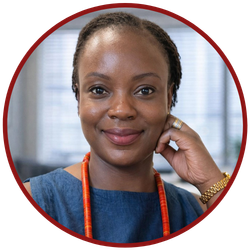
Women’s political participation remains persistently lower than men’s worldwide. This study evaluates whether a group-based training intervention can enhance women’s engagement in local governance. In a randomized controlled trial across 300 communities in southwest Nigeria, we recruited 3,900 politically unaffiliated women into newly formed women’s action committees (WACs). Control WACs received basic civic education, while treatment WACs received additional training aimed at strengthening women’s collective efficacy. Leveraging baseline and endline surveys, as well as behavioral data from a community grant competition, we find that the intervention significantly increased both the level and quality of women’s political participation. It also improved women’s perceptions of community leaders’ responsiveness. Such gains appear to be driven by increased perceptions of individual and collective agency. These findings underscore the potential of addressing both psychological and structural barriers to advance women’s political engagement.

ABOUT THE SPEAKER

Claire Adida is a Senior Fellow at FSI (CDDRL), Professor (by courtesy) of Political Science, and faculty co-director at the Immigration Policy Lab at Stanford University. She is also a faculty affiliate with the Center for Effective Global Action (CEGA), the Evidence in Governance and Politics (EGAP) group, the Policy Design and Evaluation Lab (PDEL), and the Future of Democracy Initiative at the UC Institute on Global Conflict and Cooperation (IGCC). She is an invited researcher with J-PAL’s Humanitarian Protection and Displaced Livelihoods Initiatives and an international advisory board member with CFREF’s Bridging Divides research program.

Virtual to Public. Only those with an active Stanford ID with access to the Philippines Conference Room in Encina Hall may attend in person.

Hesham Sallam
Hesham Sallam

Virtual to Public. If prompted for a password, use: 123456
Only those with an active Stanford ID with access to the Philippines Conference Room in Encina Hall may attend in person.

Encina Hall
616 Jane Stanford Way
Stanford, CA 94305-6055

0
Senior Fellow, Freeman Spogli Institute for International Studies
Professor (by courtesy) of Political Science
claire_adida_12_of_22_-_claire_leslie_adida.jpg

Claire Adida is Senior Fellow at FSI (CDDRL), Professor (by courtesy) of Political Science, and faculty co-director at the Immigration Policy Lab at Stanford University. She is also a faculty affiliate with the Center for Effective Global Action (CEGA), the Evidence in Governance and Politics (EGAP) group, the Policy Design and Evaluation Lab (PDEL), and the Future of Democracy Initiative at the UC Institute on Global Conflict and Cooperation (IGCC). She is an invited researcher with J-PAL’s Humanitarian Protection and Displaced Livelihoods Initiatives and an international advisory board member with CFREF’s Bridging Divides research program.

Adida uses quantitative and field methods to investigate how countries manage new and existing forms of diversity, what exacerbates or alleviates outgroup prejudice and discrimination, and how vulnerable groups navigate discriminatory environments. She has published two books on immigrant integration and exclusion: Immigrant exclusion and insecurity in Africa; Coethnic strangers (Cambridge University Press, 2014); and Why Muslim integration fails in Christian-heritage societies (with David Laitin and Marie-Anne Valfort, Harvard University Press, 2016). Her articles are published in the American Political Science Review, Science Advances, the Proceedings of the National Academy of Sciences, the Quarterly Journal of Political Science, Comparative Political Studies, the Journal of Population Economics, the Journal of Experimental Political Science, and Political Science Research & Methods, among others.

Prior to joining Stanford, she was Assistant Professor (2010-2016), Associate Professor (2016-2022), and Professor of Political Science at UC San Diego, where she also served as the co-Director and Director of the Center for Comparative Immigration Studies (2018-2024). In 2021-2022, she served as Research Advisor to the Director of the Office of Refugee Resettlement in the U.S. Government’s Department of Health & Human Services. She received her Ph.D. in political science from Stanford University in 2010, her Master's in International Affairs from Columbia University’s School of International and Public Affairs (2003), and her Bachelor's in political science and communication studies from Northwestern University (2000).

CDDRL Visiting Scholar, Summer 2016
CDDRL Hewlett Fellow, 2008-09
CV
Date Label
Claire Adida Senior Fellow FSI
Seminars
Date Label
Subscribe to International Development