CDDRL Research in-brief
Authors
News Type
News
Date
Paragraphs

Motivation and Summary


Modern states depend upon bureaucracies effectively delivering services and enforcing regulations, from public health to environmental protection and postal services. When bureaucracies are plagued by inefficiency and incapacity and are unable to “deliver the goods,” elected representatives suffer. This can open the door for citizens to throw their support behind authoritarian leaders who promise to deliver more effectively.

A central question of bureaucratic design concerns the degree of autonomy that ‘principals’ — political actors like legislators — should delegate to bureaucratic ‘agents.’ Calibrating autonomy is crucial because principals cannot perfectly monitor or control agents, whose preferences often diverge from their own. On the one hand, highly autonomous bureaucrats may become unaccountable to their principals. Think of national security agencies that create secretive dissident watchlists or even authorize assassinations. On the other hand, bureaucracies with little autonomy will find their decision-making hamstrung by “red tape.” If public health agencies required extensive legislative approval for every aspect of vaccine delivery, infection rates would skyrocket. How, then, can bureaucracies be designed to achieve their goals, creatively respond to new problems, and minimize corruption, all while being perceived as legitimate?

In “Calibrating autonomy,” Katherine Bersch and Francis Fukuyama disaggregate the concept of autonomy into two facets (independence and discretion), present hypotheses concerning how each facet relates to capacity and quality, and then test these hypotheses, primarily using survey data from Brazilian bureaucrats. Their findings caution against overly blunt efforts to calibrate autonomy across multiple bureaucracies, suggesting instead that policymakers should understand a given agency’s capacity to perform.

Argument and Hypotheses


The article builds on earlier research by co-author Francis Fukuyama, who in 2013 hypothesized a key moderating role for bureaucratic capacity in the relationship between autonomy and quality. Briefly, low-capacity agencies — lacking expertise and resources — will likely struggle to utilize their autonomy and deliver, whereas high-capacity bureaucracies will deliver effectively for opposite reasons. However, autonomy is itself a complex concept that ought to be disentangled before one can begin to spell out how it is linked to delivery.

Independence, the first “face” of autonomy, concerns the degree to which bureaucrats are constrained by actors who are close to politics, such as elected leaders or politically-appointed agency heads. More independent bureaucrats might allocate waste management contracts on the basis of cost-effectiveness or service quality records. Less independent bureaucrats might allocate according to the whims of politicians who wish to reward their allies. The degree of independence is oftentimes a function of the number and extent of political appointees in a given agency. 

The second face of autonomy is discretion, or rather, the extent to which agencies are constrained by laws, rules, or protocols. Waste management agencies with limited discretion may struggle to respond to sporadic garbage pile-ups, whereas those with high discretion may set unpredictable collection schedules. 

These two faces of autonomy lead to different expectations about how they are connected to quality. The authors hypothesize that independence and quality stand in a linear and positive relationship: agencies that are more unconstrained by political actors will deliver more effectively. By contrast, discretion and quality stand in a non-linear or “Goldilocks” relationship: too few and too many constraining rules will reduce quality. Following Fukuyama’s earlier research, capacity moderates these relationships; for example, less independence in specifically low-capacity agencies may strengthen quality, perhaps in cases where legislative actors are able to appoint highly qualified experts.

Methods and Findings


The authors select Brazil as their case, in part because it exhibits considerable internal variation in bureaucratic quality: some agencies are professional while others are incompetent. By focusing on one country, they avoid comparing fundamentally different national bureaucratic contexts. Further, selecting Brazil — with both strong and weak bureaucracies — reduces ‘selection biases,’ i.e., mistaking characteristics of only high- or low-quality agencies as causes of overall performance. From a global standpoint, Brazilian bureaucracies are solidly middle-ranged, neither outstanding nor abysmal. 

The main empirical part of the paper involves a 2018 survey of over 3200 Brazilian federal bureaucrats. About 60% of the respondents are political appointees and 40% are civil servants, which enables looking at bureaucrats who stand in different relationships to political actors. The authors exclude military personnel, teachers, nurses, and local police officers.

As hypothesized, respondents’ perceptions of agency independence increase their perceptions of quality in a linear way. This finding likely reflects Brazil’s coalitional style of government: politicians benefit electorally from strong government performance; without bureaucratic independence, political pressure and influence from the many coalition partners would likely hinder bureaucrats and weaken performance. Meanwhile, perceptions of discretion align with the authors’ non-linear expectations.


Image
Figure 3: (a) Impact of independence on quality at varying levels of capacity. (b) Impact of discretion on quality at varying levels of capacity.


Figure 3: (a) Impact of independence on quality at varying levels of capacity. (b) Impact of discretion on quality at varying levels of capacity.


These findings are mediated by capacity, which the authors measure in terms of resources, career length, salaries, and the proportion of agents in core or expert careers. The findings hold even when controlling for political factors like party membership or appointment type (political vs. civil servant), individual characteristics such as gender or years of service, and agency differences, including budget or size. These controls are based on administrative data from over 326,000 bureaucrats across Brazil’s 95 most important federal agencies.


Image
FIgure 4: Quality at varying levels of capacity.


Figure 4: Quality at varying levels of capacity.


Contributions and Implications

“Calibrating autonomy” makes important conceptual and empirical contributions to our understanding of bureaucratic performance. By disaggregating the concept of autonomy into independence and discretion, it helps make sense of seemingly contradictory empirical findings, namely that both minimally and highly autonomous bureaucracies perform well. And by evaluating their hypotheses about the two faces of autonomy using Brazilian data, the authors guard against selection biases or problems from comparing countries with quite different bureaucratic landscapes.

The paper serves as a caution against overly simplistic or blunt “solutions” to poor bureaucratic performance. Merely limiting discretion or increasing legislative oversight can make matters worse if the relevant bureaucratic culture is not properly understood, especially when it comes to capacity.

*Research-in-Brief prepared by Adam Fefer.

Hero Image
National Congress of Brazil (Congresso Nacional) in Brasília
National Congress of Brazil (Congresso Nacional).
Gabriel Tiveron
All News button
1
Subtitle

CDDRL Research-in-Brief [4-minute read]

Date Label
Authors
News Type
News
Date
Paragraphs

Motivation & Summary


Social, political, and religious polarization has steadily grown in many longstanding democracies. Some elected representatives and voters have come to view their opponents as illegitimate participants in politics who pose an existential threat to the nation-state; this justifies ignoring or violating democratic norms and procedures to prevent them from gaining power. As polarization increases, voters may prefer to support authoritarian parties that are viewed as better expressing their group identities, as opposed to democratic parties seen as hostile to those identities.

Trust lies at the root of these processes: polarized individuals tend to believe that those who differ from them will not act from a place of goodwill and will lack the incentive to promote their interests. Revitalizing democracy would thus seem to require revitalizing trust. Yet one’s sense of trust is often shaped by factors that are difficult to change, such as childhood socialization. How, then, can trust be increased?

In “Financial market exposure increases generalized trust,” Saumitra Jha, Moses Shayo, and Chagai M. Weiss provide evidence from an experiment conducted among Israelis in 2015. The authors find that individuals who participated in the stock market were more likely to agree with the statement that “most people can be trusted.”

Their argument builds on the intuition that stock markets are fundamentally about trust: investors take a risk by placing their assets in the hands of unfamiliar people who nonetheless have an incentive to promote their interests. As these assets grow, participants ought to become more trusting, not only of financial markets but also of people more generally. Surprisingly, the authors find that even those whose assets did not grow became more trusting. Another surprise is that the increases in trust were higher for Israelis on the political left and right. In other words, polarized voters — those who especially struggle to trust others — exhibited greater increases in trust than centrists.

Prior Research


Social scientists have analyzed trust as both a cause and a consequence. Much of this research concerns the economy, as transactions, contracts, and negotiations all require the belief that other parties will honor their commitments. Higher levels of trust may be a cause of higher economic growth. Conversely, consumers tend to distrust firms that are subject to scandals, leading the corresponding value of those stocks to decrease.

Apart from the economy, trust is also a central aspect of ‘social capital,’ which consists of the resources gained from one’s social networks. Trust can also promote good governance by enabling collective action and by providing legitimacy to political institutions. And as Americans and others learned during the COVID-19 pandemic, trust is central to public health compliance.

Survey research has identified a persistent trust deficit; less than a quarter of respondents to the World Values Survey agree with the statement that “most people can be trusted.” This deficit has many root causes. At the personal and psychological level, one’s sense of trust likely develops in childhood. Meanwhile, people who have experienced trauma or discrimination are less likely to trust others. Whether or not two people are from the same country or the same ethnic or religious group also affects their sense of trust. Those whose ancestors were victims of the African slave trade centuries ago exhibit lower levels of trust today. People in economically unequal societies are also less likely to trust each other. All of this suggests that improving trust is very difficult, especially in polarized societies.


Image
Fig. 1. Generalized trust around the world. (a) Geographic Distribution of Generalized Trust

Fig. 1. Generalized trust around the world. (a) Geographic Distribution of Generalized Trust. This figure reports cross-national patterns of generalized trust from the World Values Survey (Wave 7). For each country, we report the share of respondents who state that most people can be trusted. Since Israel is not included in the most recent wave of the World Value Survey, the figure shows generalized trust data from the 2004 World Value Survey.


The Experiment


Studying whether stock market participation affects trust is difficult because participation is itself correlated with pre-existing levels of trust, as well as with other relevant factors like gender or personality traits (such as excitability). The authors’ experimental methodology seeks to overcome this by randomly allocating a large number of participants (over 1300) into treatment and control groups. Prior to this allocation, the authors conducted a survey to establish participants’ baseline levels of trust.

Those in the treatment group participated in an additional survey that explained the study rules as well as how their asset values would be determined on the stock market, quizzing them on these topics afterwards. Participants were given either $50 or $100 (USD), which was between 64% and 128% of the average Israeli daily wage in 2015.

Stock market participants received weekly updates on the prices of their assigned assets, along with a description and valuation of their portfolio, when the markets closed at the end of each week. Individuals in the treatment group were given weekly opportunities to decide whether to buy up to 10% of their portfolio, sell up to 10% of it, or make no change. (If no decision was made, they lost the 10% that could have been traded.) Participants ultimately traded at high levels: around 70% did so at every opportunity, and 80% did so in six out of the seven weeks.

As stated above, participation increased the probability of expressing trust by around six percentage points. These effects were largest for polarized voters and for those whose stocks performed well; however, even those who suffered market losses exhibited increases in trust.


Image
Table 1. Trading Stock Increases Generalized Trust (Weighted) Outcome: Generalized Trust (0/1).


The authors carefully show how trust can be not only a cause but a consequence of stock market participation. Their approach is not paternalistic because it lets participants make independent financial decisions — as opposed to lecturing them — from which trusting attitudes then develop. In addition, the study can be replicated on a large scale because (a) it can be integrated within existing government cash aid programs and (b) participants would not need much special teaching or supervision. The authors’ approach should appeal to both those who seek solutions that promote equality and empowerment and to those who oppose top-down social programs but support market-driven solutions.

*Research-in-Brief prepared by Adam Fefer.

Hero Image
Forex trading using smartphones and laptops. Marga Santoso via Unsplash
All News button
1
Subtitle

CDDRL Research-in-Brief [4-minute read]
Date Label
Authors
News Type
News
Date
Paragraphs

Introduction and Contribution


Recep Tayyip Erdoğan and his Justice and Development Party (AKP) continue to deepen their decades-long authoritarian control over Turkish politics, economy, and society. Indeed, repressive tactics once reserved for Turkey’s marginalized Kurdish community have increasingly been applied to AKP’s opponents more generally, including journalists, business elites, and mayors. Key among these opponents is Istanbul mayor Ekrem İmamoğlu, viewed as the face of the opposition Republican People’s Party (CHP). İmamoğlu, seen as the frontrunner to challenge Erdoğan’s presidency in 2028, was arrested in March 2025 on spurious charges of terrorism and corruption.

At the same time, Turkey’s opposition is finding ways to resist Erdoğan’s autocratization. CHP — which traces its roots to Mustafa Kemal Atatürk and his vision for a secular Turkish nation — learned from its disappointing loss in Turkey’s 2023 national elections. By transforming its electoral strategy for the 2024 local elections, the CHP not only bested AKP’s vote share but also won in many areas that are historically AKP strongholds, which are often populated by conservative voters. What explains the CHP’s significant local turnaround under the constraints of Turkey’s ‘electoral authoritarian’ regime? 

In “Turkey's Hard Road to Democratic Renewal,” Ayça Alemdaroğlu, Toygar Sinan Baykan, Ladin Bayurgil, and Aytuğ Şaşmaz caution against the received wisdom that broad, national-level coalitions offer the best hope of undermining authoritarian power. Such coalitions are difficult to sustain in countries like Turkey or Hungary, where authoritarian leaders control major political institutions and the public purse while muzzling their opponents and the media. Instead, the authors point to the surprising benefits of building alternatives to authoritarianism at the local level.

Argument


At first glance, the control of local governments in authoritarian political systems does not seem especially advantageous in terms of autonomy and influence. However, Turkish mayors control many of the policy domains that directly affect ordinary citizens, including transportation, sanitation, and housing. When local services and infrastructure are poor, voters may be willing to switch their partisan allegiance, even in places where the incumbent party works to distribute patronage and to propagandize them. Local governance enables opposition politicians to gain visibility and public support, as well as to demonstrate their administrative competence. 

How exactly did the CHP pull off its impressive local showing in 2024? As noted above, the opposition built a national-level coalition in 2023, fractured by ideological divisions and disputes over its presidential candidate against Erdoğan, ultimately collapsing after the election. It was no match for Erdoğan’s unified messaging around threats to Turkey’s national security — portraying Kurds at home and in Syria as threats — and on nationalist pride in Turkey’s indigenous defense industry.

In 2024, by contrast, the CHP’s campaign strategy emerged from the bottom up: it employed electoral strategists and pollsters across Turkish municipalities, conducted fieldwork in competitive areas, selected mayoral candidates who could win, created local coalitions across ideological lines, and fine-tuned its messaging around service provision. Its flexible and pragmatic strategy appealed to both Turkey’s Sunni majority as well as its minority Alevis and Kurds. Meanwhile, the AKP was highly centralized in its reliance on Erdoğan’s popularity, failing to adapt to the demands of local residents whose support it believed was guaranteed.


In 2024, the CHP's flexible and pragmatic strategy appealed to both Turkey’s Sunni majority as well as its minority Alevis and Kurds. Meanwhile, the AKP failed to adapt to the demands of local residents whose support it believed was guaranteed.


Unpacking the CHP’s Victory


To understand how the CHP won and how it consolidated its electoral gains, the authors conducted interviews with newly elected mayors and vice mayors, CHP party officials, activists, journalists, and political observers. Interviewees were selected from six municipal districts where no opposition-controlled mayor had won an election for at least two decades and where the CHP improved its vote share by five or more points between 2019 and 2024. In these traditional AKP strongholds, voters complained a great deal about the high cost of living in Erdoğan’s Turkey. At the same time, they were becoming less religiously conservative and less supportive of a “majoritarian” style of politics.


Image
Table 1: Six Turkish districts in brief


Table 1: Six Turkish districts in brief


During the campaign, the CHP worked to reverse its image as a party committed to Atatürk’s “aggressive” secularism, sometimes nominating conservative Sunni candidates in otherwise divided districts. It focused not on ideology but on service delivery and other issues that appealed across ethnic and sectarian lines. Incumbent CHP mayors advised prospective mayors, creating intra-party relationships that were complemented by the work of CHP grassroots organizations. 

The authors introduce a number of the CHP’s successful mayoral candidates. Some of them were well-known national-level politicians who realized the benefits they could accrue by leaving Turkey’s toothless parliament and applying their skills to local government. Multiple mayors were of Kurdish and/or Alevi background, but they used these identities to appeal both inside and outside of their in-groups, for example, by attending Friday prayers with their Sunni constituents. One Alevi candidate gave municipal assembly list spots to conservative Sunnis and Kurds. By contrast, the AKP’s mayoral candidates — mainly nominated on the basis of their loyalty to Erdoğan — were perceived by their constituents as corrupt, aloof, and inefficient.

Challenges


Erdoğan’s opponents will likely struggle to reap the benefits of local governance, let alone to mount an effective challenge to AKP rule at the national level. These challenges will be heightened by AKP’s efforts to repress and arrest those whom it finds threatening. What’s more, CHP constituents expect not only the delivery of effective public services, but also patronage, especially public sector jobs, in exchange for their continued support. The AKP recognizes the challenge posed by its mayoral opponents and has responded by slashing municipal budgets. But the CHP is becoming more unified in the face of these common hardships posed by the AKP.

Ultimately, the growth of local-level CHP power opens up possibilities for democratic alternatives to AKP. The authors offer a novel perspective on how pragmatic local election campaigns, centered on service delivery, can serve as a means of undermining the influence of authoritarian leaders.

*Research-in-Brief prepared by Adam Fefer.

Hero Image
Protesters chant slogans during a protest march holding Turkish flags
Protesters chant slogans during a protest march in support of arrested Istanbul Mayor Ekrem Imamoglu on March 21, 2025 in Istanbul, Turkey.
Burak Kara/Getty Images
All News button
1
Subtitle

CDDRL Research-in-Brief [4-minute read]
Date Label
Authors
News Type
News
Date
Paragraphs

Argument and Contribution


At the national level, the United States struggled to effectively respond to the COVID-19 pandemic: federal policy was delayed and inconsistent, supply shortages were widespread, and political pressure undermined accurate public health guidance. At the state and local levels, however, there was a great deal of variation in terms of the capacity to respond to COVID. While indicators of state capacity often focus on “formal” indicators like institutional resources, staffing, and finances, translating formal capacities into effectively implemented policies is neither a simple nor an automatic process. 

In “Building the Plane While Flying,” Didi Kuo and Andrew S. Kelly draw our attention to the importance of informal indicators of public health capacity. These include strong relationships within and across government agencies, the embeddedness of health officers in local communities, and prior experience with responding to disasters, among other factors. The authors argue that local governments with strong informal capacity were better able to communicate with and learn from one another, as well as to gain the trust of community members, during the pandemic. Conversely, localities with otherwise strong formal capacities often failed to respond to the challenges at hand. This is because they were unable to effectively leverage their relationships and organizational networks.


The authors argue that local governments with strong informal capacity were better able to communicate with and learn from one another, as well as to gain the trust of community members, during the pandemic.


Kuo and Kelly’s paper is informed by qualitative analysis of California’s public health institutions as well as in-depth interviews with health officers across seventeen Northern, Central, and Southern California counties. The interviews illuminate the concrete processes by which local governments responded (or struggled to respond) to the COVID-19 pandemic. One of the paper’s key contributions is to push us to conceptualize state capacity more broadly and to focus on the factors that drive not just policy development, but policy implementation. 

The Importance of Informal Capacity


The bulk of the paper disaggregates informal capacity into its various mechanisms and processes. Each of these proves to be crucial in explaining different pandemic outcomes at the local level. One such mechanism is coordination within local governments. To illustrate this, consider public health officers, who enjoy broad legal powers to protect public health as well as financial resources and personnel at their disposal. By law, officers possess significant capacities to mitigate health crises. Yet across the interviews, health officers reported that effectively implementing COVID-19 policy required their cooperation and communication with a host of actors, including the County Counsel (the county’s top lawyer), Chief Administrative Officer, and Board of Supervisors, which is charged with appointing health officers.


Closely related to intra-governmental coordination is the importance of autonomy, particularly in the face of political pressure.


Closely related to intra-governmental coordination is the importance of autonomy, particularly in the face of political pressure. For example, boards of supervisors sometimes undermined the public guidance provided by health officers. (This guidance could range from the need to close schools to officers simply communicating truthfully with localities about COVID-19 risks.) Overcoming efforts by board members to ignore or muzzle officers required coordination between those actors who were more insulated from political pressure.

Another key component of informal capacity was prior experience responding to emergencies and California’s myriad of natural disasters, such as fires, floods, or mudslides. Health officers from more experienced counties noted their ability to draw upon established emergency procedures and partnerships. For example, some counties had previously cooperated with each other, as well as with independent agencies like the Red Cross, to provide aid and shelter to those affected by wildfires. These experiences — for which no amount of financial resources or personnel can substitute — served as templates to help coordinate COVID-19 policy responses.

Informal capacity also depended upon health departments effectively communicating with the public. Many departments initially lacked the infrastructure to do this, and therefore relied on cooperation with other actors like school superintendents, sheriffs, and community leaders. Some counties created toolkits to improve their community’s understanding of personal protective equipment (PPE) or even produced local TV shows. Still others scheduled conference calls with local hospitals, faith leaders, and nursing homes. Given that many of these communication efforts were improvised, public health officers stressed the importance of formalizing coordination between state and nonstate actors so as to improve emergency preparedness in the future.


In addition to coordination within local governments, effective policy-making and communication required coordination across governments.


In addition to coordination within local governments, effective policy-making and communication required coordination across governments. One such institution was the Association of Bay Area Health Officers (ABAHO), founded in the 1980s during the HIV/AIDS epidemic. ABAHO members had also coordinated policy responses to the H1N1 outbreak. These cross-county partnerships enabled early, rapid, and unified responses to the COVID-19 pandemic. By contrast, the authors find that regions without such networks faced greater challenges in developing and implementing public policy.

A final aspect of informal capacity is the social embeddedness of health officials in their communities. This includes partnerships with leaders of businesses and faith groups, teachers, and restaurant owners. Not only did these partnerships increase the scope of outreach, but they also often established relationships that had not existed beforehand. Gaining a foothold in local communities thus increased the likelihood that community members would support policies and enabled local governments to access hard-to-reach populations.


For federal, decentralized countries like the US, informal capacities and relationships are essential not only for delivering services but for generating legitimacy and trust among those receiving services.


Kuo and Kelly’s analysis of informal capacity should give us pause when considering existing indices of public health preparedness; some of these have ranked the United States quite high despite its often ineffective responses to the COVID-19 pandemic. That this mismatch occurs is arguably a function of observers prioritizing formal capacities. For federal, decentralized countries like the US, informal capacities and relationships are essential not only for delivering services but for generating legitimacy and trust among those receiving services.

*Research-in-Brief prepared by Adam Fefer.

Hero Image
A sign that says "Together we can help stop the spread of COVID-19" Michael Marais via Unsplash
All News button
1
Subtitle

CDDRL Research-in-Brief [3.5-minute read]

Date Label
Authors
News Type
News
Date
Paragraphs

Motivation & Contribution


The Black Lives Matter (BLM) movement has sparked a domestic and global reckoning about racial injustice, especially with respect to police brutality. BLM mass protests — in particular, the misperception that these protests tend to be violent — have polarized much of American society, spawning pro-police countermovements like Blue Lives Matter. How can we understand the sources of public support for or opposition to racial justice movements like BLM? 

One suggestion is to look at the tactics used by protesters themselves, with the implication that more “disruptive” or “radical” tactics — for example, blocking highways as opposed to holding silent vigils — are key in determining how the public perceives BLM. In “How Police Behavior Shapes Perceptions of Protests,” Jasmine English, Ariel White, and Laurel Eckhouse provide evidence for a different answer: police tactics — in particular, whether protests were met with a heavy police presence — better explain why onlookers have perceived BLM protests as violent. After presenting data on the determinants of different police responses to protests, the authors conduct a survey experiment to explore how the presence of police at BLM protests affects public perceptions. 

The article deepens our understanding of the police as political actors who shape how Americans think about social movements. These perceptions are not solely determined by what protesters do or how the media portray them, but by how police respond. Worryingly for racial justice advocates, this means that violent police repression may fail to engender public sympathy for protesters; indeed, the mere presence of police leads onlookers to believe that protests are violent. Conversely, violent protest tactics are unnecessary for the public to perceive protesters as violent. The policy implications of these findings are that heavy police deployments at protests should be clearly justified and documented, given their potential to shape public opinion. 

Data & Findings


The authors assemble a dataset from over 1,000 BLM protests that occurred between 2014 and 2017. This includes details on protest tactics, timing (i.e., whether it was before or after dark), and size, as well as police tactics, including whether police were present, made arrests, or deployed crowd-control measures. The reader learns that BLM protests varied considerably in terms of size and place. So too did police responses vary, even in the face of similar protest messages and tactics. Police were present at nearly ⅔ of BLM protests, while at least one arrest occurred, and crowd control measures were deployed around one-fifth of the time. More generally, police responses ranged from using military gear, police joining in and kneeling with demonstrators, pushing elderly people to the ground, and undercover officers pointing guns at protesters.


Image
Protest Locations in the Contiguous United States Note: Point sizes are scaled by approximate protest size.


Protest Locations in the Contiguous United States
Note: Point sizes are scaled by approximate protest size. 


The authors run a regression analysis where the three dependent variables (DVs) or outcomes of interest are police presence, arrests made, and crowd control. The following independent variables (IVs) are found to be statistically significant in affecting all three DVs: highway blockages, protests occurring after dark, disruptive tactics (e.g., protesters changing themselves to objects), and large protests (i.e., over 1000 participants). However, the low predictive value of these IVs (also known as their R²) means the authors must find another way to understand how protests, police responses, and mass perceptions are linked in a causal way.


Image
Table 1: Protest Characteristics and Police Response


Table 1: Protest Characteristics and Police Response


Survey Experiment


The authors then conduct a survey experiment to test the following two hypotheses: H1: protests with a heavy police presence are more likely to be perceived by respondents as violent. H2: protests with a heavy police presence will yield less support for the overall movement from respondents. Over 2700 people participated in the experiment, which entailed respondents receiving two different “treatments”: one group read a “vignette” about a peaceful BLM protest, while the other read about a peaceful protest with a large police deployment. In other words, the only difference is whether police were present.


Image
Figure 2: News Article Vignette


Figure 2: News Article Vignette


H1 is measured by asking respondents how much they agree or disagree — on a five-point “Likert” scale ranging from “strongly disagree” to “strongly agree” — with statements such as “the event was violent” or “protesters had violent intentions.” Similarly, H2 is measured by how much respondents agree with statements such as “I’d consider becoming involved in the protest,” “I support the protesters,” or “I’d post something positive about the protests on social media.” 

The authors find positive support for H1 but null support for H2. In other words, respondents who receive the treatment about police presence are more likely to view the protesters as violent, but this does not translate into reduced support for the movement. Their explanation for the null finding is as follows: “support” is a more medium- or long-term attitude, shaped by repeated “exposure” to protests over time. As such, a single exposure — in the form of reading a vignette — is unlikely to shift respondents’ support. By contrast, “believing something is violent” may be more easily shaped by a single exposure. Finally, the authors present exploratory (i.e., non-preregistered) data showing that the effects for white respondents in H1 are higher.


Image
Figure 5: Effects of Heavy Police Presence on Violence Perception


Figure 5: Effects of Heavy Police Presence on Violence Perception


Image
Figure 6: Effects of Police Presence on Support for BLM Protesters


Figure 6: Effects of Police Presence on Support for BLM Protesters


Ultimately, the article shows how police behavior, more than protester tactics, can shape public perceptions of social justice movements like BLM. These findings invite a reevaluation of important mass movements across American history — such as the Civil Rights Movement — where police responses played a pivotal role. A heavy police presence at otherwise peaceful protests can distort how the American public perceives constitutionally protected behavior, potentially undermining the accuracy that is necessary for democratic participation.

*Research-in-Brief prepared by Adam Fefer.

Hero Image
BLM protest in Brooklyn, 2021
BLM protest in Brooklyn, 2021.
Flow Clark via Unsplash
All News button
1
Subtitle

CDDRL Research-in-Brief [3.5-minute read]

Date Label
Authors
News Type
News
Date
Paragraphs

Motivation


Retaliation (or the threat thereof) is a central component of human behavior. It plays a key role in sustaining cooperation — such as in international organizations or free trade agreements — because those known to retaliate come to acquire a reputation of being hard to exploit. But how does the use and function of retaliation vary across cultures, and how does it interact with formal forms of punishment?

In “Cross-cultural differences in retaliation: Evidence from the soccer field,” Alain Schläpfer tackles these questions using data on retaliation from association football. Retaliation is simply defined in terms of fouling: player B retaliates against player A if and only if, after A fouls B, B then fouls A. Among other findings, Schläpfer shows that players from cultures emphasizing revenge are more likely to retaliate on the football field. This form of ‘informal punishment’ by players also interacts with ‘formal punishment’ by referees: retaliation by B is less likely when A is sanctioned with a yellow card. Schläpfer’s paper increases our knowledge of the causes and consequences of retaliation, while showing how informal cultural norms interact with the formal rules of football.  

Data


Schläpfer creates a data set of fouls committed over three football seasons (2016-2019) in nine of the world’s top professional men’s leagues. This includes the European leagues of Premier League (England), Serie A (Italy), Bundesliga (Germany), LaLiga (Spain), and Ligue 1 (France), as well as Série A (Brazil), Liga Profesional (Argentina), Liga MX (Mexico), and Major League Soccer (United States). The dataset comprises 9,531 games, 230,113 fouls committed by 10,928 unique perpetrators from 139 countries against 11,115 unique victims from 137 countries.

Because Schläpfer hypothesizes that being from more revenge-centric cultures explains on-field retaliation, the key independent variable is measured using a dataset from Stelios Michalopoulos and Melanie Meng Xue that identifies revenge motifs in a culture’s folklore. Examples of this include supernatural forces avenging human murders or animals avenging the death of their friends by humans. Schläpfer uses a host of other independent variables, such as country-level survey data about the desire to punish — as opposed to rehabilitate — criminals, which is also theoretically linked to revenge. As stated above, retaliation is measured in terms of fouls committed. Schläpfer shows that there is substantial variation in retaliation rates among players from different countries, from Gabon (8%) to Iceland (31%). Can the folklore in the country of origin explain the behavior of players on the field?


Image
Fig. 1. The share of fouls retaliated in soccer games (top) and the prevalence of revenge motifs in folklore (bottom). Both variables tend to have higher values for players and folklore from the Middle East, Central Africa, Eastern Europe, and parts of South America.


Fig. 1. The share of fouls retaliated in soccer games (top) and the prevalence of revenge motifs in folklore (bottom). Both variables tend to have higher values for players and folklore from the Middle East, Central Africa, Eastern Europe, and parts of South America.


Findings


Retaliation:

Schläpfer finds evidence that players from cultures that value revenge are indeed more likely to retaliate for fouls. However, they are not more likely to commit fouls overall, cautioning us against conflating the concepts of retaliation and violence. Indeed, Schläpfer demonstrates that motifs of violence in a culture's folklore do not predict retaliation. Players are also found to be more retaliatory early on in a game, which is consistent with its use as a signal or aspect of one’s reputation. In other words, retaliation serves to deter future fouls. Victims of fouls also retaliate quickly. Indeed, retaliation rates are stable or slightly increasing during the first 30 minutes of a game, but then fall consistently thereafter.


Image
Table 1. Effect of the prevalence of revenge motifs in victim’s country of nationality on the predicted likelihood of retaliation for the foul.


Evidence is also provided to show that retaliation deters future transgressions: perpetrators are less likely to foul again if victims retaliate for the initial foul. However, this deterrence finding is only observed when the perpetrator is from a revenge culture. In other words, for retaliation to support cooperation (the absence of fouls), players must share a similar cultural background.

Schläpfer’s findings hold even when soccer-related or socioeconomic factors are taken into account. Further, the paper considers, but finds little support for, alternative explanations of why retaliation varies. These include that some teams encourage players to retaliate more or employ more players from revenge cultures. Further, retaliation does not appear to be driven by emotions; otherwise, it would be less likely to occur after halftime when players have had a chance to cool down, but this is not the case.


Image
Table 5. Other cultural measures rarely predict retaliation. Standardized coefficients reported.


Informal and Formal Sanctioning:

Finally, Schläpfer analyzes the interaction between player retaliation and refereeing. Most importantly, retaliation is significantly less likely if a foul is sanctioned with a yellow card. This illustrates the theoretical principle of formal punishment “crowding out” informal punishment, such as religious excommunication, which carries greater weight than social shunning or police fines compared to peer pressure. Both retaliation and referee sanctioning are shown to reduce the frequency of repeated offenses by perpetrators, especially among players from revenge cultures. However, Schläpfer finds that formal sanctioning is roughly three times more effective than retaliation. This suggests that football referees are doing a better job managing conflict between players than players themselves. 

Schläpfer concludes by mentioning a few of the paper’s limitations. First of all, retaliation is measured only by what referees sanction. However, referees may miss crucial incidents for which retaliation is a response, such as Zinedine Zidane’s 2006 World Cup headbutt after a verbal insult (that was not sanctioned). This is important because individuals from revenge cultures are likely to be particularly offended by verbal insults. Second, the paper does not capture retaliation that occurs across games played by the same teams over time, particularly when rivalries and hostilities have intensified. Similarly, it does not account for preemptive retaliation that does not follow a foul. Ultimately, Schläpfer deepens our understanding of retaliation in a domain where many would expect it not to operate or to do so with minimal significance. The article impressively marshals large-scale data from both sports and cultural history to clarify the causes and consequences of retaliation.

*Research-in-Brief prepared by Adam Fefer.

Hero Image
A person in a red and blue football uniform on a field Jona Møller via Unsplash
All News button
1
Subtitle

CDDRL Research-in-Brief [4-minute read]

Date Label
Authors
News Type
News
Date
Paragraphs

Motivation & Contribution


Over the past 10-15 years, both longstanding and relatively new democracies have suffered from backsliding and erosion, including India, the United States, Brazil, Turkey, and many others. Many social scientists have explained this wave of backsliding in terms of either (a) elected autocrats who undermine democracy from within or (b) declining popular support for democrats who have failed to deliver economic growth and prosperity. However, recent scholarship by Thomas Carothers and Brendan Hartnett has questioned the wisdom of the latter. For example, India enjoyed strong economic growth prior to its backsliding under Narendra Modi.

In “Delivering for Democracy,” Francis Fukuyama, Chris Dann, and Beatriz Magaloni set out to more systematically evaluate the evidence connecting popular support for democracy with delivery, examining both backsliding and non-backsliding countries. After finding preliminary evidence for the democracy-delivery relationship, they offer an explanation of why delivery is simultaneously so important and so elusive under democratic governance.

Evidence


Using ten data sources covering 650,000 people in both old and new democracies, the authors find a strong, positive correlation between satisfaction with democracy and economic performance. This relationship holds not only for many countries at one point in time but for pairs of countries over time. In two developing democracies — Argentina and Brazil — as well as in two developed democracies — Greece and Spain — satisfaction and delivery have been closely connected since 2005, plummeting during economic crises and rising during periods of prosperity. These patterns call for an explanation for why voters care so much about delivery, such that they may be willing to sacrifice their democratic freedoms for it.


Image
Graphs showing satisfaction with democracy and growth rate in Argentina and Brazil


Image
Graphs showing satisfaction with democracy and growth rate in Greece and Spain


The Argument


Delivery is Important

The authors begin from the axiom that stable political life depends upon citizens perceiving their governments as legitimate. Legitimacy can be thought of in terms of both performance — the effective delivery of goods and services — and procedure, which encompasses policies that reflect the democratic will of the people. As the examples of China, Turkey, Saudi Arabia, and Singapore show, however, plenty of autocracies and backsliding democracies have not only delivered, but have also arguably outperformed their democratic peers. From China’s Belt and Road Initiative to Turkey’s Yavuz Sultan Selim Bridge, authoritarian leaders and ruling parties have achieved remarkable performance legitimacy. 

Although autocracies, by definition, cannot be procedurally legitimate, this may carry little weight for democratic citizens who experience prolonged unemployment or must deal with dilapidated infrastructure. Indeed, public engagement through procedural channels — such as voting or jury service — has steadily declined across the democratic world. Democratic voters are increasingly willing to support outsider candidates who build new infrastructure or promise to fight crime, but who nonetheless restrict their political freedoms. Many citizens of El Salvador — which now claims the world’s highest incarceration rate — continue to view Nayib Bukele’s administration as the surest way of delivering security, despite a years-long state of emergency that has seriously eroded democratic freedoms. 

Meanwhile, established democracies built much of their infrastructure decades ago, so investments primarily maintain these systems, rather than showcasing new projects that can garner public support. In some cases, democracies have struggled to even maintain their existing infrastructure, perhaps best exemplified by the collapse of Baltimore’s Francis Scott Key Bridge. All of this creates the conditions for voters to support far-right, anti-democratic parties, which often blame immigrants for economic problems and propose illiberal solutions.

Yet Democratic Delivery is Difficult

Elected democrats seeking to deliver may find themselves hamstrung in ways that autocrats are not. For one, democratic institutions are composed of ‘veto players’ who can stymie the introduction of badly needed policies: national and subnational governments, multiple legislative chambers, judges who review and overturn executive action, and so on. At the same time, democrats must worry about election cycles and term limits, decreasing their incentives to deliver for the long term when later politicians may take credit. Meanwhile, legal and regulatory systems, such as those intended to protect the environment, may prevent the building of critical infrastructure. Property rights prevent the forcible displacement of communities for development, while civil liberties prevent the repression of those who refuse to be displaced. Rules meant to prevent regulatory capture often become arenas where powerful interest groups block and delay government action. 

Independent news media present another potential impediment to delivery, as criticism from journalists can make incumbents wary of undertaking new projects. In addition, media bias can convince voters to remove politicians who do, in fact, deliver. By contrast, autocrats who censor media and arrest journalists can focus on delivery alone, even while their development schemes often rest on corrupt and nepotistic practices. Popular discontent with democratic government ultimately creates a damaging feedback loop: voters are unwilling to fund government projects, in turn leading government to function worse, generating further discontent.


Autocrats have figured out ways to deliver the goods and services their citizens want, but this does not make autocracy a just political system.


Prospects


Autocrats have figured out ways to deliver the goods and services their citizens want, but this does not make autocracy a just political system. By the same token, democracies may struggle to deliver, but their procedural legitimacy — especially voters’ ability to hold representatives to account — entails a powerful means of generating fair and inclusive delivery. As such, the authors call on democracies to examine their past and that of their peer countries — both developed and developing — for inspiration. For example, the U.S. New Deal was exemplary in building ambitious and popular infrastructure, as well as providing broad social and economic protections. (Of course, most of these projects would be hamstrung by modern-day regulatory frameworks.)

Meanwhile, Australia’s citizens have both benefited from a recent infrastructure boom and have demonstrated strong support for democracy. Finally, many Latin American countries have implemented popular and effective programs like conditional cash transfers. For the authors, addressing the issues most pressing to voters — such as job creation, which is especially salient to young people, who are most dissatisfied with democracy — will require democratic governments to strike the right balance between democracy and delivery.

*Research-in-Brief prepared by Adam Fefer.

Hero Image
Group of people protesting in Ibadan, Nigeria, holding a sign reading "#EndSARS #EndBadGov"
Group of people protesting in Ibadan, Nigeria.
Oladipo Adejumo via Unsplash
All News button
0
Subtitle

CDDRL Research-in-Brief [4-minute read]
Date Label
News Type
News
Date
Paragraphs

Motivation & Contribution


China has become a world leader in digital repression, including social media surveillance, internet shutdowns, website-blocking, and arrests of those posting content the Chinese Communist Party (CCP) deems threatening. These technologies have been deployed not only on Chinese citizens but have also been exported around the world, to both democracies and dictatorships. Huawei, the world’s largest — and partly state-owned — telecommunications provider, is at the center of this dynamic, having been exported to over 60 countries on every continent.

Despite the visibility of Huawei technology transfers outside of China, our understanding of how exactly this affects recipient countries is still in its infancy. Some observers see Huawei as a cornerstone of the CCP’s efforts to prop up foreign dictatorships. Others see Huawei as a source of economic growth in some of the world’s most populous and least developed countries, providing cost-effective telecommunications and infrastructure development. What is needed is systematic evidence to move beyond speculation and to better understand whether and how Huawei transfers affect repression.


Image
Figure 5: Internet Shutdowns


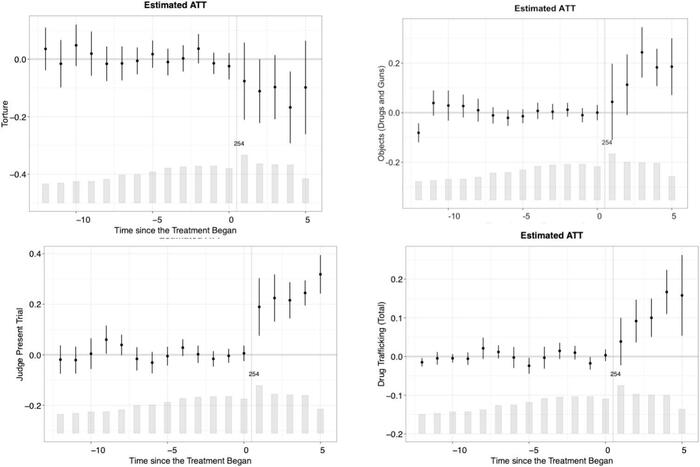
Erin B. Carter and Brett L. Carter help fill this crucial gap in our knowledge. Using data on all Huawei contracts across the world over a nearly twenty-year period, they find that Huawei transfers do, in fact, facilitate digital repression in the autocracies — but not the democracies — that receive them. Attempts at digital repression in democracies are more often checked by independent political institutions and legal frameworks. When these fail, civil society organizations, news media, and popular mobilization can step in. By contrast, autocrats tend to lack these constraints and can thus more readily use Huawei for digital repression. In short, the impact of Huawei transfers varies depending on regime type.

The article compellingly demonstrates the enduring role of political institutions — in this case, those enabling democratic resilience. In addition, it sheds light on one mechanism underlying the so-called global wave of autocratization, namely, Huawei transfers that enable dictators to more efficiently control their citizens. And from a methodological standpoint, the paper provides the “first cross-country, plausibly causal evidence” of the effects of Huawei on repression.

Data & Methods


The authors use data on Huawei contracts from 2000 to 2017, which comes from the AidData project. This includes 153 projects — almost entirely on communications technologies — in 64 countries worth over $1.5 billion. The vast majority of recipient countries are in Sub-Saharan Africa and Central, South, and Southeast Asia. Huawei is responsible for around 70% of all telecommunications in Africa alone. The single largest recipient of Huawei transfers is Indonesia (~$391 million of contracts), followed by Uzbekistan (~$150 million) and Cameroon (~$100 million). Notably, of the top 20 recipient countries, only one (Costa Rica) is considered “Free” by Freedom House, the rest being “Partly Free” or “Not Free.” Huawei transfers flow slightly more to democracies than to autocracies, but this is only if Indonesia is included; otherwise, transfers flow disproportionately to autocracies.


Image
Graphs depicting Leading Countries and Transfers Over Time


Carter and Carter quantify the effect of Huawei transfers on repression by using the generalized synthetic control (GSC) method. The goal is to compare those countries receiving (the “treatment”) of Huawei transfers with those in the “control group” that do not. However, comparing the treated and controlled countries or “units” is difficult for several reasons. For one, the countries that receive Huawei transfers differ from those that do not, for example, in terms of their political institutions and economic development. In addition, there is a lag of several years between receipt of Huawei and its full implementation, and the effects of Huawei transfers may take several years before they are fully realized. Similarly, transfers are staggered over time; for example, the largest number of contracts was signed as China’s Belt and Road Initiative expanded between 2014 and 2015.

Comparing (such ostensibly different) treated and controlled units can be facilitated by constructing a “synthetic” control out of multiple control units. This will more closely match the treated unit’s characteristics prior to receiving Huawei. GSC extends (or generalizes) the synthetic control method by enabling comparison across multiple time periods (given the staggered rollout mentioned above), and across countries with different backgrounds prior to adopting Huawei technologies. Separate tests are then run for autocracies and democracies to capture how political institutions influence the effects of Huawei transfers.

Findings


In addition to the central finding about regime type, the authors also provide evidence that the countries most likely to contract with Huawei are more populous and poorer. These countries are, from China’s standpoint, attractive markets, and their governments appreciate the subsidies offered by China’s Export-Import Bank. As such, transfers are driven, in part, by demand in recipient countries. In addition, recipient countries are also more likely to have received Chinese aid and, therefore, recognize the One China policy. Meanwhile, autocracies, coup-prone countries, and those rich in natural resources are not more likely to receive Huawei transfers. All of these findings should be qualified by the secrecy surrounding Huawei contracts. Indeed, many such contracts include confidentiality clauses that prohibit recipient countries from divulging information.


Image
Correlates of Huawei technology transfers


Correlates of Huawei technology transfers


Another set of findings relates to those democracies that do use Huawei to digitally repress, even if transfers do not systematically increase repression in democracies. India is an important case, as it is a world leader in periodically shutting down the internet. Unsurprisingly, democracies whose political institutions and civil society organizations have been weakened by elected leaders with authoritarian ambitions (such as Narendra Modi) seem more likely to impose shutdowns or monitor media. At the same time, weak democracies are unlikely to use Huawei to block websites or arrest their citizens for digital action. As Carter and Carter point out, this highlights the importance of disaggregating the concept of digital repression as well as the set of institutions that enable democratic resilience. Ultimately, “Exporting the Tools of Dictatorship” is exemplary in its use of systematic data to shed light on a complex and contested geopolitical issue.

*Research-in-Brief prepared by Adam Fefer.

Hero Image
The Huawei logo is seen on the side of the main building at the company's production campus on April 25, 2019 in Dongguan, near Shenzhen, China.
The Huawei logo is seen on the side of the main building at the company's production campus on April 25, 2019, in Dongguan, near Shenzhen, China.
Kevin Frayer/Getty Images
All News button
0
Subtitle

CDDRL Research-in-Brief [4-minute read]
Date Label
News Type
News
Date
Paragraphs

Motivation & Contribution


Vladimir Putin has ruled Russia for over a quarter century despite economic mismanagement, corruption, and a disastrous war in Ukraine. Prior to the invasion, Putin’s rule was often seen as exemplifying modern autocracy, maintaining one-man rule while employing less overt mechanisms of social control, such as propaganda and regularly held, albeit controlled, uncompetitive elections. Since the full-scale invasion of Ukraine in February of 2022, however, Putin’s authoritarianism has intensified, especially as opponents of the war are imprisoned, terrorized, driven into exile, or worse. As such, Russia’s “modern” autocracy, which relies less on force than on presenting a message to society of an all-capable state and leader, has transformed into a highly personalized form of harsh authoritarianism. At the same time, many average Russians do genuinely support Putin — especially given his emphasis on order in society and restoring Russian greatness — and view the regime as legitimate and responsive. Often, however, analysts of contemporary Russia in the West tend to focus more on those Russians who oppose Putin’s autocracy than on those who support it and why they do. 

In her “Review Article: Why Does Putinism Endure? Dialoguing With the Dictator,” Kathryn Stoner tackles this question through a critical analysis mainly of Hannah Chapman’s Dialogue with the Dictator: Authoritarian Legitimation and Information Management in Putin’s Russia. The analysis is complemented by insights from four other recently published books on authoritarianism and Russia. For Stoner, Chapman’s central contribution lies in showing how a seemingly ridiculous exercise in state propaganda — the Direct Line with Vladimir Putin TV call-in show — is in fact an important way of legitimizing Putin’s rule, providing his regime with information about social preferences and sources of dissatisfaction while affording citizens with the feeling that their complaints are being heard and even resolved live and on TV. Gaining information about citizens would otherwise be difficult in such an unfree society, where individual preferences that may be critical of Putin’s rule are often concealed or deliberately falsified to avoid punishment by the regime. The reader learns that even hegemonic dictators must be perceived by citizens to be a good listener. 

Putin uses participatory technologies not only to control what information reaches citizens, but also to enhance his legitimacy and appear more accountable.


The Functions of ‘Participatory Technologies’


The conceptual foundation of Chapman’s analysis lies in what she terms ‘participatory technologies’ (PTs), which allow citizens to interact with authoritarian regimes “directly and in a positive manner.” Observers tend to dismiss PTs, which are often low-technology formats like TV shows or radio programs, as ‘spin’ or mere propaganda. In Russia, however, Putin uses PTs not only to control what information reaches citizens, but also to enhance his legitimacy and appear more accountable. Although PTs are limited and highly individualized — for example, more often than not ignoring collective demands — they are direct.

Participatory technologies differ from autocrats’ sham, window-dressing elections, where the outcome is a foregone conclusion. Instead, they permit citizens to engage with and provide input to the autocrat on specific issues. They also provide information to the regime about the performance of lower-level agents, such as governors or regional politicians, given that citizens are often concerned with local, day-to-day problems. By involving these lower-level agents, autocrats can deflect responsibility for governance problems away from themselves. Finally, PTs provide value to those who participate in them, giving them a sense of political efficacy. At the same time, however, PTs may expose embarrassing governmental dysfunctions. Indeed, the resolution of local problems – like fixing potholes on a local road – should not require direct citizen engagement with powerful national-level leaders. Furthermore, PTs run the risk of being overused and being seen as performative and fake by citizens.


Participatory technologies differ from autocrats’ sham, window-dressing elections, where the outcome is a foregone conclusion. Instead, they permit citizens to engage with and provide input to the autocrat on specific issues.


Tuning into Direct Line


Stoner’s review article discusses Chapman’s analysis of one PT in particular, namely the Direct Line with Vladimir Putin call-in show. Direct Line began in 2001, organized by the Kremlin and broadcast on state-owned and pro-regime media. The audience and the questions posed are selected in advance. During the broadcast — which is one of the most watched events in Russia, perhaps because of compulsion from employers — Putin conveys to the audience that Russia is doing well, but that he is not satisfied, is working tirelessly, and wants to hear citizens’ concerns. Putin does not merely listen but acts to solve their concerns, for example, keeping a folder of issues raised by ordinary Russians and bringing these issues to the attention of regional governors. He has even forwarded questions directly to regional governors on air, which also serves to deflect responsibility away from himself. 

Methodology


Stoner describes the multiple survey experiments and interviews Chapman conducted in exploring whether Direct Line matters to ordinary Russians. Some of the interviewees seem to know that Direct Line is staged; yet they nonetheless find it compelling that Putin is not afraid to answer their sometimes uncomfortable questions. The goal of the survey experiments is to try to ascertain how prompts that (do not) mention Direct Line affect respondents’ evaluations of Putin. In other words, Direct Line is the ‘treatment,’ which participants in the ‘control’ group do not receive. One experiment only varies whether or not Putin heard about a problem on Direct Line. Another varies this as well as whether or not Putin resolved the problem. In both experiments, respondents whose prompts included mention of Direct Line evaluated Putin more favorably, although Stoner notes that the statistical effects of this are small. In another experiment, the mention of Direct Line leads respondents to believe there are greater opportunities to express their opinions and demands. Finally, a fourth experiment finds that respondents who support (oppose) Putin gave him higher (lower) evaluations when Direct Line was mentioned, hinting at how Direct Line might serve as a source of polarization in Russia.


Stoner highlights an important puzzle about whether participatory technologies like Direct Line can, in fact, provide credible information to Putin’s regime.


Limitations


Stoner highlights an important puzzle about whether participatory technologies like Direct Line can, in fact, provide credible information to Putin’s regime. For example, questions are pre-screened to exclude subjects that could threaten the regime. Additionally, those who call in are already likely to be more supportive of or sympathetic to the regime. It would thus seem that Putin has better mechanisms for gathering credible information, such as through the Kremlin’s surveillance system, than through a PT like Direct Line, as Chapman claims. As such, Direct Line’s value appears primarily rhetorical, as opposed to informational — the regime is merely performing an exercise in responding to easy problems that can be resolved quickly by Putin, or inane questions about things like Putin’s favorite books.

Stoner’s review article notes her concerns regarding the generalizability of Chapman’s findings. First of all, it would be challenging to draw conclusions from the survey experiments, given that they concern a single group of people who were surveyed a decade ago (2015-2016). Relatedly, and in light of the war in Ukraine, Chapman’s analysis of PTs seems dated, as Putin has resorted far more often to severely punishing opposition (real and imagined) to his regime, rather than cajoling and coercing society with participatory technologies like his call-in show. Indeed, the show was cancelled in 2022 without explanation, but presumably to avoid difficult questions about the devastation wrought that autumn on the Russian armed forces in Ukraine. Nonetheless, Stoner notes that there is now a burgeoning literature that helps us better understand how, in normal times, autocrats effectively utilize the media and other technologies to build support and legitimate their rule, while providing citizens with a sense that they can influence politics, when in reality, they cannot.

*Research-in-Brief prepared by Adam Fefer.

 
Hero Image
Direct Line with Vladimir Putin
Kremlin.ru
All News button
1
Subtitle

CDDRL Research-in-Brief [5-minute read]

Date Label
News Type
News
Date
Paragraphs

Argument & Key Findings


The system of reentry institutions — including halfway houses, parole agencies, and housing assistance programs — can be extremely complicated for formerly incarcerated persons (FIPs) to navigate. These complications are not merely logistical, but also social and emotional: the ways in which FIPs interact with reentry institutions can affect their sense of belonging, dignity, and prosperity. When the rules and practices of reentry institutions undermine these needs, it becomes more likely that participants will violate rules, withdraw from the institutions altogether, or find themselves reincarcerated. 

In “Home But Not Free,” Gillian Slee offers a rich analysis of these socioemotional dynamics. The paper both increases our knowledge of reentry processes and deepens our understanding of FIPs and reentry staff. Previous scholars have focused more on how adverse outcomes stem from reentry institutions prioritizing surveillance or control. Slee pushes forward this conversation by highlighting how adverse outcomes also stem from failures to acknowledge and support the dignity of FIPs.

Slee’s paper is informed by over two years of ethnographic fieldwork with FIPs in Philadelphia. This includes observing over 200 appointments at a housing assistance program, analyzing more than 130 files of program participants, and both observing and assisting with programming at a women’s halfway house. 


Reentry institutions and their staff often fail to recognize or respond to the constraints and vulnerabilities faced by FIPs. These failures can undermine the dignity of FIPs and provoke their withdrawal from such institutions.


Three Mechanisms:


The core of the paper centers on Slee’s elaboration of three mechanisms that link socioemotional concepts, such as indignity, to outcomes like withdrawal or reincarceration. Each mechanism is clarified through a range of examples and case studies.

1. Unrecognized vulnerability:

Reentry institutions and their staff often fail to recognize or respond to the constraints and vulnerabilities faced by FIPs. These failures can undermine the dignity of FIPs and provoke their withdrawal from such institutions. In the realm of housing assistance, the Philadelphia program requires that rent falls between 30% and 45% of participants’ income. However, this is often unrealistic given the difficulties of finding fairly priced units or securing gainful employment with a felony conviction. Accordingly, FIPs must seek low-quality units or roommates. Yet most participants do not want roommates because it reminds them of being incarcerated. Participants are thus presented with an undignified set of choices. The program restrictions mean that many FIPs cannot or will not utilize housing assistance programs, deepening their sense of instability.

Another source of vulnerability concerns the mismatch between FIPs’ expectations and the realities of frontline bureaucracy. For example, many housing assistance programs have too few staff, some of whom struggle to juggle appointments or return phone calls. Because reentry staff are overburdened, they may ask participants to pick up the slack by searching for housing units. Yet many FIPs lack the requisite know-how, for example, calling about units too frequently or too early in the morning. Others may show up hours early for their appointments, in the process annoying reentry staff. Yet participants are not coached on how to improve these behaviors, leading to neglect. Other FIPs must learn that the majority of units are listed online as opposed to in newspapers, incurring the mockery from reentry staff in the process. 

A final source of vulnerability concerns participants’ lack of efficacy — the sense that their efforts make little difference or are inadequate. Reentry staff may have high expectations of people who feel “cryogenically frozen in time” (p. 32) because of years of incarceration. Some are unable to use modern cell phones or have no rental history.


A final source of vulnerability concerns participants’ lack of efficacy — the sense that their efforts make little difference or are inadequate.


2. Discretion’s Benefits and Drawbacks:

The discretion exercised by reentry staff introduces difficult choices for participants, forcing them to choose between (a) following the rules and becoming socially isolated or (b) breaking the rules and developing social connections. For example, some halfway houses are restrictive about time spent outside of the house. Participants who abide by the rules may miss out on socially important events, like a child’s basketball game. Some FIPs may lie about or conceal where they live in order to deal with less intrusive parole agents. Others may cross state lines to pursue important career opportunities. One participant parked their mobile home outside of the parole district lines because it was less expensive and easier than seeking alternative units, but these kinds of ‘rational’ behaviors cannot be accommodated. Discretion is a highly variable attribute: some reentry staff cancel meetings and inconvenience participants, while others remember individuals’ needs and accommodate them. Those who expect more discretion than they receive may break the rules out of frustration. Ultimately, discretion and its absence can provoke a host of socioemotional problems.


Instead of preventing noncompliance, program rules may serve to encourage it when they undermine participants’ sense of dignity.


3. Risk-Escalating Rules:

Instead of preventing noncompliance, program rules may serve to encourage it when they undermine participants’ sense of dignity. For example, 29 states prohibit associating with other FIPs, yet many participants have friends or family supervised by the system; as such, people violate the rules in order to preserve meaningful relationships. Some FIPs are faced with painful dilemmas, for example, choosing between living in halfway houses where drug use is common or breaking the rules by leaving. Others report using cocaine instead of marijuana because the latter can be detected in their bloodstream for much longer. Some halfway houses mandate spending a certain number of hours inside the house, but this leads to participants being unable to work multiple jobs to support themselves, a clear violation of their dignity.

For many FIPs in uncomfortable halfway houses, they cannot be placed in another house unless they break the rules of their existing house; some consider breaking the rules for the sake of their well-being, even though doing so might land them under even more restrictive supervision. One participant was refused permission to live in a camper that he could afford because the camper’s mobility posed a flight risk. Another participant broke the rules by traveling out of state because her son’s father had cancer, and a reentry professional later told her to return in a rather threatening way. The rules of reentry institutions thus incentivized FIPs to make very risky choices.


By highlighting socioemotional concepts — especially (in)dignity — as central to the experiences of formerly incarcerated persons, Slee shows how the rules and practices of reentry institutions can undermine reintegration.


By highlighting socioemotional concepts — especially (in)dignity — as central to the experiences of formerly incarcerated persons, Slee shows how the rules and practices of reentry institutions can undermine reintegration. Addressing sources of vulnerability and counterproductive rules may help reform reentry institutions in more humane and effective ways.

*Research-in-Brief prepared by Adam Fefer.

 
Hero Image
Prison corridor with jail cells on either side.
7500 RPM via Unsplash
All News button
0
Subtitle

CDDRL Research-in-Brief [4-minute read]
Date Label
Subscribe to CDDRL Research in-brief