Authors
Nora Sulots
News Type
News
Date
Paragraphs

In 2022, the Center on Democracy, Development and the Rule of Law (CDDRL) launched its Strengthening Ukrainian Democracy and Development (SU-DD) Program — a 10-week training initiative for mid-career Ukrainian practitioners and policymakers. Designed for participants advancing well-defined projects aimed at strengthening Ukrainian democracy, enhancing human development, and promoting good governance, SU-DD builds on the successes of CDDRL’s earlier Ukrainian Emerging Leaders Program, which brought 12 fellows to Stanford over four cohorts.

The third SU-DD cohort began their work in June, meeting online with CDDRL faculty to refine the scope of their projects, each focused on actionable strategies to support Ukraine’s recovery from Russia’s invasion. In their first session, fellows presented their proposals to a panel of distinguished CDDRL faculty, including Mosbacher Director Kathryn Stoner, FSI Director Michael McFaul, and Olivier Nomellini Senior Fellow and MIP Director Francis Fukuyama, receiving initial feedback and guidance. The second meeting invited deeper exploration of solutions, using the MIP Problem-Solving Framework co-created by Professors Fukuyama and Jeremy Weinstein. In the final session, fellows were challenged to revisit and sharpen their project scope while learning from Professor Fukuyama about the Implementation phase of the framework. Equipped with new tools, fresh perspectives, and targeted feedback, the fellows concluded the virtual portion of the program ready to begin their journey at Stanford.

A hallmark of the SU-DD program is participation in CDDRL’s three-week Fisher Family Summer Fellows Program. Last month, the Ukrainian fellows joined peers from across the globe on campus at Stanford, building connections, exchanging ideas, and exploring shared solutions to complex development challenges. This experience broadened their networks far beyond Ukraine's borders, allowing them to build relationships they will draw on as they advance their projects after the program concludes on August 29.

During the final three weeks of the program, our Ukrainian fellows will visit Silicon Valley tech companies, meet with local business experts, politicians, and government officials, as well as Stanford faculty, and finalize implementation plans to bring their proposals to life.

Learn more about each fellow and their work below.

Meet the Fellows

Polina Aldoshyna

Polina Aldoshyna is a Ukrainian lawyer and civic leader with over nine years of experience in law, public administration, and nonprofit management. She currently leads the BGV Charity Fund, overseeing social projects that support vulnerable communities. In addition, she serves as a Deputy of the Zhytomyr Regional Council, focusing on local governance and social policy. Throughout her career, Polina has managed over 60 humanitarian projects, including the establishment of psychosocial support centers and aid programs for displaced individuals and veterans.

Project: Institutionalizing Resilience Centers for Postwar Recovery 

Polina is currently working on transforming Ukraine’s emerging resilience centers—grassroots hubs that provide psychosocial support, legal aid, and essential services to displaced and vulnerable populations—into a sustainable, institutionalized model of community-based social infrastructure. While these centers have played a critical role in the war’s social response, many still lack unified standards, stable funding, and digital infrastructure, limiting their long-term impact.

Her project explores which governance structures — municipal, civic, or hybrid — are most viable in Ukraine’s decentralized context, how public, private, and donor financing can be blended to support long-term operations, and how digital tools, such as CRM systems and reporting platforms, can professionalize service delivery. Drawing on global models, such as Resilience Hubs in the United States, Polina aims to co-design a scalable framework for resilience centers that can be integrated into Ukraine’s broader post-war recovery strategy.

To support this work, Polina is interested in meeting with NGOs, charitable foundations, and private philanthropists who support Ukraine in the reconstruction of human social capital in the United States. She hopes to learn how democratic institutions adapt and deliver services during crisis and post-conflict transitions, as well as engage with scholars and practitioners working at the intersection of governance, social development, and recovery.



Oleksii Movchan

Oleksii Movchan is a Member of the Ukrainian Parliament and Deputy Chairman of the Verkhovna Rada Committee on Economic Development, representing the “Servant of the People” faction. He chairs the subcommittee on public procurements and state property management, and is active in inter-parliamentary groups with the USA, UK, Japan, and others. Before parliament, he led projects at Prozorro.Sale. Oleksii holds degrees from Kyiv-Mohyla Academy, Ukrainian Catholic University, and Kyiv School of Economics. He has advanced key reforms in procurements, state-owned companies, and privatization to support Ukraine’s European Union integration.

Project: Improving Corporate Governance in Municipally-Owned Enterprises (MoEs) in Ukraine

Oleksii is currently working to improve the governance of Ukraine’s municipally owned enterprises (MoEs), which number nearly 14,000—more than triple the number of state-owned enterprises. While some MoEs serve as critical infrastructure providers in areas such as water, heating, and public transport, most operate without modern governance standards. Over 82% are unprofitable and many are subsidized, making them susceptible to inefficiency, mismanagement, and corruption. These shortcomings erode public trust, distort competition, and weaken essential service delivery.

His project focuses on designing and advocating for national legislation to institutionalize OECD-based governance practices across approximately 60 high-impact MoEs in 19 cities. Proposed measures include strategic property management policies, independent supervisory boards, transparent CEO selection, and robust audit, compliance, and risk management systems. The legislation also calls for standardized financial reporting and regular external audits to enhance transparency and creditworthiness.

To support this work, Oleksii is drawing on Ukraine’s pilot reforms in Mykolaiv and Lviv, as well as prior SOE governance reforms since 2015, and global best practices from EU and OECD countries. He is particularly interested in how institutional reform can advance anti-corruption goals and how reformers in other countries have successfully designed and implemented large-scale changes. He hopes to meet with Stanford faculty, civic technologists, and philanthropic organizations, such as the Stanford Cyber Policy Center, Code for America, and the Skoll Foundation, to explore how policy and technology innovations can support municipal reform and Ukraine’s post-war recovery.
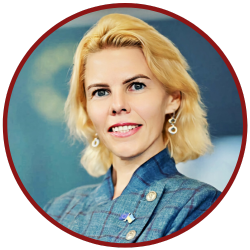


Maria Golub

Maria Golub is a recognized expert on Ukraine’s European and Euro-Atlantic integration, with deep expertise in EU-Ukraine bilateral relations. Based in Brussels, she currently serves as a Senior Political and Policy Advisor to Ukrainian leadership, where she advocates for a just and lasting peace in Ukraine and supports the country’s advancement along the EU integration path through a decisive reform agenda. She is also actively involved in shaping Ukraine’s reconstruction strategy and is a strong proponent of the “build back better” principle, championing an ambitious revival plan for the country.

Project: Building a National Recovery Platform and Transatlantic Innovation Alliance

Maria is currently working to establish a national Coalition for Recovery—an inclusive, cross-sectoral platform designed to unify Ukraine’s defense, reconstruction, and reform agendas. As Ukraine faces the twin imperatives of resisting ongoing military aggression and laying the groundwork for long-term renewal, Maria’s project aims to ensure that recovery planning is not siloed but instead integrates priorities across security, governance, innovation, and transatlantic cooperation.

The Coalition will convene key domestic and international stakeholders to shape Ukraine’s internal reform agenda, embed EU and NATO-aligned governance standards, and streamline policy frameworks across recovery sectors. A core pillar of the project is embedding security priorities and military technological innovation directly into the recovery strategy, positioning defense modernization as a foundation — not a separate track — for rebuilding state capacity and competitiveness. In tandem, Maria is developing the concept for a large-scale technology and defense innovation alliance between Ukraine, the EU, and the United States. By fostering deeper collaboration in emerging technologies and military-industrial partnerships, the initiative seeks to contribute to Ukraine’s economic resurgence in 2025–2026 and anchor its strategic integration into the Euro-Atlantic community.

Maria is particularly interested in successful strategies and action plans that demonstrate how countries emerging from large-scale conflict can simultaneously pursue national recovery and build resilient, future-oriented security and defense architectures. She aims to explore cutting-edge developments in the tech and military tech sectors, as well as innovative tools like digital twin cities, to help design an integrated national revival plan. In addition, she hopes to deepen her understanding of how AI tools and techniques can support planning, coordination, and implementation across Ukraine’s postwar recovery landscape.
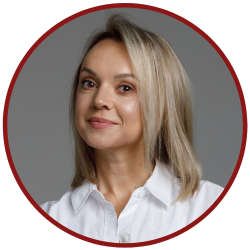


Alyona Nevmerzhytska

Alyona Nevmerzhytska is CEO of hromadske.ua, Ukraine’s leading independent online media platform. She began her career in 2012 at the Kyiv Post and has since focused on business development and organizational strategy. At hromadske, she has enhanced audience engagement and strengthened data-driven decision-making. Committed to building sustainable models for independent media, she ensures ethical newsroom operations and promotes democratic values. She is a graduate of the Stockholm School of Economics, an Atlantic Council Millennium Fellow, and a 2024 McCain Institute Global Leader.

Project: Strengthening Independent Media for Postwar Accountability and Recovery

Alyona is currently working to build a more resilient and innovative media ecosystem in Ukraine that can serve as both a watchdog and a unifying force during the country’s postwar recovery. As CEO of Hromadske.ua, she is leading efforts to combine investigative journalism, compelling storytelling, and technological advancement with a focus on financial sustainability and editorial independence.

Her project explores how independent media can most effectively cover Ukraine’s complex reconstruction process — holding public institutions and international aid mechanisms accountable while also building trust across communities fractured by war. Alyona is particularly interested in leveraging technology, including AI tools, to enhance investigative capacity, analyze data, and uncover patterns of corruption or inefficiency in recovery efforts.

Through the SU-DD fellowship, she also seeks to explore global models for sustainable journalism beyond donor-driven funding, learning how to strengthen independent media institutions to ensure their long-term viability and public impact. A key area of inquiry is the ethical integration of AI into journalism, ensuring that innovation does not compromise transparency, integrity, or audience trust. Alyona is eager to connect with Stanford faculty in communication and business, as well as experts, to explore sustainable models for independent journalism and civil society resilience. She is also interested in meeting with philanthropic organizations, alongside tech leaders, and Ukrainian NGOs to strengthen partnerships that support innovative, mission-driven media.

Read More

(Clockwise from left) Oleksandra Matviichuk, Oleksandra Ustinova, Oleksiy Honcharuk, and Serhiy Leshchenko joined FSI Director Michael McFaul to discuss Ukraine's future on the three-year anniversary of Russia's full-scale invasion.
News

Through War and Loss, Ukrainians Hold Onto Hope

FSI scholars and civic and political Ukrainian leaders discussed the impact of the largest conflict in Europe since World War II, three years after Russia's invasion of Ukraine.
Through War and Loss, Ukrainians Hold Onto Hope
Ukraine and Russia flags on map displaying Europe.
Commentary

The future of Russia and Ukraine

How the present conflict plays out has important implications for other former Soviet states and for the future of the E.U., says political scientist Kathryn Stoner.
The future of Russia and Ukraine
Oleksandra Matviichuk speaks to an audience at Stanford University on April 15, 2024.
News

Ukraine Needs Western Assistance, Global Implications if Conflict is Lost

Nobel Peace Prize winner and CDDRL alumna Oleksandra Matviichuk delivered the S.T. Lee Lecture on April 15 and spoke of the broader implications of Russia’s actions in Ukraine and for the world if the West does not continue to support Ukraine in its fight against Russia.
Ukraine Needs Western Assistance, Global Implications if Conflict is Lost
Hero Image
2025 Strengthening Ukrainian Democracy and Development fellows
Alyona Nevmerzhytska, Oleksii Movchan, Maria Golub, and Polina Aldoshyna.
Rod Searcey
All News button
1
Subtitle

Meet the four fellows participating in CDDRL’s Strengthening Democracy and Development Program and learn how they are forging solutions to help Ukraine rise stronger from the challenges of war.

Date Label
Authors
Khushmita Dhabhai
News Type
News
Date
Paragraphs

As Russia’s full-scale invasion of Ukraine enters its fourth year, the resilience of international support is being tested. Public opinion in neighboring countries — many of which have absorbed refugees and face direct geopolitical pressure — has become a critical variable in sustaining aid and solidarity. In a REDS seminar talk, co-hosted by CDDRL and The Europe Center, Princeton Professor of Politics Grigore Pop-Eleches shared findings from a major research project examining what drives support for Ukraine — and whether empathy can help counter growing war fatigue.

The study draws on two waves of public opinion surveys conducted in eight countries bordering Ukraine and/or Russia: Latvia, Lithuania, Poland, Hungary, Romania, Moldova, Kazakhstan, and Azerbaijan. Over 1,000 people were surveyed in each country, with a randomly assigned half receiving a brief empathy prompt. This prompt asked them to reflect on the daily challenges Ukrainians face living in a war zone. The goal was to measure whether simply imagining life in Ukraine could increase support for the Ukrainian cause.

The presentation began by outlining the stakes. Support for Ukraine has implications beyond aid flows. It affects how elites justify their positions, how international coalitions hold, and how misinformation, especially from Russia, can shift public discourse. The researchers focused on whether empathy-based interventions could increase not only emotional identification with Ukrainians, but also concrete actions such as signing petitions, donating money, or supporting humanitarian and military aid.

The results were striking. The empathy prompt had a clear and consistent effect: participants who received it expressed more sympathy for Ukrainians, more concern for their well-being, and greater willingness to support aid, both humanitarian and military. Statistical tests showed that these effects were driven by increased emotional connection (not concerns about the security of their own country), highlighting the central role of affective empathy.

Importantly, the effects were not uniform. They were strongest in countries like Hungary and Lithuania, and among individuals with strong attachments to their own national group and among those who had not previously interacted with Ukrainian refugees. Conversely, those who identified closer with Russians or who regularly consumed Russian media showed weaker or even no response. This suggests that perspective-taking can be powerful — but only in the absence of competing narratives.

The presentation concluded with a discussion of the broader implications. Empathy may offer a low-cost, scalable way to strengthen international solidarity — but its success depends on timing, exposure, and context. In countries with few refugees or limited media exposure to Ukraine, empathy interventions can fill an important emotional gap. However, where pro-Russian sentiment or misinformation dominates, their effects are muted.

At a moment when global support for Ukraine hangs in the balance, this research offers an encouraging insight: even brief moments of reflection can move people toward solidarity — if the conditions are right.

Read More

Brian Taylor
News

“No Peace in Sight:” Ideology, Territory, and the Stalemate in the Russo-Ukraine War

In a recent REDS Seminar, Syracuse University Professor of Political Science Brian Taylor examined the state of the war, the prospects for peace, and the political dynamics shaping both Ukrainian resistance and Russian aggression.
“No Peace in Sight:” Ideology, Territory, and the Stalemate in the Russo-Ukraine War
Juliet Johnson presented her research in a REDS Seminar, co-hosted by CDDRL and TEC, on February 27, 2025.
News

Show Me the Money: Central Bank Museums and Public Trust in Monetary Governance

Juliet Johnson, Professor of Political Science at McGill University, explores how central banks build public trust through museums.
Show Me the Money: Central Bank Museums and Public Trust in Monetary Governance
Yoshiko Herrera presented her research in a REDS Seminar co-hosted by CDDRL and TEC on January 16, 2025.
News

Identities and War: Lessons from Russia’s War on Ukraine

Political Science scholar Yoshiko Herrera examines how identity shapes the causes, conduct, and consequences of war, especially in the wake of Russia’s invasion of Ukraine.
Identities and War: Lessons from Russia’s War on Ukraine
Hero Image
Grigore Pop-Eleches discussed his research in a REDS Seminar on May 1, 2025.
Soraya Johnson
All News button
1
Subtitle

In a REDS seminar talk, co-hosted by CDDRL and The Europe Center, Princeton Professor of Politics Grigore Pop-Eleches shared findings from a major research project examining what drives support for Ukraine — and whether empathy can help counter growing war fatigue.

Date Label
Authors
Khushmita Dhabhai
News Type
News
Date
Paragraphs

On April 17, 2025, Stanford’s Center on Democracy, Development and the Rule of Law (CDDRL), alongside The Europe Center and the Hoover Institution, hosted a seminar entitled “The Russo-Ukraine War: Peace for Our Time?” featuring Syracuse University Professor of Political Science Brian Taylor. The seminar examined the state of the war, the prospects for peace, and the political dynamics shaping both Ukrainian resistance and Russian aggression. Taylor emphasized that, despite mounting casualties and economic costs, peace remains unlikely in the foreseeable future due to the ideological rigidity and strategic goals of Vladimir Putin’s regime.

Putin’s own speeches, notably from February 2022 and June 2024, underscore his belief that Ukraine lacks legitimate statehood and is a ‘Western puppet.’ He accuses Kyiv of fostering “neanderthal nationalism” and allowing NATO to develop Ukraine as a military outpost. These views culminated in his June 2024 and April 2025 peace proposals, which demand complete Ukrainian military withdrawal from occupied regions, recognition of Russian sovereignty over Crimea, Donetsk, Luhansk, Zaporizhzhia, and Kherson, and Ukraine’s permanent neutrality, demilitarization, and “denazification.” These demands remain wholly unacceptable to Ukraine, where President Zelensky has repeatedly asserted that ceding territory violates the constitution and would betray over a million Ukrainian citizens still living in unoccupied portions of the contested areas.

The seminar highlighted three core issues blocking peace: territorial integrity, security guarantees, and domestic political sovereignty. Ukraine insists on reclaiming all occupied land and seeks NATO membership or bilateral security commitments from Western powers. Meanwhile, Russia demands not only territorial concessions but also structural constraints on Ukraine’s military capabilities and internal laws. The Kremlin's calls for “denazification” include repealing post-2014 legislation on language and historical memory — proposals Ukraine sees as direct infringements on its sovereignty.

Territorially, the stakes are high. Ukraine holds parts of Kherson, Donetsk, and Zaporizhzhia, and is unwilling to legitimize Russian claims. International law supports Ukraine’s position: the UN Charter, Budapest Memorandum, and several treaties confirm Russia’s previous recognition of Ukrainian borders. The war, as NATO Secretary General Jens Stoltenberg described, is the largest attempted annexation in Europe since World War II — a recolonization effort with severe implications for the international order.

On the battlefield, the war shows no signs of abating. Russian casualties exceeded 400,000 in 2024 alone, yet recruitment incentives and resource reserves remain robust. Some analysts argue that Putin is ideologically committed and politically insulated, making him indifferent to the war’s costs. Ceasefire discussions, while briefly floated in early 2025, have faltered amid escalating demands.

Taylor also explored the U.S. political context. President Donald Trump’s shifting rhetoric — from claiming he could end the war in 24 hours to hedging that he would “like to get it settled” — reflects uncertainty about future American policy. According to Russian sources, Putin believes he can manipulate Trump to secure favorable terms.

Ultimately, Taylor concluded that both sides see more advantage in fighting than in negotiating. The war is deeply rooted in Putin’s imperial ambition and ideological confrontation, not just geopolitics. Without dramatic shifts in leadership or battlefield fortunes, peace will remain elusive.

A full recording of Professor Taylor's seminar can be viewed below:

Read More

CDDRL Postdoctoral Fellow Ivetta Sergeeva presented her research in a CDDRL seminar on April 24, 2025.
News

How Transnational Repression Impacts Exiled Opposition

CDDRL Postdoctoral Fellow Ivetta Sergeeva’s research on the Russian diaspora’s willingness to donate to oppositional organizations demonstrates that the criminalization of groups can incentivize greater donor support among emigrants, contrary to the Putin regime’s intentions.
How Transnational Repression Impacts Exiled Opposition
Soledad Artiz Prillaman presented her research in a CDDRL seminar on April 10, 2025.
News

Does Electoral Affirmative Action Worsen Candidate Quality?

In the wake of widespread challenges to affirmative action policy, Stanford Political Scientist Soledad Artiz Prillaman’s research challenges the notion that electoral quotas for minority representation weaken candidate quality.
Does Electoral Affirmative Action Worsen Candidate Quality?
Francis Fukuyama presented his research in a CDDRL seminar on April 3, 2025.
News

Rethinking Bureaucracy: Delegation and State Capacity in the Modern Era

Francis Fukuyama traces how scholars and policymakers have grappled with the tension between empowering bureaucracies to act effectively and ensuring they remain accountable to political leaders.
Rethinking Bureaucracy: Delegation and State Capacity in the Modern Era
Hero Image
Brian Taylor
All News button
1
Subtitle

In a recent REDS Seminar, Syracuse University Professor of Political Science Brian Taylor examined the state of the war, the prospects for peace, and the political dynamics shaping both Ukrainian resistance and Russian aggression.

Date Label
Paragraphs

This paper examines the impact of autocratic homelands on the subjective well-being of political emigrants. Drawing on unique survey data comprising 2,567 observations and in-depth interviews with Russian emigrants who left the country following the 2022 invasion of Ukraine, we demonstrate that the actions of autocratic homelands contribute significantly to emigrants’ well-being, often surpassing conventional economic and social determinants. Specifically, fear of transnational repression from the Russian government is strongly associated with lower subjective well-being, with effects comparable to those of income loss and unemployment. Even more pronounced negative effects arise from experiences of discrimination and the anticipation of such discrimination due to host-country backlash against the actions of autocratic states. Additionally, feelings of guilt stemming from homeland’s aggression further exacerbate political emigrants’ distress. Autocratic regimes thus continue to exert influence over their citizens abroad by imposing “invisible costs” on political emigrants, contributing to depressive states and activist burnout.

All Publications button
1
Publication Type
Journal Articles
Publication Date
Journal Publisher
Post-Soviet Affairs
Authors
Ivetta Sergeeva
Number
1-27
-

McMurtry Building, Oshman Hall
355 Roth Way, Stanford, CA 94305

Film Screenings
Date Label
Authors
News Type
News
Date
Paragraphs

Nearly every day for the last three years, Russian missiles, drones, and artillery fire have struck Ukraine, killing thousands of people and damaging power plants, schools, hospitals, and homes in what has become the largest conflict in Europe since World War II.

“You live in constant fear for your loved ones,” said Oleksandra Matviichuk, founder of the Center for Civil Liberties and a participant in a February 24 virtual panel discussion with Ukrainian leaders in Kyiv on the war’s impact on daily life, the global democratic order, and Ukraine’s path ahead. The Center on Democracy, Development and the Rule of Law hosted the event on the third anniversary of Russia’s invasion of Ukraine in 2022.

“It's very difficult to be in a large-scale war for three years. You live in total uncertainty,” Matviichuk said.


It's very difficult to be in a large-scale war for three years. You live in total uncertainty.
Oleksandra Matviichuk
Founder, Center for Civil Liberties


Kathryn Stoner, the Mosbacher Director of the Center on Democracy, Development and the Rule of Law (CDDRL), introduced the panelists, and Michael McFaul, director of the Freeman Spogli Institute for International Studies (FSI) and a former U.S. ambassador to Russia, moderated the discussion.

On the frontlines, outnumbered Ukrainian troops have waged a stiff resistance, while a mass influx of Russian troops, with enormous loss of life, have made incremental but not decisive progress. Hundreds of thousands have died or been injured on both sides. Talks to end the war are underway between the Trump Administration and Russia, with Ukraine and European nations not currently invited to participate.

Oleksandra Matviichuk (L), founder of the Center for Civil Liberties, speaks about her experiences in Ukraine over the last three years.
Oleksandra Matviichuk (L) spoke about her experiences in Ukraine over the last three years. | Rod Searcey

‘We will cease to exist’


Matviichuk, who was a visiting scholar from 2017-2018 with the Ukrainian Emerging Leaders Program at CDDRL, noted the conflict has actually been going on for 11 years, since 2014 when Russia invaded and occupied Crimea. Today, she said, there is no safe place in Ukraine where people can hide from Russian rockets. “Just two days ago, Russia sent 263 drones against Kyiv and other peaceful cities in Ukraine.”

Matviichuk described how Russia seeks to ban the Ukrainian language and culture, and how they take Ukrainian children to Russia to put them in Russian education camps. “They told them they are not Ukrainian children, but they are Russian children.”

If the West does not provide Ukraine with security guarantees in a peace plan, then “it means that we will cease to exist. There will be no more of our people,” Matviichuk said.

Oleksandra Ustinova, a member of the Verkhovna Rada, Ukraine's Parliament, said, “If we talk about life in Ukraine now, it's complicated, especially during the last week after the Munich Security Conference,” where Vice President JD Vance delivered a speech that focused on internal politics in Europe.

“People do not understand how we thought the United States was our biggest partner,” she said.


People do not understand how we thought the United States was our biggest partner.
Oleksandra Ustinova
Member of the Verkhovna Rada, Ukraine's Parliament


At one point, Ustinova noted that she could not hear the conversation in her headphones because sirens were blaring as Russia had just launched an aerial attack on Kyiv.

She said that Russian President Putin and others who seek a Ukrainian election are trying to set a trap because Ukrainian law does not allow an election during martial law, which Ukraine has declared because of the Russian invasion. Plus, it would involve the demobilization of more than 400,000 troops.

“It would be very easy to fake elections, and that’s what the Russians would do,” Ustinova said. “It’s a trap. They're going to find where to put the money into their own candidate.”

Ustinova, who was also a visiting scholar with the Ukrainian Emerging Leaders Program from 2018-2019, said, “We can see that this is a new reality, not only in the Ukrainian war, but in foreign relations, and hopefully the Europeans can unite. Because if they don't, it will be a disaster for everyone.”

Oleksandra Ustinova joined the CDDRL-sponsored event virtually via Zoom.
Oleksandra Ustinova joined the CDDRL-sponsored event virtually via Zoom. | Rod Searcey

Oleksiy Honcharuk, a former Ukrainian prime minister from 2019-2020 who was the Bernard and Susan Liautaud Visiting Fellow at FSI in 2021, said, “I think that we are still strong. My prediction is that in three or six months, Ukraine can double the damage to Russia on the battlefield from a technological perspective with drones.”

But time is very expensive now, he added, because every single day, every single hour, Ukrainians are paying with the lives of their best people and soldiers.

Honcharuk said Ukrainians are “shocked” about the position of the United States’ recent vote against a United Nations resolution condemning the Russian invasion as well as the Trump Administration’s position on talks with Russia.

“This is exactly the moment when all the people of goodwill should do everything possible to support Ukraine in this very complicated time,” said Honcharuk.

Regarding the UN vote, McFaul said, “I am shocked, I am appalled, I am embarrassed as an American to see those votes today. We are voting with the most horrific dictators in the world.”

Oleksiy Honcharuk (R) spoke to a packed audience in Encina Hall.
Oleksiy Honcharuk (R) spoke to a packed audience in Encina Hall. | Rod Searcey

‘Not about people’


Matviichuk said, “Putin started this war of aggression, not because he wanted to occupy just more Ukrainian land. Putin started this war of aggression because he wanted to occupy and destroy the whole of Ukraine and even go further. He wants to forcibly restore the Russian Empire — he dreams about his legacy, his logic is historical.”

This ultimately means that Ukraine needs real security guarantees, she said. “President Trump said he started the peace negotiation because he cares about people dying in this war. So, if President Trump cares about people dying in this war, he also has to care about people dying in Russian prisons.”

She explained that she’s spoken with hundreds of people who have survived brutal conditions in Russian captivity. And so, it’s surprising, Matviichuk said, to hear political statements from U.S. officials “about natural minerals and elections, about possible territorial concessions, but not about people.”

Lack of Global Support


Serhiy Leshchenko, an advisor to Ukrainian President Zelenskyy’s Chief of Staff, spoke about the recent overtures by the Trump Administration to Russia.

“This is a new reality we are living in now. Frankly, my understanding is that Ukrainians are not very shocked with what's going on because we went through so many shocks within the last three years.”

Acknowledging the lack of an American flag at an allied event this week in Kyiv, Leshchenko said Ukrainians know perfectly well that perception is reality.

“It means that now we have an absolutely different perception. So, it’s obvious that there is no global security infrastructure anymore. It’s obvious that NATO is not an answer anymore,” said Leshchenko, an alumnus of the 2013 cohort of CDDRL’s Fisher Family Summer Fellows Program.

Serhiy Leshchenko (R) spoke virtually via Zoom at an event hosted by the Center on Democracy, Development and the Rule of Law on February 24, 2025.
Serhiy Leshchenko (R) spoke virtually via Zoom at an event hosted by the Center on Democracy, Development and the Rule of Law on February 24, 2025. | Rod Searcey

‘Sad occasion’


In her opening remarks, Stoner noted, “We’re here on what is actually a sad occasion, which is that Feb. 24 marks three years since the start of the full-scale Russian invasion of Ukraine.”

She said, “Only about less than 1% of land has changed hands since December 2022, so Ukraine is not losing. Ukraine is at least defending what it has, and it remains in Kursk (Russia).”

McFaul said, “It’s in our national interest that we do not line up with Belarus and Russia and North Korea – that holds negative consequences for our future security and prosperity. I actually think our country cares about values.”

He added that the notion that all America cares about is mineral rights, business deals, and hotels in Gaza is not the America he knows.

McFaul told the panelists, “I've witnessed and observed what you’ve been doing for your country, and we are just extremely fortunate to be connected to all of you, whom I consider to be heroic individuals in the world.”

A full recording of the event can be viewed below, and additional commentary can be found from The Stanford Daily.

Read More

Keith Darden presented his research in a CDDRL/TEC REDS Seminar on February 6, 2025.
News

War and the Re-Nationalization of Europe

American University Political Scientist Keith Darden examines how the Russian-Ukrainian war is reshaping European institutions.
War and the Re-Nationalization of Europe
Yoshiko Herrera presented her research in a REDS Seminar co-hosted by CDDRL and TEC on January 16, 2025.
News

Identities and War: Lessons from Russia’s War on Ukraine

Political Science scholar Yoshiko Herrera examines how identity shapes the causes, conduct, and consequences of war, especially in the wake of Russia’s invasion of Ukraine.
Identities and War: Lessons from Russia’s War on Ukraine
Vladimir Kara-Murza onstage with Michael McFaul at Stanford University.
News

Gone Today, Here Tomorrow: Vladimir Kara-Murza on the Fight for Democracy in Russia

During the 2024 Wesson Lecture, former political prisoner and democracy activist Vladimir Kara-Murza called for transparency and accountability from within Russia and more support from the international community to establish and grow Russian democracy.
Gone Today, Here Tomorrow: Vladimir Kara-Murza on the Fight for Democracy in Russia
Hero Image
(Clockwise from left) Oleksandra Matviichuk, Oleksandra Ustinova, Oleksiy Honcharuk, and Serhiy Leshchenko joined FSI Director Michael McFaul to discuss Ukraine's future on the three-year anniversary of Russia's full-scale invasion.
Rod Searcey
All News button
1
Subtitle

FSI scholars and civic and political Ukrainian leaders discussed the impact of the largest conflict in Europe since World War II, three years after Russia's invasion of Ukraine.

Date Label
Authors
Khushmita Dhabhai
News Type
News
Date
Paragraphs

At a CDDRL weekly seminar, American University Political Scientist Keith Darden examined how the Russian-Ukrainian war is reshaping European institutions. The talk was part of the REDS seminar series, organized in partnership with The Europe Center and the Hoover Institution. While some expected that heightened military threats would drive greater European Union (EU) unity and integration, Darden argued that the war is instead reinforcing national institutions and re-nationalizing Europe.

First, the war has shifted power dynamics within the EU, strengthening newer member states, particularly those from post-enlargement waves in Eastern Europe. Unlike older Western European members, these states do not share the post-WWII commitment to anti-nationalism that has underpinned European integration. Countries such as Poland and Hungary have adopted nationalist policies that challenge the EU’s foundational ideals, treating European regulations as discretionary rather than binding. This shift has weakened the EU’s ability to act as a unified political entity.

Second, while the war has spurred European military rearmament, this has occurred along national rather than EU-wide lines. Defense spending has surged across the continent, yet procurement remains fragmented, with countries prioritizing domestic industries and bilateral agreements over collective EU initiatives. Military aid to Ukraine, rather than being coordinated by European institutions, has largely been managed through U.S.-led bilateral mechanisms. This reflects the EU’s limited role in security policy. Historically, existential threats have led to fiscal centralization—the concentration of taxation and spending powers at a higher level of government to fund collective defense. However, the EU is restricted by its treaties from directly allocating budgeted funds for military expenditures, limiting its ability to centralize security coordination or build stronger institutional frameworks in response to the war.

Third, the war has heightened national identity politics across Europe, further undermining European integration. Instead of fostering a shared European identity, the conflict has reinforced national distinctions. In Ukraine, the war has fueled policies emphasizing language, media control, and historical narratives rooted in nationalism. Within the EU, it has led to unilateral trade restrictions, violations of Schengen rules, and disputes over migration policies. These trends have strengthened sovereignty-based decision-making at the national level rather than pushing Europe toward deeper federalism.

Darden situated these findings within broader theories of state-building. Drawing from bellicist theories, he explained that war has historically driven state-building by centralizing fiscal capacity and consolidating power. However, unlike past cases where war led to greater political integration, the EU remains structurally constrained by its reliance on voluntary market-based cooperation rather than centralized security imperatives. Kelemen and McNamara (2022) argue that the EU’s fragmented institutional development results from the absence of war-induced fiscal consolidation. Even with the return of war to Europe, integration has not accelerated; instead, security responses have remained decentralized, with national governments taking the lead.

Darden concluded that the war is reinforcing the dominance of the nation-state rather than strengthening the EU as a collective entity. Despite increased military spending, European defense remains disjointed, and the war’s institutional impact is shaped by national identities, security alternatives, and EU governance constraints. Far from unifying Europe, the war may ultimately weaken the post-WWII European project.

Read More

Alice Siu presented her research during a CDDRL seminar on January 30, 2025.
News

Can Deliberation Revitalize Democracy?

Alice Siu, Associate Director of CDDRL’s Deliberative Democracy Lab, demonstrates the wide-ranging effects of deliberation on democracy.
Can Deliberation Revitalize Democracy?
Ali Çarkoğlu
News

Polarization, Cleavages, and Democratic Backsliding: Electoral Dynamics in Turkey (1990-2023)

Using data from the World Values Survey and Turkish Election Studies, CDDRL Visiting Scholar Ali Çarkoğlu explores the rise of the Justice and Development Party (AKP) and the enduring influence of cultural divides on Turkey’s political landscape.
Polarization, Cleavages, and Democratic Backsliding: Electoral Dynamics in Turkey (1990-2023)
Yoshiko Herrera presented her research in a REDS Seminar co-hosted by CDDRL and TEC on January 16, 2025.
News

Identities and War: Lessons from Russia’s War on Ukraine

Political Science scholar Yoshiko Herrera examines how identity shapes the causes, conduct, and consequences of war, especially in the wake of Russia’s invasion of Ukraine.
Identities and War: Lessons from Russia’s War on Ukraine
Hero Image
Keith Darden presented his research in a CDDRL/TEC REDS Seminar on February 6, 2025.
All News button
1
Subtitle

American University Political Scientist Keith Darden examines how the Russian-Ukrainian war is reshaping European institutions.

Date Label
-
Aerial Drone Flyby Shot in Kyiv - Biggest National flag of Ukraine. Aerial view. Spivoche Pole, Kiev
Aerial shot of the Motherland Monument and the Biggest National Flag of Ukraine in Kyiv, Ukraine, photographed prior to February 24, 2022. | Oleksandr Tkachenko, Getty Images

February 24 marks the third anniversary of Russia's full-scale invasion of Ukraine in 2022. Though Ukraine has won many battles, the war for Ukraine’s right to exist as an independent, democratic nation rages on at a very steep human cost.

To commemorate this important day for Ukraine and the world, the Center on Democracy, Development and the Rule of Law is honored to host a panel of high-profile Ukrainian leaders currently based in Kyiv for a discussion of the impact of the war on daily life, the global democratic order, and Ukraine's future.

The panel will be introduced by Kathryn Stoner, the Mosbacher Director of the Center on Democracy, Development and the Rule of Law, and moderated by Michael McFaul, Director of FSI, the Ken Olivier and Angela Nomellini Professor of International Studies in the Department of Political Science, and a former U.S. ambassador to Russia.

Lunch will be available for in-person attendees. For those unable to join us in person, a livestream of the panel will be available via Zoom.

Meet the Panelists

Oleksiy Honcharuk

Oleksiy Honcharuk

Former Prime Minister of Ukraine
Learn More

Oleksiy Honcharuk served as the 17th prime minister of Ukraine from 2019-2020, during which time he introduced important policy initiatives in Ukraine including the institution of business privatization processes, efforts to combat black markets, and the launch of the Anti-Raider Office to respond to cases of illegal property seizures. Prior to serving as prime minister, Honcharuk was deputy head of the Presidential Office of Ukraine and was a member of the National Reforms Council under the president of Ukraine. In 2021, he was the Bernard and Susan Liautaud Visiting Fellow at the Freeman Spogli Institute for International Studies (FSI).

Serhiy Leshchenko

Serhiy Leshchenko

Advisor to President Volodymyr Zelenskyy's Chief of Staff
Learn More


Serhiy Leshchenko is formerly a journalist with Ukrainska Pravda and member of Ukrainian Parliament (2014-2019). He first rose to political prominence during Ukraine’s 2014 Maidan Revolution, and has continued to serve in government and civil society since. He is an advisor to President Volodymyr Zelenskyy’s chief-of-staff, working and living in the governmental bunkers during the start of Russia's invasion and siege on Kyiv in 2022. He is an alumnus of the 2013 cohort of the Draper Hills Summer Fellows program (now the Fisher Family Summer Fellows Program) at FSI’s Center on Democracy, Development and the Rule of Law at Stanford University.

oleksandra hs

Oleksandra Matviichuk

Founder of the Center for Civil Liberties
Learn More


Oleksandra Matviichuk is a human rights advocate and founder of the Center for Civil Liberties, which was recognized as a co-recipient of the 2022 Nobel Peace Prize. The mission of the Center for Civil Liberties is to protect human rights and establish democracy in Ukraine and the OSCE region. The organization develops legislative proposals, exercises public oversight over law enforcement agencies and judiciary, conducts educational activities for young people, and implements international solidarity programs. Matviichuk was a visiting scholar from 2017-2018 with the Ukrainian Emerging Leaders Program at the Center on Democracy, Development and the Rule of Law.

sasha

Oleksandra Ustinova

Member of the Verkhovna Rada, Ukraine's Parliament
Learn More


Oleksandra Ustinova is a member of the Verkhovna Rada, Ukraine's parliament. Since the beginning of Russia's invasion in 2022, she has met repeatedly with lawmakers in the United States to advocate on behalf of Ukraine, including an address before the U.S. House of Representatives on February 28, 2022. Prior to her government service, Ustinova was the head of communications and anti-corruption in healthcare projects at the Anti-Corruption Action Center (ANTAC), one of the leading organizations on anti-corruption reform in Ukraine. She was a visiting scholar with the Ukrainian Emerging Leaders Program at the Center on Democracy, Development and the Rule of Law from 2018-2019.

Kathryn Stoner
Kathryn Stoner
Michael A. McFaul
Michael McFaul

In-person: Bechtel Conference Center (Encina Hall, First floor, 616 Jane Stanford Way, Stanford)

Virtual: Zoom

Members of the media interested in attending this event should contact fsi-communications@stanford.edu.

Oleksiy Honcharuk Former Prime Minister of Ukraine
Serhiy Leshchenko Advisor to Ukrainian President Vlodomyr Zelenskyy's chief of staff
Oleksandra Matviichuk Founder of the Center for Civil Liberties, 2022 Nobel Peace Prize recipient
Oleksandra Ustinova Member of Verkhovna Rada
Panel Discussions
Date Label
Authors
Soraya Johnson
News Type
News
Date
Paragraphs

In a recent REDS Seminar, co-sponsored by CDDRL and The Europe Center, University of Wisconsin-Madison Professor of Political Science Yoshiko Herrera examined the role of identity in shaping the causes, conduct, and impact of Russia’s invasion of Ukraine.

Based on the groups they align themselves with, Herrera explained, individuals hold collective memories and similar interpretations of a shared past. These memories and interpretations are often central to our understanding of wars. In the Russian context, the narrative of humiliation by the West in the 1990s and the urge to show strength against NATO expansion fueled Russia’s violent drive to assert its national identity.

During conflict, identity is central to an individual’s assessment of who is an ally or enemy. According to the social identity theory, humans cooperate more within their ingroups than outgroups, or those they perceive as different. Importantly, it can be difficult to determine which identity markers prevail the most. Although identity is often viewed through the limited lens of ethnicity, factors like nationality, religion, or gender can anchor group cohesion. In Ukraine, for example, a concept of national identity has unified people across other markers, such as ethnicity. The fundamental denial of Ukraine’s national identity has been central to Putin’s devastating invasion of the country.

Group alignment, moreover, continues to affect political attitudes throughout a war, affecting, for instance, how invested the masses are in victory. The perception of a conflict as an assault on identity tends to deepen the public’s personal investment in that conflict, as evidenced by Ukraine’s high military mobilization since the onset of the war.

Identity is not only a driver of conflict; it also is a dependent variable, or a domain that is shaped by the experience of war. In Ukraine, a cohesive national identity has strengthened in reaction to Russia’s devastating aggression. Language, a crucial dimension of identity, demonstrates this pattern; as of 2023, 82% of Ukrainians identify Ukrainian as their “native tongue,” compared to only 57% in 2012. There has been a rapid evolution in how Ukrainians view themselves, extending beyond what even the most ardent nationalists could have hoped for a decade ago.

It is not just policy considerations and pragmatism that propel the decisions of political leaders; abstract and ever-evolving concepts of identity are motivating forces behind conflicts. Herrera’s research recognizes identity as a key factor influencing war, with the power to uniquely mobilize the masses. In the face of conflict, identities can change and strengthen; Russia’s construed narratives of national identity fuel its war conduct, while in Ukraine, there has been a corresponding maturing of a unified national identity. The role of identity in all aspects of conflict must not be underplayed, as it is manipulated by and motivates political leaders, especially in times of war.

Read More

Alberto Díaz-Cayeros presents his research in a CDDRL seminar.
News

Colonialism, Epidemics, and Resilience: Rethinking Demographic Collapse in Tepetlaoztoc

FSI Senior Fellow Alberto Díaz-Cayeros explores how demographic collapse, epidemic disease, and colonial rent extraction were interconnected in Tepetlaoztoc, a city-state in the Acolhua Kingdom of the Aztec Empire.
Colonialism, Epidemics, and Resilience: Rethinking Demographic Collapse in Tepetlaoztoc
Alex Mierke-Zatwarnicki
News

Understanding Identity Politics: Strategies for Party Formation and Growth

CDDRL Postdoctoral Fellow Alex Mierke-Zatwarnicki explores how identity politics — strategies of political mobilization based on group identity — shape the development of new political parties, particularly those trying to establish themselves in a competitive environment.
Understanding Identity Politics: Strategies for Party Formation and Growth
Bryn Rosenfeld
News

The Transformative Power of Anger Under Authoritarian Repression

Cornell Assistant Professor of Political Science Bryn Rosenfeld’s work explains why ordinary citizens — those without activist ties — sometimes take extraordinary risks to stand up to authoritarian regimes.
The Transformative Power of Anger Under Authoritarian Repression
Hero Image
Yoshiko Herrera presented her research in a REDS Seminar co-hosted by CDDRL and TEC on January 16, 2025.
Soraya Johnson
All News button
1
Subtitle

Political Science scholar Yoshiko Herrera examines how identity shapes the causes, conduct, and consequences of war, especially in the wake of Russia’s invasion of Ukraine.

Date Label
Authors
News Type
Commentary
Date
Paragraphs

A warming planet. Backsliding in democracy at home and abroad. Competition with China. And active war in Europe. Broadening conflicts in the Middle East.

The world today is facing no shortage of overlapping, multilateral challenges. At a recent panel titled, “Global Threats Today: What's At Stake and What We Can Do About It,” scholars from the Freeman Spogli Institute for International Studies (FSI) had an opportunity to delve deeper into what the data says about how these global threats are evolving, and how we should be thinking about how to address them.

The discussion, which was held as part of Stanford University's 2024 Reunion and Homecoming weekend, was moderated by Michael McFaul, director of the Freeman Spogli Institute, and featured Marshall Burke, Didi Kuo, Amichai Magen, Oriana Skylar Mastro, and Steven Pifer.

In the highlights below, each scholar shares what they wish people understood better about climate change, the war in Ukraine and Russia's aggression, China's strategy for building power, the health of American democracy, and how the fighting between Israel and Hamas fits into the geopolitical struggle between democracies and autocracies.

Their full conversation can be heard on the World Class podcast, and the panel can be watched in its entirety on YouTube.
 

Follow the link for a full transcript of "Global Threats Today: The 2024 Edition."


Illiberal Actors Are on the Move  |  Amichai Magen


Around the world, we are seeing a new axis of influence coalescing. Some have called it the "axis of misery" or the "axis of resistance." It is composed of Russia and Iran and North Korea, with a lot of Chinese involvement as well. It is transforming our international system in unbelievable ways. It is united by the desire to dismantle the liberal international order, and we're starting to see the nature and the interconnectivity of this new axis of chaos much more clearly. 

You see North Korean soldiers fighting for Putin in Ukraine. You see Putin helping the Houthis attack international Western shipping in Yemen. We see North Korean tunnel technology turn up in Lebanon with Hezbollah and then with Hamas in Gaza. The interconnectivity is something that we really need to know much more about.

Historically, emperors, kings, dukes, used to spend 50% of their resources on preparing for war or waging war. But in the post-Second World War era, we built a critical norm that we've called the liberal international order. And the miracle of the liberal international order is that we've managed to take global averages of defense spending from about 50% to a global average of about 7%. And the resulting surplus wealth has allowed us to invest in education, health, and scientific discovery.

What is at stake now is the possibility of a return of a norm where states are destroyed and disappear. And we have currently three states in the international system, at the very least — Ukraine, Israel and Taiwan — that are at risk of annihilation. To that end, we must articulate a positive strategic vision for the Middle East that will strive towards a two state solution, that would give the Palestinian people the dignity and the freedom that they deserve alongside a safe and secure Israel, and that will leverage the new spirit of cooperation that exists in the Middle East.

If we allow the norm of the non-disappearance of state to erode and collapse, we will go back to the law of the jungle, where we will have to spend so much more money on the wrong things. That is what is at stake in Ukraine, in the Middle East, and with Taiwan.
 

Amichai Magen

Amichai Magen

Visiting Fellow in Israel Studies at the Freeman Spogli Institute
Full Profile


Challenges to Democracy Come From Within |  Didi Kuo


Many people think that the threat to democracy comes from outside our borders, particularly from countries like Russia and China that are asserting themselves in new and aggressive ways.

But the real threat to democracies that we're seeing across the globe is coming from within. Leaders come to power through democratic means, but then they begin to erode power from within. They attack the electoral system and the process of democratic elections, and they take power from other branches of government and aggregate it to themselves within the office of the executive. 

The good news is there are examples of countries like France, Brazil, and Poland where illiberal leaders have been stopped by pro-democracy coalitions of people who came together. These coalitions don't necessarily agree with each other politically, but they've come together and adapted in order to foreclose on these anti-democratic forces. 

That flexibility and adaptability is the reason democracies succeed. We see this over and over again in the the United States. When our institutions have become out of date, we've changed them. We extended suffrage, first to Black Americans who were formerly enslaved, then to women, then to Native Americans. We eliminating poll taxes and rethought what it means to have a multiracial democracy. We have a long track record of making changes.

Today in 2024, some of our democratic institutions are antiquated and don't reflect our contemporary values. This is a moment where we should lean into that flexible strength of democracy and think about institutional reforms that will both strengthen our system against illiberal creep and help us better achieve the ideals that we aspiring to as a people.
 

Didi Kuo

Didi Kuo

Center Fellow at the Center on Democracy, Development, and the Rule of Law
Full Profile


Ukraine Is Not Fated to Lose |  Steven Pifer


There's a narrative that's taking place that Russia is winning the war, Ukraine is losing, and it's only a matter of time. And it is true that Russia has captured a bit more territory than they occupied at the start of the year. But they've only achieved that at enormous cost.

As of September, the Pentagon says Russia had lost 600,000 dead and wounded soldiers. To put that in context, in February of 2022 when this major invasion began, the total Russian military — not just the army, but the total Russian military — was 1.1 million people. And the British Ministry of Defense earlier this week assessed that Russia now is losing 1,200 soldiers killed or severely wounded per day. You have to ask how long that's sustainable.

When I talk to Ukrainians, they still regard this war as existential. They're very determined to win, and we need to do a better job of supporting that. A stable and secure Europe is vital to America's national security interests, and you're not going to have a stable and secure Europe unless there's a stable and secure Ukraine. So we need to both provide them the weapons they need and relieve some of the restrictions we currently have and allow the Ukrainians to use those weapons to strike military targets in Russia.

Because we have to ask ourselves: what does an emboldened Vladimir Putin do if he wins in Ukraine? I don't think his ambitions end with Ukraine, perhaps not even with the post-Soviet space. There's going to be a much darker Russian threat hovering over Europe if Putin wins. So let's not count the Ukrainians out.
 

Man smiling

Steven Pifer

Affiliate at the Center for International Security and Cooperation and The Europe Center
Full Profile


China Isn't Going Away Anytime Soon  |  Oriana Skylar Mastro


There is a lot of discussion right now about the fact that the economy in China is slowing down and its demography is undergoing significant changes. What I'm here to tell you is that the challenge of China is not over, and is not going to be over any time soon. China has built power in a different way than the United States, and we have to reassess how we understand that power if we want to effectively deter, blunt, and block them from acting out in ways that threaten our partners and allies.

Since the 1990s, China has developed a significant amount of political, economic, and military power. They've gone from having an economy smaller than France’s  to the second largest in the world. They've gone from not being involved in international institutions to a great degree, not even having diplomatic relations with major countries like South Korea, to now having stronger and greater diplomatic networks, especially in Asia, than the United States.

What we really need to understand is that the U.S.-China competition is not about the United States or about China; it's about the rest of the world, and how the rest of the world sees us and how China interacts with us. The balance of power is shifting, and we have to be a lot smarter and a lot faster if we want to make sure it shifts in favor of our interests.

The United States hasn't had a comprehensive strategy towards the developing world in a long time. And we are running out of time to get that balance right in Asia. We don't have the right stuff. We don't have it in the right numbers, and it's not in the right place. Some of this is about deterring war over Taiwan, but it's also about generally maintaining peace and stability in Asia.
 

Oriana Skylar Mastro

Oriana Skylar Mastro

FSI Center Fellow at the Asia-Pacific Research Center and the Center for International Security and Cooperation
Full Profile


We're Doing Better (But Not Enough) on Climate Change |  Marshall Burke


Many people don't recognize how much progress we're actually making on climate issues. Emissions have fallen by 20% since 2005. We're actually speeding up the amount of substantial progress being made in reducing greenhouse gas emissions and dealing with the core climate change problem, which is the human emission of greenhouse gasses.

In the United States, the Inflation Reduction Act and the subsequent implementation of various rules the Biden administration has championed has given a huge boost in transitioning our economy to greener energy technologies, transportation technologies, and other kinds of infrastructure. We're moving a lot of cash to get that done, and the president is trying to get as much of it out the door as he can before his term ends.

Globally, the progress has been less rapid. Emissions are roughly flat. But overall, we're still making progress. I co-teach an undergraduate class on climate change, and we've had to update our slides on how much warming we're expecting over the next century. We thought it was going to be four degrees Celsius. Now we think it's going to be something between two and three degrees Celsius.

But the flip side of that is that we're still going to get warming of two to three degrees Celsius. We're already experiencing warming of about a degree Celsius, which is about two degrees Fahrenheit, and it's projected that we're going to get another three to five degrees Fahrenheit by the end of the century. That is a lot of warming, and we are not prepared to deal with it. We need to do much more on mitigation and much more on adaptation if we're going to meet the realities of living in a changing climate.

So we've had progress on the one hand, but there's still a lot of work left to do in the coming decades.
 

Marshall Burke

Marshall Burke

Deputy Director of the Center on Food Security and the Environment
Full Profile


Get additional analysis from scholars at the Freeman Spogli Institute for International Studies by following us on X, Facebook, LinkedIn, Instagram, YouTube, and by subscribing to our newsletters and updates.

Read More

People report high levels of dissatisfaction with democracy in countries where corruption is endemic.
News

How Corruption at the Top Erodes Support for Democracy

News of high-level dishonesty and graft can reduce people’s trust in government — and their fellow citizens.
How Corruption at the Top Erodes Support for Democracy
Hero Image
[Left to right]: Michael McFaul, Marshall Burke, Steven Pifer, Oriana Skylar Mastro, Didi Kuo, and Amichai Magen on stage.
Scholars from the Freeman Spogli Institute for International Studies offered their insights on climate change, the war between Russia and Ukraine, China's ambitions, the current conflicts in the Middle East, and the state of global democracy during a panel held at Stanford's Reunion weekend.
Melissa Morgan
All News button
1
Subtitle

At a panel during Stanford's 2024 Reunion weekend, scholars from the Freeman Spogli Institute for International Studies shared what their research says about climate change, global democracy, Russia and Ukraine, China, and the Middle East.

Date Label
Subscribe to Ukraine