Paragraphs

In July 2015, General Qasem Soleimani, former commander of Iran’s elite Quds Force, secretly traveled to Moscow to discuss an emergency plan to rescue the Assad regime in Syria, which had lost control of roughly 80 percent of Syrian territory in four years of civil war. Russia had just helped broker the 2015 Iran nuclear deal, known as the Joint Comprehensive Plan of Action. Soleimani’s trip, disclosed three months later, took place in defiance of UN travel sanctions tied to Iran’s nuclear program and threatened to undermine it. Yet the meeting would initiate a decadelong evolution of the Iranian-Russian relationship, from tactical cooperation in Syria to close partnership today, culminating in the signing of a strategic partnership agreement between the two countries in January 2025.

All Publications button
1
Publication Type
Journal Articles
Publication Date
Journal Publisher
Foreign Affairs
Authors
Or (Ori) Rabinowitz
Authors
Larry Diamond
News Type
Commentary
Date
Paragraphs

As we gather here to celebrate freedom and to recommit ourselves to the democratic cause, we face a powerful authoritarian tide. The remarkable third wave of global democratization ran out of steam two decades ago. Since then, many countries have fallen under the spell of illiberal and even authoritarian populism. Anti-establishment parties have swept into power promising to elevate “the people” over corrupt ruling elites and decrepit institutions, only to betray them more deeply through corruption and abuse of power. These include not just emerging-market democracies like Venezuela and Turkey but wealthier democracies in Europe and the United States, whose stability as liberal democracies we took for granted. 

In this global trend away from freedom, authoritarian populists have implemented a common playbook to polarize politics, punish independent media and civil society, undermine judicial independence, purge neutral watchdog institutions, politicize the civil service and security apparatus, and weaponize the state to persecute critics and opponents.

Once this authoritarian project settles into power, truth decays, the rule of law crumbles, fear sets in, and submission becomes the norm. Moreover, authoritarian populists draw from one another — and from powerful autocracies like Russia and China — the narrative arguments, political techniques, resource flows, and technological tools to accelerate their bids for hegemony.


The longer these authoritarian parties are in power, the more they eviscerate democratic institutions. But they are not invincible or irreversible.
Larry Diamond
Mosbacher Senior Fellow in Global Democracy, FSI


The longer these authoritarian parties are in power, the more they eviscerate democratic institutions. But they are not invincible or irreversible. Incipient authoritarianism has been turned back in countries as diverse as Brazil, Poland, Sri Lanka, and Senegal. The slide away from liberal democracy has been reversed recently in Botswana and Mauritius. An executive coup against democracy was defeated in South Korea. Young people in Bangladesh overthrew a dictator last year in a remarkable upsurge of protest. And the longstanding autocracies in Venezuela and Turkey are looking increasingly desperate and unpopular. These examples bear lessons we must learn and promote if we are to ignite — as we surely can — a new era of democratic progress.

First, we must study what it takes to defeat autocrats at the ballot box. Typically, electoral battles are not a straight contrast between democracy and autocracy. Voters weigh their circumstances of life as well. Fortunately, autocrats have other failings besides their corruption, lawlessness, and abuse of power: sooner or later, they fail to deliver on their material promises. Successful democratic campaigns target the populists’ hypocrisy and address not just people’s political rights but their economic and social needs. 

To defeat autocrats, democratic forces must offer specific, credible plans to meet the core policy challenges of economic growth and distribution, fairness and inclusion, education, health care, infrastructure, public safety, and national security. 

But people everywhere also need a vision of what constitutes a good and just form of government. Here, democracies have dropped the ball in making the case FOR democracy as the best form of government. Decades ago, as they fought dictatorships and then came to power, democracies taught their young people the values, ideas, and history of democracy. But as new democracies stabilized, the existence of a democratic culture came to be assumed, and countries forgot the terrible price they paid under dictatorship — the fear, falsehoods, powerlessness, and repression, the lack of accountability, voice, justice, and human dignity. We can make the practical case for democracy — it performs better over time. But we cannot pin the argument on performance, which may fail at specific points in time.


Ultimately, the case for democracy is that being able to speak truth to power, to hold it accountable, and to change those who exercise it is a core element of human dignity and a basic human right.
Larry Diamond
Mosbacher Senior Fellow in Global Democracy, FSI


Ultimately, the case for democracy is that being able to speak truth to power, to hold it accountable, and to change those who exercise it is a core element of human dignity and a basic human right. The freedoms to speak, publish, pray, organize, and assemble are inalienable human rights. As are the rights to a fair and impartial trial and to have all citizens be treated equally under the law. It is only democracy — never autocracy — that protects these rights and treats citizens with dignity by investing sovereignty in them, not some self-appointed minority. Liberty and democracy are intertwined.

We must make these points relentlessly, creatively, and convincingly, not just in the schools, at successively higher levels of instruction and deliberation, but through the social media platforms where people live their information lives. Russia, China, Iran, and other autocracies wage extensive propaganda campaigns to trash liberal values and institutions. They portray democracy as lacking in dynamism, capacity, and masculine strength. These arguments are false, offensive, and degrading to the human spirit. But they will not fail of their own accord. They need to be defeated by better, more inspiring arguments and narratives about why people need freedom to thrive, and why societies need democracy to have freedom.

Today, there are four arenas of struggle for the future of freedom, and democrats must prevail in all of them. The core battle is now in the countries that have been sliding back from democracy to autocracy. 


In almost every instance where authoritarian projects have been defeated, it has been through elections. Illiberal populists crave the legitimacy that comes from victory in multiparty elections. But corruption and misrule erode their electoral support. So, they need elections that are competitive enough to validate their claim to rule but rigged enough to minimize the risk of defeat. The pathway to restoring democracy is to seize the electoral opportunity, flood the zone with election workers and observers, and wage an effective campaign so that people who have grown weary of authoritarian abuse can defeat it at the ballot box.

To win, democrats must forge a unified coalition across factional and ideological divides. They must offer concrete policy ideas to improve people’s lives. They need a narrative about what has happened to justice and democracy, and why restoring these will help to make the country great again. A campaign is not a legal brief. It must inspire and excite. It requires strong, compelling leadership. It must engage diverse sections of society, including people who once supported the authoritarian populists but are now disillusioned. Democrats must also express patriotism and show that illiberal populists wave a false flag. Democrats are the truer patriots because they recognize democracy and liberty as pillars of national greatness.

These lessons can help to restore democracy where it has been lost and to secure it in a second arena, when it is under challenge from authoritarian populist parties. But there are two other arenas of struggle in which we must prevail. Globally, democrats cannot let the world’s powerful authoritarian states capture and hollow out the global institutions to defend freedom — the UN Human Rights Council, the international and regional instruments of electoral observation and assistance, and the rules that govern the flows of data and information. Neither can we shrink from the global battle to support democratic values and free flows of information, and to lend technical and financial support to peoples, parties, media, and movements around the world struggling for freedom. 

In the face of isolationist efforts to defund and withdraw from this cause, we must convince democratic publics that we can only secure our own freedom by supporting that of others. A more democratic world will be a safer, fairer, less corrupt, more peaceful, and prosperous world.


There is no more urgent priority than to give the Ukrainian people the weapons, resources, and economic sanctions to defeat Russian aggression. Similarly, we must ensure that Taiwan’s democracy does not suffer the same aggression from the People’s Republic of China.
Larry Diamond
Mosbacher Senior Fellow in Global Democracy, FSI


All of that has been under existential challenge in Ukraine since Russia’s brutal invasion in February of 2022. Resisting aggression is the fourth arena of struggle. There is no more urgent priority than to give the Ukrainian people the weapons, resources, and economic sanctions to defeat Russian aggression. Similarly, we must ensure that Taiwan’s democracy does not suffer the same aggression from the People’s Republic of China. Taiwan must have the weapons, trade, and international dignity it needs to survive. We must preserve the status quo across the strait by making clear that the US and other democracies stand behind the resolve of a free people to chart their own destiny in Taiwan — as we do in Ukraine.

We meet here today just a short distance from the grotesque wall that stood for decades as the dividing line between freedom and tyranny. 36 years ago — almost to this day — the wall was torn down. Few imagined it would happen when it did. But it did because of democratic conviction and resolve. Now, we are in a new cold war with global authoritarianism. The history of Berlin should constantly remind us that freedom is fragile, but it can also be resilient. We must never lose faith in the rightness of our cause and the obligation we bear once again to defend freedom in an hour of peril.

Professor Diamond delivered this speech at the Berlin Freedom Conference on November 10, 2025.

Read More

Sunset with overlaid American flag and Statue of Liberty
Q&As

Turbulent Times For Democracy

Hoover scholar Larry Diamond calls for respect, collaboration, and a crackdown on young people’s smartphones.
Turbulent Times For Democracy
Larry Diamond on World Class Podcast
Commentary

How Democracy Is Doing Around the World

On the World Class podcast, Larry Diamond and Michael McFaul compare how civic discourse and political institutions are holding up in the United States, South Korea, Taiwan, and other democracies.
How Democracy Is Doing Around the World
Larry Diamond and Francis Fukuyama speaking at a round table in front of a wall of books on a shelf.
Commentary

CDDRL Scholars Explore Impacts of Executive Orders and Policy Changes on Global Democracy

In a new video series, Francis Fukuyama and Larry Diamond discuss how democracy-promoting programs are being eroded under the new administration.
CDDRL Scholars Explore Impacts of Executive Orders and Policy Changes on Global Democracy
Hero Image
Larry Diamond delivered remarks to the Berlin Freedom Conference on November 10, 2025.
Larry Diamond delivered remarks to the Berlin Freedom Conference on November 10, 2025. | Courtesy of Democracy Without Borders
All News button
1
Subtitle

Professor Larry Diamond's remarks to the Berlin Freedom Conference, November 10, 2025.

Date Label
-
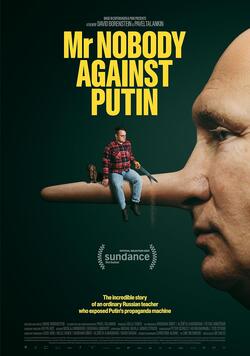
Mr. Nobody Against Putin film poster

Mr. Nobody Against Putin is a 2025 documentary film that premiered at the 2025 Sundance Film Festival, where it won the World Cinema Documentary Special Jury Award.

The film follows a rural Russian teacher who resists state propaganda in his school after the invasion of Ukraine. Filmed over two years by videographer Pavel “Pasha” Talankin at Karabash Primary School #1, it reveals how he secretly documented the growing pressure to promote patriotic education and his quiet defiance under an increasingly repressive system.

Co-sponsored by the Center on Democracy, Development and the Rule of Law (CDDRL) and the Center for Russian, East European and Eurasian Studies (CREEES).

Screening is open to the public. Seating is limited — please register in advance. The film is in Russian with English subtitles.

Encina Commons 123 (615 Crothers Way, Stanford)

Film Screenings
Date Label
Authors
Khushmita Dhabhai
News Type
Q&As
Date
Paragraphs

The "Meet Our Researchers" series showcases the incredible scholars at Stanford’s Center on Democracy, Development and the Rule of Law (CDDRL). Through engaging interviews conducted by our undergraduate research assistants, we explore the journeys, passions, and insights of CDDRL’s faculty and researchers.

On a busy Thursday afternoon at Stanford’s Center on Democracy, Development and the Rule of Law (CDDRL), I sat down with Professor Michael McFaul, Director of the Freeman Spogli Institute for International Studies (FSI) and Ken Olivier and Angela Nomellini Professor of International Studies in the Department of Political Science, for a wide-ranging conversation on great power competition, U.S.–China relations, Cold War legacies, and the role of ideology in shaping global politics.

A former U.S. Ambassador to Russia and one of the most prominent voices on American foreign policy, Professor McFaul’s new book Autocrats vs. Democrats: China, Russia, America, and the New Global Disorder examines the stakes of the current geopolitical moment. Over the course of nearly an hour, we spoke about the elasticity of the term “great power competition,” the dangers of isolationism, the importance of middle powers, and the enduring influence of ideas in world politics. He also shared advice for young people interested in foreign policy, as well as the two books that shaped his early intellectual journey.

The term “great power competition” has become such a potent buzzword in Washington. Everyone uses it all the time, and it feels like it can mean many different things depending on who’s talking. How do you define great power competition? And do you think there’s a way for Washington to stop treating it as a catch-all phrase and instead turn it into a strategy with clear ends, means, and metrics?


The original motivation for writing my book came in 2017 when the Trump administration came into power. They wrote a National Security Strategy that very explicitly stated that we were in a new era of great power competition. And that document, in my view, became one of the most famous national security strategies of recent decades because it was so clear about that shift. The Pentagon even came up with an acronym — GPC (great power competition) — and when they create an acronym, it usually means it’s here to stay.

Around that time, there was also a big debate about whether we had entered a new Cold War. It began first with Russia — books were being written about a “new Cold War” as early as 2009 — and then the conversation shifted to China. So my first motivation for writing the book was to ask: Is this actually true? Is the Cold War analogy useful or not? My answer is complicated. Some things are similar, some things are different. Some of what’s similar is dangerous; some isn’t. Some of what’s different makes things less dangerous, and some of what’s different is scarier than the Cold War. If we don’t get the diagnosis right, then we won’t have smart policies to sustain American national interests.

You’ve written and spoken about how the Cold War analogy can be misleading. What are the main lessons from that period that we should remember, both the mistakes and the successes?


Because we “won” the Cold War, a lot of the mistakes made during it are forgotten. I use the analogy of when I used to coach third-grade basketball. If we won the game, nobody remembered the mistakes made in the first quarter. But if we lost, they remembered every single one. Because the U.S. “won,” people forget the mistakes.

There were major errors: McCarthyism, the Vietnam War, and allying with autocratic regimes like apartheid South Africa when we didn’t have to. So, in the book, I dedicate one chapter to the mistakes we should avoid, one to the successes we should replicate, and one to the new issues the Cold War analogy doesn’t answer at all. It’s not about glorifying the past; it’s about learning from it in a clear-eyed way.

President Trump and former President Biden have had very different approaches to great power competition. President Biden’s vision is closer to a liberal international order, whereas President Trump talks about a concert of great powers — almost a 19th-century idea. How do you evaluate that model? Do you think it can work today?


The short answer is no. I don’t believe in the concert model or in spheres of influence. That’s the 19th century, and this is the 21st. Trump’s team itself was internally confused on China. Trump personally thinks in terms of great powers carving up the world into spheres, but the national security strategy he signed was written by his advisors, not necessarily by him.

In thinking about Trump, I find it useful to remember that U.S. foreign policy debates don’t fall neatly between Democrats and Republicans. They run along three axes: isolationism versus internationalism, unilateralism versus multilateralism, and realism versus liberalism. Trump is radical on all three fronts — he’s an isolationist, he prefers unilateralism, and he doesn’t care about regime type. I think that combination is dangerous for America’s long-term interests.


I find it useful to remember that U.S. foreign policy debates don’t fall neatly between Democrats and Republicans. They run along three axes: isolationism versus internationalism, unilateralism versus multilateralism, and realism versus liberalism.
Michael McFaul


What role do middle or “auxiliary” powers — like India, Brazil, or Turkey — play in this evolving landscape of great power competition?


This is one of the biggest differences between today and the Cold War. Back then, the system was much more binary. Today, the world is more fragmented. I think of it as a race: the U.S. is ahead, China is closing the gap, and everyone else is running behind. But they’re running. They have agency. They’re not just sitting on the sidelines.

Countries like India, South Africa, Turkey, and Brazil are swing states. They’re not going to line up neatly with Washington or Beijing. BRICS is a perfect example — democracies and autocracies working in the same grouping. The U.S. has to get used to living with that uncertainty. We need to engage, not withdraw.

And at the same time, while the U.S. seems to be retreating from some of its instruments of influence, China appears to be expanding. What worries you about this divergence?


It’s striking. We’re cutting back on USAID, pulling out of multilateral institutions, shutting down things like Voice of America, Radio Free Asia, Radio Free Europe, and cutting back on diplomats. Meanwhile, the Chinese are expanding their presence, their multilateral influence, their media footprint, and their diplomacy.

If the autocrats are organized, the democrats have to be organized too. We can’t just step back and assume things will turn out fine. That’s not how competition works.


If the autocrats are organized, the democrats have to be organized too. We can’t just step back and assume things will turn out fine. That’s not how competition works.
Michael McFaul


During the Cold War, despite intense rivalry, the U.S. and USSR cooperated on nuclear nonproliferation and arms control. How do you see cooperation taking shape in today’s U.S.–China rivalry?


That’s a really important point. Cooperation in the Cold War wasn’t just about deterring the Soviets — it was also about working with them when we had overlapping interests. The Nuclear Nonproliferation Treaty of 1968 was a monumental achievement. It was signed at the height of the Vietnam War, while we were literally fighting proxy conflicts, and yet we found common ground on nuclear weapons.

I think something similar can and should happen now. Even if we’re competing with China, and even with Russia, there are areas where cooperation is in everyone’s interest: nuclear arms control, nonproliferation of dangerous technologies like AI and bioweapons, and climate change. These are existential issues. We cooperated with our adversaries in the past; we should be able to do it again.

One of the big debates in international relations is about the role of ideology. How much does ideology matter in this current geopolitical context?


It matters a lot. My book isn’t called Great Powers — it’s called Autocrats vs. Democrats for a reason. I believe ideas and regime type shape international politics.

Putinism and Xi Jinping Thought are exported differently. Putinism — illiberal nationalism — has ideological allies in Europe and here in the U.S. Xi’s model is more economically attractive to parts of the Global South. Power matters, of course, but it’s not the only thing.

You can see this clearly if you compare Obama and Trump. There was no big structural power shift between 2016 and 2017, but their worldviews were radically different. That’s evidence that ideas and individuals matter a great deal in shaping foreign policy.


My book isn’t called "Great Powers" — it’s called "Autocrats vs. Democrats" for a reason. I believe ideas and regime type shape international politics.
Michael McFaul


You’ve warned about the dangers of U.S. retrenchment. Are there historical moments that you see as parallels to today?


I worry about a repeat of the 1930s. When Italy invaded Ethiopia, Americans said, “Where’s Ethiopia?” When Japan invaded China, they said, “Why do we care?” Then came 1939. Stalin and Hitler invaded Poland, and we still said, “That’s not our problem.” Eventually, it became our problem.

If we disengage now, we may find ourselves facing similar consequences. That’s part of why I wrote this book — to push back against the idea that retrenchment is safe. It’s not.

To close, what advice would you give to students who want to build careers like yours? And, could you recommend a book or two for young people entering this field?


Be more intentional than I was. Focus on what you want to do, not just what you want to be. Develop your ideas first, then go into government or academia to act on them. Don’t go into public service just for a title. I saw too many people in government who were there just to “be” something, without a clear agenda. The “to do” should come first; the “to be” comes later.

As for books, my own book, Autocrats vs. Democrats: China, Russia, America, and the New Global Disorder, is coming out soon — you can pre-order it. But the two books that shaped me the most when I was young are Crane Brinton’s The Anatomy of Revolution and Guillermo O’Donnell and Philippe Schmitter’s Transitions from Authoritarian Rule.

Read More

Meet Our Researchers: Alain Schläpfer
Q&As

Meet Our Researchers: Alain Schläpfer

Investigating how reputation, cultural norms, and conditional cooperation shape social harmony and conflict with CDDRL Research Scholar Alain Schläpfer.
Meet Our Researchers: Alain Schläpfer
Meet Our Researchers: Ayça Alemdaroğlu
Q&As

Meet Our Researchers: Ayça Alemdaroğlu

Exploring how authoritarian regimes influence identity, opposition movements, and class dynamics with CDDRL Research Scholar Ayça Alemdaroğlu, Associate Director of the center's Program on Turkey.
Meet Our Researchers: Ayça Alemdaroğlu
Meet Our Researchers: Michael Bennon
Q&As

Meet Our Researchers: Michael Bennon

Investigating how infrastructure project financing has changed amidst global geopolitical competition and how democracies can more effectively build in the future with CDDRL research scholar Michael Bennon.
Meet Our Researchers: Michael Bennon
Hero Image
Meet Our Researchers: Prof. Michael McFaul
All News button
1
Subtitle

Exploring great power competition, Cold War lessons, and the future of U.S. foreign policy with FSI Director and former U.S. Ambassador Michael McFaul.

Date Label
-
Democracy Day Panel

As part of Stanford Democracy Day, several Stanford scholars share their perspectives on domestic and comparative erosion of democracy, providing context for current elections in the United States and around the world.


Speakers:

Christophe Crombez, Senior Research Scholar at The Europe Center at the Freeman Spogli Institute for International Studies and Professor of Political Economy at the Faculty of Economics and Business at KU Leuven in Belgium. His research focuses on EU institutions and their impact on policies, EU institutional reform, lobbying, party politics, and parliamentary government.

Anna Grzymała-Busse, Professor in the Department of Political Science, the Michelle and Kevin Douglas Professor of International Studies, senior fellow at the Freeman Spogli Institute for International Studies and the director of The Europe Center. Her research interests include political parties, state development and transformation, informal political institutions, religion and politics, and post-communist politics.

Hakeem Jefferson, Assistant Professor in the Department of Political Science, faculty affiliate with the Center for Comparative Studies in Race and Ethnicity and the Stanford Center for American Democracy. His research focuses primarily on the role identity plays in structuring political attitudes and behaviors in the U.S., with a special interest in understanding how stigma shapes the politics of Black Americans, particularly as it relates to group members’ support for racialized punitive social policies. 

Hesham Sallam, Senior Research Scholar at CDDRL, where he serves as Associate Director for Research. He is also Associate Director of the Program on Arab Reform and Development. Sallam is co-editor of Jadaliyya ezine and a former program specialist at the U.S. Institute of Peace. His research focuses on political and social development in the Arab World. Sallam’s research has previously received the support of the Social Science Research Council and the U.S. Institute of Peace.

Kathryn Stoner, Mosbacher Director of the Center on Democracy, Development, and the Rule of Law (CDDRL), and a Senior Fellow at CDDRL and the Center on International Security and Cooperation at FSI. From 2017 to 2021, she served as FSI's Deputy Director. She is Professor of Political Science (by courtesy) and teaches in the Program on International Relations, as well as in the Ford Dorsey Master's in International Policy Program. She is also a Senior Fellow (by courtesy) at the Hoover Institution.

Encina Hall
616 Jane Stanford Way
Stanford, CA  94305


(650) 723-4270
0
Senior Fellow at the Freeman Spogli Institute for International Studies
Michelle and Kevin Douglas Professor of International Studies
Professor of Political Science
Senior Fellow, Hoover Institution
anna_gb_4_2022.jpg

Anna Grzymała-Busse is a professor in the Department of Political Science, the Michelle and Kevin Douglas Professor of International Studies, senior fellow at the Freeman Spogli Institute for International Studies and the director of The Europe Center. Her research interests include political parties, state development and transformation, informal political institutions, religion and politics, and post-communist politics.

In her first book, Redeeming the Communist Past, she examined the paradox of the communist successor parties in East Central Europe: incompetent as authoritarian rulers of the communist party-state, several then succeeded as democratic competitors after the collapse of these communist regimes in 1989.

Rebuilding Leviathan, her second book project, investigated the role of political parties and party competition in the reconstruction of the post-communist state. Unless checked by a robust competition, democratic governing parties simultaneously rebuilt the state and ensured their own survival by building in enormous discretion into new state institutions.

Anna's third book, Nations Under God, examines why some churches have been able to wield enormous policy influence. Others have failed to do so, even in very religious countries. Where religious and national identities have historically fused, churches gained great moral authority, and subsequently covert and direct access to state institutions. It was this institutional access, rather than either partisan coalitions or electoral mobilization, that allowed some churches to become so powerful.

Anna's most recent book, Sacred Foundations: The Religious and Medieval Roots of the European State argues that the medieval church was a fundamental force in European state formation.

Other areas of interest include informal institutions, the impact of European Union membership on politics in newer member countries, and the role of temporality and causal mechanisms in social science explanations.

Director of The Europe Center
Christophe Crombez, Anna Grzymała-Busse, Hakeem Jefferson, Hesham Sallam, Kathryn Stoner
Seminars
Date Label
-

This event is expected to be at full capacity. Seating is available on a first-come basis.

Join us for a book talk and signing with Professor Michael McFaul, director of the Freeman Spogli Institute for International Studies, New York Times bestselling author, and former U.S. ambassador to Russia. 

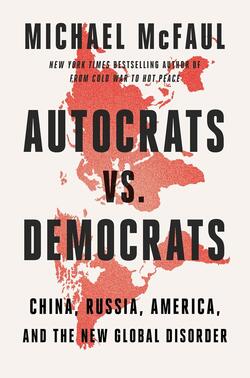
Autocrats vs. Democrats: China, Russia, America, and the New Global Disorder is a clear-eyed look at how the rise of autocratic China and Russia are compelling some to think that we have entered a new Cold War—and why we must reject that thinking in order to prevail. 

Cover of Autocrats vs Democrats Book

Amid the constant party divisions in Washington, DC, one issue generates stunning consensus—China—with Republicans and Democrats alike battling over which party can take the most hawkish stance toward the ascendant superpower. Indeed, far from trying to avoid a new Cold War with China, many have embraced it, finding comfort in the familiar construct, almost willing it into existence. And yet, even as politicians and intellectuals race to embrace this Cold War 2.0, many of the perils we face today are distinctly different from those of the Cold War with the Soviets. The alliance between the autocracies of China and Russia, the nature of the ideological struggle, China’s economic might, the rise of the far right in the United States and in Europe, and the growing isolationism and polarization in American society—taken together these represent new challenges for the democratic world. Some elements of the Cold War have reappeared today, but many features of the current great power competition have no analogy from the past century.

For decades Michael McFaul, former ambassador to Russia and international affairs analyst for NBC News, has been one of the preeminent thinkers about American foreign policy. Now, in this provocative work, he challenges the encroaching orthodoxy on Russia and China, arguing persuasively that the way forward is not to force our current conflict into a decades-old paradigm but to learn from our Cold War past so that democracy can again emerge victorious. Examining America’s layered, modern history with both Russia and China, he demonstrates that, instead of simplistically framing our competition with China and Russia as a second Cold War, we must understand the unique military, economic, and ideological challenges that come from China and Russia today, and the develop innovative policies that follow from that analysis, not just a return to the Cold War playbook.

At once a clarion call for American foreign policy and a forceful rebuttal of the creeping Washington consensus around China, Autocrats vs. Democrats demonstrates that the key to prevailing in this new era isn’t simply defeating our enemies through might, but using their oppressive regimes against them—to remind the world of the power and potential that our democratic freedoms make possible. 

Michael McFaul headshot

Professor Michael McFaul

FSI Director
"Autocrats vs. Democrats: China, Russia, America, and the New Global" is available starting October 28, 2025.
Order Now

Hauck Auditorium, Traitel Building, 435 Lasuen Mall, Stanford, CA 94305

Encina Hall
616 Jane Stanford Way
Stanford, CA 94305-6055

0
Senior Fellow, Freeman Spogli Institute for International Studies
Ken Olivier and Angela Nomellini Professor of International Studies, Department of Political Science
Peter and Helen Bing Senior Fellow, Hoover Institution
mcfaul_headshot_2025.jpg PhD

Michael McFaul is the Ken Olivier and Angela Nomellini Professor of International Studies in Political Science, Senior Fellow at the Freeman Spogli Institute for International Studies, and the Peter and Helen Bing Senior Fellow at the Hoover Institution, all at Stanford University. He joined the Stanford faculty in 1995 and served as FSI Director from 2015 to 2025. He is also an international affairs analyst for MSNOW.

McFaul served for five years in the Obama administration, first as Special Assistant to the President and Senior Director for Russian and Eurasian Affairs at the National Security Council at the White House (2009-2012), and then as U.S. Ambassador to the Russian Federation (2012-2014).

McFaul has authored ten books and edited several others, including, most recently, Autocrats vs. Democrats: China, Russia, America, and the New Global Disorder, as well as From Cold War to Hot Peace: An American Ambassador in Putin’s Russia, (a New York Times bestseller) Advancing Democracy Abroad: Why We Should, How We Can; and Russia’s Unfinished Revolution: Political Change from Gorbachev to Putin.

He is a recipient of numerous awards, including an honorary PhD from Montana State University; the Order for Merits to Lithuania from President Gitanas Nausėda of Lithuania; Order of Merit of Third Degree from President Volodymyr Zelenskyy of Ukraine, and the Dean’s Award for Distinguished Teaching at Stanford University. In 2015, he was the Distinguished Mingde Faculty Fellow at the Stanford Center at Peking University.

McFaul was born and raised in Montana. He received his B.A. in International Relations and Slavic Languages and his M.A. in Soviet and East European Studies from Stanford University in 1986. As a Rhodes Scholar, he completed his D. Phil. in International Relations at Oxford University in 1991. 

CV
Date Label
Michael McFaul
Lectures
Date Label
-
Mary Elise Sarotte — Post-Cold War Era as History

Professor Mary Elise Sarotte, award-winning historian and author of Not One Inch: America, Russia, and the Making of Post-Cold War Stalemate, will offer reflections on the difficult task of writing history that is still unfolding. Covering the pivotal years from 1989 to 2022, her work traces how early decisions at the end of the Cold War shaped the trajectory of U.S.–Russia relations and contributed to the impasse that continues to trouble the international order today. In this conversation, Sarotte will explore the historian’s challenge of disentangling myth from evidence, of balancing archival distance with contemporary resonance, and of reckoning with a legacy that remains deeply contested and urgently relevant.

The event will begin with opening remarks from Kathryn Stoner, Mosbacher Director of the Center on Democracy, Development, and the Rule of Law (CDDRL). The event will conclude with an audience Q&A.

This event is co-sponsored by the Center on Democracy, Development and the Rule of Law (CDDRL), and the Center for International Security and Cooperation (CISAC).

speakers

Mary Elise Sarotte

Mary Elise Sarotte

Johns Hopkins School of Advanced International Studies (SAIS), Kravis Professor of Historical Studies
full bio

Mary Elise Sarotte received her AB in History and Science from Harvard and her PhD in History from Yale. She is an expert on the history of international relations, particularly European and US foreign policy, transatlantic relations, and Western relations with Russia. Her book, Not One Inch: America, Russia, and the Making of Post-Cold War Stalemate, was shortlisted for both the Cundill Prize and the Duke of Wellington Medal, received the Council on Foreign Relations Arthur Ross Prize Silver Medal, and won the Pushkin House Prize for Best Non-Fiction Book on Russia. Not One Inch is now appearing in multiple Asian and European languages, including a best-selling and updated version in German, Nicht einen Schritt weiter nach Osten. In 2026, Sarotte will return to Yale for a joint appointment as a tenured professor in both the Jackson School of Global Affairs and the School of Organization and Management.

Kathryn Stoner

Kathryn Stoner

Mosbacher Director of the Center on Democracy, Development, and the Rule of Law
full bio

Kathryn Stoner is the Mosbacher Director of the Center on Democracy, Development and the Rule of Law (CDDRL), and a Senior Fellow at CDDRL and the Center on International Security and Cooperation at FSI. From 2017 to 2021, she served as FSI's Deputy Director. She is Professor of Political Science (by courtesy) at Stanford, and she teaches in the Department of Political Science, in the Program on International Relations, as well as in the Ford Dorsey Master's in International Policy Program. She is also a Senior Fellow (by courtesy) at the Hoover Institution.

Kathryn Stoner
Kathryn Stoner

William J. Perry Conference Room, 2nd Floor
Encina Hall (616 Jane Stanford Way, Stanford)

This is a hybrid event. For virtual participation, if prompted for a password, use: 123456

Mary Elise Sarotte Johns Hopkins School of Advanced International Studies (SAIS) Presenter Johns Hopkins University
Lectures
Date Label
Paragraphs
Cover of Autocrats vs Democrats Book

Amid the constant party divisions in Washington, DC, one issue generates stunning consensus—China—with Republicans and Democrats alike battling over which party can take the most hawkish stance toward the ascendant superpower. Indeed, far from trying to avoid a new Cold War with China, many have embraced it, finding comfort in the familiar construct, almost willing it into existence. And yet, even as politicians and intellectuals race to embrace this Cold War 2.0, many of the perils we face today are distinctly different from those of the Cold War with the Soviets. The alliance between the autocracies of China and Russia, the nature of the ideological struggle, China’s economic might, the rise of the far right in the United States and in Europe, and the growing isolationism and polarization in American society—taken together these represent new challenges for the democratic world. Some elements of the Cold War have reappeared today, but many features of the current great power competition have no analogy from the past century.

For decades Michael McFaul, former ambassador to Russia and international affairs analyst for NBC News, has been one of the preeminent thinkers about American foreign policy. Now, in this provocative work, he challenges the encroaching orthodoxy on Russia and China, arguing persuasively that the way forward is not to force our current conflict into a decades-old paradigm but to learn from our Cold War past so that democracy can again emerge victorious. Examining America’s layered, modern history with both Russia and China, he demonstrates that, instead of simplistically framing our competition with China and Russia as a second Cold War, we must understand the unique military, economic, and ideological challenges that come from China and Russia today, and the develop innovative policies that follow from that analysis, not just a return to the Cold War playbook.

At once a clarion call for American foreign policy and a forceful rebuttal of the creeping Washington consensus around China, Autocrats vs. Democrats demonstrates that the key to prevailing in this new era isn’t simply defeating our enemies through might, but using their oppressive regimes against them—to remind the world of the power and potential that our democratic freedoms make possible. 

Michael McFaul headshot

Professor Michael McFaul

FSI Director
"Autocrats vs. Democrats: China, Russia, America, and the New Global" is available starting October 28, 2025.
ORDER NOW
All Publications button
1
Publication Type
Books
Publication Date
Subtitle

From FSI Director, New York Times bestselling author, and former ambassador to Russia Michael McFaul comes a clear-eyed look at how the rise of autocratic China and Russia are compelling some to think that we have entered a new Cold War—and why we must reject that thinking in order to prevail. 

Authors
Michael A. McFaul
Book Publisher
Mariner Books

Encina Hall, E110
616 Jane Stanford Way
Stanford, CA 94305-6055

0
SURF Postdoctoral Fellow, 2025-26
emil-kamalov-2022.x1a300390_-_emil_kamalov.jpg

Emil Kamalov's research interests lie at the intersection of autocratic control, political behavior, migration, and repression, utilizing advanced quantitative methods complemented by qualitative data.

In his PhD thesis and papers, Emil develops an integrated account of extraterritorial opposition politics, examining how geopolitical tensions and host-country conditions shape emigrant activism, diaspora resilience, and migrant well-being. His findings demonstrate that under certain conditions, transnational repression by autocratic regimes can strengthen rather than weaken diaspora activism.

In collaboration with Ivetta Sergeeva, Emil co-founded and co-leads the OutRush project, the only ongoing multi-wave panel survey focusing on Russian political emigrants following Russia’s 2022 invasion of Ukraine. The OutRush project includes over 18,000 survey observations across four waves, covering respondents from more than 100 countries. The project has garnered substantial international media coverage and has drawn attention from policymakers and experts.

Emil is expected to receive his PhD in Political and Social Sciences from the European University Institute in September 2025.

Date Label
News Type
News
Date
Paragraphs

Motivation & Contribution


Vladimir Putin has ruled Russia for over a quarter century despite economic mismanagement, corruption, and a disastrous war in Ukraine. Prior to the invasion, Putin’s rule was often seen as exemplifying modern autocracy, maintaining one-man rule while employing less overt mechanisms of social control, such as propaganda and regularly held, albeit controlled, uncompetitive elections. Since the full-scale invasion of Ukraine in February of 2022, however, Putin’s authoritarianism has intensified, especially as opponents of the war are imprisoned, terrorized, driven into exile, or worse. As such, Russia’s “modern” autocracy, which relies less on force than on presenting a message to society of an all-capable state and leader, has transformed into a highly personalized form of harsh authoritarianism. At the same time, many average Russians do genuinely support Putin — especially given his emphasis on order in society and restoring Russian greatness — and view the regime as legitimate and responsive. Often, however, analysts of contemporary Russia in the West tend to focus more on those Russians who oppose Putin’s autocracy than on those who support it and why they do. 

In her “Review Article: Why Does Putinism Endure? Dialoguing With the Dictator,” Kathryn Stoner tackles this question through a critical analysis mainly of Hannah Chapman’s Dialogue with the Dictator: Authoritarian Legitimation and Information Management in Putin’s Russia. The analysis is complemented by insights from four other recently published books on authoritarianism and Russia. For Stoner, Chapman’s central contribution lies in showing how a seemingly ridiculous exercise in state propaganda — the Direct Line with Vladimir Putin TV call-in show — is in fact an important way of legitimizing Putin’s rule, providing his regime with information about social preferences and sources of dissatisfaction while affording citizens with the feeling that their complaints are being heard and even resolved live and on TV. Gaining information about citizens would otherwise be difficult in such an unfree society, where individual preferences that may be critical of Putin’s rule are often concealed or deliberately falsified to avoid punishment by the regime. The reader learns that even hegemonic dictators must be perceived by citizens to be a good listener. 

Putin uses participatory technologies not only to control what information reaches citizens, but also to enhance his legitimacy and appear more accountable.


The Functions of ‘Participatory Technologies’


The conceptual foundation of Chapman’s analysis lies in what she terms ‘participatory technologies’ (PTs), which allow citizens to interact with authoritarian regimes “directly and in a positive manner.” Observers tend to dismiss PTs, which are often low-technology formats like TV shows or radio programs, as ‘spin’ or mere propaganda. In Russia, however, Putin uses PTs not only to control what information reaches citizens, but also to enhance his legitimacy and appear more accountable. Although PTs are limited and highly individualized — for example, more often than not ignoring collective demands — they are direct.

Participatory technologies differ from autocrats’ sham, window-dressing elections, where the outcome is a foregone conclusion. Instead, they permit citizens to engage with and provide input to the autocrat on specific issues. They also provide information to the regime about the performance of lower-level agents, such as governors or regional politicians, given that citizens are often concerned with local, day-to-day problems. By involving these lower-level agents, autocrats can deflect responsibility for governance problems away from themselves. Finally, PTs provide value to those who participate in them, giving them a sense of political efficacy. At the same time, however, PTs may expose embarrassing governmental dysfunctions. Indeed, the resolution of local problems – like fixing potholes on a local road – should not require direct citizen engagement with powerful national-level leaders. Furthermore, PTs run the risk of being overused and being seen as performative and fake by citizens.


Participatory technologies differ from autocrats’ sham, window-dressing elections, where the outcome is a foregone conclusion. Instead, they permit citizens to engage with and provide input to the autocrat on specific issues.


Tuning into Direct Line


Stoner’s review article discusses Chapman’s analysis of one PT in particular, namely the Direct Line with Vladimir Putin call-in show. Direct Line began in 2001, organized by the Kremlin and broadcast on state-owned and pro-regime media. The audience and the questions posed are selected in advance. During the broadcast — which is one of the most watched events in Russia, perhaps because of compulsion from employers — Putin conveys to the audience that Russia is doing well, but that he is not satisfied, is working tirelessly, and wants to hear citizens’ concerns. Putin does not merely listen but acts to solve their concerns, for example, keeping a folder of issues raised by ordinary Russians and bringing these issues to the attention of regional governors. He has even forwarded questions directly to regional governors on air, which also serves to deflect responsibility away from himself. 

Methodology


Stoner describes the multiple survey experiments and interviews Chapman conducted in exploring whether Direct Line matters to ordinary Russians. Some of the interviewees seem to know that Direct Line is staged; yet they nonetheless find it compelling that Putin is not afraid to answer their sometimes uncomfortable questions. The goal of the survey experiments is to try to ascertain how prompts that (do not) mention Direct Line affect respondents’ evaluations of Putin. In other words, Direct Line is the ‘treatment,’ which participants in the ‘control’ group do not receive. One experiment only varies whether or not Putin heard about a problem on Direct Line. Another varies this as well as whether or not Putin resolved the problem. In both experiments, respondents whose prompts included mention of Direct Line evaluated Putin more favorably, although Stoner notes that the statistical effects of this are small. In another experiment, the mention of Direct Line leads respondents to believe there are greater opportunities to express their opinions and demands. Finally, a fourth experiment finds that respondents who support (oppose) Putin gave him higher (lower) evaluations when Direct Line was mentioned, hinting at how Direct Line might serve as a source of polarization in Russia.


Stoner highlights an important puzzle about whether participatory technologies like Direct Line can, in fact, provide credible information to Putin’s regime.


Limitations


Stoner highlights an important puzzle about whether participatory technologies like Direct Line can, in fact, provide credible information to Putin’s regime. For example, questions are pre-screened to exclude subjects that could threaten the regime. Additionally, those who call in are already likely to be more supportive of or sympathetic to the regime. It would thus seem that Putin has better mechanisms for gathering credible information, such as through the Kremlin’s surveillance system, than through a PT like Direct Line, as Chapman claims. As such, Direct Line’s value appears primarily rhetorical, as opposed to informational — the regime is merely performing an exercise in responding to easy problems that can be resolved quickly by Putin, or inane questions about things like Putin’s favorite books.

Stoner’s review article notes her concerns regarding the generalizability of Chapman’s findings. First of all, it would be challenging to draw conclusions from the survey experiments, given that they concern a single group of people who were surveyed a decade ago (2015-2016). Relatedly, and in light of the war in Ukraine, Chapman’s analysis of PTs seems dated, as Putin has resorted far more often to severely punishing opposition (real and imagined) to his regime, rather than cajoling and coercing society with participatory technologies like his call-in show. Indeed, the show was cancelled in 2022 without explanation, but presumably to avoid difficult questions about the devastation wrought that autumn on the Russian armed forces in Ukraine. Nonetheless, Stoner notes that there is now a burgeoning literature that helps us better understand how, in normal times, autocrats effectively utilize the media and other technologies to build support and legitimate their rule, while providing citizens with a sense that they can influence politics, when in reality, they cannot.

*Research-in-Brief prepared by Adam Fefer.

 
Hero Image
Direct Line with Vladimir Putin
Direct Line with Vladimir Putin | Kremlin.ru
All News button
1
Subtitle

CDDRL Research-in-Brief [5-minute read]

Date Label
Subscribe to Russia