-

Abstract

Speculation about the course of cross-Strait relations after the upcoming 19th Chinese Communist Party Congress ranges from greater PRC flexibility to substantially increased pressure on Taiwan. The Mainland’s persistent suspicion about President Tsai Ing-wen’s motives has only deepened with her appointment of avowed independence supporter Lai Ching-te as premier, especially because of the prospect that Lai could eventually become president. As a result, once the internal tugging and hauling leading up to the Party Congress has been settled, some people predict that Beijing will resort to military intimidation or even actual use of force to bring Tsai to heel. What are the PRC’s goals? What are Taipei’s? What role can and should the United States play in seeking not only to avoid conflict but to reestablish a reliable level of stability in cross-Strait relations and to prevent Taiwan from once more becoming a highly divisive issue in U.S.-PRC relations? Alan Romberg will address these issues in his talk on October 30th.


Bio

Image
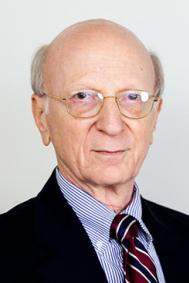
Alan Romberg

Alan Romberg is a Distinguished Fellow and the Director of the East Asia program at Stimson. Before joining Stimson in September 2000, he enjoyed a distinguished career working on Asian issues including 27 years in the State Department, with over 20 years as a U.S. Foreign Service Officer. Romberg was the Principal Deputy Director of the State Department's Policy Planning staff, Principal Deputy Assistant Secretary of State for Public Affairs and Deputy Spokesman of the department. He served in various capacities dealing with East Asia, including director of the Office of Japanese Affairs, member of the Policy Planning staff for East Asia, and staff member at the National Security Council for China. He served overseas in Hong Kong and Taiwan.

Additionally, Romberg spent almost 10 years as the CV Starr Senior Fellow for Asian Studies at the Council on Foreign Relations, and was special assistant to the secretary of the navy.

Romberg holds an M.A. from Harvard University, and a B.A. from the Woodrow Wilson School of Public and International Affairs at Princeton University.

This event is co-sponsored by the Taiwan Democracy Project in the Center on Democracy, Development, and the Rule of Law (CDDRL) and the U.S.-Asia Security Initiative in the Shorenstein Asia-Pacific Research Center (APARC), both part of the Freeman Spogli Institute for International Studies.

Alan Romberg Distinguished Fellow Stimson Center
Lectures
-

Abstract 

Scholars have credited a model of state-led capitalism called the developmental state with producing the first wave of the East Asian economic miracle. Using historical evidence based on original archival research, this talk offers a geopolitical explanation for the origins of the developmental state. In contrast to previous studies that have emphasized colonial legacies or domestic political factors, I argue that the developmental state was the legacy of the rivalry between the United States and Communist China during the Cold War. Responding to the acute tensions in Northeast Asia in the early postwar years, the United States supported emergency economic controls in Japan, South Korea, and Taiwan to enforce political stability. In response to the belief that the Communist threat would persist over the long term, the U.S. strengthened its clients by laying the foundations of a capitalist, export-oriented economy under bureaucratic guidance. The result of these interventions was a distinctive model of state-directed capitalism that scholars would later characterize as a developmental state.

I verify this claim by examining the rivalry between the United States and the Chinese Communists and demonstrating that American threat perceptions caused the U.S. to promote unorthodox economic policies among its clients in Northeast Asia. In particular, I examine U.S. relations with the Chinese Nationalists on Taiwan, where American efforts to create a bulwark against Communism led to the creation of an elite economic bureaucracy for administering U.S. economic aid. In contrast, the United States decided not to create a developmental state in the Philippines because the Philippine state was not threatened by the Chinese Communists. Instead, the Philippines faced a domestic insurgency that was weaker and comparatively short-lived. As a result, the U.S. pursued a limited goal of maintaining economic stability instead of promoting rapid industrialization. These findings shed new light on the legacy of statism in American foreign economic policy and highlight the importance of geopolitics in international development.


Bio

Image
James Lee

James Lee is a Ph.D. Candidate in the Department of Politics at Princeton University. He specializes in International Relations with a focus on U.S. foreign policy in East Asia and relations across the Taiwan Strait. James also serves as the Senior Editor for Taiwan Security Research, an academic website that aggregates news and commentary on the economic and political dimensions of Taiwan's security.


This event is co-sponsored by the Taiwan Democracy Project in the Center on Democracy, Development, and the Rule of Law (CDDRL) and the U.S.-Asia Security Initiative in the Shorenstein Asia-Pacific Research Center (APARC), both part of the Freeman Spogli Institute for International Studies.

James Lee Ph.D. Candidate Princeton University
Lectures
News Type
News
Date
Paragraphs
 
CDDRL is pleased to announce that Jerry Kaplan, who teaches social and economic impact of artificial intelligence in the Stanford computer science department, has been appointed to the position of adjunct professor at CDDRL. He will be working with Francis Fukuyama and Larry Diamond on issues related to the Internet, social media and democracy.
 

Image
jerry kaplan headshot 7

Kaplan is widely known as an artificial intelligence expert, serial entrepreneur, technical innovator and bestselling author. He is currently a fellow at the Center for Legal Informatics at Stanford University and a visiting lecturer in the computer science department, where he teaches social and economic impact of artificial intelligence.
 
Kaplan founded several technology companies over his 35-year career, two of which became public companies. He is the author of the best-selling classic “Startup: A Silicon Valley Adventure” (Houghton-Mifflin, 1995); “Humans Need Not Apply: A Guide to Wealth and Work in the Age of Artificial Intelligence” (Yale University Press, 2015); and “Artificial Intelligence: What Everyone Needs to Know (Oxford Press, 2016). Kaplan has been profiled in The New York Times, The Wall Street Journal, Forbes, and Business Week. He holds a BA in the history and philosophy of science from the University of Chicago and a PhD in computer science from the University of Pennsylvania.
 
Read his full bio here.
Hero Image
jerry kaplan headshot 7
All News button
1

Encina Hall
616 Jane Stanford Way
Stanford, CA 94305-6055

(650) 721-5345 (650) 724-2996
0
eileen_head_shot_2024.jpeg

Eileen Donahoe is the co-founder and an affiliated scholar at the Global Digital Policy Incubator (GDPI) at Stanford University's Center on Democracy, Development and the Rule of Law. (Previously, she served as GDPI’s executive director.) GDPI is a global multi-stakeholder collaboration hub for the development of policies that reinforce human rights and democratic values in a digitized society. Current research priorities include: international trends in AI governance, technical methods for aligning AI with democratic norms and standards, evolution of digital authoritarian policies and practices, and emerging blockchain and AI-enabled tools to support democracy.

Eileen served in the Biden administration as US Special Envoy for Digital Freedom at the Department of State. She also served in the Obama administration as the first US Ambassador to the UN Human Rights Council in Geneva during a period of significant institutional reform and innovation. After the Obama administration, she joined Human Rights Watch as Director of Global Affairs, where she represented the organization worldwide on human rights foreign policy, with special emphasis on digital rights, cybersecurity, and internet governance. Earlier in her career, she was a technology litigator at Fenwick & West in Silicon Valley.

Eileen serves as Vice Chair of the National Endowment for Democracy Board of Directors; on the Carnegie Endowment for International Peace Board of Directors; and on the Dartmouth College Board of Trustees. She is a member of the Global Network Initiative (GNI), the World Economic Forum AI Governance Alliance, and the Resilient Governance and Regulation working group. Previously, she served on the Transatlantic Commission on Election Integrity, the University of Essex Advisory Board on Human Rights, Big Data and Technology, the NDI Designing for Democracy Advisory Board, and the Freedom Online Coalition Advisory Network. Degrees: BA, Dartmouth; J.D., Stanford Law School; MA East Asian Studies, Stanford; M.T.S., Harvard; and Ph.D., Ethics & Social Theory, GTU Cooperative Program with UC Berkeley. She is a member of the Council on Foreign Relations.

CDDRL Affiliated Scholar
Date Label
-

Image
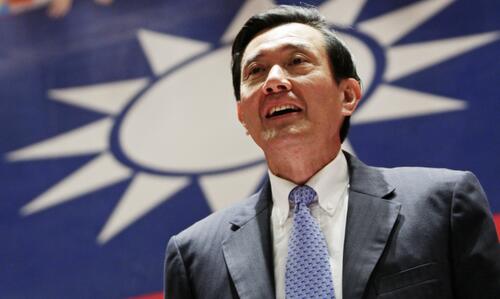
Ma Ying-jeou KMT

The eight-year presidency of Ma Ying-jeou (2008-2016) in Taiwan left a complex legacy of political achievements, confrontations, and disappointments that defies easy characterization. It began with President Ma and the Kuomintang’s (KMT) commanding electoral victories in the 2008 elections, and ended with the KMT’s overwhelming loss to the resurgent Democratic Progressive Party (DPP) and its leader Tsai Ing-wen in 2016.

It featured rapid conclusions to a broad set of agreements on cross-Strait cooperation with the People’s Republic of China (PRC). But worries about closer ties with the PRC also triggered a popular backlash against growing mainland Chinese influence in Taiwan’s economy and culminated in a student-led occupation of the Legislative Yuan.

It coincided with contradictory trends in public opinion, including both the consolidation of a separate Taiwanese identity and support for the status quo in cross-Strait relations, as well as the increasing salience of divisions over social and environmental issues such as same-sex marriage and green energy at the same time as rising concerns about economic inequality.

It also marked a return to unified government after the acrimonious partisan fights of the Chen Shui-bian years, but long-standing intra-KMT divisions and the decentralized organization of the legislature continued to frustrate the administration, especially in President Ma’s second term.        

Finally, the Ma era produced no consensus about how to move beyond Taiwan’s developmental state legacies. Plans for domestic economic liberalization and greater integration into the global economy were only partially carried out, and the Ma administration ignored or struggled to address rising inequality, stagnant wages, increasing economic dependence on the PRC market, and a skewed tax system favoring investors and corporations over salaried workers.


Conference Agenda

The 11th Annual Conference on Taiwan Democracy will bring together scholars from Taiwan, the US, and Europe to consider these political achievements, confrontations, and disappointments in depth, and to assess the strengths and weaknesses of Taiwan’s democracy at the end of the Ma Ying-jeou’s presidency. Conference participants will discuss trends in public opinion, party politics and elections, cross-Strait relations, governance and media, and the performance of political institutions. The conference papers will be revised and included in an edited volume covering democratic practice during the Ma Ying-jeou era in Taiwan.

The conference is free and open to the public. Those interested in attending are requested to RSVP at the link above. This event is organized by the Taiwan Democracy Project in the Center on Democracy, Development, and the Rule of Law.


Thursday, March 9

9:15-10:45. Panel I. Public Opinion and Elections

  • Min-hua Huang, "Why Young Voters Abandoned the KMT"
  • Ching-hsin Yu, "Trends in National Identity, Partisanship, and Attitudes toward Cross-Strait Relations"
  • Yun-han Chu, discussant

11:00-12:45. Panel II. Party Politics

  • Austin Wang, "Tsai Ing-wen and the DPP: The Path Out of the Political Wilderness"
  • Nathan Batto, "The KMT as a Presidentialized Party: Party Leaders and Shifts in China Discourse"
  • Kharis Templeman, "The Disruption that Wasn't: How 2016 Changed the Taiwanese Party System"
  • Ching-hsin Yu, discussant

12:45-1:45. Lunch

1:45-3:30. Panel III. Economics, Security, and Cross-Strait Relations

  • Szu-yin Ho, "Ma Ying-jeou's Cross-Strait Policy: Ambitions, Constraints, Results" 
  • Lang Kao, "Cross-Strait Agreements and Taiwan's Executive-Legislative Relationship, 2008-2016"
  • Dean Chen, "In the Shadow of Great Power Rivalry: The KMT Administration's Relations with America, China, and Japan, 2008-2016"
  • Larry Diamond, discussant


Friday, March 10

9:15-10:45. Panel IV. Governance, Media, and Civil Society

  • Eric Yu, "The Changing Media Environment and Public Opinion"
  • Yun-han Chu and Yu-tzung Chang, "The Challenge of Governability in Taiwan"
  • Kharis Templeman, discussant

11:00-12:30. Panel V. Political Institutions

  • Shih-hao Huang, w/ Shing-yuan Sheng, "Decentralized Legislative Organization and Its Consequences for Policy-making in the Ma Ying-jeou Era"
  • Christian Goebel, "Special Prosecutors, Courts, and Other Accountability Institutions under Ma YIng-jeou"
  • TJ Pempel, discussant

12:30-1:30. Lunch


Oksenberg Room, 3rd Floor, Encina Hall Central

CDDRL
Stanford University
Encina Hall, C147
616 Jane Stanford Way
Stanford, CA 94305-6055

(650) 724-6448 (650) 723-1928
0
Mosbacher Senior Fellow in Global Democracy at the Freeman Spogli Institute for International Studies
William L. Clayton Senior Fellow at the Hoover Institution
Professor, by courtesy, of Political Science and Sociology
diamond_encina_hall.png MA, PhD

Larry Diamond is the William L. Clayton Senior Fellow at the Hoover Institution, the Mosbacher Senior Fellow in Global Democracy at the Freeman Spogli Institute for International Studies (FSI), and a Bass University Fellow in Undergraduate Education at Stanford University. He is also professor by courtesy of Political Science and Sociology at Stanford, where he lectures and teaches courses on democracy (including an online course on EdX). At the Hoover Institution, he co-leads the Project on Taiwan in the Indo-Pacific Region and participates in the Project on the U.S., China, and the World. At FSI, he is among the core faculty of the Center on Democracy, Development and the Rule of Law, which he directed for six and a half years. He leads FSI’s Israel Studies Program and is a member of the Program on Arab Reform and Development. He also co-leads the Global Digital Policy Incubator, based at FSI’s Cyber Policy Center. He served for 32 years as founding co-editor of the Journal of Democracy.

Diamond’s research focuses on global trends affecting freedom and democracy and on U.S. and international policies to defend and advance democracy. His book, Ill Winds: Saving Democracy from Russian Rage, Chinese Ambition, and American Complacency, analyzes the challenges confronting liberal democracy in the United States and around the world at this potential “hinge in history,” and offers an agenda for strengthening and defending democracy at home and abroad.  A paperback edition with a new preface was released by Penguin in April 2020. His other books include: In Search of Democracy (2016), The Spirit of Democracy (2008), Developing Democracy: Toward Consolidation (1999), Promoting Democracy in the 1990s (1995), and Class, Ethnicity, and Democracy in Nigeria (1989). He has edited or coedited more than fifty books, including China’s Influence and American Interests (2019, with Orville Schell), Silicon Triangle: The United States, China, Taiwan the Global Semiconductor Security (2023, with James O. Ellis Jr. and Orville Schell), and The Troubling State of India’s Democracy (2024, with Sumit Ganguly and Dinsha Mistree).

During 2002–03, Diamond served as a consultant to the US Agency for International Development (USAID) and was a contributing author of its report, Foreign Aid in the National Interest. He has advised and lectured to universities and think tanks around the world, and to the World Bank, the United Nations, the State Department, and other organizations dealing with governance and development. During the first three months of 2004, Diamond served as a senior adviser on governance to the Coalition Provisional Authority in Baghdad. His 2005 book, Squandered Victory: The American Occupation and the Bungled Effort to Bring Democracy to Iraq, was one of the first books to critically analyze America's postwar engagement in Iraq.

Among Diamond’s other edited books are Democracy in Decline?; Democratization and Authoritarianism in the Arab WorldWill China Democratize?; and Liberation Technology: Social Media and the Struggle for Democracy, all edited with Marc F. Plattner; and Politics and Culture in Contemporary Iran, with Abbas Milani. With Juan J. Linz and Seymour Martin Lipset, he edited the series, Democracy in Developing Countries, which helped to shape a new generation of comparative study of democratic development.

Download full-resolution headshot; photo credit: Rod Searcey.

Former Director of the Center on Democracy, Development and the Rule of Law
Faculty Chair, Jan Koum Israel Studies Program
Date Label
Conferences
-

Abstract

Dr. Tien will reflect on security and economic trends in the Asia-Pacific region, and speak about Taiwan's foreign policy strategy in light of these trends. 

Bio

Dr. Hung-mao Tien received his Ph.D. in Political Science from the University of Wisconsin-Madison. Since September 2016, he has been the the chairman of the Straits Exchange Foundation, the semi-official body in Taiwan responsible for direct exchanges and dialogue with the People's Republic of China. He is also the president and board chairman of the Institute for National Policy Research in Taipei, as well as an advisor to the Carnegie Endowment for International Peace, and board member of several foundations and business corporations in Taiwan. He previously served as Minister of Foreign Affairs, ROC (Taiwan), Representative (ambassador) to the United Kingdom, and presidential advisor to former President Lee Teng-hui.  He has also served in an advisory capacity to Harvard University’s Asia Center, The Asia Society in New York, and the Brookings Institution in Washington, D.C.  Dr. Tien has taught in universities in both the US and Taiwan as professor of political science.  His numerous publications in English (author, editor and co-editor) include: Government and Politics in Kuomintang China 1927-37 (Stanford University Press); The Great Transition: Social and Political Change in the Republic of China (Stanford: Hoover Institution Press); and Democratization in Taiwan, Implications for China (St. Anthony’s Series, Oxford University), Consolidating the Third Wave Democracies, Themes and Perspectives (Baltimore and London: The Johns Hopkins University Press), China Under Jiang Zemin (Rienner), and The Security Environment in the Asia-Pacific (M.E. Sharpe).

Philippines Conference Room

3rd Floor, Encina Hall

Hung-mao Tien President Institute for National Policy Research
Lectures
Paragraphs

How should the quality of government be measured across disparate national contexts? This study develops a new approach using an original survey of Chinese civil servants and a comparison to the United States. We surveyed over 2,500 Chinese municipal officials on three organizational features of their bureaucracies: meritocracy, individual autonomy, and morale. They report greater meritocracy than U.S. federal employees in almost all American agencies. China's edge is smaller in autonomy and markedly smaller in morale. Differences between the U.S. and China lessen, but do not disappear, after adjusting for respondent demographics and excluding respondents most likely to be influenced by social desirability biases. Our findings contrast with numerous indices of good government that rank the U.S. far above China. They suggest that incorporating the opinions of political insiders into quality of government indices may challenge the foundations of a large body of cross-national governance research. 


All Publications button
1
Publication Type
Working Papers
Publication Date
Journal Publisher
CDDRL Working Papers
Authors
Francis Fukuyama
Margaret Boittin
-

Co-sponsored by the Taiwan Democracy Project at the Center on Democracy, Development, and the Rule of Law, and the China Program at the Shorenstein Asia-Pacific Research Center (APARC)


Abstract

As President Trump assumes office, it is timely to consider the state of US-People's Republic of China (PRC)-Taiwan relations and how they might evolve in the coming years. Uncertainty regarding US-PRC-Taiwan relations is running high—it is far greater than eight years ago when Barack Obama assumed office. Trump’s phone call with Taiwan’s President Tsai Ing-wen shortly after winning the election and his subsequent suggestion that Taiwan could be used as a bargaining chip to extract trade concessions from China have alarmed Beijing and created anxiety in Taipei. In Washington, Trump’s actions and statements have fueled policy debates about whether to abandon the “one China” policy which has been a mainstay of US policy for 37 years.  How the Trump administration will adjust relations with Beijing and Taipei is unknown. In the months ahead, a new dynamic may be created in the US-PRC-Taiwan triangular relationship in which the source of instability is neither China nor Taiwan, but rather is the United States. 


Biography

Bonnie S. Glaser is a senior adviser for Asia and the director of the China Power Project at CSIS, where she works on issues related to Chinese foreign and security policy. She is concomitantly a non-resident fellow with the Lowy Institute in Sydney, a senior associate with CSIS Pacific Forum and a consultant for the U.S. government on East Asia. From 2008 – mid-2015 Ms. Glaser was a Senior Adviser with the Freeman Chair in China Studies, and from 2003 to 2008, she was a senior associate in the CSIS International Security Program. Prior to joining CSIS, she served as a consultant for various U.S. government offices, including the Departments of Defense and State.

Ms. Glaser has written extensively on various aspects of Chinese foreign policy, including Sino-U.S. relations, U.S.-China military ties, cross-Strait relations, China’s relations with Japan and Korea, and Chinese perspectives on missile defense and multilateral security in Asia. Her writings have been published in the Washington Quarterly, China Quarterly, Asian Survey, International Security, Problems of Communism, Contemporary Southeast Asia, American Foreign Policy Interests, Far Eastern Economic Review, Korean Journal of Defense Analysis, New York Times, and International Herald Tribune, as well as various edited volumes on Asian security. Ms. Glaser is a regular contributor to the Pacific Forum quarterly Web journal Comparative Connections. She is currently a board member of the U.S. Committee of the Council for Security Cooperation in the Asia Pacific, and a member of both the Council on Foreign Relations and the Institute of International Strategic Studies. She served as a member of the Defense Department’s Defense Policy Board China Panel in 1997. Ms. Glaser received her B.A. in political science from Boston University and her M.A. with concentrations in international economics and Chinese studies from the Johns Hopkins School of Advanced International Studies.


Philippines Conference Room

Encina Hall, 3rd Floor

Bonnie Glaser Director of the China Power Project and Senior Advisor for Asia Center for Strategic and International Studies
Lectures
Subscribe to China