Authors
News Type
News
Date
Paragraphs

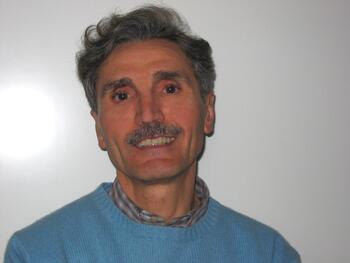
Prince Moulay Hicham Ben Abdallah, a consulting professor at the Center on Democracy, Development and the Rule of Law is leaving Stanford at the end of this academic year to pursue research in Islamic studies in the United Kingdom.

Ben Abdallah joined CDDRL – a center at the Freeman Spogli Institute for International Studies – as a visiting scholar in 2007, and then became a consulting professor. In 2010, Ben Abdallah worked with CDDRL Director Larry Diamond to launch one of the center’s principal research programs, the Program on Arab Reform and Democracy (ARD). Examining political and democratic reform in the Arab world, ARD is a multidisciplinary program that brings together policy-makers, academics and civil society members to advance policy-relevant research.

“We are very proud to have been able to engage Prince Moulay Hicham and provide him an intellectual home during this past formative period for the Program on Arab Reform and Democracy, and for his own scholarship and reflection. He has had a profound and enduring impact in helping to launch and shape a significant program of research on Arab politics and society at Stanford, and through that in stimulating the broader growth of Arab studies at Stanford,” said Diamond. “In giving so generously of his time, knowledge, and resources to our students, he has also supported and inspired many of them to make what I expect will be a lifelong commitment to study of and engagement with the Arab World. We wish him every success in this next phase of his intellectual journey.”

Written during his residence at CDDRL, Ben Abdallah's memoir entitled Journal d’un Prince Banni or the Diary of a Banished Prince debuted this spring. The autobiography shares his life story as a member of Morocco's royal family. The first cousin of Morocco's King Mohammed VI, Diary of a Banished Prince traces Ben Abdallah's evolution as a political activist against the historical backdrop of Morocco's authoritarian politics.

“At CDDRL, I found an intellectual community that was tightly knit, yet diverse enough to foster the cross-fertilization of ideas," said Ben Abdallah "Its cutting-edge research and classical scholarly debates provided an environment that broadened my expertise and offered opportunities to engage in real introspection.. All these elements were crucial in allowing me to write my book as well as explore new frontiers of research.”

Ben Abdallah has served on the FSI advisory board since November 2009, and has stepped down from that role this year.

Ben Abdallah will continue to stay engaged at Stanford through his role on the board of advisors for the American Middle Eastern Network for Dialogue at Stanford, a student group on campus. He will also stay involved with the ARD program as a principal advisor and supporter of the initiative.

Hero Image
myhicham
Moulay Hicham
All News button
1
Authors
Date
Paragraphs

The electoral eruption of anti-European Union populism is a reflection of structural flaws in that body but does not represent a fatal political blow, according to Stanford scholars.

In the May 25 elections for the European Parliament, anti-immigration parties won 140 of the 751 seats, well short of control, but enough to rattle supporters of the EU, which has 28 member nations. In Britain, Denmark, France and Greece, the political fringe vote totals stunned the political establishments.

Stanford political scientist Francis Fukuyama said the rise of extremism and anti-elitism is not surprising in the wake of the 2008 economic downturn and subsequent high levels of unemployment throughout Europe. In one sense, the EU elites have themselves to blame, he said.

"The elites who designed the EU and the eurozone failed in a major way," he said. "There was a structural flaw in the design of the euro (monetary union absent fiscal union, and the method of disciplining countries once in the zone)," said Fukuyama, the Olivier Nomellini Senior Fellow at Stanford's Freeman Spogli Institute for International Studies and the Center on Democracy, Development and the Rule of Law, and Research Afflilate at The Europe Center.

Some have argued that the European Union should adopt a form of fiscal union because without one, decisions about taxes and spending remain at the national level.

As Fukuyama points out, this becomes a problem, as in the case of a debt-ridden Greece, which he believes should not have qualified for EU membership in the first place. In fact, he said, it would have been better for Greece itself to leave the euro at the outset of the 2008 crisis.

Still, Fukuyama said the big picture behind the recent election is clear – it was a confluence of issues and timing.

"It is a bit like an off-year election in the U.S., where activists are more likely to vote than ordinary citizens," he said.

Fukuyama believes the EU will survive this electoral crisis. "I think the EU will be resilient. It has weathered other rejections in the past. The costs of really exiting the EU are too high in the end, and the elites will adjust, having been given this message," he said.

Meanwhile, the populist parties in the different countries are not unified or intent on building coalitions with each other.

"Other than being anti-EU, most of them have little in common," Fukuyama said. "They differ with regard to specific positions on immigration, economic policy, and they respond to different social bases."

Ongoing anger

Dan Edelstein, a professor of French, said the largest factor for success by extremist candidates was "ongoing anger toward the austerity policy imposed by the EU," primarily by Germany.

Edelstein estimates that a large majority of French voters are still generally supportive of the EU. For the time being, the anti-EU faction does not have a majority, though they now have much more representation in the European Parliament.

Edelstein noted existing strains among the anti-EU parties – for example, the UK Independence Party in Britain has stated that it would not form an alliance with the National Front party in France.

Immigration remains a thorny issue for some Europeans, Edelstein said.

"'Immigration' in most European political debates, tends to be a synonym for 'Islam.' While there are some countries, such as Britain, that are primarily worried about the economic costs of immigration, in most continental European countries, the fears are cultural," he said.

As Edelstein put it, Muslims are perceived as a "demographic threat" to white or Christian Europe. However, he is optimistic in the long run.

"It seems a little early to be writing the obituary of the EU. Should economic conditions improve over the next few years, as they are predicted to, we will likely see this high-water mark of populist anger recede," said Edelstein.

Cécile Alduy, an associate professor of French, writes in the May 28 issue of The Nation about how the ultra-right-wing National Front came in first place in France's election.

"This outcome was also the logical conclusion of a string of political betrayals, scandals and mismanagement that were only compounded by the persistent economic and social morass that has plunged France into perpetual gloom," she wrote.

Historian J.P. Daughton said that like elsewhere in the world, immigration often becomes a contentious issue in Europe in times of economic difficulties.  

"High unemployment and painful austerity measures in many parts of Europe have led extremist parties to blame immigrants for taking jobs and sapping already limited social programs," he said.

Anti-immigration rhetoric plays particularly well in EU elections, Daughton said. "Extremist parties portray European integration as a threat not only to national sovereignty, but also to national identity.

Edelstein, Alduy and Daughton are all Faculty Affiliates of The Europe Center.

Wake-up call

Russell A. Berman, a professor of German studies and comparative literature, said many Europeans perceive the EU as "somehow impenetrable, far from the civic politics of the nation states."

As a result, people resent regulations issued by an "intangible bureaucracy," and have come to believe that the European Parliament has not grappled with major issues such as mustering a coherent foreign policy voice, he said.

"The EU can be great on details but pretty weak on the big picture," said Berman, who is the Walter A. Haas Professor in the Humanities, Senior Fellow at the Hoover Institution, and Faculty Affiliate of The Europe Center. "It is this discrepancy that feeds the dissatisfaction."

Yet he points out that the extremist vote surged in only 14 nations of the EU – in the other 14, there was "negligible extremism," as he describes it.

"We're a long way from talking about a fatal blow, but the vote is indeed a wake-up call to the centrists that they have to make a better case for Europe," Berman said.


All News button
1
-

*Open only to Stanford students.* 

Speaker Bio: 

Zahera Harb is one of the six 2013-2014 FSI-Humanities Center International Visitors and will be in residence at Stanford in May 2014. She is Senior Lecturer in International Journalism at City University London. She received her M.A. and Ph.D. in journalism studies from Cardiff University (United Kingdom). As an expert on Arab media, she has published widely on journalism ethics, conflict and war reporting, political communication and representation of Muslims and Islam in western media. Her recent publications include Narrating Conflict in the Middle East: Discourse, Image and Communications Practices in Lebanon and Palestine (2013) and Channels of Resistance: Liberation Propaganda, Hezbollah and the Media (2011). Dr. Harb also has 11 years of experience as a journalist in Lebanon working for Lebanese and international media organizations.


This event is co-sponsored by the Sohaib and Sara Abbasi Program in Islamic Studies, CDDRL Program on Arab Reform and Democracy, the Mediterranean Studies Forum, Stanford Humanities Center, Arab Studies Table, Stanford Language Center. 

Building 30, Room 102

Zahera Harb Senior Lecturer in International Journalism Speaker City University London
Seminars
-

*Event is currently full. Live stream is available here.*

During the Enlightenment, John Locke offered a democratic solution to the Hobbesian nightmare of a war of all against all: a social contract to regulate the relationship between the government and free citizens. We now need a new "Lockean contract" for the modern digital society. The President of Estonia, Toomas Hendrik Ilves, talks about the solutions found in a small, high-tech European democracy and calls forth Locke and Voltaire of the digital age.

This event is co-sponsored by the CDDRL Program on Liberation Technology, the Department of Communications, Stanford Libraries, the Freeman Spogli Institute and the Europeans Entrepreneurship and Innovation at Stanford Engineering. A special thank you to the Clark Kelly McCatchy Lecture Fund for support of this event.


Live stream full link: http://stanfordvideo.stanford.edu/stream/ilves.html

Cecil H. Green Library
Albert M. Bender Room
5th Floor

President Toomas Hendrik Ilves Speaker Republic of Estonia
Conferences
Authors
News Type
News
Date
Paragraphs

Former President George W. Bush met with Stanford students for an hourlong conversation that touched on many of the defining moments and policies of his presidency.

In a relaxed and sometimes self-deprecating exchange on May 5, Bush talked about the limits of congressional power and his relationships and personal diplomacy with other world leaders. His tone was more serious when discussing what he described as universal desires for freedom, his military strategies following 9/11, and his commitment to addressing Africa’s HIV/AIDS pandemic.

Mariano-Florentino Cuéllar, director of the university’s Freeman Spogli Institute for International Studies, moderated the session. Stanford President John Hennessy and Condoleezza Rice – Bush’s secretary of state and national security adviser who has returned to teaching political science and business at Stanford – joined the conversation.

"FSI has a terrific track record of convening leaders at Stanford, from the head of the International Monetary Fund to prime ministers and presidents,” Cuéllar said. “On this occasion, we wanted our students to have an opportunity for a candid conversation with one of the key policymakers of the early 21st century, and we think such experiences will further prepare them for leadership in a complex world."

About 30 students were invited to the session at Encina Hall, but they didn’t know they were meeting Bush until the 43rd president walked into the room.

“I suspect he misses this sort of engagement,” said Gregory Schweizer, a second-year law school student who was part of the discussion that also covered immigration reform, national education policies and the Edward Snowden affair.

“The media always portrays him as being disengaged from current affairs,” Schweizer said. “But I’m impressed with how interested and engaged he still is.”

Along with representatives from Stanford Law School, other students were invited from the Ford Dorsey Program in International Policy Studies. Honors students from FSI’s Center for International Security and Cooperation and Center on Democracy, Development, and the Rule of Law also joined the conversation.

Bush’s visit was arranged with the help of  Brad Freeman, a former university trustee and Ronald Spogli, who is currently on Stanford's board of trustees. Freeman and Spogli are longtime friends of the former president and philanthropists who donated a naming gift to FSI in 2005. Bush appointed Spogli as ambassador to Italy in 2005 and as ambassador to San Marino a year later. 

Stanford has a tradition of hosting current and former heads of state, including German Chancellor Angela Merkel and former Russian President Dmitry Medvedev – both of whom visited in 2010.

Hero Image
screen shot 2014 08 22 at 10 16 22 am
All News button
1
-

For nearly 70 years, CARE has been serving individuals and families in the world's poorest communities. Today, they work in 84 countries around the world, with projects addressing issues from education and healthcare to agriculture and climate change to education and women's empowerment. Helene Gayle, president and CEO of CARE USA, will discuss her work with CARE and her experiences in the field of international development. Dr. Gayle will discuss how access to global health is integral to CARE's effort in addressing the underlying causes of extreme global poverty.

Dr. Michele Barry, director of the Center for Innovation in Global Health, will moderate a conversation between CARE President and CEO, Dr. Helene Gayle and former Prime Minister of Norway and United Nations Special Envoy, Dr. Gro Brundtland. 

This event is sponsoredy by CARE USA, the Center on Democracy, Development and the Rule of Law and the Haas Center for Public Service.

A reception will follow the event. 


Dr. Gro Brundtland Bio:

Dr. Gro Harlem Brundtland is the former prime minister of Norway and the current deputy chair of The Elders, a group of world leaders convened by Nelson Mandela and others to tackle the world’s toughest issues. She was recently appointed as the Mimi and Peter E. Haas Distinguished Visitor for spring 2014 at the Haas Center for Public Service at Stanford University. Dr. Brundtland has dedicated over 40 years to public service as a doctor, policymaker and international leader. She was the first woman and youngest person to serve as Norway’s prime minister, and has also served as the former director-general of the World Health Organization and a UN special envoy on climate change.

Her special interest is in promoting health as a basic human right, and her background as a stateswoman as well as a physician and scientist gives her a unique perspective on the impact of economic development, global interdependence, environmental issues and medicine on public health.


 Dr. Helene Gayle Bio:

Helene D. Gayle joined CARE USA as president and CEO in 2006. Born and raised in Buffalo, New York, she received her B.A. from Barnard College of Columbia University, her M.D. from the University of Pennsylvania and her M.P.H. from Johns Hopkins University. After completing her residency in pediatric medicine at the Children's Hospital National Medical Center in Washington, D.C., she entered the Epidemic Intelligence Service at the Centers for Disease Control and Prevention, followed by a residency in preventive medicine, and then remained at CDC as a staff epidemiologist.

At CDC, she studied problems of malnutrition in children in the United States and abroad, evaluating and implementing child survival programs in Africa and working on HIV/AIDS research, programs and policy. Dr. Gayle also served as the AIDS coordinator and chief of the HIV/AIDS division for the U.S. Agency for International Development; director for the National Center for HIV, STD, and TB Prevention, CDC; director of CDC's Washington office; and health consultant to international agencies including the World Health Organization, UNICEF, the World Bank and UNAIDS. Prior to her current position, she was the director of the HIV, TB and reproductive health program for the Bill and Melinda Gates Foundation.


Hewlett 201
Hewlett Teaching Center
370 Serra Mall
Stanford, CA 94305

Dr. Gro Brundtland Mimi and Peter E. Haas Distinguished Visitor Panelist Haas Center for Public Service, Stanford University
Dr. Helene Gayle President and CEO Panelist CARE USA
Michele Barry Director Moderator Center for Innovation in Global Health
Conferences

On March 14-15, the Program on American Democracy in Comparative Perspective at the Center for Democracy, Development, and the Rule of Law, held a workshop on electoral system alternatives in the United States. The workshop brought together a number of scholars of American electoral institutions, practitioners working to implement electoral reforms, and experts on electoral systems reforms in advanced democracies. The workshop examined how different electoral systems options have worked in other countries, and what the implications of similar reforms might be in the United States.

Among other things, the workshop asked:

  • How might plurality elections in single-member districts in the United States skew democratic outcomes? Is there a relationship between the electoral system and the problems we see today, such as ideological and political polarization?
  • What lessons might be drawn from reforms in other countries? Examples include the single-transferable vote (STV) in Ireland, the alternative vote (AV) in Australia, and mixed-member systems in Italy, Japan, and New Zealand;
  • How might we go about reforming American electoral systems -- through local, state, or federal means, and through engagement with which types of political and civil service actors?
  • How has ranked-choice voting (RCV) worked in local experiments in the United States, including in Minneapolis, MN; San Francisco, CA; Oakland, CA; and Cambridge, MA?
  • How might electoral systems reforms interact with other proposed political reforms in the United States, including the National Popular Vote for the Electoral College, top-four primaries, and the adoption of redistricting commissions? 


CONFERENCE PAPERS

Nick Stephanopoulos: Our Electoral Exceptionalism


Electoral System Reform in the U.S.
Download pdf

Oksenberg Conference Room

Conferences
-

Abstract:

Professor Schuck's new book first identifies the endemic  ineffectiveness of much federal domestic policy as a major cause of public disaffection with Washington.  This disaffection has grown along with the size and ambition of federal programs and  now threatens the very legitimacy of our polity.  Synthesizing a vast amount of social science evidence and analysis,  he argues that this widespread policy failure has little to do with which party dominates Congress and the White house but instead reflects the systemic, structural, institutional obstacles to effective policy.  These deep obstacles to coherent policymaking include our political culture, political actors' perverse incentives, voters' collective irrationality, policymakers' poor information, the government's inherent inflexibility and lack of credibility, the effect of dynamic markets on policy coherence, the inherent limits of law as a policy instrument, a deviant implementation process, and a deteriorating bureaucracy.  Those policies that have succeeded help to explain why most policies fail. Professor Schuck proposes a variety of remedies to reduce government's failure rate.

Speaker Bio:

Peter H. Schuck is the Simeon E. Baldwin Professor of Law Emeritus at Yale University in New Haven, Connecticut.  He has held the Baldwin professorship since 1984, and also served as Deputy Dean of the Law School. Prior to joining the Yale faculty in 1979, he was Principal Deputy Assistant Secretary for Planning and Evaluation in the U.S. Department of Health, Education, and Welfare (1977-79), Director of the Washington Office of Consumers Union (1972-77), and consultant to the Center for Study of Responsive Law (1971-72).  He also practiced law in New York City (1965-68) and holds degrees from Cornell (B.A. 1962), Harvard Law School (J.D. 1965), N.Y.U. Law School (Ll.M. in International Law 1966), and Harvard University (M.A. in Government 1969). 

His major fields of teaching and research are tort law; immigration, citizenship, and refugee law; groups, diversity, and law; and administrative law. He has published hundreds of articles on these and a broad range of other public policy topics in a wide variety of scholarly and popular journals.  His newest book is Why Government Fails So Often, and How It Can Do Better (April 2014).  Earlier books include Understanding America: The Anatomy of An Exceptional Nation (2008) (co-editor with James Q. Wilson; Targeting in Social Programs: Avoiding Bad Bets, Removing Bad Apples (2006)(with Richard J. Zeckhauser); Meditations of a Militant Moderate: Cool Views on Hot Topics (2006); Immigration Stories (co-editor with David A. Martin, 2005); Foundations of Administrative Law (editor, 2d ed., 2004)  Diversity in America: Keeping Government at a Safe Distance (Harvard/Belknap, 2003); The Limits of Law: Essays on Democratic Governance (2000); Citizens, Strangers, and In-Betweens: Essays on Immigration and Citizenship (1998); and Paths to Inclusion: The Integration of Migrants in the United States and Germany (co-editor with Rainer Munz, 1998); Tort Law and the Public Interest: Competition, Innovation, and Consumer Welfare (editor, 1991); Agent Orange on Trial: Mass Toxic Disasters in the Courts (1987); Citizenship Without Consent: Illegal Aliens in the American Policy (with Rogers M. Smith, 1985); Suing Government: Citizen Remedies for Official Wrongs (1983); and The Judiciary Committees (1974). He is a contributing editor of The American Lawyer.

Encina Ground Floor Conference Room

Peter Schuck Simeon E. Baldwin Professor of Law Emeritus Speaker Yale University
Seminars
Subscribe to Europe