Rule of Law
Authors
News Type
News
Date
All News button
1
Subtitle

At a time of strain for institutions in the United States and globally, Stanford Law’s Neukom Center, led by faculty director Diego Zambrano, is examining how the rule of law is defined, defended, and rebuilt.

Date Label
Display Hero Image Wide (1320px)
No
Authors
Nora Sulots
News Type
News
Date
Paragraphs

This fall, Stanford Continuing Studies will present its third annual Reimagining Democracy course, a six-part speaker series produced with the Office of Community Engagement, the Stanford Democracy Hub, and the Center on Democracy, Development and the Rule of Law (CDDRL). The free public series runs weekly starting October 7 and is hosted by Debra Satz, Vernon R. and Lysbeth Warren Anderson Dean of the School of Humanities and Sciences, and CDDRL's Larry Diamond, Mosbacher Senior Fellow in Global Democracy at the Freeman Spogli Institute for International Studies (FSI).

The series features Stanford scholars who help us understand democracy: how America’s founding 250 years ago shapes public life today, and where we go from here in reimagining and strengthening democratic values and governance, at home and around the world. This year’s series features constitutional, electoral, social science, and humanities experts with conversations connecting to the US November midterm elections and beyond.


The series draws heavily on CDDRL's bench of democracy scholars. Alberto Díaz-Cayeros, Senior Fellow at FSI and Co-Director of CDDRL's Democracy Action Lab, joins Anna Grzymala-Busse, Senior Fellow at FSI, for the October 14 conversation on global democracy and elections, drawing on their comparative work on democratic decline and resilience. Didi Kuo, Center Fellow at FSI and program manager of CDDRL's Program on American Democracy in Comparative Perspective, joins the October 21 session on money in politics, bringing her research on political parties and institutional reform. Nate Persily, James B. McClatchy Professor of Law and Senior Fellow at FSI, brings his expertise in election law to the October 28 session on voting rights and electoral reform. Other sessions bring in Stanford colleagues working across law, history, and public service.

All sessions will be recorded, and videos will be available afterward for those unable to attend live.

Hero Image
Close-up photo of a rippling American flag, with embroidered white stars on a blue field on the left and red-and-white stripes waving on the right.
Tim Mossholder
All News button
1
Subtitle

Weekly conversations hosted by Larry Diamond and Debra Satz will explore America's founding principles and their relevance to the 2026 midterms.

Date Label
Display Hero Image Wide (1320px)
Yes
-

Stanford Law School Room 280B
Crown Quadrangle, 559 Nathan Abbott Way, Stanford (map)

Room N346, Neukom Building
555 Nathan Abbott Way
Stanford, CA 94305

650.721.7681
0
Professor of Law, Stanford Law School
diego-zambrano-3-1024x684_square.jpg

Diego A. Zambrano’s primary research and teaching interests lie in the areas of civil procedure, transnational litigation, and judicial federalism. His work explores the civil litigation landscape: the institutions, norms, and incentives that influence litigant and judicial behavior. Professor Zambrano also has an interest in comparative constitutional law and legal developments related to Venezuela. He currently leads an innovative Stanford Policy Lab tracking “Global Judicial Reforms” and has served as an advisor to pro-democracy political parties in Venezuela. In 2021, Professor Zambrano received the Barbara Allen Babcock Award for Excellence in Teaching.

Professor Zambrano’s scholarship has appeared or is forthcoming at the Columbia Law Review, University of Chicago Law Review, Michigan Law Review, Northwestern University Law Review, Stanford Law Review, and Virginia Law Review, among other journals, and has been honored by the American Association of Law Schools (AALS) and the National Civil Justice Institute. Professor Zambrano will be a co-author of the leading casebook Civil Procedure: A Modern Approach (8th ed. 2024) (with Marcus, Pfander, and Redish). In addition, Professor Zambrano serves as the current chair of the Federal Courts Section of the AALS. He also writes about legal issues for broader public audiences, with his contributions appearing in the Wall Street Journal, BBC News, and Lawfare.

After graduating with honors from Harvard Law School in 2013, Professor Zambrano spent three years as an associate at Cleary Gottlieb in New York, focusing on transnational litigation and arbitration. Before joining Stanford Law School in 2018, Professor Zambrano was a Bigelow Teaching Fellow at the University of Chicago Law School.

CDDRL Affiliated Faculty
Date Label
Diego A. Zambrano
Lectures
Date Label
Paragraphs

In most countries, bureaucratic agencies handle regulatory enforcement. But the United States does things differently. Embedded in statutes governing consumer protection, antitrust, employment, civil rights, and the environment are more than 10,000 "private rights of action"―legal provisions that empower ordinary citizens and their lawyers to enforce the law through lawsuits. This is how Americans regulate everything from wage theft to air pollution to corporate fraud. 

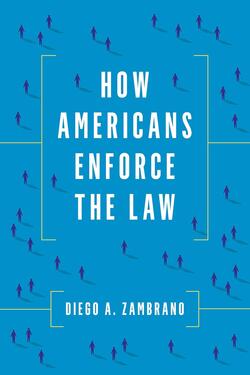
How Americans Enforce the Law book cover

How Americans Enforce the Law tells the story of this distinctively American approach to governance. Diego Zambrano reveals that private enforcement is not a modern innovation but an inherited tradition dating to medieval English "penal statutes" that colonial America adopted and intensified. The book traces how this system evolved through critical junctures and was boosted by twentieth-century procedural innovations like broad discovery rules and class actions that transformed scattered statutory clauses into a mass-litigation engine.

This is the first comprehensive account of private enforcement's origins, operations, and future. Offering both celebration and critique, Zambrano shows why private enforcement works well in employment law, for instance, but has been weaponized in environmental law. He creates a framework for determining when this uniquely American form of governance serves the public interest, and when it can be used to undermine democracy.

All Publications button
1
Publication Type
Books
Publication Date
Authors
Diego A. Zambrano
Book Publisher
Stanford University Press
Authors
Nora Sulots
News Type
News
Date
Paragraphs

The Center on Democracy, Development and the Rule of Law is pleased to invite applications from pre-doctoral students at the write-up stage and from post-doctoral scholars working in any of the four program areas of democracy, development, evaluating the efficacy of democracy promotion, and rule of law. The application cycle for the 2027-2028 academic year will be open from Monday, September 21, 2026, through Monday, November 30, 2026.

Our goal is to provide an intellectually dynamic environment that fosters lively exchange among Center members and helps everyone to do excellent scholarship. Fellows will spend the academic year at Stanford University focusing on research and data analysis as they work to finalize and publish their dissertation research while connecting with resident faculty and research staff at CDDRL.

Pre-doctoral fellows must be enrolled currently in a doctoral program or equivalent through the time of intended residency at Stanford and must be at the dissertation write-up (post-coursework) phase of their doctoral program. Post-doctoral fellows must have earned their Ph.D. within 3 years of the start of the fellowship, or plan to have successfully defended their Ph.D. dissertations by July 31, 2027.

In addition to our regular call for applications, CDDRL invites applications for the following fellowships:


Gerhard Casper Fellow in Rule of Law: We welcome research on any aspect of rule of law, including judicial politics, criminal justice, and the politicization of judicial institutions. We are an interdisciplinary center; candidates from any relevant field (i.e., the social sciences, law) are welcome to apply. This is a 9-month, residential fellowship, and the Gerhard Casper Fellow will be part of CDDRL’s larger cohort of pre- and postdoctoral fellows. Please apply through the CDDRL fellowship application process and indicate that you would like to be considered for the Gerhard Casper Rule of Law Fellowship.

Jan Koum Israel Studies Program Fellow: We welcome research on any aspect of modern Israel, including Israeli politics, constitutionalism, economics, society, diplomacy, and international affairs. We are an interdisciplinary center; candidates from any relevant field (i.e., the social sciences and law) are welcome to apply. This is a 9-month, residential fellowship, and the Jan Koum Israel Studies Program Fellow will be part of CDDRL’s larger cohort of pre- and postdoctoral fellows. Please apply through the regular CDDRL fellowship application process and indicate that you would like to be considered for the Jan Koum Israel Studies Program Fellowship.

Hero Image
Maria Nagawa presents during the 2025 Global Development Postdoctoral Fellows Conference.
All News button
1
Subtitle

The Center on Democracy, Development and the Rule of Law welcomes applications from pre-doctoral students at the write-up stage and from post-doctoral scholars working in any of the four program areas of democracy, development, evaluating the efficacy of democracy promotion, and rule of law.

Date Label
Display Hero Image Wide (1320px)
Yes
Authors
Nora Sulots
News Type
News
Date
Paragraphs

This summer, the Center on Democracy, Development and the Rule of Law (CDDRL) welcomed 26 democracy leaders from 19 countries across the developing world to its Fisher Family Summer Fellows on Democracy and Development Program for an intensive three-week training focused on democracy, good governance, and rule of law reform. Chosen from a highly competitive applicant pool, the fellows represent a diverse range of professional backgrounds and geographical regions, spanning civil society, public service, social enterprise, media, and technology. Launched in 2005, the program was previously known as the Draper Hills Summer Fellows Program. It was renamed in 2023 in recognition of a gift from the Fisher family — Sakurako (Sako), ‘82, and William (Bill), MBA ‘84 — that endowed the program and secured its future.

Fellows were instructed by a leading Stanford faculty team composed of CDDRL Mosbacher Director and FSI Satre Family Senior Fellow Kathryn Stoner; Olivier Nomellini Senior Fellow Francis Fukuyama; Senior Fellow in Global Democracy Larry Diamond; Michael McFaul, FSI Senior Fellow, Ken Olivier and Angela Nomellini Professor of International Studies, and former U.S. Ambassador to Russia; and Erik Jensen, Lecturer in Law at Stanford Law School, on new institutional models and frameworks to enhance their ability to promote good governance, accountable politics, and find new ways to achieve economic development in their home countries.

The program opened with foundational sessions on the dimensions of development, the meaning of democracy, and the role of rule of law, led by faculty including Fukuyama, Diamond, Stoner, and Jensen. Fellows then explored comparative case studies in autocratic governance — from the Middle East to China's global information ecosystem — alongside a fireside discussion on the geopolitics of energy. The second week turned to questions of migration, gender and political development, and the causes of democratization, including a session with the Human Rights Foundation on global patterns of authoritarianism. Additional sessions covered conflict and leadership, transitional justice, and anti-corruption reform, closing with discussions of sharp power, deliberative democracy, and propaganda in autocratic states. In its third and final week, the program addressed some of today's most consequential global issues, including the future of NATO, the geopolitics of artificial intelligence, and democratic backsliding worldwide. The week also covered inequality in Latin America, political corruption, and the challenges facing American democracy ahead of the midterm elections, concluding with sessions on protecting vulnerable populations in conflict and the relationship between land power and democracy.

This year's cohort now joins a global network of more than 500 alumni from over 100 countries, whose professional backgrounds are as diverse as the challenges they confront in their home countries — reflecting a shared dedication to building sound structures of democracy and development.

During the program, the fellows delivered "TED"-style talks in our Fellow Spotlight Series, sharing personal stories about the struggles in their home countries, stories of their fight for justice, equality, and democracy, and stories of optimism and endurance. You can watch their talks in the playlist below:

Read More

2026 Fisher Family Summer Fellows
News

Announcing the 2026 Class of the Fisher Family Summer Fellows on Democracy and Development Program

In July 2026, the Center on Democracy, Development and the Rule of Law will welcome a diverse cohort of 26 experienced practitioners from 19 countries who are working to advance democratic practices and economic and legal reform in contexts where freedom, human development, and good governance are fragile or at risk.
Announcing the 2026 Class of the Fisher Family Summer Fellows on Democracy and Development Program
People arrive to pay tribute at Maidan Square, where thousands of memorial flags are on display as a reminder of the toll of the war on February 24, 2025, in Kyiv, Ukraine.
News

Four Years After the Invasion, Ukrainian Leaders Build Foundations for Recovery

From parliament to regional government to independent media, alumni of the Center on Democracy, Development and the Rule of Law’s Strengthening Ukrainian Democracy and Development Program are implementing reform initiatives under wartime conditions.
Four Years After the Invasion, Ukrainian Leaders Build Foundations for Recovery
Jesús Armas stands in a crowd in front of a Venezuelan flag following his release from prison, holding a t-shirt that reads "Release all political prisoners" in Spanish.
News

2022 Summer Fellow Jesús Armas Released After More Than a Year in Detention

A Venezuelan civic leader and alumnus of CDDRL’s Fisher Family Summer Fellows Program, Armas was kidnapped by security forces following the country’s 2024 presidential election.
2022 Summer Fellow Jesús Armas Released After More Than a Year in Detention
Hero Image
2026 Fisher Family Summer Fellows
Rod Searcey
All News button
1
Subtitle

The Fellow Spotlight Series is an inspiring and moving series of "TED"-style talks given by each of our 2026 Fisher Family Summer Fellows to share their backstories and discuss their work.

Date Label
Display Hero Image Wide (1320px)
Yes
-
Three Authors Discuss Egypt’s Security State, Media, and Judiciary

The Simon Fraser University School for International Studies, the Centre for Comparative Muslim Studies at SFU, and the Program on Arab Reform and Development at Stanford's Center on Democracy, Development and the Rule of Law invite you to a talk by Hossam El-Hamalawy, Maher Hamoud, and Waleed Salem, in discussion with Hesham Sallam.

In-Person: SFU Harbour Centre, room 2270 (Simon Fraser University, Vancouver, BC)
Online: Via Zoom

ABOUT THE SPEAKERS

Hossam el-Hamalawy is an Egyptian journalist and scholar-activist based in Germany. His work focuses on Egypt’s military, security services, political economy, and counterrevolution. He publishes State & Barracks, a weekly newsletter examining the nexus of military power, money, and the state in Egypt. It features reporting, analysis, and military history, usually published twice a week.

Maher Hamoud is a lecturer and researcher in Political Economy of Development. He received his PhD in Political Sciences at Ghent University in 2017, Department of Conflict and Development Studies, where he also held a postdoctoral position until January 2022. He received his MA in Economic Development at the American University in Cairo in 2009. He was also the editor-in-chief of the Cairo-based Daily News Egypt. Within the domain of political economy of development, his current research focuses on the intersectionality between development politics, value chains, industrialisation, and international trade with and within the Global South.

Waleed Salem is an Egyptian scholar and journalist. He writes about authoritarian politics, comparative judicial politics, and the politics of the Arab Gulf states. Waleed earned his PhD in political science from the University of Washington with a dissertation entitled "Seeing Like a Court: Judicial Agency in Autocratic Regimes and Transition Politics – The Case of Egypt." His previous research affiliations, alongside the University of Washington, include the International Relations Department at the Central European University in Vienna, the Political Science Department at the American University in Cairo, and the Centre d'études et de documentation économiques, juridiques et sociales (CEDEJ), also in Cairo. His journalistic work appeared in Nature magazine, The New Atlantis, New Lines Magazine, and Al Jazeera, among others.

ABOUT THE DISCUSSANT

Hesham Sallam is a Senior Research Scholar at CDDRL, where he serves as Associate Director for Research. He is also Associate Director of the Program on Arab Reform and Development. Sallam is co-editor of Jadaliyya ezine and a former program specialist at the U.S. Institute of Peace. His research focuses on political and social development in the Arab World. Sallam’s research has previously received the support of the Social Science Research Council and the U.S. Institute of Peace. He is author of Classless Politics: Islamist Movements, the Left, and Authoritarian Legacies in Egypt (Columbia University Press, 2022), co-editor of Struggles for Political Change in the Arab World (University of Michigan Press, 2022), and editor of Egypt's Parliamentary Elections 2011-2012: A Critical Guide to a Changing Political Arena (Tadween Publishing, 2013). Sallam received a Ph.D. in Government (2015) and an M.A. in Arab Studies (2006) from Georgetown University, and a B.A. in Political Science from the University of Pittsburgh (2003).

Hesham Sallam
Hesham Sallam

Online via Zoom

Hossam el-Hamalawy
Maher Hamoud
Waleed Salem
Panel Discussions
Date Label

Encina Hall, E106
616 Jane Stanford Way
Stanford, CA 94305-6055

0
Einstein Moos Postdoctoral Fellow, 2026-27
cayton_headshot_2021_-_frances_cayton.jpg

Frances Cayton is a scholar of democracy and civil society. For the 2026-27 academic year, she is the Einstein Moos Postdoctoral Fellow at Stanford's Center on Democracy, Development and the Rule of Law (CDDRL). In 2027, she will join the University of South Carolina as an Assistant Professor of Political Science.

Frances' book project, "How Civic Consciousness Shapes Democratic Resilience," examines how, why, and under what conditions civil society encourages individuals to depolarize and resist democratic erosion. Combining extensive organizational and bureaucratic data, elite and mass surveys, experiments, and interview evidence, she demonstrates how informal and apolitical subsets of civic life retain critical latent democratic potential. The project primarily focuses on Poland and Hungary, though it also draws comparisons with cases across East-Central Europe and globally.

More broadly, Frances works on questions about the drivers and consequences of democratic engagement, particularly concerning conspiracy theories, opposition media, and the challenges of post-backsliding redemocratization. Her research is published or forthcoming in numerous outlets, including the American Journal of Political Science and Perspectives on Politics. Her work has been supported by the US Departments of State and Education, as well as the American Political Science Association. She is also the co-founder of EEPGW, a monthly online workshop on East European politics.

Frances holds a Ph.D. in Government from Cornell University. She earned her AM from Harvard University's Davis Center for Russian and Eurasian Studies and a BA from the University of North Carolina at Chapel Hill.

Date Label
0
rufaro.jpeg

Rufaro is a Research Assistant and contributor at the Democracy Action Lab, where she supports the lab's research on democracy, security, and state violence. She is a 2026 graduate from Stanford University, completing a Bachelor of Arts in Political Science. Her research interests center on the relationship between law, sovereignty, and state coercive capacity, with a focus on Latin America and sub-Saharan Africa. Prior to joining DAL, she held research and policy positions at the UN Office of the High Commissioner for Human Rights, Stanford Humanities Center, and Oxford University. In Fall 2026, she will read for an MSc in Refugee and Forced Migration Studies at the University of Oxford.

Research Assistant, Democracy Action Lab
Date Label
Subscribe to Rule of Law