Conflict
Paragraphs

The war in Ukraine has altered the course of global history. These authors explore how.

When Vladimir Putin's forces sought to conquer Ukraine in February 2022, they did more than threaten the survival of a vulnerable democracy. The invasion unleashed a crisis that has changed the course of world affairs. This conflict has reshaped alliances, deepened global cleavages, and caused economic disruptions that continue to reverberate around the globe. It has initiated the first great-power nuclear crisis in decades and raised fundamental questions about the sources of national power and military might in the modern age. The outcome of the conflict will profoundly influence the international balance of power, the relationship between democracies and autocracies, and the rules that govern global affairs. In War in Ukraine, Hal Brands brings together an all-star cast of analysts to assess the conflict's origins, course, and implications and to offer their appraisals of one of the most geopolitically consequential crises of the early twenty-first century. Essays cover topics including the twists and turns of the war itself, the successes and failures of US strategy, the impact of sanctions, the future of Russia and its partnership with China, and more.

Contributors: Anne Applebaum, Joshua Baker, Alexander Bick, Hal Brands, Daniel Drezner, Peter Feaver, Lawrence Freedman, Francis Gavin, Brian Hart, William Inboden, Andrea Kendall-Taylor, Michael Kimmage, Michael Kofman, Stephen Kotkin, Mark Leonard, Bonny Lin, Thomas Mahnken, Dara Massicot, Michael McFaul, Robert Person, Kori Schake, and Ashley Tellis.

All Publications button
1
Publication Type
Book Chapters
Publication Date
Subtitle

Chapter in War in Ukraine: Conflict, Strategy, and the Return of a Fractured World, edited by Hal Brands

Authors
Stephen Kotkin
Book Publisher
Johns Hopkins University Press
Number
pp. 17-33
-

Encina Commons, 123
615 Crothers Way, Stanford, CA 94305

Marta Tawil Kuri
Authors
News Type
News
Date
Paragraphs

Ukrainian leaders told a Stanford audience on February 23 that the Russian war against their country is not only about Ukrainian sovereignty but about the future of Europe and freedom and democracy in the world as autocratic regimes increasingly align against Western allies.

The Center on Democracy, Development and the Rule of Law hosted the two-hour panel discussion, “Two Years of War: Updates from Ukraine,” which featured CDDRL alums currently based in Ukraine. 

They included Oleksiy Honcharuk, a former prime minister of Ukraine and 2021 Bernard and Susan Liautaud Visiting Fellow at the Freeman Spogli Institute for International Studies (FSI); Serhiy Leshchenko, advisor to President Volodymyr Zelenskyy's Chief of Staff and an alumnus of the Draper Hills Summer Fellows program (now the Fisher Family Summer Fellows Program); Oleksandra Matviichuk, founder of the Center for Civil Liberties (co-recipient of the 2022 Nobel Peace Prize) and an alumna of the 2017-18 Ukrainian Emerging Leaders Program; and Oleksandra Ustinova, People’s Deputy of Ukraine and an alumna of the 2018-19 Ukrainian Emerging Leaders Program.

Reforms in Ukraine


Kathryn Stoner, Mosbacher Director of CDDRL, and Michael McFaul, director of the Freeman Spogli Institute for International Studies, served as moderators for the discussion. One year ago, with the same guests, CDDRL and FSI co-hosted a similar roundtable, the conversation of which had a different tone with more optimism.

In his opening remarks, McFaul asked the panelists for their responses to critics of U.S. military aid to Ukraine who claim Ukraine is corrupt, the money would be wasted, and that continued aid would only prolong an unwinnable war.

Matviichuk said that Ukraine has made many reforms over the last decade since the Revolution of Dignity in 2014. “Government is accountable. The judiciary is independent, and police do not kill students who are peacefully demonstrating. We have paid the highest price for this chance,” despite it being very difficult to implement far-reaching reforms during wartime.

We don't know what the result will be in the end. But we have to fight because if you don’t fight, the result will be horrible.
Serhiy Leshchenko
Advisor to President Volodymyr Zelenskyy's Chief of Staff

Leshchenko said that the perception by some in the West that the war is “unwinnable” is inaccurate when viewed through a historical lens. “We are in 1941. We don't know what the result will be in the end. But we have to fight because if you don’t fight, the result will be horrible.”

Ustinova added, "Poland, or another country, will be next, and it may be a NATO country. And then the Americans would need to put boots on the ground and fight a European war again and lose thousands of your people.”

Russia has created a false narrative about Ukrainian corruption, she said. “What Ukraine was ten years ago and what Ukraine is now are two different countries. We have created very efficient new anti-corruption institutions, like our National Anti-Corruption Bureau, that are supported and highly admired by our international partners, including the United States. We have more than 600 cases in court against former state officials or existent state officials.”

We have to wake up. If the world doesn’t wake up, if the world does not understand that this is a war of autocracies and democracies, it’s going to be a very different war in a few years.
Oleksandra Ustinova
People's Deputy of Ukraine

‘Our fight for freedom’


Matviichuk said delays in U.S. military aid are a major concern in Ukraine. “In this difficult situation, we have no other choice. Our people in Ukraine will continue our fight for freedom and democracy because if we stop fighting, there will be no more Ukrainians.”

Leshchenko said he had recently been in the Donetsk region, where he visited two Ukrainian brigades. He urged the continuation of American military assistance as the lack of support was affecting their troops.

“The general mood is quite uncertain,” he said. “The soldiers are really disappointed with the lack of ammunition for vehicles and artillery, which they need to attack Russian positions. Unfortunately, they cannot do so now — this lack of ammunition is crucial.” But he added, “We will keep fighting.”

Ustinova said the world has grown too comfortable in believing that Ukraine would prevail without ongoing support. 

“A year ago, when I was speaking on this same panel, I was very enthusiastic because we were planning the counteroffensive. We had been successful in getting some territories back, and I think the world was really clapping and standing behind Ukrainians for winning the war within the last year. It is very sad for me to say now from Kyiv that everything has changed,” she said.

Russia was the only country that ramped up its ammunition and weapons production over the past couple of years, she added. “Last year, they tripled the production of their ballistic and ultrasonic missiles.” 

Noting that Russia has kidnapped more than 20,000 Ukrainian children, Ustinova said, “This is not just a Ukrainian conflict. This is a much bigger deal we are looking at right now. We have Iran. We have North Korea. We have Russia standing on one side, and we have the Western world and democracy standing on the other side. I’m so sorry to say, but the first group is so far more efficient than the second one.”

She explained, “It’s much easier for autocracies and those regimes to be united and take the decisions to ramp up their production lines than for the Western democracies who have to debate and negotiate.”

Our people in Ukraine will continue our fight for freedom and democracy because if we stop fighting, there will be no more Ukrainians.
Oleksandra Matviichuk
Founder of the Center for Civil Liberties

Technology race, Ukrainian efficiencies


Honcharuk said the war has crystalized Ukraine’s focus on military efficiency. Last year, his teams completed about 2,000 combat missions and destroyed over 700 units of enemy military equipment. This year, they are planning for 20,000 combat missions.

“I believe Ukraine is already a trendsetter,” he said. “The technology race is very fast when you have a war. Day by day, you are trying to compete with the enemy, and Ukraine is forced to maintain this very high pace to survive. There is only one country that currently has the same high pace, and it may be even higher — that is Russia.”

He said that Russia already understands that Ukraine will not give up “I believe now Russia is trying to find other weak spots on democratic camp … It’s very sad if they are right. The whole free world is in a very dangerous situation because Russia learned their lessons very fast, and they are much more dangerous than they were a year or two ago.”

Yet Honcharuk described the Ukrainian army as the best army in the world to fight against Russia. “We understand both systems, NATO systems and post-Soviet systems, at the same time, and we can destroy and damage Russian forces with very few resources.”

Ustinova noted the grim irony of Russia chairing the United Nations Security Council. “The United Nations was invented to prevent the wars in the world. Russia is the number one terrorist in the world, and they are the chair of the Security Council of the United Nations?! Everybody pretends this to be okay?!”

The whole free world is in a very dangerous situation because Russia learned their lessons very fast, and they are much more dangerous than they were a year or two ago.
Oleksiy Honcharuk
Former Prime Minister of Ukraine

‘A hard war’


Stoner said that the Russian invasion has wrought significant damage on Ukraine as a country. “The World Bank estimated last year that it would cost over $411 billion for Ukrainian reconstruction, and I’m sure that number has increased rather dramatically in the last six or so months.”

In closing, McFaul told the panelists, “A lot of your friends are here in the audience. We miss you. We want you to come back. We want to celebrate victory. But we’re also worried about you. This is a hard war, and you are all very involved in everything in your own ways. I cannot believe you’re being so generous with your time with us as late as it is there.”

Stoner added, “This is not just a Ukrainian fight, it is. It is a fight for everyone, and thank you all for everything that you’re doing.”

You can view a recording of the panel and discussion below and read more about the event in the Stanford Daily.

Read More

Amichai Magen, Marshall Burke, Didi Kuo, Larry Diamond, and Michael McFaul onstage for a panel discussion at Stanford's 2023 Reunion and Homecoming
Commentary

At Reunion Homecoming, FSI Scholars Offer Five Policy Recommendations for the Biden Administration

FSI scholars offer their thoughts on what can be done to address political polarization in the United States, tensions between Taiwan and China, climate change, the war in Ukraine, and the Israel-Hamas war.
At Reunion Homecoming, FSI Scholars Offer Five Policy Recommendations for the Biden Administration
Michael McFaul poses with a Stanford University flag in front of a group of Ukrainian alumni during a reunion dinner in Kyiv.
Blogs

On the Ground in Ukraine: A Report from Michael McFaul and Francis Fukuyama

A trip to Kyiv gave FSI Director Michael McFaul and Olivier Nomellini Senior Fellow Francis Fukuyama the opportunity to meet with policymakers, military experts, and Ukrainian alumni of FSI's programs and fellowships.
On the Ground in Ukraine: A Report from Michael McFaul and Francis Fukuyama
Michael McFaul moderates a panel with Oleksiy Honcharuk, Serhiy Leshchenko, Oleksandra Matviichuk, Oleksandra Ustinova on the one-year anniversary of the full-scale invasion of Ukraine.
News

Ukraine’s Fight for Democracy, One Year In

To commemorate the first year of the full-scale invasion of Ukraine, Ukrainian leaders joined a panel hosted by the Freeman Spogli Institute for International Studies to express their hopes for victory and their gratitude for Western support.
Ukraine’s Fight for Democracy, One Year In
Hero Image
Ukrainian panelists speak to a packed room about the impact the second year of Russia's full-scale invasion of Ukraine has had on daily life, the global democratic order, and Ukraine's future.
Ukrainian panelists speak to a packed room about the impact the second year of Russia's full-scale invasion of Ukraine has had on daily life, the global democratic order, and Ukraine's future. Photo: Kurt Hickman / Stanford News
Kurt Hickman / Stanford News
All News button
1
Subtitle

A failure by the United States to continue military aid to Ukraine would put that country in the gravest peril and embolden Russia to launch more aggression against other European countries, Ukrainian leaders said last week during a discussion hosted by the Center on Democracy, Development and the Rule of Law.

Authors
News Type
News
Date
Paragraphs

Born in the aftermath of World War II, the State of Israel has undergone remarkable development as a nation over the past 75 years, oscillating between periods of war and strained peace while building a vibrant multiethnic society, economy, and technology sector. Taught by Larry Diamond (Mosbacher Senior Fellow in Global Democracy at the Freeman Spogli Institute for International Studies, William L. Clayton Senior Fellow at the Hoover Institution, and professor, by courtesy, of sociology and of political science) and Amichai Magen (visiting professor and fellow in Israel Studies at the Freeman Spogli Institute for International Studies), this 10-week online course will offer an informed analysis of modern Israel. Each week, the professors will be joined by Stanford experts and other guest speakers who will analyze important dimensions of Israeli life.

This course will inevitably dedicate time to the ongoing Middle East conflict, which again exploded into violence last October, and to the continuing efforts to find a formula for Israeli-Palestinian peace. In this context, former Secretary of State Condoleezza Rice will discuss the emerging dynamics of geopolitics in the Middle East, and former Palestinian negotiator Ghaith al-Omari and Ambassador Dennis Ross will explore options for Israeli-Palestinian peacemaking. In addition, Israeli author Yossi Klein Halevi will revisit his New York Times bestselling book, Letters to My Palestinian Neighbor, in light of the October 7, 2023, Hamas terror attack and the subsequent Gaza war. But the course will also look beyond the conflict, venturing into other lesser-known areas of Israeli life and history, including lectures on the politics of historical memory in divided societies with Stanford professor of history James T. Campbell, and Zionism and anti-Zionism with Stanford professor of the humanities Russell Berman. UC Berkeley School of Law professor Masua Sagiv will discuss the constitutional questions central to Israel’s effort to have a Jewish and democratic state. As we proceed, Sophia Khalifa Shramko will share the experience of growing up as an Arab woman in Israel. Finally, Stanford professor of economics Ran Abramitzky and Stanford visiting professor Alon Tal will explore Israel’s modern economy and efforts to use innovation to achieve sustainability in an environmentally challenging region. 

Please note: There are no formal prerequisites for this course, though prior interest and engagement with topics related to Israel and the Middle East are an advantage. This course is co-sponsored by Stanford's Freeman Spogli Institute for International Studies (FSI), and it is an adaptation of a class offered to Stanford undergraduates.

Read More

Amichai Magen, Marshall Burke, Didi Kuo, Larry Diamond, and Michael McFaul onstage for a panel discussion at Stanford's 2023 Reunion and Homecoming
Commentary

At Reunion Homecoming, FSI Scholars Offer Five Policy Recommendations for the Biden Administration

FSI scholars offer their thoughts on what can be done to address political polarization in the United States, tensions between Taiwan and China, climate change, the war in Ukraine, and the Israel-Hamas war.
At Reunion Homecoming, FSI Scholars Offer Five Policy Recommendations for the Biden Administration
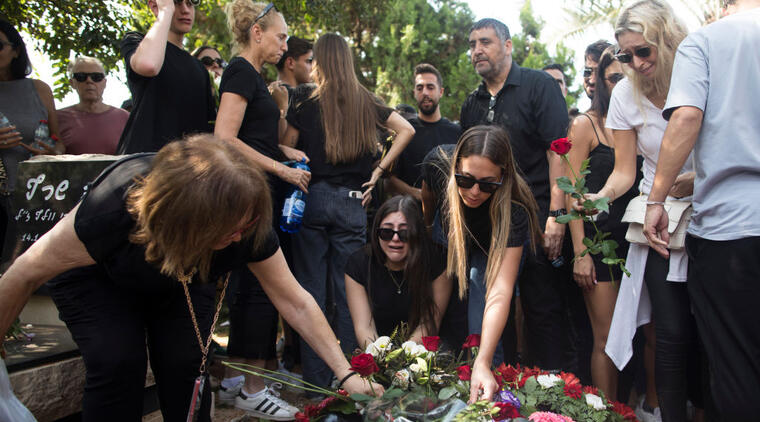
Family and friends of May Naim, 24, who was murdered by Palestinians militants at the "Supernova" festival, near the Israeli border with Gaza strip, react during her funeral on October 11, 2023 in Gan Haim, Israel. (Getty Images)
News

FSI Scholars Analyze Implications of Hamas’ Terror Attack on Israel

Larry Diamond moderated a discussion between Ori Rabinowitz, Amichai Magen and Abbas Milani on the effects of Hamas’ attacks on Israel and what the emerging conflict means for Israel and Middle Eastern geopolitics.
FSI Scholars Analyze Implications of Hamas’ Terror Attack on Israel
Protestors wave flags as thousands of Israelis attend a rally against Israeli Government's judicial overhaul plan on March 27, 2023 in Jerusalem, Israel.
Commentary

What’s Happening to Israel’s Democracy?

Law and governance expert Amichai Magen joins FSI Director Michael McFaul on the World Class podcast to discuss the judicial reforms recently passed by Israel’s legislature, and the implications these have for democracy in Israel and beyond.
What’s Happening to Israel’s Democracy?
Hero Image
Picture of the the Jerusalem Light Rail walking up Jaffa Street. Modern face of Jerusalem, Israel.
Picture of the the Jerusalem Light Rail walking up Jaffa Street. Modern face of Jerusalem, Israel. Photo credit: Laura Siegal via Unsplash
Laura Siegal via Unsplash
All News button
1
Subtitle

Open for enrollment now through Stanford Continuing Studies, "Modern Israel: Insights and Analysis from Stanford Scholars and Guests" will run online for ten weeks on Wednesdays, from April 3 through June 5.

Date Label
-
Aerial Drone Flyby Shot in Kyiv - Biggest National flag of Ukraine. Aerial view. Spivoche Pole, Kiev
Arial shot of the Motherland Monument and the Biggest National Flag of Ukraine in Kyiv, Ukraine, photographed prior to February 24, 2022. | Oleksandr Tkachenko, Getty Images

February 24 marks the second anniversary of Russia's full-scale invasion of Ukraine in 2022. Though Ukraine has won many battles, the war for Ukraine’s right to exist as an independent, democratic nation rages on at a very steep human cost.

To commemorate this important day for Ukraine and the world, the Center on Democracy, Development and the Rule of Law is honored to host a panel of high-profile Ukrainian leaders currently based in Kyiv for a discussion of the impact of the war on daily life, the global democratic order, and Ukraine's future.

The panel will be introduced by Kathryn Stoner, the Mosbacher Director of the Center on Democracy, Development and the Rule of Law, and moderated by Michael McFaul, Director of FSI, the Ken Olivier and Angela Nomellini Professor of International Studies in the Department of Political Science, and a former U.S. ambassador to Russia.

The panel discussion will be followed by Q&A with the audience.

For those unable to join us in person, a livestream of the panel will be available via Zoom.

Meet the Panelists

Oleksiy Honcharuk

Oleksiy Honcharuk

Former Prime Minister of Ukraine
Learn More

Oleksiy Honcharuk served as the 17th prime minister of Ukraine from 2019-2020, during which time he introduced important policy initiatives in Ukraine including the institution of business privatization processes, efforts to combat black markets, and the launch of the Anti-Raider Office to respond to cases of illegal property seizures. Prior to serving as prime minister, Honcharuk was deputy head of the Presidential Office of Ukraine and was a member of the National Reforms Council under the president of Ukraine. In 2021, he was the Bernard and Susan Liautaud Visiting Fellow at the Freeman Spogli Institute for International Studies (FSI).

Serhiy Leshchenko

Serhiy Leshchenko

Advisor to President Volodymyr Zelenskyy's Chief of Staff
Learn More


Serhiy Leshchenko is formerly a journalist with Ukrainska Pravda and member of Ukrainian Parliament (2014-2019). He first rose to political prominence during Ukraine’s 2014 Maidan Revolution, and has continued to serve in government and civil society since. He is an advisor to President Volodymyr Zelenskyy’s chief-of-staff, working and living in the governmental bunkers during the start of Russia's invasion and siege on Kyiv in 2022. He is an alumnus of the 2013 cohort of the Draper Hills Summer Fellows program (now the Fisher Family Summer Fellows Program) at FSI’s Center on Democracy, Development and the Rule of Law at Stanford University.

oleksandra hs

Oleksandra Matviichuk

Founder of the Center for Civil Liberties
Learn More


Oleksandra Matviichuk is a human rights advocate and founder of the Center for Civil Liberties, which was recognized as a co-recipient of the 2022 Nobel Peace Prize. The mission of the Center for Civil Liberties is to protect human rights and establish democracy in Ukraine and the OSCE region. The organization develops legislative proposals, exercises public oversight over law enforcement agencies and judiciary, conducts educational activities for young people, and implements international solidarity programs. Matviichuk was a visiting scholar from 2017-2018 with the Ukrainian Emerging Leaders Program at the Center on Democracy, Development and the Rule of Law.

sasha

Oleksandra Ustinova

People's Deputy of Ukraine
Learn More


Oleksandra Ustinova is the People's Deputy of Ukraine and a member of Ukraine’s parliament. Since the beginning of Russia's invasion in 2022, she has met repeatedly with lawmakers in the United States to advocate on behalf of Ukraine, including an address before the U.S. House of Representatives on February 28, 2022. Prior to her government service, Ustinova was the head of communications and anti-corruption in healthcare projects at the Anti-Corruption Action Center (ANTAC), one of the leading organizations on anti-corruption reform in Ukraine. She was a visiting scholar with the Ukrainian Emerging Leaders Program at the Center on Democracy, Development and the Rule of Law from 2018-2019.

Kathryn Stoner
Kathryn Stoner
Michael A. McFaul
Michael McFaul

In-person: Bechtel Conference Center (Encina Hall, First floor, 616 Jane Stanford Way, Stanford)

Virtual: Zoom (no registration required)

Oleksiy Honcharuk Former Prime Minister of Ukraine
Serhiy Leshchenko Advisor to Ukrainian President Vlodomyr Zelenskyy's chief of staff
Oleksandra Matviichuk Founder of the Center for Civil Liberties, 2022 Nobel Peace Prize recipient
Oleksandra Ustinova People's Deputy of Ukraine, Member of Verkhovna Rada
Panel Discussions
Date Label
Authors
News Type
News
Date
Paragraphs

In early October, Arab Barometer, a central resource for quantitative research on Arab countries, completed its most recent survey in Palestine, offering unique insight into the views of Palestinians living in the West Bank and Gaza. The next day, Oct. 7, Hamas launched its surprise attack on Israel.

On Wednesday, Nov. 29, Stanford’s Program on Arab Reform and Democracy presented the online event, “Public Opinion in Palestine Before the Conflict,” to discuss the survey findings in the context of the attacks. Amaney A. Jamal and Michael Robbins, two principal investigators at Arab Barometer, discussed how Palestinians view their government, their living conditions, the Israeli-Palestinian conflict, and international actors. The Program on Arab Reform and Democracy is housed at the Center on Democracy, Development and the Rule of Law (CDDRL).

Read the full article in the Stanford Report.

Hero Image
Michael Robbins and Amaney A. Jamal
Michael Robbins and Amaney A. Jamal are principal investigators at Arab Barometer, a nonpartisan research network that conducts public opinion surveys in the Middle East and North Africa. At a recent campus event, they offered insights from their most recent survey in Palestine.
All News button
1
Subtitle

Stanford’s Program on Arab Reform and Democracy – housed at the Center on Democracy, Development and the Rule of Law – hosted an event last Wednesday to discuss the Arab Barometer’s most recent survey, which concluded just as Hamas conducted its Oct. 7 attack on Israel.

Authors
News Type
News
Date
Paragraphs

We studied millennia of Ukrainian history. We debated the legality of seizing frozen Russian assets to finance Ukraine’s postwar reconstruction. And we drank a cherry liqueur that was once a staple in every household of Old Lviv.

As Russia’s illegal invasion of Ukraine dragged into its twentieth month this September, we took off with a group of Stanford Law peers from campus to Warsaw, Poland, as part of the school’s inaugural S-Term program (S stands for September). Led by Erik Jensen, director of Stanford’s Rule of Law Program, and Michael Strauss, JD ’01, general counsel at the European Bank for Reconstruction and Development, our S-Term class, titled Ukraine: The Promise and Perils of Legal Reform and Governance, in Wartime and Reconstruction, was the first ever course at the law school to focus on Ukraine. Inspired by S-Term’s vision of providing unique, immersive learning experiences with faculty leaders and renowned practitioners, Professors Jensen and Strauss gave students an opportunity not only to learn about but also to help address the many challenges facing Ukrainians as they seek a secure, prosperous, and democratic future.

Read the full story in Stanford Lawyer.

Hero Image
Ukraine: The Promise and Perils of Legal Reform and Governance, in Wartime and Reconstruction
All News button
1
Subtitle

Law students discuss their field study of Ukraine via Warsaw, including meetings with experts including former U.S. Ambassador to Ukraine Bill Taylor, Ukraine Parliament member Oleksandra Ustinova, former U.S. Ambassador to NATO Kurt Volker, Judge Olena Kibenko of Ukraine’s Supreme Court, and more.

Authors
Rachel Owens
News Type
News
Date
Paragraphs

How and why do armed actors intervene in democratic politics? In a CDDRL seminar series talk, postdoctoral fellow Andres Uribe presented a multifaceted theory explaining the strategies violent groups adopt to influence democratic processes. The talk drew on Uribe’s research on Colombia and Peru.

Uribe shows that armed groups face a choice between co-opting or undermining democracy. More specifically, groups pursuing co-optation try to influence the existing political process through either “corruption” or “capture.” Corruption entails the use of positive inducement to shape the behavior of elected officials or voters, whereas capture entails the use of the threat of force to achieve similar goals.

Those groups seeking to attack democracy do so through two different strategies. The first is “delegitimization,” which could involve attacks on elections and voting sites. The second is “displacement” or the violent removal of the democratic system and its replacement with an entirely different political order.

What determines a given armed group’s choice of strategies (i.e., corruption, capture, delegitimization, or displacement)? The answer, according to Uribe, is determined by the group’s ideological compatibility with democracy and its coercive capacity. Among groups professing ideologies compatible with democracy, they are likely to engage in corruption under low levels of coercive capacity, and capture under higher levels. As for groups whose aims are incompatible with the democratic process, they tend to pursue delegitimization when their coercive capacity is low, and displacement at higher levels of coercive capacity.

Uribe tested his theory based on a paired comparison of Peru’s Sendero Luminioso (SL) and Colombia’s FARC. To characterize each group’s relative ideological compatibility with democratic politics, he drew on a corpus of 7500 documents spanning 21 Latin American countries. He found FARC to be more compatible with democracy than the average armed actor, while SL was less compatible.

To measure coercive capacity, Uribe used data on coca production and cocaine retail pricing in the US as reflective of SL’s and FARC’s military finances. Using casualties in attacks against democracy as an indicator, he found that when FARC possessed a high coercive capacity, there was a slight increase in the number of victims, whereas a similar increase in Sendero’s capacity yielded a 15-fold increase in the number of deaths.

Uribe’s analysis shows that during electoral contests, FARC attempted to reduce the conservative vote share, whereas SL attempted to reduce overall turnout. These outcomes are consistent with Uribe’s theory — FARC’s compatibility with democracy pushes them to work within the system, focusing their attacks on the other party. Sendero, conversely, attempts to prevent all participation in the democratic process.

Uribe’s findings suggest the importance of ideology in understanding how armed actors behave and emphasizes that they do not all share the same motivations. His work also highlights the way some groups play the democratic game using violence, a choice previously seen as mutually exclusive.

Read More

Daniel Chen
News

Can Data Science Improve the Functioning of Courts?

Improving courts’ efficiency is paramount to citizens' confidence in legal institutions and proceedings, explains Daniel Chen, Director of Research at the French National Center for Scientific Research and Professor at the Toulouse School of Economics.
Can Data Science Improve the Functioning of Courts?
María Ignacia Curiel presents during CDDRL's research seminar
News

Do Institutional Safeguards Undermine Rebel Parties?

CDDRL postdoctoral fellow’s findings show that institutional safeguards meant to guarantee the representation of parties formed by former rebel groups may actually weaken such parties’ grassroots support.
Do Institutional Safeguards Undermine Rebel Parties?
Larry Diamond speaks during CDDRL's research seminar
News

Is the World Still in a Democratic Recession?

Is the world still in a democratic recession? Larry Diamond — the Mosbacher Senior Fellow in Global Democracy at FSI — believes it is.
Is the World Still in a Democratic Recession?
Hero Image
Andres Uribe presents in a CDDRL research seminar on November 16, 2024.
Rachel Cody Owens
All News button
1
Subtitle

In a recent CDDRL seminar, postdoctoral fellow Andres Uribe presented a multifaceted theory explaining the strategies violent groups adopt to influence democratic processes.

Date Label

Encina Hall, E112
616 Jane Stanford Way
Stanford, CA 94305-6055

0
alain_schlaepfer.jpg

Alain is a Social Science Research Scholar at CDDRL and a lecturer at the Ford Dorsey Master’s in International Policy (MIP), where he teaches classes in quantitative research methods. Before that, he was a lecturer in Political Science at Stanford, a lecturer in Economics at Santa Clara University, and a Visiting Scholar at Stanford’s King Center on Global Development.

Alain’s research interests include the study of cooperation and conflict among individuals and groups, with a particular focus on the role of reputation, cultural norms, and interpersonal and institutional punishment. In recent research, he also studies the relationships between immigrants and natives and the formation of norms and preferences.

Alain’s research has been published in journals in political science, economics, and biology, including the Journal of Politics, the Economic Journal, and the Proceedings of the Royal Society B: Biological Sciences. He received his PhD in economics from Universitat Pompeu Fabra in Barcelona, Spain.

Research Scholar
Lecturer, Ford Dorsey Master's in International Policy
Date Label
Subscribe to Conflict