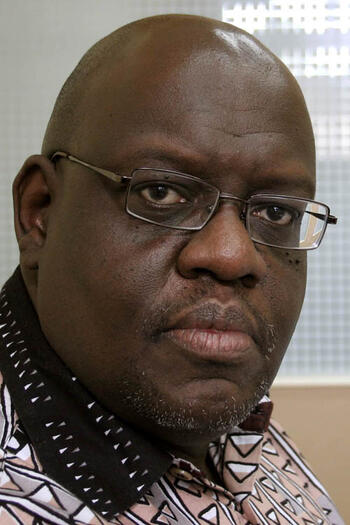
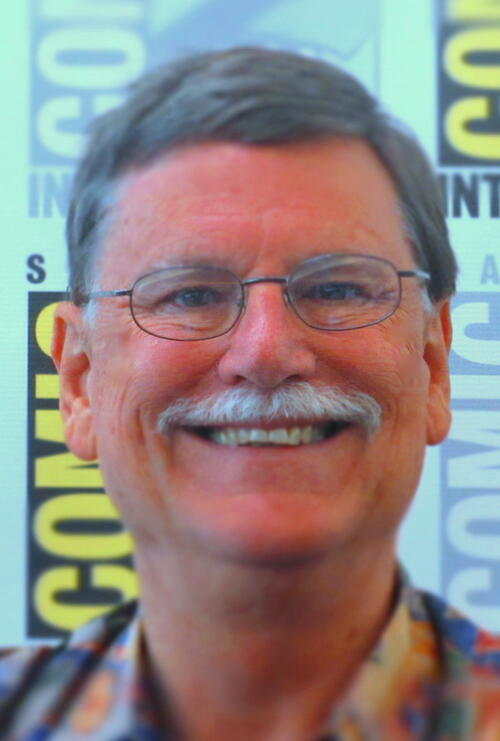
Democracy
-

Abstract:

Islamic charities occupied a critical space in Mubarak-era Egypt. While there are a plethora of organizational types and activities, Mona Atia describes a particular type of work performed by Islamic charities as a merging of religious and capitalist subjectivity, or pious neoliberalism. Pious neoliberalism describes how Islamism works in conjunction with neoliberalism rather than as an alternative to it. It represents a new compatibility between business and piety that is not specific to any religion, but rather is a result of the ways in which religion and economy interact in the contemporary moment. In Egypt, pious neoliberalism produces new institutions, systems of knowledge production and subjectivities. This lecture explores the relationship between Islamic charity and Egypt’s variegated religious landscape. The author will discuss how Islamic charities helped spread Islamic practices outside the space of the mosque and into everyday life/spaces and their impact on development in Egypt.

Speaker Bio:
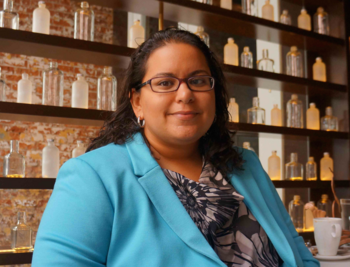
Image
mona atia

Mona Atia is Associate Professor of Geography and International Affairs at the George Washington University. She received her PhD in Geography at the University of Washington, where she received the 2008 Distinguished Dissertation Award. She holds a MSc in Cities, Space and Society from the London School of Economics and a BS in Business Administration from the University of California at Berkeley. Professor Atia is a critical development geographer whose areas of expertise include Islamic charity and finance, philanthropy and humanitarianism, and the production of poverty knowledge. She is author of Building a House in Heaven: Pious Neoliberalism and Islamic Charity in Egypt (University of Minnesota Press, 2013). She currently holds an NSF CAREER Award for her project "The Impact of Poverty Mapping on the Geography of Development."


This event is co-sponsored by the Sohaib and Sara Abbasi Program in Islamic Studies.


[[{"fid":"218621","view_mode":"crop_870xauto","fields":{"format":"crop_870xauto","field_file_image_description[und][0][value]":"Mona Atia flyer","field_file_image_alt_text[und][0][value]":"","field_file_image_title_text[und][0][value]":"","field_credit[und][0][value]":"","field_caption[und][0][value]":"","field_related_image_aspect[und][0][value]":"","thumbnails":"crop_870xauto","pp_lightbox":false,"pp_description":false},"type":"media","attributes":{"height":"540","width":"870","class":"media-element file-crop-870xauto"}}]]


Reuben Hills Conference Room
2nd Floor East Wing E207
Encina Hall
616 Serra Street
Stanford, California 94305
Mona Atia Associate Professor The George Washington University
Seminars
-

**Please note that the event time has been changed to 4:30-6:30pm.**

Abstract

The Middle East security landscape is as complex and challenging as ever: The rise of ISIL; ongoing instability in Syria and Iraq; the framework of a nuclear agreement and the challenges of Iran's destabilizing activities. Dr. Spence will discuss how the U.S. Defense Department approaches these immediate challenges, as well as the impact of longer-term challenges and opportunities in the region. Dr. Spence will also discuss the role of the Defense Department in supporting political reform in the Middle East.


Speaker Bio

Image
matthewspence
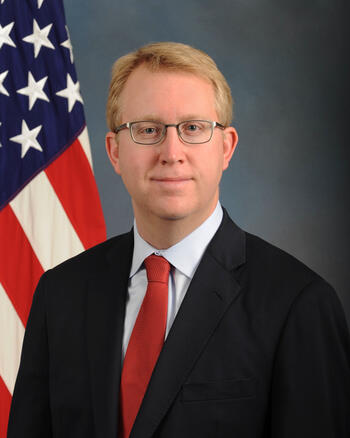
Dr. Matthew Spence was appointed Deputy Assistant Secretary of Defense for Middle East Policy in February 2012.  He is the principal advisor to the Secretary of Defense for Middle East policy, including Iraq, Syria, Iran, Israel, Egypt, and the Gulf states.  Prior to that, Dr. Spence worked at the White House on the National Security Council as Special Assistant to the President and Senior Director for International Economic Affairs and as Senior Advisor to two National Security Advisors. Dr. Spence is the co-founder of the Truman National Security Project. He has served as a Lecturer in International Relations at Oxford University, and has been widely published in international affairs. Trained as a lawyer, Dr. Spence also practiced criminal and international law in California, and served as a law clerk for Judge Richard Posner. A Marshall Scholar and Truman Scholar, Dr. Spence received his doctorate in International Relations from Oxford University; J.D. from Yale Law School; and B.A. and M.A. in International Policy Studies from Stanford University. He was born and raised in southern California.

Matthew Spence Deputy Assistant Secretary of Defense for Middle East Policy Deputy Assistant Secretary of Defense for Middle East Policy
Seminars
-

On November 14-15, the Program on American Democracy in Comparative Perspective hosted a conference on Lobbying and Campaign Finance. The conference brought together academics, practitioners, and lawyers to understand the impact of money in politics on a variety of outcomes, including special interest capture, democratic distortion, and inequality. The conference provided a rare opportunity to combine discussions of potential political reforms with evaluation of recent empirical findings in the area of lobbying and campaign finance. Participants covered a range of topics, including lobbying in Congress and in executive agencies; the relationship between patterns of campaign finance and partisan polarization; campaign finance laws, political parties, and special interest influence; and the regulation of lobbying and political money in other advanced democracies. The conference report summarizes the reform ideas that emerged from the conference discussions, including increasing soft money to political parties, disclosure of dark money, limiting lobbying access through the revolving door, and increasing the capacity of government.


The conference was held at the William and Flora Hewlett Foundation, a donor to the Program on American Democracy.

Agenda and Participants
Download pdf
Conference Report
Download pdf
Conferences
-

**Watch livestream here**

*Purchase book here*

Watch live streaming video from bccconferencechannel at livestream.com

Abstract

Latin America has gone through a major transformation in the past two decades. According to the United Nations, with the discovery of new oil and mineral deposits and increases in energy exports, manufacturing, and tourism, Latin America's economic growth and development will increase, and the region's global influence will become greater and greater.

In The Shared Society, Alejandro Toledo, whose tenure as president of Peru helped spur the country's economic renaissance, develops a plan for a future Latin America in which not only is its population much better off economically than today but the vast 40 percent of its poor and marginalized are incorporated into a rising middle class, democratic institutions work more effectively, and the extraordinary ecosystem of Latin America is preserved.


Speaker Bio:

Image
pid 25984

Alejandro Toledo served as the President of Peru from 2001 to 2006 and has been honored by the U.S. Senate for his policies during that tenure. He has held positions at the World Bank and the United Nations and was a Visiting Scholar in International Affairs at Harvard University as well as at Johns Hopkins University and a Senior Fellow and Distinguished Visiting Lecturer at Stanford University and the Brookings Institution. Toledo founded and continues to serve as the President of the Global Center for Development and Democracy in Washington, DC. 


This event is sponsored by CDDRL, FSI, the Center for Latin American Studies and Redwood Press.


[[{"fid":"218581","view_mode":"crop_870xauto","fields":{"format":"crop_870xauto","field_file_image_description[und][0][value]":"","field_file_image_alt_text[und][0][value]":"","field_file_image_title_text[und][0][value]":"","field_credit[und][0][value]":"","field_caption[und][0][value]":"","field_related_image_aspect[und][0][value]":"","thumbnails":"crop_870xauto","pp_lightbox":false,"pp_description":false},"type":"media","attributes":{"height":1433,"width":870,"class":"media-element file-crop-870xauto"}}]]

Former President of Peru (2001-2006) Former President of Peru (2001-2006)
Seminars
-

Abstract:

Image
a different democracy  american government in a 31 country perspective

American democracy differs greatly from other democracies around the world.  But is the American way more or less efficacious than comparable democracies in Asia, Latin America, or Europe?  What if the United States had a prime minister instead of (or in additional to) a president, or if it had three or more parties in Congress instead of two?  Would there be more partisan animosity and legislative gridlock or less?  These are the kinds of questions that thinking about U.S. government in comparative perspective helps us to analyze.


Speaker Bios:

Arend Lijphart 

Image
scan0001

Arend Lijphart is Research Professor Emeritus of Political Science at the University of California, San Diego.  His research has focused on the prospects of democracy in ethnically divided societies like Belgium, Lebanon, South Africa, and India, and on different forms of democracy—especially the contrast between majoritarian and consensus democracy and between presidential and parliamentary systems—and their strengths and weaknesses.  He is the author or editor of more than twenty books; the most recent are Patterns of Democracy (1999, 2nd ed, 2012),  Thinking About Democracy (2008), and A Different Democracy (co-authored with Steven L. Taylor, Matthew S. Shugart, and Bernard Grofman, 2014). 

Lijphart received his Ph.D. from Yale University in 1963, and was awarded honorary doctorates by the University of Leiden in 2001, Queen’s University Belfast in 2004, and the University of Ghent in 2009.  He served as president of the American Political Science Association in 1995-96, and is a member of the American Academy of Arts and Sciences, the British Academy, and the Netherlands Academy of Sciences.


Matthew Shugart

Image
shugart

Professor of Political Science, University of California, Davis


This event is co-sponsored with CDDRL's Program on American Democracy in Comparative Perspective


Arend Lijphart Professor Emeritus of Political Science, University of California, San Diego Professor Emeritus of Political Science, University of California, San Diego
Matthew Shugart Professor of Political Science, University of California, Davis Professor of Political Science, University of California, Davis
Seminars
-

Abstract:

African civil society is grappling with the stagnation of democratization after the highs of the Arab Spring and the crackdowns in its aftermath. Many governments, including several in sub-Saharan Africa, have retreated to repressive laws, big security budgets and expensive patronage that is straining resources and, in some instances, reigniting tensions between communities. More than dealing with bad governance as usual, African civil society is challenged to find new ways to protect the most vulnerable groups. Renowned Ugandan lawyer Nicholas Opiyo, celebrated anti-corruption activist John Githongo, and distinguished scholar of democracy, Larry Diamond, unpack the tool kit for civil society actors to find new ways to confront old dangers to minorities in sub-Saharan Africa.


Bios:

Image
githongo
John Githongo

John Githongo, former correspondent for The Economist, is a courageous leader in the struggle to combat corruption and improve governance in Kenya. 

Selected in 2011 as one of the world’s 100 most influential Africans by New African magazine and one of the world’s top 100 global thinkers by Foreign Policy magazine, Mr. Githongo currently serves as CEO of Inuka Kenya, an NGO that works with Kenyan youth to provide civic education and address societal problems.

From 2003 to 2004, he served as permanent secretary for governance and ethics in Kenya’s post-transition government, and risked his life and career to expose one of the biggest government corruption scandals in Kenyan history. 

Mr. Githongo has served as CEO of Transparency International Kenya, vice president of World Vision, senior associate member at St. Antony’s College Oxford, and member of the Kenya Human Rights Commission. 


Image
nicholas opiyo
Nicholas Opiyo

Opiyo is a former Secretary of the Ugandan bar association and a vocal defender of human rights outside the courts as regular commentator on public affairs. He heads Chapter Four Uganda – a legal charity and think tank named after Chapter Four, the bill of rights in Uganda’s constitution. As well as consulting widely on human rights related issues for the World Bank and other international agencies, he leads a team of lawyers seeking out strategic litigation in defense of human rights and providing immediate legal representation to human rights defenders. His public interest cases include challenges to Uganda’s anti-pornography law, discrimination under the HIV Prevention and Control Act, Uganda’s laws on defamation and freedom of expression amongst others. He is also engaged in litigation before the regional East African Court of Justice as well before the African Commission on Human and People’s Rights.


Image
Larry Diamond hs (2)
Larry Diamond

Larry Diamond is a senior fellow at the Hoover Institution and at the Freeman Spogli Institute for International Studies, where he directs the Center on Democracy, Development, and the Rule of Law. Diamond also serves as the Peter E. Haas Faculty Co-Director of the Haas Center for Public Service at Stanford. He is the founding co-editor of the Journal of Democracy and also serves as Senior Consultant (and previously was co-director) at the International Forum for Democratic Studies of the National Endowment for Democracy. During 2002-3, he served as a consultant to the U.S. Agency for International Development (USAID) and was a contributing author of its report Foreign Aid in the National Interest. He has also advised and lectured to the World Bank, the United Nations, the State Department, and other governmental and nongovernmental agencies dealing with governance and development.


Nicholas Opiyo Visiting Ugandan Constitutional and Human Rights Lawyer
John Githongo 2015 Mimi and Peter E. Haas Distinguished Visitor at Stanford University
Larry Diamond Senior Fellow at the Freeman Spogli Institute for International Studies, Director of the Center on Democracy, Development, and the Rule of Law
Seminars
-


Abstract:

The original Civic Culture model portrayed the ideal democratic citizen as an “allegiant” personality who dutifully participates in elections to entrust elites with legitimate power. The allegiant citizen trusts elites, the decision making process and institutions and abstains from disruptive non-electoral participation. The new book, The Civic Culture Transformed, argues that this model is outdated. In established democracies around the world, citizens have turned away from allegiance towards a decidedly “assertive” posture to politics: they are less trustful of politicians, parties and institutions, and are more likely to challenge government with their political demands. Most important, societies in which this transition from an allegiant to an assertive model of citizenship is most advanced are better performing democracies—in terms of both accountable and effective governance.

Speaker Bio:

Image
russ dalton
Russell Dalton's research and teaching has focused on the role of citizens in the political process. He has authored or edited more than twenty books and more than a 160 research articles. Dalton has been awarded the Developing Scholar Award by Florida State University, a Fulbright Research Fellowship, Scholar-in-Residence at the Barbra Streisand Center, German Marshall Fund Research Fellowship, the POSCO Fellowship at the East West Center, and the UCI Emeriti Award for Faculty Mentorship.

He was founding director of the Center for the Study of Democracy at UC Irvine and the Survey Research Center at Florida State University. His current research examines the changing norms of citizenship in the United States and other advanced industrial democracies, and how these norms are reshaping the democratic process in positive and negative ways. This has produced The Apartisan American: Dealignment and Changing Electoral Politics (CQ Press, 2012) and The Good Citizen (CQ Press, 2009). A related research program focuses on comparative electoral politics based on the Comparative Study of Electoral Systems. The first book from this project was Citizens, Choice and Context and a second book, Political Parties and Democratic Linkage, won the GESIS-Klingemann Prize.


Presentation Slides
Russell Dalton Professor of Political Science Professor of Political Science, University of California, Irvine
Seminars
-

AUDIO FROM SEGMENT OF TALK


Abstract:

A democratic recession is underway across much of Africa. Ironically it coincides with sustained economic growth since 1998. Much of this growth derived from political and economic liberalization in the 1990s, that has accelerated over the past 15 years due to an upsurge in demand for Africa’s natural resources. GDP growth does not mean development, however, and deepening inequality is more easily politicised and militarized along identity lines by elites in an era where across the world the politics of identity is resurgent. Both the war against terror and the rise of the Chinese governance model – authoritarian but efficient and compelling politically and economically – have seen elites consolidate power in fewer hands stalling and/or reversing the democratic developments of the last two decades. This elite capture of democratic processes is not limited to the South and has led to a delegitimisation of traditional political parties and players. Additionally, the securitization of geopolitics that has accompanied the ‘war against terror’ has fed a dramatic upsurge in spending on ‘national security’. National security is the last refuge of the corrupt. Indeed, this securitization has been accompanied not only by an upsurge in graft but the ongoing democratic recession. My presentation asks why and how this has come about. Finally, how can democratic gains be protected, consolidated and expanded.


Speaker Bio:

Image
githongo website
John Githongo is the CEO of Inuka, a non-governmental organisation involved in governance issues broadly defined, with an emphasis on working with and for ordinary Kenyans – youth in particular. In doing this Inuka is guided by the principles of heshima (respect), diversity (celebrating the depth and wealth of Kenya’s cultural diversity) and Ni Sisi! (It is us!) – for it is Kenyans who own and will ultimately resolve even the most seemingly intractable of their problems. John is also the Chairman of the Africa Institute for Governing with Integrity; Executive Vice Chair of the Mathare Youth Sports Association (MYSA); Chair board member of the Africa Center for Open Governance (AFRICOG); and a Commissioner of the Independent Commission on Aid Impact (ICAI) of the British government. Previously, he served as Vice President of World Vision, Senior Associate Member, St Antony’s College Oxford; Permanent Secretary in the Office of the President in charge of Governance and Ethics of the Kenya Government; board member Transparency International, Berlin, CEO Transparency International Kenya and a board member of the Kenya Human Rights Commission. In the past he has been a columnist for the EastAfrican, Associate Editor, Executive magazine; and a correspondent for the Economist. In 2004 the German President awarded him the German-Afrika Prize for Leadership. In 2011 he was selected as one of the world’s 100 most influential Africans by New African magazine and one of the world’s top 100 global thinkers by Foreign Policy magazine. In 2012 he was short-listed, alongside US Secretary of State, Hillary Clinton for the prestigious Tipperary International Peace Award.

John Githongo Visiting Anti-Corruption Journalist, Haas Center Visiting Anti-Corruption Journalist, Haas Center Visiting Anti-Corruption Journalist, Haas Center
Seminars
-

Video


Speaker Bio: 

Image
 tmv2447

Mikhail Khodorkovsky is a former Russian businessman and political prisoner of Vladimir Putin’s regime. Prior to his arrest in 2003, Khodorkovsky was the head of Yukos, one of Russia’s largest oil producers, and an increasingly outspoken critic of corruption in Russian life. He began funding opposition parties and established Open Russia, a non-governmental organization promoting a strong civil society. Khodorkovsky was one of the pioneers of Internet in Russia. His company Yukos incubated numerous successful Internet entrepreneurs and investors. He financed educating Russian teachers on new technologies, computerization of schools and broadband Internet connection for schools and libraries in Russian regions. Khodorkovsky was arrested and charged with fraud and tax evasion, and sentenced to nine years in prison, which was prolonged to eleven years after the second trial. Khodorkovsky, declared a prisoner of conscience by Amnesty International, was released in December 2013. Following his release he declared that he will support political prisoners and civil society in Russia. In September 2014 Khodorkovsky re-launched Open Russia as a movement aiming to unite pro-Western Russian citizens. 


[[{"fid":"218596","view_mode":"crop_870xauto","fields":{"format":"crop_870xauto","field_file_image_description[und][0][value]":"","field_file_image_alt_text[und][0][value]":"","field_file_image_title_text[und][0][value]":"","field_credit[und][0][value]":"","field_caption[und][0][value]":"","field_related_image_aspect[und][0][value]":"","thumbnails":"crop_870xauto","pp_lightbox":false,"pp_description":false},"type":"media","attributes":{"height":1113,"width":870,"class":"media-element file-crop-870xauto"}}]]


CEMEX Auditorium

Zambrano Hall/North Building 

Graduate School of Business

Stanford University

641 Knight Way

Mikhail Khodorkovsky Former Russian businessman; Founder, Open Russia
Seminars
-

EVENT AT FULL CAPACITY


Speaker Bio:

Image
anders aslund

Anders Aslund has been a senior fellow at the Peterson Institute since 2006. He is also an adjunct professor at Georgetown University. He examines the economic policy of Russia, Ukraine, and Eastern Europe, as well as focuses on the broader implications of economic transition. He worked at the Carnegie Endowment for International Peace from 1994 to 2005, first as a senior associate and then from 2003 as director of the Russian and Eurasian Program. He also worked at the Brookings Institution and the Kennan Institute for Advanced Russian Studies. He earned his doctorate from Oxford University. Åslund served as an economic adviser to the governments of Russia in 1991–94 and Ukraine in 1994–97. He was a professor at the Stockholm School of Economics and the founding director of the Stockholm Institute of East European Economics. He has worked as a Swedish diplomat in Kuwait, Poland, Geneva, and Moscow. He is a member of the Russian Academy of Natural Sciences and an honorary professor of the Kyrgyz National University. He is chairman of the Advisory Council of the Center for Social and Economic Research (CASE), Warsaw, and of the Scientific Council of the Bank of Finland Institute for Economies in Transition (BOFIT).

Anders Aslund Senior Fellow, Peterson Institute
Seminars
Subscribe to Democracy