Democracy
News Type
News
Date
Paragraphs

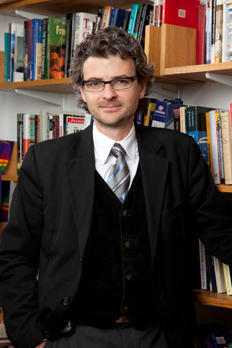
Francis Fukuyama, a political scientist and senior fellow at Stanford’s Freeman Spogli Institute for International Studies, will be the next director of the institute’s Center on Democracy, Development, and the Rule of Law.

Fukuyama will take the helm as CDDRL’s fourth director on Sept. 1. He will succeed Larry Diamond, a senior fellow at FSI who has directed CDDRL since 2009.

“Frank Fukuyama’s renowned scholarship and profile among the world's top political scientists puts him in a perfect position to lead CDDRL,” said FSI Director Michael McFaul, who announced Fukuyama’s appointment on April 17.

“Larry Diamond has been a powerful director, and we are grateful he will still be very involved with the center and FSI," McFaul said. "We are looking forward to CDDRL’s growth under Frank's leadership."

Fukuyama joined the Stanford faculty as FSI’s Olivier Nomellini Senior Fellow in 2010. He has been in residency at CDDRL since then, and has played an active role in the center’s research programming. He launched the Governance Project in 2012 to develop better measure of governance. He collaborated with other faculty members to start the Program on American Democracy in Comparative Perspective, which investigates problems confronting American democracy.

“I am very excited to be succeeding Larry Diamond as the director.  Larry has done a tremendous job over the past six years in building CDDRL into an internationally recognized institution, and I hope to continue in his footsteps,” Fukuyama said.

Fukuyama has written extensively about democracy and political economy. His book, The End of History and the Last Man, has appeared in more than 20 foreign editions since its publication in 1992. His most recent books are Political Order and Political Decay:  From the Industrial Revolution to the Globalization of Democracy; The Origins of Political Order: From Prehuman Times to the French Revolution; and  America at the Crossroads: Democracy, Power, and the Neoconservative Legacy.

Fukuyama has bolstered CDDRL’s teaching mission as faculty director of the Undergraduate Senior Honors Program, which trains Stanford students to write a thesis on a topic related to democratic development. Fukuyama also plays a key teaching role in the Draper Hills Summer Fellows Program, which attracts global democracy leaders to Stanford every year for academic training.

"Frank Fukuyama is the most influential scholar of political development in the world today,” Diamond said. “His writing, speaking, and teaching have reshaped the way we think about the interactions among economic development, democracy, rule of law, and the growth of state capacity.  I am thrilled – as I know our faculty and students will be – that he has agreed to serve as the next director of our CDDRL.  He will give the center energetic, visionary and wise leadership."

In 2014, Fukuyama brought the Leadership Academy for Development Program to Stanford from the Johns Hopkins School of Advanced International Studies where he previously served as the Bernard L. Schwartz Professor of International Political Economy. The LAD program trains emerging public sector leaders in developing countries to advance economic development.

Fukuyama received his bachelor’s from Cornell and his doctorate in political science from Harvard. He was a member of the Political Science Department of the RAND Corporation from 1979 to 1980, then again from 1983 to 1989 and from 1995 to 1996. He served twice in the 1980s as a member of the Policy Planning Staff of the State Department and was a member of the U.S. delegation to the Egyptian-Israeli talks on Palestinian autonomy.

From 1996 to 2000, Fukuyama was Omer L. and Nancy Hirst Professor of Public Policy at the School of Public Policy at George Mason University. He served as a member of the President's Council on Bioethics from 2001 through 2004. 

Fukuyama is chairman of the editorial board of The American Interest, which he helped establish in 2005. He serves on the boards of the Rand Corporation, the Pardee Rand Graduate School, the Volker Initiative, the Institute for American Values, and the Abdorrahman Boroumand Center. He is a member of the American Political Science Association and the Council on Foreign Relations.

Hero Image
15394217089 fb2b3f7f73 k
Francis Fukuyama, right, with Larry Diamond. Fukuyama will take the helm of FSI's Center on Democracy, Development, and Rule of Law when Diamond steps down as director in September.
Rod Searcey
All News button
1
Paragraphs

On November 14-15, the Program on American Democracy in Comparative Perspective hosted a conference on Lobbying and Campaign Finance. The conference brought together academics, practitioners, and lawyers to understand the impact of money in politics on a variety of outcomes, including special interest capture, democratic distortion, and inequality. The conference provided a rare opportunity to combine discussions of potential political reforms with evaluation of recent empirical findings in the area of lobbying and campaign finance. Participants covered a range of topics, including lobbying in Congress and in executive agencies; the relationship between patterns of campaign finance and partisan polarization; campaign finance laws, political parties, and special interest influence; and the regulation of lobbying and political money in other advanced democracies. The conference report summarizes the reform ideas that emerged from the conference discussions, including increasing soft money to political parties, disclosure of dark money, limiting lobbying access through the revolving door, and increasing the capacity of government.

The conference was held at the William and Flora Hewlett Foundation, a donor to the Program on American Democracy.

All Publications button
1
Publication Type
Conference Memos
Publication Date
Authors
Didi Kuo
Authors
Christian E. Ollano
News Type
Q&As
Date
Paragraphs


Svitlana Zalishchuk (’11), an alumna of the Draper Hills Summer Fellow Program (DHSFP) at Stanford’s Center on Democracy, Development and the Rule of Law reflects on the challenges and motives behind her decision to run for public office in Ukraine. Amidst a transitional moment in her country’s history, Zalishchuk won a seat in Ukraine’s Parliament alongside DHSFP alumni Sergii Leshchenko ('13) and Mustafa Nayyem ('14). Before joining government, Zalishchuk led the Ukrainian NGO, Centre UA, which works to reassert citizens' influence on politics and restore freedom of speech in Ukraine.


1) What are the top challenges Ukraine faces today?

Ukraine is currently confronted with challenges on two fronts. The first is in the east of the country – the war with Russia. The second challenge is with the old system of government against corrupt and rotten institutions ­­ both struggles are an attempt to break up with Ukraine’s Soviet past.

There is an essential interdependence between these two battles. With the war in Donbass (in the east of Ukraine) it is much more difficult to implement the reforms. At the same time, without reforms it is impossible to win the war in the East.

In the end, Putin’s aim is not to control two Ukrainian regions, but to make the European idea a failed idea in Ukraine. The reunion of the Ukrainian territories in the long-term will be based on the people’s wish to live better lives in a free and democratic European country. Reforms are the most powerful weapon against this post-Soviet front.


2) How has civil society responded to the new leadership under President Petro Poroshenko?

President Petro Poroshenko was elected with more than 50 percent support of the voters. But to be a leader of a country, which has a military conflict with one of the biggest powers in the world and is going through one of the most difficult economic crises since its independence, is a monumental task.

Ukrainian society has high expectations of the new president, government and parliament – institutions that represent the shift of the political elites after the Euromaidan protests in Kyiv. But it is almost impossible to meet these expectations. The country’s decision to move toward democratic development has been made at the expense of thousands of Ukrainian lives.

Currently, the government has been facing harsh criticism for countless mistakes, a slow reform process, and lack of effort to combat corruption. Society continues to live through unprecedented self-organization. Groups of volunteers have formed across the country to perform various tasks that the state sometimes is unable to execute - such as the creation of volunteer battalions, the financing of the army, and the construction of housing for refugees. 

Still, it is a bit early to answer this question. Society is still waiting for the results of this leadership: reforms and a peaceful settlement of the conflict.


3) What challenges do you face, currently, as a member of parliament? What kind of changes do you hope to implement in your current role?

The biggest challenge is to justify people’s expectations that a new generation in politics will be able to change the country. People need to realize that real changes do not come with new faces in the government - and not even with newly adopted bills - but with well-functioning institutions. Building these will take time.

Nevertheless, we have to show that reforms are possible even in times of military conflict and economic crisis. New anti-corruption policies and measures; judicial and police reform; deregulation; constitutional reform that decentralizes the country to allow more power to local communities – these are the first steps of a long journey toward our European goal.

In the long-term, politicians with roots tracing back to the Euromaidan protests have to build their political identities alongside new political parties. The legacy of the Euromaidan protests has to be institutionalized.


4) What prompted you to run for parliament? How would you describe the transition from a journalist to politician?

Having experienced censorship for many years in Ukraine, we have chosen to fight for the freedom of speech. This meant doing a little more outside the normal responsibilities of a journalist.

We have been advocating for the Freedom of Information Bill for five years. We were demanding reform in the media sphere for ten. We were fighting against corruption not only by writing about it, but also by initiating nation-wide civic campaigns. We were on the frontline of both revolutions – Orange in 2004 and Euromaidan in 2014. After this, pursuing a career in politics seemed like a logical next step to transform this fight into a constructive continuation of reforms.


5) How has the Draper Hills Summer Fellows Program contributed – if at all- towards your new role in government?

One of the most important experiences from the Draper Hills Summer Fellows Program was the recalibration and transformation of my local way of thinking into a global way of thinking. I was able to move from only seeing a national (Ukrainian) perspective on the problems with democratic and economic reforms to seeing an understanding of how all these challenges have been faced by many countries in the world.


6) Do you have any advice for alumni members who are seeking to run for office?

I have three personal conclusions. First, politics is a team game. It is important to build or find a circle of trustworthy and like-minded people. Second, goal-oriented strategy is essential for long-term political journeys. And finally, cooperation with civil society, continuous engagement with voters and communication with people is crucial.

Pursuing a career in politics was a difficult decision for my friends and I. But life proved that there are no right decisions. You make the decisions and then you make them right.


Hero Image
svitlana
All News button
1
-

Audio 


Abstract

Governance is exceptionally complex in health systems. Part of the complexity lies in the differences between these systems; especially across countries. Differences make it difficult to assess governance conditions in a comparative sense, and call for a framework to think about this issue. This talk discusses a potential framework based on the idea that governance mechanisms vary depending on relationships in systems and the problems that systems face. The framework is applied to different countries to show how different health sector governance regimes might be required for different contexts.


Speaker Bio

mattandrews Matt Andrews
Matt Andrews is Associate Professor of Public Policy at Harvard Kennedy School. A South African, he does research on governance in developing countries and also on implementation of reforms. His most recent work examines comparative governance arrangements as well as problem driven approaches to doing development differently.


**This event is co-sponsored by the FSI Policy Implementation Lab.** 


Governance Maps, Traps and Emergent Strategies
Matt Andrews Associate Professor of Public Policy, Harvard Kennedy School Associate Professor of Public Policy, Harvard Kennedy School
Seminars
-

Abstract:

Screening of the award winning documentary 'Dancing in Jaffa' starring Pierre Dulaine who will be in attendance and will participate in a Q&A session following the film. Free and open to the public. Dinner provided. Preceded by short performance by the Stanford Middle East Ensemble.

Speaker Bio:

Image
pierre dulaine 21

Pierre Dulaine was born in Jaffa, Palestine in 1944 to an Irish father and a Palestinian mother--both of whom fled the area in 1948.  After eight months of moving several times, Dulaine's family settled in Amman, Jordan. In 1956, the Suez Crisis forced Dulaine's parents to flee the country, eventually resettling in Birmingham, England.  In 1994 Dulaine founded the Dancing Classrooms program in New York City's public schools in which he encouraged children from various backgrounds to dance together. He later traveled to the city of his birth, Jaffa, to visit his childhood home and to make a film, 'Dancing in Jaffa,' where he brought Israeli Arabs and Jews together through dance and music.  His life was also fictionalized in the film Take the Lead starring Antonio Banderas.  More recently, Pierre Duaine has gained much acclaim in the Arab world for his role as Judge on the Arabic version of the TV show 'So You Think You Can Dance' where he encouraged young Arab men and women to pursue dance as way of dealing with difficult circumstances and certain outdated social taboos.

(See flyer for list of co-sponsors)


Note: Pierre Dulaine will give a lunchtime lecture on campus on May 29. For more information, click here.

Watch 'Dancing in Jaffa' trailer


[[{"fid":"218684","view_mode":"crop_870xauto","fields":{"format":"crop_870xauto","field_file_image_description[und][0][value]":"PD flyer","field_file_image_alt_text[und][0][value]":"","field_file_image_title_text[und][0][value]":"","field_credit[und][0][value]":"","field_caption[und][0][value]":"","field_related_image_aspect[und][0][value]":"","thumbnails":"crop_870xauto","pp_lightbox":false,"pp_description":false},"type":"media","attributes":{"height":1344,"width":870,"class":"media-element file-crop-870xauto"}}]]

Building 206-113
Stanford, CA

Pierre Dulaine
Film Screenings
-

Abstract:

Ballroom dancing legend Pierre Dulaine will discuss his 'Dancing Classrooms' method which he applied in his award winning documentary 'Dancing in Jaffa' to bring Arab and Jewish children together through dance. Mr. Dulaine will speak about the film, his journey into the world of dance and his experience as a Judge on the Arabic version of the TV show 'So You Think You Can Dance.'  Talk features audio-visual presentation and free lunch.

Speaker Bio:

Image
pierre dulaine 21

Pierre Dulaine was born in Jaffa, Palestine in 1944 to an Irish father and a Palestinian mother--both of whom fled the area in 1948.  After eight months of moving several times, Dulaine's family settled in Amman, Jordan. In 1956, the Suez Crisis forced Dulaine's parents to flee the country, eventually resettling in Birmingham, England.  In 1994 Dulaine founded the Dancing Classrooms program in New York City's public schools in which he encouraged children from various backgrounds to dance together. He later traveled to the city of his birth, Jaffa, to visit his childhood home and to make a film, 'Dancing in Jaffa,' where he brought Israeli Arabs and Jews together through dance and music.  His life was also fictionalized in the film Take the Lead starring Antonio Banderas.  More recently, Pierre Duaine has gained much acclaim in the Arab world for his role as Judge on the Arabic version of the TV show 'So You Think You Can Dance' where he encouraged young Arab men and women to pursue dance as way of dealing with difficult circumstances and certain outdated social taboos.

(See flyer for a list of the co-sponsors)


Note: A screening of 'Dancing in Jaffa' will take place on campus on May 29. For more information, click here.


[[{"fid":"218684","view_mode":"crop_870xauto","fields":{"format":"crop_870xauto","field_file_image_description[und][0][value]":"PD flyer","field_file_image_alt_text[und][0][value]":"","field_file_image_title_text[und][0][value]":"","field_credit[und][0][value]":"","field_caption[und][0][value]":"","field_related_image_aspect[und][0][value]":"","thumbnails":"crop_870xauto","pp_lightbox":false,"pp_description":false},"type":"media","attributes":{"height":1344,"width":870,"class":"media-element file-crop-870xauto"}}]]

Stanford Language Center,
Building 30-102,
Stanford, CA

Pierre Dulaine
Lectures
-

Abstract

Social and economic grievances of Tunisian youth played a major role in igniting the uprising in Tunisia, and more generally, the so-called Arab Spring. Despite a successful political transition in the country, progress on addressing youth grievances has been slow in light of deteriorating living conditions, rampant corruption, and rising unemployment. These realities continue to pose a serious challenge to the prospects of building a sustainable democracy in Tunisia. Based on data gathered from meetings with a diverse group of 500 young Tunisians, this talk will shed light on youth’s perceived and actual exclusion from social, economic, and political opportunities. In doing so it will provide a critical assessment of the underlying causes of youth alienation in the country and prospects for greater political, social and economic inclusion.

Speaker Bio

Image
attachment 1

Ghazi Ben Ahmed leads the Mediterranean Development Initiative of the Center for Transatlantic Relations, Johns Hopkins SAIS in Tunisia. He is the founder and the Secretary General of the Club de Tunis, a Tunisian based foundation that helps policymakers and entrepreneurs devise strategies and development projects for inclusive growth. He has set up jointly with Dar El Dhekra (Remembrance House, the first Tunisian Jewish Association), a project to safeguard Tunisian Jewish Heritage by promoting its products on the US market. Ghazi Ben Ahmed is the Tunisia Coordinator for Leaders Engaged in New Democracies (LEND). He cooperates with the U.S. State Department, the Community of Democracies, and the Club de Madrid to provide peer advice, peer support, and capacity building to political leaders and policy makers in Tunisia. Previously he was the Lead Trade Expert in the African Development Bank (AfDB). Before joining the AfDB, he was a Senior Advisor at the United Nation agency for Trade and Development (UNCTAD), in the Africa and LDC Division. He also worked for almost 10 years in the European Commission in Brussels, in several Directorates-Generals: Trade, EuropeAid and External Relations, responsible for trade issues, EU trade and development policy, textile negotiations, macroeconomic analysis, structural adjustment and institutional building in the Mediterranean countries.


*This event is co-sponsored with the Mediterranean Studies Forum.*


[[{"fid":"218669","view_mode":"crop_870xauto","fields":{"format":"crop_870xauto","field_file_image_description[und][0][value]":"Ghazi Ben Ahmed flyer","field_file_image_alt_text[und][0][value]":"","field_file_image_title_text[und][0][value]":"","field_credit[und][0][value]":"","field_caption[und][0][value]":"","field_related_image_aspect[und][0][value]":"","thumbnails":"crop_870xauto","pp_lightbox":false,"pp_description":false},"type":"media","attributes":{"height":"540","width":"870","class":"media-element file-crop-870xauto"}}]]


Okimoto Conference Room
3rd Floor East Wing
Encina Hall
616 Serra Street
Stanford, California 94305

Ghazi Ben Ahmed Executive Director Mediterranean Development Initiative
Seminars
Authors
News Type
Commentary
Date
Paragraphs

As part of the Arab Reform and Democracy Program's speaker series, UC Santa Barbara Political Scientist Paul Amar discussed his book The Security Archipelago, winner of the 2014 Charles Taylor Book Award of the American Political Science Association. The book provides an alternative historical and theoretical framing of the refashioning of free-market states and the rise of humanitarian security regimes in the Global South by examining the pivotal, trendsetting cases of Brazil and Egypt. Addressing gaps in the study of neoliberalism and biopolitics, Amar describes how coercive security operations and cultural rescue campaigns confronting waves of resistance have appropriated progressive, antimarket discourses around morality, sexuality, and labor. Homing in on Cairo and Rio de Janeiro, Amar reveals the innovative resistances and unexpected alliances that have coalesced in new polities emerging from the Arab Spring and South America's Pink Tide. These have generated a shared modern governance model that he terms the "human-security state."


Hero Image
screen shot 2015 04 11 at 11 47 43 am
All News button
1
Authors
News Type
Commentary
Date
Paragraphs

As part of the Arab Reform and Democracy Program's speaker series, UC Santa Barbara Historian Sherene Seikaly discusses her research on Egypt's 1977 bread intifada. A return to the historical moment of the “Bread Intifada,” of 1977 interrupts the narrative resilience of the alternating sleep and wakefulness of the Egyptian, and more broadly the Arab people. By engaging 18-19 January 1977 as a moment of politics and popular sovereignty, Seikaly's project challenges who and what count as political, rational, and legitimate. The role food played in protestors’ and government strategies and demands reveals how basic needs function as a trigger of social upheaval as well as a vehicle of political containment. This project attends to the roles that poverty and hunger play in politics in order to detail critiques of the open door policy. It explores how government officials, journalists, and protestors defined and ultimately contained the “poor” and the “hungry.” More importantly, by studying how protestors narrated and represented themselves and the tools they used to make their claims, this project troubles the construction of the “people.”  In so doing, it explores continuity and rupture between 1977 and 2011.


Hero Image
screen shot 2015 04 11 at 11 18 29 am
All News button
1
-

Abstract:

In July and August, hostilities in the Gaza Strip left 2,131 Palestinians and 71 Israelis dead, including 501 Palestinian children and one Israeli child. Of Gaza’s 1.8 million residents, 475,000 are living in temporary shelters or with other families because their homes have been severely damaged. The extent of destruction has raised questions around culpability for war crimes on all sides of the conflict. International organizations including the United Nations Human Rights Council, Amnesty International and Human Rights Watch have called for independent investigation. At the end of 2014, Palestine deposited a 12(3) application to the ICC for ad-hoc jurisdiction as well as acceded to the Rome Statute, thus granting the International Criminal Court the authority to investigate war crimes conducted in Palestinian territory. Such an investigation would bring both Israel and Palestine under scrutiny for events from this summer and as far back as 2012, and possibly to 2002 when the ICC was first formed to investigate war crimes. This is the third large scale military offensive against the besieged coastal enclave since Israel’s unilateral disengagement in 2005. Given the shortcomings of the ceasefire on August 26, 2014, another attack is seemingly inevitable. How is such civilian carnage possible notwithstanding the humanitarian and human rights legal regimes established to reduce civilian suffering? And what are the prospects for accountability under international criminal law and beyond? This lecture will explore these questions and specifically the prospects for accountability at the ICC. 


Speaker Bio:

Image
20120912 law 006

Noura Erakat is a human rights attorney, activist, and an Assistant Professor at George Mason University. Her scholarship investigates the laws of war, human rights, refugee law, and national security. She is a Co-Editor of Jadaliyya, an electronic magazine that leverages scholarly expertise and local knowledge on the Middle East. She has taught International Human Rights Law and the Middle East at Georgetown University since Spring 2009 and before beginning at George Mason University, she was a Freedman Teaching Fellow at Temple University, Beasley School of Law. She has served as Legal Counsel for a Congressional Subcommittee in the House of Representatives, chaired by Congressman Dennis J. Kucinich. She helped to initiate and organize several national formations including Arab Women Arising for Justice (AMWAJ) and the U.S. Palestinian Community Network (USPCN). While an undergraduate student at UC Berkeley, Noura helped launch the first university divestment campaign at UC Berkeley in 2001 and upon graduating from Berkeley Law School, she helped seed BDS campaigns throughout the country uas the National Organizer with the US Campaign to End the Israeli Occupation. There, she also helped initiate federal lawsuits in the U.S. against Israeli officials in for war crimes and crimes against humanity. She has lived and worked throughout the Middle East including as part of a legal fact-finding delegation to the Gaza Strip in the aftermath of Israel’s Winter 2008/09 onslaught and spent the Spring 2010 academic semester in Beirut, Lebanon as a Visiting Scholar at the American University in Beirut.  Noura has appeared on PBS News Hour, BBC World Service, NPR’s “To The Point,” MSNBC's "Up With Chris Hayes," Fox’s “The O’ Reilly Factor,” NBC’s “Politically Incorrect,” Democracy Now, and Al-Jazeera Arabic and English. Her non-scholarly publications have appeared in the New York Times, USA Today, the Los Angeles Review of Books, The Nation, Huffington Post, and Foreign Policy among others.  Most recently, she co-published an anthology entitled Aborted State? The UN Initiative and New Palestinian Junctures. 


This event is co-sponsored by the Sohaib and Sara Abbasi Program in Islamic Studies.


[[{"fid":"218623","view_mode":"crop_870xauto","fields":{"format":"crop_870xauto","field_file_image_description[und][0][value]":"Noura Erakat flyer","field_file_image_alt_text[und][0][value]":"","field_file_image_title_text[und][0][value]":"","field_credit[und][0][value]":"","field_caption[und][0][value]":"","field_related_image_aspect[und][0][value]":"","thumbnails":"crop_870xauto","pp_lightbox":false,"pp_description":false},"type":"media","attributes":{"width":"870","class":"media-element file-crop-870xauto"}}]]

Okimoto Conference Room
3rd Floor East Wing
Encina Hall
616 Serra Street
Stanford, California 94305

Noura Erakat Assistant Professor George Mason University
Seminars
Subscribe to Democracy