Democracy
Authors
News Type
News
Date
Paragraphs

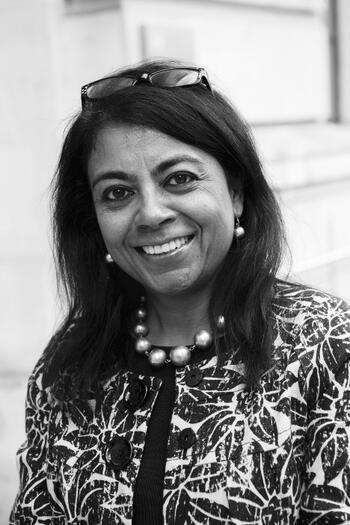
The Freeman Spogli Institute for International Studies (FSI) at Stanford University is pleased to announce that Kathryn Stoner, Senior Fellow and Deputy Director of the Institute, as well as an expert in contemporary Russia’s domestic and foreign policies, will assume the role of Mosbacher Director at the Center on Democracy, Development and the Rule of Law (CDDRL), effective September 15, 2021. She replaces Francis Fukuyama, the Olivier-Nomellini Senior Fellow at CDDRL, who has served as the Center’s director since 2015.

Dr. Stoner has served as the Deputy Director of FSI since 2017, and previously served as the Director of the Ford Dorsey Master’s in International Policy at Stanford for eight years. In her five years as FSI’s Deputy Director, she oversaw tremendous growth and expansion of the Institute’s research and policy initiatives, including the transformation of the Stanford Cyber Initiative into the Cyber Policy Center at FSI, and the incorporation of the Ford Dorsey Master's in International Policy (MIP) under the institute’s stewardship in 2018.

Prior to serving as FSI deputy director, Kathryn Stoner was a founding faculty member of CDDRL.

“Kathryn helped to launch some of CDDRL’s signature activities today, including the undergraduate honor's program, the large lecture course on democracy and development, which she will continue to teach, and the Draper Hills Summer Fellows program,” said FSI Director Michael McFaul. “We all look forward to the future innovations and creativity that Kathryn will bring to CDDRL in her newest leadership role within the Freeman Spogli Institute.”

We're all looking forward to the future innovations and creativity that Kathryn will bring to CDDRL in her newest leadership role within the Freeman Spogli Institute.
Michael McFaul
FSI Director

The Center on Democracy, Development and the Rule of Law is an interdisciplinary center for research on development in all of its dimensions:  political, economic, social, and legal, and the ways in which these different dimensions interact with one another.

"It has been a great honor to lead CDDRL over the past seven years," said Francis Fukuyama. "This has been a turbulent time for global democracy, which has forced many changes in the Center's research and training agenda. CDDRL has become a focal point for the study of democratic institutions, and is well-positioned to take on coming challenges. I'd like to thank the faculty and staff of CDDRL for all of their hard work and comradeship over this period, and wish Kathryn Stoner the best as she takes over the directorship."

An equally important aspect of CDDRL’s mission is engagement with future and current policymakers. CDDRL hosts an undergraduate honors program and graduate fellowships for students, and four unique leadership development programs to train and mentor emerging public service leaders from around the world.

“We really want our students to be not just multidisciplinary, but interdisciplinary,” Stoner emphasizes. “Different disciplines often look at the same problem and don't always come up with the best solution, because they're ignoring what another discipline can offer. We’re trying to develop unique perspectives and solutions to enduring developmental problems by working across disciplines.

“We really want our students to be not just multidisciplinary, but interdisciplinary. We’re trying to develop unique perspectives and solutions to enduring developmental problems by working across disciplines.”
Kathryn Stoner
Mosbacher Director at CDDRL and FSI Senior Fellow

Prior to arriving at Stanford in 2004, Stoner was on the faculty at Princeton University for nine years, jointly appointed to the Department of Politics and the Princeton School for International and Public Affairs (formerly known as the Woodrow Wilson School). She was awarded the Ralph O. Glendinning Preceptorship for outstanding junior faculty while at Princeton, and also served as a visiting associate professor of political science at Columbia University, and an assistant professor of political science at McGill University. A dual Canadian/American citizen, Kathryn Stoner has a B.A and M.A. in Political Science from the University of Toronto, and a PhD in Government from Harvard University. She was also awarded an honorary doctorate from Iliad State University in Tbilisi, Republic of Georgia.

At Stanford she continues her research and teaching on contemporary Russia and nations in democratic transitions. She is the author or co-editor of six books, including her most recent, Russia Resurrected: Its Power and Purpose in a New Global Order (Oxford, 2021).

“I am thrilled to take the torch at CDDRL from Francis Fukuyama," said Stoner. "He has provided outstanding leadership at CDDRL, and I look forward to continuing its successful undergraduate, graduate and faculty programming and to establishing new research directions on democracy, global populism, and modern autocracy, among others. CDDRL’s work is especially vital at a time when the veracity and efficacy of democracies worldwide is in question."

Kathryn Stoner

Kathryn Stoner

Mosbacher Director at CDDRL, FSI Senior Fellow, and Professor of Political Science (by courtesy) at Stanford
Full Profile

Read More

Screenshot of Draper Hills 2021 opening session
News

Global Democracy Leaders Gather Virtually for the 2021 Draper Hills Summer Fellowship

For the next two weeks, Fellows will participate in workshops led by an interdisciplinary team of faculty to study new theories and approaches to democratic development.
Global Democracy Leaders Gather Virtually for the 2021 Draper Hills Summer Fellowship
Text on blue background that reads "GOVERNANCE, MEDIA AND CIVIL SOCIETY are critical to the long-term success of California" with logos for California100.org, Stanford's CDDRL, and California 100
News

CDDRL Awarded a California 100 Grant to Evaluate Governance, Media and Civil Society in California’s Future

The research will be led by Francis Fukuyama, Mosbacher Director of CDDRL, and Michael Bennon, Program Manager of CDDRL’s Infrastructure Policy Research Initiative
CDDRL Awarded a California 100 Grant to Evaluate Governance, Media and Civil Society in California’s Future
Hero Image
[Left] Kathryn Stoner; [Right] Encina Hall, Stanford University
Dr. Kathryn Stoner will serve as the new director of the Center on Democracy, Development and the Rule of Law (CDDRL) at the Freeman Spogli Institute for International Studies at Stanford University.
All News button
1
Subtitle

Stoner, a Senior Fellow at the Freeman Spogli Institute for International Studies (FSI) and Professor of Political Science (by courtesy) at Stanford, will lead the Center’s efforts to understand how countries can overcome poverty, instability, and abusive rule to become prosperous societies.

-

The Freeman Spogli Institute for International Studies (FSI) is honored to host the President of Ukraine, Volodymyr Zelensky, for an address on U.S.-Ukrainian relations. President Zelensky's visit to Stanford follows his August 31 meeting with United States President Joe Biden, and is the first visit to California by a Ukrainian president.

This event is publically available via Zoom. Please register in advance.

Lectures
-

Image
When The Stars Begin to Fall book cover
About the Seminar: Structural racism threatens the principles that undergird the American creed. A national, multiracial solidarity is the best means of mitigating racism’s effects. The sociopolitical strategies of Black America – grounded in moral claims consonant with the creed but fashioned to be in alignment with contemporary national interests – provide a model for the type of solidarity the United States desperately needs.

This argument is explored in detail in When the Stars Begin to Fall: Overcoming Racism and Renewing the Promise of America. Through an examination of political science and sociological frameworks, alongside personal and historical narratives, it argues that structural racism is a crime of the state, that color-conscious policy is preferable to colorblindness, and that the American civil religion is central to national solidarity. Concluding with policy recommendations, the book offers the next step forward on the intractable issue of racism.


Image
Theodore R. Johnson
About the Speaker: Theodore R. Johnson is a Senior Fellow and Director of the Fellows Program at the Brennan Center for Justice at the NYU School of Law, where he undertakes research on race, politics, and American identity. Prior to joining the Brennan Center, he was a National Fellow at New America and a Commander in the United States Navy, serving for twenty years in a variety of positions, including as a White House Fellow in the first Obama administration and as speechwriter to the Chairman of the Joint Chiefs of Staff. His work on race relations has appeared in prominent national publications across the political spectrum, including the New York Times Magazine, the Atlantic, the Washington Post, the Wall Street Journal, and National Review, among others.


In-person for Stanford Affiliates: Philippines Conference Room
Online: Zoom

Theodore R. Johnson Senior Fellow and Director, Fellows Program at the Brennan Center for Justice
Seminars
-

About the Seminar: From foreign influence operations disrupting democratically-held elections to anti-vaccine conspiracies undermining global public health, disinformation has drawn attention to the many ways technology engenders new and complex challenges for civic life. This talk will explore the role of identity-based propaganda in contemporary influence operations and its consequences for democracy and civic life.


Register Now


About the Speaker: Samantha Bradshaw is a postdoctoral fellow at CDDRL, the Digital Civil Society Lab, and the Program on Democracy and the Internet.

Image
Samantha

Online, via Zoom.

Postdoctoral Fellow, CDDRL
Seminars
-

About the Session: How do gangs compete for extortion? Using detailed data on individual extortion payments to gangs and sales from a leading wholesale distributor of consumer goods and pharmaceuticals in El Salvador, we document evidence on the determinants of extortion payments, firm responses to extortion, and effects on consumers. We exploit a 2016 non-aggression pact between gangs to examine how collusion affects extortion in areas where gangs previously competed. While the non-aggression pact led to a large reduction in violence, we find that it increased extortion by 15% to 20%. Much of the increase in extortion was passed-through to retailers and consumers: we find a large increase in prices for pharmaceutical drugs and a corresponding increase in hospital visits for chronic illnesses. The results shed light on how extortion rates are set and point to an unintended consequence of policies that reduce competition between criminal organizations.


About the Speaker: Carlos Schmidt-Padilla received his PhD in Political Science from the University of California, Berkeley, where he was also a Research Associate at the Center on the Politics of Development. Since September 2021, Carlos has been a Postdoctoral Fellow at Stanford Impact Labs (SIL), affiliated with PovGov at CDDRL. Broadly, his research interests encompass the political economy of development of Latin America and of sub-Saharan Africa. In particular, he studies questions concerning crime, human capital, immigration, and policing in developing countries. Carlos is from San Salvador, El Salvador.

Image
Carlos Schmidt-Padilla

Online, via Zoom

1
Postdoctoral Fellow at Stanford Impact Labs (SIL), affiliated with PovGov at CDDRL, 2021-22
External Collaborator, PovGov
Carlos Schmidt-Padilla

I received my PhD in Political Science from the University of California, Berkeley, where I was also a Research Associate at the Center on the Politics of Development. Broadly, my research interests encompass the political economy of development of Latin America and of sub-Saharan Africa. In particular, I study questions concerning crime, human capital, immigration, and policing in developing countries. I am from San Salvador, El Salvador.

Postdoctoral Fellow at Stanford Impact Labs (SIL), affiliated with PovGov at CDDRL
Seminars
-

About the Seminar: Africa arguably poses some of the most challenging conditions for democratic emergence and survival.  According to our existing theories, this is due to a number of economic, social, geographic factors, and institutional legacies of predatory neo-colonial states. Yet three decades of democratic endurance in significant, key cases suggest that the continent has much to teach us about how democracies maintain despite extremely challenging conditions. And the wave of global democratic backsliding has particular contours across the continent that illuminate how democratic institutions are utilized for autocratization, and with what constraints. This research project explores two most-different cases – South Africa and Benin – with highly diverse challenges and yet strikingly similar pathways to establish and maintain democracy against all odds, and the contemporary challenges that are pushing both to autocratic concessions.


Image
rachel_beatty_riedl.jpg
About the Speaker: Rachel Beatty Riedl (PhD Princeton University) is the John S. Knight Professor of International Studies, Director of the Einaudi Center for International Studies, and professor in the Department of Government at Cornell University. Her research interests include institutional development in new democracies, local governance and decentralization policy, authoritarian regime legacies, and religion and politics, with a regional focus in Africa. Previously, she was an Associate Professor in the Department of Political Science, Faculty Fellow in the Institute for Policy Research, and Director of the Program of African Studies at Northwestern University. Riedl is co-host of the podcast Ufahamu Africa, featuring weekly episodes of news highlights and interviews about life and politics on the African continent.

Online, via Zoom

Rachel Beatty Riedl Cornell University, John S Knight Professor of International Studies
Seminars
-

Image
Book cover of Accomplishment by Sir Michael Barber
There is no secret formula for success. But what if there were a pattern you could follow? A way of mapping the route and navigating the obstacles that arise?

Michael Barber has spent many years advising governments, businesses and major sporting teams around the world on how to achieve ambitious goals on time. In this book, he applies the wisdom he has gained from dealing with large, complex organizations and elite athletes to help anyone tackle their most challenging goals.

Drawing on the stories of historic visionaries and modern heroes – from Galileo to Rosa Parks, Gareth Southgate to Justin Trudeau – Accomplishment blends personal anecdote and proven strategy to trace a blueprint that can be applied to any area of life.

At the book’s core is the need to remember the ethical basis for what you have set out to do. Doing the right thing for the right reason is the reward that will see you through the criticism and setbacks. So whatever it is that you aspire to do – run a marathon, transform a school or run a public service for millions – this book will inspire you to get going and to bridge the gap between vision and reality.

Click here to purchase the book.


Image
Sir Michael Barber
About the Author: Sir Michael Barber is a global expert on the implementation of ambitious change in large, complicated systems. He has advised governments on every continent and worked with major private sector organizations, schools and universities in Britain and the US. In addition, Barber has advised Team Sky, the elite cycling team and, since 2016, he has been a member of the Football Association's Technical Advisory Board, which helps the FA prepare England's teams, both men and women, for major tournaments.


Online, via Zoom.

Sir Michael Barber Chairman and Founder, Delivery Associates
Seminars
-

About the Seminar: Domestic migration separates voters into nationally- and locally-minded electorates because migrants differ from non-migrants regarding the strength of their local identities. To demonstrate how migration alters the importance of local identities, I study sub-national variation in the nationalization of local elections: in out-migration areas, strong local identities mean that non-migrant voters are active in local politics and consider locally defined issues when voting, while weak local identities lower migrant voters' ability to do so in in-migration areas. I support my argument using household panel data and comprehensive data on cross-county migration, national and sub-national elections, and civil society organizations in contemporary Germany. My identification strategy uses a shift-share instrument for migration and exploits a large-scale welfare reform in 2005 that lastingly altered domestic migration flows. My focus on local identities calls for a reappraisal of conventional descriptions of contemporary democratic politics, which mostly examines divides in national politics. The paper identifies a new research agenda on the political consequences of domestic migration, which has important implications for our understanding of democratic polarization and local service delivery.


Image
Hans Lueders
About the Speaker: Hans Lueders holds a Ph.D. in Political Science from Stanford University and is currently a Postdoctoral Scholar at Stanford’s Center on Democracy, Development, and the Rule of Law. His research seeks to understand the causes and consequences of political inequality in different political contexts. Hans is currently working on a book project that links political inequality in contemporary democratic societies to domestic migration. Additionally, Hans researches political inequality in closed authoritarian regimes, where state institutions ensure that citizens have little political say. His work identifies little-acknowledged ways through which citizens can still influence politics despite this extreme inequality. Moreover, his research on unauthorized migration in the United States studies political inequality from the perspective of a politically marginalized group. It seeks to understand how unauthorized immigrants navigate life while being politically disenfranchised.  Hans’ work has been published in the Proceedings of the National Academy of Sciences (PNAS), the Journal of Politics, the Journal of Economics, Race, and Policy, and the European Political Science Review, among others.

Online, via Zoom

1
Hoover Fellow, Hoover Institution
CDDRL Affiliated Scholar
CDDRL Postdoctoral Scholar, 2021-22
hans_lueders.jpg

I hold a PhD in Political Science from Stanford University. My research seeks to understand the causes and consequences of inequality in political representation across different political contexts. I am currently working on a book project that links inequality in representation and rising societal and political polarization to domestic migration. The book project focuses on contemporary Germany and combines household surveys with comprehensive data on domestic migration, voting in national and local elections, civil society organizations, political campaigning, and political recruitment. In a separate, co-authored book project, I research inequality in political participation among domestic migrants in sub-Saharan Africa. My other research asks how citizens can influence policy-making in non-democratic regimes, where political inequality is extreme by construction, and how unauthorized immigrants in the United States navigate life while being marginalized. My work has been published in the American Political Science Review, Proceedings of the National Academy of Sciences (PNAS), the Journal of Politics, Democratization, the Journal of Economics, Race, and Policy, and the European Political Science Review, among others. Before coming to Stanford, I spent two years as Visiting Assistant in Research at Yale University and obtained BA and MA degrees in Political Science from Heidelberg University in Germany.

Date Label
Postdoctoral Scholar, CDDRL
Seminars
-

About the Seminar: How are politicians selected in the countries of Middle East and North Africa where electoral politics is to a large extent dominated by secular-Islamist competition? By bringing together a novel candidate survey, a contemporaneous household survey, interviews and a conjoint experiment with party officials, this paper describes the political selection processes around the first democratic local elections in Tunisia. It shows that there is a divergence between the main secular party and the main Islamist party: The secular party suffers from a relatively negative political selection, because its candidates are less competent even though the secular voter base has a larger share of citizens with higher educational attainment. Party-related factors, i.e. what the party elites look for when selecting their candidates, are likely to explain a large share of this divergence: Secular party officials prioritize connectedness and loyalty over competence.


About the Speaker: Aytug Sasmaz is a political scientist working on political parties, social policy and democratic decline, primarily in the Middle East and North Africa region. He recently received his PhD from Harvard.

Image
Aytug Sasmaz

Online, via Zoom

1
CDDRL Postdoctoral Scholar, 2021-22
aytug.jpg

I am a political scientist (PhD degree expected in July 2021 from Harvard) working on political parties, social welfare policies and local governance, primarily in the Middle East and North Africa. My dissertation project focuses on secular parties in the region and explores why they could not form a robust electoral alternative to the Islamist parties in the post-uprisings period. In other projects, I explore voters' responses to executive aggrandizement (focusing on Turkey), and social welfare in the context of ethnic and organizational diversity (focusing on Lebanon). Prior to PhD, I worked as an education policy analyst in Turkey, managing several research projects in collaboration with the Ministry of Education, World Bank and UNICEF. I hold a BA degree in Political Science from Boğaziçi, and Master's degrees from the LSE and Brown. 

CDDRL Postdoctoral Fellow
Seminars
-

About the Seminar: Do voters value their political party over democracy? This paper examines how citizens make the trade-off between party loyalty and democracy when a president of their party violates essential democratic norms. Using two large-n original survey experiments, I show that partisanship is a predominant lens through which people view democracy. I find that, while in the aggregate people are fairly sensitive to differences in the severity of norm violations, they often choose their party and their president over support for those norms. Additionally, I demonstrate that members of the Democratic and Republican parties are starkly different in their treatment of democracy; Republican respondents have a higher tolerance for norm violations than Democratic respondents in all scenarios. This paper highlights the influence presidents have over democracy due to strong party allegiance.


About the Speaker: Alejandra is a PhD candidate in Political Science at Stanford University. She studies how Americans think about democracy in an era of polarized politics and how presidents influence conceptions of democratic norms. Broadly, her research interests include presidential influence, democratic norms, voter behavior, presidential elections, experimental methods, survey methodology, and gender and politics. She graduated from Brigham Young University with a BA in Political Science.

Image
Alejandra Aldridge

Online, via Zoom

1
CDDRL Predoctoral Scholar, 2021-22
alejandra_aldridge.jpg

Alejandra Aldridge is a PhD candidate in the Political Science department at Stanford University. Her dissertation examines how partisanship colors citizens' approval of presidential actions that violate democratic norms. Broadly, her research interests include  executive politics, public opinion, democratic norms, experimental methods, survey methodology, and gender and politics. Alejandra graduated from Brigham Young University with a BA in Political Science. On the side, she loves tennis, Crossfit, Sprinkles cupcakes, and dark chocolate.


PhD Candidate, Stanford University
Seminars
Subscribe to Democracy