Democracy
News Type
News
Date
Paragraphs

The National Research Council at the National Academies has released a new, book-length report from its Committee on the Evaluation of USAID Democracy Assistance Programs. CDDRL/CISAC faculty member Jeremy M. Weinstein was a member of the committee and co-author of the report, Improving Democracy Assistance: Building Knowledge Through Evaluations and Research, which is available for PDF download and will be published in hard copy Dec. 2008.

Hero Image
weinstein1
All News button
1
-

Saad Eddin Ibrahim is an Egyptian American sociologist and human rights activist who was imprisoned in 2000 under suspicion of espionage and corruption. His defense team countered that the real motives behind the government's persecution of Ibrahim and his assistants was his blatant criticism of Egyptian President Hosni Mubarak and his government. He received a seven-year sentence, but was later released, some claim, because of external political pressure. Ibrahim is a contentious person who gained the respect and admiration of Egypt's human rights and civil society organization in the early the late 1980s for championing the cause of democracy in the Arab world in the immediate aftermath of the fall of the Soviet Union.

Ibrahim is credited for playing a leading role in the revival of Egypt's contemporary research-based civil society movement. He is the founder of the Ibn Khaldun Center for Development Studies in Cairo and the Arab Organization for Human Rights. Ibrahim also teaches at the American University in Cairo.

Bechtel Conference Center

Dr. Saad Eddin Ibrahim Egyptian American Sociologist and Human Rights Activist Speaker
Conferences
Paragraphs

Ghana is widely regarded as a signal success story in the African “wave” of democratizations of the 1990s. Moreover, since its return to constitutional rule in 1992, Ghana’s transition to democracy appears to be steadily consolidating as the country re- establishes a long-standing two-party tradition and maintains high levels of political competition and contestation within a stable and relatively free political environment.

This paper considers the role of domestic and international factors respectively in shaping the direction and pace of Ghana’s transitions. There are two distinct phases to that transition. In the first phase, dated from 1988–1992, while there was significant pressure from below (from pro-democracy forces operating within Ghana), political change was primarily directed from the top down. Liberalisation then represented a controlled, pragmatic response to an area of key vulnerability by an otherwise remarkably successful regime. Jerry John Rawlings, Ghana’s president and the head of the ruling Provisional National Defence Council (PNDC), was no believer in multi-party democracy and did not move willingly or happily towards democracy. Moreover, it was not agitation by domestic political activists that ultimately persuaded him to do so; rather, I will argue, it was consistent pressure from the international financial institutions (IFIs) and associated donors, allied with the relatively strong political position of his own regime, that motivated Rawlings to allow liberalization of the political regime and a return to constitutionalism.

All Publications button
1
Publication Type
Working Papers
Publication Date
Journal Publisher
CDDRL Working Papers
Authors
Authors
Hicham Ben Abdallah
News Type
Commentary
Date
Paragraphs
For the last 20 years authoritarian regimes have refashioned themselves in order to stay in power, writes CDDRL visiting scholar Hicham Ben Abdallah in Le Monde Diplomatique. As the middle class under these regimes becomes increasingly disengaged from local politics, many social groups see the hope for their future outside the national context.

Since the first Gulf War, most authoritarian régimes in the Arab world have been able to maintain the well-worn structures of governance that have persisted since the end of World War II and the process of decolonization. Hoped-for agents of change have been unable to mount effective political challenges and régimes that often seemed to be on the edge of international and domestic credibility have been able to refashion themselves in the ways necessary to maintain power and control.

New movements and agents of change have appeared, but they have not been had the transformative results hoped for, and régimes were able to accommodate any challenges they represented. The results of the last 20 years in the region and the world---in the socioeconomic, political, ideological, and international dimensions—have ended up disappointing expectations. Neo-liberal economic policies have failed to transform the economies of the region. New middle classes have not achieved the political independence necessary to overcome clientilist structures and challenge regimes. The middle class has, rather, become disengaged from local politics; many social groups see the hope for their future outside the national context. Furthermore, the divergent perspectives of different social classes, as well as secular and Islamic elements regarding democracy, makes a forceful challenge to authoritarianism more difficult.

In fact, regimes have adapted to the demands of different actors, and played off the tensions among different social actors, to reconstruct the apparatus of authoritarianism. Regimes have been able to pose as protectors of moderation against extremism and to adopt limited reforms that absorb some of the demands for democratization. In this way, regimes have been able to construct simulacra of civil society and upgrade the accoutrements of authoritarianism.

Meanwhile, behind the quasi-mythological narrative of nationalism and unity, currents of social and ideological tension persist, now embedded in an international context of fear and crisis. New challenges to the possibility of democratization arise from the international context of violence and intervention, from Iraq to Pakistan. The distortions imposed by the “war on terror,” including the internationalization of l’état sécuritaire and the parallel internationalization of jihadi militancy—end up providing another alibi for authoritarian regimes.

Finally, social and political tensions remain, and there is no perfect mechanism of accommodation or cooptation. There remains the possibility of change from lateral as opposed to frontal actions, and from surprising new actors. For any kind of democratization to occur, it is crucial that we “re-indigenize” a message of progressive change in the countries of the regions—creating a renewed sense of shared purpose that includes the nation and Islam, but is not confined by them, that speaks to people’s local concerns while it connects them to wider projects of peace and democracy in the region and the world.

All News button
1
-

Economic security, sustainable development, clean energy and energy security, better regulations, greater innovativeness and the growing share of Polish economy in the international market; these are the main priorities of the Polish government and Ministry of Economy. How is Poland going to handle the 21st Century challenges? How will Poland find its niche in the globalized economy? These are the questions that will be discussed by the Polish Deputy Prime Minister and Minister of Economy, Mr. Waldemar Pawlak.

Born in 1959, Mr. Waldemar Pawlak graduated from the Warsaw University of Technology with an engineering degree in automotive and construction machinery. He has served as a member of the Polish Parliament since 1989; as President of the board of the Warsaw Commodities Exchange from 2001 to 2005; as Prime Minister of Poland in 1992 and again in 1993 to 1995; and as Deputy Prime Minister and Minister of Economy of Poland since November 2007.


This seminar is jointly sponsored by the Forum on Contemporary Europe, the Center for Democracy, Development and the Rule of Law, the U.S.-Polish Trade Council, and the Consulate General of the Republic of Poland in Los Angeles.

Oksenberg Conference Room

Waldemar Pawlak Deputy Prime Minister and Minister of Economy, Poland Speaker
Seminars
-

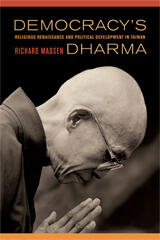
This is a CDDRL's Special Event within our Democracy in Taiwan Program. It is also co-sponsored by the Public Diplomacy/Emerging Publics Project of the Center for the Pacific Rim at University of San Francisco. In this seminar, Dr. Richard Madsen will talk about his new book that explores the religious renaissance that has reformed, revitalized, and renewed the practices of Buddhism and Daoism in Taiwan and how this religious renaissance embraces democracy modernity.  

Image
10896
Richard Madsen is distinguished professor and chair of the sociology department at the University of California, San Diego and a co-author (with Robert Bellah et al.) of The Good Society and Habits of the Heart which received the Los Angeles Times Book Award and was jury nominated for the Pulitzer Prize. He has authored or co-authored five books on China, including Morality and Power in a Chinese Village for which he received the C. Wright Mills Award; China's Catholics: Tragedy and Hope in an Emerging Civil Society; and China and the American Dream.  He also co-edited (with Tracy B. Strong) The Many and the One: Religious and Secular Perspectives on Ethical Pluralism in the Modern World. His latest book is Democracy’s Dharma: Religious Renaissance and Political Development in Taiwan.

Richard Madsen received an MA in Asian studies and a Ph.D. in sociology from Harvard.

"Madsen is a genial and well-informed guide, both to social-political change in Taiwan and to the ins and outs of religious movements. His engaging writing skillfully interweaves profound insights and themes into the descriptive analytical narrative. Democracy's Dharma presents new material based on recent research while offering a fresh spin on thinking about Asian religions."–Thomas Gold, editor of Social Connections in China: Institutions, Culture, and the Changing Nature of Guanxi

Philippines Conference Room

Richard Madsen Distinguished Professor Speaker Department of Sociology at the University of California, San Diego
Conferences
-
Mr. Melia has been Deputy Executive Director since May 2005.  He was previously Director of Research at the Institute for the Study of Diplomacy, and Adjunct Professor in the School of Foreign Service, at Georgetown University in Washington, DC where he continues to teach graduate courses about democracy promotion. For more than a dozen years, Melia held senior posts at the National Democratic Institute for International Affairs (NDI), a leading non-governmental organization engaged in the promotion of democracy worldwide. From 1998 to 2001, he was the Institute's Vice President for Programs. Earlier, he managed the Institute's programs in Central and Eastern Europe (1988 to 1993), in the Middle East (1993 to 1996), and directed programs in more than a dozen African countries. 

Mr. Melia was Associate Director of the Free Trade Union Institute of the AFL-CIO (1986 to 1988). Prior to that he served for six years as Legislative Assistant for foreign and defense policy to U.S. Senator Daniel Patrick Moynihan (D-NY).  Thomas Melia received his M.A. in Africa Studies from the Johns Hopkins University School of Advanced International Studies.

CISAC Conference Room

Thomas O. Melia Deputy Executive Director Speaker Freedom House
Seminars
News Type
News
Date
Paragraphs
Larry Diamond has been appointed as a Senior Fellow in the Freeman Spogli Institute for International Studies (FSI). Currently a Senior Fellow at the Hoover Institution, a renowned scholar of democratization, and prolific in both editorial and policy work, Diamond is an active member of FSI’s Center on Democracy, Development, and the Rule of Law (CDDRL). He coordinates the Program on Democracy - Completed, which examines the comparative dynamics of democratic functioning and change in the contemporary world, with a particular focus on the countries of Africa, the Middle East, Asia, Latin America, and the post-communist world. He has also established the offshoot program, The Taiwan Democracy Project, in 2006, and is a central participant in the The Taiwan Democracy Project.

Primarily an Africanist, Diamond received his Ph.D. in Sociology from Stanford University in 1980. He currently serves as the co-director for the National Endowment for Democracy’s International Forum for Democratic Studies in Washington DC, as a member of U.S. Agency for International Development (USAID) Advisory Committee on Voluntary Foreign Aid, and as adviser and lecturer at the World Bank, the United Nations, and the U.S. Department of State. Previously he was senior adviser to the Coalition Provisional Authority in Iraq and consultant to USAID.

He is also founding co-editor of the Journal of Democracy, the premier journal in the field, and a co-director of the International Forum for Democratic Studies of the National Endowment for Democracy. He has an impressive record of public service, which includes numerous board memberships and government appointments, and he has published widely. In his prolific portfolio of books and papers, he has advanced the knowledge on the conceptualization, determinants, and importance of democracy by examining the relationship between development and democracy, the multidimensional nature of the democratization process, and the significance of democratic consolidation.

Diamond’s commitment and contributions to teaching are also reflected in his receipt of Stanford’s 2007 Lloyd W. Dinkelspiel Award for Distinctive Contributions to Undergraduate Education, a strong testament to the breadth and depth of his engagement at the University.
All News button
1
Subscribe to Democracy