Health and Medicine

FSI’s researchers assess health and medicine through the lenses of economics, nutrition and politics. They’re studying and influencing public health policies of local and national governments and the roles that corporations and nongovernmental organizations play in providing health care around the world. Scholars look at how governance affects citizens’ health, how children’s health care access affects the aging process and how to improve children’s health in Guatemala and rural China. They want to know what it will take for people to cook more safely and breathe more easily in developing countries.

FSI professors investigate how lifestyles affect health. What good does gardening do for older Americans? What are the benefits of eating organic food or growing genetically modified rice in China? They study cost-effectiveness by examining programs like those aimed at preventing the spread of tuberculosis in Russian prisons. Policies that impact obesity and undernutrition are examined; as are the public health implications of limiting salt in processed foods and the role of smoking among men who work in Chinese factories. FSI health research looks at sweeping domestic policies like the Affordable Care Act and the role of foreign aid in affecting the price of HIV drugs in Africa.

0
forrat.jpg

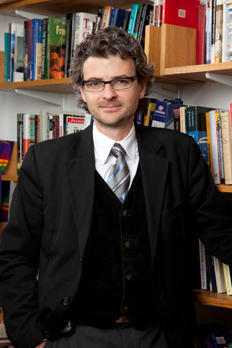
Natalia Forrat is a social scientist at the University of Michigan and Freedom House. Her research focuses on the state, state-society relations, political regimes, and social movements. She is the author of a book manuscript The Social Roots of Authoritarian Power, which is based on her fieldwork in Russian regions, and a chapter on Russian civil society in Russian Politics Today (edited by Susanne Wengle, forthcoming at Oxford University Press). Her earlier research includes a study of the political economy of Russian higher education, which argues it was influenced by the color revolutions in the neighboring states, and a study of schoolteachers’ role in electoral manipulations in Russia. Recently, she has been a co-PI of a research project, Civic Mobilizations in Authoritarian Contexts, at Freedom House. She is also a Research Affiliate at CDDRL’s Governance Project. In the past, she was a pre- and postdoctoral fellow at Stanford’s CDDRL, Kellogg Institute at the University of Notre Dame, and Weiser Center for Emerging Democracies at the University of Michigan.

Research Affiliate, Governance Project
Authors
News Type
News
Date
Paragraphs

Stanford’s Center on Democracy, Development and the Rule of Law congratulates its undergraduate honors class for completing their original research and undergraduate theses. They graduated from Stanford University on June 12 with honors in their respective disciplines.

Graduates include Vehbi “Deger” Turan, who was awarded the Firestone Medal for his thesis entitled “Augmenting Citizen Participation in Governance through Natural Language Processing.” Turan’s project employed existing literature on democratic participation, case studies and an original algorithm in order to devise a means by which government agencies can evaluate public comments received via the Internet on political issues.

The Firestone Medal for Excellence in Undergraduate Research recognizes Stanford's top ten percent of honors theses in social science, science and engineering among the graduating senior class.

Turan decided to explore this topic shortly after joining the Fisher Family CDDRL Honors Program.

According to the program’s Director Stephen Stedman, “After listening to a research seminar at our Center, Deger believed that he could develop an aggregation tool to help policy makers understand such immense data.”

Francis Fukuyama, the Mosbacher Director of CDDRL also noted, “Deger is perhaps the best example to date of why interschool honors programs are valuable. He is a computer science major who came to us expressing an interest in using his background in artificial intelligence to help solve critical public policy problems.” Fukuyama together with Associate Professor of Political Science Justin Grimmer advised Turan on his honor’s thesis.

Turan will be starting a new position at Atomic Labs’ Zenreach start-up after graduation.

The CDDRL Award for Outstanding Thesis was given to Rehan Adamjee whose thesis explored the different factors at play in choosing between healthcare providers in a rural area of Pakistan.

Adamjee and Turan are just two members of a the 2016 cohort of 11 honors students, many of whom traveled to foreign countries to collect original data, conduct interviews and research their thesis topics. Their topics range from timely case studies on the use of social media as a tool of empowerment to a glimpse at the effects of regional politics on healthcare reform in Post-Soviet Russia.

The 2016 class joins 76 graduates from CDDRL’s honors program since its launch in 2007.

The Fisher Family CDDRL Honors Program trains Stanford students from diverse majors to write theses with global policy implications on a subject related to democracy, development and the rule of law. Students attend a class on research methods the spring quarter of their junior year. During their senior year, in tandem with the CDDRL research community and their faculty advisor, students conduct both local and international research in order to write their theses. Students travel to Washington, DC for the annual honors college to meet policymakers and members of the development community to enrich their thesis topics.

A list of our graduating students along with links to all their theses can be found below.


NAMEMAJORTHESIS

Rehan Adamjee

Economics; Public Policy

Advisor: Jayanta Bhattacharya

Anna Blue

International Relations

Advisor: Alberto Diaz Cayeros

Sarah Johnson

Economics

Advisor: Lisa Blaydes

Shang-Ch’uan Li

Materials, Science and Engineering

Advice and Consent: Increase in Malaysian Judges Appointed from the Practicing Bar after the Passage of the Judicial Appointments Commission Act 2009

Advisors: Erik Jensen, Justin Grimmer

Hannah Meropol

Political Science

Advisor: Lisa Blaydes

Jelani Munroe

Economics; Public Policy

Advisor: Pete Klenow

Hannah Potter

International Relations

Advisor: Stephen Stedman

Tebello Qhotsokoane

Public Policy

Advisor: Marcel Fafchamps

Hadley Reid

Human Biology

Advisor: Grant Miller

Paul Shields

International Relations; Slavic Language & Literature

Advisor: Kathryn Stoner

Deger Turan

Computer Science

Advisors: Francis Fukuyama, Justin Grimmer


Meet our Class of 2017 

Hero Image
headline
The graduating class of 2015-2016 CDDRL senior honors students take a group photo with CDDRL Mosbacher Director Francis Fukuyama and the Fisher Family CDDRL Honors Program Director Stephen Stedman. From left to right: Didi Kuo (CDDRL honors program mentor); Jelani Munroe; Stephen Stedman; Tebello Qhotsokoane; Paul Shields; Shang-Ch’uan Li; Hannah Potter; Hadley Reid; Vehbi Deger Turan; Sarah Johnson; Hannah Meropol; Rehan Adamjee; Anna Blue
Alice Kada
All News button
1
News Type
Q&As
Date
Paragraphs

"What do I do about the chickens?"

When assistant professor of medicine Eran Bendavid began a study on livestock in African households to determine impact on childhood health, he'd already anticipated common field problems like poorly captured or intentionally misreported data, difficulty getting to work sites, or problems with training local volunteers.

But he'd never gotten that particular question from a fieldworker before. It didn't occur to him that participating families, in reporting their livestock holdings, would completely omit the chickens running around at their feet, thereby skewing the data.

"They didn't consider chickens to be livestock," recalled Bendavid. Along with Scott Rozelle, the Helen F. Farnsworth Senior Fellow at FSI, and associate professor of political science and FSI senior fellow Beatriz Magaloni, Bendavid spoke to a full house last week on lessons learned from fieldwork gone awry. The return engagement of FSI's popular seminar, "Everything that can go wrong in a field experiment” was introduced by Jesper Sørensen, executive director of Stanford Seed, and moderated by Katherine Casey, assistant professor of political economy at the GSB. The seminar is a product of FSI and Seed’s joint Global Development and Poverty (GDP) Initiative, which to date has awarded nearly $7 million in faculty research funding to promote research on poverty alleviation and economic development worldwide.

Rozelle, co-director of the Rural Education Action Program, spoke of the obstacles to accurate data gathering, especially in rural areas where record-keeping is inaccurate and participants' trust is low. Arriving in a Chinese village to carry out child nutrition studies, said Rozelle, "we found Grandma running out the back door with the baby." The researchers had worked with the local family planning council to find the names of children to study, but the families thought the authorities were coming to penalize them for violation of the one-child policy.

Cultural differences make for entertaining and illuminating (if frustrating) lessons, but Beatriz Magaloni, director of FSI's Program on Poverty and Governance at the Center on Democracy, Development and the Rule of Law had a different story to tell. Over the course of three years, her GDP-funded work to investigate and reduce police violence in Brazil - a phenomenon resulting in more than 22,000 deaths since 2005 - has encountered obstacle after obstacle. Her work to pilot body-worn cameras on police in Rio has faced a change in police leadership, setting back cooperation; a yearlong struggle to decouple a study of TASER International’s body worn cameras from its electrical weapons in the same population; a work site initially lacking electricity to charge the cameras or Internet to view the feeds; and noncompliance among the officers. "It's discouraging at times," admitted Magaloni, who has finally gotten the cameras onto the officers' uniforms and must now experiment with ways to incentivize their use. "We are learning a lot about how institutional behavior becomes so entrenched and why it's so hard to change."

Experimentation is a powerful tool to understand cause and effect, said Casey, but a tool only works if it's implemented properly. Learning from failure makes for an interesting panel discussion. The speakers' hope is that it also makes for better research in the future.

The Global Development and Poverty Initiative is a University-wide initiative of the Stanford Institute for Innovation in Developing Economies (Seed) in partnership with the Freeman Spogli Institute (FSI). GDP was established in 2013 to stimulate transformative research ideas and new approaches to economic development and poverty alleviation worldwide. GDP supports groundbreaking research at the intersection of traditional academic disciplines and practical application. GDP uses a venture-funding model to pursue compelling interdisciplinary research on the causes and consequences of global poverty. Initial funding allows GDP awardees to conduct high-quality research in developing countries where there is a lack of data and infrastructure.


Hero Image
scott in field
All News button
1
-

Abstract:

One of the key objectives of introducing a compulsory health insurance is to provide citizens, regardless of socioeconomic status, with financial risk protection against unexpected catastrophic expenditures in the face of illness.  South Korea and Taiwan achieved universal health coverage (UHC) through mandatory social insurance schemes in 1989 and 1995, respectively.  Despite both countries' efforts to achieve the goal of financial risk protection for more than two decades, past research has demonstrated that household out-of-pocket (OOP) payment still accounts for more than one-third of total health expenditures in both countries.  When OOP payment represents a significant share of financial sources for health care, one should be particularly concerned about the distribution of such payments, in particular, catastrophic health expenditures, across households of differing economic levels.  This talk sets out to examine the change in the incidence and distribution of catastrophic health expenditures before and after the introduction of the National Health Insurance programs in South Korea and Taiwan.


Given similarity in the health and National Health Insurance (NHI) system characteristics observed in South Korea and Taiwan, substantial variation in the distribution of catastrophic payment among households was noted. The rich are more likely to incur catastrophic payment in South Korea, but the opposite trend is noted in Taiwan.  Further assessment on the impact of universal health coverage (UHC) on reducing catastrophic headcount (defined as the proportion of households incurring catastrophic health payment) is observed in Taiwan, but not in South Korea.  We found that when South Korea introduced the NHI program with a limited benefit package and high copayment, it produced little effect (if not none) in reducing financial burden in terms of proportion of catastrophic headcount. On the contrary, the impact of universal health coverage on catastrophic headcount ranged from -1.82% to -4.08% for Taiwan, due to the provision of a rather comprehensive benefit package with modest copayment. While UHC is a well-lauded policy goal and may be a magic word for many countries striving for the achievement, it is definitely not a panacea to resolve the incidence of catastrophic payment and potential medical impoverishment.  To provide sufficient financial protection against unexpected medical expenses, the design of the benefit coverage and risk sharing mechanism is key to the success of effectively achieving UHC. 


Bio

Jui-fen Rachel Lu, Sc.D., is the Fulbright Visiting Scholar at Center for East Asian Studies, Stanford University, and a Professor at Chang Gung University (CGU) in Taiwan, where she teaches comparative health systems, health economics, and health care financing and has served as department chair (2000-2004), Associate Dean (2009-2010) and Dean of College of Management (2010-2013).  She earned her B.S. from National Taiwan University, and her M.S. and Sc.D. from Harvard University, and she was also a Takemi Fellow at Harvard (2004-2005).  Prof. Lu is currently the President of Taiwan Society of Health Economics (TaiSHE) and an Honorary Professor at Hong Kong University (2007-2017).  Dr. Lu was also the recipient of IBM Faculty Award in 2009.   


Her research focuses on 1) the equity issues of the health care system; 2) impact of the NHI program on health care market and household consumption patterns; 3) comparative health systems in Asia-Pacific region.  She is a long-time and active member of Equitap (Equity in Asia-Pacific Health Systems) research network and was the coordinator for the catastrophic payment component of Equitap II research project which involved 21 country teams and was jointly funded by IDRC, AusAID, and ADB.  Professor Lu has also been appointed to serve as a member on various government committees dealing with health care issues in Taiwan.  

Okimoto Conference Room, Encina Hall 3rd Floor, East Wing

Rachel Jui-fen Lu Visiting Scholar, Center for East Asian Studies Stanford University
Seminars
-

This event is open to Stanford undergraduate students only. 

The Center on Democracy, Development, and the Rule of Law (CDDRL) is currently accepting applications from eligible juniors due February 12, 2016 who are interested in writing their senior thesis on a subject touching upon democracy, economic development, and rule of law (DDRL) from any university department. CDDRL faculty and current honors students will be present to discuss the program and answer any questions.

For more information on the CDDRL Senior Honors Program, please click here.


Image
cddrl senior honors program 2016 flyer 2


CDDRL
Encina Hall, C152
616 Jane Stanford Way
Stanford, CA 94305-6055

(650) 725-2705 (650) 724-2996
0
Senior Fellow at the Freeman Spogli Institute for International Studies
Professor, by courtesy, of Political Science
Stedman_Steve.jpg PhD

Stephen Stedman is a Senior Fellow at the Freeman Spogli Institute for International Studies (FSI) and the Center on Democracy, Development and the Rule of Law (CDDRL), an affiliated faculty member at CISAC, and professor of political science (by courtesy) at Stanford University. He is director of CDDRL's Fisher Family Honors Program in Democracy, Development and Rule of Law, and will be faculty director of the Program on International Relations in the School of Humanities and Sciences effective Fall 2025.

In 2011-12 Professor Stedman served as the Director for the Global Commission on Elections, Democracy, and Security, a body of eminent persons tasked with developing recommendations on promoting and protecting the integrity of elections and international electoral assistance. The Commission is a joint project of the Kofi Annan Foundation and International IDEA, an intergovernmental organization that works on international democracy and electoral assistance.

In 2003-04 Professor Stedman was Research Director of the United Nations High-level Panel on Threats, Challenges and Change and was a principal drafter of the Panel’s report, A More Secure World: Our Shared Responsibility.

In 2005 he served as Assistant Secretary-General and Special Advisor to the Secretary- General of the United Nations, with responsibility for working with governments to adopt the Panel’s recommendations for strengthening collective security and for implementing changes within the United Nations Secretariat, including the creation of a Peacebuilding Support Office, a Counter Terrorism Task Force, and a Policy Committee to act as a cabinet to the Secretary-General.

His most recent book, with Bruce Jones and Carlos Pascual, is Power and Responsibility: Creating International Order in an Era of Transnational Threats (Washington DC: Brookings Institution, 2009).

Director, Fisher Family Honors Program in Democracy, Development and Rule of Law
Director, Program in International Relations
Affiliated faculty at the Center for International Security and Cooperation
Date Label

Encina Hall, C148
616 Jane Stanford Way
Stanford, CA 94305

0
Olivier Nomellini Senior Fellow at the Freeman Spogli Institute for International Studies
Director of the Ford Dorsey Master's in International Policy
Research Affiliate at The Europe Center
Professor by Courtesy, Department of Political Science
yff-2021-14290_6500x4500_square.jpg

Francis Fukuyama is the Olivier Nomellini Senior Fellow at Stanford University's Freeman Spogli Institute for International Studies (FSI), and a faculty member of FSI's Center on Democracy, Development and the Rule of Law (CDDRL). He is also Director of Stanford's Ford Dorsey Master's in International Policy, and a professor (by courtesy) of Political Science.

Dr. Fukuyama has written widely on issues in development and international politics. His 1992 book, The End of History and the Last Man, has appeared in over twenty foreign editions. His book In the Realm of the Last Man: A Memoir will be published in fall 2026.

Francis Fukuyama received his B.A. from Cornell University in classics, and his Ph.D. from Harvard in Political Science. He was a member of the Political Science Department of the RAND Corporation, and of the Policy Planning Staff of the US Department of State. From 1996-2000 he was Omer L. and Nancy Hirst Professor of Public Policy at the School of Public Policy at George Mason University, and from 2001-2010 he was Bernard L. Schwartz Professor of International Political Economy at the Paul H. Nitze School of Advanced International Studies, Johns Hopkins University. He served as a member of the President’s Council on Bioethics from 2001-2004. He is editor-in-chief of American Purpose, an online journal.

Dr. Fukuyama holds honorary doctorates from Connecticut College, Doane College, Doshisha University (Japan), Kansai University (Japan), Aarhus University (Denmark), the Pardee Rand Graduate School, and Adam Mickiewicz University (Poland). He is a non-resident fellow at the Carnegie Endowment for International Peace. He is a member of the Board of Trustees of the Rand Corporation, the Board of Trustees of Freedom House, and the Board of the Volcker Alliance. He is a fellow of the National Academy for Public Administration, a member of the American Political Science Association, and of the Council on Foreign Relations. He is married to Laura Holmgren and has three children.

(October 2025)

CV
Date Label
0
brett_carter_2025.jpg

Brett Carter is an Associate Professor in the Department of Political Science and International Relations at the University of Southern California, a Hoover Fellow at Stanford University's Hoover Institution, and a Faculty Affiliate at Stanford's Center on Democracy, Development and the Rule of Law. He received a Ph.D. from Harvard University, where he was a fellow at the Harvard Academy for International and Area Studies.

Carter studies politics in the world's autocracies. His first book, Propaganda in Autocracies: Institutions, Information, and the Politics of Belief (Cambridge University Press), draws on the largest archive of state propaganda ever assembled — encompassing over eight million newspaper articles in six languages from nearly 60 countries around the world — to show how political institutions shape the propaganda strategies of repressive governments. It received the William Riker Prize for the Best Book in Political Economy, the International Journal of Press/Politics Hazel Gaudet-Erskine Best Book Award, Honorable Mention for the Gregory Luebbert Award for the Best Book in Comparative Politics, and Honorable Mention for the APSA Democracy & Autocracy Section's Best Book Award.

His second book, in progress, shows how politics in Africa’s autocracies changed after the fall of the Berlin Wall and how a new era of geopolitical competition — marked by the rise of China and the resurgence of Russia — is changing them again.

Carter’s other work has appeared in the Journal of Politics, British Journal of Political Science, Perspectives on Politics, Journal of Conflict Resolution, Security Studies, China Quarterly, Journal of Democracy, and Foreign Affairs, among others. His work has been featured by The New York Times, The Economist, The National Interest, and NPR’s Radiolab.

Hoover Fellow
CDDRL Affiliated Scholar
CDDRL Visiting Scholar, 2020-2021
Date Label

Encina Hall, C150
616 Jane Stanford Way
Stanford, CA 94305

0
Center Fellow, Freeman Spogli Institute for International Studies
didi_kuo_2023.jpg

Didi Kuo is a Center Fellow at the Freeman Spogli Institute for International Studies (FSI) at Stanford University. She is a scholar of comparative politics with a focus on democratization, corruption and clientelism, political parties and institutions, and political reform. She is the author of The Great Retreat: How Political Parties Should Behave and Why They Don’t (Oxford University Press) and Clientelism, Capitalism, and Democracy: the rise of programmatic politics in the United States and Britain (Cambridge University Press, 2018).

She has been at Stanford since 2013 as the manager of the Program on American Democracy in Comparative Perspective and is co-director of the Fisher Family Honors Program at CDDRL. She was an Eric and Wendy Schmidt Fellow at New America and is a non-resident fellow with the Carnegie Endowment for International Peace. She received a PhD in political science from Harvard University, an MSc in Economic and Social History from Oxford University, where she studied as a Marshall Scholar, and a BA from Emory University.

Date Label
-

Abstract


Human rights groups have only two assets: people and information.  Learn about Benetech’s decade of putting information technology tools into the hands of human rights activists, with the goal of making these two assets more effective in advancing the global cause of human rights.   


Speaker bio


Jim Fruchterman is the founder and CEO of Benetech, a Silicon Valley nonprofit technology company that develops software applications to address unmet needs of users in the social sector. He is the recipient of numerous awards recognizing his work as a pioneering social entrepreneur, including the MacArthur Fellowship, Caltech’s Distinguished Alumni Award, the Skoll Award for Social Entrepreneurship, and the Migel Medal—the highest honor in the blindness field—from the American Foundation for the Blind. Since its founding in 1989, Benetech has touched the lives of hundreds of thousands of people. Its tools and services have transformed the ways in which people with disabilities access printed information, at-risk human rights defenders safely document abuse, and environmental practitioners succeed in their efforts to protect species and ecosystems. Through his work with Benetech and as a trailblazer in the field of social entrepreneurship, Jim continues to advance his vision of a world in which the benefits of technology reach all of humanity, not just the wealthiest and most able five percent.


Wallenberg Hall

Bulding 160

Room 124

Jim Fruchterman Founder and CEO Benetech
Seminars
-

Abstract:

While technology is a major “driver” of many of society’s comforts, conveniences, and advances, it has engineered regular physical activity and a number of other positive health behaviors out of our daily lives. A key question is: how can we harness technology for “good” in the health promotion/disease prevention area? One potential solution is “community-engaged citizen science” that brings together researchers + public and private organizations + residents themselves in harnessing the potential of IT and mobile devices to solve the health promotion challenge. Several examples of how to do this, representing both the “me” and the “we” technology domains, will be discussed, including virtual advisors, evidence-based tele-health, and the use of citizen scientists from all walks of life as change agents for creating more healthful and equitable neighborhoods and communities.


SPEAKER BIO:

Image
dr  abby kingoutdoor photothumbnail

Dr. King is Professor of Health Research & Policy and Medicine (Stanford Prevention Research Center) at Stanford School of Medicine. Recipient of the Outstanding Scientific Contributions in Health Psychology Award from the American Psychological Association, her research focuses on the development, evaluation, and translation of public health interventions to reduce chronic disease. She has served on a number of government taskforces in the U.S. and abroad, including membership on the U.S. Department of Health and Human Services’ Scientific Advisory Committee on National Health Promotion and Disease Prevention Objectives for 2020, and the Science Board of the U.S. President’s Council on Fitness, Sports and Nutrition. An elected member of the Academy of Behavioral Medicine Research and Past President of the Society of Behavioral Medicine, she received AAMC honors for outstanding research targeting health inequities. Her research on citizen science engagement to promote healthful living environments for all has been honored with an international excellence award.


Dr. Abby King Leveraging Citizen Science and ICT for Population-Wide Health Promotion Stanford Prevention Research Center
Seminars
Date Label
News Type
News
Date
Paragraphs

Just as they were marking the end of their undergraduate careers, 33 graduating seniors had something else to celebrate. They were recipients of the 2015 Firestone and Robert M. Golden medals and the David M. Kennedy Honors Thesis Prize.

Four of the Firestone winners had FSI scholars as their advisers, and one of those students was also awarded the Kennedy honor.

The Firestone Medal for Excellence in Undergraduate Research recognizes theses written in the social sciences, natural sciences, and engineering and applied sciences. The medalists each received an engraved bronze medal, citation and a monetary award at a ceremony in June, hosted by Harry J. Elam Jr., vice provost for undergraduate education.

The Kennedy Thesis Prize is awarded annually to the single best thesis in each of the four divisions of humanities, social sciences, natural sciences, and engineering and applied sciences. Recipients of this award have accomplished significantly advanced research in the field and have shown strong potential for publication in peer-reviewed scholarly works.

The prize was established in 2008 in recognition of David M. Kennedy, professor emeritus of history, well known for mentoring undergraduate writers. Each Kennedy winner received an engraved plaque and a monetary award, and the historian was on hand to present the prizes.

Jeremy Majerovitz was advised by Pascaline Dupas, an FSI senior fellow, for "Does Ethnic Fractionalization Matter for Development?"

Taylor Grossman was advised by Amy Zegart, an FSI senior fellow and co-director of CISAC, for "The Problem of Warning: Homeland Security and the Evolution of Terrorism Advisory Systems."

Stefan Norgaard, was advised by Larry Diamond and Francis Fukuyama for "Rainbow Junction: South Africa's Born Free Generation and the Future of Democracy." Both are FSI senior fellows, and Fukuyama is soon to take Diamond’s place as director of CDDRL. James Campbell, a history professor, also advised Norgaard.

Sanjana Parikh was advised by Phillip Lipscy, a center fellow at APARC, for "Constitutional Promises and Environmental Protection: An Assessment of National Legal Rights to Nature," international relations; advised by Phillip Lipscy, assistant professor of political science.

Laurie Rumker was advised by David Relman, an FSI senior fellow and co-director of CISAC for "Before and After the Flood: Stability and Resilience of the Human Gut Microbiota." Rumker was also advised by Stanley Falkow, professor emeritus of microbiology and immunology; and Les Dethlefsen, research associate in microbiology and immunology.

All News button
1
Paragraphs

Following in the footsteps of last year’s international conference on violence and policing in Latin American and U.S. Cities, on April 28th and 29th of 2015, the Program on Poverty and Governance (PovGov) at Stanford’s Center on Democracy, Development and the Rule of Law (CDDRL) turned Encina Hall at the Freeman Spogli Institute of International Studies (FSI) into a dynamic, instructive and stimulating discussion platform. The exchange of experiences, expertise and ideals that flourished within this space helped create a “dialogue for action,” as speakers and participants explored the various dimensions of youth and criminal violence in Mexico, Brazil and the United States, while advocating for the importance of opening up adequate pathways to hope. The event was sponsored by the Center for Latin American Studies, The Bill Lane Center for the America West, The Mexico Initiative at FSI, and the Center on International Security and Cooperation.

For a link to the conference event page, click here.

To find out more about CDDRL's Program on Poverty and Governance, click here.

All Publications button
1
Publication Date
Authors
Veriene Melo
Subscribe to Health and Medicine