Governance

FSI's research on the origins, character and consequences of government institutions spans continents and academic disciplines. The institute’s senior fellows and their colleagues across Stanford examine the principles of public administration and implementation. Their work focuses on how maternal health care is delivered in rural China, how public action can create wealth and eliminate poverty, and why U.S. immigration reform keeps stalling. 

FSI’s work includes comparative studies of how institutions help resolve policy and societal issues. Scholars aim to clearly define and make sense of the rule of law, examining how it is invoked and applied around the world. 

FSI researchers also investigate government services – trying to understand and measure how they work, whom they serve and how good they are. They assess energy services aimed at helping the poorest people around the world and explore public opinion on torture policies. The Children in Crisis project addresses how child health interventions interact with political reform. Specific research on governance, organizations and security capitalizes on FSI's longstanding interests and looks at how governance and organizational issues affect a nation’s ability to address security and international cooperation.

For more information, please visit: http://positivepeace2015.splashthat.com/


Positive Peace is a transformative concept. It constitutes a new approach to building peace by focusing attention on the attitudes, institutions and structures of more peaceful nations. Countries with higher levels of Positive Peace are less likely to slip into major conflicts, experience less violence, and are better equipped to bounce back from internal or external shocks such as a civil war or natural disaster.

Despite this great promise, Positive Peace has yet to reach its full potential. In 2014, over 13 percent of the global economy was spent on containing or dealing with the consequences of violence yet by comparison little is spent on strengthening Positive Peace factors such as good governance, the creation of a sound business environment, acceptance of the rights of others and control of corruption. And despite a rhetorical commitment to prevention – investing in countries before they descend into violence and chaos – all too often the global policymaking community careens from one crisis to another, intervening too late to make any meaningful impact. By contrast, Positive Peace offers a road map for building an environment in which peace can flourish over the long haul.

The inaugural Positive Peace conference will be held at Stanford University’s Paul Brest Hall on October 5, 2015. This daylong event is meant to kickstart a conversation about the role Positive Peace can play in tackling some of the most difficult problems faced by the world today.

Influenced by the Global Peace Index and other groundbreaking research, a growing number of academics, practitioners and policymakers are working on Positive Peace, defined as the attitudes, institutions and structures of more peaceful nations. The inaugural Positive Peace conference is meant to bring together leading Positive Peace practitioners together with policymakers, business leaders and representatives of other related fields like atrocity and conflict prevention and humanitarian assistance. An estimated 100 participants will gather to address a series of fundamental questions, such as:

  • How do you build support for longer-term investments in Positive Peace in a world dominated by crisis response?

  • Does Positive Peace provide a potential road map for more effective humanitarian, and business, investments?

  • How can the principles of Positive Peace be used in designing interventions for countries that are currently undergoing conflict?

  • What lessons can be learned from countries that have avoided descents into chaos and despair despite facing similar risk factors to those that have?

  • And how is information about Positive Peace best communicated in a way that is understandable and useful?


Paul Brest Hall

555 Salvatierra Walk

Stanford University 

Encina Hall, C149
616 Jane Stanford Way
Stanford, CA 94305

(650) 725-0500
0
Senior Fellow, Freeman Spogli Institute for International Studies
Professor, by courtesy, of Political Science
alberto_diaz-cayeros_2024.jpg MA, PhD

Alberto Díaz-Cayeros is a Senior Fellow at Stanford University's Freeman Spogli Institute for International Studies (FSI), and co-director of the Democracy Action Lab (DAL), based at FSI's Center on Democracy, Development and Rule of Law (CDDRL). His research interests include federalism, poverty relief, indigenous governance, political economy of health, violence, and citizen security in Mexico and Latin America.

He is the author of Federalism, Fiscal Authority and Centralization in Latin America (Cambridge, reedited 2016), coauthored with Federico Estévez and Beatriz Magaloni, of The Political Logic of Poverty Relief (Cambridge, 2016), and of numerous journal articles and book chapters.

He is currently working on a project on cartography and the developmental legacies of colonial rule and governance in indigenous communities in Mexico.

From 2016 to 2023, he was the Director of the Center for Latin American Studies at Stanford University, and from 2009 to 2013, Director of the Center for US-Mexican Studies at UCSD, the University of California, San Diego.

Affiliated faculty at the Center on Democracy, Development and the Rule of Law
Co-director, Democracy Action Lab
Director of the Center for Latin American Studies (2016 - 2023)
CV
Date Label
Senior Fellow, FSI Senior Fellow, FSI

CDDRL
Stanford University
Encina Hall, C147
616 Jane Stanford Way
Stanford, CA 94305-6055

(650) 724-6448 (650) 723-1928
0
Mosbacher Senior Fellow in Global Democracy at the Freeman Spogli Institute for International Studies
William L. Clayton Senior Fellow at the Hoover Institution
Professor, by courtesy, of Political Science and Sociology
diamond_encina_hall.png MA, PhD

Larry Diamond is the William L. Clayton Senior Fellow at the Hoover Institution, the Mosbacher Senior Fellow in Global Democracy at the Freeman Spogli Institute for International Studies (FSI), and a Bass University Fellow in Undergraduate Education at Stanford University. He is also professor by courtesy of Political Science and Sociology at Stanford, where he lectures and teaches courses on democracy (including an online course on EdX). At the Hoover Institution, he co-leads the Project on Taiwan in the Indo-Pacific Region and participates in the Project on the U.S., China, and the World. At FSI, he is among the core faculty of the Center on Democracy, Development and the Rule of Law, which he directed for six and a half years. He leads FSI’s Israel Studies Program and is a member of the Program on Arab Reform and Development. He also co-leads the Global Digital Policy Incubator, based at FSI’s Cyber Policy Center. He served for 32 years as founding co-editor of the Journal of Democracy.

Diamond’s research focuses on global trends affecting freedom and democracy and on U.S. and international policies to defend and advance democracy. His book, Ill Winds: Saving Democracy from Russian Rage, Chinese Ambition, and American Complacency, analyzes the challenges confronting liberal democracy in the United States and around the world at this potential “hinge in history,” and offers an agenda for strengthening and defending democracy at home and abroad.  A paperback edition with a new preface was released by Penguin in April 2020. His other books include: In Search of Democracy (2016), The Spirit of Democracy (2008), Developing Democracy: Toward Consolidation (1999), Promoting Democracy in the 1990s (1995), and Class, Ethnicity, and Democracy in Nigeria (1989). He has edited or coedited more than fifty books, including China’s Influence and American Interests (2019, with Orville Schell), Silicon Triangle: The United States, China, Taiwan the Global Semiconductor Security (2023, with James O. Ellis Jr. and Orville Schell), and The Troubling State of India’s Democracy (2024, with Sumit Ganguly and Dinsha Mistree).

During 2002–03, Diamond served as a consultant to the US Agency for International Development (USAID) and was a contributing author of its report, Foreign Aid in the National Interest. He has advised and lectured to universities and think tanks around the world, and to the World Bank, the United Nations, the State Department, and other organizations dealing with governance and development. During the first three months of 2004, Diamond served as a senior adviser on governance to the Coalition Provisional Authority in Baghdad. His 2005 book, Squandered Victory: The American Occupation and the Bungled Effort to Bring Democracy to Iraq, was one of the first books to critically analyze America's postwar engagement in Iraq.

Among Diamond’s other edited books are Democracy in Decline?; Democratization and Authoritarianism in the Arab WorldWill China Democratize?; and Liberation Technology: Social Media and the Struggle for Democracy, all edited with Marc F. Plattner; and Politics and Culture in Contemporary Iran, with Abbas Milani. With Juan J. Linz and Seymour Martin Lipset, he edited the series, Democracy in Developing Countries, which helped to shape a new generation of comparative study of democratic development.

Download full-resolution headshot; photo credit: Rod Searcey.

Former Director of the Center on Democracy, Development and the Rule of Law
Faculty Chair, Jan Koum Israel Studies Program
Date Label
Senior Fellow, Hoover Senior Fellow, Hoover

Dept. of Political Science
Encina Hall, Room 436
Stanford University,
Stanford, CA

(650) 724-5949
0
Senior Fellow at the Freeman Spogli Institute for International Studies
Graham H. Stuart Professor of International Relations
Professor of Political Science
beatriz_magaloni_2024.jpg MA, PhD

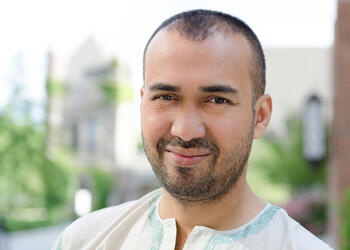
Beatriz Magaloni Magaloni is the Graham Stuart Professor of International Relations at the Department of Political Science. Magaloni is also a Senior Fellow at the Freeman Spogli Institute, where she holds affiliations with the Center on Democracy, Development and the Rule of Law (CDDRL) and the Center for International Security and Cooperation (CISAC). She is also a Stanford’s King Center for Global Development faculty affiliate. Magaloni has taught at Stanford University for over two decades.

She leads the Poverty, Violence, and Governance Lab (Povgov). Founded by Magaloni in 2010, Povgov is one of Stanford University’s leading impact-driven knowledge production laboratories in the social sciences. Under her leadership, Povgov has innovated and advanced a host of cutting-edge research agendas to reduce violence and poverty and promote peace, security, and human rights.

Magaloni’s work has contributed to the study of authoritarian politics, poverty alleviation, indigenous governance, and, more recently, violence, crime, security institutions, and human rights. Her first book, Voting for Autocracy: Hegemonic Party Survival and its Demise in Mexico (Cambridge University Press, 2006) is widely recognized as a seminal study in the field of comparative politics. It received the 2007 Leon Epstein Award for the Best Book published in the previous two years in the area of political parties and organizations, as well as the Best Book Award from the American Political Science Association’s Comparative Democratization Section. Her second book The Politics of Poverty Relief: Strategies of Vote Buying and Social Policies in Mexico (with Alberto Diaz-Cayeros and Federico Estevez) (Cambridge University Press, 2016) explores how politics shapes poverty alleviation.

Magaloni’s work was published in leading journals, including the American Political Science Review, American Journal of Political Science, Criminology & Public Policy, World Development, Comparative Political Studies, Annual Review of Political Science, Cambridge Journal of Evidence-Based Policing, Latin American Research Review, and others.

Magaloni received wide international acclaim for identifying innovative solutions for salient societal problems through impact-driven research. In 2023, she was named winner of the world-renowned Stockholm Prize in Criminology, considered an equivalent of the Nobel Prize in the field of criminology. The award recognized her extensive research on crime, policing, and human rights in Mexico and Brazil. Magaloni’s research production in this area was also recognized by the American Political Science Association, which named her recipient of the 2021 Heinz I. Eulau Award for the best article published in the American Political Science Review, the leading journal in the discipline.

She received her Ph.D. in political science from Duke University and holds a law degree from the Instituto Tecnológico Autónomo de México.
Director, Poverty, Violence, and Governance Lab
Co-director, Democracy Action Lab
CV
Date Label
Associate Professor of Political Science & Director, Program On Poverty And Governance, FSI Associate Professor of Political Science & Director, Program On Poverty And Governance, FSI
Conferences
-

Abstract:

With the proliferation of online social media, political actors have a new means of reaching their constituents directly, circumventing the mainstream news media. Indian Prime Minister Narendra Modi has had a very significant presence on social media with almost 30 million “likes” on Facebook and 15 million followers on Twitter. Modi's rise on Twitter offers an important example on political brand management, in this talk we examine specific outreach strategies and how these have evolved over time. We examine the frequency, tenor, and popularity of messages, the evolution of thematic discussions, and the use of political metaphor in Modi's sharpening of a new populist discourse as leader of an aspirational, global India.


Speaker Bio:

Image
joyojeet pal

Joyojeet Pal is an assistant professor at the University of Michigan's School of Information where his work focuses on user experience and accessibility in low- and middle-income countries. His recent research looks at the use of social media in political communication in India, specifically on the role of political branding online in India. He is one of the technical collaborators on the Unfinished Sentences project examining oral histories of the El Salvador civil war, and leads the Colombia Digital Culture project at the University of Michigan. He researched and produced the award-winning documentary, "For the Love of a Man" based on the fan following of South Indian film star Rajnikanth.

Assistant Professor, University of Michigan's School of Information
Seminars
-

Since Iran's Green Revolution, technology has demonstrated its power to mobilize millions of people demanding political and social change in countries where authoritarian regimes remained untouchable for decades. The same technology and open networks have also been used by oppressive governments to surveil populations and thwart these social movements. In facing these tensions, activists and hackers share a common mission of challenging the status quo to improve existing systems - whether governments or networks. How do the two communities work together to defend civil liberties online and on the ground?
 

Image
rita zolotova
Rita Zolotova is a Director of Public Policy for Wickr Inc. and the Wickr Foundation where she leads a global effort to raise privacy awareness and provide security education to human rights activists, journalists, and policy-makers. Rita works closely with technology innovators and security experts to engage kids, particularly young girls, in learning about encryption, cyber security and white-hat hacking. Rita came to Wickr from Middlebury College's Center for Nonproliferation Studies, a policy research center focused on WMD security and terrorism issues. At CNS Rita managed online education initiatives, co-directed the development of a policy design framework for the U.S. State Department on ways to employ new media technology in addressing global arms control and nonproliferation threats. Rita has an extensive experience in political consulting and journalism in Russia. She has degrees in Political Science, Management and holds a Masters Degree in Terrorism and Nonproliferation Studies from the Graduate School of Middlebury College.
 

Wallenberg Theatre

450 Serra Mall #124

(The room is located in the main quad, across the road from Stanford Oval).

Authors
News Type
News
Date
Paragraphs

On September 1, Francis Fukuyama became the fourth director of the Center on Democracy, Development and the Rule of Law (CDDRL) at Stanford’s Freeman Spogli Institute. In his initial days as director, Fukuyama took a moment to reflect on his vision for CDDRL and some potential pathways to grow the Center’s research agenda and teaching mission. A leading scholar of political development, Fukuyama discusses how he can apply some of his own theories of governance to inform CDDRL’s research agenda, and how his favorite leadership moment - from a movie - defines his leadership style.  


What is your vision for CDDRL?

I think that it is important to build on what CDDRL has achieved up to this point. The Center is well known and respected around the world as one of the most important research programs into the development of democratic institutions. It's important to keep sight of that focus, and to expand it to other areas. For example, we recently took on the question of democracy in developed countries with the Program on American Politics in Comparative Perspective. High quality democracy can never be taken for granted, even in the Untied States, and it will face many challenges in the coming years from populism, immigration, and cultural conflict. The nature of authoritarian government is changing as well, as regimes learn from one another how to control technology and manipulate media.


Where are some areas where you would like to expand CDDRL’s reach?

Although CDDRL is primarily a research institution, we see education as an integral part of our mission and our research interests. I would like to build out from our existing practitioner-based programs like the Draper Hills Summer Fellows Program and the Leadership Academy for Development, with similar offerings for Stanford students. We want to teach theory that is useful and connected to practice, and help students get skills that will be useful to them as leaders who can shape events in the real world. We're already in the process of building a case library, and expanding the use of cases in our teaching.


What excites you the most about your new position?

We have a unique opportunity at Stanford to leverage the resources of a top university in the study of political institutions. CDDRL and FSI more broadly can make connections with researchers in public health, engineering, law, and the business school, as well as the substantial intellectual capacities in the broader region.

If we look inward, CDDRL has a great faculty and staff, one that brings together a huge number of different perspectives in stimulating ways. We've always had a strong pre-and postdoctoral program, and I, like many professors, find I learn more from my students than the reverse.


How will you bring your scholarship and focus on governance to your new position?

I think that many failings of democracies - both old and new - are related to their failure to perform. That is, we want to be free from tyranny and oppressive governments, but we also want our government to provide those basic public goods and services like public safety, education, health, and infrastructure. The study of democracy is not just about limiting government, but also making it more effective and capable. There have been protests against Lebanon's elected government in recent weeks for not being able to pick up the trash, or provide reliable electricity. So while knowing how to dispose of garbage or how to make customers pay for their electricity, so that there are revenues to build a reliable grid, do not at first seem like components of democracy, they actually are. Unfortunately, we academics have spent much more time and energy focusing on how to limit state power, rather than on how to make the exercise of that power more effective and in line with the demands of citizens. There has been a large volume of writing on the relationship between democracy and growth, but relatively little about how democracy relates to the quality of the state. So this constitutes a big research opportunity for the future.  


Are there any principles of state-building or public administration that can be applied to your role?

First of all, the very words "public administration" makes most people immediately fall asleep; so let's refer to the art of making governments deliver better public services and shape behavior in positive ways. Theorizing in this area has been dominated in recent years by economists who tend to focus, as economists do, on incentives and material motives. But they seldom take account of leadership and the kinds of moral incentives that are needed to make organizations function well - the kinds of motivations that make people want to stay late in the office or do their best even when other people aren't watching. It's always seemed to me that the same institution can perform better or worse with the same material resources depending on how the people in it see their common goals and objectives, and how they're able to work together on an informal basis. This is what's been called "social capital," and its important both in governments as in the most modest organization. So our social capital at CDDRL is something that I want to preserve and grow.


Which leader – living or dead – do you most identify with the most and how might you adapt their leadership style to your own?

I can’t think of a leader I identity with, but I can think of a favorite leadership moment. It is the one portrayed in the movie Invictus, when Nelson Mandela decides to put all his effort into supporting the South African national team, the Springboks, in the 1994 Rugby World Cup. Under Apartheid, rugby was the sport of white South Africans, while the blacks played soccer. The film portrays Mandela going up against the assembled African National Congress leadership, who want to withdraw support from the Springboks, saying it represented the racist old regime. Mandela argued instead that winning the World Cup should become a national goal for the new, multiracial, and democratic South Africa. He had to convince lots of skeptical whites as well that there is a place for them in the country. In the end, the Springboks were inspired to defeat the New Zealand All Blacks (with a great performance of their hakka war dance), and win the championship.

I can’t think of a single more brilliant example of nation-building. We typically think of nation-building as related to tangible things like the formation of armies and ministries that sit in buildings. But the more important dimension of nation-building has to do with identity, that is, belief in a single, overarching story around which citizens can unite. For better or worse, identity in the contemporary world is more often then not built around sports. I thought it was remarkable that Mandela, having spent all those decades in jail, would understand so clearly the importance of symbols, and spend his precious political capital on something that. We’ve had plenty of other recent examples of leaders in places like Iraq or Afghanistan who were completely blind to this dimension of leadership, or worse yet, saw leadership as an opportunity to pursue their own sectarian or personal advantage.

I suppose this applies in a small way to CDDRL as well. Even small organizations have identities that make them cohesive and guide their actions. CDDRL has been a center dedicated to understanding and promoting the development of accountable and law-based government around the world. We want to train students and build research programs with this in mind, and I think that one of the legacies of our past leaders has been the fact that everyone understands this. 


Hero Image
20447192103 5dcbd516fc z Sadaf Minapara
All News button
1
-

Abstract:

Scholars of governance reforms in developing countries often argue that the surest way to address the maladies of the state—corruption, cronyism, inefficiency, and red tape—is swift, dramatic change enacted by political leaders during moments of upheaval. This research finds that a very different type of change is not only possible but also more effective and enduring. A comparison of attempts to increase accountability, transparency, and institutional strength in Brazil and Argentina demonstrates that incremental changes sequenced over time in response to failings in previous policy provide two crucial advantages over wholesale and rapid overhauls of the state: (1) continual adjustments and modifications benefit from learning; and (2) an incremental approach makes reform more durable and helps preserve bureaucratic autonomy.


Speaker Bio:

Image
bersch 1
Katherine Bersch is a Postdoctoral Fellow at the Center for Democracy, Development, and the Rule of Law at Stanford University. Her research is broadly focused on democratic quality in developing countries, with an emphasis on governance reform and state capacity in Latin America. She employs a range of research methods to understand the political conditions under which policies designed to reduce corruption, increase transparency, and enhance accountability are successful and durable. Bersch’s work has been published or is forthcoming in Comparative Politics, the European Journal of Development Research, Information Polity, and in Miguel Centeno, Atul Kohli, and Deborah Yashar's edited volume with Dinsha Mistree, States in the Developing World. Her research on state capacity with Sérgio Praça and Matthew M. Taylor recently won the LAPIS Best Paper Award from the Latin American Studies Association. Bersch received her PhD in Government from the University of Texas at Austin.

Katherine Bersch Postdoctoral Fellow at the Center for Democracy, Development, and the Rule of Law at Stanford University
Seminars
-

Abstract:

Twenty five years after the fall of the Berlin Wall, the democratic ascendency of the post-Soviet era is under severe challenge. While fragile democracies in Eastern Europe, Africa, and East Asia face renewed threats, the world has witnessed the failed democratic promises of the Arab Spring. What lessons can be drawn from these struggles? What conditions or institutions are needed to prevent the collapse of democracy? Embattled democracy is the subject matter of a new book, Fragile Democracies: Contested Power in the Era of Constitutional Courts. This book argues that the most distinctive antidote to authoritarianism in the post-1989 period is the presence of strong constitutional courts. A signature feature of the third wave of democratization, these courts serve as a bulwark against vulnerability to external threats as well as a catalyst for the internal consolidation of power. Particularly in societies still riven by deep divisions of race, religion, or national background, courts have become pivotal actors in allowing democracy to take root.


Speaker Bio:

Image
samuel issacharoff
Samuel Issacharoff is the Reiss Professor of Constitutional Law at New York University School of Law. His research addresses the law of the political process and constitutional law, as well as issues in civil procedure (especially complex litigation and class actions). He is a co-author of the seminal Law of Democracy casebook and recently served as the Reporter for the Project on Aggregate Litigation of the American Law Institute. Professor Issacharoff is a Fellow of the American Academy of Arts and Sciences.

Samuel Issacharoff Reiss Professor of Constitutional Law, New York University School of Law
Seminars
-

Sponsored by the Taiwan Democracy Project and the U.S. Asia Security Initiative at the Asia-Pacific Research Center (APARC)

Abstract

During the recent meeting between PRC President Xi Jinping and Taiwan President Ma Ying-jeou, the “1992 One China Consensus” served as a mutually acceptable paradigm for maintaining “peaceful and stable” conditions across the Taiwan Strait.  For Xi Jinping, the warmth of the visit thinly veiled a message to Taiwan’s leaders and electorate, as well as to onlookers in Washington.  Chinese officials and media clearly link the talks and confirmation of the 1992 Consensus to “the great rejuvenation of the Chinese nation”—a concept that is increasingly unpalatable to many in Taiwan.  Xi hopes to keep DPP presidential candidate Tsai Ing-wen (and perhaps even future KMT leaders) in the 1992 Consensus “box” and to co-opt the U.S. in this effort, but perhaps underestimates the political transformation underway on Taiwan. 

The Xi administration has also hardened its position regarding “core interests” such as Taiwan, embodied in a “bottom line principle” policy directive that eschews compromise.  Although many commentators and most officials across the region have shied away from stating that the PRC and Taiwan are at the crossroads of crisis, the collision of political transformation on Taiwan and the PRC’s “bottom line principle” will challenge the fragile foundations of peaceful cross-Strait co-existence.  Changes in the regional balance of military power brought about by a more muscular People’s Liberation Army compounds the potential for increased friction, providing Beijing with more credible options for coercion and deterrence.

This talk will consider the politics and principles involved in cross-Taiwan Strait relations in light of the upcoming 2016 Taiwan elections and the policies of the Xi Jinping administration; and will discuss some of the possible implications for China’s national security policy, regional stability, and the future of cross-Strait relations.

Bio

Image
Cortez Cooper
Mr. Cortez A. Cooper III joined RAND in April 2009, providing assessments of security challenges across political, military, economic, cultural, and informational arenas for a broad range of U.S. government clients.  Prior to joining RAND, Mr. Cooper was the Director of the East Asia Studies Center for Hicks and Associates, Inc.  He has also served in the U.S. Navy Executive Service as the Senior Analyst for the Joint Intelligence Center Pacific, U.S. Pacific Command.  As the senior intelligence analyst and Asia regional specialist in the Pacific Theater, he advised Pacific Command leadership on trends and developments in the Command’s area of responsibility.  Before his Hawaii assignment, Mr. Cooper was a Senior Analyst with CENTRA Technology, Inc., specializing in Asia-Pacific political-military affairs.  Mr. Cooper’s 20 years of military service included assignments as both an Army Signal Corps Officer and a China Foreign Area Officer.  In addition to numerous military decorations, the Secretary of Defense awarded Mr. Cooper with the Exceptional Civilian Service Award in 2001.

2016 Taiwan Elections and Implications for Cross-Strait and Regional Security
Download pdf
Cortez Cooper Senior International Policy Analyst RAND Corporation
Seminars
-

Abstract:

Both South Korea and Taiwan are considered consolidated democracies, but the two countries have developed very different sets of electoral campaign regulations. While both countries had highly restrictive election laws during their authoritarian eras, they have diverged after democratic transition. South Korea still restricts campaigning activities, including banning door-to-door canvassing, prohibiting pre-official period campaigning, and restricting the quantity and content of literature. Taiwan has removed most campaigning restrictions, except for finance regulations. This study explores the causes of these divergent trajectories through comparative historical process tracing, using both archival and secondary sources. The preliminary findings suggest that the incumbency advantage and the containment of the leftist or opposition parties were the primary causes of regulation under the soft and hard authoritarian regimes of South Korea and Taiwan. The key difference was that the main opposition party as well as the ruling party in South Korea enjoyed the incumbency advantage but that opposition forces in Taiwan did not. As a result, the opposition in Taiwan fought for liberalization of campaign regulations, but that in South Korea did not. Democratization in Taiwan was accompanied by successive liberalizations in campaign regulation, but in South Korea the incumbent legislators affiliated with the ruling and opposition parties were both interested in limiting campaigning opportunities for electoral challengers.


Bio:

Dr. Jong-sung You is a senior lecturer in the Department of Political and Social Change, Australian National University. His research interests include comparative politics and the political economy of inequality, corruption, social trust, and freedom of expression. He conducts both cross-national quantitative studies and qualitative case studies, focusing on Korea and East Asia. He recently published a book entitled Democracy, Inequality and Corruption: Korea, Taiwan and the Philippines Compared with Cambridge University Press. His publications have appeared at American Sociological Review, Political Psychology, Journal of East Asian Studies, Journal of Contemporary Asia, Asian Perspective, Trends and Prospects, and Korean Journal of International Studies. He obtained his Ph.D. in Public Policy from Harvard University and taught at UC San Diego. Before pursuing an academic career, he fought for democracy and social justice in South Korea.


Jong-sung You Senior Lecturer College of Asia and the Pacific, Australia National University
Seminars
-
Abstract 
Based on first-hand participant-observation, this talk will examine the culture, politics, and spatiality of the Sunflower Movement. Taiwan's most significant social movement in decades, the Sunflower Movement not only blocked the passage of a major trade deal with China, but reshaped popular discourse and redirected Taiwan's political and cultural trajectory. It re-energized student and civil society, precipitated the historic defeat of the KMT in the 2014 local elections, and prefigured the DPP's strong position coming into the 2016 presidential and legislative election season.
 
The primary spatial tactic of the Sunflowers-- occupation of a government building-- was so successful that a series of protests in the summer of 2015 by high school students was partly conceived and represented as a "second Sunflower Movement". These students, protesting "China-centric" curriculum changes, attempted to occupy the Ministry of Education building. Thwarted by police, these students settled for the front courtyard, where a Sunflower-style pattern of encampments and performances emerged. While this movement did not galvanize the wider public as dramatically as its predecessor, it did demonstrate the staying power of the Sunflower Movement and its occupation tactics for an even younger cohort of activists.
 
The Sunflower Movement showed that contingent, street-level, grassroots action can have a major impact on Taiwan's cross-Strait policies, and inspired and trained a new generation of youth activists. But with the likely 2016 presidential win of the DPP, which has attempted to draw support from student activists while presenting a less radical vision to mainstream voters, what's in store for the future of Taiwanese student and civic activism? And with strong evidence of growing Taiwanese national identification and pro-independence sentiment, particularly among youth, what's in store for the future of Taiwan's political culture? 
 

Speaker Bio

Ian Rowen in Legislative Yuan Ian Rowen in Taiwan's Legislative Yuan during the Sunflower Student Movement protest.

Ian Rowen is PhD Candidate in Geography at the University of Colorado, Boulder, and recent Visiting Fellow at the European Research Center on Contemporary Taiwan, Academia Sinica’s Institute of Sociology, and Fudan University. He participated in both the Sunflower and Umbrella Movements and has written about them for The Journal of Asian StudiesThe Guardian, and The BBC (Chinese), among other outlets. He has also published about Asian politics and protest in the Annals of the Association of American Geographers (forthcoming) and the Annals of Tourism Research. His PhD research, funded by the US National Science Foundation, the Fulbright Program, and the Taiwan Foundation for Democracy, has focused on the political geography of tourism and protest in China, Taiwan, and Hong Kong. 


Presentation Slides

Ian Rowen Doctoral Candidate University of Colorado Dept of Geography
Seminars
-

Abstract

New President of the United States Institute of Peace, Nancy Lindborg, will discuss the global challenge of fragility and conflict, including a vision of the way forward. Ms. Lindborg’s remarks reflect a lifetime of working in the world’s most fragile regions and a time when the global humanitarian system is at a breaking point, with record numbers of people forcibly displaced globally.   


Speaker Bio

nancy lindborg presidential portrait Nancy Lindborg
Nancy Lindborg has served since February, 2015, as President of the United States Institute of Peace, an independent institution founded by Congress to provide practical solutions for preventing and resolving violent conflict around the world.   

Ms. Lindborg has spent most of her career working in fragile and conflict affected regions around the world.   Prior to joining USIP, she served as the Assistant Administrator for the Bureau for Democracy, Conflict and Humanitarian Assistance (DCHA) at USAID.  From 2010 through early 2015, Ms. Lindborg led USAID teams focused on building resilience and democracy, managing and mitigating conflict and providing urgent humanitarian assistance.   Ms. Lindborg led DCHA teams in response to the ongoing Syria Crisis, the droughts in Sahel and Horn of Africa, the Arab Spring, the Ebola response and numerous other global crises.

Prior to joining USAID, Ms. Lindborg was president of Mercy Corps, where she spent 14 years helping to grow the organization into a globally respected organization known for innovative programs in the most challenging environments.   She started her international career working overseas in Kazakhstan and Nepal. 

Ms. Lindborg has held a number of leadership and board positions including serving as co-president of the Board of Directors for the U.S. Global Leadership Coalition; co-founder and board member of the National Committee on North Korea; and chair of the Sphere Management Committee. She is a member of Council on Foreign Relations.

She holds a B.A and M.A. in English Literature from Stanford University and an M.A. in Public Administration from the John F. Kennedy School of Government at Harvard University.

Nancy Lindborg President of the United States Institute of Peace President of the United States Institute of Peace
Seminars
Subscribe to Governance