Governance

FSI's research on the origins, character and consequences of government institutions spans continents and academic disciplines. The institute’s senior fellows and their colleagues across Stanford examine the principles of public administration and implementation. Their work focuses on how maternal health care is delivered in rural China, how public action can create wealth and eliminate poverty, and why U.S. immigration reform keeps stalling. 

FSI’s work includes comparative studies of how institutions help resolve policy and societal issues. Scholars aim to clearly define and make sense of the rule of law, examining how it is invoked and applied around the world. 

FSI researchers also investigate government services – trying to understand and measure how they work, whom they serve and how good they are. They assess energy services aimed at helping the poorest people around the world and explore public opinion on torture policies. The Children in Crisis project addresses how child health interventions interact with political reform. Specific research on governance, organizations and security capitalizes on FSI's longstanding interests and looks at how governance and organizational issues affect a nation’s ability to address security and international cooperation.

-

Abstract:

“Corruption in the post-Tiananmen era exhibits distinct characteristics not found in the 1980s, such as astronomical sums of money looted by officials, their family members, and their cronies in the private sector, large networks of co-conspirators, and the sale of public office. By examining the evolution of Chinese economic and political institutions since the early 1990s, we can trace the emergence of crony capitalism to two critical changes in the control of property rights of the assets owned by the state and the personnel management of the officials the ruling Communist Party. The cumulative effects of these changes have dramatically decentralized the control of public property without clarifying its ownership and granted local party chiefs unprecedented personnel power. Consequently, local political and business elites gain greater incentives and opportunities to collude with each other in looting the assets nominally owned by the state. The insights from a sample of 260 cases of corruption involving multiple officials and businessmen suggest that crony capitalism in China has given birth to a decentralized kleptocracy with its own market rules and dynamics.”


Speaker Bio:

Image
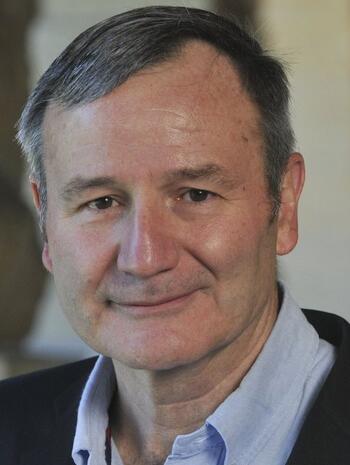
minxin pei
Minxin Pei is the Tom and Margot Pritzker '72 Professor of Government and directs the Keck Center for International and Strategic Studies at Claremont McKenna College. He is also a non-resident senior fellow at the German Marshall Fund of the United States. He is the author of China’s Crony Capitalism: The Dynamics of Regime Decay (Harvard, 2016); China's Trapped Transition: The Limits of Developmental Autocracy (Harvard, 2006) and From Reform to Revolution: The Demise of Communism in China and the Soviet Union (Harvard, 1994). Pei has published in Foreign Affairs, Foreign Policy, The New York Times, The Financial Times, the Wall Street Journal, Project Syndicate, Fortune.com, Nikkei Asian Review, and many scholarly journals and edited volumes. He was a senior associate at the Carnegie Endowment for International Peace (1999-2009) and an assistant professor of politics at Princeton University (1992-1998). He received his Ph.D. in government from Harvard University in 1991.

Minxin Pei Professor of Government at Claremont McKenna College
Seminars
-

Abstract:

Accurate and timely estimates of population characteristics are a critical input to research and policy, but reliable data is often scarce in developing and conflict-affected regions. In recent work, we have shown how machine learning algorithms can be applied to mobile phone metadata to infer fixed characteristics of individual subscribers, such as wealth and gender. Here, we describe efforts to extend this approach to a non-stationary regime, to detect and measure changes in an individual's welfare over time. For this study, we tracked 1200 Afghan citizens with high-frequency panel surveys, and matched each person's responses to psuedonymized transactions log of mobile phone activity. Preliminary results indicate that it is possible to detect negative shocks (e.g., violence), and positive shocks (e.g., receiving a gift) from the mobile phone records alone. This suggests the possibility of real-time tracking of vulnerability, and new paradigms for program monitoring and impact evaluation.


Speaker Bio:

Image
joshua blumenstock
Joshua Blumenstock is an Assistant Professor at the U.C. Berkeley School of Information. His research develops theory and methods for the analysis of large-scale behavioral data, with a focus on how such data can be used to better understand poverty and economic development. Recent projects combine field experiments with big spatiotemporal network data to model decision-making in poor and conflict-affected regions of the world. Prior to joining UW, Joshua was on the faculty at the University of Washington, where he founded and co-directed the Data Science and Analytics Lab. He has a Ph.D. in Information Science and a M.A. in Economics from U.C. Berkeley, and Bachelor’s degrees in Computer Science and Physics from Wesleyan University. He is a recipient of the Intel Faculty Early Career Honor, a Gates Millennium Grand Challenge award, a Google Faculty Research Award, and a former fellow of the Thomas J. Watson Foundation and the Harvard Institutes of Medicine.

Joshua Blumenstock Assistant Professor at the U.C. Berkeley School of Information
Seminars
-

Abstract:

The paper introduces the public sector as a major source of infrastructural state capacity that helps autocrats survive. Education or social services organizations are embedded in everyday life and trusted by the people, which makes them a unique tool in autocrats’ hands. These organizations significantly extend the ability of the state apparatus to implement political decisions on the ground. Using quantitative analysis of seventy-nine Russian regions and qualitative evidence from the media, I demonstrate that Vladimir Putin’s regime used schoolteachers, who were frequently members of local electoral commissions, to implement wide-scale electoral fraud during the 2012 presidential elections in Russia. The school system served as an organizational base for this maneuver, which allowed Putin’s regime to withstand the challenge of decreased popular support. The paper proposes a distinction between the redistributive and infrastructural roles of the public sector.


Speaker Bio:

Image
natalia forat
Natalia Forrat is a Pre-doctoral Fellow at the Center on Democracy, Development, and the Rule of Law. She will receive her PhD in Sociology from Northwestern University in 2017. She studies authoritarianism, state-society relations, state capacity, civil society, and trust with a focus on contemporary Russia. Her work has been published in Post-Soviet Affairs and supported by the Fulbright Program and the Open Society Institute. Before her doctoral studies, she received a master's degree from the University of Michigan and a bachelor's degree from Tomsk State University (Russia). She taught at TSU for a few years, while also working at a Russian NGO.

Natalia Forrat Pre-doctoral Fellow at CDDRL, Stanford
Seminars
News Type
Q&As
Date
Paragraphs

Stanford University’s Center on Democracy, Development and the Rule of Law (CDDRL) is proud to announce our four incoming fellows who will be joining us in the 2016-2017 academic year to develop their research, engage with faculty and tap into our diverse scholarly community. 

The pre- and postdoctoral program will provide fellows the time to focus on research and data analysis as they work to finalize and publish their dissertation research, while connecting with resident faculty and research staff at CDDRL. 

Fellows will present their research during our weekly research seminar series and an array of scholarly events and conferences.

Topics of the incoming cohort include electoral fraud in Russia, how the elite class impacts state power in China, the role of emotions in support for democracy in Zimbabwe, and market institutions in Nigeria. 

Learn more in the Q&A below.


Image
natalia embedded
Natalia Forrat

CDDRL Pre-Doctoral Fellow

Hometown: Tomsk, Russia

Academic Institution: Northwestern University

Discipline and expected date of graduation: Sociology, April 2017

Research Interests: authoritarianism, state capacity, social policy, civil society, trust, Russia and post-communist countries

Dissertation Title: The State that Betrays the Trust: Infrastructural State Power, Public Sector Organizations, and Authoritarian Resilience in Putin's Russia

What attracted you to the CDDRL Pre/post-doctoral program? I study the connection between state capacity and political regimes - the topic that is at the core of many research initiatives at CDDRL. Learning more about this work and receiving feedback for my dissertation will enrich and sharpen my analysis, while helping me to place it into a comparative context. I am looking forward to discussing my work with the faculty who study the post-Soviet region. I also will explore policy implications of my work with the help of policy experts at CDDRL.

What do you hope to accomplish during your nine-month residency at the CDDRL? Besides finishing writing my dissertation, I will workshop three working papers to prepare them for publication. The first one argues that Putin's regime used the school system to administer a large-scale electoral fraud in 2012 presidential elections; the second one shows how the networks of social organizations were used by subnational autocrats to strengthen the regime; and the third one will look at the factors that make the abuse of such organizations more difficult in some regions. In addition to these papers I will continue developing my post-graduation research project exploring the relationship between social trust and distrust, institutions, political competition, and democratization.

Fun fact: I have spent 25 years of my life in Siberia, and I can tell you: Chicago winters are worse!


Image
shelby embedded
Shelby Grossman

CDDRL Postdoctoral Fellow

Hometown: Reading, MA

Academic Institution: Harvard University

Discipline & Graduation Date:  Government, Summer 2016

Research interests: political economy of development, private governance, market institutions, Sub-Saharan Africa, survey methods

Dissertation Title: The Politics of Order in Informal Markets: Evidence from Lagos

What attracted you to the CDDRL post-doctoral program? I was attracted to CDDRL largely for its community of scholars. Affiliated faculty work on the political economy of development and medieval and modern market institutions, topics that are tied to my own interests.

What do you hope to accomplish during your nine-month residency at the CDDRL? I plan to prepare a book manuscript based on my dissertation, a project that explains variation in the provision of pro-trade institutions in private market organizations through the study of physical marketplaces in Nigeria. In addition, I will continue to remotely manage an on-going project in Nigeria (with Meredith Startz) investigating whether reputation alleviates contracting frictions. I also plan to work on submitting to journals a few working papers, including one on the politics of non-compliance with polio vaccination in Nigeria (with Jonathan Phillips and Leah Rosenzweig). 

Fun fact: Contrary to popular belief, not all cheese is vegetarian. I have a website to help people determine if a cheese is vegetarian or not: IsThisCheeseVegetarian.com. 


Image
daniel embedded
Daniel Mattingly

CDDRL Postdoctoral Fellow

Hometown: Oakland, California

Academic Institution: University of California, Berkeley

Discipline & Graduation Date: Political Science, Summer 2016

Research Interests: Governance, rule of law, state building, authoritarian politics, Chinese politics

Dissertation Title: The Social Origins of State Power: Democratic Institutions and Local Elites in China

What attracted you to CDDRL?  The Center has a fantastic community of scholars and practitioners who work on the areas that I'm interested in, including governance and the rule of law. I'm excited to learn from the CDDRL community and participate in the Center's events. The fellowship also provides me with valuable time to finish my book manuscript before I start teaching.

What do you hope to accomplish during your nine-month residency at the CDDRL? While at CDDRL, I plan to prepare my book manuscript and to work on some related projects on local elites and state power in China and elsewhere. 

Fun fact: I grew up on an organic farm in Vermont.


Image
lauren embedded
Lauren E. Young

CDDRL Postdoctoral Fellow

Hometown: Saratoga, CA

Academic Institution: Columbia University 

Discipline & Graduation Date: Political Science (Comparative Politics, Methods), May 2016 (defense), Oct 2016 (degree conferral)

Research Interests: political violence, political economy of development, autocratic persistence, democratization, protest, electoral violence

Dissertation Title: The Psychology of Repression and Dissent in Autocracy

What attracted you to the CDDRL post-doctoral program? As a graduate of the CISAC honors program when I was an undergraduate at Stanford, I have seen first-hand how intellectually stimulating, collaborative, and plugged into policy CDDRL is. While at the center I will be revising my dissertation work on the political psychology of participation in pro-democracy movements in Zimbabwe for submission as a book manuscript, and moving forward new projects that similarly seek to understand how different forms of violence by non-state actors affects citizens' preferences and decision-making. Because of its deep bench of experts on autocracy, narco-trafficking, and insurgency, CDDRL will add enormous value to these projects.

What do you hope to accomplish during your nine-month residency at the CDDRL?  During my fellowship year, my primary goal is to revise my research on Zimbabwe into a book manuscript. I defended my dissertation as three stand-alone articles, including two experiments showing that emotions influence whether opposition supporters in Zimbabwe express their pro-democracy preferences and a descriptive paper showing that repression has a larger effect on the behavior of the poor. To prepare the book manuscript during my fellowship, I will bring in additional quantitative and qualitative descriptive evidence and tie the three papers together into a cohesive argument about how opposition supporters make decisions about participation in protest, why emotions have such a large effect on these decisions, and how this affects variation across individuals and the strategic choices of autocrats and activists.

Fun fact: During my fieldwork I took an overnight train from Victoria Falls to a southern city in Zimbabwe and hitch-hiked into a national park. It got a little nerve-wracking when night started to fall, but ended with  an invitation to a barbecue! 


Hero Image
cddrl fellows 2016 logo
All News button
1
0
forrat.jpg

Natalia Forrat is a social scientist at the University of Michigan and Freedom House. Her research focuses on the state, state-society relations, political regimes, and social movements. She is the author of a book manuscript The Social Roots of Authoritarian Power, which is based on her fieldwork in Russian regions, and a chapter on Russian civil society in Russian Politics Today (edited by Susanne Wengle, forthcoming at Oxford University Press). Her earlier research includes a study of the political economy of Russian higher education, which argues it was influenced by the color revolutions in the neighboring states, and a study of schoolteachers’ role in electoral manipulations in Russia. Recently, she has been a co-PI of a research project, Civic Mobilizations in Authoritarian Contexts, at Freedom House. She is also a Research Affiliate at CDDRL’s Governance Project. In the past, she was a pre- and postdoctoral fellow at Stanford’s CDDRL, Kellogg Institute at the University of Notre Dame, and Weiser Center for Emerging Democracies at the University of Michigan.

Research Affiliate, Governance Project
News Type
News
Date
Paragraphs

“Americans generally think of themselves as exceptional only in a positive sense,” says Francis Fukuyama. But “other democracies around the world in recent years have actually been working better than the United States in a lot of respects.”

Thanks to a new gift by R. Bruce Mosbacher, ’76, JD ‘79, and Nancy Ditz Mosbacher, ’76, Stanford is expanding its work on issues of good governance around the world.

In spring 2016, the Mosbachers made a $5 million gift to Stanford University to endow the directorship of Stanford’s Center on Democracy, Development and the Rule of Law (CDDRL). CDDRL is one of six research centers at the Freeman Spogli Institute for International Studies (FSI), Stanford’s premier research institute for the study of international issues. The Mosbacher Directorship at CDDRL is the first endowed directorship among FSI’s centers.

“Democracy is facing challenging circumstances around the globe,” Mr. Mosbacher explains. “The education and training of policy-driven leaders has never been more critically needed.” Since 2002, CDDRL has collaborated with academics, policymakers, and practitioners around the world to understand how countries can overcome poverty, instability, and abusive rule to become prosperous, just, democratic, and well-governed states. 

“That [the Mosbacher Directorship] would be filled by Professor Fukuyama was a final and convincing factor in our consideration,” says Mr. Mosbacher. Prof. Fukuyama, the Olivier Nomellini Senior Fellow at FSI and a world-renowned political theorist, recently published a two-volume work on political order and decay that has become, in the words of FSI senior fellow and former CDDRL director Larry Diamond, “a global phenomenon.”

Prof. Fukuyama, who describes the Mosbachers’ gift as transformative, has two priorities for his directorship: developing new ideas for effective political governance, and collaborating with practitioners to support on-the-ground implementation. His goal, he says, is “to bring actual change in improving the quality of democratic politics around the world.”

Two unique CDDRL programs will help accomplish this goal. The Draper Hills Summer Fellows Program draws mid-career professionals to Stanford from all over the developing world for a three-week program of networking and academic training, while the Leadership Academy for Development (LAD) partners with institutions in developing countries to equip public officials with the tools they need to overcome context-specific barriers to policy change.

“A lot of people who have gone through these programs have gone on to play important leadership roles in furthering democratic governance in many different countries,” says Prof. Fukuyama, who brought LAD to Stanford when he joined the faculty nearly seven years ago. For example, Laura Alonso, a 2012 Draper Hills Fellow, now leads Argentina’s anti-corruption office, while other CDDRL alums work to improve democracy in Ukraine, Georgia, and elsewhere.

Closer to home, another consideration played into the Mosbachers’ gift. Their son, Jack, ’12, is a graduate of CDDRL’s Fisher Family Undergraduate Honors Program, won the center’s outstanding thesis award, and worked closely with Prof. Diamond, his mentor, for several years as an FSI research associate. The relationship between the Mosbachers and Diamond continues to this day.

“They’re an amazingly close family,” Prof. Diamond says. “If you want a model of a truly sweet, loving family, it’s hard to look further than the Mosbachers.”

Both Prof. Diamond and Prof. Fukuyama point out that the Mosbachers’ gift is particularly helpful because it will provide long-term funding for CDDRL. The Mosbachers have consistently and discreetly supported scholarship and health care initiatives at Stanford for decades. The Mosbacher Directorship is their first public gift.

“We’ve always been private about our charitable activities,” Mrs. Mosbacher says. “While initially reluctant to make a public, or named gift, we are hoping that we might inspire others to find a special connection at Stanford to support.”

 “It's a reflection of the quality of CDDRL's scholarship that the Mosbachers have been moved to make such a generous and public gift,” says FSI Director Michael McFaul. “Their support ensures that our scholars can continue doing work that is critical to understanding and addressing the most important global problems of our time.”

The Mosbachers’ gift arrives at a perfect time. After years of building a strong and unique program, CDDRL now has, in Prof. Diamond’s words, “a lot of connections with governments, organizations, agencies, and networks that can directly affect public policy and development practice” in dozens of countries around the world.

“Our family has been blessed by our association with Stanford.  We are grateful for the opportunity to be of service and support to it,” Mr. Mosbacher says.

Hero Image
Bruce & Nancy Mosbacher
Nancy & Bruce Mosbacher
Chrisman Studios
All News button
1
News Type
News
Date
Paragraphs


Stanford University’s Center on Democracy, Development, and the Rule of Law calls on the Bahraini authorities to release the travel ban on Sheikh Maytham Al Salman. Sheikh Al Salman was selected to participate in the 2016 Draper Hills Summer Fellowship Program at Stanford University from over 500 applicants based on the significant contributions that he has made to build more tolerant societies to counter violence and extremism in the Middle East.


Image
img 1969

The faculty and staff at CDDRL have been notified that his passport has been held – without his consent - by the Bahraini authorities who have refused to release it to allow him to travel. We are very disappointed and shocked by the Bahraini government’s decision to prevent Sheikh Al Salman from traveling to attend our academic program at Stanford University. We join the international community in condemning this decision and call upon the Bahraini authorities to reverse this decision and allow Sheikh Al Salman to participate in our leadership development program this July.


Sheikh al-Salman is well recognized for his work building tolerant societies in the Middle East and countering incitement to violence and discrimination in accordance with international human rights standards, in particular respect for freedom of expression as per Articles 19 and 20 of the International Covenant on Civil and Political Rights, which Bahrain is not a signatory. He is the director of Middle East North Africa Coalition Against Hate Speech; chairperson of Bahrain Interfaith; head of the religious freedom unit at Bahrain Human Rights Observatory; member of the UN committee for partnering with Interfaith leaders; member of the UN advisory committee for the role of religious leaders in preventing genocide; and Arabian Gulf representative of International association for religious freedom. Sheikh Al Salman is applauded for his calls for equal citizenship, his condemnation of all forms of discrimination and his opposition to violence and extremism in the name of religion.


Francis Fukuyama, Mosbacher Director of the Center on Democracy, Development, and the Rule of Law

Larry Diamond, Senior Fellow Freeman Spogli Institute for International Studies

Sarina Beges, Associate Director Center on Democracy, Development, and the Rule of Law


Hero Image
maytham al salman
All News button
1
-

This five day intensive program for a select group of mid-level Indian government officials is designed to address how government can encourage and enable the private sector to play a larger, more constructive role as a force for economic growth and development. A driving principle of this LAD-LBSNAA program is that policy reform is not like engineering or other technical fields that have discrete skills and clear, optimal solutions. Instead, successful reformers must be politically aware and weigh a broad range of factors that influence policy outcomes. For example, they must have a solid grasp of country-specific economic, financial, political and cultural realities. Most importantly, they must have a sense of how to set priorities, sequence actions and build coalitions. This program is designed to provide participants with an analytical framework to build these leadership abilities and operate effectively under adverse conditions. 

Mussoorie-248179 (Uttarakhand)

India

Workshops
-

This five day intensive program for a select group of mid- and high-level African government officials and business leaders is designed to address how government can encourage and enable the private sector to play a larger, more constructive role as a force for economic growth and development. A driving principle of this LAD-Strathmore program is that policy reform is not like engineering or other technical fields that have discrete skills and clear, optimal solutions. Instead, successful reformers must be politically aware and weigh a broad range of factors that influence policy outcomes. For example, they must have a solid grasp of country-specific economic, financial, political and cultural realities. Most importantly, they must have a sense of how to set priorities, sequence actions and build coalitions. This program is designed to provide participants with an analytical framework to build these leadership abilities and operate effectively under adverse conditions. 

Nairobi, Kenya

Workshops
Subscribe to Governance