Governance

FSI's research on the origins, character and consequences of government institutions spans continents and academic disciplines. The institute’s senior fellows and their colleagues across Stanford examine the principles of public administration and implementation. Their work focuses on how maternal health care is delivered in rural China, how public action can create wealth and eliminate poverty, and why U.S. immigration reform keeps stalling. 

FSI’s work includes comparative studies of how institutions help resolve policy and societal issues. Scholars aim to clearly define and make sense of the rule of law, examining how it is invoked and applied around the world. 

FSI researchers also investigate government services – trying to understand and measure how they work, whom they serve and how good they are. They assess energy services aimed at helping the poorest people around the world and explore public opinion on torture policies. The Children in Crisis project addresses how child health interventions interact with political reform. Specific research on governance, organizations and security capitalizes on FSI's longstanding interests and looks at how governance and organizational issues affect a nation’s ability to address security and international cooperation.

-

This event is co-sponsored by the Center on Democracy, Development and the Rule of Law and the Haas Center for Public Service.

Abstract:

The peaceful transfer of power from one president to the next is a hallmark of American democracy, but this hand-off is often rushed and chaotic, leaving new presidents unprepared to govern. Executing a successful presidential transition requires establishing policy goals, understanding agency issues, preparing to manage a 4 million person organization with a budget of almost $4 trillion, finding capable people for 4,000 politically appointed jobs and being ready to handle a foreign or domestic crisis on day one. The Partnership for Public Service has assisted this year’s presidential candidates by providing information and guidance on organizing a transition, sharing a management strategy to implement policies, working with the White House and agencies to ensure coordination with the new president’s team, and establishing a program to help political appointees to succeed.

Speaker Bio:

Image
max stier photo 6

Max Stier is the founding president and CEO of the Partnership for Public Service. Under his leadership, the Partnership has been widely praised as a first-class nonprofit organization and thought leader on federal government management issues.

Max has worked previously in all three branches of the federal government. In 1982, he served on the personal staff of Congressman Jim Leach. Max clerked for Chief Judge James Oakes of the United States Court of Appeals for the Second Circuit in 1992 and clerked for Justice David Souter of the United States Supreme Court in 1994. Between these two positions, Max served as Special Litigation Counsel to Assistant Attorney General Anne Bingaman at the Department of Justice.

In 1995, Max joined the law firm of Williams & Connolly where he practiced primarily in the area of white collar defense. Max comes most recently from the Department of Housing and Urban Development, having served as the Deputy General Counsel for Litigation.

A graduate of Yale University and Stanford Law School, Max is a member of the National Academy of Public Administration, the Administrative Conference of the United States and the National Advisory Board for Public Service at Harvard College.

Max Stier The Founding President and CEO of the Partnership for Public Service
Seminars
-

**We are no longer accepting RSVPs. This event is at capacity. Please join us via Facebook Live.**


The Presidential Election of 2016 has been unlike any in modern American history. How will voters decide between Donald J. Trump and Hillary Clinton on Election Day? What issues dominated the election in the final days of each campaign, and what consequences will this campaign have on the Republican and Democratic parties? What does this election mean for political polarization, campaign finance reform, and the rise of social media? 

Join a panel discussion with Larry Diamond, Francis Fukuyama, Bruce Cain, and Nate Persily of the Program on American Democracy in Comparative Perspective at Stanford's Center on Democracy, Development, and the Rule of Law after the election. The panel will discuss  the candidates, the campaigns, and the implications for American democracy. 

And join the conversation on Twitter: @StanfordCDDRL #CDDRLrecap

Speaker(s) Bio:

Image
francis fukuyama

Francis Fukuyama is the Olivier Nomellini Senior Fellow at the Freeman Spogli Institute for International Studies (FSI) and the Mosbacher Director of FSI's Center on Democracy, Development, and the Rule of Law (CDDRL).  He is also a professor by courtesy in the Department of Political Science. He was previously at the Paul H. Nitze School of Advanced International Studies (SAIS) of Johns Hopkins University, where he was the Bernard L. Schwartz Professor of International Political Economy and director of SAIS' International Development program.


Image
diamond larry smile

Larry Diamond is a senior fellow at the Hoover Institution and at the Freeman Spogli Institute for International Studies. He also serves as the Peter E. Haas Faculty Director of the Haas Center for Public Service at Stanford. For more than six years, he directed FSI’s Center on Democracy, Development, and the Rule of Law, and he continues to lead its programs on Liberation Technology, Arab Reform and Democracy, and Democracy in Taiwan.  He is the founding co-editor of the Journal of Democracy and also serves as Senior Consultant at the International Forum for Democratic Studies of the National Endowment for Democracy.


Image
bruce cain

Bruce E. Cain is a Professor of Political Science at Stanford University and Director of the Bill Lane Center for the American West. He received a BA from Bowdoin College (1970), a B Phil. from Oxford University (1972) as a Rhodes Scholar, and a Ph D from Harvard University (1976). He taught at Caltech (1976-89) and UC Berkeley (1989-2012) before coming to Stanford. Professor Cain was Director of the Institute of Governmental Studies at UC Berkeley from 1990-2007 and Executive Director of the UC Washington Center from 2005-2012.


Image
nate persily


Nathaniel Persily is a James B. McClatchy Professor and Professor, by courtesy, of Political Science and of Communication at Stanford Law School.  He received J.D. from Stanford Law School in 1998 and M.A. in 1994; PhD in Political Science in 2002 from U.C. Berkeley.  He served as Senior Research Director at the Presidential Commission on Election Administration June 2013-2014.


CDDRL
Stanford University
Encina Hall, C147
616 Jane Stanford Way
Stanford, CA 94305-6055

(650) 724-6448 (650) 723-1928
0
Mosbacher Senior Fellow in Global Democracy at the Freeman Spogli Institute for International Studies
William L. Clayton Senior Fellow at the Hoover Institution
Professor, by courtesy, of Political Science and Sociology
diamond_encina_hall.png MA, PhD

Larry Diamond is the William L. Clayton Senior Fellow at the Hoover Institution, the Mosbacher Senior Fellow in Global Democracy at the Freeman Spogli Institute for International Studies (FSI), and a Bass University Fellow in Undergraduate Education at Stanford University. He is also professor by courtesy of Political Science and Sociology at Stanford, where he lectures and teaches courses on democracy (including an online course on EdX). At the Hoover Institution, he co-leads the Project on Taiwan in the Indo-Pacific Region and participates in the Project on the U.S., China, and the World. At FSI, he is among the core faculty of the Center on Democracy, Development and the Rule of Law, which he directed for six and a half years. He leads FSI’s Israel Studies Program and is a member of the Program on Arab Reform and Development. He also co-leads the Global Digital Policy Incubator, based at FSI’s Cyber Policy Center. He served for 32 years as founding co-editor of the Journal of Democracy.

Diamond’s research focuses on global trends affecting freedom and democracy and on U.S. and international policies to defend and advance democracy. His book, Ill Winds: Saving Democracy from Russian Rage, Chinese Ambition, and American Complacency, analyzes the challenges confronting liberal democracy in the United States and around the world at this potential “hinge in history,” and offers an agenda for strengthening and defending democracy at home and abroad.  A paperback edition with a new preface was released by Penguin in April 2020. His other books include: In Search of Democracy (2016), The Spirit of Democracy (2008), Developing Democracy: Toward Consolidation (1999), Promoting Democracy in the 1990s (1995), and Class, Ethnicity, and Democracy in Nigeria (1989). He has edited or coedited more than fifty books, including China’s Influence and American Interests (2019, with Orville Schell), Silicon Triangle: The United States, China, Taiwan the Global Semiconductor Security (2023, with James O. Ellis Jr. and Orville Schell), and The Troubling State of India’s Democracy (2024, with Sumit Ganguly and Dinsha Mistree).

During 2002–03, Diamond served as a consultant to the US Agency for International Development (USAID) and was a contributing author of its report, Foreign Aid in the National Interest. He has advised and lectured to universities and think tanks around the world, and to the World Bank, the United Nations, the State Department, and other organizations dealing with governance and development. During the first three months of 2004, Diamond served as a senior adviser on governance to the Coalition Provisional Authority in Baghdad. His 2005 book, Squandered Victory: The American Occupation and the Bungled Effort to Bring Democracy to Iraq, was one of the first books to critically analyze America's postwar engagement in Iraq.

Among Diamond’s other edited books are Democracy in Decline?; Democratization and Authoritarianism in the Arab WorldWill China Democratize?; and Liberation Technology: Social Media and the Struggle for Democracy, all edited with Marc F. Plattner; and Politics and Culture in Contemporary Iran, with Abbas Milani. With Juan J. Linz and Seymour Martin Lipset, he edited the series, Democracy in Developing Countries, which helped to shape a new generation of comparative study of democratic development.

Download full-resolution headshot; photo credit: Rod Searcey.

Former Director of the Center on Democracy, Development and the Rule of Law
Faculty Chair, Jan Koum Israel Studies Program
Date Label
Senior Fellow Hoover Institution

Encina Hall, C148
616 Jane Stanford Way
Stanford, CA 94305

0
Olivier Nomellini Senior Fellow at the Freeman Spogli Institute for International Studies
Director of the Ford Dorsey Master's in International Policy
Research Affiliate at The Europe Center
Professor by Courtesy, Department of Political Science
yff-2021-14290_6500x4500_square.jpg

Francis Fukuyama is the Olivier Nomellini Senior Fellow at Stanford University's Freeman Spogli Institute for International Studies (FSI), and a faculty member of FSI's Center on Democracy, Development and the Rule of Law (CDDRL). He is also Director of Stanford's Ford Dorsey Master's in International Policy, and a professor (by courtesy) of Political Science.

Dr. Fukuyama has written widely on issues in development and international politics. His 1992 book, The End of History and the Last Man, has appeared in over twenty foreign editions. His book In the Realm of the Last Man: A Memoir will be published in fall 2026.

Francis Fukuyama received his B.A. from Cornell University in classics, and his Ph.D. from Harvard in Political Science. He was a member of the Political Science Department of the RAND Corporation, and of the Policy Planning Staff of the US Department of State. From 1996-2000 he was Omer L. and Nancy Hirst Professor of Public Policy at the School of Public Policy at George Mason University, and from 2001-2010 he was Bernard L. Schwartz Professor of International Political Economy at the Paul H. Nitze School of Advanced International Studies, Johns Hopkins University. He served as a member of the President’s Council on Bioethics from 2001-2004. He is editor-in-chief of American Purpose, an online journal.

Dr. Fukuyama holds honorary doctorates from Connecticut College, Doane College, Doshisha University (Japan), Kansai University (Japan), Aarhus University (Denmark), the Pardee Rand Graduate School, and Adam Mickiewicz University (Poland). He is a non-resident fellow at the Carnegie Endowment for International Peace. He is a member of the Board of Trustees of the Rand Corporation, the Board of Trustees of Freedom House, and the Board of the Volcker Alliance. He is a fellow of the National Academy for Public Administration, a member of the American Political Science Association, and of the Council on Foreign Relations. He is married to Laura Holmgren and has three children.

(October 2025)

CV
Date Label
Director Center on Democracy, Development, and the Rule of Law

Jerry Yang & Akiko Yamazaki
Environment & Energy Building
473 Via Ortega, First Floor
Stanford University
Stanford, CA 94305-4225

0
Charles Louis Ducommun Professor, Humanities and Sciences
Director, Bill Lane Center for the American West
Professor, Political Science
CDDRL Affiliated Faculty
bruce_cain.jpg

Bruce E. Cain is a Professor of Political Science at Stanford University and Director of the Bill Lane Center for the American West. He received a BA from Bowdoin College (1970), a B Phil. from Oxford University (1972) as a Rhodes Scholar, and a Ph D from Harvard University (1976). He taught at Caltech (1976-89) and UC Berkeley (1989-2012) before coming to Stanford. Professor Cain was Director of the Institute of Governmental Studies at UC Berkeley from 1990-2007 and Executive Director of the UC Washington Center from 2005-2012. He was elected the American Academy of Arts and Sciences in 2000 and has won awards for his research (Richard F. Fenno Prize, 1988), teaching (Caltech 1988 and UC Berkeley 2003) and public service (Zale Award for Outstanding Achievement in Policy Research and Public Service, 2000). His areas of expertise include political regulation, applied democratic theory, representation and state politics. Some of Professor Cain’s most recent publications include “Malleable Constitutions: Reflections on State Constitutional Design,” coauthored with Roger Noll in University of Texas Law Review, volume 2, 2009; “More or Less: Searching for Regulatory Balance,” in Race, Reform and the Political Process, edited by Heather Gerken, Guy Charles and Michael Kang, CUP, 2011; and “Redistricting Commissions: A Better Political Buffer?” in The Yale Law Journal, volume 121, 2012. He is currently working on a book about political reform in the US.

CV
Director Bill Lane Center for the American West
Nathaniel Persily Professor of Law Stanford Law School
Panel Discussions

Encina Hall
616 Jane Stanford Way
Stanford, CA  94305


(650) 723-4270
0
Senior Fellow at the Freeman Spogli Institute for International Studies
Michelle and Kevin Douglas Professor of International Studies
Professor of Political Science
Senior Fellow, Hoover Institution
anna_gb_4_2022.jpg

Anna Grzymała-Busse is a professor in the Department of Political Science, the Michelle and Kevin Douglas Professor of International Studies, senior fellow at the Freeman Spogli Institute for International Studies and the director of The Europe Center. Her research interests include political parties, state development and transformation, informal political institutions, religion and politics, and post-communist politics.

In her first book, Redeeming the Communist Past, she examined the paradox of the communist successor parties in East Central Europe: incompetent as authoritarian rulers of the communist party-state, several then succeeded as democratic competitors after the collapse of these communist regimes in 1989.

Rebuilding Leviathan, her second book project, investigated the role of political parties and party competition in the reconstruction of the post-communist state. Unless checked by a robust competition, democratic governing parties simultaneously rebuilt the state and ensured their own survival by building in enormous discretion into new state institutions.

Anna's third book, Nations Under God, examines why some churches have been able to wield enormous policy influence. Others have failed to do so, even in very religious countries. Where religious and national identities have historically fused, churches gained great moral authority, and subsequently covert and direct access to state institutions. It was this institutional access, rather than either partisan coalitions or electoral mobilization, that allowed some churches to become so powerful.

Anna's most recent book, Sacred Foundations: The Religious and Medieval Roots of the European State argues that the medieval church was a fundamental force in European state formation.

Other areas of interest include informal institutions, the impact of European Union membership on politics in newer member countries, and the role of temporality and causal mechanisms in social science explanations.

Director of The Europe Center
-


This event is hosted by the Program on Arab Reform and Democracy at the Center on Democracy, Development and the Rule of Law. Bassem Youssef's fellowship at CDDRL is supported by the Carnegie Corporation of New York, and the Stanford Arts Office of the Associate Dean.


Event Details

  • This is a ticketed event, only guests with tickets will be admitted. Please print out your tickets before the event and present them at the door. All persons, regardless of age, require a ticket. 
  • The event will be held at Cubberley Auditorium at Stanford University. More information on directions and parking is available below. 
  • Doors will open at 6:30 pm. We ask that you please be seated by 6:50 pm. Any unclaimed seats at that time will be released to the stand-by line.


Join the conversation at #BassematStanford


Abstract

The Arab Spring and the political changes it accompanied brought to the forefront of the public realm a wide range of satirical political expressions, whether through talk shows, social media channels and pages, and even repertoires of political protests. In this talk, international media figure and political satirist Bassem Youssef will reflect on the popularity these forms of expressions have gained in light of the Arab Spring, and why states and their advocates found them threatening and were quick to limit and undermine them.


Speaker Bio

Named one of TIME’s “100 most influential people in the world” in 2013, Bassem Youssef is an Egyptian satirist, columnist, and talk show host. A cardiac surgeon by training, Youssef turned to comedy after he was inspired by the Egyptian revolution. He uploaded the first episode of his homemade newscast, “The B+ Show,” to YouTube in May 2011. After it garnered more than 5 million views in three months, Youssef was named the host of “Al-Bernameg,” a satirical newscast modeled after Jon Stewart’s “The Daily Show.” Youssef’s bold, intelligent, and humorous critiques of Egyptian politics quickly became a hit with audiences in the country and garnered more than 40 million viewers. Due to its sharp criticism of Egyptian leaders, Al-Bernameg faced political pressure from successive governments until it was finally taken off the air in the summer of 2014. Recently, Youssef launched “The Democracy Handbook,” a Fusion TV digital series that satirizes American politics through a Middle Eastern perspective. Youssef is currently a Visiting Scholar at CDDRL's Program on Arab Reform and Democracy. He served as a resident fellow at the Institute of Politics at Harvard University’s Kennedy School of Government in 2015.


Directions

FROM 101: Take the University Avenue exit west. University will change to Palm Drive once you get onto campus. Take a left onto Campus Drive East. Take a right onto Mayfield Avenue. Take a right into the Tressider Union parking lot and park. Walk towards White Plaza (Bookstore), then towards the Clock Tower. Cubberley Auditorium appears after the Clock tower on the right.

FROM 280: Take the Sand Hill Road exit east. Follow Sand Hill Road, then take a right onto Junipero Serra Boulevard. Take a left onto Campus Drive East. Take a left onto Mayfield Avenue. Take a right into the Tressider Union parking lot and park. Walk towards White Plaza (Bookstore), then towards the Clock Tower. Cubberley Auditorium appears after the Clock tower on the right.


Parking Information

Meters and permitted parking is generally enforced 8 a.m. to 4 p.m., unless otherwise posted. You are free to park in these areas after enforcement hours.

Park either on the main Oval, or the Memorial Lot just north of the Memorial Hall on Memorial Way, or South of the campus union at Mayfield Ave.

For map and additional parking information visit http://campus-map.stanford.edu

[[{"fid":"224151","view_mode":"crop_870xauto","fields":{"format":"crop_870xauto","field_file_image_description[und][0][value]":"","field_file_image_alt_text[und][0][value]":false,"field_file_image_title_text[und][0][value]":false,"field_credit[und][0][value]":"","field_caption[und][0][value]":"","field_related_image_aspect[und][0][value]":"","thumbnails":"crop_870xauto"},"type":"media","field_deltas":{"1":{"format":"crop_870xauto","field_file_image_description[und][0][value]":"","field_file_image_alt_text[und][0][value]":false,"field_file_image_title_text[und][0][value]":false,"field_credit[und][0][value]":"","field_caption[und][0][value]":"","field_related_image_aspect[und][0][value]":"","thumbnails":"crop_870xauto"}},"attributes":{"width":"870","class":"media-element file-crop-870xauto","data-delta":"1"},"link_text":null}]]

Cubberley Auditorium
485 Lasuen Mall
Stanford, CA 94305

Bassem Youssef Visiting Scholar Visiting Scholar, CDDRL
Seminars
News Type
News
Date
Paragraphs

The Program on Arab Reform and Democracy (ARD) at Stanford’s Center on Democracy, Development, and the Rule of Law (CDDRL) is pleased to welcome international media figure and Egyptian political satirist Bassem Youssef as a visiting scholar during the Fall of 2016. Dubbed the Jon Stewart of the Arab World, Youssef was the host of the popular TV political satire show Al-Bernameg, which was the first of its kind in the Middle East region. Al-Bernameg was the most watched show in the history of Egyptian TV with an average of 40 million viewers every week. Due to its sharp criticism of Egyptian leaders, Al-Bernameg faced political pressure from successive governments until it was finally taken off the air in the summer of 2014. Recently, Youssef launched “The Democracy Handbook,” a Fusion TV digital series that satirizes American politics through a Middle Eastern perspective. Named one of TIME’s “100 most influential people in the world” in 2013, Youssef served as a resident fellow at the Institute of Politics at Harvard University’s Kennedy School of Government in 2015.

Youssef’s fellowship is supported by a generous grant from the Carnegie Corporation, and by the Stanford Arts Office of the Associate Dean. In the following interview Youssef discusses his current projects and their relevance to the Stanford community.


[[{"fid":"224139","view_mode":"crop_870xauto","fields":{"format":"crop_870xauto","field_file_image_description[und][0][value]":"Bassem Youssef at CDDRL","field_file_image_alt_text[und][0][value]":"","field_file_image_title_text[und][0][value]":"","field_credit[und][0][value]":"Djurdja Jovanovic Padejski ","field_caption[und][0][value]":"Bassem Youssef speaking with members of the CDDRL community at Stanford University, September 29, 2016","field_related_image_aspect[und][0][value]":"","thumbnails":"crop_870xauto"},"type":"media","attributes":{"width":"870","class":"media-element file-crop-870xauto"}}]]

Bassem Youssef in conversation with ARD Associate-Director Hesham Sallam and CDDRL Visiting Scholar Alexandra Pichler Fong at the CDDRL fall 2016 reception, September 29, 2016 (Photo credit: Djurdja Jovanovic Padejski)


What are your research goals and priorities at CDDRL, Stanford?

I am not a stranger to CDDRL. About a year ago I spoke at the Center in conversation with Professor Larry Diamond in what might have been one of the best interviews I had on a college campus in the United States. During my visit, I was very impressed with CDDRL’s efforts to try to make sense of all what is happening in the Middle East and to nuance American perspectives on the situation the region. I was elated when I was informed that there was a chance for me to join forces with this prestigious center.

Through my fellowship at CDDRL, I would like to bring a different voice to the discussion over what is happening in the Middle East and the Muslim World, and how narratives in the United States can affect the realities in the region. Beyond my own research on satire and social change, my priority is to connect with the student community at Stanford and encourage them to find their own voices and their own opinions about that part of the world. I believe that satire can be a great tool to understand and even change how people view the world around them. As much I have a lot to share with students, I am sure I will have a great deal to learn from them too, and from the Stanford community more generally. I had the privilege to meet with some of the smartest young people here and I look forward to benefit from this intellectually promising experience.


How are the ongoing political developments in the United States informing your current projects?

After I moved to the United States, I started to follow the American elections very closely. With the rise of a populist Right not just in the States but also in Europe, I could see many similarities of how masses are being controlled through hate, xenophobia, and fear. These have been key elements in the narratives used by many Middle Eastern regimes for decades. As people were horrified with the likes of Donald Trump, Ted Cruz and Ben Carson, this came to me as a reminder that no nation, no matter how strong or advanced, is free of such forms of public manipulation and fear-mongering. This was a great starting point for me here in the States. I discovered many similarities that I can comment on and use to show people that we are not that different from each other and that intolerance and bigotry have no single home or language. I was fortunate to relay that message in my new show in America "Democracy Handbook" and also in my coverage of the National Conventions of the Republican and Democratic Parties.


What is your assessment of the prospects for meaningful political change at the current moment in Egypt?

The current realities in Egypt and the Middle East are a product of decades of authoritarian rule. What happened in the Arab Spring interrupted the rule of particular autocrats, but did not succeed in delivering the type of lasting social change we all had hoped for. The biggest obstacle to meaningful social change in Egypt remains the massive webs of special interests that have ruled the country for the last 60 years and shaped its political and social hierarchies. It was naive of us to think that 18 days of protests could make profound changes to the system. You can get rid of the autocrat at the helm, but the system can still endure, as evidenced by the current realities. Any changes will be worthless in the absence of complete transparency and accountability of the ruling class that controls the country’s economy, governance, and legislation.

Hero Image
bassem
Bassem Youssef at the CDDRL fall 2016 reception, September 29, 2016
Djurdja Jovanovic Padejski
All News button
1
News Type
News
Date
Paragraphs

CDDRL Mosbacher director Francis Fukuyama writes for San Francisco Chronicle's Opinion section about the phenomena of "vetocracy" in U.S. politics: "There is in fact something to this point of view: America has become what I label a 'vetocracy,' in which the government has become paralyzed as a result of the ability of well-organized groups to veto initiatives they don’t like." Read the full article here.

Hero Image
gettyimages 610605806
Clinton supporters watch the first US presidential debate between Democratic candidate Hillary Clinton and Republican Donald Trump, at a debate watch party at The Abbey bar and restaurant in West Hollywood, California, September 26, 2016. / AFP / Robyn Beck
ROBYN BECK/AFP/Getty Images
All News button
1
-

Abstract:

On the eve of primaries on the Right in November and for the Socialist Party in January, the French presidential campaign for the April/May 2017 elections is now in full swing. The political landscape is bleak indeed: both major political parties are profoundly divided and fragmented; the incumbent party has suffered a string of defeats since 2012 in municipal, European and regional elections and whoever its candidate(s) may be, he/she will most probably not qualify for the run-off in May, guaranteeing the election of Alain Juppé or Nicolas Sarkozy in the spring. The terrorist attacks in Paris and Nice have accelerated the drift towards identity politics as the extreme right finds validation of its favorites themes on immigration and the supposed radical incompatibility between Islam and the French republican compact; the attacks also stand as a major cause for the implosion of the Socialist Party. Beyond the context (high unemployment levels and a slow, sputtering economic recovery, Brexit, the terrorist threat...), this form of political chaos has institutional roots as the republican model designed by Charles de Gaulle in 1958 is no longer adapted to the challenges France is facing today. This lecture will attempt to unpack the topical from the structural in the long descent of France towards political dysfunction and assess the possible scenarios for political reform.


Speaker Bio:

Image
vincent michelot
Vincent Michelot is Professor of American Politics at Sciences Po Lyon. He is a graduate of Ecole Normale Supérieure de Saint Cloud and holds a PhD from Université de Provence. Author of two essays on the American presidency (L'Empereur de la Maison Blanche, Armand Colin, 2004; Le président des Etats-Unis, un pouvoir impérial? Découvertes Gallimard, 2008), and a political biography of John F. Kennedy (Kennedy, Folio, 2013), he also co-directed with Olivier Richomme Le Bilan d'Obama (Presses de Sciences Po Paris, 2012), a collection of essays on Barak Obama's first term. His latest work, a casebook in French on women's rights in the Supreme Court will be published in 2017. He is currently at work with Ray La Raja and Alix Meyer on an essay in comparative politics on political parties in France and the United States. Professor Michelot is a member of the board of the Fulbright Committee in Paris and the vice-president of the Scientific Advisory Committee of the Institut des Amériques. In the Spring of 2017 he will be a visiting professor at the University of Virginia.


**Co-sponsored with the Bill Lane Center for the American West**

Vincent Michelot Professor of American Politics at Sciences Po Lyon
Seminars
Paragraphs

Poverty relief programs are shaped by politics. The particular design that social programs take is, to a large extent, determined by the existing institutional constraints and politicians' imperative to win elections. The "Political Logic of Poverty Relief" places elections and institutional design at the core of poverty alleviation. The authors develop a theory with applications to Mexico about how elections shape social programs aimed at aiding the poor. Would political parties possess incentives to target the poor with transfers aimed at poverty alleviation, or would they instead give these to their supporters? Would politicians rely on the distribution of particularistic benefits rather than public goods? The authors assess the welfare effects of social programs in Mexico and whether voters reward politicians for targeted property alleviation programs. The book provides a new interpretation of the role of cash transfers and poverty relief assistance in the development of welfare state institutions.

To purchase the book, click here.

All Publications button
1
Publication Type
Books
Publication Date
Journal Publisher
Cambridge University Press, 2016
Authors
Alberto Díaz-Cayeros
Beatriz Magaloni
-


Image
Taiwan's Democracy Challenged

This discussion will be based on the authors' recently published book, Taiwan's Democracy Challenged: The Chen Shui-bian Years, Lynne Rienner Publishing (2016).

Abstract

At the end of Chen Shui-bian’s two terms as the president of Taiwan, his tenure was widely viewed as a disappointment, if not an outright failure. Today, the Chen years (2000-2008) are remembered mostly for relentless partisan fighting over cross-Strait relations and national identity questions, prolonged political gridlock, and damaging corruption scandals—as an era that challenged, rather than helped consolidate, Taiwan’s young democracy and squandered most of the promise with which it began.

Yet as Taiwan’s Democracy Challenged: The Chen Shui-bian Years documents, this conventional narrative obscures a more complex and more positive story. The chapters here cover the diverse array of ways in which democratic practices were deepened during this period, including the depoliticization of the military and intelligence forces, the ascendance of an independent and professional judicial system, a strengthened commitment to constitutionalism and respect for the rule of law, and the creation of greater space for civil society representatives in the policy-making process. Even the conventional wisdom about unprecedented political polarization during this era is misleading: while elite politics became more divided and acrimonious, mass public opinion on cross-Strait relations and national identity was actually converging.

Not all developments were so positive: strong partisans on both sides of the political divide remained only weakly committed to democratic principles, the reporting of news organizations became more sensationalist and partisan, and the Taiwanese state’s exceptional autonomy from sectoral interests and vaunted capacity for long-term planning deteriorated. But on the whole, the authors argue, these years were not squandered. By the end of the Chen Shui-bian era, Taiwan’s democracy was firmly consolidated. 


This event is sponsored by the Taiwan Democracy Project in the Center on Democracy, Development, and the Rule of Law. It is free and open to the public, and lunch will be served. Please RSVP by October 31.

Taiwan's Democracy Challenged presentation slides
Download pdf

CISAC Central Conference Room, Encina Hall 2nd Floor

CDDRL
Stanford University
Encina Hall, C147
616 Jane Stanford Way
Stanford, CA 94305-6055

(650) 724-6448 (650) 723-1928
0
Mosbacher Senior Fellow in Global Democracy at the Freeman Spogli Institute for International Studies
William L. Clayton Senior Fellow at the Hoover Institution
Professor, by courtesy, of Political Science and Sociology
diamond_encina_hall.png MA, PhD

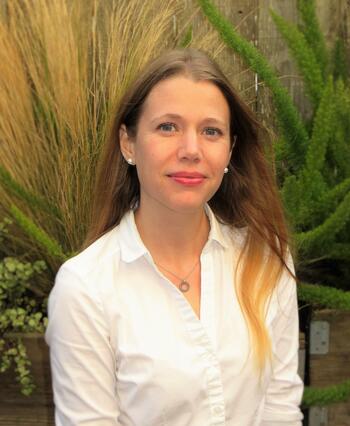
Larry Diamond is the William L. Clayton Senior Fellow at the Hoover Institution, the Mosbacher Senior Fellow in Global Democracy at the Freeman Spogli Institute for International Studies (FSI), and a Bass University Fellow in Undergraduate Education at Stanford University. He is also professor by courtesy of Political Science and Sociology at Stanford, where he lectures and teaches courses on democracy (including an online course on EdX). At the Hoover Institution, he co-leads the Project on Taiwan in the Indo-Pacific Region and participates in the Project on the U.S., China, and the World. At FSI, he is among the core faculty of the Center on Democracy, Development and the Rule of Law, which he directed for six and a half years. He leads FSI’s Israel Studies Program and is a member of the Program on Arab Reform and Development. He also co-leads the Global Digital Policy Incubator, based at FSI’s Cyber Policy Center. He served for 32 years as founding co-editor of the Journal of Democracy.

Diamond’s research focuses on global trends affecting freedom and democracy and on U.S. and international policies to defend and advance democracy. His book, Ill Winds: Saving Democracy from Russian Rage, Chinese Ambition, and American Complacency, analyzes the challenges confronting liberal democracy in the United States and around the world at this potential “hinge in history,” and offers an agenda for strengthening and defending democracy at home and abroad.  A paperback edition with a new preface was released by Penguin in April 2020. His other books include: In Search of Democracy (2016), The Spirit of Democracy (2008), Developing Democracy: Toward Consolidation (1999), Promoting Democracy in the 1990s (1995), and Class, Ethnicity, and Democracy in Nigeria (1989). He has edited or coedited more than fifty books, including China’s Influence and American Interests (2019, with Orville Schell), Silicon Triangle: The United States, China, Taiwan the Global Semiconductor Security (2023, with James O. Ellis Jr. and Orville Schell), and The Troubling State of India’s Democracy (2024, with Sumit Ganguly and Dinsha Mistree).

During 2002–03, Diamond served as a consultant to the US Agency for International Development (USAID) and was a contributing author of its report, Foreign Aid in the National Interest. He has advised and lectured to universities and think tanks around the world, and to the World Bank, the United Nations, the State Department, and other organizations dealing with governance and development. During the first three months of 2004, Diamond served as a senior adviser on governance to the Coalition Provisional Authority in Baghdad. His 2005 book, Squandered Victory: The American Occupation and the Bungled Effort to Bring Democracy to Iraq, was one of the first books to critically analyze America's postwar engagement in Iraq.

Among Diamond’s other edited books are Democracy in Decline?; Democratization and Authoritarianism in the Arab WorldWill China Democratize?; and Liberation Technology: Social Media and the Struggle for Democracy, all edited with Marc F. Plattner; and Politics and Culture in Contemporary Iran, with Abbas Milani. With Juan J. Linz and Seymour Martin Lipset, he edited the series, Democracy in Developing Countries, which helped to shape a new generation of comparative study of democratic development.

Download full-resolution headshot; photo credit: Rod Searcey.
Former Director of the Center on Democracy, Development and the Rule of Law
Faculty Chair, Jan Koum Israel Studies Program
Date Label
Larry Diamond Senior Fellow and Principal Investigator, Taiwan Democracy Project
Seminars
Subscribe to Governance