Governance

FSI's research on the origins, character and consequences of government institutions spans continents and academic disciplines. The institute’s senior fellows and their colleagues across Stanford examine the principles of public administration and implementation. Their work focuses on how maternal health care is delivered in rural China, how public action can create wealth and eliminate poverty, and why U.S. immigration reform keeps stalling. 

FSI’s work includes comparative studies of how institutions help resolve policy and societal issues. Scholars aim to clearly define and make sense of the rule of law, examining how it is invoked and applied around the world. 

FSI researchers also investigate government services – trying to understand and measure how they work, whom they serve and how good they are. They assess energy services aimed at helping the poorest people around the world and explore public opinion on torture policies. The Children in Crisis project addresses how child health interventions interact with political reform. Specific research on governance, organizations and security capitalizes on FSI's longstanding interests and looks at how governance and organizational issues affect a nation’s ability to address security and international cooperation.

News Type
News
Date
Paragraphs

“We found that when the government came to arrest or kill the leaders of the drug cartels . . . the structure of crime became disorganized and often made things worse because the leaders of the drug cartels had some capacity to control their armed soldiers. When the [federal police] removed them, they created these short-term spikes in violence that resulted from drug-trafficking gangs fighting each other for turf or for leadership of their criminal organization” says Beatriz Magaloni, Director of the Poverty and Governance Project a CDDRL/FSI Senior Fellow for Stanford Magazine. Read the whole article here.

Hero Image
gettyimages 459322868
People take a part during a protest at Eje Central Avenue in Mexico City, on November 20, 2014 to demand the safe return of 43 students who went missing in southern Mexico after an attack by gang-linked police last September 26.
ALFREDO ESTRELLA/AFP/Getty Images
All News button
1
Paragraphs

Lisa Blaydes and Christopher Paik explore the impact the Holy Land Crusaders in Cambridge International Organization, as the most significant forms of military mobilization during the medieval period, had important implications for European state formation. Their findings contribute to a scholarly debate regarding when the essential elements of the modern state first began to appear. Read more here.

All Publications button
1
Publication Type
Journal Articles
Publication Date
Journal Publisher
International Organization/Cambridge Core
Number
Issue 3
-


[[{"fid":"224666","view_mode":"crop_870xauto","fields":{"format":"crop_870xauto","field_file_image_description[und][0][value]":"","field_file_image_alt_text[und][0][value]":false,"field_file_image_title_text[und][0][value]":false,"field_credit[und][0][value]":"","field_caption[und][0][value]":"","field_related_image_aspect[und][0][value]":"","thumbnails":"crop_870xauto"},"type":"media","field_deltas":{"1":{"format":"crop_870xauto","field_file_image_description[und][0][value]":"","field_file_image_alt_text[und][0][value]":false,"field_file_image_title_text[und][0][value]":false,"field_credit[und][0][value]":"","field_caption[und][0][value]":"","field_related_image_aspect[und][0][value]":"","thumbnails":"crop_870xauto"}},"link_text":null,"attributes":{"width":"870","class":"media-element file-crop-870xauto","data-delta":"1"}}]]


Faculty from Anthropology, English and Political Science join Stanford students and staff for perspectives on the U.S. election and its implications for Mexico and Latin America, and for the prospects of immigrants living in the U.S.

(TBD) undergraduate (Centro Chicano and Latino Outreach and CORE Coordinator)

Lenica Morales-Valenzuela is a Masters in Latin American Studies student here at the Center of Latin American Studies. Her past research has focused on human rights advocacy for genocide survivors of the Guatemalan Civil War and studying root causes for Central American migration to the United States. Currently, her research is shifting towards issues of constitutionality of indigenous rights in Guatemala and how indigenous populations have been interacting (or not) with the Guatemalan state. 


#LatinxsReact


Speakers:

Image
angela garcia
Professor Garcia’s work engages historical and institutional processes through which violence and suffering is produced and lived. A central theme is the disproportionate burden of addiction, depression and incarceration among poor families and communities. Her research is oriented toward understanding how attachments, affect, and practices of intimacy are important registers of politics and economy.

Professor Garcia is currently engaged in research in Mexico City that examines emerging social and discursive worlds related to the dynamics of extreme urban poverty, mental illness and drug addiction in Mexico City, particularly within its peripheral zones.


Image
paula moya
Dr. Paula M. L. Moya is Professor of English and, by courtesy, of Iberian and Latin American Cultures and the Director of the Research Institute of Comparative Studies in Race and Ethnicity at Stanford University.

She was also a founding organizer and coordinating team member of The Future of Minority Studies research project (FMS), an inter-institutional, interdisciplinary, and multigenerational research project facilitating focused and productive discussions about the democratizing role of minority identity and participation in a multicultural society.


Beatriz Magaloni Beatriz Magaloni
Beatriz Magaloni is an Associate Professor in the Department of Political Science and a Senior Fellow at the Freeman Spogli Institute for International Studies (FSI) at Stanford University. She is also an affiliated faculty member of the Woods Institute of the Environment (2011-2013), a Faculty Fellow at the Stanford Center for International Development, and became an affiliated faculty member at CISAC in 2014.


Moderator(s):

Image
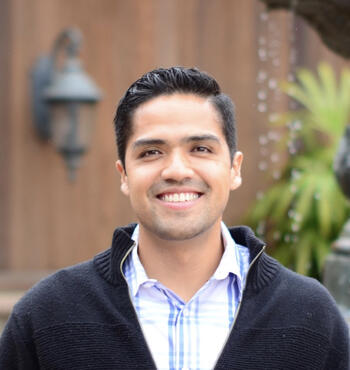
frankie preciados

Francisco Preciado, J.D., Executive Director SEIU Local 2007 at Stanford.  Francisco has experience working in local and state politics.  He has advised California State Assembly Members and State Senators, managed a non-profit, worked as a union organizer, and completed several legal externships.  He is a graduate of UC Berkeley School of Law, where he was recognized for his work assisting low-income workers.  Francisco has a Masters Degree in Mexican American Studies from San Jose State University, and a dual Bachelors Degree in Political Science and Chicano(a) Studies from Stanford University.


Image
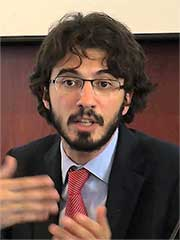
alberto diaz
Alberto Diaz-Cayeros Director of the Center for Latin American Studies.  Alberto joined the FSI faculty in 2013 after serving for five years as the director of the Center for US-Mexico studies at the University of California, San Diego. He earned his Ph.D at Duke University in 1997. He was an assistant professor of political science at Stanford from 2001-2008, before which he served as an assistant professor of political science at the University of California, Los Angeles. Diaz-Cayeros has also served as a researcher at Centro de Investigacion Para el Desarrollo, A.C. from 1997-1999. His work has primarily focused on federalism, poverty and economic reform in Latin America, and Mexico in particular. He has published widely in Spanish and English.

Dept. of Political Science
Encina Hall, Room 436
Stanford University,
Stanford, CA

(650) 724-5949
0
Senior Fellow at the Freeman Spogli Institute for International Studies
Graham H. Stuart Professor of International Relations
Professor of Political Science
beatriz_magaloni_2024.jpg MA, PhD

Beatriz Magaloni Magaloni is the Graham Stuart Professor of International Relations at the Department of Political Science. Magaloni is also a Senior Fellow at the Freeman Spogli Institute, where she holds affiliations with the Center on Democracy, Development and the Rule of Law (CDDRL) and the Center for International Security and Cooperation (CISAC). She is also a Stanford’s King Center for Global Development faculty affiliate. Magaloni has taught at Stanford University for over two decades.

She leads the Poverty, Violence, and Governance Lab (Povgov). Founded by Magaloni in 2010, Povgov is one of Stanford University’s leading impact-driven knowledge production laboratories in the social sciences. Under her leadership, Povgov has innovated and advanced a host of cutting-edge research agendas to reduce violence and poverty and promote peace, security, and human rights.

Magaloni’s work has contributed to the study of authoritarian politics, poverty alleviation, indigenous governance, and, more recently, violence, crime, security institutions, and human rights. Her first book, Voting for Autocracy: Hegemonic Party Survival and its Demise in Mexico (Cambridge University Press, 2006) is widely recognized as a seminal study in the field of comparative politics. It received the 2007 Leon Epstein Award for the Best Book published in the previous two years in the area of political parties and organizations, as well as the Best Book Award from the American Political Science Association’s Comparative Democratization Section. Her second book The Politics of Poverty Relief: Strategies of Vote Buying and Social Policies in Mexico (with Alberto Diaz-Cayeros and Federico Estevez) (Cambridge University Press, 2016) explores how politics shapes poverty alleviation.

Magaloni’s work was published in leading journals, including the American Political Science Review, American Journal of Political Science, Criminology & Public Policy, World Development, Comparative Political Studies, Annual Review of Political Science, Cambridge Journal of Evidence-Based Policing, Latin American Research Review, and others.

Magaloni received wide international acclaim for identifying innovative solutions for salient societal problems through impact-driven research. In 2023, she was named winner of the world-renowned Stockholm Prize in Criminology, considered an equivalent of the Nobel Prize in the field of criminology. The award recognized her extensive research on crime, policing, and human rights in Mexico and Brazil. Magaloni’s research production in this area was also recognized by the American Political Science Association, which named her recipient of the 2021 Heinz I. Eulau Award for the best article published in the American Political Science Review, the leading journal in the discipline.

She received her Ph.D. in political science from Duke University and holds a law degree from the Instituto Tecnológico Autónomo de México.

Director, Poverty, Violence, and Governance Lab
Co-director, Democracy Action Lab
CV
Date Label
Profesor of Political Science
Paula M. L. Moya Professor of English
Angela Garcia Associate Professor of Anthropology
Francisco Preciado Co-Moderator

Encina Hall, C149
616 Jane Stanford Way
Stanford, CA 94305

(650) 725-0500
0
Senior Fellow, Freeman Spogli Institute for International Studies
Professor, by courtesy, of Political Science
alberto_diaz-cayeros_2024.jpg MA, PhD

Alberto Díaz-Cayeros is a Senior Fellow at Stanford University's Freeman Spogli Institute for International Studies (FSI), and co-director of the Democracy Action Lab (DAL), based at FSI's Center on Democracy, Development and Rule of Law (CDDRL). His research interests include federalism, poverty relief, indigenous governance, political economy of health, violence, and citizen security in Mexico and Latin America.

He is the author of Federalism, Fiscal Authority and Centralization in Latin America (Cambridge, reedited 2016), coauthored with Federico Estévez and Beatriz Magaloni, of The Political Logic of Poverty Relief (Cambridge, 2016), and of numerous journal articles and book chapters.

He is currently working on a project on cartography and the developmental legacies of colonial rule and governance in indigenous communities in Mexico.

From 2016 to 2023, he was the Director of the Center for Latin American Studies at Stanford University, and from 2009 to 2013, Director of the Center for US-Mexican Studies at UCSD, the University of California, San Diego.

Affiliated faculty at the Center on Democracy, Development and the Rule of Law
Co-director, Democracy Action Lab
Director of the Center for Latin American Studies (2016 - 2023)
CV
Date Label
Co-Moderator
Panel Discussions
-

This film screening is hosted by the Arab Reform and Democracy Program at the Center on Democracy, Development and the Rule of Law. 


This is a ticketed event, only guests with tickets will be admitted. Please print out your tickets before the event and present them at the door. All persons, regardless of age, require a ticket. Directions and parking information is available below. Doors will open at 6:30 pm. 


About Tickling Giants:

In the midst of the Egyptian Arab Spring, Bassem Youssef makes a decision that’s every mother’s worst nightmare… He leaves his job as a heart surgeon to become a full-time comedian. Dubbed, “The Egyptian Jon Stewart,” Bassem creates the satirical show, Al Bernameg. The weekly program quickly becomes the most viewed television program in the Middle East. In a country where free speech is not settled law, Bassem’s show becomes as controversial as it popular. He and his staff must endure physical threats, protests, and legal action, all because of jokes. As Bassem attempts to remain on the air, keep his staff safe, and not get arrested, he continues to let those in power know they’re being held accountable. Despite increasing danger, the team at Al Bernameg employ comedy, not violence, to comment on hypocrisy in media, politics, and religion. Directed by Sara Taksler, Tickling Giants follows the team of Al Bernameg as they discover democracy is not easily won. For more information visit http://ticklinggiants.com


About Bassem Youssef:

Image
bassem headshot

Named one of TIME’s “100 most influential people in the world” in 2013, Bassem Youssef is an Egyptian satirist, columnist, and talk show host. A cardiac surgeon by training, Youssef turned to comedy after he was inspired by the Egyptian revolution. He uploaded the first episode of his homemade newscast, “The B+ Show,” to YouTube in May 2011. After it garnered more than 5 million views in three months, Youssef was named the host of “Al-Bernameg,” a satirical newscast modeled after Jon Stewart’s “The Daily Show.” Youssef’s bold, intelligent, and humorous critiques of Egyptian politics quickly became a hit with audiences in the country and garnered more than 40 million viewers. Due to its sharp criticism of Egyptian leaders, Al-Bernameg faced political pressure from successive governments until it was finally taken off the air in the summer of 2014. Recently, Youssef launched “The Democracy Handbook,” a Fusion TV digital series that satirizes American politics through a Middle Eastern perspective. Youssef is currently a Visiting Scholar at CDDRL's Program on Arab Reform and Democracy. He served as a resident fellow at the Institute of Politics at Harvard University’s Kennedy School of Government in 2015.


Event Information:

-- Movie duration: 111 mins
-- Q&A with Bassem Youssef after the movie
-- Food and drink are prohibited in all indoor venues
-- Cameras and all recording devices are prohibited
-- Guests will be ask to turn off cell phones, pagers and alarms during the event

Directions 

Via I-280 (north or south): LINK

From the east bay via CA-92 (San Mateo Bridge): LINK

Via US 101 (north or south): LINK

Additional directions are available here


Parking 

Parking Structure 7 offers underground parking at the Knight Management Center. Permits are required and enforced Monday through Friday from 8 am to 4 pm. Click here to access Campus Maps.

One-day visitor permits (called “scratchers”) allow for parking in any pay-and-display or metered space, and are available for purchase at the Parking and Transportation Services (P&TS) office for $12 each. Be sure to scratch off the correct date and hang your permit facing outward from your rear-view mirror. "A," "C," and "shared" resident/commuter lots are enforced Monday-Friday, 6 a.m. to 4 p.m. You are free to park in these areas after enforcement hours.

You can also pay for parking using the pay-by-space kiosks located in Structure 7. Simply enter the number for your parking space and pay with cash or card. You do not need to display your receipt in your vehicle. The receipt is not valid in any other location.

Other nearby parking locations include:

  • Parking lot at Bonair Siding Rd. and Serra St. — coin-meter spaces, two-minute walk
  • Parking lot at Memorial Way and Galvez St. — pay-and-display machine, five-minute walk
  • Visitor Center parking lot at 295 Galvez St. — pay-and-display machine, ten-minute walk
  • Parking Structure 6 at Campus Dr. East and Wilbur Way — pay-and-display machine, ten-minute walk

Meters are generally enforced 8 a.m. to 4 p.m., unless otherwise posted. You are free to park in these areas after enforcement hours.

More parking and permit information is available here.

We honor any state's disabled person placards in nearly all marked parking spaces on campus. Please visit the Persons with Disabilities page for more information.


Cemex Auditorium, Knight Management Center
655 Knight Way
Stanford, CA 94305

Bassem Youssef Visiting Scholar, CDDRL
Film Screenings
News Type
News
Date
Paragraphs

Effective Law Enforcement Institutions and Democratic Accountability: Workshop Focuses on Regional Issues in Law Enforcement

The Stanford Program on Poverty and Governance delivered its five-day training course, “Effective Law Enforcement Institutions and Democratic Accountability,” to law enforcement professionals from the Planning Unit of the Mexican Comision Nacional de Seguridad (CNS). Held in Encina Hall October 11-15, 2016, the workshop was led by Professors Beatriz Magaloni and Alberto Diaz-Cayeros as part of their U.S. State Department-funded research project on police accountability and citizen trust in Mexico. Stanford political scientists and legal scholars participated in the week-long workshop to address a wide range of topics focused on the dynamics between criminal violence, police practices and citizen trust. Highlights of the unique curriculum included:

  • Design of police interventions by Beatriz Magaloni and Alberto Diaz Cayeros, with discussion of drug policy, fighting organized crime, what law enforcement looks like up close, and prevention of violence.
  • How to measure the success of police operations by Edgar Franco, a doctoral student in Political Science.
  • Use of empirical evidence to develop effective public policy by Gustavo Robles, Ph.D candidate in Political Science, with a discussion of methods for gathering and analyzing data and how to develop indicators for performance, results and impact.
  • Regional issues with a focus on Latin America, including anomie and law, by Stanford Law School visiting professor Rogelio Perez-Perdomo.
  • Roundtable moderated by Beatriz Magaloni featuring Francis Fukuyama, Erik Jensen and Stephen Stedman on accountability, anti-corruption practices, trust in public institutions, civil engagement, and the role of international organizations.
  • A lecture by legal scholar Mirte Posterna from the Stanford Law School on human Rights, security and anti-drug policy.

The Mexican delegation took afiled trip to the Stockton Police Department to meet with Chief of Police Eric Jones, an innovator in effective community policing and use of body-worn cameras. They also a visited Stanford's new David Rumsey Map Center, where scholars can work with digital mapping software to manipulate, enlarge, quantify, aggregate, and visualize geo-data in unique ways for research.

The final session of the workshop focused on developing collaborative approaches between scholars and law enforcement practitioners in Mexico on a CNS-sponsored "risk terrain" project currently underway in Acapulco, with an analysis of police patrolling data, the role of schools in mitigating risk for youth violence and gang activity, and the design of federal police surveys.

The workshop and site visits were instrumental in advancing key goals of U.S. State Department-funded research project on project police accountability and citizen trust, which include assessing the efficacy of new law enforcement approaches in coordinating policing between federal, states and municipal agencies, mapping criminal activity and drug trafficking routes in Mexico, and correlating socio-economic characteristics with levels of trust among Mexican citizens.

Hero Image
encina group shot
All News button
1
-

Abstract:

Many authoritarian regimes use the threat of repression to suppress dissent. Theory from psychology suggests that emotions should affect how citizens perceive and process information about repression risk, and ultimately how they behave. I test the implications of this view for understanding dissent in autocracy by running a lab-in-the-field experiment with 671 opposition supporters in Zimbabwe. In the experiment, I randomly assign some participants to an exercise that induces a state of fear. The fear treatment reduces participation in a behavioral measure of dissent by 14-23%, and increases pessimism and risk aversion. These effects may lead to variation in real participation in dissent: self-efficacy, a psychological characteristic that influences emotional reactions to threats, is a better predictor of dissent than access to information and communication technology or strength of identification with the opposition. These effects suggest that fear may be used strategically by autocrats to suppress dissent.


Speaker Bio:

Image
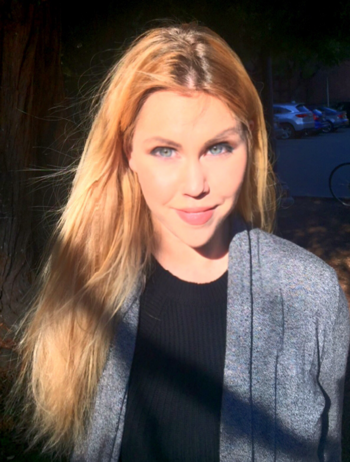
lauren young
Lauren Young is a Postdoctoral Fellow at CDDRL. Her research aims to understand how citizens make decisions when faced with the threat of political violence. Her dissertation uses a mix of experimental, quasi-experimental, and qualitative methods with more than 2,100 total participants to investigate how emotions influence decisions to participate in pro-democracy dissent using the case of Zimbabwe. Lauren is currently working on projects that test for similar effects in the context of narco-trafficking, violent crime, and police abuse. Lauren received her PhD in Political Science with distinction from Columbia University in May 2016 and holds a BA from Stanford University with honors in International Security Studies. She is also a non-resident postdoctoral scholar at the Center for Global Development.

Postdoctoral Fellow at CDDRL
Seminars
-

Speaker Bio:

Image
boittin margaret
Margaret Boittin is Assistant Professor at Osgoode Hall Law School, York University, Canada. She studies Chinese law and politics.

She was a predoctoral and postdoctoral fellow at CDDRL (2012-2015).

Encina Hall
616 Serra Street
Stanford, CA 94305-6055

0
The Governance Project Postdoctoral Fellow, 2013-15
Boittin_HS.jpg

Margaret Boittin has a JD from Stanford, and is completing her PhD in Political Science at UC Berkeley. Her dissertation is on the regulation of prostitution in China. She is also conducting research on criminal law policy and local enforcement in the United States, and human trafficking in Nepal.

The Governance Project Postdoctoral Fellow, 2013-15
CV
Assistant Professor at Osgoode Hall Law School, York University, Canada
Seminars
Subscribe to Governance