Science and Technology
-

Abstract
Weinstein recently returned from two years on the National Security Council staff at the White House where we played a key role in thinking through a 21st century approach to fighting corruption and strengthening governance. One important initiative was President Obama’s Open Government Partnership (OGP), a multilateral effort involving more than 50 countries, hundreds of civil society groups, and leading technology companies, with the goal of making governments more transparent, more accountable, and more effective. Weinstein will offer a behind-the-scenes perspective on the creation of OGP, and discuss its promise and potential pitfalls.

Jeremy Weinstein recently returned to Stanford after serving as Director for Development and Democracy on the National Security Council staff at the White House between 2009 and 2011. In this capacity, he played a key role in the National Security Council’s work on global development, democracy and human rights, and anti-corruption, with a global portfolio. Among other issues, Weinstein was centrally involved in the development of President Obama’s Policy Directive on Global Development and associated efforts to reform and strengthen USAID, promote economic growth, and increase the effectiveness of U.S. foreign assistance across the board; led efforts at the White House to develop a robust international anti-corruption agenda, which included the creation of the G-20 Action Plan on Anti-Corruption, the design and launch of the Open Government Partnership, and the successful legislative passage and subsequent internationalization of a ground-breaking extractive industries disclosure requirement; and played a significant role in developing the Administration’s policy in response to the Arab Spring, including focused work on Egypt, Tunisia, Bahrain, Syria, Yemen, and others. Before joining the White House staff, Weinstein served as an advisor to the Obama campaign and, during the transition, served as a member of the National Security Policy Working Group and the Foreign Assistance Agency Review Team.

Sloan Mathematics Center
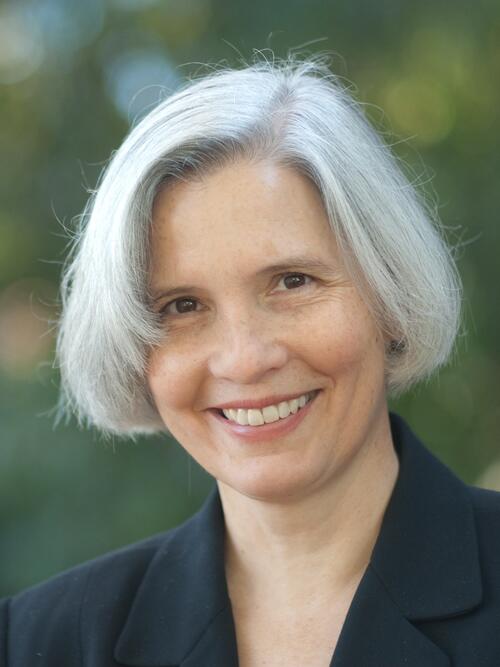
Jeremy M. Weinstein Associate Professor of Political Science and Senior Fellow, FSI Speaker Stanford University
Seminars
-

Abstract:

The 2012 Republic of China presidential and legislative elections to be held on January 14th mark the fifth presidential and seventh national legislative direct elections in Taiwan. Incumbent ROC President Ma Ying-jeou of the Kuomintang (KMT) enjoyed a landslide victory in 2008 over Democratic Progressive Party (DPP) candidate Hsieh Chang-ting, winning by over 2.2 million votes. Subsequent revelations of corruption by former President Chen Shui-bian of the DPP and various members of his administration further damaged the DPP's public image and electoral prospects.

In the intervening years, however, current DPP candidate Tsai Ing-wen and other members of the DPP have worked to revitalize their party's image, and as chairperson of the DPP Tsai established a special internal investigative committee to root out corruption in the party. A potentially complicating new factor in the race is the first-ever presidential bid by the People's First Party (PFP), led by candidate James Soong. Polling results to date have indicated the potential for a very close race between Ma and Tsai, with Soong also pulling a substantial portion of the vote that may affect the electoral outcome.

On the legislative side, the KMT won 81 out of 113 total seats in the Legislative Yuan in the 2008 elections, a circumstance that has facilitated the passage of various controversial measures supported by the Ma administration, including in particular the Economic Cooperation Framework Agreement (ECFA) with mainland China, and a significant shift in the composition of this body is likely to have a pronounced impact.

Regardless of the outcome, the results of the 2012 elections promise to offer much insight into the popular attitudes of the Taiwanese people and the prospects for future democratic consolidation and development in Taiwan. Ten days following the elections, Professors Shelly Rigger and Eric Chen-hua Yu will join us for a panel discussion to analyze the outcomes of these elections and discuss their relevance to the US and the world.

Speaker Bios:

Image
Shelley Rigger is the Brown Professor of East Asian Politics and Chair of Political Science at Davidson College in Davidson, North Carolina. She has a PhD in Government from Harvard University and a BA in Public and International Affairs from Princeton University. She has been a visiting researcher at National Chengchi University in Taiwan (2005) and a visiting professor at Fudan University in Shanghai (2006). Rigger is the author of two books on Taiwan’s domestic politics, Politics in Taiwan: Voting for Democracy (Routledge 1999) and From Opposition to Power: Taiwan’s Democratic Progressive Party(Lynne Rienner Publishers 2001). In 2011 she published Why Taiwan Matters: Small Island, Global Powerhouse, a book for general readers. She has published articles on Taiwan’s domestic politics, the national identity issue in Taiwan-China relations and related topics. Her current research studies the effects of cross-strait economic interactions on Taiwan and Mainland China. Her monograph, “Taiwan’s Rising Rationalism: Generations, Politics and ‘Taiwan Nationalism’” was published by the East West Center in Washington in November 2006.

Image

Eric Chen-hua Yu is an assistant research fellow of the Election Study Center and

jointly appointed as an assistant professor of political science at National Chengchi University in Taiwan. Before he returned to Taiwan to serve in his Alma mater in 2009, he has been a research fellow and program manager of Center on Democracy, Development, and the Rule of Law at Stanford’s Freeman Spogli Institute for International Studies since 2006. His research interests include public opinion, electoral politics, quantitative methods, and American politics. He also participates in a number of joint survey projects such as Taiwan Election and Democratization Studies (TEDS) and World Value Survey. Yu recently published academic articles on Taiwan’s domestic politics in
Taiwan Political Science Review, Journal of Electoral Studies, Review of Social Sciences, and Japanese Journal of Electoral Studies. Yu received a MS (2000) in Public Policy Analysis from the University of Rochester, and a Ph.D. in political science (2006) from Columbia University.

CISAC Conference Room

Shelly Rigger Professor of East Asian Politics and Chair of Political Science Speaker Davidson College

616 Serra St.
Encina Hall
Stanford, CA 94305

1
3x4200dpi[2]_self.JPG MS, PhD

Eric Yu was a research fellow and program manager for the Democracy in Taiwan program at CDDRL. His research interests included public opinion, electoral politics, federalism, and quantitative methods. He worked with Election Study Center at National Chengchi University (Taiwan) on a multi-year research project examining the relationship between public opinion and policy output at the local level in Taiwan. This project aimed to explore the extent to which local policy-makings respond to public opinions across a variety of policy dimensions. His recent studies also include the development of Taiwanese public attitudes toward cross-strait relations, the emergence of the third force under the new "single-district, two-ballot" electoral system for Taiwan's legislative elections, and mass policy preferences and their implications for political parties in Taiwan.

Yu received a BA (1995) in Political Science from the National Chengchi University in Taiwan, a MS (2000) in Public Policy Analysis from the University of Rochester, and a Ph.D. (2006) in Political Science from Columbia University.

Research Fellow and Program Manager for the Democracy in Taiwan Program
Eric Chen-hua Yu Assistant Research Fellow and Assistant Professor of Political Science Speaker Election Study Center; National Chengchi University
Panel Discussions
-

Abstract

Mobile phone coverage and adoption has grown substantially over the past decade, primarily in sub-Saharan Africa. In the absence of public goods infrastructure in many countries, mobile phone technology has the potential to reduce communication and transaction costs and improve access to information, goods and services, particularly for remote rural populations. Research suggests that mobile phone coverage has had positive impacts on agricultural and labor market efficiency in certain countries, but empirical microeconomic evidence is still limited. This paper presents the results of several mobile phone-related field experiments in sub-Saharan Africa, whereby mobile phones have been used for learning, money transfers and civic education programs. These experiments suggest that mobile phone technology can result in reductions in communication and transaction costs, as well as welfare gains, in particular contexts. Nevertheless, mobile phone technology cannot serve as the “silver bullet” for development, and careful impact evaluations of mobile phone development projects are required. In addition, mobile phone technology must work in partnership with other public good provision and investment to achieve optimal development outcomes. 

Speaker Bio:

Jenny C. Aker is an assistant professor of economics at the Fletcher School and department of economics at Tufts University. She is also a non-resident fellow at the Center for Global Development and a member of the Advisory Board for Frontline SMS.

After working for Catholic Relief Services as Deputy Regional Director in West and Central Africa between 1998 and 2003, Jenny returned to complete her PhD in agricultural economics at the University of California-Berkeley. Jenny works on economic development in Africa, with a primary focus on the impact of information and information technology on development outcomes, particularly in the areas of agriculture, agricultural marketing and education; the relationship between shocks and agricultural food market performance; the determinants of agricultural technology adoption; and impact evaluations of NGO and World Bank projects. Jenny has conducted field work in many countries in West and Central Africa, including Benin, Burkina Faso, Burundi, DRC, The Gambia, Ghana, Liberia, Mali, Mozambique, Niger, Nigeria, Rwanda, Senegal, Sierra Leone and Sudan, as well as Haiti and Guatemala.

CISAC Conference Room

Jenny Aker Assistant Professor of Economics Speaker Tufts University
Seminars
-

Abstract:

Aprajit Mahajan will describe findings from the first large-scale cluster randomized controlled trial in a developing country that evaluates the uptake of a health-protecting technology, insecticide-treated bednets (ITNs), through micro-consumer loans, as compared to free distribution and control conditions. Despite a relatively high price, 52% of sample households purchased ITNs, although coverage remained significantly lower than what is achieved with free distribution. Most strikingly, neither micro-loans nor free distribution led to improvements in malaria and anemia prevalence. Mahajan will examine several plausible explanations, and argue that insufficient ITN coverage was the most likely cause.

Speaker Bio:

Aprajit Mahajan is an assistant professor of economics at Stanford University with interests in development economics and econometrics. One focus of his work has been on the adoption of technologies in developing countries and he has worked on issues surrounding the adoption of health-improving technologies in rural India and the adoption of modern management practices by Indian textile firms. His methodological work has attempted to address common problems in empirical work. In particular, he has worked on problems of mismeasured data in social science settings as well as problems of model identification with limited data.

To view paper in advance of seminar, please reference: http://www.stanford.edu/~axl/RCT_short.pdf

CISAC Conference Room

Aprajit Mahajan Assistant Professor Speaker Stanford Department of Economics
Seminars
-

Abstract
A global struggle for control of the Internet is now underway. At stake are no less than civil liberties, privacy and even the character of democracy in the 21st century.

Many commentators have debated whether the Internet is ultimately a force for freedom of expression and political liberation, or for alienation, and repression. Rebecca MacKinnon moves the debate about the Internet’s political impact to a new level. It is time, she says, to stop arguing over whether the Internet empowers individuals and societies, and address the more fundamental and urgent question of how technology should be structured and governed to support the rights and liberties of all the world’s Internet users.

Rebecca MacKinnon is a Bernard L. Schwartz Senior Fellow at the New America Foundation, where she conducts research, writing and advocacy on global Internet policy, free expression, and the impact of digital technologies on human rights. She is author of Consent of the Networked: The Worldwide Struggle for Internet Freedom (Basic Books, January 2012). MacKinnon is also cofounder of Global Voices, an international citizen media network. She also serves on the Boards of Directors of the Committee to Protect Journalists and the Global Network Initiative.

Fluent in Mandarin Chinese, MacKinnon worked as a journalist for CNN in Beijing for nine years and was Beijing Bureau Chief and Correspondent from 1998-2001, then served as CNN’s Tokyo Bureau Chief and Correspondent from 2001-03. From 2004-06 she was a Research Fellow at Harvard’s Berkman Center for Internet and Society, where she began her ongoing research and writing about the Chinese Internet in addition to launching Global Voices with colleague Ethan Zuckerman. In 2007-08 she taught online journalism at the University of Hong Kong’s Journalism and Media Studies Centre. In 2009 she conducted research and writing as an Open Society Fellow, and in the Spring of 2010 she was a Visiting Fellow at Princeton’s Center or Information Technology Policy.

MacKinnon received her AB magna cum laude from Harvard University and was a Fullbright scholar in Taiwan in 1991-92.

Sloan Mathematics Center

Rebecca MacKinnon Bernard L. Schwartz Senior Fellow Speaker New America Foundation
Seminars
-

Abstract:

Since the very beginning of the state formation, Angolan political elites of the Popular Movement for the Liberation of Angola (MPLA), the National Front for the Liberation of Angola (FNLA) and the National Union for the Total Independence of Angola (UNITA) agreed that liberal democracy would be the form of government. However, in 1975 MPLA inaugurated a formal authoritarian regime that lasted until 1991. From 1991 to 2010, Angola had a democratic interim constitution and in 1992 had the first national multiparty elections as well as presidential ones of its history. In 2008, Angola held its second legislative elections and in 2010 a new and definite constitution was approved. Nevertheless, democratic development did not lead to the end of a successful democratic transition process started in 1991 or to the consolidation of democracy. The answer can probably be found in the politics of curbing democratic development, which constitutes the aim of this presentation by Professor Fernando Macedo of the Lusíada University of Angola.

Speaker Bio:

Fernando Macedo teaches political science and constitutional law at Law Faculty since 2007 and Angolan constitutional law and human rights in the department of international relations since 2006 at Lusíada University of Angola. He is currently the coordinator of the department of international relations of Lusíada University of Angola.

Fernando Macedo has co-authored with Pedro Franco Romão a book named Anotações à Lei da Prisão Preventiva em Angola, printed by Livraria Almedina of Portugal. He wrote three articles, the first one, Human Rights and Global Security, was published in Revista Brasileira de Estudos Constitucionais in 2008. The second, Civil Society and Political Power, in Sociedade Civil e Política em Angola, organized by Nuno Vidal and Justino Pinto de Andrade in 2008; and the third one, Advocacy and Citizenship, in Encontros, by the Angolan Bar Association in 2011.

Encina Ground Floor Conference Room

Fernando Macedo Professor, Political Science Speaker Luanda, Angola
Seminars
-
Abstract:
 
CDDRL pre-doctoral Alex Ruiz Euler will explore the evolution of inequality at the municipal level in Mexico with original measures constructed using household-level data from 1990, 2000 and 2010. Euler will analyze how increasing electoral competition at both the federal and local level correlates with these patterns of inequality.
 
Speaker Bio:

Alex Ruiz Euler is a 2011-2012 pre-doctoral fellow at CDDRL and a PhD candidate in political science from the University of California, San Diego. His dissertation focuses on the effects of democratization and economic inequality on the provision of education. His case study is Mexico and is developing novel databases for these indicators at the municipal and locality level. He is also part of a collaborative effort to analyze more broadly the relation between governance and the provision of public goods, including water, health and public security.

Encina Ground Floor Conference Room

Alex Ruiz Euler Pre-doctoral Fellow, 2011-2012 Speaker CDDRL
Seminars
-

Abstract:

Issues about “good governance” and anti-corruption have become central in the development and democracy agenda. While it’s clear that low-quality government institutions have negative effects on the health and wealth of societies, the criteria for what should count as good governance remain far from clear. In his new book “The Quality of Government: Corruption, Social Trust and Inequality in International Perspective”, Bo Rothstein argues that the dominant theories in this field represent serious mischaracterizations of the problem and that the standard definitions of the problem used in research as well as by many leading policy organizations are not helpful. This, he argues, has led to anti-corruption policies that are, at best, ineffective. 

Speaker Bio: 

Bo Rothstein holds the August Röhss Chair in Political Science at University of Gothenburg in Sweden where he is head of the Quality of Government (QoG) Institute. The QoG Institute consists of about twenty researchers studying the importance of trustworthy, reliable, competent and non-corrupt government institutions.

Rothstein took is PhD at Lund University in 1986 and served as assistant and associate professor at Uppsala University 1986 to 1994. He has been a visiting scholar at the Russell Sage Foundation in New York, Cornell University, Harvard University, Collegium Budapest Institute for Advanced Study, the Australian National University and the University of Washington in Seattle. In 2006, he served as Visiting Professor at Harvard University.

His latest book, The Quality of Government: Corruption, Inequality and Social Trust in International Perspective is published by University of Chicago Press in 2011. Among his earlier books in English are Social Traps and the Problem of Trust, and Just Institutions Matters: The Moral and Political Logic of the Universal Welfare State (both Cambridge University Press 1998) and The Social Democratic State (Univ. of Pittsburgh Press 1996). His articles have appeared in scholarly journals such as World Politics, Governance, Comparative Politics, Scandinavian Political Studies, American Behavioral Scientist, European Journal of Political Research and Comparative Political Studies. He is also a regular contributor to the Swedish debate about public policy and has published more than 100 op-ed articles in all major Swedish daily newspapers.

Beginning in January 2012, Rothstein will be in residence at Stanford and affilliated with the Scandinavian Consortium for Organizational Research (SCANOCOR) and the Institute for Research in the Social Sciences at Stanford. 

Encina Ground Floor Conference Room

Bo Rothstein August Röhss Chair in Political Science Speaker University of Gothenburg
Seminars
-

Abstract: 

Vote buying is widespread during multiparty elections in many African countries.  Despite its prevalence, vote buying's secretive and sensitive nature poses a challenge to empirical research on the subject.  In this talk, CDDRL Pre-Doctoral Fellow Eric Kramon will present evidence from experiments conducted in Kenya that shed light on the extent to which vote buying influences vote choice, why it is effective, how it relates to ethnic voting, and what its implications are for government responsiveness and accountability to poor voters.

Speaker Bio:

Eric Kramon is a 2011-12 pre-doctoral fellow at CDDRL and a PhD candidate in the Department of Political Science at UCLA. In his dissertation, he investigates vote buying during African elections. Using a set of field experiments and surveys conducted in Kenya, the project explains why vote buying persists and is effective, and examines its implications for democratic accountability and the political representation of the poor. Eric is also working on several projects about the impact of ethnic favoritism by politicians on public goods provision and general health and welfare in multiple African countries. His research has been funded by the National Science Foundation and published in the Journal of Democracy.

Encina Ground Floor Conference Room

Eric Kramon Pre-doctoral Fellow 2011-2012 Speaker CDDRL
Seminars
Subscribe to Science and Technology