International Relations

FSI researchers strive to understand how countries relate to one another, and what policies are needed to achieve global stability and prosperity. International relations experts focus on the challenging U.S.-Russian relationship, the alliance between the U.S. and Japan and the limitations of America’s counterinsurgency strategy in Afghanistan.

Foreign aid is also examined by scholars trying to understand whether money earmarked for health improvements reaches those who need it most. And FSI’s Walter H. Shorenstein Asia-Pacific Research Center has published on the need for strong South Korean leadership in dealing with its northern neighbor.

FSI researchers also look at the citizens who drive international relations, studying the effects of migration and how borders shape people’s lives. Meanwhile FSI students are very much involved in this area, working with the United Nations in Ethiopia to rethink refugee communities.

Trade is also a key component of international relations, with FSI approaching the topic from a slew of angles and states. The economy of trade is rife for study, with an APARC event on the implications of more open trade policies in Japan, and FSI researchers making sense of who would benefit from a free trade zone between the European Union and the United States.

News Type
Commentary
Date
Paragraphs

FSI SENIOR FELLOWS FRANCIS FUKUYAMA & LARRY DIAMOND DISCUSS DEMOCRACY IN THE JULY/AUGUST ISSUE OF FOREIGN AFFAIRS

Larry Diamond and Francis Fukuyama, senior fellows at the Freeman Spogli Institute, have both written essays in the July/August 2016 issue of Foreign Affairs. Follow the links below to read the full articles without a subscription block:

Diamond, who is also the former director of the Center for Democracy, Development and the Rule of Law (CDDRL), takes stock of the global democratic recession and urges the next president to make democracy promotion a pillar of his or her foreign policy agenda in his article "Democracy in Decline."

In "American Political Decay or Renewal?" Fukuyama, the Olivier Nomellini Senior Fellow at FSI and the Mosbacher Director of CDDRL, analyzes the rising tide of populism as represented by the current candidates for the US Presidential elections.

Hero Image
Person voting Getty Images
All News button
1
Paragraphs

About the Report

In March 2015, the United States Institute of Peace (USIP), Chatham House, and Stanford University's Center on Democracy, Development and the Rule of Law held a two-day conference on “State-Strengthening in Afghanistan 2001–2014: Learning from the Past to Inform the Future.” CDDRL's Erik Jensen and Karl Eikenberry represented CDDRL at this event. This report comprises a selection of papers presented at the conference. One of the papers entitled, "Rule of Law and Statebuilding in Afghanistan: Testing Theory with Practice" was co-authored by CDDRL's Erik Jensen. The papers look back critically at thirteen years of international intervention in Afghanistan, focusing on the impact of state-strengthening exercises on security, democratization, governance, the economy, rule of law, infrastructure, civil society participation, youth development, and women’s empowerment. They describe, from the perspective of Afghan and international policy makers and experts, the immense and often unforseen challenges in rebuilding the Afghan state.

All Publications button
1
Publication Date
Journal Publisher
Peaceworks
Authors
News Type
News
Date
Paragraphs

Stanford’s Center on Democracy, Development and the Rule of Law congratulates its undergraduate honors class for completing their original research and undergraduate theses. They graduated from Stanford University on June 12 with honors in their respective disciplines.

Graduates include Vehbi “Deger” Turan, who was awarded the Firestone Medal for his thesis entitled “Augmenting Citizen Participation in Governance through Natural Language Processing.” Turan’s project employed existing literature on democratic participation, case studies and an original algorithm in order to devise a means by which government agencies can evaluate public comments received via the Internet on political issues.

The Firestone Medal for Excellence in Undergraduate Research recognizes Stanford's top ten percent of honors theses in social science, science and engineering among the graduating senior class.

Turan decided to explore this topic shortly after joining the Fisher Family CDDRL Honors Program.

According to the program’s Director Stephen Stedman, “After listening to a research seminar at our Center, Deger believed that he could develop an aggregation tool to help policy makers understand such immense data.”

Francis Fukuyama, the Mosbacher Director of CDDRL also noted, “Deger is perhaps the best example to date of why interschool honors programs are valuable. He is a computer science major who came to us expressing an interest in using his background in artificial intelligence to help solve critical public policy problems.” Fukuyama together with Associate Professor of Political Science Justin Grimmer advised Turan on his honor’s thesis.

Turan will be starting a new position at Atomic Labs’ Zenreach start-up after graduation.

The CDDRL Award for Outstanding Thesis was given to Rehan Adamjee whose thesis explored the different factors at play in choosing between healthcare providers in a rural area of Pakistan.

Adamjee and Turan are just two members of a the 2016 cohort of 11 honors students, many of whom traveled to foreign countries to collect original data, conduct interviews and research their thesis topics. Their topics range from timely case studies on the use of social media as a tool of empowerment to a glimpse at the effects of regional politics on healthcare reform in Post-Soviet Russia.

The 2016 class joins 76 graduates from CDDRL’s honors program since its launch in 2007.

The Fisher Family CDDRL Honors Program trains Stanford students from diverse majors to write theses with global policy implications on a subject related to democracy, development and the rule of law. Students attend a class on research methods the spring quarter of their junior year. During their senior year, in tandem with the CDDRL research community and their faculty advisor, students conduct both local and international research in order to write their theses. Students travel to Washington, DC for the annual honors college to meet policymakers and members of the development community to enrich their thesis topics.

A list of our graduating students along with links to all their theses can be found below.


NAMEMAJORTHESIS

Rehan Adamjee

Economics; Public Policy

Advisor: Jayanta Bhattacharya

Anna Blue

International Relations

Advisor: Alberto Diaz Cayeros

Sarah Johnson

Economics

Advisor: Lisa Blaydes

Shang-Ch’uan Li

Materials, Science and Engineering

Advice and Consent: Increase in Malaysian Judges Appointed from the Practicing Bar after the Passage of the Judicial Appointments Commission Act 2009

Advisors: Erik Jensen, Justin Grimmer

Hannah Meropol

Political Science

Advisor: Lisa Blaydes

Jelani Munroe

Economics; Public Policy

Advisor: Pete Klenow

Hannah Potter

International Relations

Advisor: Stephen Stedman

Tebello Qhotsokoane

Public Policy

Advisor: Marcel Fafchamps

Hadley Reid

Human Biology

Advisor: Grant Miller

Paul Shields

International Relations; Slavic Language & Literature

Advisor: Kathryn Stoner

Deger Turan

Computer Science

Advisors: Francis Fukuyama, Justin Grimmer


Meet our Class of 2017 

Hero Image
headline
The graduating class of 2015-2016 CDDRL senior honors students take a group photo with CDDRL Mosbacher Director Francis Fukuyama and the Fisher Family CDDRL Honors Program Director Stephen Stedman. From left to right: Didi Kuo (CDDRL honors program mentor); Jelani Munroe; Stephen Stedman; Tebello Qhotsokoane; Paul Shields; Shang-Ch’uan Li; Hannah Potter; Hadley Reid; Vehbi Deger Turan; Sarah Johnson; Hannah Meropol; Rehan Adamjee; Anna Blue
Alice Kada
All News button
1
News Type
News
Date
Paragraphs
Image
awards cuthbertson diamond 555x833
Larry Diamond, the former director of Stanford’s Center on Democracy, Development, and the Rule of Law, was awarded Stanford’s Kenneth M. Cuthbertson Award for exceptional service to Stanford University. Diamond was honored for nearly two decades of enthusiastic service to Stanford alumni, as well as for his visionary leadership as the faculty director of the Haas Center for Public Service. Diamond will receive the award during Stanford’s 125th Commencement ceremony on June 12, 2016. 


Hero Image
Larry Diamond CDDRL
All News button
1
News Type
News
Date
Paragraphs

Stanford's Center on Democracy, Development, and the Rule of Law is proud to announce the 2016 class of Draper Hills Summer Fellows who were selected for their outstanding contributions to advancing democratic development in some of the most challenging regions of the world. 

From Afghanistan to Venezuela, this group of 25 courageous leaders are working to root out corruption, advance freedom of expression, pioneer new technology for social change, and reform government institutions. Many have been imprisoned and victimized for their work, and struggle with great odds to defend democracy and human rights in closed societies. Fellows will arrive at Stanford in July to begin the three-week academic training program taught by Stanford faculty, policymakers, and thought-leaders in the technology sector.

The 2016 class will mark the 12th cohort of the Draper Hills Summer Fellows Program and the fellows will join the Omidyar Network Leadership Forum, an alumni community of over 270 alumni in 70 countries worldwide.


[[{"fid":"223440","view_mode":"crop_870xauto","fields":{"format":"crop_870xauto","field_file_image_description[und][0][value]":"","field_file_image_alt_text[und][0][value]":false,"field_file_image_title_text[und][0][value]":false,"field_credit[und][0][value]":"","field_caption[und][0][value]":"","field_related_image_aspect[und][0][value]":"","thumbnails":"crop_870xauto"},"type":"media","field_deltas":{"1":{"format":"crop_870xauto","field_file_image_description[und][0][value]":"","field_file_image_alt_text[und][0][value]":false,"field_file_image_title_text[und][0][value]":false,"field_credit[und][0][value]":"","field_caption[und][0][value]":"","field_related_image_aspect[und][0][value]":"","thumbnails":"crop_870xauto"}},"link_text":null,"attributes":{"width":"870","class":"media-element file-crop-870xauto","data-delta":"1"}}]]


Sub-Saharan Africa

Image
marques profile photo


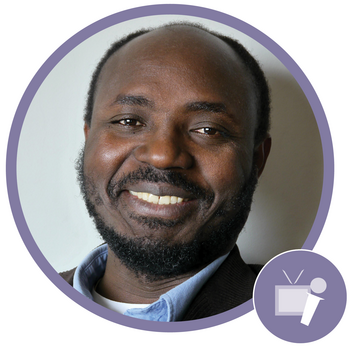
Rafael Marques de Morais is an award-winning journalist and human rights activist in Angola, working to investigate corruption and abuse of power by the country’s ruling family. He founded Makaangola, a watchdog website dedicated to exposing corruption and human rights abuses in Angola. 


Image
astere profile photo


Astère Muyango is a human rights lawyer working to strengthen the rule of law in Burundi, and serves as the country program director of International Bridges to Justice. His organization represents indigents accused of crimes, and has represented many of the young protestors who were arrested during Burundi’s recent political violence. 


Image
kasha profile photo


Kasha Nabagesera is the executive director of Kuchu Times Media Group, the first LGBTI media platform in Africa. She is known as the “founding mother” of the LGBTI movement in Uganda - where homosexuality is illegal - advocating for equal rights and the eradication of all forms of discrimination based on sexual orientation. 


Image
oluseun profle photo


Oluseun Onigbinde is a social entrepreneur in Nigeria and co-founder of BudgIT, which develops civic technology tools to advance greater public sector transparency and accountability. Their technology campaigns have reached over 625,000 Nigerians on issues of public sector accountability.  


Image
glowen profile photo


Glowen Wombo Kyei-Mensah is the managing director of Participatory Development Associates, a development consultancy working to support governance and community development in Ghana. She brings over a decade of experience in the development sector, leading nationwide research projects with considerable impact on social and policy reform. 


Asia

Image
atishi profile photo


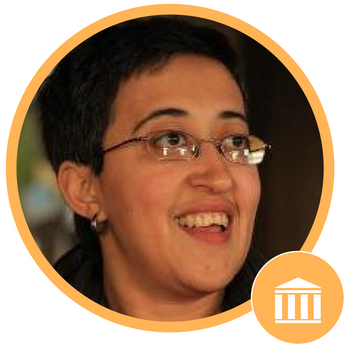
Atishi Marlena is a young Indian politician, who is part of the Aam Aadmi Party, which emerged from a nationwide anti-corruption movement. She serves as the advisor to the Deputy Chief Minister working on educational reform and participatory governance efforts in the National Capital Territory of Delhi, where the political party is in power. 


Image
wai wai profile photo


Wai Wai Nu is the director and founder of Women Peace Network-Arakan, an organization building a platform for peace and understanding among Burma’s diverse ethnic groups. Nu was a political prisoner for seven years under the Burmese military government, and emerged to serve as a national – and international – voice for Burma’s human rights and democracy movement.


Image
rajamanohar profile photo


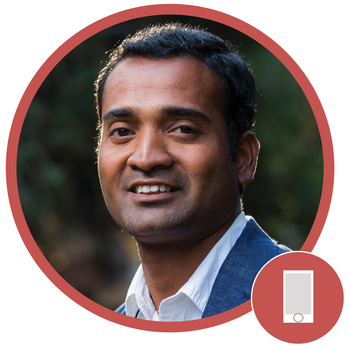
Rajamanohar Somasundaram is a technology entrepreneur from India who co-founded Hexolabs, a company building technology solutions for basic mobile handset users in emerging markets. Somasundaram pioneers the use of mobile technology for the development of healthcare, education, and governance services to support inclusive development at the base of the pyramid.


Image
nguyen profile photo


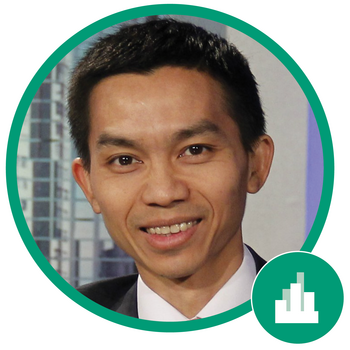
Nguyen Duc Thanh is a Vietnamese economist, and president of the Vietnam Institute for Economic and Policy Research, a think tank that advocates for market economy reform, civil society empowerment, and the implementation of the rule of law. Thanh was a member of the Economic Advisory Group to the Vietnamese Prime Minister from 2011-2016. 


Image
chandralal profile photo

Chandralal Majuwana is a human rights lawyer in Sri Lanka. He serves as the head of the Human Rights Program for the Forum for Human Dignity, a Colombo-based NGO. The program provides legal assistance to victims of human rights abuses and focuses on education and advocacy.

Eastern Europe and Eurasia

Image
olga profile photo


Olga Aivazovska is head of the Board of the Civil Network OPORA, a civil-society organization catalyzing change in Ukraine by engaging citizens in decision-making, and fighting for the protection of voting rights and transparent electoral processes. An active participant in Ukraine’s Revolution of Dignity, Aivazovska has been working to transform Ukraine into a democratic and prosperous country. 


Image
giorgi profile photo


Giorgi Kadagidze is a professor at Ilia State University, one of the leading research and educational institutions in Georgia. From 2009-2016, Kadagidze served as Chairman of the Board and Governor of the Central Bank of Georgia, leading the country’s economic transition from a planned to a market-based economy. 


Image
edmon profile photo


Edmon Marukyan is a member of the National Assembly of the Republic of Armenia and serves as the chairman of the Council of Bright Armenia, an opposition party. Before assuming public office, he worked as a human rights lawyer helping to strengthen democracy and civil society in Armenia. 


Image
natalia profile photo


Natalia Yudina is a researcher and vice-director at the SOVA Center for Information and Analysis, a Russian-based nonprofit organization that conducts research on nationalism and racism, relations between the churches and secular society, and political radicalism. Yudina’s work has contributed to a growing awareness of the government’s anti-extremist measures on the Internet and how these actions harm freedom of expression. 


Image
elizaveta profile photo


Elizaveta Osetinskaya is a media manager, editor and business journalist. She was responsible for the editorial operations at RBC Media Holding until May 2016. RBC Media Holding is the leading independent Russian media outlet, which includes a TV channel, the largest news portal in the country, a newspaper and magazine. 


Arab World

Image
hossem profile photo

Houssem Aoudi is a Tunisian entrepreneur with over a decade of experience in media, civic engagement, and social innovation. He is the founder of Wasabi, a company that builds platforms to promote open expression. Aoudi served as the director of the Media Center for the 2014 Tunisian parliamentary and presidential elections, and is the co-founder of a hub and community space for entrepreneurs. 


Image
asos profile photo


Asos Askari is a lawyer who serves as a legal advisor to the Kurdistan Regional Government in Iraq, drafting new laws and regulations to govern natural resource, human rights, and public sector reform. He also co-founded the Iraq Legal Education Initiative, a partnership between the American University of Iraq Sulaimani and Stanford Law School, which seeks to advance legal education in the Kurdistan region.


Image
belabbes profile photo


Belabbes Benkredda is an award-winning social innovator and the founder of the Munathara Initiative, the Arab world’s largest online and television debate forum highlighting voices of youth, women, and marginalized communities. Operating in 11 Arab countries, Munathara’s monthly prime- time TV debates are the only civil society-run, independent political talk program on Arabic television. 


Image
abdelrahman profile photoicon


Abdelrahman Mansour is an Egyptian political activist and entrepreneur in the field of media and journalism. He has played a key role in several Egyptian and Arab initiatives committed to advancing citizen’s rights to knowledge and access to information. 


Latin America

Image
mauricio profile photo

Mauricio Alarcón Salvador is an Ecuadorian lawyer, and human rights and transparency activist. He is currently the executive director of Fundación Ciudadanía y Desarrollo, a non-profit organization that works on citizen participation and transparency, and serves as the program director of Fundamedios, Ecuador’s leading organization in the promotion and defense of freedom of expression. 


Image
lisseth profile photo


Lisseth Boon is a Venezuelan investigative journalist with over 20 years of experience in print, broadcast, and digital media. She is currently an investigative reporter at RunRun.es, an independent news website.


Image
crexell profile photo


Lucila Crexell is a national senator of Argentina and represents the province of Neuquén, located in the Patagonia region. She has two decades of experience working in different areas of the public administration - both at the national and local level. As a senator, she defends the decentralization of power and the protection of provincial autonomy.


Image
llorente profile photo


Maria Llorente is the executive director of the Fundacion Ideas para la Paz, an independent think tank working on peace and security issues, and actively involved in the peace process in Colombia. Her work has contributed to evidence-based policy recommendations to increase citizen security and the reform of the Colombian police.  


Image
macedo profile photo


Jana Macedo is a public policy manager at the Brazilian Federal Government where she works at the Ministry of Planning coordinating initiatives on participatory planning and civic engagement. Previously, Macedo worked on human rights issues, which gave her a multidisciplinary perspective to develop public policy serving vulnerable populations.


Hero Image
dhsfcropjpg
All News button
1
-

Please note the venue is now the Bechtel Conference Center at Encina Hall.

This event is jointly sponsored by the China Program at at the Walter H. Shorenstein Asia-Pacific Research Center (APARC) and the Center on Democracy, Development, and the Rule of Law (CDDRL).


Geostrategic rivalry and economic interdependence coexist in uneasy balance between the U.S. and China. Ambassador Fu will identify key strands in U.S. perceptions of China, frequently marked by confusion and anxiety, and China’s perceptions of the U.S., riddled by the desire for closer cooperation and suspicions over U.S.’s exclusion of China. The speech will highlight the South China Sea issue and emphasize the harmful effects of negative perceptions and the importance of cooperation. Commentary will be provided by Dr. Thomas Fingar, the Shorenstein Asia-Pacific Research Center Distinguished Fellow in the Freeman Spogli Institute for International Studies, Stanford University, after the speech.


Ambassador Fu Ying has been the Chairperson of the Foreign Affairs Committee of the National People’s Congress of China since March 2013. She is also the Chairperson of the Academic Committee for China’s Institute of International Strategy, Chinese Academy of Social Sciences. From 1993 to 2000, she served successively as the Director, Counselor of the Foreign Ministry’s Asian Department and the Minister Counselor of the Chinese Embassy in Indonesia (1997). While serving as the head of the Asian Department at the Ministry of Foreign Affairs in 2000, she was instrumental in crafting China’s comprehensive strategic partnership with ASEAN and for launching the Six Party Talks with North Korea. She has served as China’s Ambassador to the Philippines (1998), Australia (2004) and to the United Kingdom (2007). From 2009 to 2013, she served as the Vice Minister of Foreign Affairs for the P.R.C.


Dr. Thomas Fingar is the inaugural Oksenberg-Rohlen Distinguished Fellow in the Freeman Spogli Institute for International Studies at Stanford University. From 2005 to 2008, he served concurrently as the first deputy director of national intelligence for analysis and as chairman of the National Intelligence Council. He served previously as assistant secretary of the State Department’s Bureau of Intelligence and Research (2004–2005), principal deputy assistant secretary (2001–2003), deputy assistant secretary for analysis (1994–2000), director of the Office of Analysis for East Asia and the Pacific (1989–1994), and chief of the China Division (1986–1989).

Chairperson, Foreign Affairs Committee of the National People’s Congress, China; former PRC Ambassador to the Philippines, Australia, and the U.K.
Fu Ying <i>Chairperson, Foreign Affairs Committee of the National People’s Congress, China; former PRC Ambassador to the Philippines, Australia, and the U.K.</i> <i>Chairperson, Foreign Affairs Committee of the National People’s Congress, China; former PRC Ambassador to the Philippines, Australia, and the U.K.</i> <i>Chairperson, Foreign Affairs Committee of the National People’s Congress, China; former PRC Ambassador to the Philippines, Australia, and the U.K.</i>
Dr. Thomas Fingar <i>Shorenstein Asia-Pacific Research Center Distinguished Fellow, Freeman Spogli Institute for International Studies, Stanford Universit</i>
Seminars
Paragraphs

Over the past year and more, Taiwan’s political elite has been deadlocked over the question of deepening economic relations with the People’s Republic of China. This controversial issue has led to a standoff between the executive and legislative branches, sparked a frenzy of social activism and a student occupation of the legislature, and contributed to President Ma Ying-jeou’s deep unpopularity.

On October 17-18, the Taiwan Democracy Project at CDDRL, with the generous support of the Taipei Economic and Culture Office, hosted its annual conference at Stanford University to examine the politics of polarization in Taiwan.


This conference brought together specialists from Taiwan, the U.S., and elsewhere in Asia to examine the sources and implications of this political polarization in comparative perspective. It included a special case study of the Trade in Services Agreement with China that triggered this past year’s protests, as well as a more general overview of the politics of trade liberalization in Taiwan, prospects for Taiwan’s integration into the Trans-Pacific Partnership and other regional trade agreements, and a consideration of the implications for Taiwan’s long-term democratic future.

The conference report summarizes the key debates and findings of the conference.

All Publications button
1
Publication Type
Policy Briefs
Publication Date
Authors
-

In January 2016, voters in Taiwan went to the polls to select a new president and legislature, bringing to a close President Ma Ying-jeou’s second and final term in office. This roundtable, held at the annual conference of the Association of Asian Studies in Seattle, Washington, brings together four specialists on Taiwanese politics to reflect on the legacy of the last eight years of rule by the Kuomintang (Chinese Nationalist Party), and to consider the challenges facing the new DPP administration of Tsai Ing-wen, which takes office in May 2016. 


The roundtable panel will consider questions about five key developments under President Ma. First, on cross-Strait relations: what has been the political impact of the wide array of agreements that Taipei signed with the PRC, and is this period of enhanced cooperation likely to be sustained by his successor? Second, on the economy: Taiwan’s economy has become increasingly integrated with that of mainland China. What are the long-term political consequences of this trend? Does the next administration have any feasible alternatives to continued dependence on the PRC market? Third, on social changes: wealth inequality has risen significantly under President Ma. Why, and with what consequences for Taiwan’s social compact? Fourth, on social movements: social activism has surged during the Ma era, most notably during the student protests that came to be called the Sunflower Movement. What are the root causes of this increase in social movement activity, and what are likely to be the lasting consequences for Taiwan’s democracy? And finally, on democratic governance: the Ma administration to a surprising degree struggled to pass reforms and to respond effectively to social demands despite holding a large KMT majority in the legislature. Is this worrisome? Does it indicate a general decline in the Taiwanese political system’s ability to govern, or is it something more specific to the Ma administration?  

In considering these questions, the panelists will contribute to the debate about both the state of Taiwan’s democracy and Ma Ying-jeou’s legacy as president.

This special event at the Association for Asian Studies annual conference is sponsored by the Taiwan Democracy Project at the Center on Democracy, Development, and the Rule of Law at Stanford University. 


Washington State Convention Center, Seattle, WA

Larry Diamond Senior Fellow Chair Center on Democracy, Development and the Rule of Law
Yun Fan Associate Professor of Sociology Panelist National Taiwan University
Szu-Yin Ho Professor of International Relations Panelist Tamkang University
Shelley Rigger Professor of Political Science Panelist Davidson College
Yun-han Chu Professor of Political Science Panelist National Taiwan University
Panel Discussions
News Type
Q&As
Date
Paragraphs

"What do I do about the chickens?"

When assistant professor of medicine Eran Bendavid began a study on livestock in African households to determine impact on childhood health, he'd already anticipated common field problems like poorly captured or intentionally misreported data, difficulty getting to work sites, or problems with training local volunteers.

But he'd never gotten that particular question from a fieldworker before. It didn't occur to him that participating families, in reporting their livestock holdings, would completely omit the chickens running around at their feet, thereby skewing the data.

"They didn't consider chickens to be livestock," recalled Bendavid. Along with Scott Rozelle, the Helen F. Farnsworth Senior Fellow at FSI, and associate professor of political science and FSI senior fellow Beatriz Magaloni, Bendavid spoke to a full house last week on lessons learned from fieldwork gone awry. The return engagement of FSI's popular seminar, "Everything that can go wrong in a field experiment” was introduced by Jesper Sørensen, executive director of Stanford Seed, and moderated by Katherine Casey, assistant professor of political economy at the GSB. The seminar is a product of FSI and Seed’s joint Global Development and Poverty (GDP) Initiative, which to date has awarded nearly $7 million in faculty research funding to promote research on poverty alleviation and economic development worldwide.

Rozelle, co-director of the Rural Education Action Program, spoke of the obstacles to accurate data gathering, especially in rural areas where record-keeping is inaccurate and participants' trust is low. Arriving in a Chinese village to carry out child nutrition studies, said Rozelle, "we found Grandma running out the back door with the baby." The researchers had worked with the local family planning council to find the names of children to study, but the families thought the authorities were coming to penalize them for violation of the one-child policy.

Cultural differences make for entertaining and illuminating (if frustrating) lessons, but Beatriz Magaloni, director of FSI's Program on Poverty and Governance at the Center on Democracy, Development and the Rule of Law had a different story to tell. Over the course of three years, her GDP-funded work to investigate and reduce police violence in Brazil - a phenomenon resulting in more than 22,000 deaths since 2005 - has encountered obstacle after obstacle. Her work to pilot body-worn cameras on police in Rio has faced a change in police leadership, setting back cooperation; a yearlong struggle to decouple a study of TASER International’s body worn cameras from its electrical weapons in the same population; a work site initially lacking electricity to charge the cameras or Internet to view the feeds; and noncompliance among the officers. "It's discouraging at times," admitted Magaloni, who has finally gotten the cameras onto the officers' uniforms and must now experiment with ways to incentivize their use. "We are learning a lot about how institutional behavior becomes so entrenched and why it's so hard to change."

Experimentation is a powerful tool to understand cause and effect, said Casey, but a tool only works if it's implemented properly. Learning from failure makes for an interesting panel discussion. The speakers' hope is that it also makes for better research in the future.

The Global Development and Poverty Initiative is a University-wide initiative of the Stanford Institute for Innovation in Developing Economies (Seed) in partnership with the Freeman Spogli Institute (FSI). GDP was established in 2013 to stimulate transformative research ideas and new approaches to economic development and poverty alleviation worldwide. GDP supports groundbreaking research at the intersection of traditional academic disciplines and practical application. GDP uses a venture-funding model to pursue compelling interdisciplinary research on the causes and consequences of global poverty. Initial funding allows GDP awardees to conduct high-quality research in developing countries where there is a lack of data and infrastructure.


Hero Image
scott in field
All News button
1
Subscribe to International Relations