Israel Fellows
Authors
News Type
News
Date
Paragraphs

The Visiting Fellows in Israel Studies program at the Freeman Spogli Institute for International Studies (FSI) is pleased to welcome Professor Alon Tal as a visiting fellow. He will be based at FSI’s Center on Food Security and the Environment (FSE)

Professor Tal’s research looks at a broad range of issues involving public policy and sustainability, primarily considering the effect of rapidly growing populations on natural resources and the environment. Over the course of his career, Tal has balanced the demands of both academia and public interest advocacy. He has worked in government as a member of Israel’s parliament and as a professor with appointments at Tel Aviv University, Stanford, Ben Gurion, Hebrew, Michigan State, Otago, and Harvard Universities.

Prior to joining FSI, Tal was a visiting professor at the Stanford Graduate School of Business. He is also the founder of several environmental organizations in Israel, including Adam Teva V’Din, the Israel Union for Environmental Defense, and the Arava Institute.

To get a better understanding of how environmental issues are intersecting with other challenges unfolding in Israel and the region, we spoke to Dr. Tal about his research, his time in government, and his recommendations for what can be done to affect more action to address climate change.


Can you give us a general overview of how the Middle East as a region currently approaches climate-related and environmental policies?

Given the availability of inexpensive oil, it is not the surprising that many countries in the Middle East have a significant “carbon footprint.” Historically, there has been resistance to modify that energy profile. This is now starting to change. Just in December 2023, at the UN climate conference in Dubai, for the first time all Middle Eastern countries signed a pledge which ostensibly should lead to a decarbonized region. It’s fairly clear what needs to be done to achieve this, but there are enormous institutional and political obstacles to actually doing it. Each country in the Middle East functions as an “energy island” making renewable deployment much more difficult. Creating a regional electricity grid is a good place to start.

Israel has an extremely creative climate tech ecosystem that’s producing everything from green hydrogen and fuel cells to cultured meat and milk. I am encouraged that countries like the United Arab Emirates have already begun to invest in Israeli start-ups and more established companies to provide the muscle they need to become transformative. A year ago, Israel, Jordan, and the UAE signed an agreement which, for the first time, will provide clean solar energy from Jordan (which has ample open space in its deserts) to Israel. In exchange, Israel will deliver inexpensive desalinized water to Jordan, which is perhaps the world’s most water scarce country.

Beyond the sustainability dividends, given the prevailing tensions, I believe that such cooperative efforts in the environment will not only make the region healthier, but will serve as a basis to reduce the historic enmity. Indeed, I have been involved in a range of cooperative projects with Palestinian and Jordanian partners for almost thirty years.

Ready or not, the climate crisis is here, and making these issues part of the country’s political agenda and keeping them in the spotlight is important. The younger generations know this and are speaking out, and we have a responsibility to make sure they are heard.
Alon Tal
Visiting Fellow in Israel Studies


You have firsthand experience working on policy as a member of the Knesset, Israel’s parliament. What success did you see there, and what challenges remain in addressing environmental issues? 

Israeli politics is quite polarized, not unlike the U.S., but issues relating to the environment generally enjoy support from all political parties. I did a lot of work with partners on the Israeli right and amongst religious politicians to engage them and receive support for a green agenda. The press made a big deal about this “bi-partisan” orientation, but it feels very natural to me. Regardless of people’s political orientation, everyone wants their children to breath clean air, drink potable war, and live in a planet with a stable climate.

That being said, I worry that public awareness of these issues remains deficient in Israel even though we are considered a “climate hotspot.” Other issues, particularly those involving security, don’t leave our citizens very much bandwidth to think about other matters, even urgent ones like climate change.

That’s why having a committee that convenes regular meetings and pushes the executive branch to be more conscientious in its mitigation and adaptation efforts from inside government is so critical. While I was serving, we held hearings on increasing shading in urban areas, removing bureaucratic obstacles to installation of “agrovoltaic” systems (solar panels on farmlands), expediting sales of electric vehicles through tax incentives, and many other topics. 

Our paramount objective was to pass a “climate law,” which would provide a statutory basis for the energy transition that needs to be accelerated. This is a step many state and national governments have taken in recent years. Unfortunately, the “Government of Change” that my party was part of in Israel fell apart before this critical legislation could be passed. That’s truly unfortunate. But the cabinet did make a commitment to reach net-zero emissions of greenhouse gases by 2050.  

Ready or not, the climate crisis is here, and making these issues part of the country’s political agenda and keeping them in the spotlight is important. The younger generations know this and are speaking out, and we have a responsibility to make sure they are heard.


What environmental implications does the ongoing war between Hamas and Israel have for the region?

For me, the war is not just about personal security, but also environmental security. Extremist, Islamist forces, and proxies for the Iranian government all threaten the kind of cooperation which is critical for the region.

I am encouraged that not one of my environmental colleagues from Arab countries — including many Palestinian colleagues — has broken off interactions with me since the war began. We continue to do research with a West Bank Palestinian group from Al Quds University about exposures to pharmaceutical products from wastewater reuse. We urgently need more of this kind of cooperation if we are going to address the pressing needs being created by this crisis.

Consider, for example, the groundwater situation in Gaza. When Egypt held the Gaza Strip in the 1960s, the aquifers were contaminated by salt water intrusion from the Mediterranean Sea caused by over pumping. It is absolutely critical that the people of Gaza have desalinated water (like Israel does) both to meet their immediate needs now and as climate-driven droughts continue to change local hydrological conditions in the future. For this to happen, whoever rules Gaza will have to stop investing limited local resources in military weaponry and focus on environmental infrastructure.

The human toll of this war is heartbreaking on all sides. But I believe that when the dust settles, there will be a victory for those who want to work together on critical environmental issues.

If we are going to meet the unprecedented challenges posed by the climate crisis, the world as we know it will have to change. And that won’t happen without effective public policies.
Alon Tal
Visiting Fellow in Israel Studies


How can institutions like Stanford help in addressing these issues?

There’s no question that higher education is evolving. Universities generally divide up their departments according to disciplinary distinctions that were germane at the advent of the twentieth century but often make less sense today. In the fields I work in, it’s common lip service to talk about “interdisciplinary solutions.” But what that actually means in practice is that students need to be given literacy in topics ranging from chemistry and biology to economics, social science, and even aesthetics. I am very impressed with Stanford’s new Doerr School of Sustainability, which is aspiring to serve as an example of how this can be done. 

The course I am currently teaching, “Public Policy and Sustainability Challenges: Israel and the Middle East,” is designed to give the students a sense of what policies appear to work and which ones do not.  For instance, carbon taxes used to be a theoretical idea. But with 61 countries having introduced policies that monetize carbon, we can now dispassionately evaluate these interventions.

The students I see in my class are a healthy mix of MBA and sustainability scholars. They break up into groups of four and serve as consultants for a variety of climate tech companies, applying what they have learned to the real-life regulatory challenges which these promising ventures face. Stanford is preparing leaders, many of whom are committed to working in the climate space. I hope that the class provides them with valuable insights and tools to do this.


Looking to the future, what policies would you like to see put in place to precipitate meaningful action on climate-related issues in both the short and long term?

It is increasingly clear that despite increased global awareness, humanity is not meeting its goals for reducing greenhouse emissions. The population is growing, and billions of people are justifiably seeking a higher standard of living. If we are going to meet the unprecedented challenges posed by the climate crisis, the world as we know it will have to change; we are going to have undergo a complete technological makeover. This means an end to the fossil fuel era, beef as it is raised today, steel, cement, plastics – you name it. And this won’t happen without effective public policies.

One of the things that we started doing in Israel is requiring every school child from kindergarten to grade 12 to take 40 hours of classes about climate related topics during the course of the school year. That’s only a start, but it’s an important one. At Tel Aviv University, ten different departments have collaborated to produce a massive online open class, or “MOOC,” to get that expertise out of the university and into the hands of people. Education, coupled with urgency and action, is crucial. These are the kinds of initiatives that I believe are needed if we are going to see any real progress. 

Read More

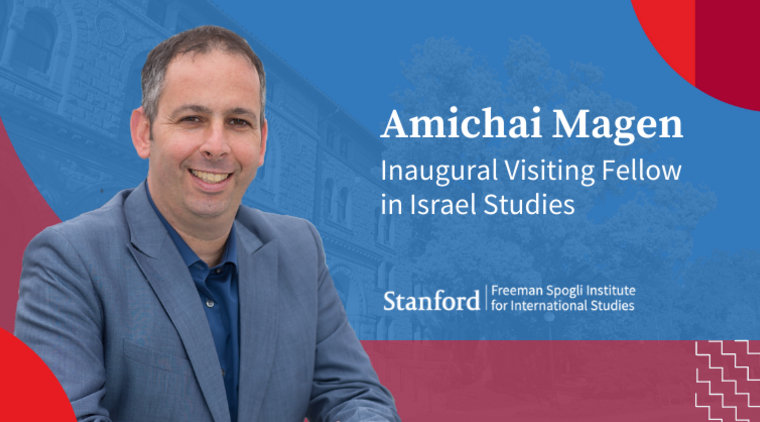
Amichai Magen joins the Freeman Spogli Institute as its inaugural Visiting Fellow in Israel Studies.
News

Meet Amichai Magen, Stanford’s Visiting Fellow in Israel Studies

In spring quarter, Magen, a scholar of law, government, and international relations, will teach “Israel: Society, Politics and Policy.”
Meet Amichai Magen, Stanford’s Visiting Fellow in Israel Studies
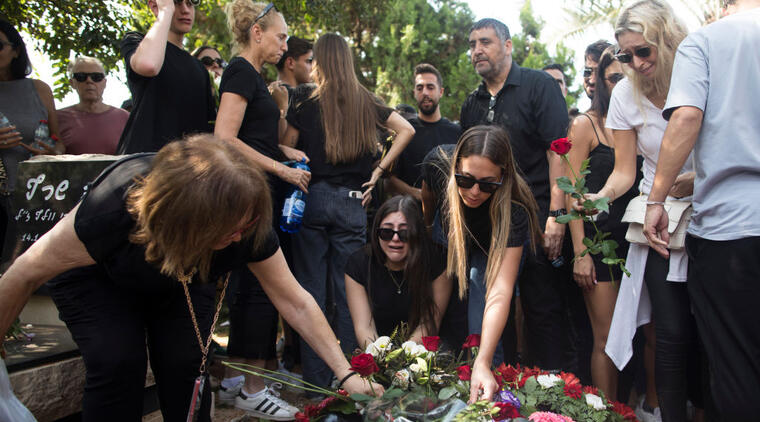
Family and friends of May Naim, 24, who was murdered by Palestinians militants at the "Supernova" festival, near the Israeli border with Gaza strip, react during her funeral on October 11, 2023 in Gan Haim, Israel. (Getty Images)
News

FSI Scholars Analyze Implications of Hamas’ Terror Attack on Israel

Larry Diamond moderated a discussion between Ori Rabinowitz, Amichai Magen and Abbas Milani on the effects of Hamas’ attacks on Israel and what the emerging conflict means for Israel and Middle Eastern geopolitics.
FSI Scholars Analyze Implications of Hamas’ Terror Attack on Israel
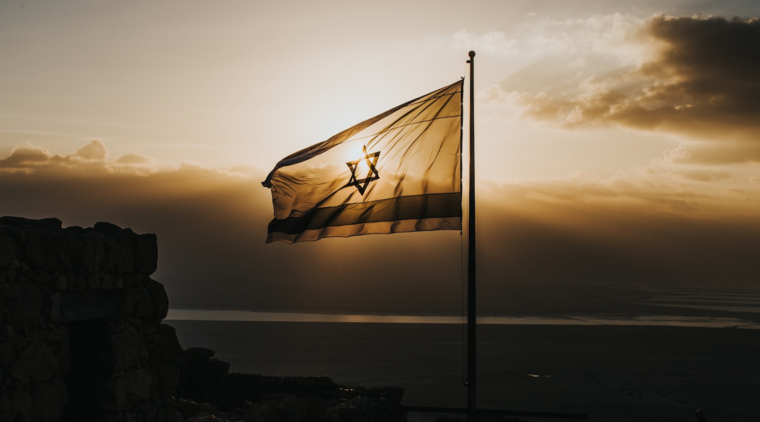
The flag of Israel flies against a sunlit sky
Commentary

Rise, Recover, Reimagine: A Jewish Response to the Terror of Oct. 7

For me, a Jewish response to Oct. 7 can be captured in three words: rise, recover, reimagine.
Rise, Recover, Reimagine: A Jewish Response to the Terror of Oct. 7
Hero Image
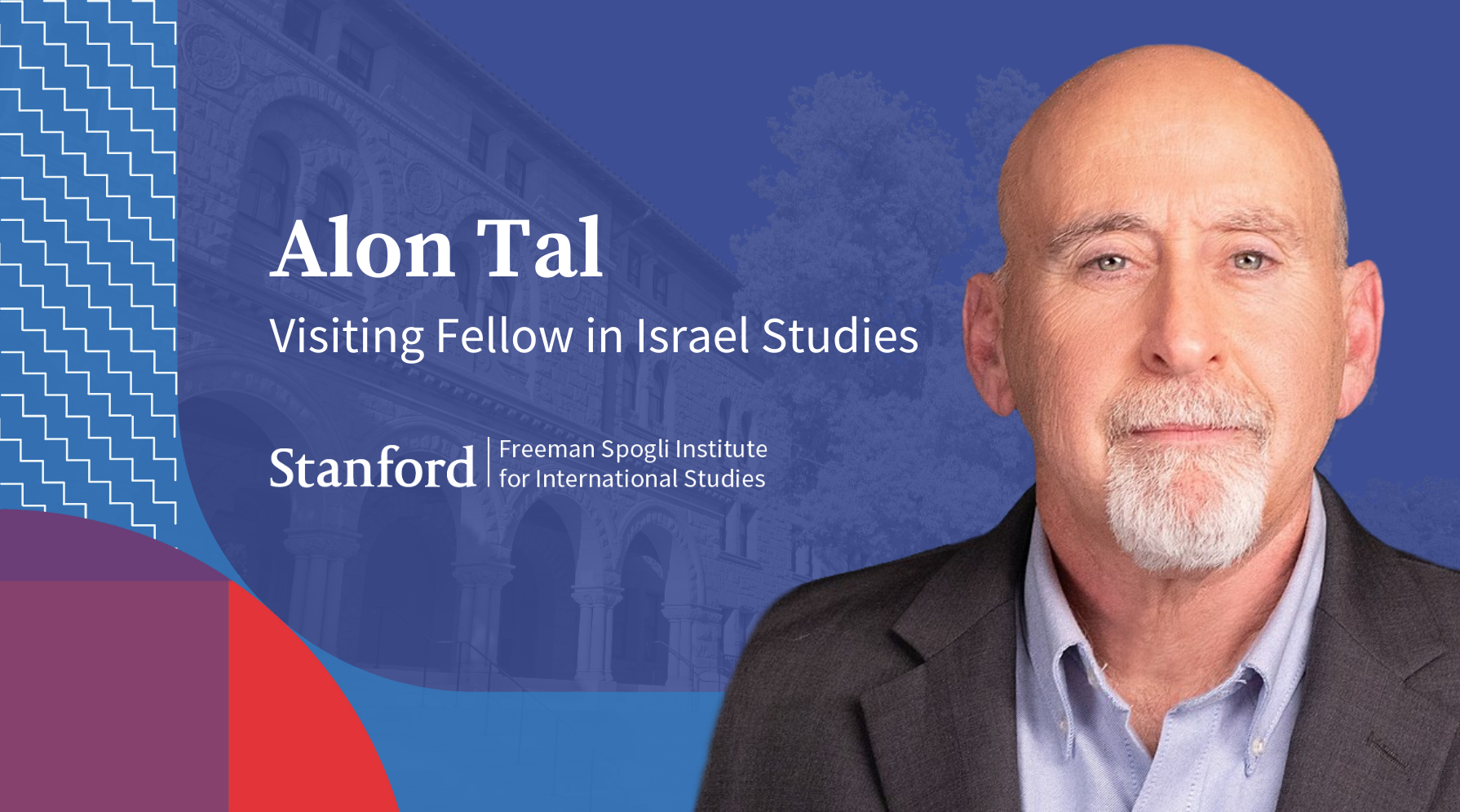
Alon Tal joins the Freeman Spogli Institute for International Studeis as a Visiting Fellow in Israel Studies
Dr. Alon Tal researches public policy and sustainability, primarily considering the effect of rapidly growing populations on natural resources and the environment.
All News button
1
Subtitle

Professor Tal’s expertise in sustainability and public policy will offer students valuable insight into the intersection of climate change issues and politics in the Middle East.

Date Label
Authors
News Type
Commentary
Date
Paragraphs

If you had five minutes to speak with the president of the United States, what would you say? That’s the question Michael McFaul, director of the Freeman Spogli Institute for International Studies, posed to FSI scholars at a Stanford 2023 Reunion Homecoming event.

The discussion, “Global Threats Today: What's At Stake and What We Can Do About It,” centered around five major challenges currently facing the world: political dissatisfaction and disillusionment at home, tensions between China and Taiwan, the consequences of climate change, the ongoing war between Russia and Ukraine, and the conflict between Hamas and Israel.

Speaking to each of these areas of concern and how they overlap, FSI scholars Didi Kuo, Larry Diamond, Marshall Burke, Michael McFaul, and Amichai Magen offered their perspectives on what can be done. You can listen to their full conversation on the World Class podcast and browse highlights from their policy ideas below.

Follow the link for a full transcript of "Global Threats: What's at Stake and What We Can Do About It."


Reform the Electoral College |  Didi Kuo


One of the major problems people feel right now in American politics is that their voices aren’t heard. We live in what my colleague Francis Fukuyama calls a "vetocracy," meaning there are a lot of veto points in our system.

In a lot of other democratic institutional configurations, you have rule by the majority. But in the United States, we have an institutional configuration that allows a very small group — for example, 15 people in the House of Representatives — to hold up government in various ways. We see this in dramatic examples on the national level, but it also trickles down to the local level where you see it in issues like permitting hold-ups.

Reforming the Electoral College would be a very direct way of changing that vetocracy. The United States is one of the only advanced democracies that has this indirect system of elections. If all the votes counted equally and all the presidential candidates had to treat all of us the same and respond to us equally in all 50 states, it would do a lot to show the power of the popular vote and realign us more closely to the principle of majoritarianism that we should seek in our institutions.

Didi Kuo

Didi Kuo

Center Fellow at the Freeman Spogli Institute
Full Profile


Allow Taiwan to License Weapons Production |  Larry Diamond


My recommendation is deterrence, deterrence, deterrence. It is not inevitable that the People's Republic of China is going to launch an all-out military assault on Taiwan. But if the United States does not do more to make that a costly decision, the likelihood it will happen are exponentially higher.

Deterrence works. The United States deterred the Soviet Union from moving against West Berlin and much of Europe for decades. But it only works if you have a superior force.

To that end, the United States needs to pre-position more military force in the region. There's now a $12 billion backlog of weapons that Taiwan has ordered and paid for but hasn't received yet. That’s because the American defense production system is completely broken. This is the same reason why we can’t get weapons to Ukraine at the pace we need there.

This issue could be fixed, at least in part, if we licensed the production of some of these weapon systems directly to Taiwan. Their ability to build plants and produce these systems is much more agile than our own, and so licensing the rights to production would dramatically increase the deterrence factor against China, in addition to deepening our cooperation with allies throughout the region.

Professor Larry Diamond

Larry Diamond

Mosbacher Senior Fellow in Global Democracy at FSI
Full Profile


Pursue Climate Mitigation AND Adaptation |  Marshall Burke


There are three things we can do in response to climate change: we can mitigate, we can adapt, or we can suffer. We’re off to a good start, but we have decades of long slog ahead of us to get that right. And it's not just us; even if we do a good job, we depend on other countries to also do a good job. The Biden administration has already been engaged on some of that front, but there’s more work to do there.

And even with our best efforts, we are not going to be able to move as fast as we want or mitigate our greenhouse gas emissions as quickly as we need to avoid climate change. So, we're going to have to live with some climate change, which means adaptation. And if we can't adapt, then we're going to suffer. 

The key point is that we are very poorly adapted to today's climate, much less the climate we're going to have 30 or 50 years from now. The West Coast and California are prime examples of this. There have been monumental wildfire seasons there the last few years, and there are significant negative health impacts from smoke exposure. I see it in my own home, even as someone who studies this and should know better and do more to reduce those risks.

The point is, we're really poorly adapted to the current climate, and things are going to get a lot worse. We need to focus on mitigation; it’s still really important and we need to get it done. But at the same time, we need to figure out how to adapt and live with the changing climate that we're going to experience.

Marshall Burke

Marshall Burke

Deputy Director of the Center on Food Security and the Environment
Full Profile


Weapons for Ukraine, Sanctions on Russia |  Michael McFaul


When I was in Kyiv this September, I had a chance to meet with President Zelenskyy, and he pointed out an absolutely crazy reality. Companies in the United States and Europe are still making tens of thousands of dollars in profits from selling various technologies that ultimately end up in Russia. It’s getting in through places like Hong Kong and Kazakhstan and Belarus and Georgia, and it allows Russia to keep waging its horrific war.

At the same time, the United States is spending millions of dollars to arm Ukraine with systems to shoot down the Russian rockets that were built using the components they got from the West. That’s completely illogical, bad policy. I know it’s hard to control technology, but we have to find a better way than what we’re doing right now. If you're an American taxpayer, that is your money being wasted.

That means more and better weapons for Ukraine, faster. And that means more and better sanctions on Russia, faster. That is the way to speed the end of this war.

Michael McFaul

Michael McFaul

Director of the Freeman Spogli Institute
Full Profile


Be Confident in America |  Amichai Magen


Just a few short years ago, we were all talking about the decline of the United States. I think that is far from inevitable. People speak about the 20th century as the “American Century.” The 21st century can also be the American Century. It's in our hands.

Be bullish on America. Be confident in America. Rediscover the spirit of America for adaptation and innovation and entrepreneurship. We need to wake up from the break we’ve taken from history in the post-Cold War era and rally once again in our spirit, our research, and our intellect.

We need to find new solution structures to the great challenges of our era: environmental challenges, AI, biotechnological challenges, nuclear challenges. And we can do it. China is on the verge of demographic decline and economic decline. Russia is a very dangerous international actor, but it is not a global superpower. We must reinvent the institutions and the alliances that we need for the 21st century in order to make sure that we continue a journey towards greater peace and prosperity for all of mankind.

Amichai Magen

Amichai Magen

Visiting Fellow in Israel Studies at the Freeman Spogli Institute
Full Profile


The entire discussion, including the audience Q&A, is available to watch on FSI's YouTube channel. To stay up to date on our content, be sure to like, subscribe, and turn on notifications.

Read More

Family and friends of May Naim, 24, who was murdered by Palestinians militants at the "Supernova" festival, near the Israeli border with Gaza strip, react during her funeral on October 11, 2023 in Gan Haim, Israel. (Getty Images)
News

FSI Scholars Analyze Implications of Hamas’ Terror Attack on Israel

Larry Diamond moderated a discussion between Ori Rabinowitz, Amichai Magen and Abbas Milani on the effects of Hamas’ attacks on Israel and what the emerging conflict means for Israel and Middle Eastern geopolitics.
FSI Scholars Analyze Implications of Hamas’ Terror Attack on Israel
Michael McFaul poses with a Stanford University flag in front of a group of Ukrainian alumni during a reunion dinner in Kyiv.
Blogs

On the Ground in Ukraine: A Report from Michael McFaul and Francis Fukuyama

A trip to Kyiv gave FSI Director Michael McFaul and Olivier Nomellini Senior Fellow Francis Fukuyama the opportunity to meet with policymakers, military experts, and Ukrainian alumni of FSI's programs and fellowships.
On the Ground in Ukraine: A Report from Michael McFaul and Francis Fukuyama
Democracy Day 2023 light up marquee letters
News

Democracy Day sweeps Stanford

Thousands turned out for the student-run, campuswide event, which has grown significantly since launching in 2021.
Democracy Day sweeps Stanford
Hero Image
Amichai Magen, Marshall Burke, Didi Kuo, Larry Diamond, and Michael McFaul onstage for a panel discussion at Stanford's 2023 Reunion and Homecoming
Melissa Morgan
All News button
1
Subtitle

FSI scholars offer their thoughts on what can be done to address political polarization in the United States, tensions between Taiwan and China, climate change, the war in Ukraine, and the Israel-Hamas war.

Date Label
Authors
Amichai Magen
News Type
Commentary
Date
Paragraphs

We have been living a nightmare since Oct. 7. In Israel and across the world, Jews and their true friends are suffering terribly. We are engulfed in a toxic cloud of horror, trauma, grief, incredulity, anger, fear, shame and, yes, a sense of abandonment.

Many, if not most, of us know someone whose loved ones were murdered, maimed or kidnapped. The survivors — our families, friends and students — are numb with pain and anxiety.

How could this have happened in Israel, a country that was created to ensure that something like this could never happen? How do I keep my family and my community safe from Hamas’ calls for global jihad? How do we, as Jews, wake up from this nightmare and begin the long process of healing?

For me, a Jewish response to Oct. 7 can be captured in three words: rise, recover, reimagine.

READ THE FULL ARTICLE IN THE J. WEEKLY

Hero Image
The flag of Israel flies against a sunlit sky Cole Keister, Unsplash
All News button
1
Subtitle

For me, a Jewish response to Oct. 7 can be captured in three words: rise, recover, reimagine.

Date Label
Authors
News Type
News
Date
Paragraphs

Scholars hosted by the Visiting Fellows in Israel Studies program at the Freeman Spogli Institute for International Studies (FSI) on October 27 discussed the lessons of the 1973 Yom Kippur War and its relevance for understanding the current Israel-Hamas war.

The seminar, “1973 Yom Kippur War: Lessons to Remember,” was moderated by Larry Diamond, the Mosbacher Senior Fellow in Global Democracy at FSI who is also leading the Visiting Fellows in Israel Studies program at FSI. 

In his opening remarks, Diamond said, “Our hearts go out to the people of Israel and this struggle they have now in the wake of one of the most horrific terrorist attacks in anyone’s living memory, maybe the most horrific. And to all of the people in Israel and Gaza, who are innocent people who’ve lost their lives.”

Speakers included Or Rabinowitz of the International Relations Department of the Hebrew University of Jerusalem and a visiting associate professor at FSI’s Center for International Security and Cooperation (CISAC); Gil-li Vardi, a former visiting scholar at CISAC and Stanford history lecturer; Professor Emeritus Meron Medzini of the Hebrew University of Jerusalem and former Israeli Prime Minister Golda Meir’s spokesperson during 1973–1974; and Ron Hassner, the Chancellor’s Professor of Political Science and Helen Diller Family Chair in Israel Studies at UC Berkeley. 

Israel’s Nuclear Question

On October 6, 1973, an Arab alliance of Egyptian and Syrian forces launched a surprise attack on Israel on Yom Kippur – the Jewish holy day of atonement. The three-week conflict was one of the deadliest Arab-Israeli wars. It ended with an Israeli victory, shaping inter-state relations in the region for years to come.

Rabinowitz addressed the nuclear dimension of the Yom Kippur War, quoting Richard Nixon, who said in 1972, “The Israelis have nuclear weapons. I’m not going to tell you how I know, but I know that.”

She said a “partial picture” exists of Israel’s nuclear capabilities during the 1973 conflict, and more research needs to be done. Back then, Israel and the U.S. had reached an understanding about Israel’s “ambiguous nuclear posture,” as well as an agreement that any U.S.-made fighter jets would not be used to deploy nuclear weapons. Regarding nuclear-equipped missiles, “we have to take it into account that this was probably a political signaling which wasn’t backed by an actual ability to put in a nuclear warhead on the ballistic missile, but we just don’t know,” Rabinowitz said.

She added, “I am convinced that Golda Meir would have shown nuclear restraint, even if a bilateral understanding had not been in effect with the U.S. – because it made sense, there were moral clouds, and the Israeli objective was to align itself with the U.S. and guarantee further collaboration, and that would have just backfired.”

An Evolving Military Strategy

Vardi said the Yom Kippur War generated a huge incentive for the U.S. military and others to later develop the “AirLand Battle Doctrine,” which emphasizes close coordination between land forces acting as an aggressively maneuvering defense, and air forces attacking rear-echelon forces feeding those front-line enemy forces. 

“It also taught the military leadership in Israel that their instincts are the right ones, that they should always be on the offensive. If war is coming, then they should always be very active about it – active to the point of aggression,” she said.

As for Egypt, Vardi said, they weren’t planning an all-out war against Israel if they didn’t receive help from the Soviet Union or elsewhere, and their tactical goals were therefore limited.

She also noted Israel’s battle doctrine, which rests on three pillars – deterrence, intelligence, and military decision-making, as well as a defensive strategy to be executed offensively, by transferring the battle to enemy territory.

This doctrine failed on October 7 when Hamas attacked Israel, killing more than 1,400 people in Israeli territory. “Israeli security perceptions will need to change,” Vardi said.

If Hamas is removed from Gaza, something else needs to go and fill that gap.
Larry Diamond
Mosbacher Senior Fellow in Global Democracy at FSI

Confronting Hamas

On October 7, Medzini said, Israel was dealt its worst blow since 1948. “Totally unprepared, wrong intelligence, the army in disarray, leadership, very poor response. And, parts of proper Israel were occupied by Palestinians with a huge number of casualties.”

He said, “The entire country was stunned. How could this happen to us?”

The Yom Kippur War was totally different than today’s conflict between Israel and Hamas, Medzini said. In 1973 it was launched by mostly secular governments in Egypt and Syria, whereas Hamas is a religious organization. 

“We thought in terms of Western thinking or Arab thinking. We did not take into account that Hamas is a religious organization. If you read their covenant, if you look at the logo, it’s not only to destroy the Jews of Israel, it’s to destroy the Jews” everywhere, Medzini said. 

Hassner said Israel’s opponents erred during the Yom Kippur War by believing the Israelis would be unable to mobilize quickly. 

“Mobilization turned out to be very easy,” he said, “because everybody was in the same place. Everybody was in the synagogue. And so, unit commanders just went to the nearest synagogues and told all the young men to come out. The roads were empty, which the Egyptians seemed to be unaware of. Mobilization to the front may have happened at twice the speed at which the Israeli military had planned to mobilize, because nobody else was on the road.”

Also, Hassner said, a backlash effect can exist if one is attempting to exploit their opponents’ religious holiday – “you are going to unleash a certain amount of religiously motivated anger.”

Regarding Israel’s security situation today, Rabinowitz said Prime Minister Benjamin Netanyahu’s policies reflect a deep miscalculation of Hamas since the terror group rose to power in 2007 in the Gaza Strip. After Netanyahu took office in 2009, “he went on the record saying that his main mission is to strengthen Hamas” by favoring it over other Palestinian groups.

Medzini said Israel has to conduct a major operation in Gaza to make sure that Hamas loses its military and political capabilities. “You can’t kill an ideology. You can’t kill a religion. But you can certainly destroy a military capability and capacity,” he said. But, Medzini also noted, “Where do we go from here? What’s the end game?”

Diamond spoke of reigniting the peace process and bringing back the two-state solution in a very actual manner. “I’ll note what I think everybody in the room knows that if Hamas is removed from Gaza, something else needs to go and fill that gap.”

Read More

Family and friends of May Naim, 24, who was murdered by Palestinians militants at the "Supernova" festival, near the Israeli border with Gaza strip, react during her funeral on October 11, 2023 in Gan Haim, Israel. (Getty Images)
News

FSI Scholars Analyze Implications of Hamas’ Terror Attack on Israel

Larry Diamond moderated a discussion between Ori Rabinowitz, Amichai Magen and Abbas Milani on the effects of Hamas’ attacks on Israel and what the emerging conflict means for Israel and Middle Eastern geopolitics.
FSI Scholars Analyze Implications of Hamas’ Terror Attack on Israel
Larry Diamond, Or Rabinowitz, Yonatan Eyov, and Amichai Magen in discussion in the Bechtel Conference Center at the Freeman Spogli Institute for International Studies at Stanford University.
News

Visiting Fellows in Israel Studies Program is in Full Swing at FSI

The program aims to foster cross-disciplinary analysis of Israel and its unique position as a regional influence and geopolitical actor.
Visiting Fellows in Israel Studies Program is in Full Swing at FSI
Michael McFaul poses with a Stanford University flag in front of a group of Ukrainian alumni during a reunion dinner in Kyiv.
Blogs

On the Ground in Ukraine: A Report from Michael McFaul and Francis Fukuyama

A trip to Kyiv gave FSI Director Michael McFaul and Olivier Nomellini Senior Fellow Francis Fukuyama the opportunity to meet with policymakers, military experts, and Ukrainian alumni of FSI's programs and fellowships.
On the Ground in Ukraine: A Report from Michael McFaul and Francis Fukuyama
Hero Image
Panelists at the event "1973 Yom Kippur War: Lessons Learned"
All News button
1
Subtitle

Scholars of Israel and the Middle East discussed the strategic takeaways of the 1973 Yom Kippur War and their relevance to the region’s current security crisis.

Date Label
Authors
News Type
News
Date
Paragraphs

Scholars from the Freeman Spogli Institute for International Studies discussed the global and regional implications of Hamas’ terror attack during a webinar on October 13, 2023.

Larry Diamond, the Mosbacher Senior Fellow in Global Democracy at FSI and William L. Clayton Senior Fellow at the Hoover Institution, moderated the conversation. Speakers included Abbas Milani, the Hamid and Christina Moghadam Director of Iranian Studies; Ori Rabinowitz of the International Relations Department of the Hebrew University of Jerusalem and a visiting associate professor at FSI’s Center for International Security and Cooperation; and Amichai Magen, of the Lauder School of Government, Diplomacy, and Strategy, Reichman University in Herzliya, Israel, and the inaugural visiting fellow in Israel Studies at FSI. 

Israel declared war against Hamas after the terrorist group infiltrated the country on October 7, firing thousands of rockets at residential areas, killing civilians, and inflicting the most lethal attack on Israel since its founding in 1948.

Diamond said, “The brutal October 7 attacks on innocent Israeli civilians by the terrorist group Hamas constitute one of the most appalling incidents of terrorism in our lifetimes.” He noted that for a smaller country the size of Israel, when compared to the U.S., their death toll of 1,200 that weekend is equivalent to more than 40,000 Americans – or more than 10 times the U.S. death toll on 9/11.

Impact on Israelis

Rabinowitz said Israelis have been deeply affected by Hamas’ atrocities. “It’s trauma being compounded by failure of the Israeli state and the army institution to respond immediately to all levels of this. It really brought to the surface images of the Holocaust.” 

However, she said, Israeli civil society is strong and resilient, and it’s taking on the role of providing what the government's institutions and leadership should have provided more quickly after the attacks. “Soldiers called up for duty were driven to the front by their parents and by family friends,” for example, she said.

Magen said Hamas’ attacks shattered three fundamental myths for Israelis. One involved the notion that Israel could coexist with Hamas and Palestinian Islamic Jihad. The second illusion that broke was the belief that the government of Israel and the Israeli Defense Forces could effectively protect the civilian population.

“The reason why this is a much bigger trauma than Yom Kippur (in 1973) is because on Yom Kippur there was a very high military death toll, but the civilian population was protected,” Magen said. "However, this time, thousands of Israeli civilians were massacred before the Israeli state could even respond."

The third illusion, Magen said, was the belief that global jihad was non-existent in today’s world. “This is a cautionary tale – sometimes Israel is the canary in the coal mine. What happens in Israel today may tragically happen in the United States or elsewhere.”

Iran and Regional Implications

Milani noted the speculation about whether Iran ordered the attacks, but said that misses the larger picture. “Iran created Hamas in this sense. Iran is the architect of the narrative” that the future of the Middle East must not include Israel.

He said the only solution for lasting peace in the region is a two-state solution (with a Palestinian state) and an Iran with a democratic government. But extremists are in power in all the involved countries and now this outcome is even more difficult, said Milani. “Iran has been adamant in undermining the two-state solution.”

Milani also said the Hamas incursions should end the illusion shared by some in the West that you can make enough concessions to the Iranian regime and it will change its support for terrorism. 

“This regime is not going to abide by laws, it is not going to abide by its commitments. It is murderously suppressing the Iranian people,” he said.

Iran, Milani believes, sees the Hamas attacks as a major turning point in its bid for regional supremacy and the demise of Israel. It wants to undermine the delicate normalization talks between Israel, Saudi Arabia and other Arab countries. With Iranian-backed Hezbollah aiming more than 150,000 rockets at Israel, Iran is maneuvering for possibly a broader conflict and chaos that could see Israel confronting several fronts.

Milani added that his heart goes out to all the victims and the hostages of this ordeal, noting that the 2 million-plus citizens of Gaza are also hostages to this catastrophe. “Human beings should be considered as hostages in this brutal regime (Hamas).” Their lives should be protected as well, and this would be best for the future of the Middle East and for the future of Israel.

Factors Leading to Attacks

Rabinowitz said scholars in the future will need to examine how the more radical factions in the Middle East realigned and created such a situation, she said. 

Magen said Israel was too complacent in regard to their technologically-enhanced security systems, rife with domestic political polarization, and naïve that a deal could be struck with Hamas.

“Israel was clearly perceived to be vulnerable and divided internally, and the enemy pounced. We in Israel tend to think that we watch very carefully what is happening in the neighborhood, but the neighborhood also watches us,” he said.

With Iran nearing the nuclear threshold for a weapon of mass destruction, the West needs to be incredibly aware of this possibility, Magen said. 

Campus Conversations

Diamond and the scholars emphasized the need for civil dialogue and safe spaces for conversations on college campuses about the Israeli-Palestinian conflict. Rabinowitz said the Stanford community is well-positioned to achieve this. 

She said, “We’re not in Israel and Gaza, and we can use this opportunity to foster more dialogue between the different groups, between different students, and I think that is part of our jobs.”

Magen said, “We must create constructive spaces for empathic and sympathetic analysis, conversation, and engagement. We need to talk about difficult issues – we live in a difficult world.” 

The Freeman Spogli Institute for International Studies produced the webinar, “The Hamas Terrorist Attack on Israel and its Implications for the Middle East,” in cooperation with the Visiting Fellows in Israel Studies program, where Professors Magen and Rabinowitz are visiting scholars. The program was launched in September 2021 with the aim of deepening FSI’s academic expertise in geopolitics and democracy studies as it relates to Israel.

Read More

A mourner kneels at the funeral of May Naim in Israel following the massacre at music festival
Commentary

This Was Never Supposed to Happen

October 7th was a catastrophe for Israel’s people—and its government.
This Was Never Supposed to Happen
Larry Diamond, Or Rabinowitz, Yonatan Eyov, and Amichai Magen in discussion in the Bechtel Conference Center at the Freeman Spogli Institute for International Studies at Stanford University.
News

Visiting Fellows in Israel Studies Program is in Full Swing at FSI

The program aims to foster cross-disciplinary analysis of Israel and its unique position as a regional influence and geopolitical actor.
Visiting Fellows in Israel Studies Program is in Full Swing at FSI
Hero Image
Family and friends of May Naim, 24, who was murdered by Palestinians militants at the "Supernova" festival, near the Israeli border with Gaza strip, react during her funeral on October 11, 2023 in Gan Haim, Israel. (Getty Images)
Family and friends of May Naim, 24, who was murdered by Palestinian militants at the "Supernova" festival, near the Israeli border with Gaza strip, react during her funeral on October 11, 2023 in Gan Haim, Israel. (Getty Images)
All News button
1
Subtitle

Larry Diamond moderated a discussion between Ori Rabinowitz, Amichai Magen and Abbas Milani on the effects of Hamas’ attacks on Israel and what the emerging conflict means for Israel and Middle Eastern geopolitics.

Date Label
Authors
Amichai Magen
News Type
Commentary
Date
Paragraphs

At approximately 6:30am on October 7th—on the holy sabbath of Shemini Atzeret, the eighth and final day of the Jewish holiday of Sukkot—air raid sirens went off all across Israel. Before the day was done, more than 3,000 rockets, missiles, and mortar shells were fired by Hamas, as well as Palestinian Islamic Jihad (PIJ), from Gaza into Israel. As with all recent attacks, the barrages were fired from within densely populated Palestinian civilian areas into densely populated civilian areas inside Israel, constituting a double war crime.

But this time things were different. This time the salvos of rocket fire—as intensive, indiscriminate, and far-ranging as they undoubtedly were—were not the attack itself. They were primarily a diversion meant to obfuscate, and provide cover for, a Hamas invasion, slaughter, and kidnapping operation.

Read the full article in "Persuasion."

Hero Image
A mourner kneels at the funeral of May Naim in Israel following the massacre at music festival Getty
All News button
1
Subtitle

October 7th was a catastrophe for Israel’s people—and its government.

Date Label
Authors
News Type
Commentary
Date
Paragraphs

Since the beginning of 2023, many citizens in Israel have taken part in a weekly ritual: street protests.

Most of the demonstrations are aimed at proposals from Prime Minister Benjamin Netanyahu’s administration to reform aspects of Israel’s judicial system, including reducing certain powers held by the Supreme Court to check the power of Israel’s legislative body, the Knesset.

After months of sustained opposition, it appeared that the most controversial proposals would be dropped. In March, Prime Minister Netanyahu announced a pause on the judicial overhaul plan, citing intentions to seek a compromise with dissenting members of the legislature. But in late July, a vote in the Knesset successfully passed a bill which removes the Supreme Court’s ability to invoke the “reasonableness clause,” or a legal tool by which the court can reject decisions or appointments made by the government if they fail to meet a standard of reasonable precedent and function.

This move has set off alarm bells both inside and outside of Israel. The only well-established, functioning democracy in the Middle East, many fear that the country may be heading toward a constitutional crisis.

To offer context on the current situation and its implication both for Israel and the broader geopolitical community, Amichai Magen, the inaugural Visiting Fellow in the Israel Visiting Fellows Program at the Freeman Spogli Institute for International Studies, joined Michael McFaul on the World Class podcast

In their conversation, Magen explains some of the cultural and political reasons that led Israel to this point, and offers his analysis of how Israel might move forward.

Listen to the full episode above, or browse highlights from their conversation below. Click here for a transcript of "Understanding Israel's Democracy."


The Paradox of Israeli Democracy


At the heart of the current crisis, says Magen, are unresolved tensions in Israel’s identity as a democratic nation. It has been a democracy since its recognition as an independent state in 1948, and in its 75 years as a nation, pulled off nothing less than a miracle of growth, development, and economic success. In 2022, it was the fastest growing country of the Organization for Economic Co-operation and Development (OECD) nations and entered the top 20 ranking of countries with the highest GDP per capita. Outside of strictly economic statistics, it was also listed as the fourth happiest country on earth, falling in line behind Finland, Denmark and Iceland.

“This is a country that came from very inauspicious circumstances and has not only survived, but thrived as an open and pluralistic society,” Magen told McFaul. “If you and I looked at Israel this time last year, we would be in awe of this country.”

However, there have always been vulnerabilities brewing under the surface of this great success.

Israel has done pretty well by fudging those issues and focusing on mundane bread-and-butter political issues. But we find ourselves confronting a coalition government that today wants to take Israel down a different path.
Amichai Magen
Visiting Scholar

Israel notably lacks a formal, written constitution, and has long relied on what Magen references as “norms and mores” in order to keep the work of government in line with accepted precedent. He explains further:

“Israel has decided not to decide on some of the critical questions that are normally settled in constitutional conventions. We don't have formal rules on separation of church and state. We decided not to decide on whether the ultra-orthodox in Israel should serve in the army or not serve in the army. We decided not to decide what should be the relationship between the Jewish majority and the Arab Israeli minority that makes up 20% of the Israeli population.

“And Israel has done pretty well by fudging those issues, by not bringing them to the fore, and by essentially trying to focus on mundane bread-and-butter political issues. But we find ourselves confronting a coalition government that today wants to take Israel down a different path.” 
 

Learning from the Current Crisis


In the short-term, Magen does not see a short-term fix for the current situation as long as the Netanyahu government remains entrenched. Speaking about the situation in a recent BBC interview, he expressed his fears that the situation “has reached a point where Netanyahu's personal political fortunes are being put ahead of everything else in Israel."

But there are signs of what may lay ahead. Current polling in Israel shows that if national elections were held now, the Netanyahu administration would lose. And the ongoing protests , now nearly eight months long, show the commitment of the demonstrators.

Magen hopes that this current crisis will be a springboard for Israel to finally address some of the issues it has “decided not to decide.” While a singular, decisive constitutional convention would be satisfying, Magen imagines these changes will most likely come as a series of decisions over time.

“At the very least, we need to set in place the procedural rules of the game to make sure that we have stronger guardrails around how we’re going to conduct our national politics,” he explained.

Continuing, he said, “It might happen in one grand bargain, but I think more realistically, we will see a series of incremental changes of finer grained reforms that will try to put in place those guardrails. I think there's going to be quite a lot of pressure for Israelis to move in that direction, and that is the space to watch over the coming months and years.”
 

International Implications


Magen says another important lesson Israel’s current situation has to offer is a comparative lens for other democracies around the world suffering from similar polarization.

“This is not unique to Israel. We've seen something similar happening in places like Holland, Sweden, and Germany. There's something in the air that is driving mistrust and polarization and a collapse in public trust in elected authorities all around the world. And that is something we need to do a better job at understanding,” Magen emphasizes.

Just as authoritarians and populists have their international networks and circles, we really need to strengthen the circles and the networks of support for democracy all around the world.
Amichai Magen
Visiting Scholar in Israel Studies

The implications of Israel’s importance as a democratic cornerstone in the Middle East also shouldn’t be underestimated, says Magen.

“We've managed to make tremendous progress in Middle Eastern peace based on the understanding that Israel's neighbors have that Israel is a powerful, cohesive, and coherent international actor. If that is undermined, then we could find ourselves in a much more precarious regional and international environment with very serious consequences for energy markets and for stability in the Middle East and Europe and beyond,” he warns.

Magen explains that it is critical in this moment for the people of Israel to know that their efforts to protect and preserve democracy in their country is recognized by fellow democrats around the world.

“This is a time when the people of Israel — not only the Israeli government — really need to hear from their friends around the world, including, and I would say first and foremost, in the United States,” says Magen.

It’s a principle that’s applicable not only to the current situation in Israel, but to the global democratic community as a whole, he explains. 

“Just as authoritarians and populists have their international networks and circles, we really need to strengthen the circles and the networks of support for democracy all around the world, including for Israeli democracy,” Magen urges. “And we'd better do it earlier rather than later.”

Read More

Larry Diamond, Or Rabinowitz, Yonatan Eyov, and Amichai Magen in discussion in the Bechtel Conference Center at the Freeman Spogli Institute for International Studies at Stanford University.
News

Visiting Fellows in Israel Studies Program is in Full Swing at FSI

The program aims to foster cross-disciplinary analysis of Israel and its unique position as a regional influence and geopolitical actor.
Visiting Fellows in Israel Studies Program is in Full Swing at FSI
Hero Image
Protestors wave flags as thousands of Israelis attend a rally against Israeli Government's judicial overhaul plan on March 27, 2023 in Jerusalem, Israel.
Protestors wave flags as thousands of Israeli citizens attend a rally against the government's judicial overhaul plan in Jerusalem, Israel.
Getty
All News button
1
Subtitle

Law and governance expert Amichai Magen joins FSI Director Michael McFaul on the World Class podcast to discuss the judicial reforms recently passed by Israel’s legislature, and the implications these have for democracy in Israel and beyond.

Date Label
Authors
News Type
News
Date
Paragraphs

One of the newest initiatives at the Freeman Spogli Institute for International Studies (FSI) is the Visiting Fellows in Israel Studies program, which aims to deepen FSI’s academic expertise in geopolitics and democracy studies as it relates to Israel.

The program was launched in September 2021 with the generous support of Stanford alumni and donors and under the leadership  of Larry Diamond, FSI’s Mosbacher Senior Fellow in Global Democracy. 

In the Fall quarter, the program welcomed Professor Or Rabinowitz, a senior lecturer in International Relations at Hebrew University in Jerusalem, as a visiting scholar at the Center for International Security and Cooperation (CISAC). Prof. Rabinowitz is a nuclear historian who has worked on issues relating to nuclear proliferation, intelligence studies, and Israel-US relations.

In Spring quarter, the program’s Inaugural Fellow, Professor Amichai Magen arrived at Stanford. Prof. Magen is a former predoctoral fellow and affiliated scholar at FSI’s Center on Democracy, Development and the Rule of Law and current Director of the Program on Democratic Resilience and Development at the Lauder School of Government, Diplomacy and Strategy at Reichman University in Israel.

Few countries in the world have captured the American imagination, or receive international attention, as much as Israel. At the same time, few countries are as poorly understood
Amichai Magen
Visiting Fellow in Israel Studies

The inception of the Visiting Fellows in Israel Studies program comes at a particularly relevant time in Israel’s development as a nation. Over the course of its 75 years as an independent country, Israel has undergone a remarkable transformation into a state boasting a highly developed, globally integrated economy with an estimated GDP of US $488.53 billion in 2021, and a ranking as the fourth happiest country in the world in 2023 by the metrics of the World Happiness Report (WHR).

But many challenges still remain. The recent proposals by Prime Minister Benjamin Netanyahu’s government to overhaul the judicial system to allow a simple parliamentary majority to overrule decisions by Israel’s Supreme Court, limit its jurisdiction, and give the government additional power in appointing judges has raised fears of democratic backsliding and a constitutional crisis for the country and the potential for instability in the region.

While the proposals were formally withdrawn by Netanyahu on March 27 after hundreds of thousands of Israeli citizens — by some estimates up to half of million — took to the streets in protest, the attempted rewrite of the law has left many both inside and outside the country concerned about Israel’s future.

Speaking at the first official event of the Visiting Fellows in Israel Studies, Prof. Or Rabinowitz addressed the gravity of current events.

“We’re in a historical moment in Israel,” she said. “I think it’s as dramatic as 1948 and 1967. I do think that the coming months will dictate the direction in which Israeli democracy will go for years to come.”

The event, “Reflections on Israel at 75,” which marked Israel’s Independence Day on April 26, was a chance to reflect on the country’s successes and challenges through both academic lenses and personal stories.

Alongside Professors Magen, Rabinowitz, and moderator Larry Diamond, Yonatan Eyov, the current Jewish Agency Israel Fellow at Stanford University, offered some of his personal insights on the state of Israel’s society and current governance. As an openly gay Ethiopian Jew, Eyov acknowledged that while he deeply loves Israel and the opportunities it has given him, recent events have left him uneasy and hesitant at times to share his experiences with fellow Israelis.

“I think it’s necessary for us as people who live in Israel to understand that this is our country, and we need to do everything we can to protect it from these non-democratic influences,” he told the panel. “We have to be the ones to set the tone for those who would try to come and change things.”

Eyov’s experiences highlight the diversity of modern Israel, and the multidimensional nature of Israeli society, a topic which was also highlighted by the screening the Visiting Fellows program hosted on May 10 of Cinema Sabaya, a film by Orit Fouks Rotem.

The premise of the film was inspired by Rotem’s lived experiences in a multicultural, multi-ethnic Israel, and the growing pains — and joys — that come from the work of building community. 

Speaking at the screening via videolink, Matan Zamir, Deputy Consul General of Israel to the Pacific North West, reminded the audience that, “it is often in the arts, that we see a true spirit of a nation and its people represented.”

I do think that the coming months will dictate the direction in which Israeli democracy will go for years to come.
Or Rabinowitz
Visiting Scholar at CISAC

Speaking in an interview with FSI, Amichai Magen echoed the need for thoughtful, cross-cultural, cross-disciplinary analysis of Israel and its role as a regional influence and geopolitical partner.

“Few countries in the world have captured the American imagination, or receive international attention, as much as Israel. At the same time, few countries are as poorly understood. Whether for reasons of geographical or cultural distance, Israel's rapid transformation into a high-tech superpower over the past three decades, or competing political and media agendas, this intriguing and surprisingly influential country is rarely explored for what it is - a human society, polity, constitutional system, and policy actor that is best understood in historical and comparative context.”

As part of the Freeman Spogli Institute’s interdisciplinary, highly collaborative community of scholars, the Visiting Fellows in Israel Studies program will have the chance to develop and anchor dialogue about Israel within the broader ecosystem of FSI’s data-driven, research-based policy work and teaching.

For additional information about the Visiting Fellows in Israel Studies and how to be involved, please contact program manager Aleeza Schoenberg.

Read More

Amichai Magen joins the Freeman Spogli Institute as its inaugural Visiting Fellow in Israel Studies.
News

Meet Amichai Magen, Stanford’s Visiting Fellow in Israel Studies

In spring quarter, Magen, a scholar of law, government, and international relations, will teach “Israel: Society, Politics and Policy.”
Meet Amichai Magen, Stanford’s Visiting Fellow in Israel Studies
Presidential Candidate Kemal Kilicdaroglu Holds Campaign Rally In Tekirdag
Q&As

Challenges and Opportunities in Turkey's 2023 Presidential and Parliamentary Elections

In this Q&A, Ayça Alemdaroğlu, Associate Director of the Program on Turkey at the Center on Democracy, Development and the Rule of Law, discusses the key issues and their implications for the country's future.
Challenges and Opportunities in Turkey's 2023 Presidential and Parliamentary Elections
Hero Image
Larry Diamond, Or Rabinowitz, Yonatan Eyov, and Amichai Magen in discussion in the Bechtel Conference Center at the Freeman Spogli Institute for International Studies at Stanford University.
Larry Diamond, Or Rabinowitz, Yonatan Eyov, and Amichai Magen commemorated the 75th anniversary of Israel's independence with a discussion of the country's achievements and current challenges to its democratic nature.
Kate Tyminska
All News button
1
Subtitle

The program aims to foster cross-disciplinary analysis of Israel and its unique position as a regional influence and geopolitical actor.

Date Label
Authors
News Type
News
Date
Paragraphs

Spring quarter at Stanford will bring a familiar face back to campus, though in a new role and in a new program. Amichai Magen, an alumnus of Stanford Law School (’08), and formerly a pre-doctoral fellow and scholar at the Center on Democracy, Development, and the Rule of Law (CDDRL), will return as the inaugural visiting fellow in Israel Studies and visiting associate professor. 

Based at the Freeman Spogli Institute for International Studies (FSI), the Visiting Fellow in Israel Studies program was established with the generous support of Stanford alumni and donors. 

As a visiting fellow, Dr. Magen will teach the spring quarter course “Israel: Society, Politics and Policy,” and will help guide FSI programming related to Israel, as well as advise and engage Stanford students and faculty. His appointment, which follows the arrival to the program of Or Rabinowitz in fall 2022 as a visiting associate professor, will be based at CDDRL.

In the below Q&A with FSI, Dr. Magen explains what he’s missed most about Stanford, the goals of his spring quarter course, his work back in Israel, and his takeaways on Israel’s development as a democracy as it approaches its 75th year of independence.

In 2004-2008 you were a CDDRL predoctoral fellow and CDDRL affiliated scholar in 2008-2009. What have you missed about being on “the Farm,” and what excites you most about being back? 


My years as a predoctoral fellow and affiliated scholar at CDDRL were among the most formative and productive of my adult life. CDDRL was then, and remains, a model academic community for me; one that has continuously guided me as a scholar, teacher, and academic manager. Indeed, CDDRL shaped me in at least three profound ways: as a scholar, teacher, and institution-builder. 

As a young scholar, I was incredibly fortunate to join a vibrant, multidisciplinary hub of cutting-edge research and open intellectual debate. I remember CDDRL as a place buzzing with creative energy, ideas, and engagement in the key challenges of the time (such as understanding the color revolutions of 2003-2004; the challenges of political violence and governance failures in the Middle East; and how the European Union and United States approached democracy and rule of law promotion). Even though I was a “minion among giants” I was embraced as a valuable intellectual partner who was to be entrusted with real responsibility and empowered through active work as part of the CDDRL community. In that context, I was encouraged to innovate, to cut my teeth on exciting new projects, and to grow as a scholar. In terms of teaching, I was mentored by the best (wisest, toughest, fairest) mentors I could have hoped for, and was given my first opportunities to teach. 

Lastly, in 2004-2009 CDDRL was still very young, which meant that I got to observe, and even play a modest role in, its nascent institutional development. It is very rare that a young scholar gets to experience from the inside how a new world-class institution like CDDRL is built in real time. I still remember CDDRL's 5th anniversary retreat; where we took stock of the foundational years of the Center and debated where it should go next and how to best achieve the center's mission. Naturally, I have really missed Stanford's unique spirit and intellectual DNA. Over the past two decades, I believe that I have taken part of that Stanford spirit with me wherever I went – in my research and writing, teaching, and civic activism – but clearly that spirit is strongest at the source. Returning to "the Farm" is a real homecoming experience for me. This time I'll also be able to share it with my family, which is priceless.

You’ll be teaching a new course, “Israel: Society, Politics and Policy.” Why did you choose to teach this course, and what do you hope students will gain from it? 


Few countries in the world have captured the American imagination, or receive international attention, as much as Israel. At the same time, few countries are as poorly understood. Whether for reasons of geographical or cultural distance, Israel's rapid transformation into a high-tech superpower over the past three decades, or competing political and media agendas, this intriguing and surprisingly influential country is rarely explored for what it is - a human society, polity, constitutional system, and policy actor that is best understood in historical and comparative context. The purpose of the course is to do just that; to go "beyond the headlines" and seek to understand Israel as a society, political order, and international actor. Students who take the course should expect to gain a grounded, up-to-date understanding of modern Israel, but also to deepen their knowledge of the Middle East, aspects of U.S. foreign policy, and acquire tools to better understand the broader international system.

In Israel you are director of the Program on Democratic Resilience and Development at the Lauder School of Government, Diplomacy and Strategy at Reichman University. Can you tell us about your work there, and your research interests? 


The Program on Democratic Resilience and Development (PDRD) at the Lauder School of Government, Diplomacy, and Strategy, Reichman University, is an interdisciplinary research, educational, and policy platform dedicated to the understanding and nurturing of free and responsible societies in Israel and around the world. Established in 2020, in partnership with the Konrad-Adenauer-Stiftung, PDRD seeks to better understand, protect and promote the values, institutions, and processes that enable human beings to create and sustain conditions of human dignity, security, liberty, and wellbeing. We also analyze twenty-first century threats to those values, institutions, and processes, and seek to nurture a cadre of young leaders committed to freedom and responsibility. In many respects, therefore, the Program on Democratic Resilience and Development at Reichman University is an initiative that has learned from, and echoes CDDRL. 

My own research is really centered around the perpetual human quest for good political order. Specifically, I am interested in the package of values, institutions, and processes that have given us the miracle of liberal modernity, and how to protect and adapt that miracle in the face of 21st century challenges. In this context, I have written extensively about statehood and areas of limited statehood, democracy, the rule of law, and political violence. I am increasingly interested in exploring whether and how liberal political orders (domestic, regional, and global) could generate "solution-structures" to the great fears of our age.

Israel is approaching its 75th year of independence. What are your takeaways on the development of Israel’s democratic institutions and governance at this milestone? 


I wrote about this topic recently in Yascha Mounk's "Persuasion." I would add that, at the moment, Israel's 75th anniversary could be remembered in one of two strongly divergent ways. If current efforts to achieve a broad national agreement on democracy-preserving/enhancing constitutional reforms are successful, 2023 would be remembered as "Israel's constitutional moment" – the point at which, following a brief crisis and mass popular mobilization for democracy, responsibility and moderation prevailed, and Israel finally moved to enact a clear constitutional framework in the spirit of its liberal Declaration of Independence. Conversely, if the current legislative agenda advanced by Prime Minister Benjamin Netanyahu to weaken the Israeli judiciary is enacted, Israel will enter an unprecedented, and dangerous, constitutional limbo – a "clash of authorities" between the government and the rule of law, the outcome of which is anyone's guess. 

Israelis can (and do) look back at 75 years of remarkable democratic success under conditions of extreme adversity. Israel has faced several crises in the past that could have destroyed its democracy, but didn't (for example, the Yom Kippur War; economic meltdown/hyperinflation in the mid-1980s; the assassination of PM Yitzhak Rabin). This is testimony to Israel's history of democratic resilience, but what about now? I am still hopeful that our current national leadership will step back from the brink, decide to seek a responsible compromise that is acceptable to a broad majority of all Israelis, and that ultimately we will emerge from this crisis stronger and with better constitutional protections. Over the past three months, hundreds of thousands of Israelis have exhibited outstanding civic responsibility, demonstrating peacefully but vigorously to protect their democracy. If Israel's elected leaders take example from the people of Israel, the country will pass the current "stress test" and its democracy may well emerge stronger from the test. The stakes are extremely high. 

Israel is a country that demands a lot from its citizens and the people of Israel are accustomed to be free. Many Israelis will simply not accept losing their open society and democratic ethos. They will not innovate, fight, or sacrifice for a non-democratic regime. Ultimately, Israel will be a modern liberal democracy, or it will falter, perhaps catastrophically. That is a very powerful incentive to be a democracy.

Media contact: Ari Chasnoff, director of communications, Freeman Spogli Institite for International Studies

Amichai Magen

Amichai Magen

Visiting Fellow in Israel Studies
Full Bio

Read More

Amichai Magen joins the Freeman Spogli Institute as its inaugural Visiting Fellow in Israel Studies.
News

Amichai Magen Selected as Inaugural Visiting Fellow in Israel Studies

Magen, a scholar of law, government and international relations, will arrive at Stanford in the 2022-2023 academic year.
Amichai Magen Selected as Inaugural Visiting Fellow in Israel Studies
Larry Diamond, center, with the Mosbacher family - Nancy, Bruce, Emily and Jack.
News

Larry Diamond Named Mosbacher Senior Fellow in Global Democracy at the Freeman Spogli Institute for International Studies

CDDRL’s Larry Diamond, a world-renowned expert on comparative democracy, is recognized for a career of impact on students, policymakers and democratic activists around the world.
Larry Diamond Named Mosbacher Senior Fellow in Global Democracy at the Freeman Spogli Institute for International Studies
Hero Image
Amichai Magen joins the Freeman Spogli Institute as its inaugural Visiting Fellow in Israel Studies.
All News button
1
Subtitle

In spring quarter, Magen, a scholar of law, government, and international relations, will teach “Israel: Society, Politics and Policy.”

Date Label
Subscribe to Israel Fellows