-

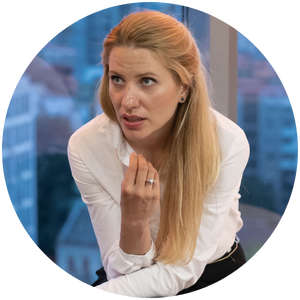
There is an ongoing war between Ukraine and Russia. It is not a war solely for territories, resources, or people — it's an ideological war, indicative of the battle between authoritarianism and democracy. What is the real nature of this conflict and who are the parties involved? What tools does the Kremlin use to control the narrative and what can be done to stop it? And why is Ukraine the cornerstone of democracy in the region? Join former Prime Minister of Ukraine Oleksiy Honcharuk, the Bernard and Susan Liautaud Visiting Fellow at FSI, to discuss.


The Liautaud Fellowship was established to bring former heads of state or senior policymakers to Stanford, with the goal of promoting meaningful dialogue on the challenges world leaders face in crafting policy solutions for pressing global problems. Toomas Hendrik Ilves, the former President of Estonia, was the inaugural Liautaud Fellow in 2017, followed by H.R. McMaster in 2018.

ABOUT THE SPEAKER

Image
Oleksiy Honchaurk

Oleksiy Honchaurk was Ukraine’s 17th Prime Minister (August 2019 – March 2020). In just 5 months Mr. Honcharuk initiated important changes that other Ukrainian politicians had not dared to do for years (launched of large and small privatization processes, started of land market implementation, conducted Naftogaz unbundling, started combating shade markets – illegal gambling houses and petrol stations were closed, launched of Anti-Raider (illegal seizure of business or property) Office that would react within just 24 hours to any cases of such illegal seizure, etc).

Before he served as a Deputy Head of the Presidential Office of Ukraine and was a member of the National Reforms Council under the President of Ukraine. Previously for more than ten years, Mr. Honcharuk has been working in the legal sphere. He has established a reputation as a strong professional and qualified specialist. Mr. Honcharuk is also known as a strong fighter for business community rights. 2005-2008, he worked as a lawyer at PRIOR-Invest investment company and later on headed its legal department. 2008-2015, he worked as an arbitration manager and managing partner at Constructive Lawyers, a law firm he had founded, which provided legal services in the field of investment and financing real estate construction.

From 2015-2019, Oleksiy Honcharuk headed Better Regulation Delivery Office non-governmental organization (BRDO). Among his achievements as the head of the BRDO was the cancellation of around 1000 Government acts and adoption of more than 50 decisions, facilitating activity of business in Ukraine. Oleksiy Honcharuk also served as an external advisor to the First Deputy Prime Minister - Minister of Economic Development and Trade of Ukraine. He has a degree in law from Interregional Academy of Personal Management and in Public Administration from National Academy for Public Administration under the President of Ukraine. He was born on July 7, 1984, in Zhmerynka, Vinnytsia region.

Hybrid event: Online via Zoom, and in-person in Bechtel Conference Center

616 Jane Stanford Way,

Encina Hall,

Stanford, CA 94305-6055

0
Bernard and Susan Liautaud Visiting Fellow, 2021
rsd21_038_1181a.jpg

Ukraine’s 17th Prime Minister (August 2019 – March 2020). In just 5 months Mr. Honcharuk initiated important changes that other Ukrainian politicians had not dared to do for years (launched of large and small privatization processes, started of land market implementation, conducted Naftogaz unbundling, started combating shade markets –– illegal gambling houses and petrol stations were closed, launched of Anti-Raider (illegal seizure of business or property) Office that would react within just 24 hours to any cases of such illegal seizure, etc).

Before he served as a Deputy Head of the Presidential Office of Ukraine and was a member of the National Reforms Council under the President of Ukraine. Previously for more than ten years, Mr. Honcharuk has been working in the legal sphere. He has established a reputation as a strong professional and qualified specialist. Mr. Honcharuk is also known as a strong fighter for business community rights. 2005-2008, he worked as a lawyer at PRIOR-Invest investment company and later on headed its legal department. During 2008-2015, he worked as an arbitration manager and managing partner at Constructive Lawyers, a law firm he had founded, which provided legal services in the field of investment and financing real estate construction.

From 2015-2019, Oleksiy Honcharuk headed Better Regulation Delivery Office non-governmental organization (BRDO). Among his achievements as the head of the BRDO was the cancellation of around 1000 Government acts and adoption of more than 50 decisions, facilitating activity of business in Ukraine. Oleksiy Honcharuk also served as an external advisor to the First Deputy Prime Minister - Minister of Economic Development and Trade of Ukraine.

Oleksiy Honcharuk has a degree in law from Interregional Academy of Personal Management and in Public Administration from National Academy for Public Administration under the President of Ukraine. He was born on July 7, 1984, in Zhmerynka, Vinnytsia region.

CV
Former Prime Minister of Ukraine, Bernard and Susan Liautaud Visiting Fellow at FSI

FSI
Stanford University
Encina Hall C140
Stanford, CA 94305-6055

(650) 736-1820 (650) 724-2996
0
Satre Family Senior Fellow, Freeman Spogli Institute for International Studies
kathryn_stoner_1_2022_v2.jpg MA, PhD

Kathryn Stoner is the Mosbacher Director of the Center on Democracy, Development, and the Rule of Law (CDDRL), and a Senior Fellow at CDDRL and the Center on International Security and Cooperation at FSI. From 2017 to 2021, she served as FSI's Deputy Director. She is Professor of Political Science (by courtesy) at Stanford and she teaches in the Department of Political Science, and in the Program on International Relations, as well as in the Ford Dorsey Master's in International Policy Program. She is also a Senior Fellow (by courtesy) at the Hoover Institution.

Prior to coming to Stanford in 2004, she was on the faculty at Princeton University for nine years, jointly appointed to the Department of Politics and the Princeton School for International and Public Affairs (formerly the Woodrow Wilson School). At Princeton she received the Ralph O. Glendinning Preceptorship awarded to outstanding junior faculty. She also served as a Visiting Associate Professor of Political Science at Columbia University, and an Assistant Professor of Political Science at McGill University. She has held fellowships at Harvard University as well as the Woodrow Wilson Center in Washington, DC. 

In addition to many articles and book chapters on contemporary Russia, she is the author or co-editor of six books: "Transitions to Democracy: A Comparative Perspective," written and edited with Michael A. McFaul (Johns Hopkins 2013);  "Autocracy and Democracy in the Post-Communist World," co-edited with Valerie Bunce and Michael A. McFaul (Cambridge, 2010);  "Resisting the State: Reform and Retrenchment in Post-Soviet Russia" (Cambridge, 2006); "After the Collapse of Communism: Comparative Lessons of Transitions" (Cambridge, 2004), coedited with Michael McFaul; and "Local Heroes: The Political Economy of Russian Regional" Governance (Princeton, 1997); and "Russia Resurrected: Its Power and Purpose in a New Global Order" (Oxford University Press, 2021).

She received a BA (1988) and MA (1989) in Political Science from the University of Toronto, and a PhD in Government from Harvard University (1995). In 2016 she was awarded an honorary doctorate from Iliad State University, Tbilisi, Republic of Georgia.

Download full-resolution headshot; photo credit: Rod Searcey.

Mosbacher Director, Center on Democracy, Development and the Rule of Law
Professor of Political Science (by courtesy), Stanford University
Senior Fellow (by courtesy), Hoover Institution
CV
Date Label
Mosbacher Director of CDDRL
Lectures
Authors
News Type
News
Date
Paragraphs

This interview by Melissa De Witte originally appeared in Stanford News.


The upcoming summit between President Joe Biden and President Vladimir Putin is not rewarding the Russian leader for his bad behavior: It’s opening negotiations and delivering a warning to him instead, says Stanford scholar Kathryn Stoner.

Here, Stoner is joined by Stanford political scientist and former U.S. Ambassador to Russia Michael McFaul, Payne Distinguished Lecturer at CISAC and former Deputy Secretary General of NATO Rose Gottemoeller and Russia historian Norman Naimark to discuss what to expect at the summit in Geneva on Wednesday.

The meeting, the scholars say, could reset U.S.-Russia relations, signal deterrence on certain issues – including cybersecurity in light of attacks like the SolarWinds breach that the U.S. has blamed on the Russian Foreign Intelligence Service – and launch strategic stability talks related to nuclear weapons.

Interviews have been edited for length and clarity. For more information on what to expect about the Biden-Putin summit from FSI scholars, visit the FSI website.


Where does diplomacy now stand between the U.S. and Russia?

Naimark: Russian-American relations are at their lowest point since the fall of the Soviet Union in 1991, perhaps even since the last years of Gorbachev’s rule. When relations are fraying between the world’s two most powerful nuclear powers, the coming of the summit on June 16 between President Biden and President Putin should be welcomed. It’s worth recalling the heightened military tensions just three months ago between Moscow and Washington, when Moscow moved tens of thousands of troops to the Ukrainian border and mobilized its air and sea power in the region. Both leaders have emphasized that they seek stability, reliability and predictability in their bilateral relations; at the same time, their respective administrations have warned that expectations should be kept at the minimum for any kind of serious breakthrough at the summit.

Stoner: We’ve lost a lot of leverage because of the withdrawal from global politics that started under the latter part of the Obama administration and continued with Trump with his America First platform, which meant America alone. There is some leverage, it’s just how much. We don’t necessarily want to destabilize Russia because it’s a big, complicated country with nuclear weapons, but all signs point to Putin staying in office until 2036. He’s not going away. I think we have to try to signal deterrence on certain issues, like trying to move into another former Soviet republic as he is doing with Ukraine, Georgia and potentially Belarus, but then cooperate in other areas where it is productive to do so.

What do you think about some of the criticisms toward Biden meeting with Putin? For example, that Biden meeting with Putin is only rewarding him for his bad behavior.

Stoner: There is a reasonable question about why Biden and Putin are meeting and if it is somehow rewarding Putin for bad behavior by having a summit with the President of the United States. Rather than rewarding Putin, however, I think this meeting could be Biden’s warning to him that if hacking and other cyberattacks continue, we have a menu of things we could do as well.

Naimark: There is no reason that the American president cannot talk about difficult subjects like cybersecurity, ransomware attacks, human rights, the release of Alexei Navalny, the protection of Ukrainian sovereignty and other important items on the American agenda while focusing on issues of mutual interest: the future of arms control, global warming and the regulation of the Arctic, and outer space. One can always hope that, like the last summit on Lake Geneva between Russian and American leaders [Mikhail Gorbachev and Ronald Reagan] in November 1985, this one can lay the groundwork for serious improvements in relations in the near future.

Is this meeting a reset of diplomatic relations between the two nations?

Stoner: I know in Washington it is popular to say that Biden is not having a reset of relations with Russia when past presidents all have tried that. I think that’s wrong. I do think it is a reset in the relationship in that there should be more clarity and stability, but that doesn’t mean it’s going to be friendly and universally cooperative, given that we still see many differences in perspectives and some antagonism too. Still, Russia and the U.S. need to talk because there are a lot of issues in common where it would be helpful to coordinate with Russia. After all, even in the depths of the Cold War, the leaders of both countries still talked. Russia has reestablished itself as the most formidable power in Europe and it looks like Biden is acknowledging that and the fact that the U.S. can no longer afford to ignore Russia.

Is there anything the two leaders will be able to agree upon?

McFaul: I used to organize these kinds of meetings when I worked in the government and back when President Medvedev was there. We would have these meetings as a way to force our governments to produce what is called in State Department-speak “deliverables.” We didn’t have meetings to have them, we wanted to get things done. In the first Obama-Medvedev meeting we had a long list of deliverables when they met in July of 2009.

But there is no way that will happen with Putin today because he doesn’t really want to cooperate, he doesn’t really want deliverables. That’s challenging for President Biden, I think, because he has said that he wants a stable, predictable relationship with Putin. I think that’s fine to aspire to, but I don’t think Putin is that interested in that kind of relationship, so that creates a challenge of substance for summits like this.

Gottemoeller: With such different threat perceptions, the two presidents are not going to agree in Geneva about what should go into the next nuclear treaty. They can agree, though, to put their experts together to hammer it out. They can also agree to put the two sides together to tackle the different threat perceptions and the question of what stability means. Finally, they can agree to a deadline, so the talks don’t stall. It won’t be a headline-grabbing outcome, but at least Moscow and Washington will get moving again on the nuclear agenda.

Where can Biden make progress?

McFaul: I think the most likely place to make progress is to launch strategic stability talks, which is an abstract phrase for beginning the process of negotiations about nuclear weapons and their delivery vehicles that would be a follow-on to the New START treaty. Biden and Putin rightfully extended the New START treaty early in his term for five years, and I think that was very smart. I personally worked on that treaty, so I think it’s a good treaty and deserves to be extended. But it’s going to run out really fast because the next set of negotiations are going to be much more complicated. I hope they would start some process to begin those negotiations now.

Gottemoeller: Maybe the only place where President Biden can make progress with Vladimir Putin in Geneva is the nuclear agenda with Russia. Since the two men agreed, in February, to extend the New START treaty by five years, they have put out a clear public message that they intend to pursue a deal to replace New START and to launch strategic stability talks. They are not going to have identical ideas, however, about what those two goals mean.

Biden wants a new arms control deal that will control all nuclear warheads, whether launched on intercontinental strategic-range missiles or on shorter-range systems. He also wants to get a handle on some of the new types of nuclear weapons that the Russians have been developing. One new system, for example, uses nuclear propulsion to ensure that it can fly for many hours at great speed over long distances, earning it the moniker “weapon of vengeance.” These exotic weapons did not exist when New START was negotiated; now, they need to be controlled.

Putin, by contrast, focuses on U.S. long-range conventional missiles that he worries are capable of the accuracy and destructive power of nuclear weapons. The United States, in his view, could use these conventional weapons to destroy hard targets such as the Moscow nuclear command center. He also worries that the United States is producing ever more capable ways to intercept his nuclear missiles and destroy them before they reach their targets. In his worst nightmare, the United States undermines his nuclear deterrent forces without ever resorting to nuclear weapons.

What advice do you have for Biden?

McFaul: One, do not have a one-on-one meeting – just have a normal meeting. Two, I would recommend not having a joint press conference that just gives Putin a podium for the world to say his “whataboutism” stuff; it’s better to have separate press conferences because most of the world will be more interested in what Biden says compared to what Putin says.

Third, I think it’s important to cooperate when you can but also be clear about your differences and don’t pull punches on that. In particular, I want Biden to talk about Alexei Navalny, the Americans who are wrongly detained in Russia today, Crimea still being occupied, Russian proxies in eastern Ukraine, and parts of Georgia that are under occupation. They have been attacking us relentlessly with these cyberattacks, these Russian criminals who in my view have to have some association with the Russian government.

That’s a tough list, but I think it’s really important for President Biden to say those things directly to Putin. I have confidence that he can. I was at their last meeting. I traveled with the vice president in 2011 when he met with then Prime Minister Putin. Biden is capable of delivering tough messages and I hope he uses this occasion to do so again.

What would be a sign that their meeting was productive?

Stoner: One sign the meeting was productive would be if Biden and Putin could agree to establish a joint committee or council on some rules surrounding cybersecurity. Another would be if they make plans to talk again about either replacing or reviving the Minsk-2 agreement [that sought to bring an end to Russia’s war on Ukraine]. And three, a positive sign would be if they plan to do some negotiation on further reducing tactical nuclear weapons or strategic nuclear weapons. An agreement to disagree on some issues, but to continue talking on others would be indicative of at least some small progress.

The Russian and American flags flying side by side

Assessing the Biden-Putin Summit

Analysis and commentary on the Biden-Putin summit from FSI scholars.
Learn More

Read More

Hero Image
Flags of the United States and Russia Getty Images
All News button
1
Subtitle

Scholars at the Freeman Spogli Institute for International Studies hope that President Joe Biden’s meeting with Russian President Vladimir Putin will lay the groundwork for negotiations in the near future, particularly around nuclear weapons.

Authors
News Type
Commentary
Date
Paragraphs

Ukraine finally has a chance to create a strong counterintelligence service and shed the Soviet standards of the old KGB.  

The Ukrainian parliament recently passed the first reading of a bill to reform the Security Service of Ukraine, known as the SBU. This is a crucial step in efforts to remake the SBU into a modern security service guided by Western democratic standards. 

This process owes much to the US Congress. In 2019, Congress voted to condition half of American defense assistance to Ukraine on adoption of a bill on national defense that laid the groundwork for future security service reform. 

In 2021, the United States will allocate USD 250 million for the Ukrainian defense sector. If this money is conditioned on real security service reform, it can prove a game-changer, not only for domestic law enforcement, but also in Ukraine’s fight against Russia.

A modern security service for Ukraine should deal exclusively with counterintelligence, counter-terrorism, protection of state secrets, and countering subversion. The SBU should not be included in any foreign intelligence operations, since this is done by the Service of Foreign Intelligence, which reports directly to the Ukrainian president.

The question now is whether Ukrainian MPs are ready to take responsibility and vote for such a security service. Recently, Maryana Bezugla, deputy head of the Ukrainian National Security, Defense, and Intelligence Committee, reported about pressure on MPs from the SBU’s leadership not to vote for the bill.

The SBU reform bill envisions a number of major changes in Ukraine’s security services. Crucially, it will eliminate the anti-corruption and organized crime department of the SBU. Ukraine has created specific agencies to fight corruption, namely the National Anti-Corruption Bureau (NABU) and the State Bureau of Investigations (SBI).

In the past, the SBU has duplicated the functions of both NABU and the SBI, and has been accused of misusing its authority to protect corrupt state officials. Eliminating the SBU’s anti-corruption function would also meet a key demand of the international community. 

The current anti-crime department is regarded as one of the most corrupt wings of the SBU. It stands accused of regularly engaging in raids on businesses. Pavlo Demchyna, former head of the SBU’s Anti-Corruption and Organized Crime Department, came under criminal investigation a few years ago for precisely such actions. He could not explain how he came to own his elite property and luxury cars. 

In line with the current reform proposals, the number of SBU employees would be reduced from 27,000 to 17,000 within four years. At present, Ukraine has the largest security service in Europe. The proposed cuts would still leave the SBU far larger than many comparative services. For example, Britain’s MI5 has only 4,400 employees, even though it is recognized as one of the top security services in the world. 

Reducing the number of SBU employees over four years can be done without harming Ukraine’s national security. The reduction will provide an opportunity to retain the best officers and raise salaries while ridding the service of old Soviet functions. The SBU does not need its own kindergartens, hospitals, or sanatoriums filled with “secret nannies and doctors” in order to be an effective security service.

While these proposed changes are encouraging, the new bill on Ukraine’s security service still needs to include additional important reforms.

It is vital to eliminate the SBU’s investigative functions. As long as the SBU has investigative powers, the service will remain a law enforcement agency rather than a Western-style security service. The SBU should focus on counterintelligence and national security, not ordinary crime, which should be left to the National Police. 

Eliminating the SBU’s investigative functions would cut opportunities for corruption. The European Union Advisory Mission in Ukraine also notes that the SBU should not have authority to conduct pretrial investigations, which are the purview of the National Anti-Corruption Bureau of Ukraine and National Police.

All SBU employees (except covert counterintelligence officers) should submit transparent asset declarations. Reforms introduced in 2015 obliged SBU officials, along with millions of other Ukrainian state employees, to publish asset declarations. However, SBU officials have ignored this rule, claiming that all 27,000 employees (including “secret” kindergarten nannies) should be exempt due to national security requirements.

It is important to remove the loopholes that currently enable corruption within the security service. In its present state, the new bill would allow the SBU to put inappropriate pressure on private businesses. This includes the ability to access databases, documents, audio, and video files without requiring any prior court permission. Such powers are subject to widespread abuse and should be eliminated.

The selection process for SBU officers must be competitive. Officers need to be chosen on the basis of competence not nepotism. 

Given Russia’s ongoing aggression against Ukraine, those with family ties or other links to Russia require specific scrutiny. It makes no sense, for example, to appoint someone as head of the security service whose wife holds Russian citizenship, but this has happened in the past.

Ukraine must end the SBU monopoly in wiretapping. Understandably, the SBU wants to retain that monopoly, which allows the service to control criminal investigations, even against its own officers. A few years ago, SBU officers misused this power and declassified the identities of NABU agents working on a corruption case.

The current reform drive is also an opportunity to provide public access to declassified information. The SBU tends to overprotect information. For instance, even Ukrainian MPs are currently forbidden from knowing the exact number of SBU employees.

As Ukraine reforms its security service, it is important to avoid creating any new threats to the country’s democratic system. The new bill would empower the SBU to ban, without any court decision, political parties or individual candidates from participating in elections. That provision should be removed.

At a time when Ukraine finds itself engaged in an undeclared war with Russia, the country urgently needs to abandon the Soviet standards of the KGB and adopt the best practices and standards of Western security services. Ukraine also needs to restrict or remove powers that allow the SBU to pressure business or help certain oligarchs.

The current reform process has been a long time coming. It gives Ukrainian MPs the chance to transform the SBU into a modern, Western-style counterintelligence agency that will better serve the country’s national security interests. Parliament must not pass up this opportunity.

Oleksandra Ustinova, a Ukrainian MP with the Holos party, is an alumna of Stanford's Ukrainian Emerging Leaders Program. Steven Pifer, a fellow at the Robert Bosch Academy in Berlin and affiliate of the Center for International Security and Cooperation, is a former US ambassador to Ukraine (1998-2000).


Originally for Ukraine Alert

Hero Image
Soldiers with guns REUTERS/Gleb Garanich
All News button
1
Subtitle

Ukraine finally has a chance to create a strong counterintelligence service and shed the Soviet standards of the old KGB. Are Ukrainian MPs ready to take responsibility and vote for such a security service?

-

This event is co-sponsored with the Center on Democracy, Development, and the Rule of Law


Seminar Recording: https://youtu.be/cPaeCJiRWuM


About this Event: In 2011, the impact of the Arab Spring and the emergence of YouTube videos evidencing ballot stuffing during Russian parliamentary elections, which nearly led to a revolution in Russia, forced Kremlin strategists to suddenly realize that the Internet had become a major media — and a major power. This was the case not only in Russia, but everywhere on the planet. The Kremlin spent years and billions of dollars [or rubles?] to subdue this power, and  to learn how to make use of it. Was this crusade successful? Is it true that Putin is now capable of influencing elections everywhere in the world? Will he be able to cut Russia off from the global internet? And what are the troll farms trying to achieve? Leonid Volkov, an internet expert and the founder of the Internet Protection Society, the leading Russian digital rights NGO—and, simultaneously, Chief of Staff for Alexey Navalny, the leader of Russian opposition—is known for his optimistic view on these issues. While Putin is far from possessing almighty internet warfare, the situation has complex implications for Russian society and democracy.


About the Speaker: Leonid Volkov is a Russian politician and IT-expert. He oversees regional political operations, IT and electoral campaigns for the leader of Russian opposition Alexey Navalny. Previously Volkov served as campaign manager and chief of staff for Alexei Navalny’s 2013 mayoral campaign for Moscow, as well as for Navalny’s attempt to get registered for the 2018 presidential election. Leonid Volkov is a former deputy of the Yekaterinburg City Duma. He has over 20 years of experience as an IT professional, running and consulting several of Russia’s largest software firms. Since 2016 Leonid is active also as founder and chairman of the Internet Protection Society, a NGO focused on internet freedom and digital rights in Russia.

Virtual Seminar

Leonid Volkov Russian Politician and IT-Expert
Seminars
Paragraphs
Ill Winds book cover

Larry Diamond has made it his life’s work to secure democracy’s future by understanding its past and by advising dissidents fighting autocracy around the world. Deeply attuned to the cycles of democratic expansion and decay that determine the fates of nations, he watched with mounting unease as illiberal rulers rose in Hungary, Poland, Turkey, the Philippines, and beyond, while China and Russia grew increasingly bold and bullying. Then, with Trump’s election at home, the global retreat from freedom spread from democracy’s margins to its heart.

Ill Winds’ core argument is stark: the defense and advancement of democratic ideals relies on U.S. global leadership. If we do not reclaim our traditional place as the keystone of democracy, today’s authoritarian swell could become a tsunami, providing an opening for Vladimir Putin, Xi Jinping, and their admirers to turn the twenty-first century into a dark time of despotism.

We are at a hinge in history, between a new era of tyranny and an age of democratic renewal. Free governments can defend their values; free citizens can exercise their rights. We can make the internet safe for liberal democracy, exploit the soft, kleptocratic underbelly of dictatorships, and revive America’s degraded democracy. Ill Winds offers concrete, deeply informed suggestions to fight polarization, reduce the influence of money in politics, and make every vote count.

In 2019, freedom’s last line of defense still remains “We the people.”

All Publications button
1
Publication Type
Books
Publication Date
Subtitle
From America’s leading scholar of democracy, a personal, passionate call to action against the rising authoritarianism that challenges our world order—and the very value of liberty.
Authors
Larry Diamond
Book Publisher
Penguin Books
News Type
News
Date
Paragraphs

Kleptocracy--well-organized elite corruption--has come to characterize Russia and much of the post-Communist space and is one of the chief obstacles to democratic development as well as economic growth in Russia and Ukraine. This panel features three experts who have focused on anti-corruption measures in these countries and will discuss the origins, effects, and future of kleptocracy in the region.

Speakers:

Charles Davidson, the publisher of The American Interest and Director of The Kleptocracy Initiative at the George Mason School of Public Policy.

Jeffrey Gedmin, the editor of The American Interest, who previously was president of the Legatum Institute in London and of Radio Liberty/Radio Free Europe in Prague.

Oleksandra Ustinova, Ukrainian Emerging Leaders Fellow 2019 and a leading Ukrainian anti-corruption activist for a conversation on kleptocracy in Russia and Ukraine and how it is abetted by American institutions.

Moderator: Francis Fukuyama, CDDRL Mosbacher Director and FSI Olivier Nomellini Senior Fellow.

Watch the video here.

Hero Image
img 7950
All News button
1
-

Recent years have witnessed an increasing number of cyber attacks originating in Russia that target the United States, European Union and EU member-states.  In Russia’s undeclared war against Ukraine—a conflict that has claimed some 13,000 lives—Russia has employed cyber tactics on a regular basis, including release against Ukraine of the Petya and NotPetya viruses.

Those attacks had consequences far beyond Ukraine’s borders.  The NonPetya attack, initiated against a small tech firm in Ukraine, spread to global businesses and government agencies throughout Europe and crossed the Atlantic to the United States.  The West should closely examine the Ukrainian experience, as Russia perfects tactics that could be turned against Europe and the United States as well.

Improving the security of the Internet will require sharing knowledge and experience, promoting greater awareness on cyber security, developing cyber security capacities, and deepening communication and cooperation among different stakeholders.  The Panel will discuss the nature of the threat as well as what governments, international organizations and businesses should do in these areas.

Speaker Bios:

Image
stamos
Alex Stamos is a cybersecurity expert, business leader and entrepreneur working to improve the security and safety of the Internet through his teaching and research at Stanford University. Stamos is an Adjunct Professor at Stanford’s Freeman-Spogli Institute, a William J. Perry Fellow at the Center for International Security and Cooperation, and a visiting scholar at the Hoover Institution. Prior to joining Stanford, Alex served as the Chief Security Officer of Facebook. In this role, Stamos led a team of engineers, researchers, investigators and analysts charged with understanding and mitigating information security risks to the company and safety risks to the 2.5 billion people on Facebook, Instagram and WhatsApp. During his time at Facebook, he led the company’s investigation into manipulation of the 2016 US election and helped pioneer several successful protections against these new classes of abuse. As a senior executive, Alex represented Facebook and Silicon Valley to regulators, lawmakers and civil society on six continents, and has served as a bridge between the interests of the Internet policy community and the complicated reality of platforms operating at billion-user scale.

Image
oleh derevianko
Oleh Derevianko is a business and social entrepreneur. He is the co-founder and chairman of the Board of ISSP — Information Systems Security Partners — a private international cybersecurity company founded in Ukraine in 2008 and currently operating in seven countries of Central and Eastern Europe and Middle Asia. Having a strong presence in the countries at the front line of cyber and hybrid war, such as Ukraine, and serving both private and public sectors, ISSP provides unique expertise for APT attacks analysis, detection and response. Derevianko is also a co-founder of International Cyber Academy (Kyiv), which provides worldclass learning opportunities for students who want to become skilled professionals in a world that depends on the use of cyberspace. In 2015–2016 he served as Deputy Minister, Chief of Staff at Ministry of Education and Science of Ukraine. 

Image
cortes sarah linderpix120815 scortes 0652 high res

Dr. Sarah Lewis Cortes has managed Security at American Express, Putnam Investments, Fidelity, and Biogen, among others. A postoctoral researcher at ACSO Digital Crime Lab, she performs training and consultation with the FBI and Interpol. She earned her degrees at Harvard University and Northeastern, and her research focuses on threat intelligence and the darknet, privacy and privacy law, international criminal legal treaties (MLATs), and digital forensics. At Putnam Investments, which manages over $1.3 trillion in assets, Sarah was SVP, Security. She oversaw Putnam’s recovery on 9/11 when parent company Marsh & McLennan’s World Trade Center 99th floor data center was destroyed.

Image
screen shot 2019 03 14 at 6 42 11 pm
Jason Min is the Head of Business Development at Check Point Software Technologies. In this role he sources, evaluates, and executes M&A transactions. Jason is responsible for overseeing business development and sale enablement activities that involve Check Point technology partners. Since joining Check Point in 2014, Jason has contributed to the success of Check Point’s major acquisitions and partnership growth. Prior to joining Check Point, Jason was at Highland Capital, a global venture capital firm, where he sourced and executed investments in security and software companies. Before working at Highland Capital, Jason was at General Atlantic, a $28B global private equity firm, where he focused on security and software investments across all stages of company growth.

Image
dafina toncheva usvp
Dafina Toncheva invests in emerging technologies in the enterprise space with focus on Enterprise SaaS applications and security. Dafina joined USVP in 2012 and has led investments in and joined the boards of InsideSales.com, Apptimize, Luma Health, Arkose Labs and Raken. Most recently, Dafina served on the board of Prevoty, a leader in application security, who was acquired by Imperva where USVP was the lead investor and largest shareholder. Prior to joining USVP, Dafina was a principal investor with Tugboat Ventures since 2010. Before that, she spent two years at Venrock helping to expand the firm’s investments in SaaS, virtualization, security, infrastructure and enterprise applications. Dafina led the first institutional investment round in Cloudflare which has since transformed into one of the most successful Internet security startups in Silicon Valley. 

Image
nm
Nataliya Mykolska is the Ukrainian Emerging Leaders Fellow at Stanford Center for Democracy Development and Rule of Law. Before coming to Stanford Nataliya was the Trade Representative of Ukraine - Deputy Minister of Economic Development and Trade. In the government, Nataliya was responsible for developing and implementing consistent, predictable and efficient trade policy. She focused on export strategy and Ukrainian exportpromotion, free trade agreements, protecting Ukrainian trade interests in the World Trade Organization (WTO), dialogue with Ukrainian exporters. Nataliya was the Vice-Chair of the International Trade Council and the Intergovernmental Committee on International Trade.

Moderator: 

Image
steven pifer 0
Steven Pifer is a William J. Perry fellow at Stanford’s Freeman Spogli Institute for International Studies (FSI), where he is affiliated with FSI’s Center for International Security and Cooperation and Europe Center.  He is also a nonresident senior fellow with the Brookings Institution. A retired Foreign Service officer, Pifer’s more than 25 years with the State Department focused on U.S. relations with the former Soviet Union and Europe, as well as arms control and security issues.  He served as deputy assistant secretary of state in the Bureau of European and Eurasian Affairs with responsibilities for Russia and Ukraine (2001-2004), ambassador to Ukraine (1998-2000), and special assistant to the president and senior director for Russia, Ukraine and Eurasia on the National Security Council (1996-1997).  

-

Kleptocracy--well-organized elite corruption--has come to characterize Russia and much of the post-Communist space, and is one of the chief obstacles to democratic development as well as economic growth in Russia and Ukraine.  This panel will feature three experts who have focused on anti-corruption measures in these countries, and will discuss the origins, effects, and future of kleptocracy in the region.

Please join Charles Davidson, the publisher of The American Interest and Director of The Kleptocracy Initiative at the George Mason School of Public Policy, Jeffrey Gedmin, the editor of The American Interest, who previously was president of the Legatum Institute in London and of Radio Liberty/Radio Free Europe in Prague and Oleksandra Ustinova, Ukrainian Emerging Leaders Fellow 2019 and a leading Ukrainian anti-corruptian activist for a conversation on kleptocracy in Russia and Ukraine and how it is abetted by American institutions. The discussion will be moderated by Francis Fukuyama, CDDRL Mosbacher Director and FSI Olivier Nomellini Senior Fellow. 


This event is co-sponsored by the Center on Democracy, Development and the Rule of Law, The Humanities Center, The Europe Center and the Center for Russian, East European and Eurasian Studies. 

Image
charles davidson
Charles Davidson
 is Publisher of The American Interest magazine (co-founded with Francis Fukuyama in 2005), and Senior Policy Fellow, Schar School of Policy and Government, George Mason University.  Since 2006, co-founder of Global Financial Integrity, one of the founders of the FACT Coalition, Executive Producer of Sundance documentary We’re Not Broke, and until recently Executive Director of the Kleptocracy Initiative at Hudson Institute. The Kleptocracy Initiative has published a quiver of reports focusing on the civilizational threats we face from the marriage of authoritarianism and kleptocracy. The Kleptocracy Initiative engaged in a broad set of activities for a think tank program, from organizing the first “Klepto Tours” of London, to the premiere of “From Russia with Cash” in DC, the dubbing of a Russian documentary explaining Putin’s rise to power, the establishment of an extensive archive of primary source material, hosting many events, and serving as a platform for anti-kleptocracy convening and information sharing.  Regarding the national security threats associated with kleptocracy, Davidson has testified to the Senate Committee of the Judiciary, the Helsinki Commission, and the Subcommittee on Europe, Eurasia, and Emerging Threats. Prior to 2006, Davidson spent his career in the information technology industry, in various technical/managerial positions, as CIO of a large pan-European logistics company, and in a venture capital partnership until 2008.  Bowdoin College 1981, B.A.  Duke University 1988, MBA
 
Image
jeffrey gedmin 2008
Dr. Jeffrey Gedmin
is editor-in-chief of The American Interest, a publication of politics, public policy, and international affairs. From 2015 to 2018, he was senior adviser at Blue Star Strategies. From 2011 to 2014, Gedmin was President and CEO of the London-based Legatum Institute. Prior to joining the Legatum Institute in early 2011, Gedmin served for four years as President and CEO of Radio Free Europe/Radio Liberty (RFE/RL) headquartered in Prague. Before RFE/RL, Gedmin served as President and CEO of the Aspen Institute in Berlin. Before that, he was Resident Scholar at the American Enterprise Institute (AEI) in Washington, D.C and Executive Director of the New Atlantic Initiative. He is the author/editor of several books, including The Hidden Hand: Gorbachev and the Collapse of East Germany (1992).Gedmin also served as co-executive producer for two major PBS documentaries: "The Germans, Portrait of a New Nation" (1995), and "Spain's 9/11 and the Challenge of Radical Islam in Europe" (2007).  He is a member of the Council on Foreign Relations and serves on several advisory boards, including Georgetown University’s School of Foreign Service Masters Program, the Institute for State Effectiveness, the Kleptocracy Initiative (based at the Hudson Institute), the International Republican Institute’s Beacon Project, the Justice for Journalists Foundation, and the Tocqueville Conversations. Together with former U.S. Ambassador to the Czech Republic, Norm Eisen, Gedmin is co-chair of the Transatlantic Democracy Working Group.
 
Image
ustinova
Oleksandra Ustinova
is the head of communications and Anti-Corruption in HealthCare Projects at the Anti-Corruption Action Center (ANTAC), in Kyiv, Ukraine. ANTAC is one of the leading watchdog organizations on anti-corruption reform in Ukraine and was one of the founders of new anti-corruption institutions in Ukraine. Serving as a communication and advocacy expert over the last 10 years, Ustinova has successfully advocated for more than 20 national laws. Among them are laws that established new anticorruption and investigative bodies, that now investigate more than 500 criminal cases against politicians including Members of Parliament, Ministers, heads of the Central Election Committee, and the head of the tax service. Ustinova was the first Secretary of the Civil Oversight Council of the National Anti-Corruption Bureau of Ukraine (NABU)  - the first independent anti-corruption law enforcement institution in Ukraine. At ANTAC, Ustinova also manages the project “Anti-Corruption in Healthcare” and in 2015 advocated changes to the legislation so all medicine in Ukraine is procured via international organizations. As a result of this legislation, Ukraine has saved up to 40 percent of the state budget for medicine procurement each year.


Levinthal Hall, The Humanities Center

Paragraphs

In 2008, when Michael McFaul was asked to leave his perch at Stanford and join an unlikely presidential campaign, he had no idea that he would find himself at the beating heart of one of today’s most contentious and consequential international relationships. As President Barack Obama’s adviser on Russian affairs, McFaul helped craft the United States’ policy known as “reset” that fostered new and unprecedented collaboration between the two countries. And then, as U.S. ambassador to Russia from 2012 to 2014, he had a front-row seat when this fleeting, hopeful moment crumbled with Vladimir Putin’s return to the presidency. This riveting inside account combines history and memoir to tell the full story of U.S.-Russia relations from the fall of the Soviet Union to the new rise of the hostile, paranoid Russian president. From the first days of McFaul’s ambassadorship, the Kremlin actively sought to discredit and undermine him, hassling him with tactics that included dispatching protesters to his front gates, slandering him on state media, and tightly surveilling him, his staff, and his family.

From Cold War to Hot Peace is an essential account of the most consequential global confrontation of our time.

All Publications button
1
Publication Type
Books
Publication Date
Journal Publisher
Houghton Mifflin Harcourt
Authors
Michael A. McFaul
0
Visiting Scholar, Ukrainian Emerging Leaders Program 2017-18
oleksandra_hs.jpg

Oleksandra Matviichuk is a human rights defender who works on issues in Ukraine and the OSCE region. At present she heads the human rights organization Center for Civil Liberties, and also coordinates the work of the initiative group Euromaidan SOS. The activities of the Center for Civil Liberties are aimed at protecting human rights and establishing democracy in Ukraine and the OSCE region. The organization is developing legislative changes, exercises public oversight over law enforcement agencies and judiciary, conducts educational activities for young people and implements international solidarity programs. 

The Euromaidan SOS initiative group was created in response to the brutal dispersal of a peaceful student rally in Kyiv on November 30, 2013. During three months of mass protests that were called the Revolution of Dignity, several thousand volunteers provided round-the-clock legal and other aid to persecuted people throughout the country. Since the end of the protests and beginning of Russian aggression in Ukraine, the initiative has been monitoring political persecution in occupied Crimea, documenting war crimes and crimes against humanity during the hybrid war in the Donbas and conducting the “LetMyPeopleGo” international campaign to release political prisoners detained by the Russian authorities. 

Oleksandra Matviichuk has experience in creating horizontal structures for massive involvement of people in human rights activities against attacks on rights and freedoms, as well as a multi-year practice of documenting violations during armed conflict. She is the author of a number of alternative reports to various UN bodies, the Council of Europe, the European Union, the OSCE and the International Criminal Court. In 2016 she received the Democracy Defender Award for "Exclusive Contribution to Promoting Democracy and Human Rights" from missions to the OSCE.

Subscribe to Russia