-

Speaker Bio:

Image
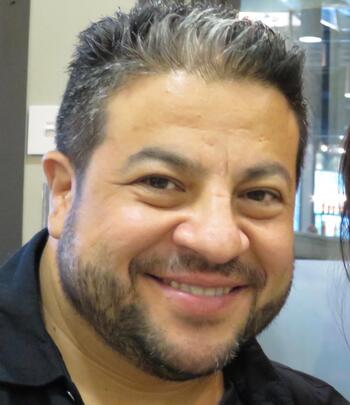
leonid gozman 3
After graduating from the Moscow State University’s Department of Psychology, Leonid Gozman worked for the MSU Department of Social Psychology, specializing in interpersonal relations and political psychology. He defended his thesis at MSU in 1983. Gozman lectured in the United States in 1993 (as Professor of Psychology and Russian Research, Dickinson College, Carlisle, Pennsylvania). In 1992, he served as aide to acting First Deputy Prime Minister Yegor Gaidar and aide to Anatoly Chubais in the Presidential Executive Office and the Government of Russia. In 1999–2008, he was member of the board of RAO UES of Russia and its representative responsible for liaisons with government authorities and public organizations. In 2008–2013, he was on the board of RUSNANO.

Gozman has written eight books and appears in the media on a regular basis. He has lectured at the Moscow State University throughout his career in the Government, RAO UES of Russia and RUSNANO. He is married with a daughter and two grandsons. 


This event is hosted by the Center on Democracy, Development and the Rule of Law and the Center for Russian, East European and Eurasian Studies. 


[[{"fid":"216916","view_mode":"crop_870xauto","fields":{"format":"crop_870xauto","field_file_image_description[und][0][value]":"Gozman Flyer","field_file_image_alt_text[und][0][value]":"","field_file_image_title_text[und][0][value]":"","field_credit[und][0][value]":"","field_caption[und][0][value]":"","field_related_image_aspect[und][0][value]":"","thumbnails":"crop_870xauto","pp_lightbox":false,"pp_description":false},"type":"media","attributes":{"height":1344,"width":870,"class":"media-element file-crop-870xauto"}}]]

Leonid Gozman President Perspective Foundation
Seminars
News Type
Commentary
Date
Paragraphs

In this week's Politico, David Remnick has written a lengthy piece about former U.S. Ambassador to Russia Michael McFaul's rocky tenure in Moscow, as Vladir Putin came back into power as president and U.S.-Russia relations began to deteriorate.

Michael A. McFaul, a FSI senior fellow and CISAC affiliated faculty member, writes in this Center on Democracy, Development, and the Rule of Law that while the U.S. and Europe maintain pressure on Putin through sanctions, the West also needs to get serious about strengthening Ukraine.

"So far, Ukrainians have done more to thwart Mr. Putin than any action by outside powers," says McFaul. "The West can likewise do more to help the Kiev government win hearts and minds in eastern Ukraine."

And in a Politico magazine piece by McFaul earlier this week, he argues that Putin today sees a path to glory that does not involve democratic governance and ignores international norms.

"Putin dreams of comparisons with Peter the Great or the Catherine the Great," writes McFaul, who was ambassador in Moscow from January 2012 until this February, when he returned to Stanford as a political science professor at FSI's New Yorker.

"But if we judge him by his ability to achieve even his own stated goals, his record is not so great. He has achieved some objectives aimed at restoring Russia to the position of global greatness he believes it deserves, but failed at achieving those most important to him. And the future looks even darker."


Hero Image
1 Putin May 2014 001
Russian President Vladimir Putin speaks during a session of the St. Petersburg International Economic Forum on May 24, 2014.
Reuters
All News button
1
Authors
News Type
News
Date
Paragraphs

Former President George W. Bush met with Stanford students for an hourlong conversation that touched on many of the defining moments and policies of his presidency.

In a relaxed and sometimes self-deprecating exchange on May 5, Bush talked about the limits of congressional power and his relationships and personal diplomacy with other world leaders. His tone was more serious when discussing what he described as universal desires for freedom, his military strategies following 9/11, and his commitment to addressing Africa’s HIV/AIDS pandemic.

Mariano-Florentino Cuéllar, director of the university’s Freeman Spogli Institute for International Studies, moderated the session. Stanford President John Hennessy and Condoleezza Rice – Bush’s secretary of state and national security adviser who has returned to teaching political science and business at Stanford – joined the conversation.

"FSI has a terrific track record of convening leaders at Stanford, from the head of the International Monetary Fund to prime ministers and presidents,” Cuéllar said. “On this occasion, we wanted our students to have an opportunity for a candid conversation with one of the key policymakers of the early 21st century, and we think such experiences will further prepare them for leadership in a complex world."

About 30 students were invited to the session at Encina Hall, but they didn’t know they were meeting Bush until the 43rd president walked into the room.

“I suspect he misses this sort of engagement,” said Gregory Schweizer, a second-year law school student who was part of the discussion that also covered immigration reform, national education policies and the Edward Snowden affair.

“The media always portrays him as being disengaged from current affairs,” Schweizer said. “But I’m impressed with how interested and engaged he still is.”

Along with representatives from Stanford Law School, other students were invited from the Ford Dorsey Program in International Policy Studies. Honors students from FSI’s Center for International Security and Cooperation and Center on Democracy, Development, and the Rule of Law also joined the conversation.

Bush’s visit was arranged with the help of  Brad Freeman, a former university trustee and Ronald Spogli, who is currently on Stanford's board of trustees. Freeman and Spogli are longtime friends of the former president and philanthropists who donated a naming gift to FSI in 2005. Bush appointed Spogli as ambassador to Italy in 2005 and as ambassador to San Marino a year later. 

Stanford has a tradition of hosting current and former heads of state, including German Chancellor Angela Merkel and former Russian President Dmitry Medvedev – both of whom visited in 2010.

Hero Image
screen shot 2014 08 22 at 10 16 22 am
All News button
1
-

Bio: 

Michael McFaul is the former director of CDDRL and deputy director of FSI at Stanford University. He recently returned to FSI after serving as U.S. ambassador to Russia. Prior to his nomination to the ambassadorial position, McFaul worked for the U.S. National Security Council as Special Assistant to the President and Senior Director of Russian and Eurasian Affairs. McFaul is also the Peter and Helen Bing Senior Fellow at the Hoover Institution, where he co-directs the Iran Democracy Project, as well as Professor of Political Science, and CISAC Affiliated Faculty Member at Stanford University. He is a non-resident Senior Associate at the Carnegie Endowment for International Peace. McFaul also serves on the Board of Directors of the Eurasia Foundation, the Firebird Fund, Freedom House, the International Forum for Democratic Studies of the National Endowment for Democracy and the International Research and Exchange Board (IREX).

Lunch will be provided to those that RSVP.

*Please note that this event will be off the record.*


Image

CISAC Conference Room

Encina Hall
616 Jane Stanford Way
Stanford, CA 94305-6055

0
Senior Fellow, Freeman Spogli Institute for International Studies
Ken Olivier and Angela Nomellini Professor of International Studies, Department of Political Science
Peter and Helen Bing Senior Fellow, Hoover Institution
mcfaul_headshot_2025.jpg PhD

Michael McFaul is the Ken Olivier and Angela Nomellini Professor of International Studies in Political Science, Senior Fellow at the Freeman Spogli Institute for International Studies, and the Peter and Helen Bing Senior Fellow at the Hoover Institution, all at Stanford University. He joined the Stanford faculty in 1995 and served as FSI Director from 2015 to 2025. He is also an international affairs analyst for MSNOW.

McFaul served for five years in the Obama administration, first as Special Assistant to the President and Senior Director for Russian and Eurasian Affairs at the National Security Council at the White House (2009-2012), and then as U.S. Ambassador to the Russian Federation (2012-2014).

McFaul has authored ten books and edited several others, including, most recently, Autocrats vs. Democrats: China, Russia, America, and the New Global Disorder, as well as From Cold War to Hot Peace: An American Ambassador in Putin’s Russia, (a New York Times bestseller) Advancing Democracy Abroad: Why We Should, How We Can; and Russia’s Unfinished Revolution: Political Change from Gorbachev to Putin.

He is a recipient of numerous awards, including an honorary PhD from Montana State University; the Order for Merits to Lithuania from President Gitanas Nausea of Lithuania; Order of Merit of Third Degree from President Volodymyr Zelenskyy of Ukraine, and the Dean’s Award for Distinguished Teaching at Stanford University. In 2015, he was the Distinguished Mingde Faculty Fellow at the Stanford Center at Peking University.

McFaul was born and raised in Montana. He received his B.A. in International Relations and Slavic Languages and his M.A. in Soviet and East European Studies from Stanford University in 1986. As a Rhodes Scholar, he completed his D. Phil. in International Relations at Oxford University in 1991. 

CV
Date Label
Michael A. McFaul Speaker
Conferences
-

Over the past 23 years, Mongolia’s democracy has advanced on many fronts. The initial transition to democracy was peaceful in both economic and political areas. Since embracing democracy in 1990, democratic development in Mongolia has been coupled with rapid economic growth, sustained by a neo-liberal economic policy. Regionally, Mongolia is often seen as a successful case of democratic transition and development. However, in recent years, the fragilities in Mongolian democracy have revealed themselves, especially domestically, in the booming economic climate that is unparalleled in the country's history.

Mongolia, located in north East Asia, locked between China and Russia, has a unique geopolitical situation, unlike any other country in the world. With these two large, powerful and politically changing neighbors, Mongolia pays constant and careful attention to maintaining diplomatic balance. Russia's historical, political, and cultural influence on Mongolia's 20th century cannot be underestimated. China, in complicated and important areas, represents vast economic opportunities. These economic opportunities, and the development that they drive, are viewed with increased suspicion domestically and regionally. However, Mongolia’s rapid economic development and democratic reforms may create additional opportunities and positive political developments in the region.

Philippines Conference Room

Encina Hall
616 Serra Street
Stanford, CA 94305-6055

0
Zandanshatar.jpg

Zandanshatar Gombojav comes to Stanford as a Visiting Scholar at CDDRL, having recently served as the General Secretary of the Mongolian People's Party, Mongolia's largest party by membership. From 2004 until 2012, he was a Member of the Parliament of Mongolia, and from 2009 to 2012, he was Mongolia's Minister of Foreign Affairs and Trade.

Before his appointment as Foreign Minister, during which he had many foreign policy accomplishments from renewing the country's foreign policy concept to adopting new trade agreements with several partners, he had a successful career in Mongolia's banking sector, working at the Agricultural Bank, Khan Bank, and the Central Bank of Mongolia. He also served as the Deputy Minister of Agriculture, before being elected to Parliament. After graduating from the State Institute of Finance in Russia, he began his career as a Lecturer on Economics and Finance at Mongolia's Institute of Commerce and Industry.
His current research interest focuses on issues related to the democratic and political development of Mongolia given its geostrategic situation. At Stanford, he will be working on a larger research project encompassing regional democratic and political development from Mongolia's unique perspective.

He has published extensively on various banking issues and also on topics regarding the international relations process in refereed journals and different conference proceedings. He has been a strong supporter of the reform process, being actively involved in the organisation of youth development.

Visiting Scholar, 2016, 2014-15
Zandanshatar Gombojav Visting Scholar 2014, Center on Democracy, Development and the Rule of Law Speaker Stanford University
Seminars
Date Label

Encina Hall
616 Serra Street
Stanford, CA 94305-6055

0
Zandanshatar.jpg

Zandanshatar Gombojav comes to Stanford as a Visiting Scholar at CDDRL, having recently served as the General Secretary of the Mongolian People's Party, Mongolia's largest party by membership. From 2004 until 2012, he was a Member of the Parliament of Mongolia, and from 2009 to 2012, he was Mongolia's Minister of Foreign Affairs and Trade.

Before his appointment as Foreign Minister, during which he had many foreign policy accomplishments from renewing the country's foreign policy concept to adopting new trade agreements with several partners, he had a successful career in Mongolia's banking sector, working at the Agricultural Bank, Khan Bank, and the Central Bank of Mongolia. He also served as the Deputy Minister of Agriculture, before being elected to Parliament. After graduating from the State Institute of Finance in Russia, he began his career as a Lecturer on Economics and Finance at Mongolia's Institute of Commerce and Industry.
His current research interest focuses on issues related to the democratic and political development of Mongolia given its geostrategic situation. At Stanford, he will be working on a larger research project encompassing regional democratic and political development from Mongolia's unique perspective.

He has published extensively on various banking issues and also on topics regarding the international relations process in refereed journals and different conference proceedings. He has been a strong supporter of the reform process, being actively involved in the organisation of youth development.

Visiting Scholar, 2016, 2014-15
-


Abstract:

Political polarization has paralyzed the functioning of democracy in Thailand, Bangladesh, and Taiwan, where students have recently occupied the parliament building.  Civil liberties and political opposition are under intensified assault by an abusive prime minister in Turkey.  Indian democracy is increasingly diminished by brazen corruption and rent-seeking. Several African democracies have failed, and others are slipping.  The Arab Spring has largely imploded, and Egypt is in the grip of military authoritarian rule more repressive than anything the country has seen in decades.  After invading and swallowing a piece of Ukraine, Russia now poses a gathering threat to its democratic postcommunist neighbors.  For the eighth consecutive year, Freedom House finds that the number of countries declining in freedom have greatly exceeded the number improving.  And most of the advanced industrial democracies, including the United States, seem unable to address their long-term fiscal and other policy challenges.  Is there an emerging global crisis of democracy?  And if so, why?

Speaker Bio:

Larry Diamond is a senior fellow at the Hoover Institution and at the Freeman Spogli Institute for International Studies, where he directs the Center on Democracy, Development, and the Rule of Law. Diamond also serves as the Peter E. Haas Faculty Co-Director of the Haas Center for Public Service at Stanford. He is the founding co-editor of the Journal of Democracy and also serves as Senior Consultant (and previously was co-director) at the International Forum for Democratic Studies of the National Endowment for Democracy. During 2002-3, he served as a consultant to the U.S. Agency for International Development (USAID) and was a contributing author of its report Foreign Aid in the National Interest. He has also advised and lectured to the World Bank, the United Nations, the State Department, and other governmental and nongovernmental agencies dealing with governance and development. His latest book, The Spirit of Democracy: The Struggle to Build Free Societies Throughout the World (Times Books, 2008), explores the sources of global democratic progress and stress and the prospects for future democratic expansion.


Image

Reuben W. Hills Conference Room

CDDRL
Stanford University
Encina Hall, C147
616 Jane Stanford Way
Stanford, CA 94305-6055

(650) 724-6448 (650) 723-1928
0
Mosbacher Senior Fellow in Global Democracy at the Freeman Spogli Institute for International Studies
William L. Clayton Senior Fellow at the Hoover Institution
Professor, by courtesy, of Political Science and Sociology
diamond_encina_hall.png MA, PhD

Larry Diamond is the William L. Clayton Senior Fellow at the Hoover Institution, the Mosbacher Senior Fellow in Global Democracy at the Freeman Spogli Institute for International Studies (FSI), and a Bass University Fellow in Undergraduate Education at Stanford University. He is also professor by courtesy of Political Science and Sociology at Stanford, where he lectures and teaches courses on democracy (including an online course on EdX). At the Hoover Institution, he co-leads the Project on Taiwan in the Indo-Pacific Region and participates in the Project on the U.S., China, and the World. At FSI, he is among the core faculty of the Center on Democracy, Development and the Rule of Law, which he directed for six and a half years. He leads FSI’s Israel Studies Program and is a member of the Program on Arab Reform and Development. He also co-leads the Global Digital Policy Incubator, based at FSI’s Cyber Policy Center. He served for 32 years as founding co-editor of the Journal of Democracy.

Diamond’s research focuses on global trends affecting freedom and democracy and on U.S. and international policies to defend and advance democracy. His book, Ill Winds: Saving Democracy from Russian Rage, Chinese Ambition, and American Complacency, analyzes the challenges confronting liberal democracy in the United States and around the world at this potential “hinge in history,” and offers an agenda for strengthening and defending democracy at home and abroad.  A paperback edition with a new preface was released by Penguin in April 2020. His other books include: In Search of Democracy (2016), The Spirit of Democracy (2008), Developing Democracy: Toward Consolidation (1999), Promoting Democracy in the 1990s (1995), and Class, Ethnicity, and Democracy in Nigeria (1989). He has edited or coedited more than fifty books, including China’s Influence and American Interests (2019, with Orville Schell), Silicon Triangle: The United States, China, Taiwan the Global Semiconductor Security (2023, with James O. Ellis Jr. and Orville Schell), and The Troubling State of India’s Democracy (2024, with Sumit Ganguly and Dinsha Mistree).

During 2002–03, Diamond served as a consultant to the US Agency for International Development (USAID) and was a contributing author of its report, Foreign Aid in the National Interest. He has advised and lectured to universities and think tanks around the world, and to the World Bank, the United Nations, the State Department, and other organizations dealing with governance and development. During the first three months of 2004, Diamond served as a senior adviser on governance to the Coalition Provisional Authority in Baghdad. His 2005 book, Squandered Victory: The American Occupation and the Bungled Effort to Bring Democracy to Iraq, was one of the first books to critically analyze America's postwar engagement in Iraq.

Among Diamond’s other edited books are Democracy in Decline?; Democratization and Authoritarianism in the Arab WorldWill China Democratize?; and Liberation Technology: Social Media and the Struggle for Democracy, all edited with Marc F. Plattner; and Politics and Culture in Contemporary Iran, with Abbas Milani. With Juan J. Linz and Seymour Martin Lipset, he edited the series, Democracy in Developing Countries, which helped to shape a new generation of comparative study of democratic development.

Download full-resolution headshot; photo credit: Rod Searcey.

Former Director of the Center on Democracy, Development and the Rule of Law
Faculty Chair, Jan Koum Israel Studies Program
Date Label
Larry Diamond Speaker
Seminars
News Type
News
Date
Paragraphs

From the November 2013 public protests in Kiev to Russia’s military intervention in Crimea, FSI scholars have been monitoring developments throughout the region. Since stepping down last month as Washington’s ambassador to Moscow, Michael McFaul has returned to Stanford where he continues to analyze the unfolding crisis. Follow McFaul, Kathryn Stoner, Norman Naimark and Gail Lapidus as the FSI senior fellows share their expertise and insights into the situation.


Article: In a New York Times op-ed, Michael McFaul writes that Ukraine "must succeed as a democracy," and Russia's "current regime must be isolated." (March 24, 2014)


Article: Michael McFaul says no U.S. president has ever succeeded in deterring Soviet military intervention in Eastern Europe over the last 70 years.  (March 20, 2014)


Audio: Michael McFaul discusses sanctions on Russia following Crimea vote for secession. (March 17, 2014)


Article: Stephen Krasner on why the United States has "no good options with regard to Crimea." (March 14, 2014)


Article: Michael McFaul says diplomatic pressure unlikely to sway Russia. (March 7, 2014)


Article: Kathryn Stoner argues that America and Europe should clearly articulate what Ukraine means to the West and consider some economic sanctions. (March 4, 2014)


Video: Michael McFaul calls Putin’s latest remarks “ominous” in NBC interview. (March 4, 2014) 


Audio: Michael McFaul joins KQED’s Forum to discuss Russia's military intervention in Ukraine and what the U.S. should do in response. (March 4, 2014)


Article: Kathryn Stoner tells Reuters that Russia’s claim of attacks on ethnic Russians in Crimea is “a lie.” (March 4, 2014)


Audio: Gail Lapidus joins the BBC to discuss Putin's political and military strategy. (March 4, 2014; Interview begins at 6:14)


Video: Michael McFaul discusses the volatile political situation in Ukraine and German Chancellor Angela Merkel’s comments that Putin is out of touch with reality on MSNBC. (March 3, 2014)


Article: In a piece for Foreign Affairs, Kathryn Stoner discusses Russia’s invasion of Ukraine as a show of force by Russian President Vladimir Putin to re-establish the country as a superpower. (March 2, 2014)


Article: Norman Naimark argues that the Ukrainian crisis reflects a deep desire among many people in that country for a more democratic, pro-Western government and economy. (Feb. 26, 2014)


Audio: In an interview on KQED’s Forum, Kathryn Stoner analyzes the political turmoil surrounding President Viktor Yanukovych’s refusal to sign an economic agreement with the European Union. (Dec. 11, 2013)

Hero Image
RTX196HW logo
An anti-government protester waves the national flag from the top of a statue during clashes with riot police in the Independence Square in Kiev February 20, 2014.
Reuters
All News button
1
News Type
News
Date
Paragraphs
In a piece for Foreign Affairs, FSI Senior Fellow Kathryn Stoner discusses Russia’s invasion of Ukraine as a show of force by Russian President Vladimir Putin to re-establish the country as a superpower for a domestic and international audience. Stoner argues that there is little the West can do about the annex of Crimea without risking a third World War.
Hero Image
RTR3FZIS logo
A float with a caricature of Putin in the Rose Monday parade in Duesseldorf, March 3, 2014.
Ina Fassbender / Reuters
All News button
1
Authors
News Type
News
Date
Paragraphs

When Michael McFaul steps down from his post as Washington’s ambassador to Moscow later this month, he will return to Stanford where he is a senior fellow at the Freeman Spogli Institute for International Studies (FSI) and a former director of the institute’s Center on Democracy, Development, and the Rule of Law (CDDRL).

Announcing his decision this week to leave Russia following the Winter Olympics, McFaul wrote on his blog that "it is time to come home."

"We are immensely proud of the service Michael McFaul has rendered in these past five years of steering U.S. policy toward Russia, first at the National Security Council and then for the past two years as U.S. Ambassador to Russia," said CDDRL Director Larry Diamond. "During this time, he has navigated skillfully through some of the toughest challenges in U.S. foreign policy, showing that it is possible for the United States to advance its strategic interests while also standing up for its values of freedom, democracy and an open society."  

At Stanford, McFaul will resume his academic activities as a professor in the department of political science, a resident faculty member at CDDRL and the Peter and Helen Bing Senior Fellow at the Hoover Institution.

"Ambassador McFaul's return is a sterling opportunity for Stanford and FSI," said FSI Director Mariano-Florentino Cuéllar. "His unique experience as a diplomat and a leading scholar are enormous assets to our centers and educational programs, and to the entire university."

McFaul has worked in the Obama administration for the past five years, and was tapped as ambassador in 2011. He arrived in Russia with the mandate to reset relations with Moscow, which proved to be challenging in a political climate marked by increasing tensions between the two countries. From the ban on U.S. adoptions to the Edward Snowden affair, McFaul faced many setbacks as he embarked on his political mandate.

Nevertheless, McFaul leaves Moscow citing major gains in improving trade and tourism between the two countries, having worked to secure Russia's membership to the World Trade Organization and a new visa regime. He was also integral to negotiating the historic agreement with Russia to eliminate Syrian chemical weapons.

U.S. Secretary of State John Kerry praised McFaul's service in a statement released by the U.S. State Department, "From the New START Treaty to securing Russian cooperation on Iran’s nuclear program, to resupplying our troops in Afghanistan and expanding our trade, there’s scarcely an issue in our bilateral agenda that didn’t benefit from Mike’s steady hand and good old fashioned willpower."

Kerry continued to commend McFaul's deep commitment and engagement with Russian civil society on human rights and the independent media, which often invoked tension with the Russian government.

McFaul was a trailblazer in public diplomacy, using the social media platforms Twitter and Facebook to connect to audiences in Russia and beyond. In his blog, McFaul admits to never having sent a tweet before his time as ambassador but now reaches over 60,000 followers through his Twitter account.

"He grasped the importance of social media in an information age, but he also grasped a much more essential truth: that all people everywhere should be able to express themselves and, ultimately, determine how they are governed," said Kerry. "That’s an enduring conviction, and Mike leaves behind an enduring legacy."

Hero Image
Feb 14 McFaul Logo
McFaul is seen here with President Barack Obama outside Air Force One. McFaul's departure will mark the end of over five-years of work for President Obama's administration.
Michael McFaul
All News button
1
Subscribe to Russia