0
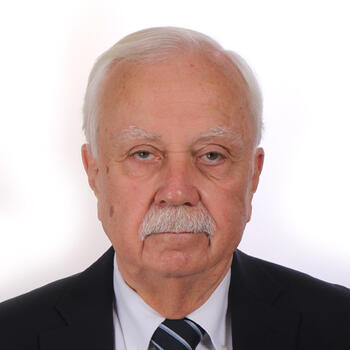
CDDRL Visiting UELP Scholar, 2021-22
ustaiev.jpeg

Nariman Ustaiev is co-founder and Director at Gasprinski Institute for Geostrategy. He is also an external advisor for the Committee on Human Rights, Deoccupation and Reintegration of Temporarily Occupied Territories in Donetsk, Luhansk Regions and Autonomous Republic of Crimea, National Minorities and Interethnic Relations of the Verkhovna Rada of Ukraine. 

His work explores the multiple dimensions of Ukraine’s foreign and security policy and their intersection with good governance based on human rights. His areas of expertise are foreign policy; political and security challenges in the Black Sea Region; and human rights and Crimean Tatar issues. 

Prior to this Nariman had worked for governmental institutions responsible for Ukraine’s security policy, namely the National Security and Defense Council, the Secretariat of the Cabinet Ministers and the State Service for the Autonomous Republic of Crimea and Sevastopol for many years. 

Nariman graduated from the Diplomatic Academy at the Ministry of Foreign Affairs of Ukraine, the Ukrainian Academy for Foreign Trade and Kyiv-Mohyla Business School. 

Encina Hall

616 Jane Stanford Way

Stanford, CA 94305-6055

0
CDDRL Visiting Scholar, 2021-23
marisa_kellam_2022.jpg

Marisa Kellam researches the quality of democracy with a focus on Latin America and a growing interest in East Asia. Her research links institutional analysis to various governance outcomes in democracies along three lines of inquiry: political parties and coalitional politics; mass electoral behavior and party system change; and democratic accountability and media freedom. She has published her research in various peer-reviewed journals, including The British Journal of Political Science, Comparative Political Studies, Party Politics, Electoral Studies, and Political Communication. Originally from Santa Rosa, California, Marisa Kellam earned her Ph.D. in political science from UCLA and spent several years as an assistant professor at Texas A&M University. Since 2013, she has been Associate Professor at Waseda University in Tokyo, Japan, where she also served as Director of the English-based degree programs for the School of Political Science & Economics. Currently she is a steering committee member for the V-Dem Regional Center for East Asia.

CV
-

About the Seminar: Domestic migration separates voters into nationally- and locally-minded electorates because migrants differ from non-migrants regarding the strength of their local identities. To demonstrate how migration alters the importance of local identities, I study sub-national variation in the nationalization of local elections: in out-migration areas, strong local identities mean that non-migrant voters are active in local politics and consider locally defined issues when voting, while weak local identities lower migrant voters' ability to do so in in-migration areas. I support my argument using household panel data and comprehensive data on cross-county migration, national and sub-national elections, and civil society organizations in contemporary Germany. My identification strategy uses a shift-share instrument for migration and exploits a large-scale welfare reform in 2005 that lastingly altered domestic migration flows. My focus on local identities calls for a reappraisal of conventional descriptions of contemporary democratic politics, which mostly examines divides in national politics. The paper identifies a new research agenda on the political consequences of domestic migration, which has important implications for our understanding of democratic polarization and local service delivery.


Image
Hans Lueders
About the Speaker: Hans Lueders holds a Ph.D. in Political Science from Stanford University and is currently a Postdoctoral Scholar at Stanford’s Center on Democracy, Development, and the Rule of Law. His research seeks to understand the causes and consequences of political inequality in different political contexts. Hans is currently working on a book project that links political inequality in contemporary democratic societies to domestic migration. Additionally, Hans researches political inequality in closed authoritarian regimes, where state institutions ensure that citizens have little political say. His work identifies little-acknowledged ways through which citizens can still influence politics despite this extreme inequality. Moreover, his research on unauthorized migration in the United States studies political inequality from the perspective of a politically marginalized group. It seeks to understand how unauthorized immigrants navigate life while being politically disenfranchised.  Hans’ work has been published in the Proceedings of the National Academy of Sciences (PNAS), the Journal of Politics, the Journal of Economics, Race, and Policy, and the European Political Science Review, among others.

Online, via Zoom

1
Hoover Fellow, Hoover Institution
CDDRL Affiliated Scholar
CDDRL Postdoctoral Scholar, 2021-22
hans_lueders.jpg

I hold a PhD in Political Science from Stanford University. My research seeks to understand the causes and consequences of inequality in political representation across different political contexts. I am currently working on a book project that links inequality in representation and rising societal and political polarization to domestic migration. The book project focuses on contemporary Germany and combines household surveys with comprehensive data on domestic migration, voting in national and local elections, civil society organizations, political campaigning, and political recruitment. In a separate, co-authored book project, I research inequality in political participation among domestic migrants in sub-Saharan Africa. My other research asks how citizens can influence policy-making in non-democratic regimes, where political inequality is extreme by construction, and how unauthorized immigrants in the United States navigate life while being marginalized. My work has been published in the American Political Science Review, Proceedings of the National Academy of Sciences (PNAS), the Journal of Politics, Democratization, the Journal of Economics, Race, and Policy, and the European Political Science Review, among others. Before coming to Stanford, I spent two years as Visiting Assistant in Research at Yale University and obtained BA and MA degrees in Political Science from Heidelberg University in Germany.

Date Label
Postdoctoral Scholar, CDDRL
Seminars
Authors
News Type
News
Date
Paragraphs

On April 21, 2021, the APARC China Program hosted Professor Erin Baggott Carter, Assistant Professor in the Department of Political Science and International Relations, University of Southern California, and Visiting Scholar at the Stanford Center on Democracy, Development and the Rule of Law. Her program, "When Beijing Goes to Washington: Autocratic Lobbying Influence in Democracies," explored how lobbying from China and China-based companies can affect policy in the United States. Professor Jean Oi, William Haas Professor of Chinese Politics and director of the APARC China Program, moderated the event.

Professor Baggot Carter based her talk on a dataset drawn from the public records of the US Foreign Agents Registration Act, which includes over 10,000 lobbying activities undertaken by the Chinese government between 2005 and 2019. According to Baggot Carter, the evidence suggests that Chinese government lobbying makes legislators at least twice as likely to sponsor legislation that is favorable to Chinese interests. Moreover, US media outlets that participated in Chinese-government sponsored trips subsequently covered China as less threatening. Coverage pivoted away from US-China military rivalry and the CCP’s persecution of religious minorities and toward US-China economic cooperation. These results suggest that autocratic lobbying poses an important challenge to democratic integrity. Watch now: 

Read More

Hero Image
United States Capitol Building from an angle Photo by Harold Mendoza on Unsplash
All News button
1
Subtitle

Professor Erin Baggot Carter tells us how autocratic lobbying affects political outcomes and media coverage in democracies.

Encina Hall
616 Jane Stanford Way
Stanford, CA 94305-6055

0
Research Scholar
mike_bennon_2022.jpg

Michael Bennon is a Research Scholar at CDDRL for the Global Infrastructure Policy Research Initiative. Michael's research interests include infrastructure policy, project finance, public-private partnerships and institutional design in the infrastructure sector. Michael also teaches Global Project Finance to graduate students at Stanford. Prior to Stanford, Michael served as a Captain in the US Army and US Army Corps of Engineers for five years, leading Engineer units, managing projects, and planning for infrastructure development in the United States, Iraq, Afghanistan and Thailand. 

Program Manager, Global Infrastructure Policy Research Initiative
-

As street protests in the U.S. grew in strength in support of racial justice, authoritarian regimes around the world offered their own interpretations of events to their people back home. The Iranian regime in particular points to the demonstrations as proof that U.S. democracy has failed. Join us as Stanford scholars discuss recent and persistent challenges to democracy in the U.S., in particular violence against the Black community and in response to recent protests.

Freeman Spogli Institute for International Studies (FSI) Director Michael McFaul will moderate a panel discussion on this trend with Larry Diamond, senior fellow at FSI and the Hoover Institution, Didi Kuo, associate director for research at the Center on Democracy, Development and the Rule of Law (CDDRL), Abbas Milani director of the Iranian Studies Program, and Nancy Okail, visiting scholar at CDDRL.

This event is online only. Register to receive a personalized link to join the Zoom webinar.

REGISTER HERE.

This event is co-sponsored by the Freeman Spogli Institute for International Studies, the Center on Democracy, Development and the Rule of Law at FSI and the Hamid and Christina Moghadam Program in Iranian Studies at Stanford.

615 Crothers Way,
Encina Commons, Room 128A
Stanford University
Stanford, CA 94305

(650) 721-4052
0
Research Fellow, Hoover Institution
abbas_milani_photo_by_babak_payami.jpg PhD

Abbas Milani is the Hamid and Christina Moghadam Director of Iranian Studies at Stanford University and a visiting professor in the department of political science. In addition, Dr. Milani is a research fellow and co-director of the Iran Democracy Project at the Hoover Institution.

Prior to coming to Stanford, Milani was a professor of history and political science and chair of the department at Notre Dame de Namur University and a research fellow at the Institute of International Studies at the University of California at Berkeley. Milani was an assistant professor in the faculty of law and political science at Tehran University and a member of the board of directors of Tehran University's Center for International Studies from 1979 to 1987. He was a research fellow at the Iranian Center for Social Research from 1977 to 1978 and an assistant professor at the National University of Iran from 1975 to 1977.

Dr. Milani is the author of Eminent Persians: Men and Women Who Made Modern Iran, 1941-1979, (Syracuse University Press, Syracuse, NY, 2 volumes, November, 2008); King of Shadows: Essays on Iran's Encounter with Modernity, Persian text published in the U.S. (Ketab Corp., Spring 2005); Lost Wisdom: Rethinking Persian Modernity in Iran, (Mage 2004); The Persian Sphinx: Amir Abbas Hoveyda and the Riddle of the Iranian Revolution (Mage, 2000); Modernity and Its Foes in Iran (Gardon Press, 1998); Tales of Two Cities: A Persian Memoir (Mage 1996); On Democracy and Socialism, a collection of articles coauthored with Faramarz Tabrizi (Pars Press, 1987); and Malraux and the Tragic Vision (Agah Press, 1982). Milani has also translated numerous books and articles into Persian and English.

Milani received his BA in political science and economics from the University of California at Berkeley in 1970 and his PhD in political science from the University of Hawaii in 1974.

Hamid and Christina Moghadam Director of Iranian Studies
Co-director of the Iran Democracy Project
CDDRL Affiliated Scholar
Date Label
Moderator

CDDRL
Stanford University
Encina Hall, C147
616 Jane Stanford Way
Stanford, CA 94305-6055

(650) 724-6448 (650) 723-1928
0
Mosbacher Senior Fellow in Global Democracy at the Freeman Spogli Institute for International Studies
William L. Clayton Senior Fellow at the Hoover Institution
Professor, by courtesy, of Political Science and Sociology
diamond_encina_hall.png MA, PhD

Larry Diamond is the William L. Clayton Senior Fellow at the Hoover Institution, the Mosbacher Senior Fellow in Global Democracy at the Freeman Spogli Institute for International Studies (FSI), and a Bass University Fellow in Undergraduate Education at Stanford University. He is also professor by courtesy of Political Science and Sociology at Stanford, where he lectures and teaches courses on democracy (including an online course on EdX). At the Hoover Institution, he co-leads the Project on Taiwan in the Indo-Pacific Region and participates in the Project on the U.S., China, and the World. At FSI, he is among the core faculty of the Center on Democracy, Development and the Rule of Law, which he directed for six and a half years. He leads FSI’s Israel Studies Program and is a member of the Program on Arab Reform and Development. He also co-leads the Global Digital Policy Incubator, based at FSI’s Cyber Policy Center. He served for 32 years as founding co-editor of the Journal of Democracy.

Diamond’s research focuses on global trends affecting freedom and democracy and on U.S. and international policies to defend and advance democracy. His book, Ill Winds: Saving Democracy from Russian Rage, Chinese Ambition, and American Complacency, analyzes the challenges confronting liberal democracy in the United States and around the world at this potential “hinge in history,” and offers an agenda for strengthening and defending democracy at home and abroad.  A paperback edition with a new preface was released by Penguin in April 2020. His other books include: In Search of Democracy (2016), The Spirit of Democracy (2008), Developing Democracy: Toward Consolidation (1999), Promoting Democracy in the 1990s (1995), and Class, Ethnicity, and Democracy in Nigeria (1989). He has edited or coedited more than fifty books, including China’s Influence and American Interests (2019, with Orville Schell), Silicon Triangle: The United States, China, Taiwan the Global Semiconductor Security (2023, with James O. Ellis Jr. and Orville Schell), and The Troubling State of India’s Democracy (2024, with Sumit Ganguly and Dinsha Mistree).

During 2002–03, Diamond served as a consultant to the US Agency for International Development (USAID) and was a contributing author of its report, Foreign Aid in the National Interest. He has advised and lectured to universities and think tanks around the world, and to the World Bank, the United Nations, the State Department, and other organizations dealing with governance and development. During the first three months of 2004, Diamond served as a senior adviser on governance to the Coalition Provisional Authority in Baghdad. His 2005 book, Squandered Victory: The American Occupation and the Bungled Effort to Bring Democracy to Iraq, was one of the first books to critically analyze America's postwar engagement in Iraq.

Among Diamond’s other edited books are Democracy in Decline?; Democratization and Authoritarianism in the Arab WorldWill China Democratize?; and Liberation Technology: Social Media and the Struggle for Democracy, all edited with Marc F. Plattner; and Politics and Culture in Contemporary Iran, with Abbas Milani. With Juan J. Linz and Seymour Martin Lipset, he edited the series, Democracy in Developing Countries, which helped to shape a new generation of comparative study of democratic development.

Download full-resolution headshot; photo credit: Rod Searcey.

Former Director of the Center on Democracy, Development and the Rule of Law
Faculty Chair, Jan Koum Israel Studies Program
Date Label
Panelist

Encina Hall, C150
616 Jane Stanford Way
Stanford, CA 94305

0
Center Fellow, Freeman Spogli Institute for International Studies
didi_kuo_2023.jpg

Didi Kuo is a Center Fellow at the Freeman Spogli Institute for International Studies (FSI) at Stanford University. She is a scholar of comparative politics with a focus on democratization, corruption and clientelism, political parties and institutions, and political reform. She is the author of The Great Retreat: How Political Parties Should Behave and Why They Don’t (Oxford University Press) and Clientelism, Capitalism, and Democracy: the rise of programmatic politics in the United States and Britain (Cambridge University Press, 2018).

She has been at Stanford since 2013 as the manager of the Program on American Democracy in Comparative Perspective and is co-director of the Fisher Family Honors Program at CDDRL. She was an Eric and Wendy Schmidt Fellow at New America and is a non-resident fellow with the Carnegie Endowment for International Peace. She received a PhD in political science from Harvard University, an MSc in Economic and Social History from Oxford University, where she studied as a Marshall Scholar, and a BA from Emory University.

Date Label

Encina Hall
616 Jane Stanford Way
Stanford, CA 94305-6055

0
Senior Fellow, Freeman Spogli Institute for International Studies
Ken Olivier and Angela Nomellini Professor of International Studies, Department of Political Science
Peter and Helen Bing Senior Fellow, Hoover Institution
mcfaul_headshot_2025.jpg PhD

Michael McFaul is the Ken Olivier and Angela Nomellini Professor of International Studies in Political Science, Senior Fellow at the Freeman Spogli Institute for International Studies, and the Peter and Helen Bing Senior Fellow at the Hoover Institution, all at Stanford University. He joined the Stanford faculty in 1995 and served as FSI Director from 2015 to 2025. He is also an international affairs analyst for MSNOW.

McFaul served for five years in the Obama administration, first as Special Assistant to the President and Senior Director for Russian and Eurasian Affairs at the National Security Council at the White House (2009-2012), and then as U.S. Ambassador to the Russian Federation (2012-2014).

McFaul has authored ten books and edited several others, including, most recently, Autocrats vs. Democrats: China, Russia, America, and the New Global Disorder, as well as From Cold War to Hot Peace: An American Ambassador in Putin’s Russia, (a New York Times bestseller) Advancing Democracy Abroad: Why We Should, How We Can; and Russia’s Unfinished Revolution: Political Change from Gorbachev to Putin.

He is a recipient of numerous awards, including an honorary PhD from Montana State University; the Order for Merits to Lithuania from President Gitanas Nausea of Lithuania; Order of Merit of Third Degree from President Volodymyr Zelenskyy of Ukraine, and the Dean’s Award for Distinguished Teaching at Stanford University. In 2015, he was the Distinguished Mingde Faculty Fellow at the Stanford Center at Peking University.

McFaul was born and raised in Montana. He received his B.A. in International Relations and Slavic Languages and his M.A. in Soviet and East European Studies from Stanford University in 1986. As a Rhodes Scholar, he completed his D. Phil. in International Relations at Oxford University in 1991. 

CV
Date Label
Panelist
Seminars
News Type
Commentary
Date
Paragraphs

"Freedom is inseparable from human dignity," says LarryDiamond for Bertelsmann Foundation talks on "How to Fix Democracy." The crisis is “bad, deepening, accelerating,” but he suggests several steps we can take to reverse the trend, such as ranked-choice voting to tackle the two-party system, and spreading “motor voter” laws to increase the number of registered voters. Watch the video here

Hero Image
screen shot 2020 02 03 at 11 11 47 am
All News button
1
Paragraphs
Ill Winds book cover

Larry Diamond has made it his life’s work to secure democracy’s future by understanding its past and by advising dissidents fighting autocracy around the world. Deeply attuned to the cycles of democratic expansion and decay that determine the fates of nations, he watched with mounting unease as illiberal rulers rose in Hungary, Poland, Turkey, the Philippines, and beyond, while China and Russia grew increasingly bold and bullying. Then, with Trump’s election at home, the global retreat from freedom spread from democracy’s margins to its heart.

Ill Winds’ core argument is stark: the defense and advancement of democratic ideals relies on U.S. global leadership. If we do not reclaim our traditional place as the keystone of democracy, today’s authoritarian swell could become a tsunami, providing an opening for Vladimir Putin, Xi Jinping, and their admirers to turn the twenty-first century into a dark time of despotism.

We are at a hinge in history, between a new era of tyranny and an age of democratic renewal. Free governments can defend their values; free citizens can exercise their rights. We can make the internet safe for liberal democracy, exploit the soft, kleptocratic underbelly of dictatorships, and revive America’s degraded democracy. Ill Winds offers concrete, deeply informed suggestions to fight polarization, reduce the influence of money in politics, and make every vote count.

In 2019, freedom’s last line of defense still remains “We the people.”

All Publications button
1
Publication Type
Books
Publication Date
Subtitle
From America’s leading scholar of democracy, a personal, passionate call to action against the rising authoritarianism that challenges our world order—and the very value of liberty.
Authors
Larry Diamond
Book Publisher
Penguin Books
-

Stanford's Poverty, Violence and Governance Lab is hosting a two day conference that seeks to advance understanding of the causes and consequences of human rights violations in both dictatorships and democracies. It brings together researchers studying repression – including illegal detention, police killings, and censorship – to better understand the conditions under which states violate human rights, and how this affects the relationship between the state and its citizens. CLICK HERE FOR THE CONFERENCE PAGE.

Keynote Speaker: Tamara Taraciuk Broner (Human Rights Watch)
 
Participants:
  • Risa Kitagawa (Department of Political Science, Northeastern)
  • Consuelo Amat (Center on Philanthropy and Civil Society, Stanford)
  • Harold Trinkunas (Center for International Security and Cooperation, Stanford)  
  • Christian Davenport (Department of Political Science, University of Michigan)
  • Martin Dimitrov (Department of Political Science, Tulane)
  • Jane Esberg (Department of Political Science, Stanford)
  • Omar Garcia Ponce (Department of Political Science, UC Davis)
  • Beatriz Magaloni (Department of Political Science, Stanford)
  • Elizabeth Nugent (Department of Political Science, Yale)
  • Jennifer Pan (Department of Communication, Stanford)
  • Luis Alberto Rodriguez (Department of Political Science, Stanford)
  • Arturas Rozenas (Department of Politics, NYU)
  • Scott Williamson (Department of Political Science, Stanford)
  • Lauren Young (Department of Political Science, UC Davis)


Keynote Speaker Bio

Image
201801americas tamara headshot
Tamara Taraciuk Broner,  Senior Americas Researcher,  joined Human Rights Watch as a fellow in September 2005. After a year, she became HRW’s Mexico researcher (2006-2009), and is currently a senior researcher with Human Rights Watch’s Americas Division, covering several countries in the region. She previously was a junior scholar at the Latin American Program of the Woodrow Wilson International Center for Scholars, where she coordinated a project on citizen security in Latin America, and worked at the Inter-American Commission on Human Rights of the Organization of American States (OAS). Taraciuk was born in Venezuela, and grew up in Argentina, where she studied law at Torcuato Di Tella University. She holds a post-graduate diploma on human rights and transitional justice from the University of Chile, and a Master’s degree in Law (LLM) from Columbia Law School.


THIS EVENT IS CO-SPONSORED BY:

[[{"fid":"236200","view_mode":"crop_870xauto","fields":{"format":"crop_870xauto","field_file_image_description[und][0][value]":"","field_file_image_alt_text[und][0][value]":false,"field_file_image_title_text[und][0][value]":false,"field_credit[und][0][value]":"","field_caption[und][0][value]":"","thumbnails":"crop_870xauto"},"link_text":null,"type":"media","field_deltas":{"3":{"format":"crop_870xauto","field_file_image_description[und][0][value]":"","field_file_image_alt_text[und][0][value]":false,"field_file_image_title_text[und][0][value]":false,"field_credit[und][0][value]":"","field_caption[und][0][value]":"","thumbnails":"crop_870xauto"}},"attributes":{"class":"media-element file-crop-870xauto","data-delta":"3"}}]]

Dept. of Political Science
Encina Hall, Room 436
Stanford University,
Stanford, CA

(650) 724-5949
0
Senior Fellow at the Freeman Spogli Institute for International Studies
Graham H. Stuart Professor of International Relations
Professor of Political Science
beatriz_magaloni_2024.jpg MA, PhD

Beatriz Magaloni Magaloni is the Graham Stuart Professor of International Relations at the Department of Political Science. Magaloni is also a Senior Fellow at the Freeman Spogli Institute, where she holds affiliations with the Center on Democracy, Development and the Rule of Law (CDDRL) and the Center for International Security and Cooperation (CISAC). She is also a Stanford’s King Center for Global Development faculty affiliate. Magaloni has taught at Stanford University for over two decades.

She leads the Poverty, Violence, and Governance Lab (Povgov). Founded by Magaloni in 2010, Povgov is one of Stanford University’s leading impact-driven knowledge production laboratories in the social sciences. Under her leadership, Povgov has innovated and advanced a host of cutting-edge research agendas to reduce violence and poverty and promote peace, security, and human rights.

Magaloni’s work has contributed to the study of authoritarian politics, poverty alleviation, indigenous governance, and, more recently, violence, crime, security institutions, and human rights. Her first book, Voting for Autocracy: Hegemonic Party Survival and its Demise in Mexico (Cambridge University Press, 2006) is widely recognized as a seminal study in the field of comparative politics. It received the 2007 Leon Epstein Award for the Best Book published in the previous two years in the area of political parties and organizations, as well as the Best Book Award from the American Political Science Association’s Comparative Democratization Section. Her second book The Politics of Poverty Relief: Strategies of Vote Buying and Social Policies in Mexico (with Alberto Diaz-Cayeros and Federico Estevez) (Cambridge University Press, 2016) explores how politics shapes poverty alleviation.

Magaloni’s work was published in leading journals, including the American Political Science Review, American Journal of Political Science, Criminology & Public Policy, World Development, Comparative Political Studies, Annual Review of Political Science, Cambridge Journal of Evidence-Based Policing, Latin American Research Review, and others.

Magaloni received wide international acclaim for identifying innovative solutions for salient societal problems through impact-driven research. In 2023, she was named winner of the world-renowned Stockholm Prize in Criminology, considered an equivalent of the Nobel Prize in the field of criminology. The award recognized her extensive research on crime, policing, and human rights in Mexico and Brazil. Magaloni’s research production in this area was also recognized by the American Political Science Association, which named her recipient of the 2021 Heinz I. Eulau Award for the best article published in the American Political Science Review, the leading journal in the discipline.

She received her Ph.D. in political science from Duke University and holds a law degree from the Instituto Tecnológico Autónomo de México.

Director, Poverty, Violence, and Governance Lab
Co-director, Democracy Action Lab
CV
Date Label
Tamara Taraciuk Broner
Conferences
-
Please join Stanford's Center on Democracy, Development, and the Rule of Law (CDDRL) on Tuesday, February 19, 2019 for a conversation with Larry Summers on US-China relations.  Summers will be joined in coversation with Francis Fukuyama, the Mosbacher Director of CDDRL. 
 

Speaker Bio

Image
summers 2 200x300
Former Treasury Secretary Lawrence H. Summers is one of America’s leading economists. In addition to serving as 71st Secretary of the Treasury in the Clinton Administration, Dr. Summers served as Director of the White House National Economic Council in the Obama Administration, as President of Harvard University, and as the Chief Economist of the World Bank.Currently, Dr. Summers is the President Emeritus and the Charles W. Eliot University Professor at Harvard University, where he became a full professor at age 28, one of the youngest in Harvard’s recent history. He directs the University’s Mossavar-Rahmani Center for Business and Government. Summers was the first social scientist to receive the National Science Foundation’s Alan Waterman Award for scientific achievement and, in 1993, he was awarded the John Bates Clark Medal, given to the most outstanding economist under 40 in the United States. He was elected to the National Academy of Sciences in 2002. He has published more than 150 papers in scholarly journals.


Stanford Institute for Economic Policy Research 366 Galvez Street Stanford, CA 94305
Lawrence H. Summers Charles W. Eliot University Professor and President Emeritus at Harvard University

Encina Hall, C148
616 Jane Stanford Way
Stanford, CA 94305

0
Olivier Nomellini Senior Fellow at the Freeman Spogli Institute for International Studies
Director of the Ford Dorsey Master's in International Policy
Research Affiliate at The Europe Center
Professor by Courtesy, Department of Political Science
yff-2021-14290_6500x4500_square.jpg

Francis Fukuyama is the Olivier Nomellini Senior Fellow at Stanford University's Freeman Spogli Institute for International Studies (FSI), and a faculty member of FSI's Center on Democracy, Development and the Rule of Law (CDDRL). He is also Director of Stanford's Ford Dorsey Master's in International Policy, and a professor (by courtesy) of Political Science.

Dr. Fukuyama has written widely on issues in development and international politics. His 1992 book, The End of History and the Last Man, has appeared in over twenty foreign editions. His book In the Realm of the Last Man: A Memoir will be published in fall 2026.

Francis Fukuyama received his B.A. from Cornell University in classics, and his Ph.D. from Harvard in Political Science. He was a member of the Political Science Department of the RAND Corporation, and of the Policy Planning Staff of the US Department of State. From 1996-2000 he was Omer L. and Nancy Hirst Professor of Public Policy at the School of Public Policy at George Mason University, and from 2001-2010 he was Bernard L. Schwartz Professor of International Political Economy at the Paul H. Nitze School of Advanced International Studies, Johns Hopkins University. He served as a member of the President’s Council on Bioethics from 2001-2004. He is editor-in-chief of American Purpose, an online journal.

Dr. Fukuyama holds honorary doctorates from Connecticut College, Doane College, Doshisha University (Japan), Kansai University (Japan), Aarhus University (Denmark), the Pardee Rand Graduate School, and Adam Mickiewicz University (Poland). He is a non-resident fellow at the Carnegie Endowment for International Peace. He is a member of the Board of Trustees of the Rand Corporation, the Board of Trustees of Freedom House, and the Board of the Volcker Alliance. He is a fellow of the National Academy for Public Administration, a member of the American Political Science Association, and of the Council on Foreign Relations. He is married to Laura Holmgren and has three children.

(October 2025)

CV
Date Label
Olivier Nomellini Senior Fellow at the Freeman Spogli Institute for International Studies (FSI), and Mosbacher Director of FSI's Center on Democracy, Development, and the Rule of Law.
Lectures
Subscribe to North America