-
Students and faculty pose in front of the Lincoln Memorial during Honors College in Washington, D.C.

The Center on Democracy, Development and the Rule of Law (CDDRL) will be accepting applications from eligible juniors from any university department who are interested in writing their senior thesis on a subject touching upon democracy, economic development, and rule of law (DDRL). 

Join CDDRL faculty and current honors students on Wednesday, January 21, at 12:00 pm, to discuss the program and answer questions.

The application period opens on January 5, 2026, and runs through February 13, 2026.

For more information on the Fisher Family CDDRL Honors Program, please click here.

CDDRL
Encina Hall, C152
616 Jane Stanford Way
Stanford, CA 94305-6055

(650) 725-2705 (650) 724-2996
0
Senior Fellow at the Freeman Spogli Institute for International Studies
Professor, by courtesy, of Political Science
Stedman_Steve.jpg PhD

Stephen Stedman is a Senior Fellow at the Freeman Spogli Institute for International Studies (FSI) and the Center on Democracy, Development and the Rule of Law (CDDRL), an affiliated faculty member at CISAC, and professor of political science (by courtesy) at Stanford University. He is director of CDDRL's Fisher Family Honors Program in Democracy, Development and Rule of Law, and will be faculty director of the Program on International Relations in the School of Humanities and Sciences effective Fall 2025.

In 2011-12 Professor Stedman served as the Director for the Global Commission on Elections, Democracy, and Security, a body of eminent persons tasked with developing recommendations on promoting and protecting the integrity of elections and international electoral assistance. The Commission is a joint project of the Kofi Annan Foundation and International IDEA, an intergovernmental organization that works on international democracy and electoral assistance.

In 2003-04 Professor Stedman was Research Director of the United Nations High-level Panel on Threats, Challenges and Change and was a principal drafter of the Panel’s report, A More Secure World: Our Shared Responsibility.

In 2005 he served as Assistant Secretary-General and Special Advisor to the Secretary- General of the United Nations, with responsibility for working with governments to adopt the Panel’s recommendations for strengthening collective security and for implementing changes within the United Nations Secretariat, including the creation of a Peacebuilding Support Office, a Counter Terrorism Task Force, and a Policy Committee to act as a cabinet to the Secretary-General.

His most recent book, with Bruce Jones and Carlos Pascual, is Power and Responsibility: Creating International Order in an Era of Transnational Threats (Washington DC: Brookings Institution, 2009).

Director, Fisher Family Honors Program in Democracy, Development and Rule of Law
Director, Program in International Relations
Affiliated faculty at the Center for International Security and Cooperation
Date Label

Encina Hall, Suite 052
616 Jane Stanford Way
Stanford, CA 94305-6055

0
Research Scholar
Research Manager, Democracy Action Lab
Poverty, Violence, and Governance Lab Research Affiliate, 2024-25
CDDRL Postdoctoral Fellow, 2023-24
maria_curiel_2024.jpg

María Ignacia Curiel is a Research Scholar at the Center on Democracy, Development and the Rule of Law and Research Affiliate of the Poverty, Violence and Governance Lab at Stanford University. Curiel is an empirical political scientist using experimental, observational, and qualitative data to study questions of violence and democratic participation, peacebuilding, and representation.

Her research primarily explores political solutions to violent conflict and the electoral participation of parties with violent origins. This work includes an in-depth empirical study of Comunes, the Colombian political party formed by the former FARC guerrilla, as well as a broader analysis of rebel party behaviors across different contexts. More recently, her research has focused on democratic mobilization and the political representation of groups affected by violence in Colombia, Mexico, and Venezuela.

Curiel's work has been supported by the Folke Bernadotte Academy, the Institute for Humane Studies, and the APSA Centennial Center and is published in the Journal of Politics. She holds a Ph.D. in Political Science and dual B.A. degrees in Economics and Political Science from New York University.

Date Label
Date Label
-
Sanjeev Khagram seminar

This seminar will introduce the prototype of an innovative new AI-powered decision-making intelligence platform that forecasts country trajectories with scenario analysis, predictive analytics, hotspot detection, causal explanations through large language models, etc., for a range of outcomes central to CDDRL and FSI's missions — effective governance, human security, and sustainable development. The initial use case is for political resilience and its inverse, fragility, conflict, and violence.

ABOUT THE SPEAKER

Dr. Sanjeev Khagram is a world-renowned leader, entrepreneur, scholar, and professor across the academic, private, public, and civic sectors. His specialities include global leadership and management across sectors, entrepreneurship and innovation, the data revolution and 4th Industrial Revolution — including AI, sustainable development and human security, good governance and accountability, globalization and transnationalism, public-private partnerships and multi-stakeholder networks. Dr. Khagram holds all of his transdisciplinary bachelor's, master's, and doctoral degrees from Stanford University. He has lived and worked for extended periods in Australia, Brazil, China, Kenya, India, Indonesia, Mexico, Nigeria, the GCC, Germany, South Africa, Thailand, and the United Kingdom.

Dr. Sanjeev Khagram is currently a Visiting Scholar at Stanford University’s Center for Democracy, Development and the Rule of Law and Department of Management Science and Engineering.  He is also a Distinguished Visiting Fellow with the Hoover Institution's Emerging Markets Working Group, where he leads the Global Reslience Intelligence Platform Partnership (GRIPP), and at the Center for Sustainable Development and Global Competitiveness, where he leads the AI and Sustainability Initiative at Stanford.

Khagram was most recently CEO, Director-General, and Dean of the Thunderbird School of Global Management, 2018-2024, which he took to #1 in International Trade with QS World University Rankings. He is on leave from his position as Foundation Professor of Global Leadership and Global Futures at the Thunderbird School of Global Management, Arizona State University.  Previously, he was the inaugural Young Professor of Global Political Economy at Occidental College, Wyss Scholar at the Harvard Business School, Founding Director of the Lindenberg Center for International Development, Professor at the University of Washington, and Associate Professor at Harvard’s Kennedy School of Government.

Dr. Khagram is an award-winning scholar and teacher. Dr. Khagram has published widely including the award winning book Dams and Development with Cornell University Press; Restructuring World Politics with University of Minnesota Press; The Transnational Studies Reader with Routledge Press; Open Budgets: The Political Economy of Transparency, Participation and Accountability with Brookings Press; "Inequality and Corruption" in the American Journal of Sociology; "Future Architectures of Global Governance" in Global Governance, "Environment and Security" in the Annual Review of Environment and Resources, “Towards a Platinum Standard for Evidence-Based Assessment,” in Public Administration Review, “Social Balance Sheets” in Harvard Business Review, “Evidence for Development Effectiveness” in the Journal of Development Effectiveness, and “From Human Security and the Environment to Sustainable Security and Development,” in the Journal of Human Development.

Dr. Khagram has worked extensively in global leadership roles across international organizations, government, business, and civil society from the local to the international levels around the world. Dr. Khagram has established and led a range of global multi-stakeholder initiatives over the last three decades, including the Global Carbon Removal Partnership, Global Partnership for Sustainable Development Data, the Global Initiative for Fiscal Transparency, and the World Commission on Dams, authoring its widely acclaimed final report.  

Dr. Khagram was selected as a Young Global Leader at the World Economic Forum, was a senior advisor to United Nations Secretary General Ban Ki-Moon, Dean of the Desmond Tutu Peace Centre, and Founder/CEO of Innovations for Scaling Impact – a global technology enterprise solutions network. He is currently Chair of the Board of United Platform Solutions (an African AI-IOT Pollution Monitoring Venture) and Vice Chair of Altos Bank (the first new bank in Silicon Valley since 2008).

Dr. Khagram was born in Uganda as a fourth-generation East African Indian.  He and his family were expelled by Idi Amin and spent several years in refugee camps before being provided asylum in the United States in the 1970s.  He has lived and worked across all regions of the world and travelled to over 140 countries.

Kathryn Stoner
Kathryn Stoner

Virtual to Public. If prompted for a password, use: 123456
Only those with an active Stanford ID with access to Philippines Conference Room in Encina Hall may attend in person.

0
CDDRL Visiting Scholar, 2025-26
CISAC Visiting Scholar, 2024-25
dr.sanjeevkhagramphoto.jpg

Dr. Sanjeev Khagram is a world-renowned leader, entrepreneur, scholar, and professor across the academic, private, public, and civic sectors. His specialities include global leadership and management across sectors, entrepreneurship and innovation, the data revolution and 4th Industrial Revolution — including AI, sustainable development and human security, good governance and accountability, globalization and transnationalism, public-private partnerships and multi-stakeholder networks. Dr. Khagram holds all of his transdisciplinary bachelor's, master's, and doctoral degrees from Stanford University. He has lived and worked for extended periods in Australia, Brazil, China, Kenya, India, Indonesia, Mexico, Nigeria, the GCC, Germany, South Africa, Thailand, and the United Kingdom.

Dr. Sanjeev Khagram is currently a Visiting Scholar at Stanford University’s Center for Democracy, Development and the Rule of Law and Department of Management Science and Engineering.  He is also a Distinguished Visiting Fellow with the Hoover Institution's Emerging Markets Working Group, where he leads the Global Reslience Intelligence Platform Partnership (GRIPP), and at the Center for Sustainable Development and Global Competitiveness, where he leads the AI and Sustainability Initiative at Stanford.

Khagram was most recently CEO, Director-General, and Dean of the Thunderbird School of Global Management, 2018-2024, which he took to #1 in International Trade with QS World University Rankings. He is on leave from his position as Foundation Professor of Global Leadership and Global Futures at the Thunderbird School of Global Management, Arizona State University.  Previously, he was the inaugural Young Professor of Global Political Economy at Occidental College, Wyss Scholar at the Harvard Business School, Founding Director of the Lindenberg Center for International Development, Professor at the University of Washington, and Associate Professor at Harvard’s Kennedy School of Government.

Dr. Khagram is an award-winning scholar and teacher. Dr. Khagram has published widely including the award winning book Dams and Development with Cornell University Press; Restructuring World Politics with University of Minnesota Press; The Transnational Studies Reader with Routledge Press; Open Budgets: The Political Economy of Transparency, Participation and Accountability with Brookings Press; "Inequality and Corruption" in the American Journal of Sociology; "Future Architectures of Global Governance" in Global Governance, "Environment and Security" in the Annual Review of Environment and Resources, “Towards a Platinum Standard for Evidence-Based Assessment,” in Public Administration Review, “Social Balance Sheets” in Harvard Business Review, “Evidence for Development Effectiveness” in the Journal of Development Effectiveness, and “From Human Security and the Environment to Sustainable Security and Development,” in the Journal of Human Development.

Dr. Khagram has worked extensively in global leadership roles across international organizations, government, business, and civil society from the local to the international levels around the world. Dr. Khagram has established and led a range of global multi-stakeholder initiatives over the last three decades, including the Global Carbon Removal Partnership, Global Partnership for Sustainable Development Data, the Global Initiative for Fiscal Transparency, and the World Commission on Dams, authoring its widely acclaimed final report.  

Dr. Khagram was selected as a Young Global Leader at the World Economic Forum, was a senior advisor to United Nations Secretary General Ban Ki-Moon, Dean of the Desmond Tutu Peace Centre, and Founder/CEO of Innovations for Scaling Impact – a global technology enterprise solutions network. He is currently Chair of the Board of United Platform Solutions (an African AI-IOT Pollution Monitoring Venture) and Vice Chair of Altos Bank (the first new bank in Silicon Valley since 2008).

Dr. Khagram was born in Uganda as a fourth-generation East African Indian.  He and his family were expelled by Idi Amin and spent several years in refugee camps before being provided asylum in the United States in the 1970s.  He has lived and worked across all regions of the world and travelled to over 140 countries.

Date Label
Sanjeev Khagram CDDRL Visiting Scholar FSI
Seminars
Date Label
Authors
Larry Diamond
News Type
Commentary
Date
Paragraphs

As we gather here to celebrate freedom and to recommit ourselves to the democratic cause, we face a powerful authoritarian tide. The remarkable third wave of global democratization ran out of steam two decades ago. Since then, many countries have fallen under the spell of illiberal and even authoritarian populism. Anti-establishment parties have swept into power promising to elevate “the people” over corrupt ruling elites and decrepit institutions, only to betray them more deeply through corruption and abuse of power. These include not just emerging-market democracies like Venezuela and Turkey but wealthier democracies in Europe and the United States, whose stability as liberal democracies we took for granted. 

In this global trend away from freedom, authoritarian populists have implemented a common playbook to polarize politics, punish independent media and civil society, undermine judicial independence, purge neutral watchdog institutions, politicize the civil service and security apparatus, and weaponize the state to persecute critics and opponents.

Once this authoritarian project settles into power, truth decays, the rule of law crumbles, fear sets in, and submission becomes the norm. Moreover, authoritarian populists draw from one another — and from powerful autocracies like Russia and China — the narrative arguments, political techniques, resource flows, and technological tools to accelerate their bids for hegemony.


The longer these authoritarian parties are in power, the more they eviscerate democratic institutions. But they are not invincible or irreversible.
Larry Diamond
Mosbacher Senior Fellow in Global Democracy, FSI


The longer these authoritarian parties are in power, the more they eviscerate democratic institutions. But they are not invincible or irreversible. Incipient authoritarianism has been turned back in countries as diverse as Brazil, Poland, Sri Lanka, and Senegal. The slide away from liberal democracy has been reversed recently in Botswana and Mauritius. An executive coup against democracy was defeated in South Korea. Young people in Bangladesh overthrew a dictator last year in a remarkable upsurge of protest. And the longstanding autocracies in Venezuela and Turkey are looking increasingly desperate and unpopular. These examples bear lessons we must learn and promote if we are to ignite — as we surely can — a new era of democratic progress.

First, we must study what it takes to defeat autocrats at the ballot box. Typically, electoral battles are not a straight contrast between democracy and autocracy. Voters weigh their circumstances of life as well. Fortunately, autocrats have other failings besides their corruption, lawlessness, and abuse of power: sooner or later, they fail to deliver on their material promises. Successful democratic campaigns target the populists’ hypocrisy and address not just people’s political rights but their economic and social needs. 

To defeat autocrats, democratic forces must offer specific, credible plans to meet the core policy challenges of economic growth and distribution, fairness and inclusion, education, health care, infrastructure, public safety, and national security. 

But people everywhere also need a vision of what constitutes a good and just form of government. Here, democracies have dropped the ball in making the case FOR democracy as the best form of government. Decades ago, as they fought dictatorships and then came to power, democracies taught their young people the values, ideas, and history of democracy. But as new democracies stabilized, the existence of a democratic culture came to be assumed, and countries forgot the terrible price they paid under dictatorship — the fear, falsehoods, powerlessness, and repression, the lack of accountability, voice, justice, and human dignity. We can make the practical case for democracy — it performs better over time. But we cannot pin the argument on performance, which may fail at specific points in time.


Ultimately, the case for democracy is that being able to speak truth to power, to hold it accountable, and to change those who exercise it is a core element of human dignity and a basic human right.
Larry Diamond
Mosbacher Senior Fellow in Global Democracy, FSI


Ultimately, the case for democracy is that being able to speak truth to power, to hold it accountable, and to change those who exercise it is a core element of human dignity and a basic human right. The freedoms to speak, publish, pray, organize, and assemble are inalienable human rights. As are the rights to a fair and impartial trial and to have all citizens be treated equally under the law. It is only democracy — never autocracy — that protects these rights and treats citizens with dignity by investing sovereignty in them, not some self-appointed minority. Liberty and democracy are intertwined.

We must make these points relentlessly, creatively, and convincingly, not just in the schools, at successively higher levels of instruction and deliberation, but through the social media platforms where people live their information lives. Russia, China, Iran, and other autocracies wage extensive propaganda campaigns to trash liberal values and institutions. They portray democracy as lacking in dynamism, capacity, and masculine strength. These arguments are false, offensive, and degrading to the human spirit. But they will not fail of their own accord. They need to be defeated by better, more inspiring arguments and narratives about why people need freedom to thrive, and why societies need democracy to have freedom.

Today, there are four arenas of struggle for the future of freedom, and democrats must prevail in all of them. The core battle is now in the countries that have been sliding back from democracy to autocracy. 


In almost every instance where authoritarian projects have been defeated, it has been through elections. Illiberal populists crave the legitimacy that comes from victory in multiparty elections. But corruption and misrule erode their electoral support. So, they need elections that are competitive enough to validate their claim to rule but rigged enough to minimize the risk of defeat. The pathway to restoring democracy is to seize the electoral opportunity, flood the zone with election workers and observers, and wage an effective campaign so that people who have grown weary of authoritarian abuse can defeat it at the ballot box.

To win, democrats must forge a unified coalition across factional and ideological divides. They must offer concrete policy ideas to improve people’s lives. They need a narrative about what has happened to justice and democracy, and why restoring these will help to make the country great again. A campaign is not a legal brief. It must inspire and excite. It requires strong, compelling leadership. It must engage diverse sections of society, including people who once supported the authoritarian populists but are now disillusioned. Democrats must also express patriotism and show that illiberal populists wave a false flag. Democrats are the truer patriots because they recognize democracy and liberty as pillars of national greatness.

These lessons can help to restore democracy where it has been lost and to secure it in a second arena, when it is under challenge from authoritarian populist parties. But there are two other arenas of struggle in which we must prevail. Globally, democrats cannot let the world’s powerful authoritarian states capture and hollow out the global institutions to defend freedom — the UN Human Rights Council, the international and regional instruments of electoral observation and assistance, and the rules that govern the flows of data and information. Neither can we shrink from the global battle to support democratic values and free flows of information, and to lend technical and financial support to peoples, parties, media, and movements around the world struggling for freedom. 

In the face of isolationist efforts to defund and withdraw from this cause, we must convince democratic publics that we can only secure our own freedom by supporting that of others. A more democratic world will be a safer, fairer, less corrupt, more peaceful, and prosperous world.


There is no more urgent priority than to give the Ukrainian people the weapons, resources, and economic sanctions to defeat Russian aggression. Similarly, we must ensure that Taiwan’s democracy does not suffer the same aggression from the People’s Republic of China.
Larry Diamond
Mosbacher Senior Fellow in Global Democracy, FSI


All of that has been under existential challenge in Ukraine since Russia’s brutal invasion in February of 2022. Resisting aggression is the fourth arena of struggle. There is no more urgent priority than to give the Ukrainian people the weapons, resources, and economic sanctions to defeat Russian aggression. Similarly, we must ensure that Taiwan’s democracy does not suffer the same aggression from the People’s Republic of China. Taiwan must have the weapons, trade, and international dignity it needs to survive. We must preserve the status quo across the strait by making clear that the US and other democracies stand behind the resolve of a free people to chart their own destiny in Taiwan — as we do in Ukraine.

We meet here today just a short distance from the grotesque wall that stood for decades as the dividing line between freedom and tyranny. 36 years ago — almost to this day — the wall was torn down. Few imagined it would happen when it did. But it did because of democratic conviction and resolve. Now, we are in a new cold war with global authoritarianism. The history of Berlin should constantly remind us that freedom is fragile, but it can also be resilient. We must never lose faith in the rightness of our cause and the obligation we bear once again to defend freedom in an hour of peril.

Professor Diamond delivered this speech at the Berlin Freedom Conference on November 10, 2025.

Read More

Sunset with overlaid American flag and Statue of Liberty
Q&As

Turbulent Times For Democracy

Hoover scholar Larry Diamond calls for respect, collaboration, and a crackdown on young people’s smartphones.
Turbulent Times For Democracy
Larry Diamond on World Class Podcast
Commentary

How Democracy Is Doing Around the World

On the World Class podcast, Larry Diamond and Michael McFaul compare how civic discourse and political institutions are holding up in the United States, South Korea, Taiwan, and other democracies.
How Democracy Is Doing Around the World
Larry Diamond and Francis Fukuyama speaking at a round table in front of a wall of books on a shelf.
Commentary

CDDRL Scholars Explore Impacts of Executive Orders and Policy Changes on Global Democracy

In a new video series, Francis Fukuyama and Larry Diamond discuss how democracy-promoting programs are being eroded under the new administration.
CDDRL Scholars Explore Impacts of Executive Orders and Policy Changes on Global Democracy
Hero Image
Larry Diamond delivered remarks to the Berlin Freedom Conference on November 10, 2025.
Larry Diamond delivered remarks to the Berlin Freedom Conference on November 10, 2025. | Courtesy of Democracy Without Borders
All News button
1
Subtitle

Professor Larry Diamond's remarks to the Berlin Freedom Conference, November 10, 2025.

Date Label
-
Mr. Nobody Against Putin film poster

Mr. Nobody Against Putin is a 2025 documentary film that premiered at the 2025 Sundance Film Festival, where it won the World Cinema Documentary Special Jury Award.

The film follows a rural Russian teacher who resists state propaganda in his school after the invasion of Ukraine. Filmed over two years by videographer Pavel “Pasha” Talankin at Karabash Primary School #1, it reveals how he secretly documented the growing pressure to promote patriotic education and his quiet defiance under an increasingly repressive system.

Co-sponsored by the Center on Democracy, Development and the Rule of Law (CDDRL) and the Center for Russian, East European and Eurasian Studies (CREEES).

Screening is open to the public. Seating is limited — please register in advance. The film is in Russian with English subtitles.

Encina Commons 123 (615 Crothers Way, Stanford)

Film Screenings
Date Label
Authors
Nora Sulots
News Type
News
Date
Paragraphs

The Fisher Family Summer Fellows on Democracy and Development Program at Stanford University's Center on Democracy, Development and the Rule of Law is now accepting applications for our summer 2026 program. The deadline to apply is 11:59 pm PST on Thursday, January 15, 2026.

The program brings together an annual cohort of approximately 30 mid-career practitioners from countries in political transition who are working to advance democratic practices and enact economic and legal reform to promote human development. Launched by CDDRL in 2005, the program was previously known as the Draper Hills Summer Fellows Program. The new name reflects an endowment gift from the Fisher family — Sakurako (Sako), ‘82, and William (Bill), MBA ‘84 — that secures the future of this important and impactful program.

From Afghanistan to Zimbabwe, our program participants are selected from among hundreds of applicants every year for the significant contributions they have already made to their societies and their potential to make an even greater impact with some help from Stanford. We aim to give them the opportunity to join a global network of over 500 alumni from 97 countries who have all faced similar sets of challenges in bringing change to their countries.

The Fisher Family Summer Fellows Program provides an intensive 3-week on-campus forum for civil society leaders to exchange experiences and receive academic and policy training to enrich their knowledge and advance their work. Delivered by a leading Stanford faculty team composed of Michael McFaul, Kathryn Stoner, Francis Fukuyama, Larry Diamond, Erik Jensen, and more, the program allows emerging and established global leaders to explore new institutional models and frameworks to enhance their ability to promote good governance, accountable politics, and find new ways to achieve economic development in their home countries.

Prospective fellows from Ukraine are also invited to apply for our Strengthening Ukrainian Democracy and Development (SU-DD) Program, which runs concurrently with the Fisher Family Summer Fellows Program. The SU-DD program provides a unique opportunity for mid-career practitioners working on well-defined projects aimed at strengthening Ukrainian democracy, enhancing human development, and promoting good governance. Applicants to the SU-DD program will use the Fisher Family Summer Fellows Program application portal to apply and indicate their interest there. You will then be directed to a series of supplemental questions specific to the SU-DD program, including requiring a detailed description of your proposed project.

Read More

2025 Fisher Family Summer Fellows
News

Spotlight on the 2025 Summer Fellows

The Fellow Spotlight Series is an inspiring and moving series of "TED"-style talks given by each of our 2025 Fisher Family Summer Fellows to share their backstories and discuss their work.
Spotlight on the 2025 Summer Fellows
2025 Strengthening Ukrainian Democracy and Development fellows
News

Ukrainian Leaders Advance Postwar Recovery Through Stanford Fellowship

Meet the four fellows participating in CDDRL’s Strengthening Democracy and Development Program and learn how they are forging solutions to help Ukraine rise stronger from the challenges of war.
Ukrainian Leaders Advance Postwar Recovery Through Stanford Fellowship
FFSF Class of 2025 with 20th Anniversary logo
News

Announcing the 20th Anniversary Cohort of the Fisher Family Summer Fellows on Democracy and Development Program

In July 2025, the Center on Democracy, Development and the Rule of Law will welcome a diverse cohort of 27 experienced practitioners from 18 countries who are working to advance democratic practices and economic and legal reform in contexts where freedom, human development, and good governance are fragile or at risk.
Announcing the 20th Anniversary Cohort of the Fisher Family Summer Fellows on Democracy and Development Program
Hero Image
2025 Summer Fellows role play during a case study session
Chloe Davis
All News button
1
Subtitle

The program will run from Sunday, July 19, to Friday, August 7, 2026. Applications are due by 11:59 pm PST on Thursday, January 15, 2026.

Date Label
Authors
Nora Sulots
News Type
News
Date
Paragraphs

In 2025, the Center on Democracy, Development and the Rule of Law (CDDRL) celebrated the 20th year of its Fisher Family Summer Fellows on Democracy and Development Program. This summer, 27 democracy leaders from across the developing world convened at Stanford for an intensive three-week training focused on democracy, good governance, and rule of law reform. Chosen from a highly competitive applicant pool, the fellows represent a diverse range of professional backgrounds and geographical regions, spanning civil society, public service, social enterprise, media, and technology. Launched in 2005, the program was previously known as the Draper Hills Summer Fellows Program. It was renamed in 2023 in recognition of a gift from the Fisher family — Sakurako (Sako), ‘82, and William (Bill), MBA ‘84 — that endowed the program and secured its future.

Fellows were instructed by a leading Stanford faculty team composed of FSI Director and former U.S. Ambassador to Russia Michael McFaul; CDDRL Mosbacher Director Kathryn Stoner; Olivier Nomellini Senior Fellow Francis Fukuyama; Senior Fellow in Global Democracy Larry Diamond; and Erik Jensen, Lecturer in Law at Stanford Law School on new institutional models and frameworks to enhance their ability to promote good governance, accountable politics, and find new ways to achieve economic development in their home countries.

Esteemed guest lectures were also presented by individuals from the greater FSI and Stanford communities, as well as by Damon Wilson, President of the National Endowment for Democracy; Joshua Achiam, Head of Mission Alignment at OpenAI; Austin Mejia, Product Manager and Head of AI for Wearables at Google and a founding member of the AI for Developing Countries Forum, which advocates for equitable AI development globally; and various speakers from the Bay Area Council Economic Institute, the leading think tank focused on the most critical economic and policy issues facing the nine-county Bay Area region.

During the program, the fellows delivered "TED"-style talks during our Fellow Spotlight Series, sharing personal stories about the struggles in their home countries, stories of their fight for justice, equality, and democracy, and stories of optimism and endurance. You can watch their talks in the playlist below:

Read More

FFSF Class of 2025 with 20th Anniversary logo
News

Announcing the 20th Anniversary Cohort of the Fisher Family Summer Fellows on Democracy and Development Program

In July 2025, the Center on Democracy, Development and the Rule of Law will welcome a diverse cohort of 27 experienced practitioners from 18 countries who are working to advance democratic practices and economic and legal reform in contexts where freedom, human development, and good governance are fragile or at risk.
Announcing the 20th Anniversary Cohort of the Fisher Family Summer Fellows on Democracy and Development Program
Lilian Tintori, Waleed Shawky, and Gulika Reddy
News

Confronting Repression: Strategies for Supporting Political Prisoners

A panel discussion featuring 2025 Fisher Family Summer Fellows Lilian Tintori and Waleed Shawky, along with Gulika Reddy, Director of the International Human Rights and Conflict Resolution Clinic at Stanford Law School, explored the human cost of political imprisonment, the barriers advocates face, and the strategies available to combat them.
Confronting Repression: Strategies for Supporting Political Prisoners
2025 Strengthening Ukrainian Democracy and Development fellows
News

Ukrainian Leaders Advance Postwar Recovery Through Stanford Fellowship

Meet the four fellows participating in CDDRL’s Strengthening Democracy and Development Program and learn how they are forging solutions to help Ukraine rise stronger from the challenges of war.
Ukrainian Leaders Advance Postwar Recovery Through Stanford Fellowship
Hero Image
2025 Fisher Family Summer Fellows
2025 Fisher Family Summer Fellows | Rod Searcey
All News button
1
Subtitle

The Fellow Spotlight Series is an inspiring and moving series of "TED"-style talks given by each of our 2025 Fisher Family Summer Fellows to share their backstories and discuss their work.

Date Label
Paragraphs
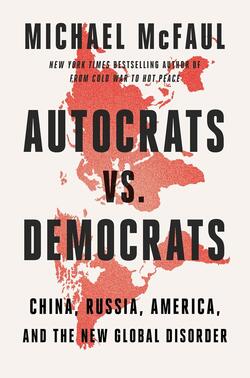
Cover of Autocrats vs Democrats Book

Amid the constant party divisions in Washington, DC, one issue generates stunning consensus—China—with Republicans and Democrats alike battling over which party can take the most hawkish stance toward the ascendant superpower. Indeed, far from trying to avoid a new Cold War with China, many have embraced it, finding comfort in the familiar construct, almost willing it into existence. And yet, even as politicians and intellectuals race to embrace this Cold War 2.0, many of the perils we face today are distinctly different from those of the Cold War with the Soviets. The alliance between the autocracies of China and Russia, the nature of the ideological struggle, China’s economic might, the rise of the far right in the United States and in Europe, and the growing isolationism and polarization in American society—taken together these represent new challenges for the democratic world. Some elements of the Cold War have reappeared today, but many features of the current great power competition have no analogy from the past century.

For decades Michael McFaul, former ambassador to Russia and international affairs analyst for NBC News, has been one of the preeminent thinkers about American foreign policy. Now, in this provocative work, he challenges the encroaching orthodoxy on Russia and China, arguing persuasively that the way forward is not to force our current conflict into a decades-old paradigm but to learn from our Cold War past so that democracy can again emerge victorious. Examining America’s layered, modern history with both Russia and China, he demonstrates that, instead of simplistically framing our competition with China and Russia as a second Cold War, we must understand the unique military, economic, and ideological challenges that come from China and Russia today, and the develop innovative policies that follow from that analysis, not just a return to the Cold War playbook.

At once a clarion call for American foreign policy and a forceful rebuttal of the creeping Washington consensus around China, Autocrats vs. Democrats demonstrates that the key to prevailing in this new era isn’t simply defeating our enemies through might, but using their oppressive regimes against them—to remind the world of the power and potential that our democratic freedoms make possible. 

Michael McFaul headshot

Professor Michael McFaul

FSI Director
"Autocrats vs. Democrats: China, Russia, America, and the New Global" is available starting October 28, 2025.
ORDER NOW
All Publications button
1
Publication Type
Books
Publication Date
Subtitle

From FSI Director, New York Times bestselling author, and former ambassador to Russia Michael McFaul comes a clear-eyed look at how the rise of autocratic China and Russia are compelling some to think that we have entered a new Cold War—and why we must reject that thinking in order to prevail. 

Authors
Michael A. McFaul
Book Publisher
Mariner Books
0
CDDRL Visiting Scholar, 2025-26
denis_morozov.jpg

Denis Morozov is a Visiting Scholar at Stanford’s Center on Democracy, Development and the Rule of Law for the 2025-2026 academic year. His research focuses on the role and position of multilateral development banks in the evolving global financial system and their impact on international development.

Before joining Stanford in 2023 as a Fellow at the Distinguished Careers Institute, Denis served as President of Bank of America for Russia and the CIS, overseeing the franchise’s regional work in investment advisory, capital markets, research, and securities trading.

Prior to his role at Bank of America, Denis was the Executive Director of the European Bank for Reconstruction and Development, a leading international financial institution aimed at fostering the transition towards market-oriented economies and multiparty democracy in Central and Eastern Europe, the former USSR, and parts of Northern Africa, the Middle East, and Asia.

Earlier in his career, Denis was the President and Chief Executive Officer of Norilsk Nickel and Uralkali, two global leaders in their respective commodities (base and platinum group metals and fertilizer inputs), both of which were recognized for their superior financial performance and high standards of corporate governance under Denis’ leadership.

Denis obtained a BA in Economics and a JD from Moscow State University. He later received an MA in Public Administration from Columbia University’s School of International and Public Affairs. Additionally, he completed the Advanced Management Program at Harvard Business School, received a diploma in Commercial Banking from the Swiss Banking School, and earned a PhD (Russian equivalent) in Economics from the Moscow State Institute of International Relations.

In 2012, Denis was named a Young Global Leader by the Davos World Economic Forum.

Denis is passionate about travel and exploration and enjoys long-distance running, water sports, and anything to do with mountains.

Date Label

Encina Hall, E110
616 Jane Stanford Way
Stanford, CA 94305-6055

0
SURF Postdoctoral Fellow, 2025-26
emil-kamalov-2022.x1a300390_-_emil_kamalov.jpg

Emil Kamalov's research interests lie at the intersection of autocratic control, political behavior, migration, and repression, utilizing advanced quantitative methods complemented by qualitative data.

In his PhD thesis and papers, Emil develops an integrated account of extraterritorial opposition politics, examining how geopolitical tensions and host-country conditions shape emigrant activism, diaspora resilience, and migrant well-being. His findings demonstrate that under certain conditions, transnational repression by autocratic regimes can strengthen rather than weaken diaspora activism.

In collaboration with Ivetta Sergeeva, Emil co-founded and co-leads the OutRush project, the only ongoing multi-wave panel survey focusing on Russian political emigrants following Russia’s 2022 invasion of Ukraine. The OutRush project includes over 18,000 survey observations across four waves, covering respondents from more than 100 countries. The project has garnered substantial international media coverage and has drawn attention from policymakers and experts.

Emil is expected to receive his PhD in Political and Social Sciences from the European University Institute in September 2025.

Date Label
News Type
News
Date
Paragraphs

Motivation & Contribution


Vladimir Putin has ruled Russia for over a quarter century despite economic mismanagement, corruption, and a disastrous war in Ukraine. Prior to the invasion, Putin’s rule was often seen as exemplifying modern autocracy, maintaining one-man rule while employing less overt mechanisms of social control, such as propaganda and regularly held, albeit controlled, uncompetitive elections. Since the full-scale invasion of Ukraine in February of 2022, however, Putin’s authoritarianism has intensified, especially as opponents of the war are imprisoned, terrorized, driven into exile, or worse. As such, Russia’s “modern” autocracy, which relies less on force than on presenting a message to society of an all-capable state and leader, has transformed into a highly personalized form of harsh authoritarianism. At the same time, many average Russians do genuinely support Putin — especially given his emphasis on order in society and restoring Russian greatness — and view the regime as legitimate and responsive. Often, however, analysts of contemporary Russia in the West tend to focus more on those Russians who oppose Putin’s autocracy than on those who support it and why they do. 

In her “Review Article: Why Does Putinism Endure? Dialoguing With the Dictator,” Kathryn Stoner tackles this question through a critical analysis mainly of Hannah Chapman’s Dialogue with the Dictator: Authoritarian Legitimation and Information Management in Putin’s Russia. The analysis is complemented by insights from four other recently published books on authoritarianism and Russia. For Stoner, Chapman’s central contribution lies in showing how a seemingly ridiculous exercise in state propaganda — the Direct Line with Vladimir Putin TV call-in show — is in fact an important way of legitimizing Putin’s rule, providing his regime with information about social preferences and sources of dissatisfaction while affording citizens with the feeling that their complaints are being heard and even resolved live and on TV. Gaining information about citizens would otherwise be difficult in such an unfree society, where individual preferences that may be critical of Putin’s rule are often concealed or deliberately falsified to avoid punishment by the regime. The reader learns that even hegemonic dictators must be perceived by citizens to be a good listener. 

Putin uses participatory technologies not only to control what information reaches citizens, but also to enhance his legitimacy and appear more accountable.


The Functions of ‘Participatory Technologies’


The conceptual foundation of Chapman’s analysis lies in what she terms ‘participatory technologies’ (PTs), which allow citizens to interact with authoritarian regimes “directly and in a positive manner.” Observers tend to dismiss PTs, which are often low-technology formats like TV shows or radio programs, as ‘spin’ or mere propaganda. In Russia, however, Putin uses PTs not only to control what information reaches citizens, but also to enhance his legitimacy and appear more accountable. Although PTs are limited and highly individualized — for example, more often than not ignoring collective demands — they are direct.

Participatory technologies differ from autocrats’ sham, window-dressing elections, where the outcome is a foregone conclusion. Instead, they permit citizens to engage with and provide input to the autocrat on specific issues. They also provide information to the regime about the performance of lower-level agents, such as governors or regional politicians, given that citizens are often concerned with local, day-to-day problems. By involving these lower-level agents, autocrats can deflect responsibility for governance problems away from themselves. Finally, PTs provide value to those who participate in them, giving them a sense of political efficacy. At the same time, however, PTs may expose embarrassing governmental dysfunctions. Indeed, the resolution of local problems – like fixing potholes on a local road – should not require direct citizen engagement with powerful national-level leaders. Furthermore, PTs run the risk of being overused and being seen as performative and fake by citizens.


Participatory technologies differ from autocrats’ sham, window-dressing elections, where the outcome is a foregone conclusion. Instead, they permit citizens to engage with and provide input to the autocrat on specific issues.


Tuning into Direct Line


Stoner’s review article discusses Chapman’s analysis of one PT in particular, namely the Direct Line with Vladimir Putin call-in show. Direct Line began in 2001, organized by the Kremlin and broadcast on state-owned and pro-regime media. The audience and the questions posed are selected in advance. During the broadcast — which is one of the most watched events in Russia, perhaps because of compulsion from employers — Putin conveys to the audience that Russia is doing well, but that he is not satisfied, is working tirelessly, and wants to hear citizens’ concerns. Putin does not merely listen but acts to solve their concerns, for example, keeping a folder of issues raised by ordinary Russians and bringing these issues to the attention of regional governors. He has even forwarded questions directly to regional governors on air, which also serves to deflect responsibility away from himself. 

Methodology


Stoner describes the multiple survey experiments and interviews Chapman conducted in exploring whether Direct Line matters to ordinary Russians. Some of the interviewees seem to know that Direct Line is staged; yet they nonetheless find it compelling that Putin is not afraid to answer their sometimes uncomfortable questions. The goal of the survey experiments is to try to ascertain how prompts that (do not) mention Direct Line affect respondents’ evaluations of Putin. In other words, Direct Line is the ‘treatment,’ which participants in the ‘control’ group do not receive. One experiment only varies whether or not Putin heard about a problem on Direct Line. Another varies this as well as whether or not Putin resolved the problem. In both experiments, respondents whose prompts included mention of Direct Line evaluated Putin more favorably, although Stoner notes that the statistical effects of this are small. In another experiment, the mention of Direct Line leads respondents to believe there are greater opportunities to express their opinions and demands. Finally, a fourth experiment finds that respondents who support (oppose) Putin gave him higher (lower) evaluations when Direct Line was mentioned, hinting at how Direct Line might serve as a source of polarization in Russia.


Stoner highlights an important puzzle about whether participatory technologies like Direct Line can, in fact, provide credible information to Putin’s regime.


Limitations


Stoner highlights an important puzzle about whether participatory technologies like Direct Line can, in fact, provide credible information to Putin’s regime. For example, questions are pre-screened to exclude subjects that could threaten the regime. Additionally, those who call in are already likely to be more supportive of or sympathetic to the regime. It would thus seem that Putin has better mechanisms for gathering credible information, such as through the Kremlin’s surveillance system, than through a PT like Direct Line, as Chapman claims. As such, Direct Line’s value appears primarily rhetorical, as opposed to informational — the regime is merely performing an exercise in responding to easy problems that can be resolved quickly by Putin, or inane questions about things like Putin’s favorite books.

Stoner’s review article notes her concerns regarding the generalizability of Chapman’s findings. First of all, it would be challenging to draw conclusions from the survey experiments, given that they concern a single group of people who were surveyed a decade ago (2015-2016). Relatedly, and in light of the war in Ukraine, Chapman’s analysis of PTs seems dated, as Putin has resorted far more often to severely punishing opposition (real and imagined) to his regime, rather than cajoling and coercing society with participatory technologies like his call-in show. Indeed, the show was cancelled in 2022 without explanation, but presumably to avoid difficult questions about the devastation wrought that autumn on the Russian armed forces in Ukraine. Nonetheless, Stoner notes that there is now a burgeoning literature that helps us better understand how, in normal times, autocrats effectively utilize the media and other technologies to build support and legitimate their rule, while providing citizens with a sense that they can influence politics, when in reality, they cannot.

*Research-in-Brief prepared by Adam Fefer.

 
Hero Image
Direct Line with Vladimir Putin
Direct Line with Vladimir Putin | Kremlin.ru
All News button
1
Subtitle

CDDRL Research-in-Brief [5-minute read]

Date Label
Subscribe to Russia and Eurasia