Fukuyama & Diamond on Democracy
FSI SENIOR FELLOWS FRANCIS FUKUYAMA & LARRY DIAMOND DISCUSS DEMOCRACY IN THE JULY/AUGUST ISSUE OF FOREIGN AFFAIRS
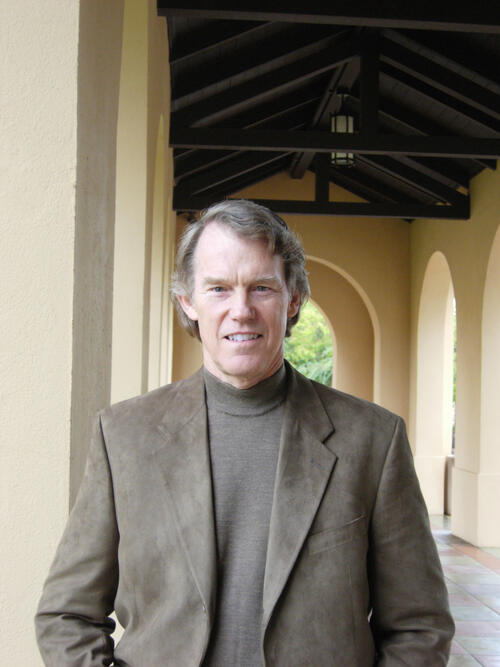
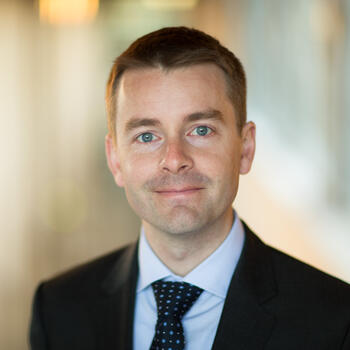
Larry Diamond and Francis Fukuyama, senior fellows at the Freeman Spogli Institute, have both written essays in the July/August 2016 issue of Foreign Affairs. Follow the links below to read the full articles without a subscription block:
Diamond, who is also the former director of the Center for Democracy, Development and the Rule of Law (CDDRL), takes stock of the global democratic recession and urges the next president to make democracy promotion a pillar of his or her foreign policy agenda in his article "Democracy in Decline."
In "American Political Decay or Renewal?" Fukuyama, the Olivier Nomellini Senior Fellow at FSI and the Mosbacher Director of CDDRL, analyzes the rising tide of populism as represented by the current candidates for the US Presidential elections.
Democracy in Decline
In the July/August edition of Foreign Affairs, Larry Diamond takes stock of the global democratic recession, and urges the next president to make democracy promotion a pillar of his or her foreign policy agenda.
CDDRL honors students recognized for outstanding theses
Stanford’s Center on Democracy, Development and the Rule of Law congratulates its undergraduate honors class for completing their original research and undergraduate theses. They graduated from Stanford University on June 12 with honors in their respective disciplines.

Graduates include Vehbi “Deger” Turan, who was awarded the Firestone Medal for his thesis entitled “Augmenting Citizen Participation in Governance through Natural Language Processing.” Turan’s project employed existing literature on democratic participation, case studies and an original algorithm in order to devise a means by which government agencies can evaluate public comments received via the Internet on political issues.
The Firestone Medal for Excellence in Undergraduate Research recognizes Stanford's top ten percent of honors theses in social science, science and engineering among the graduating senior class.
Turan decided to explore this topic shortly after joining the Fisher Family CDDRL Honors Program.
According to the program’s Director Stephen Stedman, “After listening to a research seminar at our Center, Deger believed that he could develop an aggregation tool to help policy makers understand such immense data.”
Francis Fukuyama, the Mosbacher Director of CDDRL also noted, “Deger is perhaps the best example to date of why interschool honors programs are valuable. He is a computer science major who came to us expressing an interest in using his background in artificial intelligence to help solve critical public policy problems.” Fukuyama together with Associate Professor of Political Science Justin Grimmer advised Turan on his honor’s thesis.
Turan will be starting a new position at Atomic Labs’ Zenreach start-up after graduation.
The CDDRL Award for Outstanding Thesis was given to Rehan Adamjee whose thesis explored the different factors at play in choosing between healthcare providers in a rural area of Pakistan.
Adamjee and Turan are just two members of a the 2016 cohort of 11 honors students, many of whom traveled to foreign countries to collect original data, conduct interviews and research their thesis topics. Their topics range from timely case studies on the use of social media as a tool of empowerment to a glimpse at the effects of regional politics on healthcare reform in Post-Soviet Russia.
The 2016 class joins 76 graduates from CDDRL’s honors program since its launch in 2007.
The Fisher Family CDDRL Honors Program trains Stanford students from diverse majors to write theses with global policy implications on a subject related to democracy, development and the rule of law. Students attend a class on research methods the spring quarter of their junior year. During their senior year, in tandem with the CDDRL research community and their faculty advisor, students conduct both local and international research in order to write their theses. Students travel to Washington, DC for the annual honors college to meet policymakers and members of the development community to enrich their thesis topics.
A list of our graduating students along with links to all their theses can be found below.
| NAME | MAJOR | THESIS |
|---|---|---|
Rehan Adamjee | Economics; Public Policy | Advisor: Jayanta Bhattacharya |
Anna Blue | International Relations | Advisor: Alberto Diaz Cayeros |
Sarah Johnson | Economics | Advisor: Lisa Blaydes |
Shang-Ch’uan Li | Materials, Science and Engineering | Advice and Consent: Increase in Malaysian Judges Appointed from the Practicing Bar after the Passage of the Judicial Appointments Commission Act 2009 Advisors: Erik Jensen, Justin Grimmer |
Hannah Meropol | Political Science | Advisor: Lisa Blaydes |
Jelani Munroe | Economics; Public Policy | Advisor: Pete Klenow |
Hannah Potter | International Relations | Advisor: Stephen Stedman |
Tebello Qhotsokoane | Public Policy | Advisor: Marcel Fafchamps |
Hadley Reid | Human Biology | Advisor: Grant Miller |
Paul Shields | International Relations; Slavic Language & Literature | Advisor: Kathryn Stoner |
Deger Turan | Computer Science | Advisors: Francis Fukuyama, Justin Grimmer |
Larry Diamond recognized with Stanford service award
Fieldwork Fail: FSI Faculty Share Lessons Learned the Hard Way
"What do I do about the chickens?"
When assistant professor of medicine Eran Bendavid began a study on livestock in African households to determine impact on childhood health, he'd already anticipated common field problems like poorly captured or intentionally misreported data, difficulty getting to work sites, or problems with training local volunteers.
But he'd never gotten that particular question from a fieldworker before. It didn't occur to him that participating families, in reporting their livestock holdings, would completely omit the chickens running around at their feet, thereby skewing the data.
"They didn't consider chickens to be livestock," recalled Bendavid. Along with Scott Rozelle, the Helen F. Farnsworth Senior Fellow at FSI, and associate professor of political science and FSI senior fellow Beatriz Magaloni, Bendavid spoke to a full house last week on lessons learned from fieldwork gone awry. The return engagement of FSI's popular seminar, "Everything that can go wrong in a field experiment” was introduced by Jesper Sørensen, executive director of Stanford Seed, and moderated by Katherine Casey, assistant professor of political economy at the GSB. The seminar is a product of FSI and Seed’s joint Global Development and Poverty (GDP) Initiative, which to date has awarded nearly $7 million in faculty research funding to promote research on poverty alleviation and economic development worldwide.
Rozelle, co-director of the Rural Education Action Program, spoke of the obstacles to accurate data gathering, especially in rural areas where record-keeping is inaccurate and participants' trust is low. Arriving in a Chinese village to carry out child nutrition studies, said Rozelle, "we found Grandma running out the back door with the baby." The researchers had worked with the local family planning council to find the names of children to study, but the families thought the authorities were coming to penalize them for violation of the one-child policy.
Cultural differences make for entertaining and illuminating (if frustrating) lessons, but Beatriz Magaloni, director of FSI's Program on Poverty and Governance at the Center on Democracy, Development and the Rule of Law had a different story to tell. Over the course of three years, her GDP-funded work to investigate and reduce police violence in Brazil - a phenomenon resulting in more than 22,000 deaths since 2005 - has encountered obstacle after obstacle. Her work to pilot body-worn cameras on police in Rio has faced a change in police leadership, setting back cooperation; a yearlong struggle to decouple a study of TASER International’s body worn cameras from its electrical weapons in the same population; a work site initially lacking electricity to charge the cameras or Internet to view the feeds; and noncompliance among the officers. "It's discouraging at times," admitted Magaloni, who has finally gotten the cameras onto the officers' uniforms and must now experiment with ways to incentivize their use. "We are learning a lot about how institutional behavior becomes so entrenched and why it's so hard to change."
Experimentation is a powerful tool to understand cause and effect, said Casey, but a tool only works if it's implemented properly. Learning from failure makes for an interesting panel discussion. The speakers' hope is that it also makes for better research in the future.
The Global Development and Poverty Initiative is a University-wide initiative of the Stanford Institute for Innovation in Developing Economies (Seed) in partnership with the Freeman Spogli Institute (FSI). GDP was established in 2013 to stimulate transformative research ideas and new approaches to economic development and poverty alleviation worldwide. GDP supports groundbreaking research at the intersection of traditional academic disciplines and practical application. GDP uses a venture-funding model to pursue compelling interdisciplinary research on the causes and consequences of global poverty. Initial funding allows GDP awardees to conduct high-quality research in developing countries where there is a lack of data and infrastructure.
Authoritarian Responsiveness: Evidence from China
Abstract:
Speaker Bio:
Running Candidates after Using Violence?
Abstract:
Designing peace agreements that can be signed and sustained can be difficult in civil conflict. A recent transformation in successful settlement design has produced many cases that include electoral or other political participation provisions. In this paper, we examine popular support for the transformation from bullets to ballots, testing whether individuals object to providing former rebels with the protections and legitimacy of electoral participation. Using a survey experiment in the context of Colombia’s current peace process between the Government and the FARC (Fuerzas Armadas Revolucionarias de Colombia), we find that the latter is a highly controversial actor in the country—indeed, invoking the specific group diminishes support for the peace process, particularly accords that would allow for increased representation in municipalities more affected by conflict. These findings are important to understanding how to design settlements, providing policy implications for the peace process with the FARC in Colombia but also in other civil conflicts that negotiators may seek to end through electoral participation by the former rebels, a proposal that has become common in many cases, including the Taliban in Afghanistan.
Speaker Bio: