News Type
Commentary
Date
Paragraphs

CDDRL Mosbacher Director Francis Fukuyama participated the screening of the Children of Men, the 2006 film adaptation of PD James’ dystopian novel, at the event organized by the Future Tense - “My Favorite Movie” series, in which thought leaders host screenings and discussions on their favorite movies with science and technology themes. Children of Men is set in the year 2027, 18 years after the last child was born, due to worldwide infertility. In the video at the top of this post, filmed Sept. 21, Fukuyama expanded on the thoughts he shared at the screening. Watch here

Hero Image
screen shot 2016 10 09 at 19 45 00 copy Future Tense/ Slate.com
All News button
1
-

Abstract:

Low-income countries are less productive than their high-income counterparts. Is one reason because labor in high-income countries can more easily move to where it is most productive? We use detailed individual data combined with a spatial general equilibrium model of worker selection to study the determinants of labor productivity growth in Indonesia and the United States over the last 40 years. We find that while improvements in in situ labor productivity and the spatial allocation of human capital resources account for about 55% of Indonesian labor productivity growth, improvements in spatial mobility, due to lower costs of movement and improvements in the amenity of high productivity locations, account for nearly as much: 45%. In a comparison to the US, higher costs of movement in Indonesia account for 10% of the labor productivity gap between the two countries. These results suggest an important role of migration to explain aggregate productivity gaps both across and within countries.
 

Speaker Bio:

Image
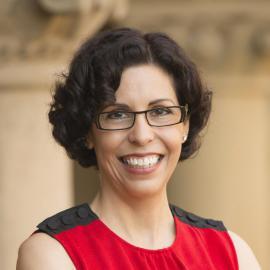
melanie morten

Melanie Morten is an Assistant Professor of Economics at Stanford University. Her research focuses on migration in developing countries, including analyzing how migration changes informal financial safety nets and understanding the costs and potential productivity benefits of migration. She has worked on projects in India, Brazil, and Indonesia. She has a PhD in economics from Yale University.

Melanie Morten Assistant Professor, Department of Economics, Stanford University
Seminars
-

Abstract:

American government is incapable of dealing effectively with the challenges of modern society. Why the dysfunction? The usual suspects include polarization and the rise in campaign spending. But William Howell and Terry Moe argue—in their new book, Relic—that the roots of dysfunction go much deeper: to the Constitution itself. The framers designed the Constitution some 225 years ago for a simple agrarian society. But the government they created, a separation of powers system with a parochial Congress at its center, is ill-equipped to address the serious social problems that inevitably arise in a complex post-industrial nation. We are prisoners of the past. The solution is to update the Constitution for modern times. A promising step forward, the authors argue, is a simple reform that pushes Congress and its pathologies to the periphery of policymaking, and brings presidents to center stage.


Speaker Bio:

Image
terry moe
Terry M. Moe is the William Bennett Munro Professor of Political Science at Stanford University and a senior fellow at the Hoover Institution. He has written extensively on public bureaucracy and the presidency, as well as the theory of political institutions more generally. His articles include "The New Economics of Organization," "The Politicized Presidency," "The Politics of Bureaucratic Structure," "Political Institutions: The Neglected Side of the Story," "Presidents, Institutions, and Theory," “The Presidential Power of Unilateral Action” (with William Howell), “Power and Political Institutions,” “Political Control and the Power of the Agent,” and “Do Politicians Use Policy to Make Politics? The Case of Public Sector Labor Laws” (with Sarah F. Anzia). His most recent work is Relic: How Our Constitution Undermines Effective Government--And Why We Need a More Powerful Presidency (with William Howell, 2016)." He has also written extensively on the politics of American education. His newest books are The Comparative Politics of Education: Teachers Unions and Education Systems Around the World (edited with Susanne Wiborg, forthcoming 2017) and Special Interest: Teachers Unions and America’s Public Schools (2011). His past work on education includes Politics, Markets, and America's Schools (1990) and Liberating Learning: Technology, Politics, and the Future of American Education (2009), both with John E. Chubb, and Schools, Vouchers, and the American Public (2001).

Terry M. Moe William Bennett Munro Professor of Political Science at Stanford University
Seminars
News Type
News
Date
Paragraphs

The 12th annual Draper Hills Summer Fellows Program gathered 25 democracy leaders from around the developing world for a three-week training program on democracy, good governance, and the rule of law reform. Selected from a large pool of applicants, the fellows have diverse backgrounds across sectors and geographies, working in civil society, public service, social enterprise, media and technology.

Fellows were instructed by an all-star roster of Stanford scholars and policy experts, including former U.S. Secretary of State Condoleezza Rice; FSI Director and former U.S. Ambassador to Russia Michael McFaul; CDDRL Mosbacher Director Francis Fukuyama and Larry Diamond, senior fellow at the Freeman Spogli Institute for International Studies. Fellows also met industry leaders such as Eric Schmidt of Google, democracy leaders such as Carl Gershman of the National Endowment for Democracy and others. During the program, they shared their personal stories about the struggle in their home countries, but also stories of their fight for justice, equality, and democracy, stories of optimism and endurance.

You can find some of their talks below and for more videos visit our YouTube channel


Kasha Nabagesera (Uganda)

The founding member of Uganda's LGBTI Movement

"I am the only founding member of Uganda's LGBTI movement who is still based in the country"


Kasha Nabagesera is the executive director of Kuchu Times Media Group, the first LGBTI media platform in Africa. She is known as the “founding mother” of the LGBTI movement in Uganda - where homosexuality is illegal - advocating for equal rights and the eradication of all forms of discrimination based on sexual orientation. Listen to her story about big losses and big wins, everyday dangers and hope.


Rafael Marques de Morais (Angola)

Investigative reporter, MakaAngola

"Why the government is after you when you are sleeping so much?"

Rafael Marques de Morais is an award-winning journalist and human rights activist in Angola, working to investigate corruption and abuse of power by the country’s ruling family. He founded Makaangola, a watchdog website dedicated to exposing corruption and human rights abuses in Angola. Find out why his son thinks that his father is harmless for the government.


Belabbes Benkredda (Algeria)

The founder of Munathara Initiative

"Debate is the central part of the democratic equation."

Belabbes Benkredda is an award-winning social innovator and the founder of the Munathara Initiative, the Arab world’s largest online and television debate forum highlighting voices of youth, women, and marginalized communities. Operating in 11 Arab countries, Munathara’s monthly prime-time TV debates are the only civil society-run, independent political talk program on Arabic television. Munathara Initiative organized over 650 workshops with more than 10 thousand participants from 12 countries. They have around 90 thousand of registered users. More importantly, Munathara Initiative provided safe public space for young women to voice their opinions and mark their presence in public, traditionally dominated by the middle-aged men.  


Hero Image
dhsf16collagesmall01
All News button
1
-

Co-sponsor by Stanford in Government (SIG)

Abstract:

Image
elaine kamarck
From the botched attempt to rescue the U.S. diplomats held hostage by Iran in 1980 under President Jimmy Carter and the missed intelligence on Al Qaeda before 9-11 under George W. Bush to, most recently, the computer meltdown that marked the arrival of health care reform under Barack Obama, the American presidency has been a profile in failure. In Why Presidents Fail and How They Can Succeed Again, Elaine Kamarck surveys these and other recent presidential failures to understand why Americans have lost faith in their leaders—and how they can get it back. Kamarck argues that presidents today spend too much time talking and not enough time governing, and that they have allowed themselves to become more and more distant from the federal bureaucracy that is supposed to implement policy. After decades of “imperial” and “rhetorical” presidencies, we are in need of a “managerial” president. This White House insider and former Harvard academic explains the difficulties of governing in our modern political landscape, and offers examples and recommendations of how our next president can not only recreate faith in leadership but also run a competent, successful administration.


Speaker Bio:

Image
elaine kamarck cr
Elaine C. Kamarck is a Senior Fellow in the Governance Studies program as well as the Director of the Center for Effective Public Management at the Brookings Institution. She is an expert on American electoral politics and government innovation and reform in the United States, OECD nations, and developing countries. Kamarck is also a Lecturer in Public Policy at the Harvard Kennedy School of Government. She has been a member of the Democratic National Committee and the DNC’s Rules Committee since 1997. She has participated actively in four presidential campaigns and in ten nominating conventions—including two Republican conventions. In the 1980s, she was one of the founders of the New Democrat movement that helped elect Bill Clinton president. She served in the White House from 1993 to 1997, where she created and managed the Clinton Administration's National Performance Review, also known as the “reinventing government initiative.” At the Kennedy School, she served as Director of Visions of Governance for the Twenty-First Century and as Faculty Advisor to the Innovations in American Government Awards Program. In 2000, she took a leave of absence to work as Senior Policy Advisor to the Gore campaign. Kamarck received her Ph.D. in political science from the University of California, Berkeley.

Elaine Kamarck Senior Fellow in the Governance Studies program as well as the Director of the Center for Effective Public Management at the Brookings Institution
Seminars
-

Abstract:

China's government alternately appears in western scholarship as an idealized meritocracy or a corrupt cohort of venal officials. Yet empirical attempts to place China's government in comparative perspective are limited. We develop and exploit a new empirical source--survey testimony from political insiders--to measure three Weberian qualities of Chinese bureaucracy: meritocracy, autonomy, and morale. By translating questions from a major survey of U.S. officials, we place the responses of Chinese officials in comparative perspective. In contrast to claims that political connections dominate official promotions in China, Chinese bureaucrats are markedly more likely than U.S. bureaucrats to report that their agencies recruit people with the right skills and promote people based on performance. Responses from municipal governments in China resemble those of high-performing federal bureaucracies in the United States, such as NASA and the Nuclear Regulatory Commission. However, the Chinese advantage shrinks in autonomy and nearly disappears in workplace morale.


Speaker(s) Bio:

Image
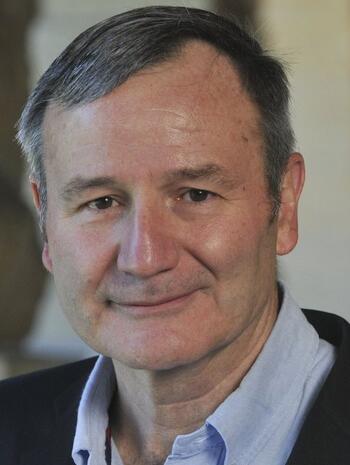
francis fukuyama

Francis Fukuyama is the Olivier Nomellini Senior Fellow at the Freeman Spogli Institute for International Studies (FSI) and the Mosbacher Director of FSI's Center on Democracy, Development, and the Rule of Law (CDDRL).  He is also a professor by courtesy in the Department of Political Science. He was previously at the Paul H. Nitze School of Advanced International Studies (SAIS) of Johns Hopkins University, where he was the Bernard L. Schwartz Professor of International Political Economy and director of SAIS' International Development program.


Image
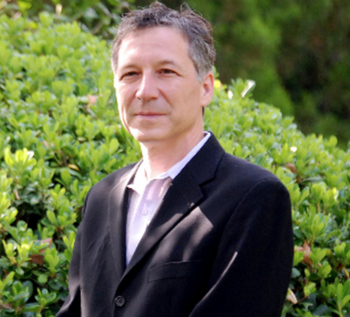
greg distellhorst

Greg Distelhorst is the Mitsubishi Career Development Professor and an Assistant Professor of Global Economics and Management at the MIT Sloan School of Management. He studies contemporary Chinese politics and public policy, as well as the social impacts of multinational business. He was a CDDRL Predoctoral Fellow in 2012-2013.


Image
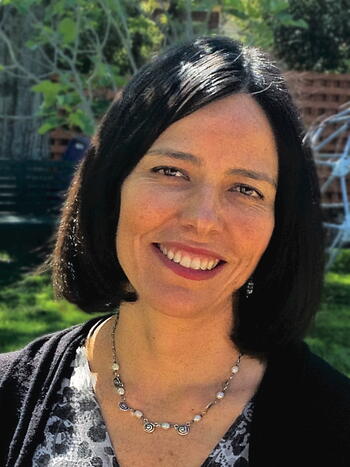
margaret boittin


Margaret Boittin is Assistant Professor at Osgoode Hall Law School, York University, Canada. She studies Chinese law and politics. She was a predoctoral and postdoctoral fellow at CDDRL (2012-2015).

Encina Hall, C148
616 Jane Stanford Way
Stanford, CA 94305

0
Olivier Nomellini Senior Fellow at the Freeman Spogli Institute for International Studies
Director of the Ford Dorsey Master's in International Policy
Research Affiliate at The Europe Center
Professor by Courtesy, Department of Political Science
yff-2021-14290_6500x4500_square.jpg

Francis Fukuyama is the Olivier Nomellini Senior Fellow at Stanford University's Freeman Spogli Institute for International Studies (FSI), and a faculty member of FSI's Center on Democracy, Development and the Rule of Law (CDDRL). He is also Director of Stanford's Ford Dorsey Master's in International Policy, and a professor (by courtesy) of Political Science.

Dr. Fukuyama has written widely on issues in development and international politics. His 1992 book, The End of History and the Last Man, has appeared in over twenty foreign editions. His book In the Realm of the Last Man: A Memoir will be published in fall 2026.

Francis Fukuyama received his B.A. from Cornell University in classics, and his Ph.D. from Harvard in Political Science. He was a member of the Political Science Department of the RAND Corporation, and of the Policy Planning Staff of the US Department of State. From 1996-2000 he was Omer L. and Nancy Hirst Professor of Public Policy at the School of Public Policy at George Mason University, and from 2001-2010 he was Bernard L. Schwartz Professor of International Political Economy at the Paul H. Nitze School of Advanced International Studies, Johns Hopkins University. He served as a member of the President’s Council on Bioethics from 2001-2004. He is editor-in-chief of American Purpose, an online journal.

Dr. Fukuyama holds honorary doctorates from Connecticut College, Doane College, Doshisha University (Japan), Kansai University (Japan), Aarhus University (Denmark), the Pardee Rand Graduate School, and Adam Mickiewicz University (Poland). He is a non-resident fellow at the Carnegie Endowment for International Peace. He is a member of the Board of Trustees of the Rand Corporation, the Board of Trustees of Freedom House, and the Board of the Volcker Alliance. He is a fellow of the National Academy for Public Administration, a member of the American Political Science Association, and of the Council on Foreign Relations. He is married to Laura Holmgren and has three children.

(October 2025)

CV
Date Label
Mosbacher Director of the Center on Democracy, Development, and the Rule of Law

Encina Hall
616 Serra Street
Stanford, CA 94305-6055

0
Research Affiliate
Distelhorst_HS.jpg

Greg Distelhorst is a Ph.D. candidate in the MIT Department of Political Science and a predoctoral fellow at Stanford University's Center on Democracy, Development, and the Rule of Law. His dissertation addresses public accountability under authoritarian rule, focusing on official responsiveness and citizen activism in contemporary China. This work shows how citizens can marshal negative media coverage to discipline unelected officials, or "publicity-driven accountability." These findings result from two years of fieldwork in mainland China, including a survey experiment on tax and regulatory officials. A forthcoming second study measures the effects of citizen ethnic identity on government responsiveness in a national field experiment. His dissertation research has been funded by the U.S. Fulbright Program, the Boren Fellowship, and the National Science Foundation. A second area of research is labor governance under globalization, where he has examined private initiatives to improve working conditions in the global garment, toy, and electronics supply chains.

For more on Greg's research, please visit:
Governance Project Pre-doctoral Fellow 2012-2013
Assistant Professor of Global Economics and Management at the MIT Sloan School of Management

Encina Hall
616 Serra Street
Stanford, CA 94305-6055

0
The Governance Project Postdoctoral Fellow, 2013-15
Boittin_HS.jpg

Margaret Boittin has a JD from Stanford, and is completing her PhD in Political Science at UC Berkeley. Her dissertation is on the regulation of prostitution in China. She is also conducting research on criminal law policy and local enforcement in the United States, and human trafficking in Nepal.

The Governance Project Postdoctoral Fellow, 2013-15
CV
Assistant Professor at Osgoode Hall Law School, York University, Canada
Seminars
-

Abstract:

Accurate and timely estimates of population characteristics are a critical input to research and policy, but reliable data is often scarce in developing and conflict-affected regions. In recent work, we have shown how machine learning algorithms can be applied to mobile phone metadata to infer fixed characteristics of individual subscribers, such as wealth and gender. Here, we describe efforts to extend this approach to a non-stationary regime, to detect and measure changes in an individual's welfare over time. For this study, we tracked 1200 Afghan citizens with high-frequency panel surveys, and matched each person's responses to psuedonymized transactions log of mobile phone activity. Preliminary results indicate that it is possible to detect negative shocks (e.g., violence), and positive shocks (e.g., receiving a gift) from the mobile phone records alone. This suggests the possibility of real-time tracking of vulnerability, and new paradigms for program monitoring and impact evaluation.


Speaker Bio:

Image
joshua blumenstock
Joshua Blumenstock is an Assistant Professor at the U.C. Berkeley School of Information. His research develops theory and methods for the analysis of large-scale behavioral data, with a focus on how such data can be used to better understand poverty and economic development. Recent projects combine field experiments with big spatiotemporal network data to model decision-making in poor and conflict-affected regions of the world. Prior to joining UW, Joshua was on the faculty at the University of Washington, where he founded and co-directed the Data Science and Analytics Lab. He has a Ph.D. in Information Science and a M.A. in Economics from U.C. Berkeley, and Bachelor’s degrees in Computer Science and Physics from Wesleyan University. He is a recipient of the Intel Faculty Early Career Honor, a Gates Millennium Grand Challenge award, a Google Faculty Research Award, and a former fellow of the Thomas J. Watson Foundation and the Harvard Institutes of Medicine.

Joshua Blumenstock Assistant Professor at the U.C. Berkeley School of Information
Seminars
-

Abstract:

The paper introduces the public sector as a major source of infrastructural state capacity that helps autocrats survive. Education or social services organizations are embedded in everyday life and trusted by the people, which makes them a unique tool in autocrats’ hands. These organizations significantly extend the ability of the state apparatus to implement political decisions on the ground. Using quantitative analysis of seventy-nine Russian regions and qualitative evidence from the media, I demonstrate that Vladimir Putin’s regime used schoolteachers, who were frequently members of local electoral commissions, to implement wide-scale electoral fraud during the 2012 presidential elections in Russia. The school system served as an organizational base for this maneuver, which allowed Putin’s regime to withstand the challenge of decreased popular support. The paper proposes a distinction between the redistributive and infrastructural roles of the public sector.


Speaker Bio:

Image
natalia forat
Natalia Forrat is a Pre-doctoral Fellow at the Center on Democracy, Development, and the Rule of Law. She will receive her PhD in Sociology from Northwestern University in 2017. She studies authoritarianism, state-society relations, state capacity, civil society, and trust with a focus on contemporary Russia. Her work has been published in Post-Soviet Affairs and supported by the Fulbright Program and the Open Society Institute. Before her doctoral studies, she received a master's degree from the University of Michigan and a bachelor's degree from Tomsk State University (Russia). She taught at TSU for a few years, while also working at a Russian NGO.

Natalia Forrat Pre-doctoral Fellow at CDDRL, Stanford
Seminars
Authors
News Type
Blogs
Date
Paragraphs

It’s always great to see the work of one of our researchers shouted out in the New York Times. It’s even better when it becomes the scientific basis of an argument thrown into the mix of a presidential campaign.

Nicholas Kristof asserted in his column on Sunday that when women are involved in the political process and given the capacity to shape public policy, everyone benefits, particularly when it comes to health.

Kristof, who covers human rights, women’s rights, health and global affairs for the Times, wrote in his column:

Put aside your feelings about Hillary Clinton: I understand that many Americans distrust her and would welcome a woman in the White House if it were someone else. But whatever one thinks of Clinton, her nomination is a milestone, and a lesson of history is that when women advance, humanity advances.

Grant Miller of Stanford University found that when states, one by one, gave women the right to vote at the local level in the 19th and early 20th centuries, politicians scrambled to find favor with female voters and allocated more funds to public health and child health. The upshot was that child mortality rates dropped sharply and 20,000 children’s lives were saved each year.

Many of those whose lives were saved were boys. Today, some are still alive, elderly men perhaps disgruntled by the cavalcade of women at the podium in Philadelphia. But they should remember that when women gained power at the voting booth, they used it to benefit boys as well as girls.

Miller, an associate professor of medicine and core faculty member of Stanford Health Policy, first wrote about this issue in the Quarterly Journal of Economics in 2008, arguing that women’s choices appear to emphasize child welfare more than those of men.

He presented evidence on how state-to-state suffrage rights for U.S. women from 1869 to the adoption of the 19th Amendment in 1920, which gave all women the right to vote, helped children benefit from scientific breakthroughs.

Image

Simple hygienic practices — including hand and food washing, boiling water and milk, refrigerating meat and the renewed emphasis on breastfeeding — were among the most important innovations in the 19th and early 20th centuries to help protect children from often-fatal diseases such typhoid fever, smallpox, measles and scarlet fever.


“Communicating their importance to the American public required large-scale door-to-door hygiene campaigns, which women championed at first through voluntary organizations and then through government,” explained Miller, who is also a senior fellow at the Freeman Spogli Institute for International Studies and the Stanford Institute for Economic Policy Research.

As women became more and more involved in state and federal politics, Miller found, child mortality declined by 8 to 15 percent, or 20,000 fewer child deaths each year.

“Public health historians clearly link the success of hygiene campaigns to the rising influence of women,” Miller wrote, citing examples with data and graphs.

That women have been — and can be — so influential seems like a no-brainer, but it’s nice to have the science to back it up.

 
Hero Image
votes for women button
All News button
1
News Type
News
Date
Paragraphs

Larry Diamond writes for online magazine The Cipher Brief how the extended period of democracy has not brought a dramatic deepening of democratic norms in Latin America countries.


Read the full article here.


Hero Image
LAFlags
Flags representing speakers from Latin America and US during the conference at Stanford's CDDRL/Photo credits: Christian Ollano and Zaira Razu
All News button
1
Subscribe to The Americas