-

**Please note all CDDRL events are scheduled using the Pacific Time Zone

About the Event:

What are the costs of the Chinese regime's fixation on quelling dissent in the name of political order, or “stability”? Using novel datasets and a variety of methodologies, Welfare for Autocrats shows how China has reshaped its major social assistance program, Dibao, around this preoccupation, turning an effort to alleviate poverty into a tool of surveillance and repression. This distortion of Dibao damages perceptions of government competence and legitimacy and can trigger unrest among those denied benefits. Welfare for Autocrats traces how China's approach to enforcing order transformed at the turn of the 21st century and identifies the phenomenon of seepage whereby one policy—in this case, quelling dissent—alters the allocation of resources and goals of unrelated areas of government. These findings challenge the view that concessions and repression are distinct strategies in authoritarian regimes and departs from the assumption that all tools of repression were originally designed as such.


About the Speaker:

Image
JenPan
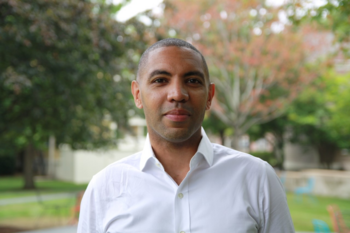
Jennifer Pan is an Assistant Professor of Communication, and an Assistant Professor, by courtesy, of Political Science and Sociology at Stanford University. Her research resides at the intersection political communication and authoritarian politics, showing how authoritarian governments try to control society, how the public responds, and when and why each is successful. Her work has appeared in peer-reviewed publications such as the American Political Science ReviewAmerican Journal of Political ScienceComparative Political StudiesJournal of Politics, and Science.

Online, via Zoom: REGISTER

Jennifer Pan Assistant Professor of Communication, and an Assistant Professor, by courtesy, of Political Science and Sociology at Stanford University
Seminars
0
George G.C. Parker Professor of Finance and Economics, Stanford Graduate School of Business
Director of the Corporations and Society Initiative, Stanford Graduate School of Business
Director of the Program on Capitalism and Democracy, Center on Democracy, Development and the Rule of Law
Senior Fellow, Stanford Institute for Economic Policy Research
Senior Fellow (by courtesy), Freeman Spogli Institute for International Studies
anat_admati-stanford-2021.jpg

Anat R. Admati is the George G.C. Parker Professor of Finance and Economics at Stanford University Graduate School of Business (GSB), a Faculty Director of the GSB Corporations and Society Initiative, and a senior fellow at Stanford Institute for Economic Policy Research. She has written extensively on information dissemination in financial markets, portfolio management, financial contracting, corporate governance and banking. Admati’s current research, teaching and advocacy focus on the complex interactions between business, law, and policy with focus on governance and accountability.

Since 2010, Admati has been active in the policy debate on financial regulations. She is the co-author, with Martin Hellwig, of the award-winning and highly acclaimed book The Bankers’ New Clothes: What’s Wrong with Banking and What to Do about It (Princeton University Press, 2013; bankersnewclothes.com). In 2014, she was named by Time Magazine as one of the 100 most influential people in the world and by Foreign Policy Magazine as among 100 global thinkers.

Admati holds BSc from the Hebrew University, MA, MPhil and PhD from Yale University, and an honorary doctorate from University of Zurich. She is a fellow of the Econometric Society, the recipient of multiple fellowships, research grants, and paper recognition, and is a past board member of the American Finance Association. She has served on a number of editorial boards and is a member of the FDIC’s Systemic Resolution Advisory Committee, a former member of the CFTC’s Market Risk Advisory Committee, and a former visiting scholar at the International Monetary Fund.

Date Label
-

Image
Maiko Ichihara
Speaker Bio:

Maiko Ichihara is Associate Professor in the Graduate School of Law and the School of International and Public Policy at Hitotsubashi University, Japan, and a Visiting Scholar at the Center on Democracy, Development and the Rule of Law at Stanford University. She is a committee member of the World Movement for Democracy, East Asia Democracy Forum, and Partnership for Democratic Governance (Japan), and is a co-chair of Democracy for the Future project at the Japan Center for International Exchange. Throughout her career, she has undertaken research on international relations, democracy support, and Japanese foreign policy. She earned her Ph.D. in political science from the George Washington University and her M.A. from Columbia University. Her recent publications include: “Universality to Plurality? Values in Japanese Foreign Policy,” in Yoichi Funabashi and G. John Ikenberry, eds., The Crisis of Liberalism: Japan and the International Order (Washington DC: Brookings Institution Press, forthcoming); “International Power Structure and Strategic Motivations: Democracy Support by Japan and Indonesia,” JICA-RI Working Paper, No. 194 (August 2019); and Japan’s International Democracy Assistance as Soft Power: Neoclassical Realist Analysis (New York and London: Routledge, 2017).

Online, via Zoom: REGISTER

Visiting Scholar at Center on Democracy, Development and the Rule of Law
Seminars
-


CANCELLED


Moderator:  Larry Diamond, Senior Fellow, Center on Democracy, Development & the Rule of Law (CDDRL)

Comments: James Fishkin, Director of Stanford's Center for Deliberative Democracy


SPEAKER BIO:

Image
zandanshatar
Zandanshatar Gombojav is a member of the State Great Hural (Parliament) of Mongolia and has been elected as the Chairman on February 1, 2019.

Over the years, he has held key roles within the Mongolian Government including Minister for Foreign Affairs and Trade (2009-2012), State Minister and Chief of the Cabinet Office (2017-2019). He also served as the Deputy Minister for Agriculture (2003-2004) before being elected to Parliament for two consecutive terms. He is a member of Mongolian People's Party, the largest political force formerly known as the Mongolian Peoples’ Revolutionary Party and has served in its General Secretary’s position during 2012-2013. Before his appointment as Foreign Minister, during which he had many foreign policy accomplishments from renewing the country's foreign policy concept to adopting new trade agreements with several partners, he had over a decade long successful career in Mongolia's banking sector, working at the Agricultural Bank (Khan Bank 2003), and the Central Bank of Mongolia (2000).

After graduating from the State Institute of Finance in Russia (1992), he began his career as a Lecturer on Economics and Finance at Mongolia's Institute of Trade and Industry. He has published extensively on various banking issues and also on topics regarding the international relations process in refereed journals and different conference proceedings. He has been a strong supporter of the reform process, being actively involved in the organization of youth development.

Between 2014-2015 he was a visiting scholar at Stanford Univesity's Center on Democracy, Development, and Rule of Law, directed at the time by Prof. Larry Diamond. His research interest focused on issues related to the democratic and political development of Mongolia given its geostrategic situation. The research continued at Stanford’s Deliberative Democracy Center, directed by Prof. J.Fishkin, to a larger research project encompassing regional democratic and political development from Mongolia's unique perspective. As a strong advocate for democratic reform, Zandanshatar Gombajav was impressed by the Deliberative Democracy concept and its core application the deliberative polling as a sound tool to find common determination of political process including to change constitution. He has applied the concept of deliberative polling and pioneered to amend the Mongolian constitution which was successfully adopted by the State Great Hural on 14 November 2019.

Advisory on Novel Coronavirus (COVID-19)

In accordance with university guidelines, if you (or a spouse/housemate) have returned from travel to mainland China in the last 14 days, we ask that you DO NOT come to campus until 14 days have passed since your return date and you remain symptom-free. For more information and updates, please refer to the Stanford Environmental Health & Safety website: https://ehs.stanford.edu/news/novel-coronavirus-covid-19


Image
larry diamond
Larry Diamond is a senior fellow at the Hoover Institution and at the Freeman Spogli Institute for International Studies. For more than six years, he directed FSI’s Center on Democracy, Development, and the Rule of Law, where he now leads its Program on Arab Reform and Democracy and its Global Digital Policy Incubator. He is the founding coeditor of the Journal of Democracy and also serves as senior consultant at the International Forum for Democratic Studies of the National Endowment for Democracy. His research focuses on democratic trends and conditions around the world and on policies and reforms to defend and advance democracy. His latest book, China's Influence and American Interests (Hoover Press, 2019), focuses on promoting constructive vigilance of China’s ambitions as a global economic and military superpowerHe is now writing a textbook and preparing a massive open online course (MOOC) on democratic development. Diamond’s other books include Ill Winds:  Saving Democracy from Russian Rage, Chinese Ambition, and American Complacency (Penguin Press, 2019), In Search of Democracy (2016)The Spirit of Democracy (2008), Developing Democracy: Toward Consolidation (1999), Promoting Democracy in the 1990s (1995), and Class, Ethnicity, and Democracy in Nigeria (1989). He has also edited or coedited more than forty books on democratic development around the world. He directed the Stanford Program on Democracy in Taiwan for more than ten years and has been a regular visitor to Taiwan since 1995.


Image
fishkin 2
James S. Fishkin holds the Janet M. Peck Chair in International Communication at Stanford University where he is Professor of Communication, Professor of Political Science (by courtesy) and Director of the Center for Deliberative Democracy. He is the author of Democracy When the People Are Thinking (Oxford 2018), When the People Speak (Oxford 2009), Deliberation Day (Yale 2004 with Bruce Ackerman) and Democracy and Deliberation (Yale 1991). He has been a Guggenheim Fellow, a Fellow of the American Academy of Arts and Sciences and a Fellow of the Center for Advanced Study in the Behavioral Sciences. His Deliberative Polling has been conducted in 30 countries around the world, including Mongolia. The Deliberative Poll provides data on representative and informed opinion in order to see what policies a population would support if they thought in depth about the issues.

Zandanshatar Gombojav Chairman of the State Great Hural, Parliament of Mongolia

CDDRL
Stanford University
Encina Hall, C147
616 Jane Stanford Way
Stanford, CA 94305-6055

(650) 724-6448 (650) 723-1928
0
Mosbacher Senior Fellow in Global Democracy at the Freeman Spogli Institute for International Studies
William L. Clayton Senior Fellow at the Hoover Institution
Professor, by courtesy, of Political Science and Sociology
diamond_encina_hall.png MA, PhD

Larry Diamond is the William L. Clayton Senior Fellow at the Hoover Institution, the Mosbacher Senior Fellow in Global Democracy at the Freeman Spogli Institute for International Studies (FSI), and a Bass University Fellow in Undergraduate Education at Stanford University. He is also professor by courtesy of Political Science and Sociology at Stanford, where he lectures and teaches courses on democracy (including an online course on EdX). At the Hoover Institution, he co-leads the Project on Taiwan in the Indo-Pacific Region and participates in the Project on the U.S., China, and the World. At FSI, he is among the core faculty of the Center on Democracy, Development and the Rule of Law, which he directed for six and a half years. He leads FSI’s Israel Studies Program and is a member of the Program on Arab Reform and Development. He also co-leads the Global Digital Policy Incubator, based at FSI’s Cyber Policy Center. He served for 32 years as founding co-editor of the Journal of Democracy.

Diamond’s research focuses on global trends affecting freedom and democracy and on U.S. and international policies to defend and advance democracy. His book, Ill Winds: Saving Democracy from Russian Rage, Chinese Ambition, and American Complacency, analyzes the challenges confronting liberal democracy in the United States and around the world at this potential “hinge in history,” and offers an agenda for strengthening and defending democracy at home and abroad.  A paperback edition with a new preface was released by Penguin in April 2020. His other books include: In Search of Democracy (2016), The Spirit of Democracy (2008), Developing Democracy: Toward Consolidation (1999), Promoting Democracy in the 1990s (1995), and Class, Ethnicity, and Democracy in Nigeria (1989). He has edited or coedited more than fifty books, including China’s Influence and American Interests (2019, with Orville Schell), Silicon Triangle: The United States, China, Taiwan the Global Semiconductor Security (2023, with James O. Ellis Jr. and Orville Schell), and The Troubling State of India’s Democracy (2024, with Sumit Ganguly and Dinsha Mistree).

During 2002–03, Diamond served as a consultant to the US Agency for International Development (USAID) and was a contributing author of its report, Foreign Aid in the National Interest. He has advised and lectured to universities and think tanks around the world, and to the World Bank, the United Nations, the State Department, and other organizations dealing with governance and development. During the first three months of 2004, Diamond served as a senior adviser on governance to the Coalition Provisional Authority in Baghdad. His 2005 book, Squandered Victory: The American Occupation and the Bungled Effort to Bring Democracy to Iraq, was one of the first books to critically analyze America's postwar engagement in Iraq.

Among Diamond’s other edited books are Democracy in Decline?; Democratization and Authoritarianism in the Arab WorldWill China Democratize?; and Liberation Technology: Social Media and the Struggle for Democracy, all edited with Marc F. Plattner; and Politics and Culture in Contemporary Iran, with Abbas Milani. With Juan J. Linz and Seymour Martin Lipset, he edited the series, Democracy in Developing Countries, which helped to shape a new generation of comparative study of democratic development.

Download full-resolution headshot; photo credit: Rod Searcey.

Former Director of the Center on Democracy, Development and the Rule of Law
Faculty Chair, Jan Koum Israel Studies Program
Date Label
Moderator, Senior Fellow, Center on Democracy, Development & the Rule of Law, Freeman Spogli Institute for International Studies
Seminars
News Type
Q&As
Date
Paragraphs

A Q&A with Professor Stephen Stedman, who serves as the Secretary General of the Kofi Annan Commission on Elections and Democracy in the Digital Age.

Image
Stedman Steve
Stephen Stedman, a Senior Fellow at the Freeman Spogli Institute for International Studies (FSI) at Stanford, is the director of the Kofi Annan Commission on Elections and Democracy in the Digital Age, an initiative of the Kofi Annan Foundation. The Commission is focused on studying the effects of social media on electoral integrity and the measures needed to safeguard the democratic process.  

At the World Economic Forum in Davos, Switzerland, the Commission which includes FSI’s Nathaniel Persily, Alex Stamos, and Toomas Ilves, launched a new report, Protecting Electoral Integrity in the Digital Age. The report takes an in-depth look at the challenges faced by democracy today and makes a number of recommendations as to how best to tackle the threats posed by social media to free and fair elections. On Tuesday, February 25, professors Stedman and Persily will discuss the report’s findings and recommendations during a lunch seminar from 12-1:15 PM. To learn more and to RSVP, visit the event page.

Q: What are some of the major findings of the report? Are digital technologies a threat to democracy?

Steve Stedman: Our report suggests that social media and the Internet pose an acute threat to democracy, but probably not in the way that most people assume. Many people believe that the problem is a diffuse one based on excess disinformation and a decline in the ability of citizens to agree on facts. We too would like the quality of deliberation in our democracy to improve and we worry about how social media might degrade democratic debate, but if we are talking about existential threats to democracy the problem is that digital technologies can be weaponized to undermine the integrity of elections.

When we started our work, we were struck by how many pathologies of democracy are said to be caused by social media: political polarization; distrust in fellow citizens, government institutions and traditional media; the decline in political parties; democratic deliberation, and on and on. Social media is said to lessen the quality of democracy because it encourages echo chambers and filter bubbles where we only interact with those who share our political beliefs. Some platforms are said to encourage extremism through their algorithms.

What we found, instead, is a much more complex problem. Many of the pathologies that social media are said to create – for instance, polarization, distrust, and political sorting begin their trendlines before the invention of the Internet, let alone the smart phone. Some of the most prominent claims are unsupported by evidence, or are confounded by conflicting evidence. In fact, we say that some assertions simply cannot be judged without access to data held by the tech platforms.

Instead, we rely on the work of scholars like Yochai Benkler and Edda Humphries to argue that not all democracies are equally vulnerable to network propaganda and disinformation. It is precisely where you have high pre-existing affective polarization, low trust, and hyperpartisan media, that digital technologies can intensify and amplify polarization.

Elections and toxic polarization are a volatile mix. Weaponized disinformation and hate speech can wreak havoc on elections, even if they don’t alter the vote tallies. This is because democracies require a system of mutual security. In established democracies political candidates and followers take it for granted that if they lose an election, they will be free to organize and contest future elections. They are confident that the winners will not use their power to eliminate them or disenfranchise them. Winners have the expectation that they hold power temporarily, and accept that they cannot change the rules of competition to stay in power forever. In short, mutual security is a set of beliefs and norms that turn elections from being a one-shot game into a repeated game with a long shadow of the future.

In a situation already marred by toxic polarization, we fear that weaponized disinformation and hate speech can cause parties and followers to believe that the other side doesn’t believe in the rules of mutual security. The stakes become higher. Followers begin to believe that losing an election means losing forever. The temptation to cheat and use violence increases dramatically. 

Q: As far as political advertising, the report encourages platforms to provide more transparency about who is funding that advertising. But it also asks that platforms require candidates to make a pledge that they will avoid deceptive campaign practices when purchasing ads. It also goes as far as to recommend financial penalties for a platform if, for example, a bot spreading information is not labelled as such. Some platforms might argue that this puts an unfair onus on them. How might platforms be encouraged to participate in this effort?

SS: The platforms have a choice: they can contribute to toxic levels of political polarization and the degradation of democratic deliberation, or they can protect electoral integrity and democracy. There are a lot of employees of the platforms who are alarmed at the state of polarization in this country and don’t want their products to be conduits of weaponized disinformation and hate speech. You saw this in the letter signed by Facebook employees objecting to the decision by Mark Zuckerberg that Facebook would treat political advertising as largely exempt from their community standards. If ever there were a moment in this country that we should demand that our political parties and candidates live up to a higher ethical standard it is now. Instead Facebook decided to allow political candidates to pay to run ads even if the ads use disinformation, tell bald-faced lies, engage in hate speech, and use doctored video and audio. Their rationale is that this is all part of “the rough and tumble of politics.” In doing so, Facebook is in the contradictory position that it has hundreds of employees working to stop disinformation and hate speech in elections in Brazil and India, but is going to allow politicians and parties in the United States to buy ads that can use disinformation and hate speech.

Our recommendation gives Facebook an option that allows political advertisement in a way that need not enflame polarization and destroy mutual security among candidates and followers: 1.) Require that candidates, groups or parties who want to pay for political advertising on Facebook sign a pledge of ethical digital practices; 2.) Then use the standards to determine if an ad meets the pledge or not. If an ad uses deep fakes, if an ad grotesquely distorts the facts, if an ad out and out lies about what an opponent said or did, then Facebook would not accept the ad. Facebook can either help us raise our electoral politics out of the sewer or it can ensure that our politics drowns in it.

It’s worth pointing out that the platforms are only one actor in a many-sided problem. Weaponized disinformation is actively spread by unscrupulous politicians and parties; it is used by foreign countries to undermine electoral integrity; and it is often spread and amplified by irresponsible partisan traditional media. Fox News, for example, ran the crazy conspiracy story about Hilary Clinton running a pedophile ring out of a pizza parlor in DC. Individuals around the president, including the son of the first National Security Adviser tweeted the story. 

Q: While many of the recommendations focus on the role of platforms and governments, the report also proposes that public authorities promote digital and media literacy in schools as well as public interest programming for the general population. What might that look like? And how would that type of literacy help protect democracy? 

SS: Our report recommends digital literacy programs as a means to help build democratic resilience against weaponized disinformation. Having said that however, the details matter tremendously. Sam Wineburg at Stanford, who we cite, has extremely insightful ideas for how to teach citizens to evaluate the information they see on the Internet, but even he puts forward warnings: if done poorly digital literacy could simply increase citizen distrust of all media, good and bad; digital literacy in a highly polarized context begs the question of who will decide what is good and bad media. We say in passing that in addition to digital literacy we need to train citizens to understand biased assimilation of information. Digital literacy trains citizens to understand who is behind a piece of information and who benefits from it. But we also need to teach citizens to stand back and ask, “why am I predisposed to want to believe this piece of information?”

Q: Obviously access to data is critical for researchers and commissioners to do their work, analysis and reporting. One of the recommendations asks that public authorities compel major internet platforms to share meaningful data with academic institutions. Why is it so important for platforms and academia to share information?

SS: Some of the most important claims about the effects of social media can’t be evaluated without access to the data. One example we cite in the report is the controversy about whether YouTube’s algorithms radicalize individuals and send them down a rabbit hole of racist, nationalist content. This is a common claim and has appeared on the front pages of the New York Times. The research supporting the claim, however, is extremely thin, and other research disputes it. What we say is that we can’t adjudicate this argument unless YouTube were to share its data, so that researchers can see what the algorithm is doing. There are similar debates concerning the effects of Facebook. One of our commissioners, Nate Persily, has been at the forefront of working with Facebook to provide certified researchers with privacy protected data – Social Science One. Progress has been so slow that the researchers have lost patience. We hope that governments can step in and compel the platforms to share the data.

Q: This is one of the first reports to look at this problem in the Global South. Is the problem more or less critical there?

SS: Kofi Annan was very concerned that the debate about digital technologies and democracy was far too focused on Europe and the United States. Before Cambridge Analytica’s involvement in the United States and Brexit elections of 2016, its predecessor company had manipulated elections in Asia, Africa and the Caribbean. There is now a transnational industry in election manipulation.

What we found does not bode well for democracies in the rest of the world. The factors that make democracies vulnerable to network propaganda and weaponized disinformation are often present in the Global South: pre-existing polarization, low trust, and hyperpartisan traditional media. Many of these democracies already have a repertoire of electoral violence. 

On the other hand, we did find innovative partnerships in Indonesia and Mexico where Election Management Bodies, civil society organizations, and traditional media cooperated to fight disinformation during elections, often with success. An important recommendation of the report is that greater attention and resources are needed for such efforts to protect electoral integrity in the Global South. 

About the Commission on Elections and Democracy in the Digital Age

 As one of his last major initiatives, in 2018 Kofi Annan convened the Commission on Elections and Democracy in the Digital Age. The Commission includes members from civil society and government, the technology sector, academia and media; across the year 2019 they examined and reviewed the opportunities and challenges for electoral integrity created by technological innovations. Assisted by a small secretariat at Stanford University and the Kofi Annan Foundation, the Commission has undertaken extensive consultations and issue recommendations as to how new technologies, social media platforms and communication tools can be harnessed to engage, empower and educate voters, and to strengthen the integrity of elections. Visit  the Kofi Annan Foundation and the Commission on Elections and Democracy in the Digital Age for more on their work.

Hero Image
democracy stock image
All News button
1
-

Join Stephen Stedman, Nathaniel Persily, the Cyber Policy Center, and the Center on Democracy, Development and the Rule of Law (CDDRL) in an enlightening exploration of the recent report, Protecting Electoral Integrity in the Digital Age, put out by the Kofi Annan Commission on Elections and Democracy in the Digital Age. Moderated by Kelly Born, Executive Director of the Cyber Policy Center.

More on the report:


Abstract:

New information and communication technologies (ICTs) pose difficult challenges for electoral integrity. In recent years foreign governments have used social media and the Internet to interfere in elections around the globe. Disinformation has been weaponized to discredit democratic institutions, sow societal distrust, and attack political candidates. Social media has proved a useful tool for extremist groups to send messages of hate and to incite violence. Democratic governments strain to respond to a revolution in political advertising brought about by ICTs. Electoral integrity has been at risk from attacks on the electoral process, and on the quality of democratic deliberation.

The relationship between the Internet, social media, elections, and democracy is complex, systemic, and unfolding. Our ability to assess some of the most important claims about social media is constrained by the unwillingness of the major platforms to share data with researchers. Nonetheless, we are confident about several important findings.

About the Speakers

Image
Stephen Stedman
Stephen Stedman is a senior fellow at the Freeman Spogli Institute for International Studies, professor, by courtesy, of political science, and deputy director of the Center on Democracy, Development and Rule of Law. Professor Stedman currently serves as the Secretary General of the Kofi Annan Commission on Elections and Democracy in the Digital Age, and is the principal drafter of the Commission’s report, “Protecting Electoral Integrity in the Digital Age.”

Professor Stedman served as a special adviser and assistant secretary general of the United Nations, where he helped to create the United Nations Peacebuilding Commission, the UN’s Peacebuilding Support Office, the UN’s Mediation Support Office, the Secretary’s General’s Policy Committee, and the UN’s counterterrorism strategy. During 2005 his office successfully negotiated General Assembly approval of the Responsibility to Protect. From 2010 to 2012, he directed the Global Commission on Elections, Democracy, and Security, an international body mandated to promote and protect the integrity of elections worldwide.  Professor Stedman served as Chair of the Stanford Faculty Senate in 2018-2019. He and his wife Corinne Thomas are the Resident Fellows in Crothers, Stanford’s academic theme house for Global Citizenship. In 2018, Professor Stedman was awarded the Lloyd B. Dinkelspiel Award for outstanding service to undergraduate education at Stanford.

Image
Nathaniel Persily

Nathaniel Persily is the James B. McClatchy Professor of Law at Stanford Law School, with appointments in the departments of Political Science, Communication and FSI.  Prior to joining Stanford, Professor Persily taught at Columbia and the University of Pennsylvania Law School, and as a visiting professor at Harvard, NYU, Princeton, the University of Amsterdam, and the University of Melbourne. Professor Persily’s scholarship and legal practice focus on American election law or what is sometimes called the “law of democracy,” which addresses issues such as voting rights, political parties, campaign finance, redistricting, and election administration. He has served as a special master or court-appointed expert to craft congressional or legislative districting plans for Georgia, Maryland, Connecticut, and New York, and as the Senior Research Director for the Presidential Commission on Election Administration.

Also among the commissioners of the report were FSI's Alex Stamos, and Toomas Ilves


Stephen Stedman
Paragraphs

Democratic consolidation around the world currently faces major challenges. Threats to democracy have become more insidious, especially due to the manipulation of legal and constitutional procedures originally designed to guard democracy against arbitrary action and abuse. Free and fair elections, the cornerstone of democratic legitimacy, are under considerable stress from populism and post-truth movements, who abuse new digital communication technologies to confuse and mislead citizens. Today, free and fair elections, the primary expression of democratic will for collective government, are far from guaranteed in many countries around the world. Protecting them will require a new set of policies and actions from technological platforms, governments, and citizens.

Read online.

All Publications button
1
Publication Type
Journal Articles
Publication Date
Authors
Stephen J. Stedman
Nathaniel Persily
News Type
News
Date
Paragraphs

"The Kofi Annan Commission on Elections and Democracy in the Digital Age found the rise of social media has caused irrevocable harm to global electoral integrity and democratic institutions—and the effects may get even worse," Paris Martineau writes in Wired. CDDRL's Deputy Director Stephen J. Stedman served as the Secretary-General of the Commission. Read here.

Hero Image
person dropping paper on box 1550337 Photo by Element5 Digital from Pexels
All News button
1
Paragraphs

Protecting Electoral Integrity in the Digital Age | The Report of the Kofi Annan Commission on Elections and Democracy in the Digital Age

New information and communication technologies (ICTs) pose difficult challenges for electoral integrity. In recent years foreign governments have used social media and the Internet to interfere in elections around the globe. Disinformation has been weaponized to discredit democratic institutions, sow societal distrust, and attack political candidates. Social media has proved a useful tool for extremist groups to send messages of hate and to incite violence. Democratic governments strain to respond to a revolution in political advertising brought about by ICTs. Electoral integrity has been at risk from attacks on the electoral process, and on the quality of democratic deliberation.

The relationship between the Internet, social media, elections, and democracy is complex, systemic, and unfolding. Our ability to assess some of the most important claims about social media is constrained by the unwillingness of the major platforms to share data with researchers. Nonetheless, we are confident about several important findings.

All Publications button
1
Publication Type
Annual Reports
Publication Date
Authors
Nathaniel Persily
Stephen J. Stedman
-
 
 
"How to Make Love to a Despot" by Stephen D. Krasner
Please note this book launch event will be virtual over zoom 
 
Image
krasners book cover


Stephen D. Krasner, MA, PhD

Senior Fellow at the Freeman Spogli Institute for International Studies
Graham H. Stuart Professor of International Relations
Senior Fellow at the Hoover Institution
 

Online, via Zoom: REGISTER

CDDRL
Stanford University
Encina Hall
Stanford, CA 94305-6055

(650) 723-0676 (650) 724-2996
0
Senior Fellow at the Freeman Spogli Institute for International Studies, Emeritus
Graham H. Stuart Professor of International Relations
Senior Fellow at the Hoover Institution, Emeritus
krasner.jpg MA, PhD

Stephen Krasner is the Graham H. Stuart Professor of International Relations. A former director of CDDRL, Krasner is also an FSI senior fellow, and a fellow of the Hoover Institution.

From February 2005 to April 2007 he served as the Director of Policy Planning at the US State Department. While at the State Department, Krasner was a driving force behind foreign assistance reform designed to more effectively target American foreign aid. He was also involved in activities related to the promotion of good governance and democratic institutions around the world.

At CDDRL, Krasner was the coordinator of the Program on Sovereignty. His work has dealt primarily with sovereignty, American foreign policy, and the political determinants of international economic relations. Before coming to Stanford in 1981 he taught at Harvard University and UCLA. At Stanford, he was chair of the political science department from 1984 to 1991, and he served as the editor of International Organization from 1986 to 1992.

He has been a fellow at the Center for Advanced Studies in the Behavioral Sciences (1987-88) and at the Wissenschaftskolleg zu Berlin (2000-2001). In 2002 he served as director for governance and development at the National Security Council. He is a fellow of the American Academy of Arts and Sciences and a member of the Council on Foreign Relations.

His major publications include Defending the National Interest: Raw Materials Investment and American Foreign Policy (1978), Structural Conflict: The Third World Against Global Liberalism (1985), Sovereignty: Organized Hypocrisy (1999), and How to Make Love to a Despot (2020). Publications he has edited include International Regimes (1983), Exploration and Contestation in the Study of World Politics (co-editor, 1999),  Problematic Sovereignty: Contested Rules and Political Possibilities (2001), and Power, the State, and Sovereignty: Essays on International Relations (2009). He received a BA in history from Cornell University, an MA in international affairs from Columbia University and a PhD in political science from Harvard.

CV

Encina Hall, C148
616 Jane Stanford Way
Stanford, CA 94305

0
Olivier Nomellini Senior Fellow at the Freeman Spogli Institute for International Studies
Director of the Ford Dorsey Master's in International Policy
Research Affiliate at The Europe Center
Professor by Courtesy, Department of Political Science
yff-2021-14290_6500x4500_square.jpg

Francis Fukuyama is the Olivier Nomellini Senior Fellow at Stanford University's Freeman Spogli Institute for International Studies (FSI), and a faculty member of FSI's Center on Democracy, Development and the Rule of Law (CDDRL). He is also Director of Stanford's Ford Dorsey Master's in International Policy, and a professor (by courtesy) of Political Science.

Dr. Fukuyama has written widely on issues in development and international politics. His 1992 book, The End of History and the Last Man, has appeared in over twenty foreign editions. His book In the Realm of the Last Man: A Memoir will be published in fall 2026.

Francis Fukuyama received his B.A. from Cornell University in classics, and his Ph.D. from Harvard in Political Science. He was a member of the Political Science Department of the RAND Corporation, and of the Policy Planning Staff of the US Department of State. From 1996-2000 he was Omer L. and Nancy Hirst Professor of Public Policy at the School of Public Policy at George Mason University, and from 2001-2010 he was Bernard L. Schwartz Professor of International Political Economy at the Paul H. Nitze School of Advanced International Studies, Johns Hopkins University. He served as a member of the President’s Council on Bioethics from 2001-2004. He is editor-in-chief of American Purpose, an online journal.

Dr. Fukuyama holds honorary doctorates from Connecticut College, Doane College, Doshisha University (Japan), Kansai University (Japan), Aarhus University (Denmark), the Pardee Rand Graduate School, and Adam Mickiewicz University (Poland). He is a non-resident fellow at the Carnegie Endowment for International Peace. He is a member of the Board of Trustees of the Rand Corporation, the Board of Trustees of Freedom House, and the Board of the Volcker Alliance. He is a fellow of the National Academy for Public Administration, a member of the American Political Science Association, and of the Council on Foreign Relations. He is married to Laura Holmgren and has three children.

(October 2025)

CV
Date Label
Subscribe to Asia-Pacific