-

About the Seminar: Nick surveyed the universe of recent applicants to the Indonesian civil service to study the effects of high-stakes examinations on political attitudes. Leveraging applicants' scores on the civil service examination, he employs a regression discontinuity design to compare the attitudes of applicants who narrowly failed against those who narrowly passed. Nick shows that the simple fact of failure on the civil service examination negatively affects applicants’ belief in the legitimacy of the process, some attitudes towards outgroups, and national identification. Next, Nick found that applicants who were offered – and accepted – employment in the civil service reported higher satisfaction with the process, greater amity towards outgroups, and higher national identification. Since more applicants fail than pass, these results suggest that civil service examination outcomes may have unintended consequences for social cohesion – particularly in contexts where successful applicants disproportionately hail from specific ethnic, racial, or religious groups.


For Fall Quarter 2021, we will be hosting a hybrid weekly Research Seminar Series. All events will be open to the public online via Zoom, and a limited-capacity in-person element for Stanford affiliates may be added in accordance with the County's health and safety guidelines.
 

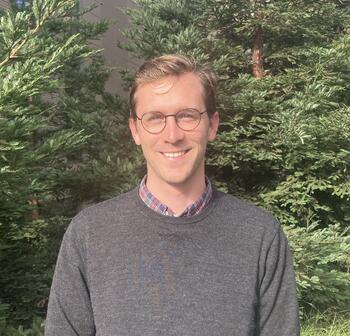
About the Speaker: Nick is a Ph.D. candidate in political science at the University of California, Berkeley, studying comparative politics. Most of his research is interested in identifying whether and when certain political institutions worsen group-based antagonisms. He has a particular regional interest in Southeast Asia.

Image
Nicholas Kuipers

Online, via Zoom

1
CDDRL Predoctoral Scholar, 2021-22
nick_kuipers.jpg

Nicholas Kuipers is a Ph.D. candidate in political science at the University of California, Berkeley, studying comparative politics and political economy. Nicholas’ research has been supported by the Institute for International Studies, the National Science Foundation (NSF), the Southeast Asia Research Group (SEAREG), and the Weiss Family Fund. His research has been published in Asian Survey, British Journal of Political Science, Journal of Politics, and Journal of Experimental Political Science. A graduate of Oberlin College, he previously worked in Jakarta at Saiful Mujani Research & Consulting, a political consultancy specializing in public opinion surveys.

Nick Kuipers Ph.D. Candidate, UC Berkeley CDDRL Predoctoral Fellow
Seminars
-

About this Event: In this book project, we walk in the footsteps of the pioneers of the nonviolent approach to provide a reinterpretation of the histories of the great movements of the twentieth century from a game theoretic perspective, bringing to bear a host of new quantitative analyses to understand the challenges they faced, when they were successful at overcoming them and why. We develop a simple conceptual framework for understanding the strategies available to both the leaders and the followers of political movements, the media and outside audiences, as well as the regimes that they seek to influence, and how these decisions interact. We use this framework to highlight the presence of three key tensions that exist in many political movements.

These tensions include: those between the allure of violence and the seeming pedestrianism of nonviolence, between the need for numbers and the need for focus, and between organizations that depend on grassroots mobilization versus hierarchies and leadership. 

In light of the framework and new quantitative evidence, we then retrace and re-examine the decisions of the participants of the Indian Independence Movement in each of their three great nonviolent drives for change---the Non-Cooperation Movement of the 1920s, the Civil Disobedience Movement of the 1930s and the Quit India Movement of the 1940s---and how they succeeded or failed in addressing these tensions. At each step, we also discuss both grand strategy and the effectiveness of local tactics. We next compare the Indian experience with the movements that came after, including the Civil Rights Movement in the United States, the Arab Spring and recent protests around the world. Finally, we draw on what we have learned to suggest ideas for better implement nonviolent protests today.


About the Speaker:

Image
Saumitra Jha
Along with being a Senior Fellow at FSI, Saumitra Jha is an associate professor of political economy at Stanford’s Graduate School of Business, and, by courtesy, of economics and of political science, and convenes the Stanford Conflict and Polarization Lab. He is also a senior fellow at the Stanford Institute for Economic Policy Research. In 2020–21, he is a fellow at the Center for Advanced Study in the Behavioral Sciences.

Jha’s research has been published in leading journals in economics and political science, including Econometrica, the Quarterly Journal of Economics, the American Political Science Review and the Journal of Development Economics, and he serves on a number of editorial boards. His research on ethnic tolerance has been recognized with the Michael Wallerstein Award for best published article in Political Economy from the American Political Science Association in 2014 and his co-authored research on heroes with the Oliver Williamson Award for best paper by the Society for Institutional and Organizational Economics in 2020. Jha was honored to receive the Teacher of the Year Award, voted by the students of the Stanford MSx Program in 2020.


Online, via Zoom: REGISTER

Graduate School of Business 655 Knight Way Stanford, CA 94305
(650) 721 1298
0
Associate Professor of Political Economy, GSB
Associate Professor, by courtesy, of Economics and of Political Science
saumitra_jha.jpg

Along with being a Senior Fellow at the Freeman Spogli Institute for International Studies, Saumitra Jha is an associate professor of political economy at the Stanford Graduate School of Business, and convenes the Stanford Conflict and Polarization Lab. 

Jha’s research has been published in leading journals in economics and political science, including Econometrica, the Quarterly Journal of Economics, the American Political Science Review and the Journal of Development Economics, and he serves on a number of editorial boards. His research on ethnic tolerance has been recognized with the Michael Wallerstein Award for best published article in Political Economy from the American Political Science Association in 2014 and his co-authored research on heroes with the Oliver Williamson Award for best paper by the Society for Institutional and Organizational Economics in 2020. Jha was honored to receive the Teacher of the Year Award, voted by the students of the Stanford MSx Program in 2020.

Saum holds a BA from Williams College, master’s degrees in economics and mathematics from the University of Cambridge, and a PhD in economics from Stanford University. Prior to rejoining Stanford as a faculty member, he was an Academy Scholar at Harvard University. He has been a fellow of the Niehaus Center for Globalization and Governance and the Center for the Study of Democratic Politics at Princeton University, and at the Center for Advanced Study in the Behavioral Sciences at Stanford. Jha has consulted on economic and political risk issues for the United Nations/WTO, the World Bank, government agencies, and for private firms.


Senior Fellow at the Freeman Spogli Institute for International Studies
Dan C. Chung Faculty Scholar at the Freeman Spogli Institute for International Studies
Senior Fellow at the Stanford Institute for Economic Policy Research
Date Label
Senior Fellow, Center for Democracy, Development and the Rule of Law, FSI
Seminars
-

About the Event:  Decentralization and community-driven development programs have become increasingly common policies to attempt to improve the distribution of public goods across low- and middle-income countries. We study a series of reforms in the city of Delhi that decentralized the administration of discretionary school-level budgets to elected bodies of parents. We find that parents have preferences for representatives that are substantially more educated than them and discriminate against Muslims. Parents act on these preferences when given the opportunity to elect SMC members. They elect parents that are wealthier and more educated and are also of higher status. The paper provides empirical evidence to the question of under what conditions decentralization leads to elite capture. When bureaucrats have a stronger say in the selection of representatives, budgets are captured to reflect the preferences of state representatives, rather than constituents.


Image
Emmerich Davies
About the Speaker:  Emmerich Davies is an Assistant Professor of Education at the Harvard Graduate School of Education, a Faculty Associate at the Weatherhead Center for International Affairs and Center for International Development, and a co-convener of the Brown-Harvard-M.I.T. Joint Seminar on South Asian Politics. He studies the political economy of education with a regional focus on South Asia. His work has been published in Comparative Political Studies and Governance. He received his Ph.D. and M.A. in political science from the University of Pennsylvania, and his B.A. in political science and economics from Stanford University.

Online, via Zoom:  REGISTER

Emmerich Davies Assistant Professor of Education at the Harvard Graduate School of Education
Seminars
-

About this Event: In India there persists a striking gender gap in political participation. Women's political participation is important both on normative grounds of inclusion and because when women do participate, politics changes. I develop a theoretical model of political behavior arguing that women's lack of political participation is the result of the structure of women's political networks in patriarchal societies. I then evaluate the effect of expanding women's networks by leveraging a natural experiment that created as-if random variation in access to women-only credit groups. Participation in these groups had a significant and substantial impact on women's political participation - women's attendance at public meetings doubled. I provide suggestive evidence of three mechanisms underlying this effect: (1) larger networks, (2) increased capacity for collective action within networks, and (3) development of civic skills. These findings contribute to our understanding of how networks affect political behavior and underlie gendered inequalities in political participation.


Image
Soledad Prillaman
About the Speaker: Soledad Artiz Prillaman is an Assistant Professor of Political Science at Stanford University. Her research lies at the intersections of comparative political economy, development, and gender, with a focus in South Asia. Specifically, her research addresses questions such as: What are the political consequences of development and development policies, particularly for women’s political behavior? How are minorities, specifically women, democratically represented and where do inequalities in political engagement persist and how are voter demands translated into policy and governance? In answering these questions, she utilizes mixed methods, including field experiments, surveys, and in-depth qualitative fieldwork. She received her Ph.D. in Government from Harvard University in 2017 and a B.A. in Political Science and Economics from Texas A&M University in 2011.


Online, via Zoom: REGISTER

Soledad Prillaman Assistant Professor of Political Science at Stanford University
Seminars
-

**Please note all CDDRL events are scheduled using the Pacific Time Zone

About the Event:  How can one of the world’s most free-wheeling cities transition from a vibrant global center of culture and finance into a subject of authoritarian control? As Beijing's anxious interference has grown, the “one country, two systems” model China promised Hong Kong has slowly drained away in the years since he 1997 handover. As “one country” seemed set to gobble up “two systems," the people of Hong Kong riveted the world’s attention in 2019 by defiantly demanding the autonomy, rule of law and basic freedoms they were promised. In 2020, the new National Security Law imposed by Beijing aimed to snuff out such resistance. Will the Hong Kong so deeply held in the people’s identity and the world’s imagination be lost? Professor Michael Davis, who has taught human rights and constitutional law in this city for over three decades, and has been one of its closest observers, takes us on this constitutional journey. 


Image
Michael Davis
About the Speaker:  Professor Michael C. Davis is in the Fall of 2020 a Visiting Professor in the Faculty of Law at the University of Hong Kong where he teaches core courses on international human rights. He is also currently a Global Fellow at the Woodrow Wilson International Center for Scholars in Washington DC, a Senior Research Scholar at the Weatherhead East Asia Institute at Columbia University and a Professor of Law and International Affairs at O.P. Jindal Global University in India (where he is in residence each spring).  A professor in the Law Faculty at the University of Hong Kong until late 2016, he has held a number of distinguished visiting professorships, including the J. Landis Martin Visiting Professor of Human Rights Law at Northwestern University (2005-6), the Robert and Marion Short Visiting Professor of Human Rights at the University of Notre Dame (2004-5) and the Frederick K. Cox Visiting Professor of Law at Case Western Reserve University (2000).  As a public intellectual his media writing won him a 2014 Human Rights Press Award for commentary. 


Online, via Zoom: REGISTER

Michael C.Davis Visiting Professor in the Faculty of Law at the University of Hong Kong
Seminars
-

**Please note all CDDRL events are scheduled using the Pacific Time Zone


About the Event: Following the Allied invasion of Iraq in 2003, the U.S. government and military officials revived counterinsurgency doctrine and practice—widely employed, though not invented, during the era of decolonization—in service of the nation’s ongoing War on Terror. This revival was dramatized during a widely publicized screening at the Pentagon of Gillo Pontecorvo’s classic film The Battle of Algiers (1966). What insights into (Algerian) insurgency and (French) counterinsurgency did U.S. officials hope to glean from Pontecorvo’s film? And how would these insights be mobilized, if at all, for the occupation of Iraq and other insurgent geographies? 

This talk revisits this historical moment and the questions it raises about the relationship between U.S. militarism and the uses of literature and film in the management of insurgency in Africa and Western Asia.


Image
Vaughn Rasberry
About the Speaker: Vaughn Rasberry is Associate Professor in the Department of English and Academic Director of the Center for Comparative Studies in Race and Ethnicity at Stanford. He is the author of Race and the Totalitarian Century: Geopolitics and the Black Literary Imagination (Harvard UP, 2016), winner of the Ralph Bunche Award from the American Political Science Association and an American Book Award from the Before Columbus Foundation. 


Online, via Zoom: REGISTER

Vaughn Rasberry Associate Professor in the Department of English and Academic Director of the Center for Comparative Studies in Race and Ethnicity at Stanford
Seminars
Authors
News Type
News
Date
Paragraphs

On September 29, the APARC China Program hosted Thomas Fingar and Stephen Stedman for the program “Rebuilding International Institutions.” The program, which was moderated by China Program Director Jean Oi, examined the future of international institutions such as the United Nations (UN), World Trade Organization (WTO), and World Health Organization (WHO) in our evolving global political landscape. While Fingar and Stedman acknowledged that such institutions facilitated attainment of unprecedented peace and prosperity after WWII, they also asked difficult questions: Are these institutions still adequate? And if not, how will we change them?

Shorenstein APARC Fellow Thomas Fingar kicked off the session by asking whether or not US-China tensions would impede cooperation on major global challenges, or if those challenges were so serious as to render such rivalries immaterial. Perhaps the most obvious example of such a crisis is the current COVID-19 pandemic. The efforts to curb the virus’ spread not only by individual countries, but also by international organizations like the WHO, have proven largely inadequate. According to Fingar, our existing institutions need to be reformed or supplemented to deal with these types of threats. However, such an overhaul of our international systems will be difficult, he says.

How, then, will we go about such a massive project? Stephen Stedman, Deputy Director at Stanford’s Center on Democracy, Development, and the Rule of Law (CDDRL), responded by explaining that the current failure of international cooperation makes such undertakings tough. Globalization has been a double-edged sword: On one hand, more contact, perhaps inherently, leads to increased tension. The resurgence of traditional notions of sovereignty in 2010, kickstarted by the opposition of countries like Russia and China to what was seen as UN overreaching, has led to a reduction of international cooperation overall. On the other hand, Fingar posits that our interconnectedness may force us toward cooperation despite rivalries as we face more and more transnational threats. International institutions create rules to organize and manage our many interconnected relationships so that we can deal with our problems effectively and reduce friction.

Stedman also pointed to the upcoming US elections and the major impact their outcome will have on how these problems are addressed—or not. In the last four year, the United States has pulled back significantly from international institutions and agreements, leaving a gap that China has started to fill. Furthermore, despite the US’s retreat from international responsibility, the country still remains a critical actor in global initiatives. China’s embrace of a global leadership role is not inherently negative, but its future relationship with the US will need to be “managed in a way that you get greater cooperation and not just paralysis.” Stedman says that it is likely that progress will need to be made on a bilateral front in order to have productive conversations about international issues with China.

Concluding on an optimistic note, Fingar voiced his hope that the current tensions and negative perceptions between rivals might ultimately “be mitigated by success in dealing with a common problem,” because “experience does shape perceptions.”

A video recording of this program is available upon request. Please contact Callista Wells, China Program Coordinator at cvwells@stanford.edu with any inquiries.

Read More

Hero Image
Photograph of the UN building in Geneva, Switzerland Image by Mat Reding on Unsplash
All News button
1
Subtitle

Fingar and Stedman spoke as part of the APARC program “Rebuilding International Institutions,” which examined the future of international institutions such as the United Nations (UN), World Trade Organization (WTO), and World Health Organization (WHO) in our evolving global political landscape.

Date Label
-

This event is open to Stanford undergraduate students only. 

Image
CDDRL Flyer 2021

The Center on Democracy, Development, and the Rule of Law (CDDRL) will be accepting applications from eligible juniors on who are interested in writing their senior thesis on a subject touching upon democracy, economic development, and rule of law (DDRL) from any university department.  The application period opens on January 11, 2021 and runs through February 12, 2021.   CDDRL faculty and current honors students will be present to discuss the program and answer any questions.

For more information on the Fisher Family CDDRL Honors Program, please click here.

**Please note all CDDRL events are scheduled using the Pacific Time Zone

 Online, via Zoom: REGISTER

CDDRL
Encina Hall, C152
616 Jane Stanford Way
Stanford, CA 94305-6055

(650) 725-2705 (650) 724-2996
0
Senior Fellow at the Freeman Spogli Institute for International Studies
Professor, by courtesy, of Political Science
Stedman_Steve.jpg PhD

Stephen Stedman is a Senior Fellow at the Freeman Spogli Institute for International Studies (FSI) and the Center on Democracy, Development and the Rule of Law (CDDRL), an affiliated faculty member at CISAC, and professor of political science (by courtesy) at Stanford University. He is director of CDDRL's Fisher Family Honors Program in Democracy, Development and Rule of Law, and will be faculty director of the Program on International Relations in the School of Humanities and Sciences effective Fall 2025.

In 2011-12 Professor Stedman served as the Director for the Global Commission on Elections, Democracy, and Security, a body of eminent persons tasked with developing recommendations on promoting and protecting the integrity of elections and international electoral assistance. The Commission is a joint project of the Kofi Annan Foundation and International IDEA, an intergovernmental organization that works on international democracy and electoral assistance.

In 2003-04 Professor Stedman was Research Director of the United Nations High-level Panel on Threats, Challenges and Change and was a principal drafter of the Panel’s report, A More Secure World: Our Shared Responsibility.

In 2005 he served as Assistant Secretary-General and Special Advisor to the Secretary- General of the United Nations, with responsibility for working with governments to adopt the Panel’s recommendations for strengthening collective security and for implementing changes within the United Nations Secretariat, including the creation of a Peacebuilding Support Office, a Counter Terrorism Task Force, and a Policy Committee to act as a cabinet to the Secretary-General.

His most recent book, with Bruce Jones and Carlos Pascual, is Power and Responsibility: Creating International Order in an Era of Transnational Threats (Washington DC: Brookings Institution, 2009).

Director, Fisher Family Honors Program in Democracy, Development and Rule of Law
Director, Program in International Relations
Affiliated faculty at the Center for International Security and Cooperation
Date Label
Deputy Director, CDDRL

Encina Hall, C150
616 Jane Stanford Way
Stanford, CA 94305

0
Center Fellow, Freeman Spogli Institute for International Studies
didi_kuo_2023.jpg

Didi Kuo is a Center Fellow at the Freeman Spogli Institute for International Studies (FSI) at Stanford University. She is a scholar of comparative politics with a focus on democratization, corruption and clientelism, political parties and institutions, and political reform. She is the author of The Great Retreat: How Political Parties Should Behave and Why They Don’t (Oxford University Press) and Clientelism, Capitalism, and Democracy: the rise of programmatic politics in the United States and Britain (Cambridge University Press, 2018).

She has been at Stanford since 2013 as the manager of the Program on American Democracy in Comparative Perspective and is co-director of the Fisher Family Honors Program at CDDRL. She was an Eric and Wendy Schmidt Fellow at New America and is a non-resident fellow with the Carnegie Endowment for International Peace. She received a PhD in political science from Harvard University, an MSc in Economic and Social History from Oxford University, where she studied as a Marshall Scholar, and a BA from Emory University.

Date Label
Associate Director for Research, CDDRL
-

This is a virtual event. Please click here to register and generate a link to the talk. 
The link will be unique to you; please save it and do not share with others.


Sponsored by the Stanford China Program and the Stanford Center at Peking University.
 

International institutions established after WWII and shaped by the Cold War facilitated attainment of unprecedented peace and prosperity.  But what worked well in the past may no longer be adequate to address the challenges and opportunities in the world these institutions helped to create.  Should legacy institutions be reformed, replaced, or supplemented by new mechanisms to manage new global challenges?  This program will examine whether existing institutions of global governance are adequate, and if not, why changing them will be difficult.


Image
Dr. Thomas Fingar
Thomas Fingar is a Shorenstein APARC Fellow in the Freeman Spogli Institute for International Studies at Stanford University. He was the inaugural Oksenberg-Rohlen Distinguished Fellow from 2010 through 2015 and the Payne Distinguished Lecturer at Stanford in 2009. From 2005 through 2008, he served as the first deputy director of national intelligence for analysis and, concurrently, as chairman of the National Intelligence Council. Fingar served previously as assistant secretary of the State Department’s Bureau of Intelligence and Research (2000-01 and 2004-05), principal deputy assistant secretary (2001-03), deputy assistant secretary for analysis (1994-2000), director of the Office of Analysis for East Asia and the Pacific (1989-94), and chief of the China Division (1986-89). Between 1975 and 1986 he held a number of positions at Stanford University, including senior research associate in the Center for International Security and Arms Control.

Fingar's most recent books are The New Great Game: China and South and Central Asia in the Era of Reform, editor (Stanford, 2016), Uneasy Partnerships: China and Japan, the Koreas, and Russia in the Era of Reform (Stanford, 2017), and Fateful Decisions: Choices that will Shape China’s Future, co-edited with Jean Oi (Stanford, 2020).


Dr. Stephen J. StedmanStephen Stedman is a Freeman Spogli senior fellow at the Center on Democracy, Development, and the Rule of Law and FSI, an affiliated faculty member at CISAC, and professor of political science (by courtesy) at Stanford University. 

In 2011-12 Professor Stedman served as the Director for the Global Commission on Elections, Democracy, and Security, a body of eminent persons tasked with developing recommendations on promoting and protecting the integrity of elections and international electoral assistance. The Commission is a joint project of the Kofi Annan Foundation and International IDEA, an intergovernmental organization that works on international democracy and electoral assistance. In 2003-04 Professor Stedman was Research Director of the United Nations High-level Panel on Threats, Challenges and Change and was a principal drafter of the Panel’s report, A More Secure World: Our Shared Responsibility. In 2005 he served as Assistant Secretary-General and Special Advisor to the Secretary- General of the United Nations, with responsibility for working with governments to adopt the Panel’s recommendations for strengthening collective security and for implementing changes within the United Nations Secretariat, including the creation of a Peacebuilding Support Office, a Counter Terrorism Task Force, and a Policy Committee to act as a cabinet to the Secretary-General.  His most recent book, with Bruce Jones and Carlos Pascual, is Power and Responsibility: Creating International Order in an Era of Transnational Threats (Washington DC: Brookings Institution, 2009).

Via Zoom Webinar. Register at: https://bit.ly/3b6qmKT

Thomas Fingar Shorenstein APARC Fellow, Stanford University
Stephen Stedman Deputy Director, Center on Democracy, Development and Rule of Law, Stanford University
Seminars
-

**Please note all CDDRL events are scheduled using the Pacific Time Zone

About this Event:  This book offers a novel theory of the nuances in relationships between business and political elites in three authoritarian regimes in developing Asia: Indonesia under Suharto’s New Order, Malaysia under the Barisan Nasional (BN), and China under the Chinese Communist Party (CCP). How did business-state relations in all three regimes come to be seen as “crony,” and why do some crony arrangements generate growth and political stability and others stagnation or crisis? The book develops conceptual models of state-business relations (mutual alignment and mutual endangerment) and explains their genesis. I argue that the main factors explaining why one pattern dominates over the other are the political status of capitalists, determined during regime formation, and the political management of the financial system. The research draws on extensive archival and interview sources as well as novel datasets on corporate filings in each country.


Image
Meg Rithmere
About the Speaker:  Meg Rithmire is F. Warren MacFarlan associate professor in the Business, Government, and International Economy Unit. Professor Rithmire holds a PhD in Government from Harvard University, and her primary expertise is in the comparative political economy of development with a focus on China and Asia. Her first book, Land Bargains and Chinese Capitalism (Cambridge University Press, 2015), examines the role of land politics, urban governments, and local property rights regimes in the Chinese economic reforms. A new project, for which Meg conducted fieldwork in Asia 2016-2017, investigates the relationship between capital and the state and globalization in Asia. The project focuses on a comparison of China, Malaysia, and Indonesia from the early 1980s to the present. The research has two components; first, examining how governments attempt to discipline business and when those efforts succeed and, second, how business adapts to different methods of state control. 


Online, via Zoom: REGISTER

Meg Rithmire F. Warren MacFarlan associate professor in the Business, Government, and International Economy Unit
Seminars
Subscribe to Asia-Pacific