0
Research Scholar, Global Digital Policy Incubator
charles_mok.jpg

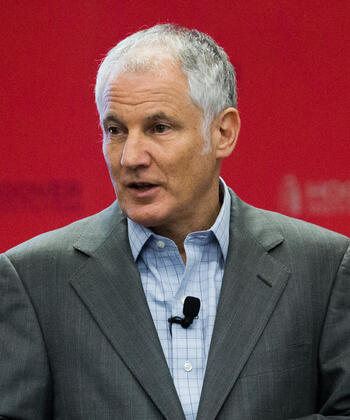
Charles is a Research Scholar at the Global Digital Policy Incubator of the Center on Democracy, Development and the Rule of Law at Stanford University, a member of the Board of Trustees of the Internet Society, and a board member of the International Centre for Trade Transparency and Monitoring. Charles served as an elected member of the Legislative Council in the Hong Kong Special Administrative Region, representing the Information Technology functional constituency, for two terms from 2012 to 2020. In 2021, he founded Tech for Good Asia, an initiative to advocate positive use of technology for businesses and civil communities. As an entrepreneur, Charles co-founded HKNet in 1994, one of the earliest Internet service providers in Hong Kong, which was acquired by NTT Communications in 2000. He was the founding chair of the Internet Society Hong Kong, honorary president and former president of the Hong Kong Information Technology Federation, former chair of the Hong Kong Internet Service Providers Association, and former chair of the Asian, Australiasian and Pacific Islands Regional At-Large Organization (APRALO) of ICANN. Charles holds a BS in Computer and Electrical Engineering and an MS in Electrical Engineering from Purdue University.

Date Label
-

About the Seminar: In this time of great challenges, our democracies urgently need to produce citizens who can move from demanding change to making it. But the skills for doing so are not innate, they are learned. In this talk, Beth Simone Noveck will discuss how both citizens and governments can take advantage of digital technology, data, and the collective wisdom of our communities to design and deliver powerful solutions to contemporary problems. Drawing on the latest methods from data and social sciences, including original survey data from around the world, she proposes a practical set of methods for public servants, community leaders, students, activists, and anyone who wants to be a catalyst for positive social change.


Register Now


Image
Beth Simone Noveck Headshot
About the Speaker: Beth Simone Noveck is a professor at Northeastern University, where she directs the Burnes Family Center for Global Impact and its partner project, The Governance Lab (The GovLab) and its MacArthur Research Network on Opening Governance. The author of Solving Public Problems: How to Fix Our Government and Change Our World (Yale Press 2021) (named a Best Book of 2021 by Stanford Social Innovation Review), she is also Core Faculty at the Institute for Experiential AI (IEAI) at Northeastern. New Jersey governor Phil Murphy appointed her as the state’s first Chief Innovation Officer and Chancellor Angela Merkel named her to her Digital Council in 2018. Previously, Beth served in the White House as the first United States Deputy Chief Technology Officer and director of the White House Open Government Initiative under President Obama. UK Prime Minister David Cameron appointed her senior advisor for Open Government.

In addition to Solving Public Problems, Beth is the author of Smart Citizens, Smarter State: The Technologies of Expertise and the Future of Governing (Harvard Univ Press 2015) and Wiki Government: How Technology Can Make Government Better, Democracy Stronger and Citizens More Powerful (Brookings 2009) and co-editor of The State of Play: Law, Games and Virtual Worlds (NYU Press, 2005).

Online, via Zoom.

Beth Simone Noveck Director | The GovLab
Seminars
-

About the Seminar: For centuries, the world’s dominant power has been the state that wielded the world’s dominant navy. More recently, globalization has been remade, as a sea-based trade—85% of all global trade moves by sea. As does nearly 2/3rds of the world trade in oil and gas, while 93% of all data in the world moves along undersea cables that line the ocean floor. The oceans are vital, too, to our changing climate. All of which highlights the drama of China’s return to the high seas, and its rapid maritime and naval build-up. The net result: a new arms race, centered in the Western Pacific but reaching out into the Arctic and the Indian Oceans, and pulling in Russia, India, Japan and Europe.  Bruce Jones, author of To Rule the Waves, will explore how our security, our prosperity, and our environment are being reshaped by the dynamics of sea power.

Register Now

About the Speaker: 

Image
Bruce Jones Headshot

Bruce Jones is a senior fellow and director of the project on international order and strategy at the Brookings Institution. The author or co-author of several books on international order, his most recent work is “To Rule the Waves: How Control of the World’s Oceans Shapes the Fate of the Superpowers”.


Online, via Zoom.

Bruce Jones The Brookings Institution
Seminars
-

About the Seminar: Saumitra Jha and Steven Wilkinson's book project, Wars and Freedoms, makes the case that, throughout human history, external wars are common catalysts for political change at home, and they do so in large part because of their impact on the organizational capacity of the disenfranchised. It draws widely from across the social sciences and humanities: literature; history; biography; psychology; sociology; economics; and political science. The book draws upon these diverse ways of knowing to provide evidence from across time and around the world of the relevance of a simple framework for understanding which types of external wars are conducive to the emergence of broad-based freedoms, the building of states, and the shrinking of wealth inequalities on one hand, and when instead, others have led to the building of military castes, or an increased propensity for political polarization,  ethnic conflict, attempted coups, revolution and genocide on the other. In so doing, Wars and Freedoms provides a re-interpretation of the history of revolutions and political change, in order to make clear which lessons and episodes from history may be more germane for the future of democracy and freedoms in the twenty-first century.

Wars and Freedoms describes how there were historically three paths that connected organizational skills developed in external wars to the spread of democracy and democratic values: in the shadow of a crisis that threatened broad class conflict, through a more gradual process of state-building in response to ongoing external existential threats, and through the organizational efforts of committed military leaders. Of these, however, only the last, the most fragile and contingent, is still likely to emerge organically. Understanding the decline of other paths, however, can still help us understand both how political freedoms and democracy emerged, how our democracies may die, and what we may still be able to do about it.

Register Now

About the Speaker:

Image
Headshot for Saumitra Jha
Saumitra Jha is Associate Professor of Political Economy at the Stanford Graduate School of Business, a Senior Fellow at the Center for Democracy, Development and the Rule of Law in Stanford's Freeman-Spogli Institute for International Affairs and convenes the Stanford Conflict and Polarization Lab. His work on the historical relationship between conflict and markets has been received the Michael Wallerstein Award for best article in political economy from the American Political Science Association, and has been published in the top journals in both Economics and Political Science, including The American Political Science Review, Econometrica, and The Quarterly Journal of Economics. His co-authored work on Heroes was awarded the Oliver Williamson Award from the Society for Institutional and Organizational Economics. Also an award-winning teacher, he has shown a particular interest in communicating the results of his research to broader audiences, in the press (such as the Indian Express and USA Today) and through online policy and social media outlets (VoxEU, VoxDev, Public Books, Broadstreet, Ideas for India, AOC), and to a range of student and practitioner audiences, including cadets at West Point, members of the US intelligence community, European Union diplomats, and entrepreneurs in Africa, India and the United States.  His work has been featured in the Economist, Financial Times and the Washington Post, among others, and he has provided commentary for television and radio news, including for the BBC, ABC and CBC.

Online, via Zoom.

Graduate School of Business 655 Knight Way Stanford, CA 94305
(650) 721 1298
0
Associate Professor of Political Economy, GSB
Associate Professor, by courtesy, of Economics and of Political Science
saumitra_jha.jpg

Along with being a Senior Fellow at the Freeman Spogli Institute for International Studies, Saumitra Jha is an associate professor of political economy at the Stanford Graduate School of Business, and convenes the Stanford Conflict and Polarization Lab. 

Jha’s research has been published in leading journals in economics and political science, including Econometrica, the Quarterly Journal of Economics, the American Political Science Review and the Journal of Development Economics, and he serves on a number of editorial boards. His research on ethnic tolerance has been recognized with the Michael Wallerstein Award for best published article in Political Economy from the American Political Science Association in 2014 and his co-authored research on heroes with the Oliver Williamson Award for best paper by the Society for Institutional and Organizational Economics in 2020. Jha was honored to receive the Teacher of the Year Award, voted by the students of the Stanford MSx Program in 2020.

Saum holds a BA from Williams College, master’s degrees in economics and mathematics from the University of Cambridge, and a PhD in economics from Stanford University. Prior to rejoining Stanford as a faculty member, he was an Academy Scholar at Harvard University. He has been a fellow of the Niehaus Center for Globalization and Governance and the Center for the Study of Democratic Politics at Princeton University, and at the Center for Advanced Study in the Behavioral Sciences at Stanford. Jha has consulted on economic and political risk issues for the United Nations/WTO, the World Bank, government agencies, and for private firms.


Senior Fellow at the Freeman Spogli Institute for International Studies
Dan C. Chung Faculty Scholar at the Freeman Spogli Institute for International Studies
Senior Fellow at the Stanford Institute for Economic Policy Research
Date Label
Associate Professor of Political Economy at the Stanford Graduate School of Business and Senior Fellow at the Center for Democracy, Development at the Rule of Law in the Freeman-Spogli Institute.
Seminars
-

About the Seminar: President Biden and his foreign policy team pledged in early 2021 to upgrade and update U.S. support for democracy globally. With a year having passed, a stocktaking is due.  In what ways have they succeeded in putting the United States back into the role of the world’s leading democracy supporter? In what ways, and for what reasons have they fallen short? And with the Summit for Democracy now behind them, how will they take democracy policy forward in 2022 and what success will they likely have?


Register Now

About the Speaker:

Image
Thomas Carothers
 Thomas Carothers is senior vice president for studies and director of the Democracy, Conflict, and Governance Program at the Carnegie Endowment for International Peace. A leading authority on international democracy support and the global state of democracy, he is the author of numerous critically-acclaimed books and widely-cited articles on these topics.


Online, via Zoom.

Thomas Carothers Senior Vice President for Studies, Carnegie Endowment for International Peace
Seminars
-

About the Seminar: What are the defining traits of an autocracy? Leading works answer this question in negative terms: autocracies are non-democracies. We propose instead a substantive definition of autocracy, which we believe better captures what scholars actually mean when they invoke the term. We define autocracy as exclusive rule. Between substantive autocracy and electoral democracy, there is a residual space, of regimes that do not fit under either concept. We call these regimes “non-autocratic non-democracies” or NANDs.  A substantive understanding of autocracy has important theoretical and empirical implications. Theoretically, it ensures that claims about the population of autocratic regimes are ontologically coherent, and that we do not end up calling barely non-democratic regimes autocracies. Empirically, our measure reveals that the post-Cold War era has been even less autocratic than it is normally portrayed, and that concerns about a global turn toward "autocratization" are likely overblown.
 

Read the paper


About the Speakers:

Jason Brownlee

Image
Jason Brownlee

Jason Brownlee, a former post-doctoral fellow at CDDRL, is now a professor of Government at the University of Texas at Austin, where he researches and teaches about authoritarianism US foreign policy, and Southwest Asian politics.

Ashley Anderson

Image
ashley_anderson.jpg

Ashley Anderson is an Assistant Professor at the University of North Carolina - Chapel Hill. Her research interests are concentrated in the Middle East where she studies issues of contentious politics, political mobilization and regime change.

Killian Clarke

Image
Killian Clarke Headshot

Killian Clarke is an Assistant Professor at Georgetown University’s School of Foreign Service, where he is affiliated with the Center for Contemporary Arab Studies. His research and teaching focuses on protest, revolutions, and regime change in the Middle East.


Autocracy: A Substantive Approach
Download pdf

Online, via Zoom.

Jason Brownlee Professor, Department of Government, University of Texas at Austin
Ashley Anderson University of North Carolina, Chapel Hill
Killian Clarke Assistant Professor, Georgetown University, School of Foreign Service
Seminars
Paragraphs

A growing literature examines democratic backsliding, but there is little consensus on when, where, and why it occurs. Reviewing more than 100 recent articles and working papers, this research note argues that inattention to the measurement of backsliding and the underlying concept of democracy drives this disagreement. We propose three remedies. First, we outline several questions that help researchers navigate common measurement challenges. Second, we argue that conceptual confusion around backsliding is driven in large part by inconsistent definitions of democracy. We show how outlining a comprehensive concept of democracy enables researchers to better account for the diversity of instances of democratic backsliding. Our third contribution is drawing attention to a previously overlooked form of backsliding: when governments lose the effective power to govern or voters and elites increasingly disagree about truths and facts. The research note urges scholars to pay closer attention to the conceptualization and measurement of backsliding prior to empirical analysis.

All Publications button
1
Publication Type
Journal Articles
Publication Date
Subtitle

A growing literature examines democratic backsliding, but there is little consensus on when, where, and why it occurs.

Journal Publisher
Democratization
Authors
Hans Lueders
Paragraphs

This double book review roundtable examines the drivers and international influence of Russia and China. It features Kathryn Stoner’s Russia Resurrected: Its Power and Purpose in a New Global Order and James Reilly’s Orchestration: China’s Economic Statecraft Across Asia and Europe.

Image
Asia Policy 16-4 cover
Domestic Politics as the Driver and the Limitation to Statecraft
Marcin Kaczmarski

Domestic Drivers Influencing Russia-China Alignment: Implications for Challenging the West
Robert Sutter

Updating Neoclassical Realism: A New Angle on Global Power Projection
Alexander Korolev

Author’s Response: Russia Is Not as Weak as We Think
Kathryn E. Stoner

Author’s Response: Understanding China’s Economic Statecraft
James Reilly

All Publications button
1
Publication Type
Journal Articles
Publication Date
Journal Publisher
Asia Policy
Authors
Kathryn Stoner
Number
Number 4
-

About the Seminar: US response to 9/11 included a major focus on peace building through democracy promotion. The seminar examines the rationale and milestones for American engagement in distant lands. How will such an approach work in future foreign policy implementation is also discussed with some conclusions about future engagement.


For Fall Quarter 2021, we will be hosting a hybrid weekly Research Seminar Series. All events will be open to the public online via Zoom, and a limited-capacity in-person element for Stanford affiliates may be added in accordance with the County's health and safety guidelines.


Image
Shirin Tahir-Kheli
About the Speaker: Dr. Shirin Tahir-Kheli is a Senior Fellow and Founding Director of the South Asia Program at the Foreign Policy Institute of the Johns Hopkins University School of Advanced International Studies (SAIS). In 2011, Tahir-Kheli was named by Newsweek as one of the "150 Women Who Shake the World." She specializes in South Asia, nuclear non-proliferation, United Nations and U.S. foreign policy, and women's empowerment.

She is the author and editor of several monographs, including Pakistan Today: The Case for U.S.-Pakistan Relations (with Shahid Javed Burki, Foreign Policy Institute, 2017); Manipulating Religion for Political Gain in Pakistan: Consequences for the U.S. and the Region (Foreign Policy Institute, 2015); and India, Pakistan and the United States: Breaking with the Past (Council on Foreign Relations, 1997).

Democracy Promotion in U.S. Foreign Policy: Looking Back, Looking Forward
Download pdf

Online, via Zoom

Shirin Tahir-Kheli Ambassador & Senior Fellow, Foreign Policy Institute, Johns Hopkins School of Advanced International Studies, Washington DC Organization
Seminars
Authors
Nora Sulots
News Type
News
Date
Paragraphs

This week we launched the long-awaited 17th year of the Center on Democracy, Development and the Rule of Law's Draper Hills Summer Fellowship Program. Founded in 2005 with generous support from Bill and Phyllis Draper and Ingrid von Mangoldt Hills, Draper Hills is an executive training program for world leaders striving to promote democracy. For the next two weeks, Fellows will participate in workshops led by an interdisciplinary team of faculty to study new theories and approaches to democratic development.

Fellows in the class of 2021 were selected from among thousands of applicants for their ground-breaking work to defend democracy. These 34 leaders drawn from 30 countries around the world are pioneering new approaches and models to advance social and political change in some of the most challenging global contexts. Representing business, government, and the nonprofit sector, our fellows are working on the frontlines of democratic change to combat the global rise of authoritarianism and populism. In countries moving towards democracy, our fellows are working to institutionalize new systems and practices to support democratic transitions.

An Unconventional Year


Traditionally, Fellows would travel from their home countries to the U.S. and spend three weeks on campus at Stanford learning together. However, due to the ongoing COVID-19 pandemic, the program is currently taking place virtually for the first time (for the same reasons, the program did not run in 2020). The shift to online programming posed a number of logistical obstacles – from what time to run virtual sessions when participants span over a dozen time zones to how to foster the sense of belonging and personal connections that occur more naturally in in-person settings.

To begin addressing the latter, Fellows were sent welcome packages to build excitement and foster community both within the program and at Stanford. Upon receiving hers, Aisha Yesufu of Nigeria shared, "I am so excited at the different people I'll be meeting from all over the world, and also learning from different people, lecturers, professors... It's going to be quite interesting, and, for me, that is what I am most looking forward to."

"One of the most important things I have ever been involved with."


Opening against the backdrop of the fall of Kabul to the Taliban in Afghanistan, the importance of the Draper Hills program and the need to promote democratic change is now more evident than ever.

The inaugural session for the 2021 cohort began with Francis Fukuyama introducing the fellows to several of the esteemed faculty they will be learning from over the next two weeks, including Larry Diamond, Erik Jensen, and Michael McFaul. McFaul shared that not only did he found the program, but "it is one of the most important things I have ever been involved with." Jensen later added that "participating in this program is one of the great pleasures I have every year."

More to Come


Throughout the next two weeks, our Draper Hills Fellows will examine the political development, democratic transitions, and the relationship of law to economic development, public administration, administrative law, transitional justice, food security, and global health policy, among others. The group is eager to learn, and we look forward to seeing the many great things the training they receive here will enable them to do in their home countries and beyond.

Hero Image
Screenshot of Draper Hills 2021 opening session
All News button
1
Subtitle

For the next two weeks, Fellows will participate in workshops led by an interdisciplinary team of faculty to study new theories and approaches to democratic development.

Date Label
Subscribe to Asia-Pacific