-

REGISTER HERE


The United States has historically played an important role in promoting democracy to countries across the globe. But is the role of the U.S. as a leading advocate for democracy now diminished following the recent U.S. election and mob attack on the U.S. Capitol? 

The panel for this event will feature democracy activists from around the world, all of whom are graduates of the Draper Hills Program at the Center for Democracy, Development and the Rule of Law (CDDRL). In a discussion moderated by Professor Francis Fukuyama, they will offer their perspectives on the need for democracy promotion in their home countries at the current moment, particularly what role the new Biden administration could constructively play. Professor Michael McFaul’s recent series of articles [https://www.americanpurpose.com/articles/sell-it-again-uncle-sam/] in American Purpose, an online magazine recently launched by Professor Fukuyama, about the need for democracy promotion, will be the starting point for the discussion. Professor McFaul will offer introductory remarks.

PANELISTS:


Image
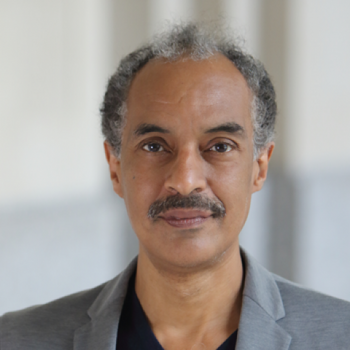
Moussa Kondo
Kondo Moussa, Class of 2018, Mali - Director Accountability Lab Mali . Kondo founded and runs the Mali chapter of the Accountability Lab, a U.S.-based nonprofit that promotes public accountability in six African and Asian countries. Rather than condemning corrupt leaders, it works to boost the influence of their honest counterparts, running grassroots “Integrity Idol” campaigns to celebrate their good work. Communities nominate local civil servants, and the Lab then profiles the top five on TV. The movement reaches a broader audience, as viewers across the country vote for their favorite candidates. It also runs in-country incubators to train and mentor “accountrapreneurs” who launch their own accountability projects. Kondo, a journalist, started Mali’s Lab after spending six months embedded with Liberia’s team during his 2015 Mandela Washington Fellowship. While Accountability Lab is not new, Kondo has successfully adapted it to a new and challenging context.


Image
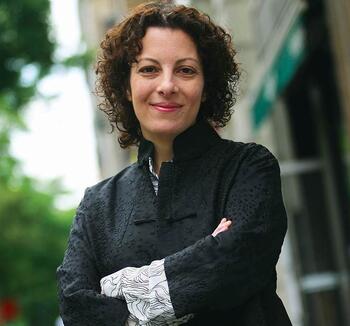
Sahili Chopra
Shaili Chopra, Class of 2019, India - An Indian journalist turned entrepreneur whose work is focused on championing real women and their stories across India. Chopra is the founder of SheThePeople.TV, which is India's only women's channel. SheThePeople.TV is a form of digital democracy where women get to choose, speak up, and set the agenda. Chopra uses the internet to spotlight issues of women's rights, their role in a democracy, and empower them in a digitally connected world. Chopra is the recipient of India's highest honor in journalism and counted among the top 50 most influential women in media in India and is a Vital Voices fellow. She holds a BA in Economics from Delhi University and a Masters diploma in Journalism from the Asian College of Journalism in Chennai.  


Image
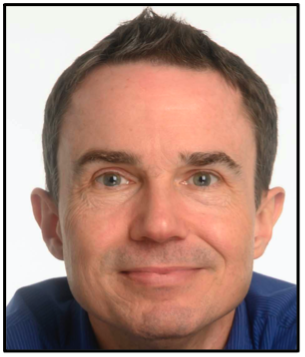
Mohamad Najem

Mohamad Najem, Class of 2019, Lebanon - Mohamad is the executive director of the Beirut–based digital rights organization Social Media Exchange (SMEX), the Middle East and North Africa’s leading digital rights research and policy advocacy organization. His work includes local and regional advocacy campaigns, research on privacy, data protection, and freedom of expression. Najem organized “Bread & Net”, the first unconference in the Middle East and North Africa region that tackled topics related to technology and human rights. Najem’s career began in the humanitarian aid arena. Najem was a 2014 New America Foundation Fellow and an alumnus of the Arts, Sciences, and Technology University in Lebanon where he completed his Masters in Business Administration. 


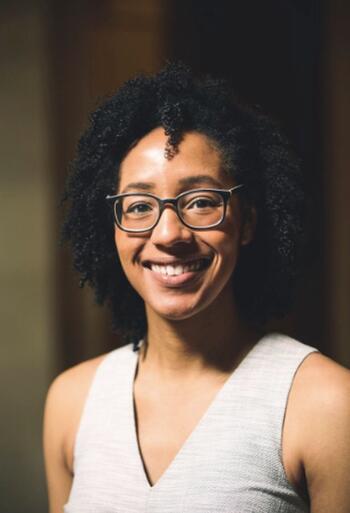
Anna Dobrovolskaya

Anna Dobrovolskaya Class of 2019, Russia – is a human rights activist based in Moscow, serving as the executive director of the Memorial Human Rights Center (MHRC). The Center is the biggest Russian human rights NGO, working to provide legal aid and consultation for refugees and asylum seekers, monitoring human rights violations in post-conflict zones and advocating for a human-rights based approach in fighting terrorism; as well as raising awareness about politically-motivated repression in Russia and maintains its own list of political prisoners. Dobrovolskaya’s areas of expertise include human rights education and awareness-raising activities and programs for young people and activists since 2008. She is a member of the Council of Europe pool of trainers. Her work currently lies in NGO management and providing consultancy to various human rights groups and initiatives. Anna was the author of the first Russian play about the life of human rights defenders, which is being performed in Teatr.doc since 2017.


This event is co-sponsored by the Freeman Spogli Institute for International Studies and the Center for Democracy, Development and the Rule of Law.

Paragraphs

A new four-paper series in The Lancet exposes the far-reaching effects of modern warfare on women’s and children’s health.

All Publications button
1
Publication Type
Journal Articles
Publication Date
Authors
Paul H. Wise
Stephen J. Stedman
-

**Please note all CDDRL events are scheduled using the Pacific Time Zone


About the Event: Following the Allied invasion of Iraq in 2003, the U.S. government and military officials revived counterinsurgency doctrine and practice—widely employed, though not invented, during the era of decolonization—in service of the nation’s ongoing War on Terror. This revival was dramatized during a widely publicized screening at the Pentagon of Gillo Pontecorvo’s classic film The Battle of Algiers (1966). What insights into (Algerian) insurgency and (French) counterinsurgency did U.S. officials hope to glean from Pontecorvo’s film? And how would these insights be mobilized, if at all, for the occupation of Iraq and other insurgent geographies? 

This talk revisits this historical moment and the questions it raises about the relationship between U.S. militarism and the uses of literature and film in the management of insurgency in Africa and Western Asia.


Image
Vaughn Rasberry
About the Speaker: Vaughn Rasberry is Associate Professor in the Department of English and Academic Director of the Center for Comparative Studies in Race and Ethnicity at Stanford. He is the author of Race and the Totalitarian Century: Geopolitics and the Black Literary Imagination (Harvard UP, 2016), winner of the Ralph Bunche Award from the American Political Science Association and an American Book Award from the Before Columbus Foundation. 


Online, via Zoom: REGISTER

Vaughn Rasberry Associate Professor in the Department of English and Academic Director of the Center for Comparative Studies in Race and Ethnicity at Stanford
Seminars
Authors
News Type
News
Date
Paragraphs

On September 29, the APARC China Program hosted Thomas Fingar and Stephen Stedman for the program “Rebuilding International Institutions.” The program, which was moderated by China Program Director Jean Oi, examined the future of international institutions such as the United Nations (UN), World Trade Organization (WTO), and World Health Organization (WHO) in our evolving global political landscape. While Fingar and Stedman acknowledged that such institutions facilitated attainment of unprecedented peace and prosperity after WWII, they also asked difficult questions: Are these institutions still adequate? And if not, how will we change them?

Shorenstein APARC Fellow Thomas Fingar kicked off the session by asking whether or not US-China tensions would impede cooperation on major global challenges, or if those challenges were so serious as to render such rivalries immaterial. Perhaps the most obvious example of such a crisis is the current COVID-19 pandemic. The efforts to curb the virus’ spread not only by individual countries, but also by international organizations like the WHO, have proven largely inadequate. According to Fingar, our existing institutions need to be reformed or supplemented to deal with these types of threats. However, such an overhaul of our international systems will be difficult, he says.

How, then, will we go about such a massive project? Stephen Stedman, Deputy Director at Stanford’s Center on Democracy, Development, and the Rule of Law (CDDRL), responded by explaining that the current failure of international cooperation makes such undertakings tough. Globalization has been a double-edged sword: On one hand, more contact, perhaps inherently, leads to increased tension. The resurgence of traditional notions of sovereignty in 2010, kickstarted by the opposition of countries like Russia and China to what was seen as UN overreaching, has led to a reduction of international cooperation overall. On the other hand, Fingar posits that our interconnectedness may force us toward cooperation despite rivalries as we face more and more transnational threats. International institutions create rules to organize and manage our many interconnected relationships so that we can deal with our problems effectively and reduce friction.

Stedman also pointed to the upcoming US elections and the major impact their outcome will have on how these problems are addressed—or not. In the last four year, the United States has pulled back significantly from international institutions and agreements, leaving a gap that China has started to fill. Furthermore, despite the US’s retreat from international responsibility, the country still remains a critical actor in global initiatives. China’s embrace of a global leadership role is not inherently negative, but its future relationship with the US will need to be “managed in a way that you get greater cooperation and not just paralysis.” Stedman says that it is likely that progress will need to be made on a bilateral front in order to have productive conversations about international issues with China.

Concluding on an optimistic note, Fingar voiced his hope that the current tensions and negative perceptions between rivals might ultimately “be mitigated by success in dealing with a common problem,” because “experience does shape perceptions.”

A video recording of this program is available upon request. Please contact Callista Wells, China Program Coordinator at cvwells@stanford.edu with any inquiries.

Read More

Hero Image
Photograph of the UN building in Geneva, Switzerland Image by Mat Reding on Unsplash
All News button
1
Subtitle

Fingar and Stedman spoke as part of the APARC program “Rebuilding International Institutions,” which examined the future of international institutions such as the United Nations (UN), World Trade Organization (WTO), and World Health Organization (WHO) in our evolving global political landscape.

Date Label
-

This event is open to Stanford undergraduate students only. 

Image
CDDRL Flyer 2021

The Center on Democracy, Development, and the Rule of Law (CDDRL) will be accepting applications from eligible juniors on who are interested in writing their senior thesis on a subject touching upon democracy, economic development, and rule of law (DDRL) from any university department.  The application period opens on January 11, 2021 and runs through February 12, 2021.   CDDRL faculty and current honors students will be present to discuss the program and answer any questions.

For more information on the Fisher Family CDDRL Honors Program, please click here.

**Please note all CDDRL events are scheduled using the Pacific Time Zone

 Online, via Zoom: REGISTER

CDDRL
Encina Hall, C152
616 Jane Stanford Way
Stanford, CA 94305-6055

(650) 725-2705 (650) 724-2996
0
Senior Fellow at the Freeman Spogli Institute for International Studies
Professor, by courtesy, of Political Science
Stedman_Steve.jpg PhD

Stephen Stedman is a Senior Fellow at the Freeman Spogli Institute for International Studies (FSI) and the Center on Democracy, Development and the Rule of Law (CDDRL), an affiliated faculty member at CISAC, and professor of political science (by courtesy) at Stanford University. He is director of CDDRL's Fisher Family Honors Program in Democracy, Development and Rule of Law, and will be faculty director of the Program on International Relations in the School of Humanities and Sciences effective Fall 2025.

In 2011-12 Professor Stedman served as the Director for the Global Commission on Elections, Democracy, and Security, a body of eminent persons tasked with developing recommendations on promoting and protecting the integrity of elections and international electoral assistance. The Commission is a joint project of the Kofi Annan Foundation and International IDEA, an intergovernmental organization that works on international democracy and electoral assistance.

In 2003-04 Professor Stedman was Research Director of the United Nations High-level Panel on Threats, Challenges and Change and was a principal drafter of the Panel’s report, A More Secure World: Our Shared Responsibility.

In 2005 he served as Assistant Secretary-General and Special Advisor to the Secretary- General of the United Nations, with responsibility for working with governments to adopt the Panel’s recommendations for strengthening collective security and for implementing changes within the United Nations Secretariat, including the creation of a Peacebuilding Support Office, a Counter Terrorism Task Force, and a Policy Committee to act as a cabinet to the Secretary-General.

His most recent book, with Bruce Jones and Carlos Pascual, is Power and Responsibility: Creating International Order in an Era of Transnational Threats (Washington DC: Brookings Institution, 2009).

Director, Fisher Family Honors Program in Democracy, Development and Rule of Law
Director, Program in International Relations
Affiliated faculty at the Center for International Security and Cooperation
Date Label
Deputy Director, CDDRL

Encina Hall, C150
616 Jane Stanford Way
Stanford, CA 94305

0
Center Fellow, Freeman Spogli Institute for International Studies
didi_kuo_2023.jpg

Didi Kuo is a Center Fellow at the Freeman Spogli Institute for International Studies (FSI) at Stanford University. She is a scholar of comparative politics with a focus on democratization, corruption and clientelism, political parties and institutions, and political reform. She is the author of The Great Retreat: How Political Parties Should Behave and Why They Don’t (Oxford University Press) and Clientelism, Capitalism, and Democracy: the rise of programmatic politics in the United States and Britain (Cambridge University Press, 2018).

She has been at Stanford since 2013 as the manager of the Program on American Democracy in Comparative Perspective and is co-director of the Fisher Family Honors Program at CDDRL. She was an Eric and Wendy Schmidt Fellow at New America and is a non-resident fellow with the Carnegie Endowment for International Peace. She received a PhD in political science from Harvard University, an MSc in Economic and Social History from Oxford University, where she studied as a Marshall Scholar, and a BA from Emory University.

Date Label
Associate Director for Research, CDDRL

Encina Hall
616 Jane Stanford Way
Stanford, CA 94305-6055

0
Research Scholar
mike_bennon_2022.jpg

Michael Bennon is a Research Scholar at CDDRL for the Global Infrastructure Policy Research Initiative. Michael's research interests include infrastructure policy, project finance, public-private partnerships and institutional design in the infrastructure sector. Michael also teaches Global Project Finance to graduate students at Stanford. Prior to Stanford, Michael served as a Captain in the US Army and US Army Corps of Engineers for five years, leading Engineer units, managing projects, and planning for infrastructure development in the United States, Iraq, Afghanistan and Thailand. 

Program Manager, Global Infrastructure Policy Research Initiative
-

**Please note all CDDRL events are scheduled using the Pacific Time Zone


About the Event: How does the widespread frustration that often accompanies democratic transitions shape the political cleavages underlying the party systems that emerge from them? Nine years after the 2010–11 uprising, Tunisia’s 2019 elections took place against a backdrop of widespread frustration with the party system that emerged during the ensuing transition. The elections presented opportunities to a diverse set of outsiders, many of whom brandished antiparty system messages, including unapologetic boosters of the former ruling party, a would-be plutocrat jailed on charges of corruption, and a broad set of antiparty independents. Drawing upon campaign materials and a nationally representative postelection survey, this presentation will describe the differences in the antiparty system messages and the ways that nostalgia underlies them. Through this analysis, I will consider a set of theoretical propositions arising from the literature on the dynamics of political cleavages in party systems in new democracies. 


About the Speaker: 

Image
Nathan Grubman
Nate Grubman is a Postdoctoral Fellow at the Center on Democracy, Development, and the Rule of Law at Stanford University. In the fall, he will receive his PhD in political science from Yale University. His dissertation uses the case of postuprising Tunisia to explore the question of why party systems in many new democracies furnish few economic policy choices, as well as the consequences of this absence of choice. More broadly, his research focuses on political nostalgia, ideology, corruption, and authoritarian legacies in new democracies. 

Online, via Zoom: REGISTER

0
CDDRL Postdoctoral Scholar, 2020-21
nate.jpg

I am a teaching fellow in Civic, Liberal, and Global Education (COLLEGE) at Stanford University. I teach courses focused on democracy, citizenship, and the politics of development. My research focuses on party systems, ideology, nostalgia, and corruption during transitions from authoritarian rule, especially in North Africa. My book manuscript focuses on the question of why democratization in Tunisia failed to address the social and economic grievances that precipitated it. My work has appeared in the Journal of Democracy, MERIP Middle East Report Online, and Washington Post Monkey Cage

I received my PhD in political science (with specialties in comparative politics, quantitative methods, and political economy) from Yale University in December 2020. I have a BA in international relations from Tufts University, an MS in applied economics from Johns Hopkins University, and an MA and MPhil in political science from Yale. I have spent more than three years living in Egypt, Morocco, and Tunisia. My CV is available here.

Postdoctoral Fellow at the Center on Democracy, Development, and the Rule of Law at Stanford University.
Seminars
-

**Please note all CDDRL events are scheduled using the Pacific Time Zone

About the Event:

Can intergroup contact build social cohesion after war? I randomly assigned Iraqi Christians displaced by the Islamic State of Iraq and Syria (ISIS) to an all-Christian soccer team or to a team mixed with Muslims. The intervention improved behaviors toward Muslim peers: Christians with Muslim teammates were more likely to vote for a Muslim (not on their team) to receive a sportsmanship award, register for a mixed team next season, and train with Muslims 6 months after the intervention. The intervention did not substantially affect behaviors in other social contexts, such as patronizing a restaurant in Muslim-dominated Mosul or attending a mixed social event, nor did it yield consistent effects on intergroup attitudes. Although contact can build tolerant behaviors toward peers within an intervention, building broader social cohesion outside of it is more challenging.


About the Speaker:

Image
mousa
Salma Mousa is an Egyptian scholar of migration, conflict, and social cohesion.  Prior to joining CDDRL, Salma held fellowships at the U.S. Institute of Peace, Stanford's Immigration Policy Lab, the Freeman Spogli Institute, the Stanford Center for International Conflict and Negotiation, the McCoy Center for Ethics in Society, and the Stanford Center on Philanthropy and Civil Society.  Her research is forthcoming as a cover article in Science, and has been covered by The Economist, the BBC, and Der Spiegel, and featured on the front page of the Times of London and PBS NOVA.  Salma received a PhD in Political Science from Stanford in 2020.


Online, via Zoom: REGISTER


0
CDDRL Postdoctoral Scholar, 2020-21
mousa.jpg

An Egyptian-Canadian raised in Saudi Arabia, the UAE, Qatar, and Canada, Salma Mousa received her PhD in Political Science from Stanford University in 2020. A scholar of comparative politics, her research focuses on migration, conflict, and social cohesion.  Salma's dissertation investigates strategies for building trust and tolerance after war. Leveraging field experiments among Iraqis displaced by ISIS,  American schoolchildren, and British soccer fans, she shows how intergroup contact can change real-world behaviors — even if underlying prejudice remains unchanged.   A secondary research agenda tackles the challenge of integrating refugees in the United States. Combining a meta-analytic review, ethnographic fieldwork, and field experiments with resettlement agencies, this project identifies risk factors and promising policies for new arrivals.  Salma has held fellowships at the U.S. Institute of Peace, Stanford’s Immigration Policy Lab, the Freeman Spogli Institute, the Stanford Center for International Conflict and Negotiation, the McCoy Center for Ethics in Society, and the Stanford Center on Philanthropy and Civil Society. Her work has been supported by the Abdul Latif Jameel Poverty Action Lab (JPAL), the Innovations for Poverty Action Lab (IPA), the King Center on Global Development, the Institute for Research in the Social Sciences (IRiSS), the Program on Governance and Local Development (GLD), and the Abbasi Program in Islamic Studies. Her research has been featured by The Economist, BBC, and Der Spiegel,  on the front page of the Times of London and on PBS NOVA.

CV
CDDRL Postdoctoral Scholar
Seminars
-

* Please note all CDDRL events are scheduled using the Pacific Time Zone

About the event: Ahmet T. Kuru will talk about his award-winning new book Islam, Authoritarianism, and Underdevelopment: A Global and Historical Comparison (Cambridge University Press, 2019). Why do Muslim-majority countries have high levels of authoritarianism and low levels of socio-economic development in comparison to world averages? Kuru elaborates an argument about the ulema-state alliance as the cause of these problems in the Muslim world from the eleventh century to the present. Criticizing essentialist, post-colonialist, and new institutionalist alternative explanations, Kuru focuses on the relations between intellectual, economic, religious, and political classes in his own explanation.


Image
Ahmet Kuru
About the speaker:  Ahmet T. Kuru is Porteous Professor of Political Science at San Diego State University. Kuru received his PhD from the University of Washington and held a post-doc position at Columbia University. He is the author of award-winning Secularism and State Policies toward Religion: The United States, France, and Turkey (Cambridge UP) and the co-editor (with Alfred Stepan) of Democracy, Islam, and Secularism in Turkey (Columbia UP). His works have been translated into Arabic, Bosnian, Chinese, French, Indonesian, and Turkish. His 2019 book, Islam, Authoritarianism, and Underdevelopment: A Global and Historical Comparison (Cambridge UP) became the co-winner of the American Political Science Association's International History and Politics Section Best Book Award.


Ahmet Kuru Porteous Professor of Political Science at San Diego State University
Seminars
0
George G.C. Parker Professor of Finance and Economics, Stanford Graduate School of Business
Director of the Corporations and Society Initiative, Stanford Graduate School of Business
Director of the Program on Capitalism and Democracy, Center on Democracy, Development and the Rule of Law
Senior Fellow, Stanford Institute for Economic Policy Research
Senior Fellow (by courtesy), Freeman Spogli Institute for International Studies
anat_admati-stanford-2021.jpg

Anat R. Admati is the George G.C. Parker Professor of Finance and Economics at Stanford University Graduate School of Business (GSB), a Faculty Director of the GSB Corporations and Society Initiative, and a senior fellow at Stanford Institute for Economic Policy Research. She has written extensively on information dissemination in financial markets, portfolio management, financial contracting, corporate governance and banking. Admati’s current research, teaching and advocacy focus on the complex interactions between business, law, and policy with focus on governance and accountability.

Since 2010, Admati has been active in the policy debate on financial regulations. She is the co-author, with Martin Hellwig, of the award-winning and highly acclaimed book The Bankers’ New Clothes: What’s Wrong with Banking and What to Do about It (Princeton University Press, 2013; bankersnewclothes.com). In 2014, she was named by Time Magazine as one of the 100 most influential people in the world and by Foreign Policy Magazine as among 100 global thinkers.

Admati holds BSc from the Hebrew University, MA, MPhil and PhD from Yale University, and an honorary doctorate from University of Zurich. She is a fellow of the Econometric Society, the recipient of multiple fellowships, research grants, and paper recognition, and is a past board member of the American Finance Association. She has served on a number of editorial boards and is a member of the FDIC’s Systemic Resolution Advisory Committee, a former member of the CFTC’s Market Risk Advisory Committee, and a former visiting scholar at the International Monetary Fund.

Date Label
Subscribe to Middle East and North Africa