Denis Morozov is a Visiting Scholar at Stanford’s Center on Democracy, Development and the Rule of Law for the 2025-2026 academic year. His research focuses on the role and position of multilateral development banks in the evolving global financial system and their impact on international development.
Before joining Stanford in 2023 as a Fellow at the Distinguished Careers Institute, Denis served as President of Bank of America for Russia and the CIS, overseeing the franchise’s regional work in investment advisory, capital markets, research, and securities trading.
Prior to his role at Bank of America, Denis was the Executive Director of the European Bank for Reconstruction and Development, a leading international financial institution aimed at fostering the transition towards market-oriented economies and multiparty democracy in Central and Eastern Europe, the former USSR, and parts of Northern Africa, the Middle East, and Asia.
Earlier in his career, Denis was the President and Chief Executive Officer of Norilsk Nickel and Uralkali, two global leaders in their respective commodities (base and platinum group metals and fertilizer inputs), both of which were recognized for their superior financial performance and high standards of corporate governance under Denis’ leadership.
Denis obtained a BA in Economics and a JD from Moscow State University. He later received an MA in Public Administration from Columbia University’s School of International and Public Affairs. Additionally, he completed the Advanced Management Program at Harvard Business School, received a diploma in Commercial Banking from the Swiss Banking School, and earned a PhD (Russian equivalent) in Economics from the Moscow State Institute of International Relations.
In 2012, Denis was named a Young Global Leader by the Davos World Economic Forum.
Denis is passionate about travel and exploration and enjoys long-distance running, water sports, and anything to do with mountains.
Please join us in congratulating Anna Grzymala-Busse, the Michelle and Kevin Douglas Professor of International Studies in the Department of Political Science, Senior Fellow at the Freeman Spogli Institute for International Studies (FSI), and the Director of the Europe Center, winner of the American Political Science Review's 2025 Heinz I. Eulau Award. The award honors the best articles published during the previous calendar year in American Political Science Review (APSA) and Perspectives on Politics. Dr. Eulau served as the president of APSA from 1971 to 1972, and this award was established to honor his contributions to the discipline.
In her award-winning article, “Tilly Goes to Church: The Religious and Medieval Roots of European State Fragmentation,” Professor Grzymala-Busse challenges traditional views of how European states formed, demonstrating how the medieval Catholic Church deliberately maintained divided political power to protect its influence.
The Award Committee shared the following on her article and selection:
Anna Grzymala-Busse’s “Tilly Goes to Church: The Religious and Medieval Roots of European State Fragmentation” challenges paradigmatic understandings of state development, according to which centralizing European states overcame fragmentation in the early modern era by consolidating strong states through warfare. Critics of this bellicist account have noted several empirical challenges: namely, the fragmentation of Europe was in fact highly persistent; concomitant institutions such as taxation and courts, which were supposedly consequents of mobilization for conflict, arose prior to warfare; and war did not lead uniformly to state consolidation.
In this paper, Gzrymala-Busse proposes a new explanation for these discordant patterns. She focuses on a critical but often ignored actor: the Catholic Church. Fragmentation, she argues, was a direct and intended consequence of concerted papal effort, especially starting in the 11th century, to weaken the authority of those rulers the Church saw as a threat to its autonomy. Thus, where states became relatively consolidated, including medieval England, France, and Spain, this was due to alliances between secular rulers and popes; while fragmentation was a function of Church-secular conflict, as in especially the Holy Roman Empire. Where states consolidated, institutions such as courts, parliaments and administrations arose often in mimicry of the Church, and appeared substantially earlier than required by early modern warfare.
The paper leverages rich argumentation and information drawn from a wealth of secondary sources, as well as original data on state boundaries, the timing of institutional innovations, the presences of proxy wars funded by popes, and indicators of secular conflict to test the association between papal conflict and fragmentation. It adds up to a compelling account, underscoring not only of the drawbacks for the paradigmatic understanding of European state development but also providing a novel and convincing empirical explanation for patterns of state consolidation and fragmentation.
"Tilly Goes to Church" was also awarded the Best Article Prize by the Comparative Politics section of the American Political Science Association in June 2024. You can read the full article here.
Congratulations, Professor Grzymala-Busse, on this high honor!
Read More
Q&As
Will Pope Leo XIV Shift Global Politics? Q&A with Professor Anna Grzymała-Busse
Prof. Grzymała-Busse, a leading scholar on religion and politics, unpacks what Pope Leo XIV’s election could mean for diplomacy, populism, and the Church’s global role.
Diversity and Democracy: Navigating the Complexities of the 2024 Election
The third of four panels of the “America Votes 2024” series examined the tension surrounding diversity and inclusion in the upcoming election. The panel featured Stanford scholars Hakeem Jefferson, Didi Kuo, Jonathan Rodden, and Anna Grzymala-Busse.
CDDRL Scholars Celebrated for Exceptional Contributions to Political Science Literature
Anna Grzymala-Busse's book "Sacred Foundations" has been awarded the American Political Science Association's J. David Greenstone Award and the Hubert Morken Best Book in Religion and Politics Award. Erin Baggott Carter and Brett Carter's book "Propaganda in Autocracies" has won the Hazel Gaudet-Erskine Best Book Award from the International Journal of Press/Politics.
Major: Economics & Political Science Minor: Mathematics Hometown: Boston, Massachusetts & Oxford, UK Thesis Advisor: Larry Diamond & Javier Mejia
Tentative Thesis Title:Toward a Theory of the Evolution of the Global Political Economy: Varieties of Democracy, Development and Law
Future aspirations post-Stanford: I would like to undertake a joint JD/PhD in political economy and to work in the academy, public, and private sectors.
A fun fact about yourself: I was the youngest person in UK history to litigate on behalf of the disabled in the High Court, Court of Appeal and Employment Tribunal, where I cross-examined a dozen senior leaders of a $500 million organization in a 40-day trial for an ongoing four-year, multi-million dollar lawsuit, in which I have been acting on a pro bono basis.
Virtual participation available via Zoom using the link above. Zoom Meeting ID: 997 4878 4037, Passcode: 998456
We invite our virtual participants to join in celebrating Marcel Fafchamps' distinguished career. Following the keynote address, at 10:00 AM PST, there will be an opportunity for online attendees to offer brief remarks or words of appreciation to honor Professor Fafchamps and his many contributions to scholarship, mentorship, and our academic community. Your reflections are a valued part of this special occasion.
Join us for a full-day academic symposium celebrating the career and contributions of economist Marcel Fafchamps, Satre Family Senior Fellow at the Freeman Spogli Institute for International Studies, on the occasion of his retirement. Featuring a keynote by Marcel himself, this tribute brings together colleagues, collaborators, and students to engage with the themes and ideas that have shaped his influential work in development economics, labor markets, and social networks.
The day will feature in-depth paper presentations, rapid-fire research talks, and engaging discussions with scholars, including Stefano Caria (University of Warwick), Pascaline Dupas (Princeton University), and Simon Quinn (Imperial College London), with more speakers to be announced soon. Topics span management practices, persuasion and diffusion, strategic reasoning, and mutual aid—from field experiments to economic theory.
Come celebrate the distinguished research career of Marcel Fafchamps with us.
Lunch and refreshments will be provided.
The symposium will be held in person, by invitation only. Professor Fafchamps' keynote will be livestreamed via Zoom.
This event is co-sponsored by the Center on Democracy, Development and the Rule of Law and the King Center on Global Development.
8:30 AM — Continental Breakfast available in 2nd Floor Lobby, Encina Hall Central
8:45 AM — General Welcome, Kathryn Stoner
9:00 AM — Keynote Address, Marcel Fafchamps: Behavioral Markets
10:00 AM— Virtual Attendees may join to share brief remarks and words of appreciation
10:15 AM — Morning Break
10:45 AM — Session Speaker: Stefano Caria,Competition and Management
11:45 AM — Rapid Fire Speaker: Tom Schwantje, Management Style Under the Spotlight: Evidence from Studio Recordings
12:15 PM — Lunch Break
1:15 PM — Session Speaker Pascaline Dupas: Keeping Up Appearances: Socioeconomic Status Signaling to Avoid Discrimination
2:15 PM — Rapid Fire Speaker: Deivy Houeix,Eliciting Poverty Rankings from Urban or Rural Neighbors
2:45 PM — Afternoon Break
3:00 PM — Session Speaker: Simon Quinn,Matching, Management and Employment Outcomes: A Field Experiment with Firm Internships
Marcel Fafchamps is a senior fellow at Stanford University’s Freeman Spogli Institute for International Studies (FSI) and a professor of economics. His research focuses on development economics, particularly how institutions, social networks, and market failures impact economic outcomes in low-income countries. He has published extensively on topics like agriculture, labor markets, and entrepreneurship, and has held academic positions at Oxford and Stanford. Fafchamps is known for combining rigorous empirical analysis with an understanding of real-world development challenges.
Stefano Caria is a Professor of Economics at the University of Warwick, affiliated with J‑PAL, CEPR, CAGE, and the IGC, serving as lead academic for Ethiopia. He earned his DPhil (and MPhil) in Economics from the University of Oxford and previously held positions at Oxford’s Department of International Development and the University of Bristol. He combines experimental and structural methods to study labor market frictions, refugee employment, childcare support, and firm-worker matching in low-income settings across Africa and the Middle East.
Tom Schwantje is a Postdoctoral Research Fellow at Bocconi University, where he is affiliated with IGIER and FINAFRICA. In his research, he focuses on the organizational economics and management of firms and banks in low-income countries. He is particularly interested in how managers operate in these settings, and how this is shaped by their environment. Most recently, he has started working on an exciting new research agenda on the organizational economics of banking in Ethiopia. Tom received his undergraduate and graduate degrees from Oxford University.
Deivy Houeix is a Prize Fellow at the Center for History and Economics at Harvard University. His primary field is Development Economics, with secondary interests in Organizational Economics. His research focuses on technology's role in lower-income countries, particularly in West Africa. Houeix explores how digital technologies reshape economic relationships and contract structures within and between firms, uncovering some key drivers and barriers to their adoption. Houeix is a graduate of the Massachusetts Institute of Technology, and has conducted research projects in Côte d'Ivoire, Ethiopia, Senegal, and Togo. In 2027, Houeix will join Columbia Business School as an Assistant Professor of Economics.
Pascaline Dupas is Professor of Economics and Public Affairs at Princeton University. She joined the Princeton faculty in July 2023. She was previously the Kleinheinz Family Professor of International Studies at Stanford University, where she spent 12 years on the faculty. She has also held faculty positions at Dartmouth College and UCLA. Dupas is a development economist studying the challenges facing poor households in lower-income countries and their root causes. Her goal is to identify interventions and policies that can help overcome these challenges and reduce global poverty. She conducts extensive fieldwork. Her ongoing research includes studies of education policy in Ghana, family planning policy in Burkina Faso, and government-subsidized health insurance in India, among others.
Simon Quinnis an Associate Professor of Economics at Imperial College Business School and Academic Director of its MSc in Economics & Strategy for Business. His research lies at the intersection of development and labor economics, with a focus on firms, markets, and institutions in low-income countries, especially in Africa. A Rhodes Scholar, he earned his MPhil and DPhil in Economics from Oxford, where he was also an Examination Fellow at All Souls College. Simon’s work includes field experiments on credit, management, and labor markets.
Kathryn Stoner is the Mosbacher Director of the Center on Democracy, Development and the Rule of Law (CDDRL), and a Senior Fellow at CDDRL and the Center on International Security and Cooperation at FSI. From 2017 to 2021, she served as FSI's Deputy Director. She is Professor of Political Science (by courtesy) at Stanford and she teaches in the Department of Political Science, and in the Program on International Relations, as well as in the Ford Dorsey Master's in International Policy Program. She is also a Senior Fellow (by courtesy) at the Hoover Institution.
Katherine Casey is a professor of political economy at the Stanford Graduate School of Business and Faculty Director of the King Center on Global Development. Her research explores the interactions between economic and political forces in developing countries, with particular interest in the role of information in enhancing political accountability and the influence of foreign aid on economic development. Her work has appeared in the American Economic Review, Journal of Political Economy and Quarterly Journal of Economics, among others. She teaches a course in the MBA program focused on firm strategy vis a vis government in emerging markets.
Melanie Morton, Faculty Affiliate, King Center on Global Development, is a development economist and associate professor in the department of economics at Stanford University. She is a senior fellow at the Stanford Institute for Economic Policy Research and the National Bureau for Economic Research. Dr. Morten is interested in how households respond to risk in developing countries, including using short term and temporary migration. Her work has been published in numerous journals including the Journal of Police Economy and the World Bank Economic Review. She received her PhD from Yale and was a postdoctoral fellow at the Minneapolis Federal Reserve.
The symposium will be held in the William J. Perry Conference Room, 2nd Floor, Encina Hall.
Event Location:
William J. Perry Conference Room Encina Hall, 2nd Floor, C-231 616 Jane Stanford Way Stanford, CA 94305-6165
Visitor Parking
There is no free parking on campus. Visitor and hourly parking permits are required through the ParkMobile app. Please download the app ahead of your visit and follow directions. Pay-by-space parking is available throughout campus; availability is limited. Please note that parking is monitored Monday - Friday, 8 am - 4 pm.
The parking areas closest to Encina Hall are located on surrounding streets and in the following parking garages:
Knight Management Center Parking Garage
Stanford Graduate School of Business (GSB), 655 Knight Way, Stanford, CA 94305
Manzanita Field Garage
742 Campus Drive, Stanford, CA 94305
For parking information, contact the Parking and Transportation Department's Visitor Parking page.
Rideshare Drop-off / Pick-up Address
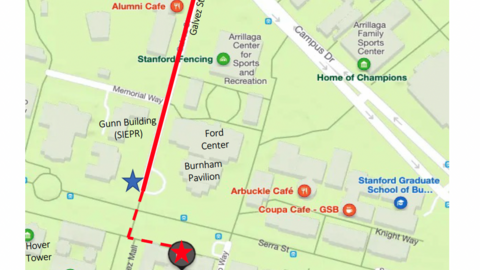
The closest drop-off location is: Gunn Building, 366 Galvez St., Stanford, CA 94305
From Galvez, walk South towards the Hoover Tower, and turn left at the intersection, onto Jane Stanford Way. Encina Hall is the large four-story building on your right. Enter through the main door, at the top of the stairs, and head up to the 2nd floor. An accessible entrance and ramp are located on the right side of Encina Hall, at the West Entrance.
Encina Hall
616 Jane Stanford Way
Stanford, CA 94305-6055
0
fafchamp@stanford.edu
Senior Fellow Emeritus at the Freeman Spogli Institute for International Studies
Professor, by courtesy, of Economics
marcel_fafchamps_2025.jpg
Marcel Fafchamps is a Senior Fellow Emeritus at the Freeman Spogli Institute for International Studies (FSI) and a member of the Center on Democracy, Development and the Rule of Law. Previously, he was the Satre Family Senior Fellow at FSI. Fafchamps is a professor (by courtesy) for the Department of Economics at Stanford University. His research interests include economic development, market institutions, social networks, and behavioral economics — with a special focus on Africa and South Asia.
Prior to joining FSI, from 1999-2013, Fafchamps served as professor of development economics in the Department of Economics at Oxford University. He also served as deputy director and then co-director of the Center for the Study of African Economies. From 1989 to 1996, Fafchamps was an assistant professor with the Food Research Institute at Stanford University. Following the closure of the Institute, he taught for two years at the Department of Economics. For the 1998-1999 academic year, Fafchamps was on sabbatical leave at the research department of the World Bank. Before pursuing his PhD in 1986, Fafchamps was based in Addis Ababa, Ethiopia, for 5 years during his employment with the International Labour Organization, a United Nations agency that oversees employment, income distribution, and vocational training in Africa.
He has authored two books: Market Institutions in Sub-Saharan Africa: Theory and Evidence (MIT Press, 2004) and Rural Poverty, Risk, and Development (Elgar Press, 2003), and has published numerous articles in academic journals.
Fafchamps served as the editor-in-chief of Economic Development and Cultural Change until 2020. Previously, he had served as chief editor of the Journal of African Economies from 2000 to 2013, and as associate editor of the Economic Journal, the Journal of Development Economics, Economic Development and Cultural Change, the American Journal of Agricultural Economics, and the Revue d'Economie du Développement.
He is a research associate of the National Bureau of Economic Research, an affiliated professor with J-PAL, a senior fellow with the Bureau for Research and Economic Analysis of Development, a research fellow with IZA, Germany, and with the Center for Economic and Policy Research, UK, and an affiliate with the University of California’s Center for Effective Global Action.
Fafchamps has degrees in Law and in Economics from the Université Catholique de Louvain. He holds a PhD in Agricultural and Resource Economics from the University of California, Berkeley.
Senior Fellow, Freeman Spogli Institute for International Studies
Professor, Economics
Senior Fellow, Stanford Institute for Economic Policy Research
Director, Stanford King Center on Global Development
dupas_photo_resized.jpg
Ph.D.
Pascaline Dupas is a development economist seeking to better understand challenges facing poor households in lower income countries. Her aim is to identify tools and policies that can help overcome these challenges and reduce global poverty. Her research aims to understand the barriers that households and governments face in accumulating or fostering accumulation of health and education, and how these barriers can be overcome. She conducts extensive fieldwork — field experiments embedded in longitudinal data collection efforts, which are used to perform empirical tests of microeconomic theory and to quantify the effects of potential policies. Health is the primary focus of Dupas’ research to date. Her work covers the role of information and education in health behavior, and the role of subsidies in increasing adoption of health technologies.
Hide publication sections
Off
Pascaline Dupas
Professor of Economics and Public Affairs
Princeton University
Deivy Houeix
Prize Fellow, Center for History and Economics
Panelist
Harvard University
Simon Quinn
Associate Professor, Department of Economics & Public Policy
Speaker
Imperial College Business School
Tom Schwantje
Postdoctoral Research Fellow
Panelist
Bocconi University
The Center on Democracy, Development and the Rule of Law proudly congratulates its 2025 graduating class of honors students on their outstanding original research conducted under CDDRL's Fisher Family Honors Program. Among those graduating is Charles Sheiner, an International Relations major, who has won a Firestone Medal for his research on the electoral impact of Biden-era spending programs. Additionally, two students were selected as recipients of the CDDRL Outstanding Thesis Award. Adrian Feinberg, an International Relations major who is also minoring in History, Film & Media Studies, was honored for his research revealing how postwar Yugoslavia utilized the justice system to build state power and suppress dissent. Adelaide Madary, a Political Science major, was honored for her research exploring how local leadership shapes the responses of rural Calabrian communities to immigration, fostering hospitality in some towns and resistance in others.
Firestone Medal winner Charles Sheiner, '25, presents his honors thesis. | Nora Sulots
The Firestone Medal for Excellence in Undergraduate Research recognizes Stanford's top ten percent of honors theses in social science, science, and engineering among the graduating senior class. Charles's thesis is entitled The Limits of Payout Politics: How Biden-Harris Federal Spending Shaped (and Didn't Shape) the 2024 Presidential Vote. His thesis examines whether the Biden-Harris administration’s signature spending programs — the Bipartisan Infrastructure Law, Inflation Reduction Act, and CHIPS Act — yielded electoral rewards in the 2024 presidential election. Using an original dataset of over 40,000 geocoded federal projects representing $227 billion in county-level investments, Charles finds no statistically significant association between per-capita spending and shifts in Democratic vote margins, even when accounting for partisan context and project visibility. Through interviews with federal and local officials, he identifies three explanatory mechanisms: implementation lags prevented most projects from reaching completion before Election Day, administrative and policy bottlenecks systematically delayed development, and Republican messaging successfully reframed spending as inflationary. These findings suggest that retrospective voting operates primarily through immediate, visible benefits rather than campaign promises or announced investments, with significant implications for how policy initiatives must be designed to deliver outcomes within electoral cycles.
CDDRL Outstanding Thesis Award winner Adrian Feinberg ('25) presents his honors thesis. | Nora Sulots
Adrian's thesis is entitled The Gavel and the Gun: Post-War Trials and State-Building Politics in Yugoslavia (1945-1949). His thesis explores how the Communist Party of Yugoslavia (KPJ) authorities used the post-World War II justice process to consolidate power from 1945 to 1949. Drawing on trial transcripts, newspapers, and other archival materials, the study argues that the Yugoslav state instrumentalized judicial structures in three distinct stages: first, using honor courts to assert basic state capacity; second, conducting public-facing war crimes trials to promote the state’s ideological legitimacy; and third, orchestrating espionage trials to suppress dissent and entrench single-party rule. While affirming that the KPJ often subordinated judicial integrity to its state-building project, the thesis complicates conventional narratives by attending to the moral ambiguities, partial truths, and undeniable moments of justice present in even the most politicized of trials. In doing so, it offers broader insights into the fraught intersection of law, memory, and power in postwar societies.
CDDRL Outstanding Thesis Award winner Adelaide Madary ('25) presents her honors thesis. | Nora Sulots
Adelaide's thesis is entitled Philoxenia: Local Responses to Immigration in Calabria, Italy. Over recent decades, many nations across Europe and the Americas have responded to mass migration movements across the globe with hostile policies, xenophobic sentiment, and poorly managed immigration systems. At the same time, several municipalities in Calabria, Italy that struggle with severe depopulation and economic hardship have experienced positive transformations upon opening refugee reception centers, including reversals to declining population trends, job creation and the continuation of important public goods, such as elementary schools — but not all towns that have a demand for immigration respond in the same way. Many Calabrian municipalities have not opened refugee resettlement centers, and others have become a breeding ground for labor exploitation among migrant workers. This thesis employs a mixed-methods approach to consider how structure, agency, and culture account for the variation in local responses to migrants and refugees throughout the relatively homogenous region of Calabria. A systematic analysis of quantitative municipal-level data paired with four granular case studies suggests that a municipality’s structural characteristics alone do not explain the variance in local responses to immigration. Rather, the presence of an entrepreneurial local actor, such as a mayor or non-profit leader with strong humanitarian commitments, is necessary to recognize and actualize the aligned interests between locals and newcomers and bring about cultures of hospitality. While much of the literature on local responses to immigration has focused on urban settings, this thesis aims to widen academic discussions to include more rural contexts and contributes to the underdeveloped literature on hospitality, rather than hostility, toward newcomers.
The Class of 2025
Charles, Adrian, and Adelaide are part of a cohort of 13 graduating CDDRL honors students who have spent the past year working in consultation with CDDRL-affiliated faculty members and attending honors research workshops to develop their thesis projects. The theses this year covered topics as wide ranging as authoritarian repression, conflict and state-building, regulation and governance, and democratic accountability. Students embarked on original research across multiple countries, conducting interviews, fielding surveys, plumbing archives, and building datasets.
“We are so proud of this year’s cohort of seniors in the Fisher Family Honors Program,” shared Didi Kuo, Center Fellow at FSI and co-director of CDDRL’s Fisher Family Honors Program. “Our multidisciplinary students brought a range of methods and analytical approaches to inform their understanding of democracy and development. They asked a range of trenchant research questions and brought a collaborative spirit to the research enterprise that improved everyone’s projects.”
Our students brought a range of methods and analytical approaches to inform their understanding of democracy and development. They asked a range of trenchant research questions and brought a collaborative spirit to the research enterprise that improved everyone's projects.
Didi Kuo
Center Fellow, FSI; Co-director, Fisher Family Honors Program
In addition to the Firestone Medal and CDDRL Outstanding Thesis Awards, members of the Class of 2025 have received several other honors heading into graduation:
Kate Tully is among four Stanford students named as 2025 Rhodes Scholars. The prestigious award provides support for talented scholars to pursue postgraduate degrees at Oxford University in England.
Adrian Feinberg was also named a Gaither Fellow. The national program offers recent graduates the opportunity to work as research assistants on projects related to democracy, global security, and foreign policy at the Carnegie Endowment for International Peace in Washington, D.C.
Alex Borthwick, Adrian Feinberg, Elizabeth Jerstad, and Gabriela Holzer have all received the Award of Excellence. Designed to recognize the top 10% of the class, this award honors graduating seniors who have demonstrated a sincere commitment to the university through involvement, leadership, and extraordinary Stanford spirit.
CDDRL's Fisher Family Honors Program trains students from any academic department at Stanford to prepare them to write a policy-relevant research thesis with global impact on a subject touching on democracy, development, and the rule of law. Honors students participate in research methods workshops, attend honors college in Washington, D.C., connect to the CDDRL research community, and write their thesis in close consultation with a faculty advisor to graduate with a certificate of honors in democracy, development, and the rule of law.
Explore the rest of the thesis topics of the Fisher Family Honors Program Class of 2025 below:
Alex Borthwick
Avinash Thakkar
Elizabeth Jerstad
Gabriela Holzer
Grace Geier
Josh Orszag
Kate Tully
Malaina Kapoor
Seamus Allen
Sofia Raso
Alex Borthwick
Memorialization of the Iraq Invasion in Kuwait
Avinash Thakkar
Revisiting the SEC’s Accredited Investor Standard: An Examination of the Continued Merits of Limiting Access to the Private Capital Markets
Elizabeth Jerstad
You Can Run, But You Can’t Hide: Transnational Repression in Wartime Russia
Gabriela Holzer
Bajo Sospecha: Insecurity and the Criminalized Other in Modern-Day Chile
Grace Geier
Doing Business with FEMA: Tracing Contract Patterns and Consolidated Influence
Josh Orszag
Democratic Meddling in Republican Primaries: A Theoretical and Empirical Analysis
Kate Tully
The Sahelian Coup Belt: Multipolar Contestation and Authoritarian Capture
Malaina Kapoor
Mandatory Unveiling in 1936 Iran: Monarchical Mission or Activist Ambition?
Seamus Allen
Force of the Better Argument: Mechanisms of Persuasion in Deliberative Polling
Sofia Raso
“The Arteries and Veins”: Principal Agent and Moral Hazard Setbacks in China’s Belt and Road Initiative
Read More
News
Record Number of CDDRL Honors Students Elected to Phi Beta Kappa
Seniors Alex Borthwick, Adrian Feinberg, Malaina Kapoor, and Avinash Thakkar (Fisher Family Honors Program class of 2025), and junior Emma Wang (Fisher Family Honors Program class of 2026) are among the newest members of this prestigious academic honors society.
Noah Tan and Adrian Feinberg Named Gaither Fellows
The national program offers recent graduates the opportunity to work as research assistants on projects related to democracy, global security, and foreign policy at the Carnegie Endowment for International Peace in Washington, D.C.
Charles Sheiner ('25) is a recipient of the 2025 Firestone Medal, and Adrian Feinberg ('25) and Adelaide Madary ('25) have won CDDRL's Outstanding Thesis Awards.
On April 17, 2025, Stanford’s Center on Democracy, Development and the Rule of Law (CDDRL), alongside The Europe Center and the Hoover Institution, hosted a seminar entitled “The Russo-Ukraine War: Peace for Our Time?” featuring Syracuse University Professor of Political Science Brian Taylor. The seminar examined the state of the war, the prospects for peace, and the political dynamics shaping both Ukrainian resistance and Russian aggression. Taylor emphasized that, despite mounting casualties and economic costs, peace remains unlikely in the foreseeable future due to the ideological rigidity and strategic goals of Vladimir Putin’s regime.
Putin’s own speeches, notably from February 2022 and June 2024, underscore his belief that Ukraine lacks legitimate statehood and is a ‘Western puppet.’ He accuses Kyiv of fostering “neanderthal nationalism” and allowing NATO to develop Ukraine as a military outpost. These views culminated in his June 2024 and April 2025 peace proposals, which demand complete Ukrainian military withdrawal from occupied regions, recognition of Russian sovereignty over Crimea, Donetsk, Luhansk, Zaporizhzhia, and Kherson, and Ukraine’s permanent neutrality, demilitarization, and “denazification.” These demands remain wholly unacceptable to Ukraine, where President Zelensky has repeatedly asserted that ceding territory violates the constitution and would betray over a million Ukrainian citizens still living in unoccupied portions of the contested areas.
The seminar highlighted three core issues blocking peace: territorial integrity, security guarantees, and domestic political sovereignty. Ukraine insists on reclaiming all occupied land and seeks NATO membership or bilateral security commitments from Western powers. Meanwhile, Russia demands not only territorial concessions but also structural constraints on Ukraine’s military capabilities and internal laws. The Kremlin's calls for “denazification” include repealing post-2014 legislation on language and historical memory — proposals Ukraine sees as direct infringements on its sovereignty.
Territorially, the stakes are high. Ukraine holds parts of Kherson, Donetsk, and Zaporizhzhia, and is unwilling to legitimize Russian claims. International law supports Ukraine’s position: the UN Charter, Budapest Memorandum, and several treaties confirm Russia’s previous recognition of Ukrainian borders. The war, as NATO Secretary General Jens Stoltenberg described, is the largest attempted annexation in Europe since World War II — a recolonization effort with severe implications for the international order.
On the battlefield, the war shows no signs of abating. Russian casualties exceeded 400,000 in 2024 alone, yet recruitment incentives and resource reserves remain robust. Some analysts argue that Putin is ideologically committed and politically insulated, making him indifferent to the war’s costs. Ceasefire discussions, while briefly floated in early 2025, have faltered amid escalating demands.
Taylor also explored the U.S. political context. President Donald Trump’s shifting rhetoric — from claiming he could end the war in 24 hours to hedging that he would “like to get it settled” — reflects uncertainty about future American policy. According to Russian sources, Putin believes he can manipulate Trump to secure favorable terms.
Ultimately, Taylor concluded that both sides see more advantage in fighting than in negotiating. The war is deeply rooted in Putin’s imperial ambition and ideological confrontation, not just geopolitics. Without dramatic shifts in leadership or battlefield fortunes, peace will remain elusive.
A full recording of Professor Taylor's seminar can be viewed below:
Read More
News
How Transnational Repression Impacts Exiled Opposition
CDDRL Postdoctoral Fellow Ivetta Sergeeva’s research on the Russian diaspora’s willingness to donate to oppositional organizations demonstrates that the criminalization of groups can incentivize greater donor support among emigrants, contrary to the Putin regime’s intentions.
Does Electoral Affirmative Action Worsen Candidate Quality?
In the wake of widespread challenges to affirmative action policy, Stanford Political Scientist Soledad Artiz Prillaman’s research challenges the notion that electoral quotas for minority representation weaken candidate quality.
Rethinking Bureaucracy: Delegation and State Capacity in the Modern Era
Francis Fukuyama traces how scholars and policymakers have grappled with the tension between empowering bureaucracies to act effectively and ensuring they remain accountable to political leaders.
In a recent REDS Seminar, Syracuse University Professor of Political Science Brian Taylor examined the state of the war, the prospects for peace, and the political dynamics shaping both Ukrainian resistance and Russian aggression.
What is everyday life under autocracy like? We have an image of violence, all-powerful elites, and jackbooted thugs, but many people living in modern autocratic regimes instead experience mundane repression, self-censorship, and distrust of formal institutions. In this panel, several Stanford scholars who research and who have lived through authoritarian rule reflect on how autocracies govern people’s daily lives, and how it is possible to resist these incursions. At a time when democracy is threatened in many countries, these experiences and lessons in resistance are more relevant than ever.
Panel
Anna Grzymala-Busse is the Michelle and Kevin Douglas Professor of International Studies in the Department of Political Science, the Director of the Europe Center, and Senior Fellow at the Freeman Spogli Institute. Her research focuses on the historical development of the state and its transformation, political parties, religion and politics, and post-communist politics. Other areas of interest include populism, informal institutions, and causal mechanisms.
Jovana Lazić is an historian whose research and teaching interests focus on belligerent occupation and the social and cultural history of the First World War; urban history; and the Habsburg Empire, the Balkans and Yugoslavia. She is author of several book chapters and articles on gender and war and the Habsburg-occupied Serbian capital of Belgrade during World War I. A graduate of the Edmund A. Walsh School of Foreign Service at Georgetown University and recipient of a diplome from Sciences Po-Paris, she received her PhD from Yale University. Jovana came to Stanford in 2006 to teach in the History Department and joined the Center for Russian, East European and Eurasian Studies in 2013.
Haiyan Lee is Professor of Comparative Literature, Professor of East Asian Languages and Cultures, and Walter A. Haas Professor of the Humanities. Her first book, Revolution of the Heart: A Genealogy of Love in China, 1900-1950, is a critical genealogy of the idea of “love” (qing) in modern Chinese literary and cultural history. It was awarded the 2009 Joseph Levenson Prize from the Association for Asian Studies for the best English-language book on post-1900 China. It is the first recipient of this prize in the field of modern Chinese literature. Her second book, The Stranger and the Chinese Moral Imagination, examines how the figure of “the stranger”—foreigner, migrant, class enemy, woman, animal, ghost—in Chinese fiction, film, television, and exhibition culture tests the moral limits of a society known for the primacy of consanguinity and familiarity. Her third book, A Certain Justice: Toward an Ecology of the Chinese Legal Imagination investigates Chinese visions of “justice” at the intersection of narrative, law, and ethics. She is working on a new project on animism, cognition, and the Chinese environmental imagination.
Hesham Sallam is a Senior Research Scholar at CDDRL, where he serves as Associate Director for Research. He is also Associate Director of the Program on Arab Reform and Democracy. Sallam is co-editor of Jadaliyya ezine and a former program specialist at the U.S. Institute of Peace. His research focuses on political and social development in the Arab World. Sallam’s research has previously received the support of the Social Science Research Council and the U.S. Institute of Peace. He is author of Classless Politics: Islamist Movements, the Left, and Authoritarian Legacies in Egypt (Columbia University Press, 2022), co-editor of Struggles for Political Change in the Arab World (University of Michigan Press, 2022), and editor of Egypt's Parliamentary Elections 2011-2012: A Critical Guide to a Changing Political Arena (Tadween Publishing, 2013). Sallam received a Ph.D. in Government (2015) and an M.A. in Arab Studies (2006) from Georgetown University, and a B.A. in Political Science from the University of Pittsburgh (2003).
Ali Yaycıoğlu is Associate Professor of History and Director of the Abbasi Program in Islamic Studies and Middle Eastern Studies Forum. He is a historian specializing in the Ottoman Empire and Modern Turkey. His research examines various dimensions of political, economic, and legal institutions and practices, as well as the social and cultural dynamics of the Ottoman world and Turkey, from the sixteenth century to the present. He is also interested in using digital tools to understand, visualize, and conceptualize historical developments. Dr. Yaycıoğlu teaches courses on the Ottoman Empire and Modern Turkey; Empires, Markets & Networks in the Early Modern World; the Age of Revolutions; Histories of Democracy and Capitalism; and Digital Humanities.
This event is sponsored by The Europe Center; Center on Democracy, Development and the Rule of Law (CDDRL); Office of the Dean of Humanities & Sciences; and CREEES Center for Russian, East European, and Eurasian Studies.
After more than three years since Russia’s full-scale invasion of Ukraine, international support for Ukraine is coming under increasing attack, even as it is more important than ever to safeguard Ukraine’s independence and sovereignty.
This paper builds on two waves of online public opinion surveys in eight countries bordering Ukraine and/or Russia (Latvia, Lithuania, Poland, Hungary, Romania, Moldova, Kazakhstan and Azerbaijan) to analyze the drivers of popular attitudes towards the war among citizens of neighboring countries, and identify the factors that may counter the growing war fatigue and the barrage of misinformation and propaganda from Russia (and increasingly from Western politicians). We also present the results of a pre-registered survey experiment, in which respondents were selectively exposed to an empathy induction prompt that encouraged them to reflect on the challenges of daily life in war-time Ukraine, and tests the impact of this empathy treatment on different dimensions of support for Ukraine.
Speaker: Grigore Pop-Eleches
I am a Professor of Politics and International Affairs at the Princeton School of Public and International Affairs and the Politics Department at Princeton University. I joined the Princeton faculty in 2003 after receiving my PhD in Political Science from UC Berkeley. I am co-director of the Princeton Workshop on Post-Communist Politics(Link is external).
My main current research interests are in comparative political behavior with a focus on authoritarian and post-authoritarian regimes (largely in Eastern Europe and the former Soviet Union). I have also worked on comparative and international political economy of Eastern Europe and Latin America, and on democratization and democratic backsliding, with a focus on the role of electoral behavior and political parties.
My first book, entitled "From Economic Crisis to Reform: IMF Programs in Latin America and Eastern Europe" was published by Princeton University Press in February 2009. My second book, "Communism's Shadow: Historical Legacies and Contemporary Political Attitudes" (joint with Joshua A. Tucker), was published in 2017 by Princeton University Press. My work has also appeared in a variety of academic journals, including The American Journal of Political Science, The Journal of Politics, World Politics, Comparative Political Studies, Comparative Politics, Quarterly Journal of Political Science, International Studies Quarterly, Journal of Democracy, Studies in Comparative International Development, and East European Politics and Societies.
REDS: RETHINKING EUROPEAN DEVELOPMENT AND SECURITY
The REDS Seminar Series aims to deepen the research agenda on the new challenges facing Europe, especially on its eastern flank, and to build intellectual and institutional bridges across Stanford University, fostering interdisciplinary approaches to current global challenges.
REDS is organized by The Europe Center and the Center on Democracy, Development and the Rule of Law, and co-sponsored by the Hoover Institution and the Center for Russian, East European and Eurasian Studies.
Learn more about REDS and view past seminars here.
On February 26, the Visiting Fellows in Israel Studies program at the Center on Democracy, Development and the Rule of Law (CDDRL) was pleased to host Ambassador Stuart E. Eizenstat for a talk on his new book, The Art of Diplomacy. Eizenstat’s distinguished career in Washington, spanning five decades, included his work as a former ambassador to the European Union and as Deputy Secretary of the Treasury. He spoke with Stanford faculty and students about the importance of diplomacy and the dangers of isolationism. Drawing from personal experience and examples from close colleagues such as Jimmy Carter and Bill Clinton, Eizenstat identified the attributes and strategies necessary for diplomacy. Leaders engaged in diplomacy require “unsympathetic empathy,” courage, and intellect. They must know the other side’s history and culture, come to negotiations prepared, and possess stamina — both mental and physical — for months-long or years-long negotiations.
Eizenstat shared how his connection to Israel has inspired some of his teaching. He described how Jimmy Carter’s incremental progress and knowledge of his fellow negotiators allowed him to drive the Camp David Accords. In his stories about the Oslo Accords, he also highlighted the utility of back channels in negotiations.
Outlining the role of leverage in diplomacy, Eizenstat noted that whereas positive leverage involves giving the other side what they want, negative leverage includes actions such as sanctions and military support. He argued that sanctions are ineffective in the current era and that military force should come as a last resort. Offering analyses of the War in Afghanistan, the Iraq War, the Gulf War, and the war in Gaza, Eizenstat described successful and unsuccessful uses of war in diplomacy. If resorting to war, leaders must prioritize national interests, stay equipped to change their plans, have good intelligence, understand local alliances and advantages, and establish post-war strategies.
During the question and answers portion of the seminar, Eizenstat spoke about deterrence, credibility, and strategic decision-making in international conflicts, referencing Obama's red line in Syria, Kennedy’s Cuban Missile Crisis strategy, and the current situation in Ukraine. He also emphasized the roles public opinion and public pressure play in diplomacy, noting that they are far more powerful in democracies.
You can listen to the audio of Ambassador Eizenstat's presentation below:
Read More
News
New Continuing Studies Course with CDDRL Scholars on Geopolitics in the 21st-Century Middle East
Open for enrollment now through Stanford Continuing Studies, "Geopolitics in the 21st-Century Middle East: Insights from Stanford Scholars and Other Experts" will run online for ten weeks on Wednesdays, from April 2 through June 4.
Eugene Kandel on Tackling Israel’s Internal Existential Risks
Kandel's talk with Visiting Fellow in Israel Studies Amichai Magen focused on his work at the Israel Strategic Futures Institute (ISFI) in diagnosing what he and his colleagues identify as internal existential risks for Israel and the policy ideas generated by ISFI in response to those risks.
Shavit, in conversation with FSI Visiting Fellow in Israel Studies Amichai Magen, discussed the threats Israel faces — particularly from Iran and its proxies — while reassessing historical defense doctrines and the evolving regional landscape, including the future of Gaza.
Ambassador Stuart E. Eizenstat discusses diplomacy during a seminar hosted by the Visiting Fellows in Israel Studies program. | Aleeza Schoenberg
All News button
1
Subtitle
In a seminar hosted by the Visiting Fellows in Israel Studies program, Eizenstat explored why diplomats succeed or fail, drawing from his firsthand experience with world leaders.
McGill University Professor of Political Science Juliet Johnson unpacked how central banks use their own museums to support the ‘stability narrative’ and promote confidence in financial institutions. She discussed her research in a recent REDS seminar co-sponsored by CDDRL and The Europe Center.
Central banks may be unique among government bureaucracies because of their investment in their own museums. Central banks focus on public outreach because monetary systems depend on collective belief in the value of money, as it is one of the most essential social contracts upon which modern society is built.
Museums can be effective instruments for improving faith in money and financial institutions. Visitors are unusually receptive to learning from museums because museums are often viewed as neutral, trusted guides. The number of central bank museums has increased significantly over the last two decades, and some get many visitors yearly. The Museum Bank Indonesia has an impressive 10,781 Google reviews and a 4.7-star rating.
The nearly 60 central bank museums that focus on economic education (in addition to numismatics and/or art) promote what Johnson calls the stability narrative, which is that central banks can maintain the value and security of money, represent the nation, and have become progressively more effective over time.
Through interactive exhibits and games, these museums aim to teach visitors that the central bank is needed to fight the evils of inflation. For example, the Bank of Finland museum has a display that features a green inflation monster to convey this sentiment. They use the exhibits to emphasize how people can be personally affected by inflation and, in many cases, to explain why maintaining a 2% inflation rate is ideal for protecting the value of money.
Central banks convey a sense of security to visitors through exhibits about detecting counterfeit money, regulating banks, and displaying their wealth, such as with gold bars. They tie their work to national pride through art displays about national heroes depicted on currency and by relating their work to prominent historical events. Through visual timelines, they convey how central bankers have learned from past mistakes and solved problems, making them more equipped to continue ensuring the stability of our financial system.
The rise of central bank museums exhibits the importance of improving public confidence in money and the financial institutions that control it, legitimizing an essential aspect of our society.
Read More
News
Race, Presidential Transformation, and Impeachment Crises
Marquette University Professor of Political Science Julia Azari explored the link between race, presidential transformation, and impeachment crises in a CDDRL research seminar.
Stanford Scholars Larry Diamond, Šumit Ganguly, and Dinsha Mistree, co-editors of the recently released book "The Troubling State of India's Democracy," gathered to discuss how the decline of opposition parties in India has undermined the health of its democracy.